STARZ ‘The White Queen’: Lady Margaret Beaufort

1beaufort_1

The Red Queen

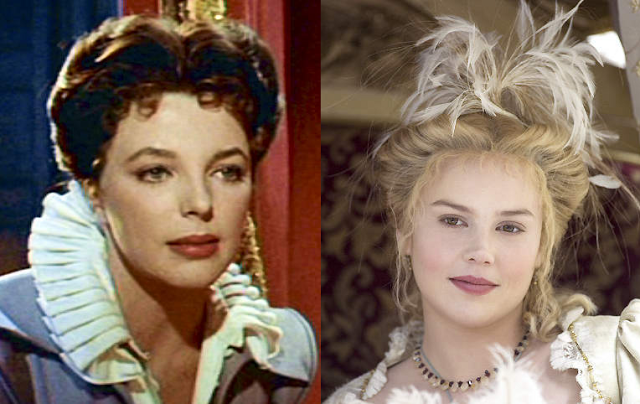
Lady Margaret Beaufort portrayed by Amanda Hale.

Lady Margaret Beaufort portrayed by Amanda Hale.

A loyal Lancastrian and cousin to the deposed King Henry VI (David Shelley). Margaret suffered a difficult childhood, raised by a loveless and vindictive mother (Lady Beauchamp – Frances Tomelty). In her darkest hour, she turned to God for comfort. She now believes she has been sent a sign that her young son Henry Tudor is destined to be King. Margaret’s terrifying determination to see her son take the throne, leaves her enduring loveless marriages solely to improve her political standing. She is willing to lay down her own life or even kill, so that her son Henry can be fitted for the crown. Her world is filled with cold, calculated maneuvering strictly for her and her son’s gain. — STARZ

Lady Margaret portrayed by Amanda Hale.

Lady Margaret portrayed by Amanda Hale.

Heiress to the red rose of Lancaster, Margaret Beaufort fervently believes that her house is the true ruler of England. Ignored by her sainted cousin Henry VI, mocked by her mother, married at age twelve, and endangered by childbirth, she vows to put her son on the throne. Naming him Henry, she sends him into exile and pledges him in marriage to the daughter of her sworn enemy. 

Philippa Gregory's new covers to promote "The White Queen."

Philippa Gregory’s new covers to promote “The White Queen.”

Margaret charts her own way through loveless marriages, treacherous alliances, and secret plots. Finally, she gambles her life to mastermind one of the greatest rebellions of all time – all the while knowing that her grown son and his army await the opportunity to win the greatest prize. (Gregory)

The White Queen BBC one commercial - Directors cut from Jamie Childs.

The White Queen BBC one commercial – Directors cut
from Jamie Childs.

Sir Thomas Parr’s father, William, 1st Baron Parr of Kendal, had once been Lady Margaret Beaufort’s revisionary heir to her substantial lands in Westmoreland, known as the “Richmond fee.” Lord Parr married to Hon. Elizabeth FitzHugh, daughter of Henry, 5th Baron FitzHugh and Lady Alice Neville (sister of Warwick). Lady Margaret Beaufort was a double second cousin to Elizabeth FitzHugh, Lady Parr [so she would have been a double second cousin, thrice removed of Katherine]. After the death of Lord Parr, his widow made a marriage with the Lancastrian family, the Vauxs’ of Harrowden. The Vaux family was close to Margaret, enjoying a long-term relationship with her. The previous Lady Vaux, mother of Thomas Parr’s step-father Nicholas, had been lady and friend to the Lancastrian queen Margaret of Anjou. Katherine, Lady Vaux served the queen during her exile. Nicholas Vaux (later 1st Baron Vaux) was a protege of Lady Margaret Beaufort. The young Thomas Parr [Katherine’s father and Margaret’s cousin] most likely studied under Maurice Westbury of Oxford who had been installed as a teacher by Lady Margaret Beaufort at her estate of Colyweston. It was at Colyweston that certain gentlemen, including the son of the Earl of Westmoreland [cousin of Sir Thomas], not only received an education but also gained political connections that would prove useful in their future careers.[1][2]

This slideshow requires JavaScript.

STARZ Official Trailer


The White Queen BBC one commercial – Directors cut from Jamie Childs on Vimeo.


See also —

STARZ ‘The White Queen’: Elizabeth Woodville

STARZ ‘The White Queen’: The Kingmaker’s Daughters

Sources

  1. Linda Porter. “Katherine the Queen; The Remarkable Life of Katherine Parr, the Last Wife of Henry VIII.” Macmillan, 2010.
  2. Barbara J. Harris. “English Aristocratic Women, 1450-1550 : Marriage and Family, Property and Careers: Marriage and Family, Property and Careers,” Oxford University Press, Jul 26, 2002. pg 218.

Links

Family of Queen Katherine: The Baux Family of Andria

Francesco de Balzo, 1st Duke of Andria (or Baux) (c.1330[1] – 23 April 1422) Count of Montescaglioso and Squillace, Signore of Berre, Mison, and Tiano.

Original coat of arms of the House of Baux (Lords of Baux). Some authors, and local tradition, with a hagiographic aim, fancifully claimed that the family was descended from Balthazar, one of the three Magi (the 16-rayed star symbolizing the star of Bethlehem). Some, that they descended from the first kings of Armenia, the star signifying that they directly knew Jesus. The motto of the family was ‘Au Hasard Baltasar', as well as 'Jamais Vassal’ and ‘Semper Ardentius’

Original coat of arms of the House of Baux (Lords of Baux). Some authors, and local tradition, with a hagiographic aim, fancifully claimed that the family was descended from Balthazar, one of the three Magi (the 16-rayed star symbolizing the star of Bethlehem). Some, that they descended from the first kings of Armenia, the star signifying that they directly knew Jesus. The motto of the family was ‘Au Hasard Baltasar’, as well as ‘Jamais Vassal’ and ‘Semper Ardentius’

Balzo was the son of Bertrand III del Balzo, Count of Andria and Montescaglioso and his second wife, Marguerite d’Aulnay.[1] Balzo’s father was a Senator of Rome, Captain General of Tuscany, and Justiciar of Naples.[1] The half-royal Balzo (Baux) family was one of the greatest families of Regno after the Duke’s marriage to Marguerite of Taranto in 1348.[2]

In 1349, Balzo was given an extant grant by Louis, Prince of Taranto. Prince Louis had married his cousin Joanna I of Naples in 1346 as her second husband. Louis of Taranto and Queen Joanna’s mothers (Empress Catherine and Marie of Valois) were sisters. Queen Joanna had named Louis, King of Naples; he was crowned in 1352/53. The King was brother to Balzo’s second wife, Marguerite of Taranto, whom he had married in 1348.[1][3] Balzo was created Duke of Andria and was the first magnate to be raised to ducal dignity in the kingdom.[2] Andria had been a royal fief which the Duke’s father received from Beatrice of Anjou, by virtue of her dower.[4]

On the death of Philip II, Prince of Taranto in 1373, Marguerite and Balzo declared Taranto and Philip’s Greek lands and titles for themselves and their son, James of Baux, as the last male descendant of Philip I, Prince of Taranto.[2] Margaret’s claim was supported by Pope Gregory XI.[2] Queen Joanna, however, decided to exercise direct rule over the Prince of Taranto’s Greek possessions.[2] In April 1374, Queen Joanna decided to suppress the family and stripped Baux of all his lands and titles.[2] This action led to a civil war between the Queen and the del Balzo family.[2] An account is recorded in the Aragonese version of Chronicle of Morea.[2]

Family

Balzo married three times.[1] In 1337, he married firstly to Luisa de San Severino, daughter of Tamasso III de San Severino, Count of Marsico; they had no issue.[1]

In 1348, Balzo married secondly to Marguerite of Taranto, daughter of Philip I, Prince of Taranto by his second wife, Catherine of Valois, titular Empress of Constantinople.[1] She died about September 1380 in imprisonment.[1] They had two children:

  • James of Baux, Prince of Achaea and the last titular Latin Emperor of Constantinople.[1]
  • Antonia de Balzo, queen consort to Frederick III, King of Sicily.[1]
Elizabeth Woodville from "Kings & Queens: The story of Britain's monarchs from pre-Roman times to today"

Elizabeth Woodville from “Kings & Queens: The story of Britain’s monarchs from pre-Roman times to today”

In 1381, Balzo married thirdly to Sueva Orsini, by whom he had issue including Margherita del Balzo; mother of Jacquetta of Luxembourg.[1] By Margherita, Balzo was a great-grandfather of queen consort Elizabeth Woodville, wife of King Edward IV of England.[1]

Queen Katherine Parr was related to Marguerite of Taranto through many lines including Parr’s descent from Charles II, King of Sicily, Prince Charles, Count of Valois (son of Philip III of France), etc. Parr was distantly related to Sueva Orsini by her descent from King John; Parr’s ancestors included Simon de Montfort, lord of Montfort l’Amaury and Amicia de Beaumont (grandparents of the Earl of Leicester), several legitimate and illegitimate children of King John, etc.

References

  1. Douglas Richardson. Plantagenet Ancestry: Plantagenet Ancestry: A Study In Colonial And Medieval Families, 2nd Edition, 2011. pg 401.
  2. Kenneth Meyer Setton. A History of the Crusades: Fourteenth and fifteenth centuries, edited by Harry W. Hazard. Univ of Wisconsin Press, 1969. pg 142-46.
  3. Pietro Giannone. The civil history of the Kingdom of Naples, Volume 2, London, 1723. pg 241.
  4. Welbore St. Clair Baddeley. Robert the Wise and His Heirs, 1278-1352, W. Heinemann, 1897. pg 463.

Written and Researched by Meg McGath; 5 May 2013.

STARZ ‘The White Queen’: Elizabeth Woodville

The “common” Queen

Rebecca Ferguson as Queen Elizabeth.

Rebecca Ferguson as Queen Elizabeth.

A young commoner from the House of Lancaster with angelic beauty and high intellect, Elizabeth becomes widowed when her first husband is killed in battle. She is left to fend for herself with two small boys, until fate introduces her to the noble King Edward IV (Max Irons) from the House of York. They both fall madly in love, and after a secret wedding she becomes Queen of England. At the outset of their lives together, Elizabeth’s motives are pure but once she finds herself on the throne, Elizabeth becomes fiercely protective of her family as she sees the dangerous forces surrounding her in the perilous politics of the day. — STARZ

The first in a stunning new series, The Cousins’ War, is set amid the tumult and intrigue of the Wars of the Roses. Internationally bestselling author Philippa Gregory brings this extraordinary family drama to vivid life through its women – beginning with Elizabeth Woodville, the White Queen.

Philippa Gregory's new covers to promote "The White Queen."

Philippa Gregory’s new covers to promote “The White Queen.”

Elizabeth Woodville, of the House of Lancaster, is widowed when her husband [Sir John Grey of Groby, by whom she has issue] is killed in battle. Aided and abetted by the raw ambition and witchcraft skills of her mother Jacquetta, Elizabeth seduces and marries, in secret, reigning king Edward IV, of the family of the white rose, the House of York. As long as there are other claimants to Edward’s throne, the profound rivalries between the two families will never be laid to rest. Violent conflict, shocking betrayal and murder dominate Elizabeth’s life as Queen of England, passionate wife of Edward and devoted mother of their children.

In The White Queen Philippa Gregory brilliantly evokes the life of a common woman who ascends to royalty by virtue of her beauty, a woman who rises to the demands of her position and fights tenaciously for the survival of her family, a woman whose two sons become the central figures in a mystery that has confounded historians for centuries: the Princes in the Tower whose fate remains unknown to this day. — Gregory

Philippa Gregory's new covers to promote "The White Queen."

Philippa Gregory’s new covers to promote “The White Queen.”

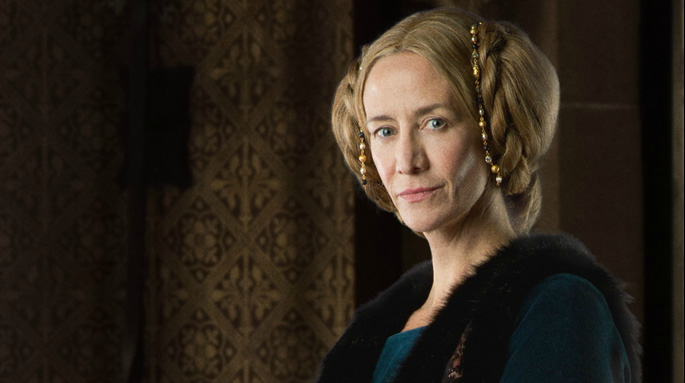
Elizabeth Woodville’s (Rebecca Ferguson) mother. Jacquetta hails from royalty through the House of Burgundy. She is a kind, caring and loving mother. As the matriarch of the family and a woman who feels she is in tune with the Earth and worldly callings, Jacquetta encourages the romance between Elizabeth and Edward, claiming it to be destiny. Jacquetta wants only the best for her daughter, and in Edward, she has gotten it, along with a proper place for herself and the rest of her family in history. That is, if they all can weather the raging political storm. — STARZ

Jacquetta of Luxembourg portrayed by Janet McTeer.

Jacquetta of Luxembourg portrayed by Janet McTeer.

Elizabeth Woodville was the niece of Queen Katherine’s maternal great-great-grandmother Joan Wydeville [Katherine would have been a first cousin, thrice removed of Queen Elizabeth by her mother, Maud Green]. Joan Wydeville married Sir William Haute/Hawte. Their daughter, Alice, married Sir John Fogge. The Haute family which Joan married into was quite prominent during the reign of Edward IV and Richard III. Fogge had originally been a supporter of the Lancastrian king, but in 1460 Fogge joined the Yorkist earls in Kent. It is obvious however that he was a Yorkist by the families which he married into; Alice Kyriel (daughter of Yorkist Sir Thomas) and Alice Haute c. 1465 who was a cousin of Queen Elizabeth. The previous year, Elizabeth Woodville had married Edward. Queen Elizabeth brought her favorite female relatives to court to serve her. Lady Alice Fogge (Haute) would be one of five ladies-in-waiting to her cousin, queen consort Elizabeth Woodville during the 1460s. (Harris) The other ladies included her sister Lady Anne (wife of William Bourchier, Viscount Bourchier and George Grey, 2nd Earl of Kent) and her sister-in-law Lady Elizabeth Scales (wife of Sir Anthony Woodville, 2nd Earl Rivers). (Harris)

Katherine Parr was also a descendant of Henry V, Count of Luxembourg and Marguerite de Bar; William II, Baron of Tingry and Blanche de Brienne; Guy of Dampierre, Count of Flanders; and several other paternal ancestors of Jacquetta of Luxembourg.

Elizabeth Woodville portrayed by Rebecca Ferguson.

Elizabeth Woodville portrayed by Rebecca Ferguson.

This slideshow requires JavaScript.


STARZ Official Trailer

The White Queen BBC one commercial – Directors cut from Jamie Childs on Vimeo.


See also —

Starz ‘The White Queen’: The Kingmaker’s Daughters

Starz ‘The White Queen’: Lady Margaret Beaufort

Sources

  • Philippa Gregory.The White Queen (the family tree is not correct and has many links missing!)
  • STARZ. “The White Queen,” August 2013.
  • Philippa Gregory. “The New Cousins’ War Series Book Covers,” 9 May 2013.
  • Barbara J. Harris. “English Aristocratic Women, 1450-1550 : Marriage and Family, Property and Careers: Marriage and Family, Property and Careers,” Oxford University Press, Jul 26, 2002. pg 218.

Links

The Hampton Court Pedigrees: The Six Wives of Henry VIII

All of King Henry’s wives had one thing in common, they all descended from Edward I; some by his first wife Eleanor of Castile or by his second, Marguerite of France; and in some cases both! In Hampton Court Palace in King Henry VIII’s apartment there are six stained glassed windows showing his wives pedigrees from King Edward I. As some were descended multiple times or by both wives the more prominent ancestry was featured.

henry_viii

From Atonia Fraser’s The Wives of Henry VIII, pg 363:

The following genealogy should be seen as a reflection of the narrowness of aristocratic society in a world of small population, rather than as some unconscious desire [that King Henry VIII might have] to commit forms of incest as has been suggested. The wives of Henry VIII were not “closely” related or to King Henry himself. The exception would be of the first cousins Anne Boleyn and Catherine Howard; Henry’s 2nd and 5th wife whom shared the same grandfather, Sir Thomas Howard, 2nd Duke of Norfolk by his 1st wife Elizabeth Tilney (herself the daughter of Elizabeth Cheney by her first husband Sir Philip Tilney. Elizabeth married secondly Sir John Say. Her daughter Anne would become grandmother to Queen consort Jane Seymour, thus making Queen Anne, Queen Jane, and Queen Catherine Howard second cousins).

In actuality, King Henry was closely related to two of his wives; Katherine of Aragon and his last wife, Katherine Parr. All three shared common ancestry and the ancestor Prince John of Gaunt, 1st Duke of Lancaster. Thus, Katherine of Aragon was a 3rd cousin, once removed and 4th cousin (by Lancaster’s first two wives). Katherine’s lineage made her more eligible to the throne of England than her father-in-law, Henry VII. The lineage from both Henry VIII and Katherine of Aragon gave their daughter, Princess Mary, the stronghold that she would have needed to be Queen Regnant from birth. Her claim to the throne was undeniable, yet Henry VIII threw away her chances–when he declared Mary illegitimate and moved on to wife no. 2, Anne Boleyn.

Parr, however, had multiple links via her father and mother. Queen Katherine Parr and Henry VIII’s closest relations: 3rd cousins via Lady Maud Parr (through Sir Richard Wydeville and Joan Bedlisgate; grandparents of Queen consort Elizabeth Woodville, wife of Edward IV); and by Lord Parr — 3rd cousins, once removed (through Ralph Neville, 1st Earl of Westmorland and Lady Joan Beaufort; parents to Lady Cecily, Duchess of York, mother to Edward IV and Richard III); 4th cousins by John of Gaunt, 1st Duke of Lancaster and Katherine Swynford (grandparents to John Beaufort, 1st Earl of Somerset); 4th cousins, once removed and 5th cousins through Sir Thomas Holland, 2nd Earl of Kent and Lady Alice FitzAlan (parents of Lady Margaret, Countess of Somerset and Lady Alianore, Countess of March).

The Hampton Court Pedigrees 

The SIX pedigrees of Henry VIII’s Wives, Henry’s Apartments;
linking them all back to King Edward I of England

Katherine Of AragonQueen Katharine of Aragon 

(1509-1533)

Not for my Crown” (As Princess of Wales)

&

Humble and Loyal” (As queen consort)

Katharine of Arragon 1st wife of King Henry ye Eighth, her pedigree from King Edward ye First and his 1st wife Eleanor of Castile

Pedigree window of Katherine of Aragon

Pedigree window of Queen Katherine of Aragon

Katharine of Aragon was the daughter of

Ferdinand King of Spain
Ferdinand, King of Spain married Isabel of Leon
John, King of Leon married Isabel of Portugal
John, Prince of Portugal married Isabel of Braganza
John, Grand Master of Avis [de jure King of Portugal] married Philippa of Lancaster
John, Duke of Lancaster married Blanch Plantagenet
King Edward ye Third [of England] married Philippa of Hainault
King Edward ye Second [of England] married Isabel of France
King Edward ye First [of England] married 1st Eleanor of Castile
Queen Katherine's royal emblem, the Pomegranate, a symbol her mother Queen Isabel of Castile used in her own coat of arms.

Queen Katherine’s royal emblem, the Pomegranate, a symbol her mother Queen Isabel I of Castile (1474-1504) used in her own coat of arms as queen regnant from 1492.

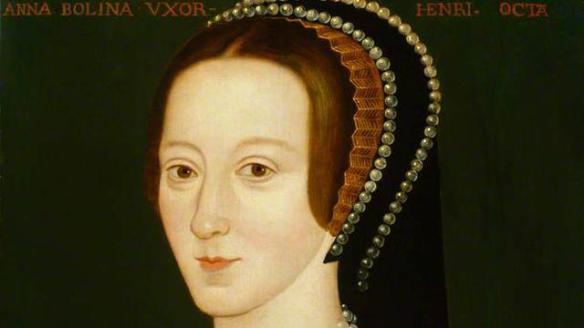
anne_boleynQueen Anne Bullen 

(1533-1536)

The Most Happy

Anne Bullen the 2nd wife of King Henry ye Eighth, her pedigree from King Edward ye First and his second wife Margaret of France

Pedigree window of Queen Anne Boleyn.

Pedigree window of Queen Anne Boleyn.

Anne Bullen, daughter of

Thomas, Earl of Wiltshire
Thomas, Earl of Wiltshire married Elizabeth Howard
Thomas, Duke of Norfolk married Elizabeth Tylney
John, Duke of Norfolk married Katharine Molyns
Syr Robert Howard married Margaret Mowbray
Thomas, Duke of Norfolk married Elizabeth Fitzalan
John, Lord Mowbray married Elizabeth Segrave
John, Lord Segrave married Margaret of Brotherton
Thomas, Earl of Norfolk married Alice Halys
King Edward ye first [of England] married 2nd Margaret of France
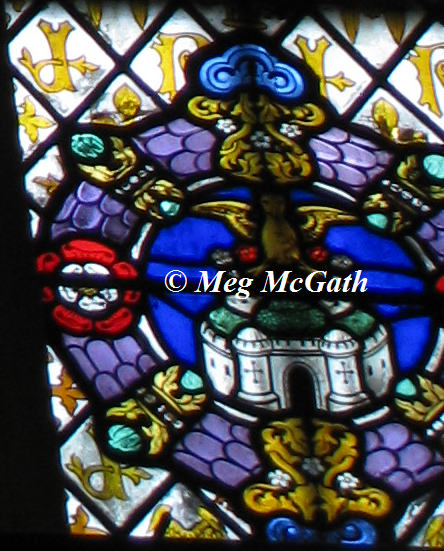
Royal emblem of Anne Boleyn as queen, the falcon.

Royal emblem of Anne Boleyn as queen, the falcon.

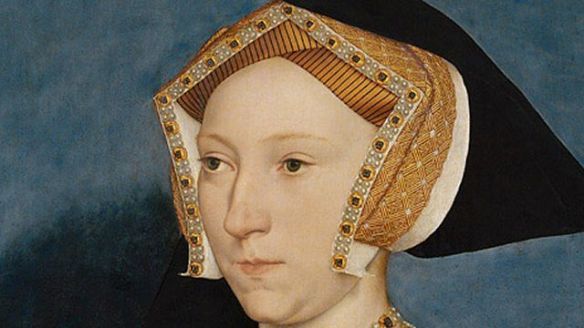
jane_seymourQueen Jane Seymour 

(1536-1537)

Bound to Serve and Obey

Jane Seymour 3rd wife of King Henry ye Eighth, her pedigree from King Edward ye First and his 1st wife Eleanor of Castile

Pedigree window of Queen Jane Seymour

Pedigree window of Queen Jane Seymour

Jane Seymour was the daughter of

Syr John Seymour
Syr John Seymour married Margaret Wentworth
Syr Henry Wentworth married Anne Say
Syr Philip Wentworth married Mary Clifford
John, Lord Clifford married Elizabeth Percy
Henry, Lord Percy married Elizabeth Mortimer
Edmond, Earl of March married Philippa of Clarence
Lionel, Duke of Clarence married Elizabeth Burgh
King Edward ye Third [of England] married Philippa of Hainault
King Edward ye Second [of England] married Isabel of France
King Edward ye First [of England] married 1st Eleanor of Castile
Royal emblem of Queen Jane Seymour, the Phoenix.

Royal emblem of Queen Jane Seymour, the Phoenix.

p02h9h78Queen Anne of Cleve 

(1540)

God Send Me Well to Keep

Anne of Cleve, 4th wife of King Henry ye Eighth, her pedigree from King Edward ye First and his 1st wife Eleanor of Castile

Pedigree window of Queen Anne of Cleves

Pedigree window of Queen Anne of Cleves

Anne of Cleve was the daughter of

 John, Duke of Cleve
John Duke of Cleve married Mary of Jüliers
John, Duke of Cleve married Maud of Hesse
John, Duke of Cleve married Elizabeth of Nevers
Adolphus of Cleves married Mary of Burgundy
John, Duke of Burgundy married Margaret of Bavaria
Philip, Duke of Burgundy married Margaret of Flanders
Lewis, Count of Flanders married Margaret of Brabant
John, Duke of Brabant married Margaret of France
John, Duke of Brabant married Margaret Plantagenet
King Edward ye first married 1st Eleanor of Castile
Anne of Cleves window emblem

Anne of Cleves Royal window emblem

otd-february-13-catherine-howard-jpgQueen Katharine Howard

(1540-1541)

No Other Will But His

Katharine Howard, 5th wife of King Henry ye Eighth, her pedigree from King Edward ye First and his 2nd wife Margaret of France

Pedigree window of Queen Katherine Howard

Pedigree window of Queen Katherine Howard

Katharine, daughter of

 Lord Edmond Howard

Lord Edmond Howard married Joyce Culpeper
Thomas, Duke of Norfolk married Elizabeth Tylney
John, Duke of Norfolk married Katharine Molyns
Syr Robert Howard married Margaret Mowbray
Thomas, Duke of Norfolk married Elizabeth Fitzalan
John, Lord Mowbray married Elizabeth Segrave
John, Lord Segrave married Margaret of Brotherton
Thomas, Earl of Norfolk married Alice Halys
King Edward ye first [of England] married 2nd Margaret of France
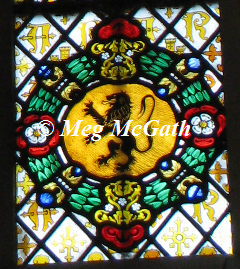
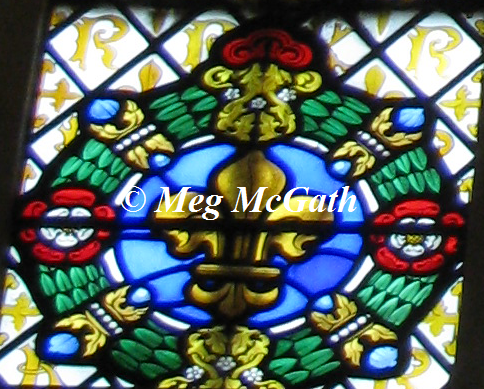
Katherine Howard window emblem

Katherine Howard’s Royal emblem was a Tudor Rose; there was no feature but this Fleur-de-Lis window emblem in her Pedigree

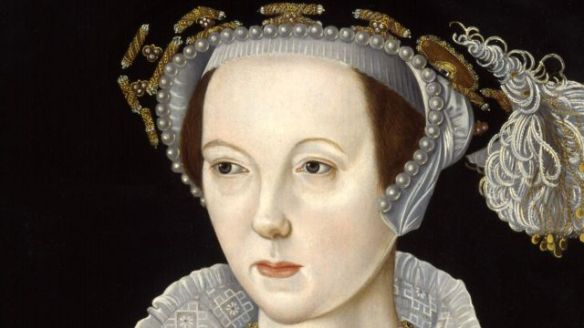
images-of-henry-viii-children-i19Queen Katherine Parr 

(1543-1547)

To be Useful in All That I Do

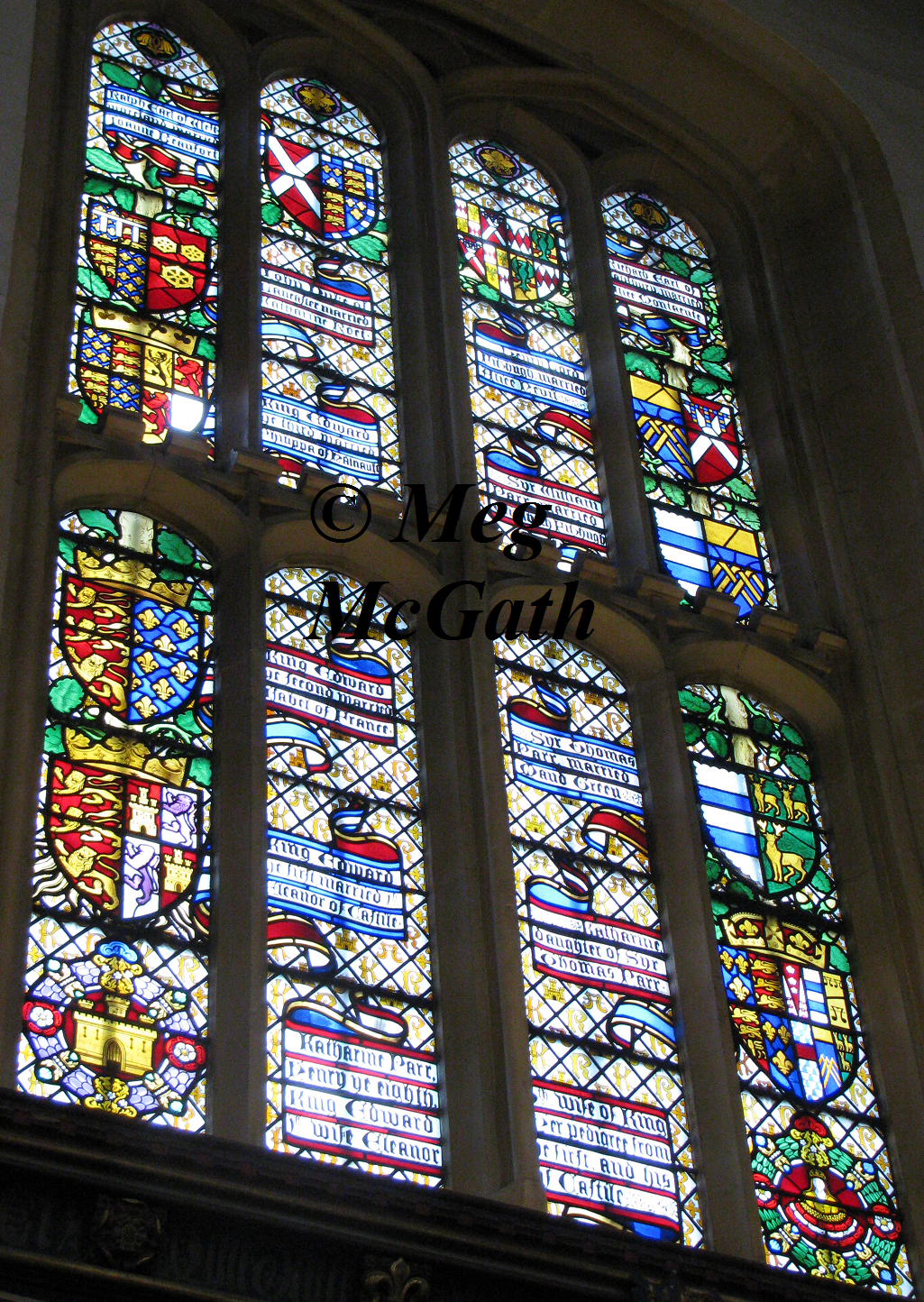
Katharine Parr, 6th wife of King Henry ye Eighth, her pedigree from King Edward ye First and his 1st wife Eleanor of Castile

Pedigree window of Queen Katherine Parr

Pedigree window of Queen Katherine Parr

Katharine daughter of

Syr Thomas Parr
Syr Thomas married Maud Green
Syr William Parr married Elizabeth FitzHugh
Henry, Lord FitzHugh married Alice Nevil
Richard, Earl of Salisbury married Alice Montacute
Ralph, Earl of Westmorland married Joanne Beaufort
John, Duke of Lancaster married Katharine de Roet
King Edward ye Third [of England] married Philippa of Hainault
King Edward ye Second [of England] married Isabel of France
King Edward ye First [of England] married 1st to Eleanor of Castile
Royal emblem of Queen Katherine Parr, maidenhead of the Lord Parrs of Kendal

Royal emblem of Queen Katherine Parr, maidenhead of the Lord Parrs of Kendal (taken from the de Ros Family)

STARZ ‘The White Queen’: The Kingmaker’s Daughters

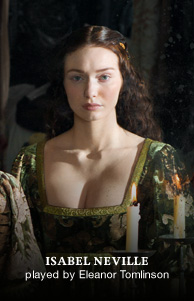
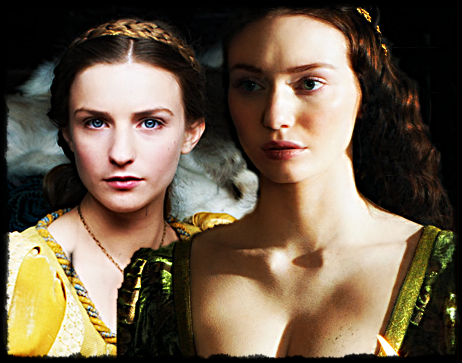
Lady Isabel (Eleanor Tomlinson) and Lady Anne (Faye Marsay); daughters of Lord and Lady Warwick.

Lady Isabel (Eleanor Tomlinson) and Lady Anne (Faye Marsay); daughters of Lord and Lady Warwick.

Lady to Queen

Lady Anne and Lady Isabella of Warwick

Lady Anne and Lady Isabel of Warwick [fan art by tudorquen6, episode 2]

“Daughter of Lord Warwick “The Kingmaker” (James Frain). Anne is a timid girl who becomes a pawn in her unruly father’s struggle for power. As little girls, Anne and her sister Isabel (Eleanor Tomlinson) pretend to be Queen and dream of the royal life along with the finery it will bring. But as Anne grows older, she begins to understand the reality and danger associated with actually wearing the crown. Those who possess it must always watch their back for those trying to take it. And those who want their hands on it will lie, cheat and kill to make it happen. Anne is not sure if constantly living in fear is the life she wants to lead.” — STARZ1yorks

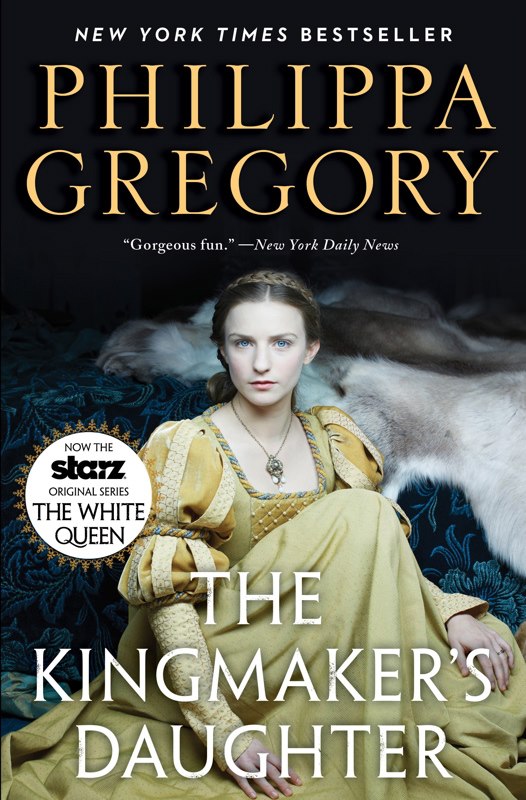
The Kingmaker’s Daughter is the gripping story of the daughters of the man known as the “Kingmaker,” Richard Neville, Earl of Warwick: the most powerful magnate in fifteenth-century England. Without a son and heir, he uses his daughters Anne and Isabel as pawns in his political games, and they grow up to be influential players in their own right. In this novel, her first sister story since The Other Boleyn Girl, Philippa Gregory explores the lives of two fascinating young women.

Lady Anne (Faye Marsay)

Lady Anne (Faye Marsay)

At the court of Edward IV and his beautiful queen, Elizabeth Woodville, Anne grows from a delightful child to become ever more fearful and desperate when her father makes war on his former friends. Married at age fourteen, she is soon left widowed and fatherless, her mother in sanctuary and her sister married to the enemy.

Lady Isabel (Eleanor Tomlinson)

Lady Isabel (Eleanor Tomlinson)

Anne manages her own escape by marrying Richard, Duke of Gloucester, but her choice will set her on a collision course with the overwhelming power of the royal family and will cost the lives of those she loves most in the world, including her precious only son, Prince Edward. Ultimately, the kingmaker’s daughter will achieve her father’s greatest ambition. (Gregory)

Sir Richard Neville, 16th Earl of Warwick and 6th Earl of Salisbury portrayed by James Frain

Sir Richard Neville, 16th Earl of Warwick and 6th Earl of Salisbury portrayed by James Frain

“The master manipulator who helps King Edward IV attain the throne. As a close confidant of Edward, Lord Warwick uses his powers of persuasion and deception against all the right people to elevate his young protégé to his position atop all of England. When Elizabeth and Edward marry, the power-hungry Warwick loses his grip on the monarchy, leaving his plan to have a say in all things political lying in ruins. Incensed at losing Edward’s ear, Warwick vows to have him replaced in a series of twisted plots designed to bring him back into a position of power. If his daughters meet and marry the right suitors, Warwick could soon find himself back in the political mix.” — STARZ

Lady Warwick (Juliet Aubrey) with her daughters.

Lady Warwick (Juliet Aubrey) with her daughters, episode 4.

Lady Anne (later Queen) is portrayed by Faye Marsay and Lady Isabel (Duchess of Clarence) is portrayed by Eleanor Tomlinson.

Their mother, Lady Anne Beauchamp, 16th Countess of Warwick is portrayed by Juliet Aubrey.

Philippa Gregory's new covers to promote "The White Queen."

Philippa Gregory’s new covers to promote “The White Queen.”

Lady Anne’s titles were as followed:

  • Lady Anne of Warwick (1456-1470)
  • Princess of Wales (1470-1471) as wife to Prince Edward of Lancaster, Prince of Wales.
  • Dowager Princess of Wales (1471-1472) as widow of Prince Edward of Lancaster, Prince of Wales.
  • Duchess of Gloucester (1472-1483) as wife to Richard, Duke of Gloucester.
  • Queen consort of England (1483-1485) as wife to Richard, Duke of Gloucester, who became King Richard III in 1483.
Fan art by tudorqueen6

Fan art by tudorqueen6

Both Anne and Isabel were nieces of Lady Alice FitzHugh (born Neville) (paternal great-grandmother of Queen Katherine Parr). Parr’s grandmother, Elizabeth FitzHugh, was cousin to Lady Anne and Lady Isabel and served as a lady to Queen Anne. The two families, FitzHugh and Neville (Lord Warwick), were close due to the proximity of the two families; they lived near each other and FitzHugh was close to both the Earl of Salisbury and his son, the Earl of Warwick. Queen Anne personally appointed Elizabeth and her mother Lady Alice much like Woodville did with Parr’s maternal great-grandmother Lady Fogge. Both women were part of the coronation of King Richard and Queen Anne and received gifts from the King. However, Elizabeth’s husband (Parr’s grandfather), refused his part in the coronation and returned north where he died shortly after. I often wonder what their family thought when Edward married Woodville even though Lord William Parr rose highly under Edward IV.

This slideshow requires JavaScript.

STARZ Official Trailer

The White Queen BBC one commercial – Directors cut from Jamie Childs on Vimeo.

See also —

Starz ‘The White Queen’: Elizabeth Woodville

Starz ‘The White Queen’: Lady Margaret Beaufort

Sources

Links

Family of Queen Katherine: Anne of York, Lady Howard

Anne of York from the Canterbury window of her mother and sisters.

Anne of York from the Canterbury window of her mother and sisters.

Anne of York, Princess of England, Lady Howard (2 November 1475[1] – 23 November 1511[2]) was the fourth surviving daughter of King Edward IV of England and his queen consort Elizabeth Woodville.[1]

Up until early 2013, the wife of the eventual 3rd Duke of Norfolk, Princess Anne of York (daughter of Edward IV), was labeled incorrectly on Wikipedia as “Countess of Surrey.”

Early life

She was born in the Palace of Westminster, London. She was a younger sister of Elizabeth of York (queen consort to King Henry VII), Mary of York, Cecily of York, King Edward V, Margaret of York, and Richard of Shrewsbury, 1st Duke of York.[1] She was also an older sister of George Plantagenet, Duke of Bedford, Catherine of York and Bridget of York.

On 5 August 1480, King Edward IV signed a treaty agreement with Maximilian, Archduke of Austria (later Holy Roman Emperor).[1] According to its terms, Princess Anne was supposed to marry his eldest son Philip the Handsome (the future Duke of Burgundy and husband to Queen Juana of Castile, sister of Katherine of Aragon).[1]

Maximilian was the eldest son of Frederick III, Holy Roman Emperor and would eventually become Emperor himself in 1493. His wife and mother to Archduke Philip was Mary of Burgundy, suo jure Duchess of Burgundy who became Duchess in 1477 after the death of her father, Charles. By her paternal grandmother, Isabel of Portugal, the Duchess was a great-granddaughter of Philippa of Lancaster, daughter of Prince John of Gaunt, 1st Duke of Lancaster (son of Edward III of England) and his first wife, Blanche of Lancaster. Both relations made Maximilian a valuable ally for Edward IV. The marriage would also place Anne at the court of her aunt, Margaret of York, the Dowager Duchess of Burgundy. Having a family member of the same house (York) at court would have been a comfort and helpful; especially since Margaret was the a previous Duchess. However, the marriage treaty was repudiated after Edward’s death and was never concluded.[1]

Marriage

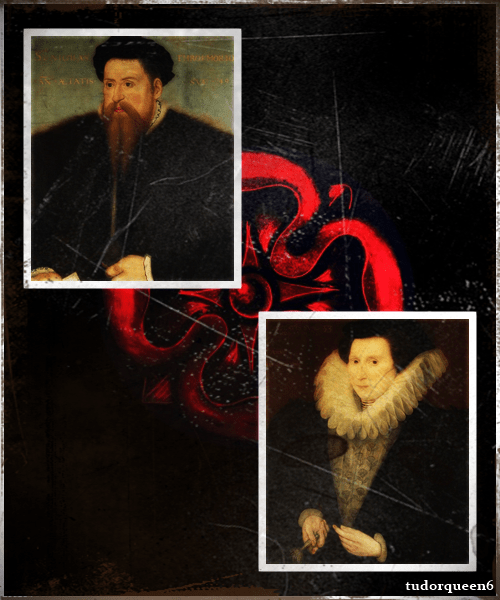
Portrait of Thomas Howard, 3rd Duke of Norfolk by Han Holbein, the Younger c. 1539-40. Royal Collection, Windsor.

Portrait of Thomas Howard as the 3rd Duke of Norfolk by Han Holbein, the Younger c. 1539-40. Royal Collection, Windsor.

As a sign of closeness between King Richard III (Anne’s uncle) and the Howard family, Princess Anne was betrothed to Thomas Howard in 1484.[1] After the overthrow of Richard III, Howard renewed his martial claim to Princess Anne and planned to marry her anyway.[1] At this time, Princess Anne was attending her sister, Elizabeth of York, who had become queen consort of King Henry VII as a lady-in-waiting.[1] The marriage of Elizabeth of York to Henry of Richmond (Tudor) ended the War of the Roses as both York and Lancaster finally came together. Elizabeth, as the eldest daughter of Edward IV, was technically the “rightful heir” to the throne of England after the death of Richard III. Her younger brothers, King Edward V and Richard of Shrewsbury, had disappeared in The Tower of London. However, being a woman was a problem. No queen would rule England in her own right until Queen Mary in 1553; a granddaughter of Elizabeth of York by her son King Henry VIII.

On 4 February 1495, Anne was married to Thomas Howard (later 3rd Duke of Norfolk) at Westminster Abbey.[1][2] Howard was the eldest son and heir of Sir Thomas Howard, 1st Earl of Surrey (later 2nd Duke of Norfolk) by his first wife, Elizabeth Tilney (the widow of Sir Humphrey Bourchier).[1][2]

Their only son known with certainty was Thomas Howard (dates unknown, but Wiki [with no source] states c. 1496 – 1508).[1][2] Richardson only states one child, Thomas, no others. The Dictionary of National Biography states however that the couple had four children who all died young.[1]

Later life and legacy
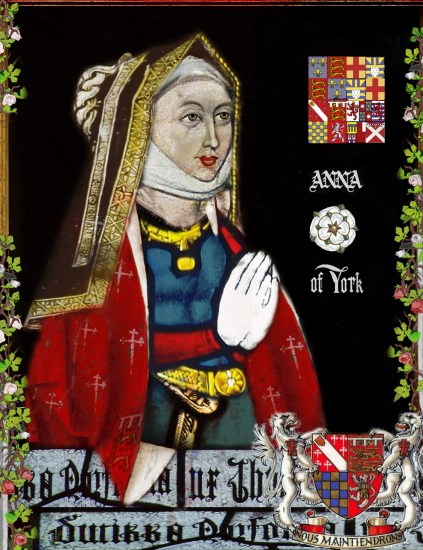
Anne of York, Lady Howard.

Anne of York, Lady Howard.

In 1486, at the lavish christening of her nephew Prince Arthur Tudor of Wales the first Tudor prince, she carried the chrisom. And in 1489, at the christening of her niece, Princess Margaret Tudor, later Queen of Scots, she again carried the chrisom during the ceremony.

On the death of her brother-in-law, King Henry VII Tudor, her nephew became king as King Henry VIII on 21 April 1509.

In 1510, King Henry VIII granted Anne and her heirs the various properties as compensation for the lands claimed in right of her great-grandmother, Lady Anne (Mortimer), Countess of Cambridge, wife of Richard, 3rd Earl of Cambridge.[1] These properties included the Castle and Manor of Wingfield and several other prominent properties.[1]

Anne died on 23 November 1511 probably from consumption and was buried at Thetford Priory.[2] After the Reformation, she was relocated, along with other Howards, to the large aisle chancel of the Church of St Michael the Archangel, Framlingham.[2]

Lord Howard, as a childless widower, later married a very reluctant Lady Elizabeth Stafford around Easter 1513. Lady Elizabeth was a daughter of Edward Stafford, 3rd Duke of Buckingham and Lady Eleanor Percy by whom he had surviving issue including the infamous Lord Henry Howard, Earl of Surrey.

Wikipedia Title Issue (2013)

2nd to 4th Duke of Norfolk by European Heraldry (1483 creation).

2nd to 4th Duke of Norfolk by European Heraldry (1483 creation).

Sir John Howard (great-grandfather of Queen Anne Boleyn and Queen Katherine Howard) was a supporter of Richard, Duke of Gloucester. Howard was created Duke of Norfolk and given his half of the Mowbray estates after Richard III’s coronation on 28 June 1483. Howard was the maternal grandson of Lord Thomas Mowbray, 1st Duke of Norfolk by his daughter Lady Margaret Howard (Mowbray). The dukedom of Norfolk had been inherited by the Mowbray family for several generations. The title would descend from the 1st Mowbray Duke of Norfolk’s eldest son, Lord John Mowbray, 2nd Duke of Norfolk [not an ancestor to the Howard Dukes of Norfolk]. The title would hold in the Mowbray family until the death of the Mowbray 2nd Duke of Norfolk’s great-great-granddaughter, Lady Anne Mowbray, suo jure 8th Countess of Norfolk (d.1481); who died without issue. Upon her death, her heirs normally would have been her cousins Sir William, Viscount Berkeley (descendant of the 2nd Duke’s sister, Lady Isabel Mowbray) and John, Lord Howard (descendant of the 2nd Duke’s other sister, Lady Margaret Mowbray), but by an act of Parliament in January 1483 the rights were given to the 8th Countess’s husband, Prince Richard of Shrewsbury [one of the Princes in The Tower], with reversion to his descendants, and, failing that, to the descendants of his father Edward IV.[3] Looking at this, it’s rather interesting to point out that with the disappearance of the Prince in the Tower [most likely death], the Howard family advanced. This may explain the Howards attachment to the Lord Protector (Richard, Duke of Gloucester, later King) who was the uncle of Edward V and the other Prince in the Tower who held the Mowbray estates and title they would be given.

Sir John Howard, son of Lady Margaret Mowbray, would become the 1st Duke of Norfolk of the Howard family.[1] After John Howard’s elevation to Duke, his son, Thomas, was created Earl of Surrey on 28 June 1483.[2] The titles were forfeited and attained after the Battle of Bosworth field (22 August 1485). The “2nd Duke” (grandfather to Queen Anne Boleyn and Queen Katherine Howard) was restored as Earl of Surrey in 1489; and was created (or restored as) Duke of Norfolk in 1514 (2nd Duke of the Howard creation), and resigned the Earldom of Surrey to his son (also named Thomas) on the same day. This Thomas Howard (later 3rd Duke of Norfolk) married to Princess Anne of York, daughter of King Edward IV on 4 February 1495. The couple had been betrothed since 1484 when the Howard family rose in favor with King Richard. Even after the death of King Richard, Howard went on to marry Anne. At the time of their marriage, Howard, however, had no titles and wasn’t even knighted (knt. 1497) which was very unusual for a marriage to a Princess. As Princess of England, Anne had been previously contracted to marry Philip “the handsome”, future Duke of Burgundy (a proper marriage for a Princess in that period of time). On the death of her father in 1483, the marriage however, never took place.[see note 1] Therefore, Anne who died in 1511, was never Countess of Surrey, but technically Lady Anne Howard (more informal: Anne of York, Lady Howard).[1]

Parr Relations

For those of you wondering how on earth Anne of York relates to Queen Katherine Parr — she does; by both parents.

  • Sir Thomas Parr, Lord Parr of Kendal’s closest connection was a 2nd cousin.
  • Lady Maud Parr (Green) was a 2nd cousin of Anne of York.

References

  1. Sidney Lee. “Dictionary of national biography: Howard, Anne,” Volume XXVIII: From HOWARD to INGLETHORP, Macmillan, Smith, Elder & Co. in New York, London, 1891. pg 64-67. Open Library
  2. Douglas Richardson. Plantagenet Ancestry: A Study In Colonial And Medieval Families, 2nd Edition, 2011. pg 273-78.
  3. Charles Ross. “Edward IV,” (second ed.) New Haven: Yale University Press. 1997.
  4. European Heraldry. “House of Howard.”

Notes

  1. Philip of Burgundy would go on to marry Queen Juana I of Castile, daughter of Queen Isabel I of Castile. Queen Juana was sister to Katherine of Aragon, wife to Lady Howard’s nephews by her sister Queen consort Elizabeth of York; Arthur, Prince of Wales (thus Princess of Wales from 1501-1502) and queen consort to King Henry VIII (previously Duke of York) (thus Queen consort of England from 1509-1533).

Researched by Meg McGath
© 15 APRIL 2013

Helena the Red

Helena, wife to Sir William Parr, 1st Marquess of Northampton, etc. would have been the sister-in-law of Queen Katherine Parr. The couple had no children. Helena caught the eye of Northampton when she arrived as a lady to Princess Cecilia of Sweden. When the Princess left England, Helena decided to stay. She caught the eye of Northampton and the queen stepped in to help the couple by giving Helena quarters at Hampton Court Palace. The couple was married a few months before Northampton’s death; the queen attended. Helena, who was allowed to hold on to her title of “Marchioness of Northampton” would re-marry and have issue. She became one of the top ladies of Elizabeth I and was considered the highest lady at court under the queen’s cousin, Lady Margaret Douglas (grandmother of James I of England).

'The Master of the Countess of Warwick', ‘Portrait of a lady, aged 21, possibly Helena Snakenborg’, dated 1569.

‘The Master of the Countess of Warwick’, ‘Portrait of a lady, aged 21, possibly Helena Snakenborg’, dated 1569.

For more info on the Marchioness see: 16 APRIL 1635: THE DEATH of the Marchioness of Northampton

historywitch's avatarHistory Witch

LadyHelenaGorges

I love red-heads.

Elin Ulfsdotter Snakenborg, Marchioness of Northampton (hell of a last name) was the Maid of Honour to Queen Elizabeth I of England. She was born in Sweden in 1548 and lived to be 86 years old. At the time of her death, she had 92 direct descendants. Wow.

One of the many titles she carried (and the one I find most interesting) was “Chief Mourner” in the funeral procession for Queen Elizabeth.

View original post

Family of Queen Katherine: Bess Throckmorton, Lady Raleigh


Abbie Cornish as Bess; lady to Elizabeth I in “Elizabeth: The Golden Age” (2007)

16 APRIL 1565: The BIRTH of Elizabeth “Bess” Throckmorton, Lady Raleigh (16 April 1565 – 1647) was a lady-in-waiting to Elizabeth I. Bess is said to have been intelligent, forthright, passionate and courageous. Elizabeth Throckmorton would have been a striking person in any age, including our own. She stands alongside Bess of Hardwick, a contemporary, and Lady Anne Clifford, a little later, as an example of the woman who overcomes all the considerable odds stacked against her.

I envy you Bess. You’re free to have what I can’t have.”
Elizabeth: The Golden Age (2007)

Family History at Court

Elizabeth’s family had deep rooted connections at court that started centuries before her birth. Elizabeth was the youngest child and only daughter of Sir Nicholas Throckmorton and his wife Anne Carew. Nicholas was the son of Sir George of Coughton Court and Katherine Vaux. The Throckmortons had been at court since the early reign of King Henry IV. Elizabeth’s great-great-grandfather, Sir Thomas Throckmorton, was High Sheriff of Warwick and Leicester counties during Henry’s reign. Nicholas’s mother, Katherine, just happened to be the uterine sister of Sir Thomas Parr, father of the future Queen Katherine. A uterine sibling meant that Sir Thomas and Lady Throckmorton shared the same mother, Elizabeth FitzHugh. Elizabeth was a daughter of Henry, Lord FitzHugh and Lady Alice [born Neville]. As the daughter of a Neville, there is no need to explain the Neville connections to the crown. I will simply note that they were descended from the Beaufort children of Prince John of Gaunt, 1st Duke of Lancaster and his third wife, Katherine Swynford. Elizabeth FitzHugh was at court as Lady Parr until her husband died in 1483. Sir William Parr was a staunch supporter of the House of York and had been a close confidant of King Edward IV. However, once the Duke of Gloucester took the throne as Richard III, Parr declined any involvement in Richard’s coronation and reign. Lord Parr headed north where he died shortly after. His widow, Elizabeth, would marry again sometime before or shortly after Henry Tudor took the throne as King Henry VII. The new husband was a staunch Lancastrian. Nicholas Vaux’s mother had served Margaret of Anjou. Nicholas was a protege of Lady Margaret Beaufort, mother of the new King. And this, my friends, was how it was played at court. Alignment with the right people and monarch on the throne made life comfortable for everyone involved. Elizabeth, now Lady Vaux, had three daughters by her second husband, Nicholas [later Baron Vaux of Harrowden].

Family

Elizabeth Throckmorton’s father, Lord Nicholas, later a diplomat, served in the household of Henry Fitzroy, Duke of Richmond as a page. The position is thought to have been attained by his uncle, Sir William Parr [later Baron Parr of Horton], in 1532. Sir William had been appointed Chamberlain of the household of the illegitimate son of King Henry VIII. Nicholas’s cousin, also named William, was present in Richmond’s household as a companion. William learned and played alongside Richmond and another companion, the Earl of Surrey [Henry Howard]. Nicholas ventured with Fitzroy as he traveled to France to meet King Francis. He stayed on for about a year and became somewhat fluent in French. After Fitzroy’s death in 1536, Nicholas’s options were somewhat limited. His mother, Katherine, used her influence as an aunt to obtain him a position in the household of his cousin, Lord William Parr [created Earl of Essex in December 1543]. In July 1543, his cousin Katherine Parr, was married to King Henry VIII as his sixth queen. By 1544-47 or 8, Nicholas had been appointed to the Queen’s household as a sewer. Nicholas would go on to serve under the rest of the Tudor monarchs; Edward VI, Mary I, and Elizabeth I.

throckmorton_nicholas_anne

Nicholas Throckmorton and his wife, Anne Carew.

Elizabeth’s mother, Anne Carew, was the daughter of Sir Nicholas Carew and Elizabeth Bryan. Lady Bryan married Sir Thomas Bryan and was governess to all three of Henry VIII’s children at one point in time. Lady Bryan was the daughter of Elizabeth Tilney by her first marriage to Sir Humphrey Bourchier. By her mother’s second marriage to Thomas Howard, Earl of Surrey [later Duke of Norfolk], Lady Bryan was an aunt of Queen Anne Boleyn and Queen Katherine Howard. Anne Carew’s father, Nicholas, was a grandson of Eleanor Hoo. Eleanor was sister to Sir Thomas Boleyn’s [father of Queen Anne Boleyn] grandmother, Anne Hoo. Courtiers, by this time, had started to close the gap between the affinity to each other, meaning most of the court was related to each other. One way or another.

Life

Elizabeth was only six when her father died. In 1584, she went to court and became a lady-in-waiting to the Queen. She eventually became a gentlewoman of the Privy Chamber (she dressed and undressed Elizabeth).

Sir Walter Raleigh before Queen Elizabeth

Sir Walter Raleigh was in favour with Queen Elizabeth until he fell in love with the daughter of Sir Nicholas Throckmorton. Look AND Learn History Picture Library.

In 1590, she caught the eye of Sir Walter Raleigh, a rising royal favorite. In November 1591, the couple secretly wed after Elizabeth discovered she was pregnant. For months, Elizabeth kept her secret from the queen and withdrew to her brother’s house in London, where she gave birth to a son in March 1592. The queen came to discover what had happened and both Elizabeth and Raleigh were thrown in to The Tower of London.

In December 1592, after Elizabeth had lost her child, the two were released, but Raleigh was refused to be seen by the queen for a year and the queen never forgave Lady Raleigh. In 1601, an attempt to restore her at court failed. Lady Raleigh spent most of her time at Sherborne, their country home in Dorset. In 1593, Lady Raleigh gave birth to another son named Walter at Sherborne. Lady Raleigh did come and go between London, but much of the 1590s saw husband and wife separated from each other.

Sir Walter Raleigh lead an exhibition to the Orinoco basin to South America in 1595; while in 1596, Raleigh was made a leader of the Cadiz Raid.

After the ascension of James I in 1603, Raleigh’s enemies at court convinced King James that he was a threat and Raleigh was imprisoned again in the Tower.

In 1605, Lady Raleigh gave birth to another son named Carew either in or around the Tower. In 1609, the King confiscated Sherborne and Lady Raleigh was given a small pension to live off of.

Lady Raleigh lived with her husband  until 1610.  Despite her many appeals, her husband was executed on 29 October 1618. Lady Raleigh ended up keeping her husband’s head which she had embalmed. It is said that she carried the head with her until her own death. Whether that’s true, who knows!

Bess would go on to rebuild her life after the death of her husband. She was perused by creditors for the rest of her life but in time came to clear her family’s name. She earned back her fortunes and prospects and ended up a rich widow in time. Bess became good friend to John Donne and Ben Jonson [the play write], and mother of an MP.

MEDIA

Elizabeth “Bess” Throckmorton portrayals through out the years in film.

  • The Virgin Queen (1955): Sir Walter Raleigh gains audience with Queen Elizabeth I seeking her support – and money for ships to sail – but soon finds himself caught between the Queen’s desire for him and his love for Beth Throgmorton (Joan Collins). Ben Nye was makeup artist.
  • Elizabeth: The Golden Age (2007): This sequel to Elizabeth deals with Elizabeth’s handling of the Spanish Armada, and the problem of Mary Queen of Scots, while infatuated with sir Walter Raleigh. The Armada is dealt with in short order, Mary with much anguish but thanks to Bess Throckmorton (Abbie Cornish) Raleigh slips from her grasp. Jenny Shircore was hair & makeup designer.
  • The Simpsons (2009): The plot of this one was basically The Simpsons’ take on “Elizabeth: The Golden Age” with Selma as Elizabeth I, Homer as Sir Walter Raleigh, and Marge as Bess Throckmorton. (Eakins)

FURTHER READING

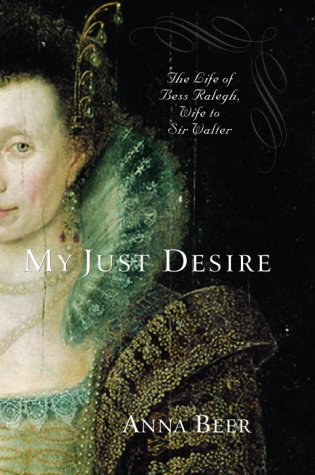
"My Just Desire: The Life of Bess Raleigh, Wife to Sir Walter"

My Just Desire: The Life of Bess Raleigh, Wife to Sir Walter” by Anna Beer.

Sources

Family of Queen Katherine: THE FUNERAL of William Herbert, 1st Earl of Pembroke

Old St. Paul's before the fire of 1666. Old St. Paul’s before 1561. (Benham)

18 APRIL 1570: THE FUNERAL of Sir William Herbert, 1st Earl of Pembroke took place at Old St. Paul’s Cathedral in London. Pembroke had been the husband of Lady Anne (Parr), sister of the late Queen Katherine and the Marquess of Northampton.

Lord Pembroke died on 17 March 1570 at Hampton Court Palace. William was eldest son of Sir Richard Herbert of Ewyas, Herefordshire, by his wife Margaret, daughter of Sir Matthew Cradock of Swansea. Pembroke’s father, Sir Richard, was an illegitimate son of the original Herbert first creation of the Earldom, William Herbert, 1st Earl of Pembroke (d. 1469), by a mistress, Maud, daughter of Adam ap Howell Graunt. He married firstly to Anne Parr in 1538 and after her death, Lady Anne Talbot, daughter of the Earl of Shrewsbury. Parr gave Pembroke an heir (the 2nd Earl), an heir to spare (ancestor to the Earls of Powis), and a daughter (no issue). Talbot had no issue by Pembroke.

In his will, Pembroke listed two possible burial places; Old Saint Paul’s or Canterbury Cathedral. If he died near London, his wishes were to be buried in St. Paul’s Cathedral next to his first wife, Lady Anne (Parr). Pembroke obviously loved his wife for when he wrote his will, despite being married again, he wanted nothing more than to be buried “near the place where Anne my late wife doth lie buried” in St. Paul’s.

On Tuesday, 18 April 1570, Pembroke was buried with great state and ceremony in Old St. Paul’s Cathedral. His funeral was attended by all the principle members of the Government, as well as all the numerous officers of his household. A full list is provided in “Wiltshire Archaeological and Natural History Society,” 1879. The list states the various positions and who attended to them.

“An ordre of Proceedinge at the funerall of the late right Honorable William Erle of Penbrooke one tuisdaye the xviijth daye of April 1570,”

Some highlights of the list:

Chief Mourner: Sir Henry Herbert, 2nd Earl of Pembroke (eldest son of Lord Pembroke).

Mourners assistants with their hoods on:

  • The Earl of Leicester
  • Edward Herbert (second son of Lord Pembroke)
  • Sir James Crofts
  • Sir William Cecil
  • Sir Walter Myldemaye
  • Sir Nicholas Throckmorton (cousin to Pembroke’s wife, Lady Anne (Parr))

Six noblemen with their rolls:

  • Lord Admiral (Edward Clinton, Lord Clinton (later Earl of Lincoln))
  • Lord Chamberlain (Lord Howard of Effingham)
  • Lord Talbot
  • Lord Cobham
  • Lord Grey of Wilton
  • Lord Buckherst

One of the three knights with their hoods on their shoulders included Sir Francis Knollys.

“The proceedinge to the offringe as heerafter folowith: First the chief mourner, his trayne borne, and all the rest of the mourners to folowe and none to offerre but he and the officers of Arms before him.

Then the chief mourner to goe upp alone, and to offerre for himself, and ther to remayne untill all the hatchements  be offred, whiche he shall receyve and delyuer to York Herauld, who shall set theim one the communion boord: then he to be brought downe agayne to his place.

Then the hatchements to be offred as folowith, and at all tymes…Herauld before them..

First my Lord Keper and The Erl of Leicester offred the Coat of Armes

Then Mr Edward Herbert and Sr James Crofte offred the sword

Then Sr William Cicill [Cecil] and Sr Walter Myldemay offred the Targe

Sr Nicholas Throckmorton [and] Mr Gerard attorney generall offred the heaulme and crest

Then the viij mourners to offerre for theime selfes as folowith ij and ij

First the Lorde Keper [and] The Erle of Leicester; Garter Kinge of Armes before them

Mr Comptroller, Mr Edward Herbert; Richemond Harauld before theim

Sr William Cicill [Cecil], Sr Walter Myldemay; Chester Harauld before theim

Sr Nicholas Throckmorton, Mr Gerard attorney generall; Richemond Harauld before theim

The the iiij assistantes York Harauld before theim

Then the noble men in blackes ioyntly togither Richemond Haruald before theim

Then the Steward Threasorer & comptroller; Chester Harauld before theim

Then the Knightes Master Coferer and Clerkes of the greene clothe and all other Esquyres and gentlemen to folowe theime ioyntly ij and ij Richemond Harauld before

Then the banner of his armes, Then the Standert; a Harauld before either of theim

Then all other gentlemen having no blackes that will offere

Then the offringe donn and a certayne collect reade all the chief mourners and noble men departed leauinge the officers and assistantes to see the body buryed . Which officers did putt  the Defunctes staff into the graue and brake eche of theim ther owne staves and cast theim into the graue with him.”

Choir in Old St. Paul's Cathedral. Choir in Old St. Paul’s Cathedral. (Benham)

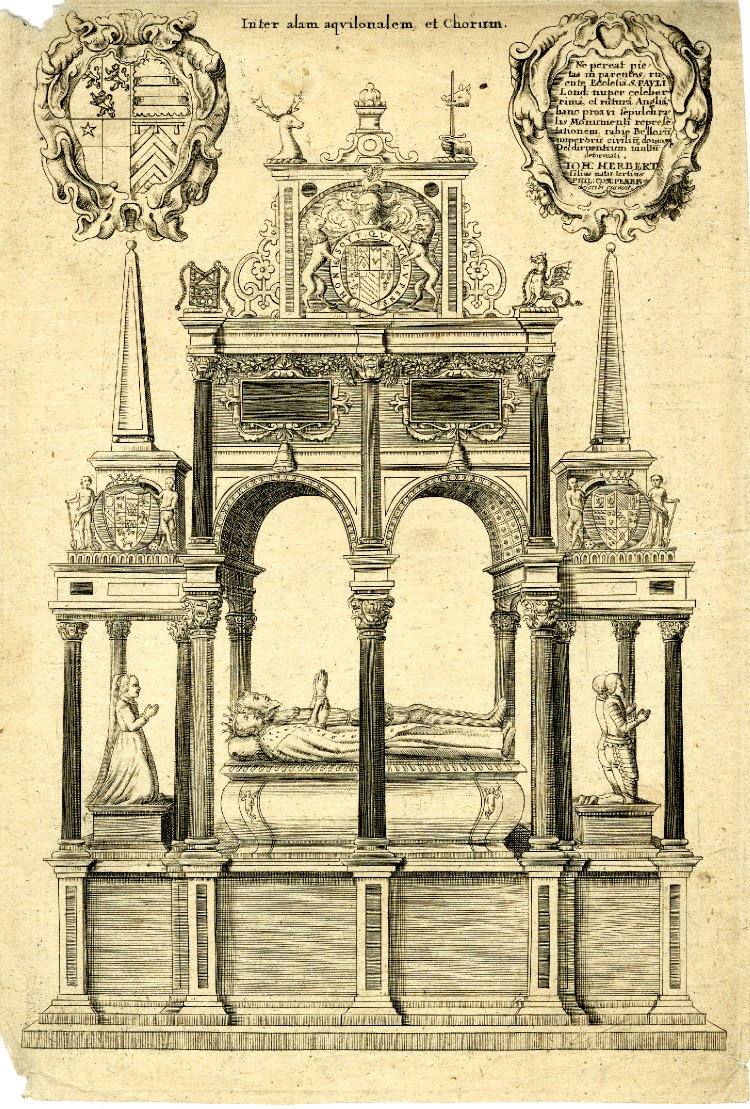
Pembroke’s tomb (along with Lady Anne Parr) was located between the choir and the North aisle. The tomb was/is by John of Gaunt and Blanche of Lancaster, between the pillars of the 6th bay of the Choir. (Benham) It was a magnificent structure consisting of effigies of the earl and his lady (Anne Parr) lying on a sarcophagus, attended by kneeling children, and the whole covered by an elaborate canopy resting on stone shafts. (Clinch)

Tomb of William, Earl of Pembroke, in St Paul's; the tomb on a tall base on which lie a man and wife, in ermine robes, heads to left; eleven columns support a double arch above and obelisk topped extensions at the sides; two cartouches at top, to the left with coat of arms and to the right with dedication by 'Ioh Herbert'; illustration to William Dugdale's 'History of St Paul's' (London, 1658 and 1716) Tomb of William, Earl of Pembroke, in St Paul’s; the tomb on a tall base on which lie a man and wife, in ermine robes, heads to left; eleven columns support a double arch above and obelisk topped extensions at the sides; two cartouches at top, to the left with coat of arms and to the right with dedication by ‘Ioh Herbert’; illustration to William Dugdale’s ‘History of St Paul’s’ (London, 1658 and 1716) Trustees of the British Museum

See also

Sources

Links

Marriage & the Nevills: Margaret Nevill & Richard Huddleston

Arms of Warwick, the Kingmaker.

Arms of Warwick, the Kingmaker.

An interesting blog on the illegitimate daughter of Lord Warwick; she would have been cousin to Elizabeth FitzHugh, grandmother of Queen Katherine. What is interesting in this post is the account of Neville’s son, named Richard; his kidnapping by Mabel Parr, Lady Dacre (great-aunt to Queen Katherine) to marry her daughter. We then find other connections between the two families as Sir John Huddleston married Lady Parr’s (Elizabeth FitzHugh) sister, Joan. Lady Huddleston’s brother-in-law, William, married a niece of Warwick, Isabel, daughter of Montacute and yet another cousin of Lady Parr.

anevillfeast's avatarA Nevill Feast

The Feast’s first ever guest post! I’m feeling almost like a real blogger.

Will Glover has contributed many interesting comments to my initial post on Margaret Nevill, Warwick’s illegitimate daughter, and has very kindly agreed to be my first guest blogger. Thanks, Will!

Margaret Nevill (c. 1440 – 1499)

What can be written about Margaret Nevill?  Was she not merely an obscure footnote in the grand volume of Warwick’s life; little more and perhaps much less than a cardboard cutout?

I first learned of Margaret from one of the Pedigrees Recorded at The Heralds’ Visitations of the Counties of Cumberland and Westmoreland made by Richard St. George, Norroy, King of Arms in 1615, and by William Dugdale, Norroy, King of Arms in 1666.  The 1615 visitation of ‘Hudleston of Millom’, found at page 44, mentioned ‘Margaret, base daughter of … Nevill, Earl of Warwick, died 14 H. VII’, who…

View original post 1,313 more words