Queen Katherine Parr: Not Important Enough?

I love how much people dismiss Queen Kateryn Parr. There may be evidence that she WAS supposed to be Regent for Edward VI. See her signature AFTER Henry died.

Credit: Elizabeth Norton

She was apparently signing as “Kateryn, the quene regente KP”. The theory goes that she was indeed made Regent for her stepson, King Edward VI. Which would make sense with the use of her signature. It is believed that Edward Seymour, Duke of Somerset, Kateryn’s brother the Marquess of Northampton, her brother-in-law the Earl of Pembroke and the council ousted her and rewrote the will. She would have made a wonderful Queen Regent. She proved she was capable of being Regent while Henry went to war with France. Perhaps she would have lived longer and prevented the succession from being rewritten. She gets credit for the placement of Princesses Mary & Elizabeth back into the line of succession behind their brother in 1545. That succession act seems to have overwritten or they disregarded King Edward’s will and supported the actual heir to the throne, Mary. Mary WAS the rightful heir. Jane was further down the approved line of succession. Why would you accept someone below the status of the actual daughters of King Edward’s father, Henry VIII? Kateryn Parr’s brother and brother in law were again involved in matters of the state and actually pulled off putting Lady Jane Grey on the throne for 9 days! Jane somehow outranked her own mother who was STILL alive and technically would have been the next heiress to the throne after Princesses Mary & Elizabeth. I never understood that. The Protestants feared the Catholic “Bloody Mary” (her nickname was started as Protestant propaganda, the pro Queen Elizabeth movement, lol) would try to return the country to the Pope and Catholicism. Mary was deeply religious. Kateryn Parr and Mary got on despite differences in matters like religion. Parr’s mother, Lady Maud, had served Mary’s own mother, Queen Katherine of Aragon, the first wife and crowned Queen consort to King Henry. The two women were pretty close. The Parrs backed Queen Katherine of Aragon when her lady in waiting became the Kings new obsession. Parr let Mary be and encouraged her every chance she could. One could argue she loved Mary more than Elizabeth. Heck, Kateryn named her only daughter and child, Mary, before the queen passed on 5 September 1548. Don’t think there were any other important Marys. The French Queen, Mary Tudor, had died long before Parr became Queen. Pretty sure it’s not after The Virgin Mary. Protestants aren’t that attached to her, right? I was raised Catholic, so I honestly don’t know. Anyway, Queen Kateryn Parr was VERY important. Read a book. She wasn’t an ex-queen. She remained Queen (consort) of England, Ireland, and France until she died. She was the LAST Tudor Queen Consort as King Edward died young. She was also the FIRST Queen of Ireland. Her funeral was the FIRST Protestant funeral for a Queen. Her mourner was none other than Lady Jane Grey, who would have probably stayed with Kateryn had the queen lived. Having Parr around seemed to pacify things. She knew how to handle tricky and dangerous situations. For Gods sake, she almost lost her head after she spoke with the King. It was overheard by the queens enemy, Bishop Gardiner, who saw an opportunity to “get rid” of Kateryn. I mean why not? He already KILLED TWO WIVES!! Lordy, so Gardiner tried to fuck with the Kings head. Saying shit like “it is a petty thing when a woman should instruct her husband” or some stupid sexist bs! Story goes, Kateryn was warned by an anonymous source who found her death warrant lying on the ground. YEAH RIGHT!! That’s straight up narcissistic abuse, my man!! Why do I feel like Henry set her up to test her loyalty? He was such a theatrical douche bag. No, no love for King Henry here. I have yet to see the film “Firebrand” which follows the reign of Kateryn as queen consort and queen Regente I believe. It’s based off Elizabeth Freemantle’s “Queen’s Gambit”. Anyway, Kateryn talked her way out of being arrested or worse by stroking the Kings ego and basically submitting to him just to fuvking survive. Imagine going through this marriage without psych meds like Benzos. I do believe they dabbled in potions however and she was known to “treat” melancholy with herbs from the gardens. Sudeley Castle where she is buried has a garden full of deadly herbs. Physic gardens. I have photos somewhere…

My page: Queen Catherine Parr

© 2024 Meg McGath. All research and original commentary belong to the author.

The Queen’s Uncle: Sir William Parr, 1st Baron Parr of Horton

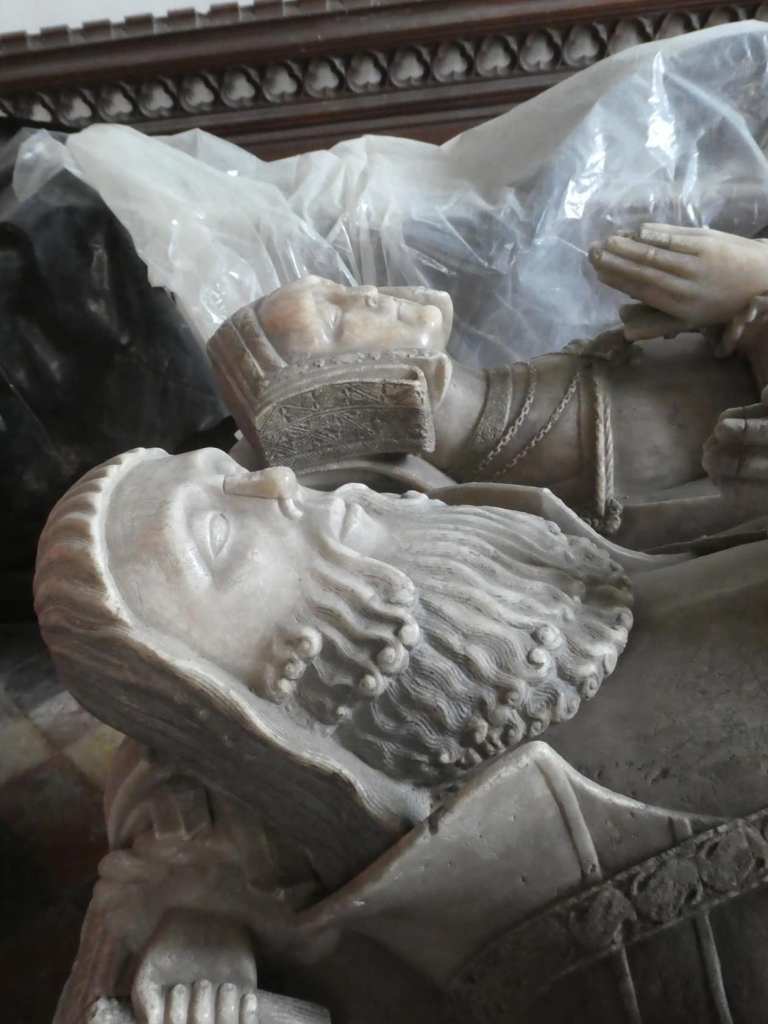
Tomb of Sir William Parr, Baron Horton & his wife, Mary. Source: Church Monuments Society

Sir William Parr, 1st Baron Parr of Horton (c. 1483 – 10 September 1546) was the son of Sir William Parr of Kendal and his wife Elizabeth Fitzhugh. His mother was a niece to Warwick, the Kingmaker and thus a cousin of Anne Neville, Duchess of Gloucester and Queen of England as the wife of Richard III. Lady Elizabeth and her mother, Lady Alice FitzHugh, rode in the coronation train for Anne when she became queen and it is believed they stayed on as ladies to the queen. Elizabeth had been in the household since Anne became Duchess.

Parr’s siblings included an elder brother, Sir Thomas Parr of Kendal (d.1517), who was father to the future queen of England, the Marquess of Northampton, and the Countess of Pembroke. Their sister Anne married Thomas Cheney (or Chenye) and was mother to Lady Elizabeth Vaux, wife of the 2nd Baron Vaux of Harrowden. The father of the 2nd Baron was Nicholas Vaux, 1st Baron. His first wife was the widowed Lady Elizabeth Parr, mother to Thomas, William, and Anne. By Elizabeth, Nicholas had 3 daughters, Lady Katherine Throckmorton, Lady Alice Sapcote, and Lady Anne le Strange.

William Parr was a military man who fought in France, where he was knighted by King Henry VIII at Tournai Cathedral, and Scotland. Parr seemed to be uncomfortable in court circles and insecure in securing relationships. None the less he accompanied the King at the ‘Field of the Cloth of Gold’ in France. Like his brother, Sir Thomas Parr, William flourished under Sir Nicholas Vaux.

William was a family man. After the death of his brother, Sir Thomas Parr, William’s sister-in-law Maud, widowed at age 25, called upon him to help in financial matters and to manage her estates in North England while she was busy in the south securing a future for her three children. William had been named one of the executors of his brother’s will. Along with Cuthbert Tunstall, a kinsman of the Parrs, Parr provided the kind of protection and father figure which was missing in the lives of Maud’s children. William’s children were educated along side Maud’s children.

Although William was en-adapt at handling his financial matters, he was ironically appointed the office of Chamberlain in the separate household of Henry FitzRoy, 1st Duke of Richmond and Somerset, the acknowledged illegitimate son of King Henry VIII and Elizabeth Blount, based at Sheriff Hutton Castle in Yorkshire. It was William who found a spot for his nephew, William Parr, later Earl of Essex, in the Duke’s household where he would be educated by the very best tutors and mixed with the sons of other prominent families. Though thought to be a wonderful environment for Parr and his nephew to flourish in, the household was not a great passport to success as Parr hoped for. Henry VIII was very fond of his illegitimate son, but had no intention of naming him his heir. It has been claimed that Parr and his sister-in-law, Maud Parr, coached William to make sure that he ingratiated himself with the Duke, in case the Duke became heir to the throne but there is no factual evidence to support this claim.

Although Parr was named Chamberlain of the Duke’s household, the household was actually controlled by Cardinal Thomas Wolsey in London. This control by Wolsey diminished any opportunity of Parr gaining financial benefit or wider influence. Along with the limited possibilities came other daily frustrations as the Duke’s tutors and the household officers under Parr disagreed on the balance of recreation and study. Parr was a countryman who thought it perfectly normal for boys to prefer hunting and sports to the boring rhetoric of learning Latin and Greek. As the Duke’s behavior became more unruly Parr and his colleagues found it quite amusing. The Duke’s tutor, John Palsgrave, who had only been employed six months, would not tolerate being undermined and decided to resign. Such was the household in which Parr presided over. Parr was suspicious of schoolmaster priests and anyone of lesser birth, even though he was not considered a nobleman at the time. The experience did not further the Parr family. If Sir William had paid more attention to his duties and responsibilities he may have reaped some sort of advancement; thus when the overmanned and over budgeted household was dissolved in the summer of 1529, Parr found himself embittered by his failure to find any personal advancement or profit from the whole ordeal.

Despite his failed attempts at achieving personal gain from the household of the Duke, Sir William made up for it during the Pilgrimage of Grace during 1536. William showed impeccable loyalty to the Crown during the rebellion. He had been in Lincolnshire along with Charles Brandon, 1st Duke of Suffolk and supervised the executions at Louth and Horncastle. William tried to ingratiate himself with Thomas Howard, 3rd Duke of Norfolk and Thomas Cromwell, 1st Earl of Essex. Parr’s presence at the execution in Hull of Sir Robert Constable prompted Cromwell to share in confidence a correspondence in which he received from the Duke of Norfolk on William’s “goodness” which “never proved the like in any friend before.”

Sir William was Sheriff of Northamptonshire in 1518 and 1522. He was also Esquire to the Body to Henry VII and Henry VIII. In addition to this, he was a third cousin to King Henry VIII through his mother. William was appointed Chamberlain to his niece Katherine Parr and when she became Queen regent during Henry’s time in France, Catherine appointed William part of her council. Although he was too ill to attend meetings, the appointment shows her confidence in her uncle.

Parr was knighted by King Henry VIII on Christmas Day, 1513. He was made a peer of the realm as 1st Baron Parr of Horton on 23 December 1543. Upon his death in 1546, with no male heirs, the barony became extinct.

He married Mary Salisbury, the daughter and co-heir of Sir William Salisbury; who brought as her dowry the manor of Horton. It was a happy marriage which produced four daughters who survived infancy:

* Maud (Magdalen) Parr, who married Sir Ralph Lane of Orlingbury. One of their children was Sir Ralph Lane, the explorer. Maud grew up with her cousin Katherine Parr, who would later become the last queen of Henry VIII. Maud would become a lifelong friend and confidante of the queen.
* Anne Parr, who married Sir John Digby.
* Elizabeth Parr, who married Sir Nicholas Woodhall.
* Mary Parr, who married Sir Thomas Tresham I.

He is buried at Horton, Northamptonshire where the family estate was.

Lady Maud Lane and Lady Mary Tresham are ancestors to the Prince of Wales and the Duke of Sussex through their late mother, the Princess of Wales.

Ever wonder why SOME sources mix up Anne and Mary?

References

‘Parishes: Horton’, A History of the County of Northampton: Volume 4 (1937), pp. 259-262. URL: http://www.british-history.ac.uk/report.aspx?compid=66363&strquery=SirWilliamParr Date accessed: 19 October 2010.

Burke, A general and heraldic dictionary of the peerages of England, Ireland, and Scotland, extinct, dormant, and in abeyance, pg. 411

Porter, Linda. Katherine, the Queen: The Remarkable Life of Katherine Parr, the Last Wife of Henry VIII. Macmillan, 2010.

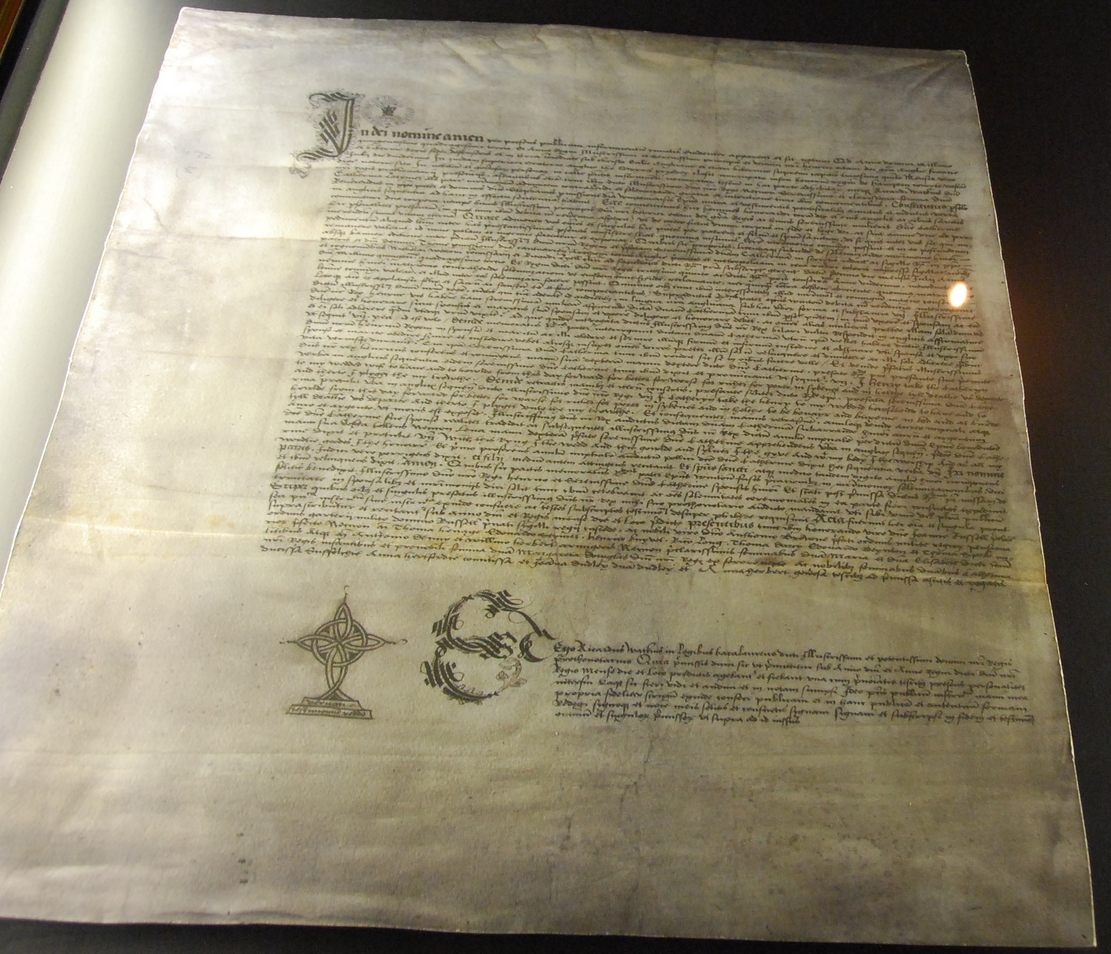
10 JULY 1543: Archbishop Cranmer’s License for the Marriage of Henry & Kateryn

Marriage Certificate

The actual Marriage Certificate of King Henry VIII and Kateryn Parr. The certificate was on display in 2012 at Hampton Court Palace where they were married on 12 July 1543.

ARCHBISHOP THOMAS CRANMER’S LICENSE FOR THE MARRIAGE OF KING HENRY VIII AND KATHERINE PARR LATIMER, INCLUDING DISPENSATION OF THE REQUIRED PROCLAMATION OF BANNS, JULY, 10, 1543

To the most excellent and most invincible prince on a throne, and our supreme lord Henry VIII, by the Grace of God King of England, France, and Ireland, Defender of the Faith, and on earth Supreme Head, under Christ, of the Churches of England and Ireland: Thomas, by divine compassion Archbishop of Canterbury, Primate of all England, and Metropolitan, dully and lawfully invested therein by the subscribed authority of the Parliament of England:

Health and perpetual happiness, with honor.

Since by your most excellent royal majesty it has been considered worthy to lead into matrimony the noble and distinguished woman Lady Katherine Latimer, lately the wife of the distinguished and powerful man, Lord Latimer, during his natural life, now deceased, she being favored by the most good and most great God and by your initiatives:

Therefore, that marriage between your most excellent kingly majesty and the said noblewoman, Lady Katherine, in whatever Church, chapel, or oratory or wherever else your kingly majesty may wish to choose, without any proclamation of banns, may be solemnized by any bishop or priest whatsoever; and that you may exempt from actual constraints,

We and our soul, moved in this regard duly and legitimately by the honor of your estate and concerned for the benefit of the whole realm of England, with the authority established by these presents, do dispense with constitutions and ordinances propounded to the contrary, nothing whatsoever standing in the way.

Given at our manor of Lambeth, under our seal for enactments, the tenth day of the month of July, the year of our Lord one thousand five hundred forty-three; and of your majesty’s most happy and most illustrious reign, the thirty-fifth; and of our consecration, the eleventh year.

[Witnessed by]

Nicholas Wotton, Comissioner

Richard Lyell, Clerk for enactments by the said very Reverend [Lord Archbishop]

Source: Kew, Surrey: The National Archives, E 30/1472(6). A formulaic Latin writ in the engrossing hand of Richard Lyell, Cranmer’s clerk for enactments, sealed with the archbishop’s outsized seal.

  • From Katherine Parr: Complete Works & Correspondences, edited by Janel Mueller.