Family of Queen Katherine: Elizabeth FitzHugh, Lady Parr and Vaux

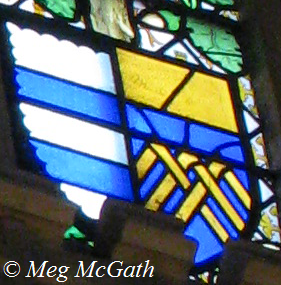
Impaled arms of Parr and FitzHugh, Hampton Court Palace Pedigree window of Katherine Parr.

Impaled arms of Parr and FitzHugh, Hampton Court Palace Pedigree window of Katherine Parr.

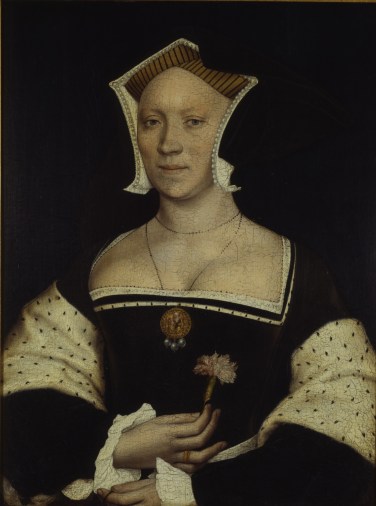
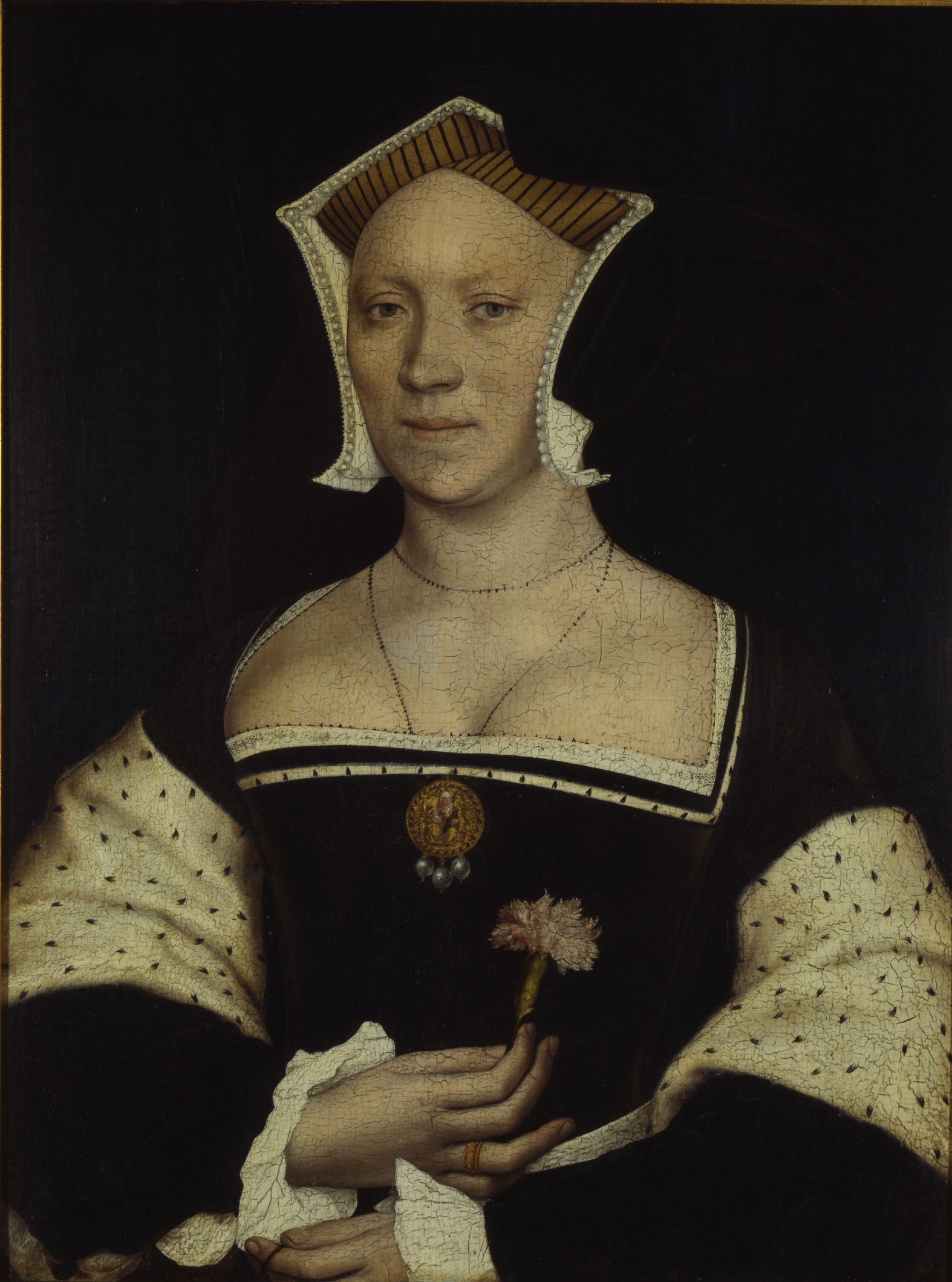
Hon. Elizabeth FitzHugh Lady Parr of Kendal and Lady Vaux of Harrowden (1455/65 – 29 January 1508) was an English noblewoman and the co-heiress to her father, Hon. Sir Henry FitzHugh, 5th Baron FitzHugh of Ravensworth. Lady Parr is best known for being the grandmother of the sixth queen of Henry VIII, Katherine Parr and her siblings Lady Anne Herbert, Countess of Pembroke and William Parr, 1st Marquess of Northampton.

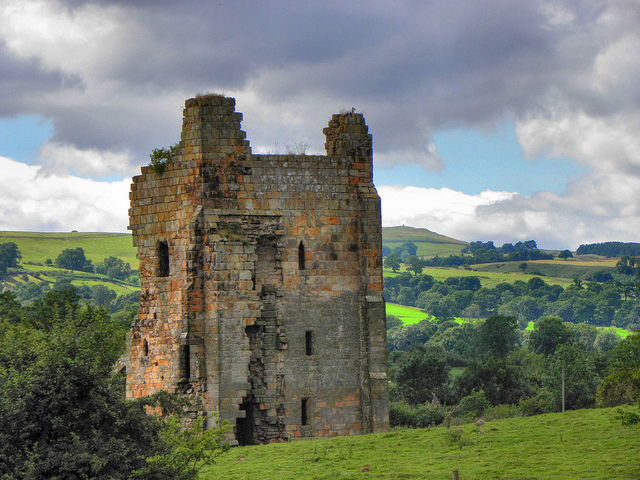
Ravensworth Castle, ancestral home to the Barons FitzHugh

Ravensworth Castle, ancestral home to the Barons FitzHugh

Elizabeth FitzHugh was born at her family’s ancestral home, Ravensworth Castle, in North Yorkshire, England. She was the daughter of Sir Henry FitzHugh, 5th Baron Fitzhugh of Ravensworth Castle. Her family was of the Northern gentry. Lady Parr’s mother was born Lady Alice Neville, daughter of Sir Richard Neville, 5th Earl of Salisbury and Lady Alice Montacute, suo jure 5th Countess of Salisbury, only daughter and heiress of Sir Thomas Montague, 4th Earl of Salisbury and Lady Eleanor Holland. Her paternal grandparents were Sir William FitzHugh, 4th Baron Fitzhugh of Ravensworth and Marjory Willoughby, daughter of Sir William Willoughby, 5th Baron Willoughby de Eresby and his first wife, Lucy Le Strange. Through her mother Lady FitzHugh, Lady Parr descended from Edward III by his son Prince John of Gaunt, 1st Duke of Lancaster and Titular King of Castile. Lady FitzHugh was sister to Sir Richard Neville, 16th Earl of Warwick (“Warwick, the Kingmaker”). Her paternal aunts included Lady Cecily, Duchess of York making her a cousin to King Edward IV, Richard III, and his siblings. Elizabeth had nine siblings[1], including Alice FitzHugh, Lady Fiennes and Henry, 6th Baron FitzHugh who married Elizabeth Burgh, daughter of Sir Thomas Burgh, 1st Baron Burgh of Gainsborough. Their son George, the 7th Lord FitzHugh, inherited the barony but after his death in 1513, the barony fell in abeyance between Lady Parr and her older sister Alice, Lady Fiennes. This abeyance continues today between the two families.[2]

The current co-heirs to the barony are:

  • Hon. Emily Douglas-Home, suo jure 29th Baroness Dacre (b. 1983)
  • Hon. Tessa Ogilvie Thompson née Brand (b. 1934)
  • Francis Brand, 7th Viscount Hampden (b. 1970)
  • William Herbert, 18th Earl of Pembroke (b. 1978), a descendant of Lady Anne [Parr], Countess of Pembroke

Lancaster_vs_York

Life

Elizabeth FitzHugh had an easy-going and pleasure-loving disposition. As Lady Parr, she joined the household of her cousin, the Duchess of Gloucester.[7] The Duchess of Gloucester was born Lady Anne Neville, the youngest daughter of Sir Richard Neville, 16th Earl of Warwick (“Warwick, the Kingmaker”) and Lady Anne Beauchamp. Lady Parr was close to her cousin which showed in her positions under Anne as Duchess and Queen consort. Because of the family connections, Elizabeth’s mother, Lady FitzHugh pressured Lady Parr’s husband, Lord Parr, to follow the rule of the Duke of Gloucester (later King Richard III) while he was serving as Lord Protector of the Realm. When the Duchess became queen in 1483, Lady Parr was appointed by the Queen herself and served as lady-in-waiting. Lady Parr and her mother were both present at the coronation on 6 July 1483. Both were dressed in fine dresses made by cloth that the King himself had given them. Elizabeth received seven yards of gold and silk; her mother received material for two gowns, one of blue velvet and crimson satin as well as one of crimson and velvet with white damask. It is not known which gown Elizabeth wore as she rode behind Queen Anne; but she was one of the seven noble ladies given this honour. Her husband who had been deeply devoted to Edward IV declined his role in the coronation and headed north where he died shortly after.[8]

After her husband Sir William Parr died in 1483, Elizabeth, who was twenty three at the time, was left with four small children. As a widow, Elizabeth’s life revolved around the court. Elizabeth would be second in a four generation span of family that would serve England’s queens which started in 1483 with her mother, the redoubtable Alice Neville, Lady Fitzhugh. Her granddaughter, Anne Parr would continue the tradition by becoming lady-in-waiting to all six of Henry VIII’s wives. Even Anne’s sister, Catherine Parr, who would later become queen served in the household of the Lady Mary until she caught the eye of King Henry.[3]
Elizabeth was lucky enough to remarry. After the overthrow of Richard III and The House of York, Elizabeth made a dubious second marriage with a protege of Lady Margaret Beaufort, Sir Nicholas Vaux, the future 1st Baron Vaux of Harrowden, which saved the family fortunes.[3]

Marriages and Issue

FitzHugh was married twice. She married firstly, at the age of 12, Sir William Parr (d.1483), a man twenty eight years her senior. William was a Knight of the Garter, among other high positions at court, who was held high in favour with King Edward IV; who by marriage to Elizabeth became a cousin. He fought as a Yorkist on the side of the Neville’s at Banbury. The couple did not produce their first child until Elizabeth was sixteen years of age. Lord and Lady Parr had three sons and two daughters:
  1.  Anne Parr, Lady Cheney (AFT 1475–4 November 1513), who married Sir Thomas Cheney of Irthlingborough. Their daughter Elizabeth, would go on to marry the son of Nicholas Vaux, 1st Baron Vaux of Harrowden (Elizabeth FitzHugh’s second husband) by his second marriage to Anne Green; maternal aunt to Katherine Parr. When Elizabeth Cheney married Lord Vaux, she was age 18 and he was age 14. While there were no blood relations,  Lord Vaux’s father had issue by his marriage to his first wife (see below); thus making Hon. Katherine, Hon. Alice, and Hon. Anne Vaux her maternal aunts. Through these relations, Elizabeth Cheney and her husband, the 2nd Lord Vaux, would have Throckmorton cousins in common.[4]
    Elizabeth, Lady Vaux of Harrowden, wife to the 2nd Baron Vaux.

    Elizabeth Cheney (or Cheyne), Lady Vaux of Harrowden; daughter of Anne Parr and Sir Thomas Cheney.

    Elizabeth was originally drawn by Holbein c.1536. For more on the original drawing and copies of paintings, see: The OTHER Elizabeth Cheney

  2. Sir Thomas Parr, Lord of Kendal (AFT 1475–11 November 1517), who was the eldest son, was knighted and was sheriff of Northamptonshire in 1509; he was master of the wards and comptroller to Henry VIII. He was rich, owing to his succeeding, in 1512, to half the estates of his cousin, Lord FitzHugh, and also to his marriage with Maud Green, daughter and coheiress of Sir Thomas Green of Boughton and Greens Norton in Northamptonshire. He died on 12 November 1518, and was buried in Blackfriars Church, London. His widow died on 1 September 1532, and was buried beside him. Of their children, Katherine Parr, queen of Henry VIII, and William Parr (afterwards Marquess of Northampton), are separately noticed; while a daughter, Anne, married William Herbert, 1st Earl of Pembroke of the tenth creation. The couple also had two other children who died as infants; a son was born before their eldest, Katherine, but was stillborn. The second infant who was conceived after their fourth child, Anne; but was either miscarried, dead at birth, or died shortly after, the same year their father died, 1517. The only descendants alive today are the descendants of their youngest surviving daughter, Anne. Her descendants include the current Earls of Pembroke, Earls of Montgomery, Earls of Carnarvon, and more.[4]
  3. Sir William Parr, 1st Baron Parr of Horton (BEF 1483–10 September 1547), the second son, was knighted on 25 December 1513, was sheriff of Northamptonshire in 1518 and 1522, and after his niece’s Katherine Parr’s promotion became her chamberlain. On 23 December 1543 he was created Baron Parr of Horton, Northamptonshire. He died on 10 September 1547, and was buried at Horton (for his tomb, see Bridges, Northamptonshire, i. 370). By Mary, daughter of Sir William Salisbury, he left four daughters.[4]
  4. John Parr, Esq. (BEF 1483–8 September 1508), married Constance, daughter of Sir Henry Vere of Addington, Surrey. They had no issue.[4]
  5. Alice, died young (b. before 1483).

Second Marriage

After the death of Sir William Parr in fall of 1483, Elizabeth re-married Sir Nicholas Vaux c.1484/5 (probably right before the fall of Richard III), who later became 1st Baron Vaux of Harrowden as his first wife.[4] Vaux was the protege of Lady Margaret Beaufort, mother of King Henry VII, so the marriage came at a good time, saving the family fortunes. Vaux’s mother, Katherine Peniston, had been lady to Margaret of Anjou and as such, the Vauxs’ were sympathetic to the Lancastrian cause bringing the Parr family back in to favor. Lady Katherine Vaux (Peniston) would remain with Margaret of Anjou in exile and died in her service.[6] After the accession of Henry VII, Vaux was raised by Lady Margaret Beaufort.[6] Elizabeth’s son by her first marriage, Sir Thomas Parr (father of Katherine), is thought to have been educated under Beaufort’s tutelage (Susan James) which would explain the closeness he formed with her grandson, King Henry VIII. Vaux became close to his Parr step-children. After the death of Elizabeth, Vaux would re-marry to Anne Green, sister to Lady Maud Parr and thus sister-in-law to Sir Thomas Parr.

Their issue:

  1. Hon. Katherine Vaux (abt 1490-1552/1571)[5], married the Catholic Sir George Throckmorton of Coughton Court. Sir George was one of those opposed to the divorce of Henry VIII and Queen Katherine of Aragon. He also opposed the break from Rome. As the divorce of Queen Katherine and the marriage of Anne Boleyn was still pending, Sir George said that the king “had meddled with both the mother and sister.” The couple had 19 children and in his life time 112 grandchildren who were mostly ardent Catholics.[4] For over 500 years now, their family has remained one of England’s oldest Catholic families.

    British English School An Unknown Lady once called Katherine Vaux, Lady Throckmorton National Trust Collections Coughton Court, Warwickshire 1576.

    British English School An Unknown Lady once called Katherine Vaux, Lady Throckmorton National Trust Collections Coughton Court, Warwickshire 1576.

  2. Hon. Alice Vaux (d. 1543), married Sir Richard Sapcott/Sapcote c. 1501. No issue; some genealogies state she was the mother of one of Sapcott’s younger sons, but that has not been proven.[4]
  3. Hon. Anne Vaux, married Sir Thomas Le Strange (1493-1545) and had issue.[4]

Sources:

  1. The Complete Peerage vol. V, pp. 428-429.
  2. Crofts Peerage Online, Baron FitzHugh
  3. Susan James. Catherine Parr: Henry VIII’s Last Love,” (2009), pg 15, 81.
  4. Douglas Richardson. “Plantagenet Ancestry,” Genealogical Publishing Com, 2004. pg 144, 561.
  5. Peter Marshall, Geoffrey Scott (OSB.) “Catholic Gentry in English Society: The Throckmortons of Coughton from Reformation to Emancipation,” Ashgate Publishing, Ltd., Nov 17, 2009. (several errors, i.e. Katherine Parr’s relation to the Throckmorton’s and Lord Throckmorton died in 1552, pretty sure his wife didn’t die in the same year.)
  6. Barbara J. Harris. “English Aristocratic Women, 1450-1550 : Marriage and Family, Property and Careers: Marriage and Family, Property and Careers,” Oxford University Press, Jul 26, 2002. pg 218.
  7. Michael Hicks. “Anne Neville: Queen to Richard III,” Tempus, 2006. pg 189.
  8. Linda Porter. “Katherine, the Queen,” Macmillan, 2010.

See also

copyright_meg_tudorqueen

25 February 1475: THE BIRTH of Edward, Earl of Warwick

Coat of arms of Edward Plantagenet, 17th Earl of Warwick, the last male Plantagenet.

Coat of arms of Edward Plantagenet, 17th Earl of Warwick, the last male Plantagenet. European Heraldry: War of the Roses

Today, 25 February, in 1475, birth of Edward Plantagenet, Earl of Warwick and Salisbury, son of George Plantagenet, Duke of Clarence and Lady Isabel Neville. Edward was a potential claimant to the English throne during the reigns of both Richard III and his successor, Henry VII. Edward was a double 2nd cousin to Queen Katherine Parr’s father. He was also a younger brother of Lady Margaret Pole, 8th Countess of Salisbury, Governess to Princess Mary, daughter of King Henry VIII and Katherine of Aragon.

Edward was born at Warwick, ancestral home to his mother, the Duchess of Clarence. His paternal grandparents were Richard, Duke of York and Lady Cecily Neville, great-aunt to his mother. His maternal grandparents were Richard Neville, 16th Earl of Warwick (known as “Warwick, the Kingmaker”) and Lady Anne Beauchamp, suo jure 16th Countess of Warwick.

He succeeded to the title of Earl of Salisbury on 12 December 1476. He was created Earl of Warwick in 1478 shortly after the attainder and execution of his father for treason. With the title, he received Warwick Castle which had belonged to his grandfather. His potential claim to the throne following the deposition of his cousin Edward V in 1483 was overlooked because of the argument that the attainder of his father also barred Warwick from the succession, although an Act of Parliament could have reversed that.

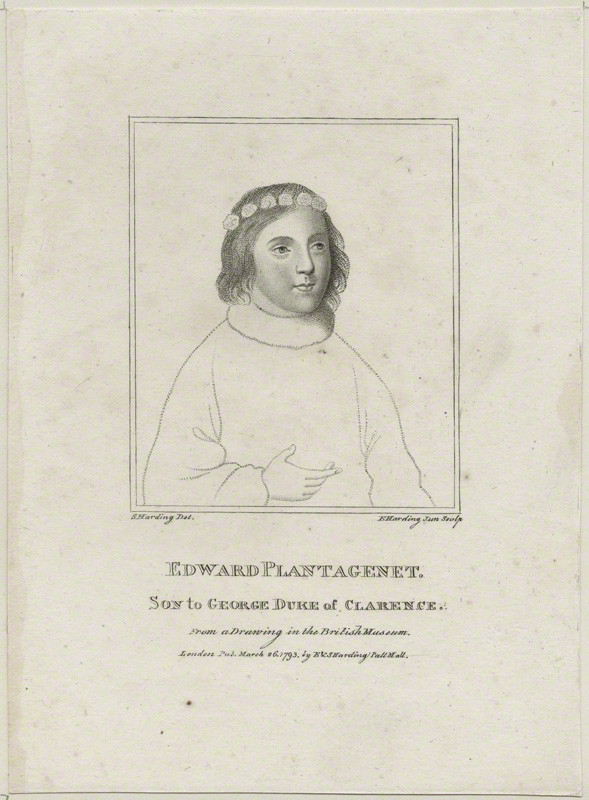
Edward (Plantagenet), Earl of Warwick and Salisbury by Edward Harding, published by  E. & S. Harding, after  Sylvester Harding, stipple engraving, published 26 March 1793.

Edward (Plantagenet), Earl of Warwick and Salisbury by Edward Harding, published by E. & S. Harding, after Sylvester Harding, stipple engraving, published 26 March 1793. © National Portrait Gallery, London

Edward, at the age of only ten years old, was kept as prisoner in the Tower of London by Henry VII. He remained a prisoner until 1499 when a plot between Warwick and Warbeck (pretender of Edward of Shrewsbury and claimant to the throne) for Warwick’s escape was alleged. Warwick didn’t escape, was brought to trial on 21 November, plead guilty, and was executed. He was in his early 20s.

King Richard III, Queen Anne, Edward, Prince of Wales, Margaret, Countess of Salisbury and Edward, Earl of Warwick after Unknown artist

(L to R) Lord Edward, Earl of Warwick; Lady Margaret, Countess of Salisbury; Queen Anne (Neville); King Richard III; and Edward, Prince of Wales after Unknown artist. © National Portrait Gallery, London

Sudeley Castle History: Ralph Boteler, 1st Baron Sudeley

Boteler of Sudeley coat of arms.

Boteler of Sudeley coat of arms; bore gules, a fess countercompony argent and sablo between six crosses pattee or

Ralph Boteler, 1st Baron Sudeley and 7th Baron Sudeley KG (c. 1394 – 2 May 1473[1]) was an English baron and aristocrat. He was the Captain of Calais and Treasurer of England (from 7 July 1443).

Family

Ralph Boteler was the youngest surviving son of Sir Thomas Boteler, de jure 4th Baron of Sudeley Castle, Gloucestershire and Alice Beauchamp (d. 1443), daughter of Sir John Beauchamp of Powick, Worcestershire.[1]

His paternal grandparents were Sir William le Boteler, 2nd Baron Boteler and co-heiress Joan de Sudeley, daughter of John de Sudeley, 2nd Baron Sudeley.

Life

Boteler was a military commander and member of the King’s Household under both Henry V and Henry VI. In 1418, Boteler was part of the retinue of Humphrey, Duke of Gloucester (son of Henry IV) on the occasion of Henry V’s visit to Troyes.[6] He was present for the signing of the Treaty of Troyes which agreed that after the death of Charles VI of France, his heirs male would inherit the throne of France.[6] The treaty also required that Henry espouse the Princess Katherine of Valois, a younger daughter of Charles VI and sister to Isabella of Valois, the second queen to Richard II of England.[6] In 1420-21, Boteler was awarded grants of land in France most likely for his service to the King. After the signing of the treaty, Boteler was part of the attack against the Dauphin of France to keep him from trying to reclaim his right to the succession.

Dugdale quotes, “he was retained by indenture to serve the King in his wars of France with twenty men-at-arms and sixty archers on horseback.” (Dent)

Again, “In the beginning of the following reign, he had liscence to travel beyond the sea; was again in the wars of France and of the retinue of John, Duke of Bedford (brother of Henry V).” (Dent)

The Duke of Bedford was named Protector of the Realm and carried on the wars of France. Dent states that after the fall of Joan of Arc, Boteler rejoined Bedford at Rouen and was present for her burning at the stake.

He was made a Knight of the Garter in 1420.[4] He was captain of Arques and Crotoy in 1423 and took muster in Calais in 1425.[3] In 1441, Boteler became Lord Chamberlain of the King’s household.[6] The following year, Boteler was made Treasurer of the King’s Exchequer.[6] He was then sent as an ambassador with Richard, Duke of York, to negotiate a treaty with France. He served as Lord High Treasurer of England from 1443 to 1446. In 1447, he was associated with John, Viscount Beaumont in the Governorship of the “Isle of Jersey, Garnesey, Serke, and Erme” with the priories-alien and all their possessions in those islands; to hold during the minority of Anne, daughter and heiress of Henry Beauchamp, 1st Duke of Warwick (husband to Lady Cecily Neville, sister to Lady Alice, great-grandmother of Queen Katherine Parr).[6] The employment was short as the young heiress died in 1449. Boteler then joined commission with James Butler, Earl of Wiltshire, in the Governorship of the town, marches, and castle of Calais.

In 1458, Boteler was acknowledged for his great service done to King Henry V and Henry VI in France and Normandy. Upon the fall of Henry VI, things drastically turned. Boteler excused himself from Parliament due to his age. He then devoted himself to the re-construction of Sudeley Castle.

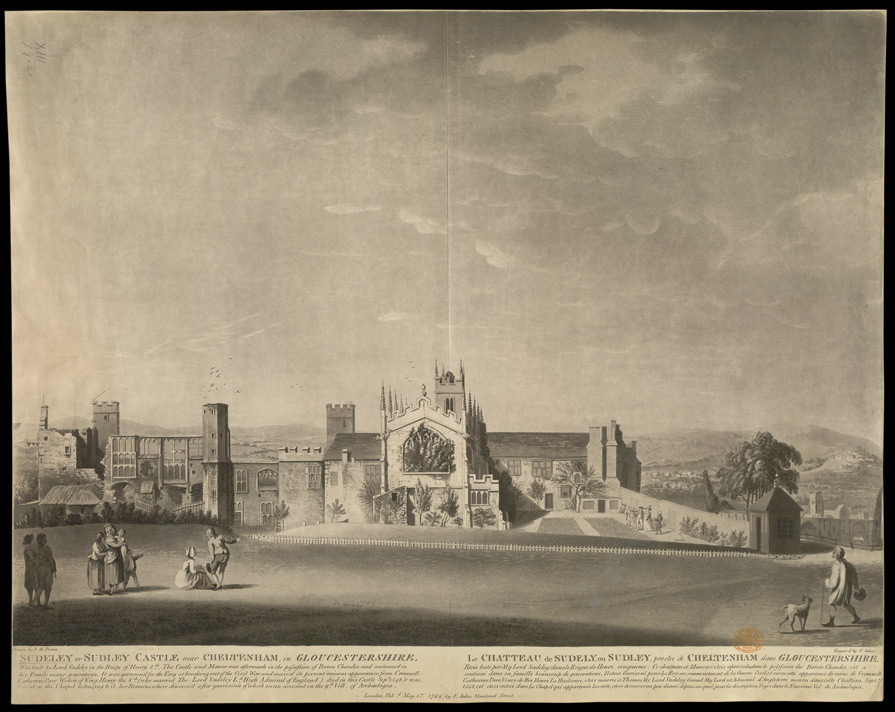
View of the back of Sudley Castle in Gloucestershire showing the landscape it overlooks. Sudley is one of the grandest late medieval houses in Gloucestershire. Many of the buildings are ruined but the long medieval hall appears habitable. The Castle Chapel is striking, very much in the Gothic Perpendicular style with heavily pinnacled roof. It has a Royal connection, as Katherine Parr, the last Queen of Henry VIII died here in 1548 and was buried in this Chapel. The large rear window of the chapel is obscured by foliage, which suggests that the Chapel was at this date in a bad state of repair. Between 1554 and 1813, it was held by the Chandos family, although it was damaged during the Civil War, which made it largely inhabitable.

View of the back of Sudeley Castle in Gloucestershire showing the landscape it overlooks. Sudeley is one of the grandest late medieval houses in Gloucestershire. Many of the buildings are ruined but the long medieval hall appears habitable. The Castle Chapel is striking, very much in the Gothic Perpendicular style with heavily pinnacled roof. It has a Royal connection, as Katherine Parr, the last Queen of Henry VIII died here in 1548 and was buried in this Chapel. The large rear window of the chapel is obscured by foliage, which suggests that the Chapel was at this date in a bad state of repair. Between 1554 and 1813, it was held by the Chandos family, although it was damaged during the Civil War, which made it largely inhabitable.

The original Castle was built during King Stephen’s reign. His His capture of several French ships added to his wealth which he spent on restoring the Castle. Tradition says that the Portmare Tower was where Boteler held a French Admiral who he had taken prisoner. Boteler received ransom from the King adding more to his considerable wealth.[6]

Boteler was a huge benefactor to the churches. He erected St. Mary’s Chapel and aided the parishioners of Winchcombe to restore their Parish Church.[6]

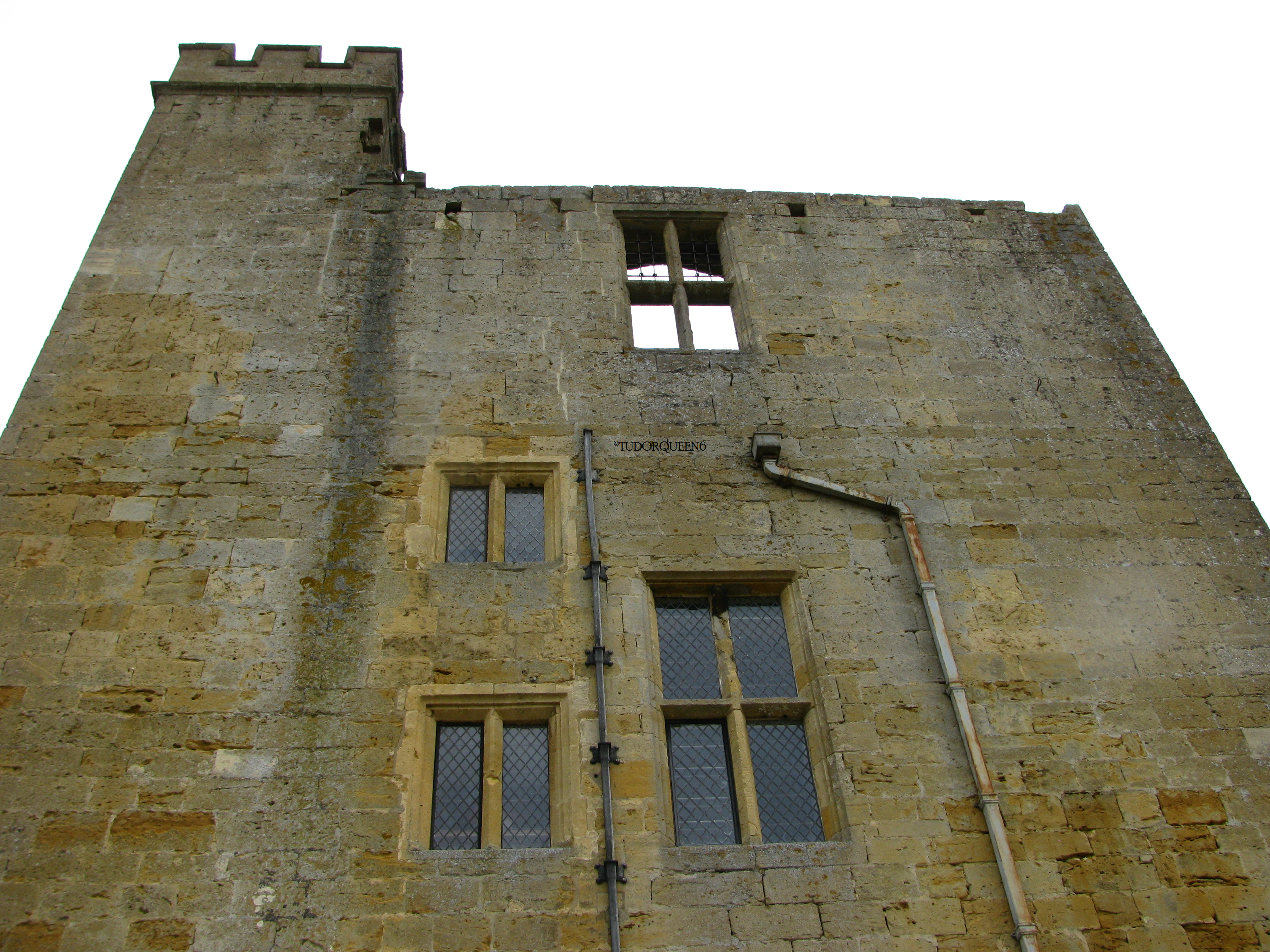
The Dungeon Tower of Sudeley Castle.

The Dungeon Tower of Sudeley Castle.

In May 1455, Boteler took up arms again for the King at the first Battle of St. Alban’s. The First Battle of St Albans, fought on 22 May 1455 at St Albans, 22 miles (35 km) north of London, traditionally marks the beginning of the Wars of the Roses. Richard, Duke of York (husband to Lady Cecily Neville and father to Edward IV and Richard III) and his ally, Richard Neville, Earl of Warwick (Warwick, the Kingmaker, uncle to Elizabeth Parr, grandmother of Queen Katherine), defeated the Lancastrians under Edmund, Duke of Somerset, who was killed. York captured Henry VI.[6]

When Edward IV took the throne, things turned for the bad for Boteler. Boteler was forced to give up Sudeley Castle — Edward was depriving the Lancastrians of their lands, etc. leaving some of them in poverty while the Yorks’ flourished with the new grants that had been transferred from the Lancastrians to them. Records show Boteler reluctantly handing over the Castle. It states that he confirmed the Castle over to Richard, Earl of Rivers; William, Earl of Pembroke; Antony Wydville; Lord Scales; William Hastings; Lord Hastings; Thomas Bonyfaunt, Dean of the Chapel Royal; Thomas Vaughan; and Richard Fowler.[6] With this went the inheritance of his heirs as well.

When the Lancastrian party rose again in 1470, there was hope that Sudeley would be restored to Boteler, but the House of York refused. The Castle was handed over to the Earl of Rivers and the others named above, but it was not meant to stay with them. Instead, Edward IV granted the Castle to his brother, Richard, Duke of Gloucester (later King Richard III).[6] It would remain Crown property until a grant to Thomas, Lord Seymour, the husband of Queen Katherine Parr, widow of King Henry VIII, in 1547 by his nephew King Edward VI (son of Henry VIII and Jane Seymour, wife 3). Shortly after Sudeley was taken from Lord Seymour, the Castle would temporarily pass to the late Queen’s brother, Marquess of Northampton (Sir William Parr) until the accession of Queen Mary I.

Lord Sudeley

Tree of the Lords of Sudeley from "Annals of Winchcombe and Sudeley" by Emma Dent, Lady Sudeley, 1877.

Tree of the Lords of Sudeley from “Annals of Winchcombe and Sudeley” by Emma Dent, Lady Sudeley, 1877.

The Boteler’s elevation to the aristocracy arose from the second marriage of Ralph’s grandfather, William le Botiler of Wem, de jure 2nd Baron Boteler, to the co-heiress of John de Sudeley, de jure 2nd Baron Sudeley, Joan de Sudeley.[1] In 1367, Thomas Boteler became co-heir to his uncle, John de Sudeley, de jure 3rd Baron Sudeley.[1] This eventually led to his father succeeding to the title of Lord of Sudeley. The title passed to both of Ralph’s elder brothers, John (5th Baron Sudeley) who died unmarried and childless in 1410 and William (6th Baron Sudeley), who despite being married, also died childless seven years later. William’s widow, Alice, was appointed governess of Henry VI in 1424.[2] On 10 September 1441, Ralph Boteler was created by a new writ and letters patent, Baron of Sudeley by King Henry VI.[1] With the title he was granted an annuity of 100 marks to himself and his heirs for the better support of his dignity, to be received out of the farm of the county of Lincoln.[6]

Ralph inherited Sudeley Castle from his mother; he started rebuilding in 1442.[4][6] Unfortunately he failed to gain royal permission to crenellate it and had to seek Henry VI’s pardon.[5] Boteler was a supporter of the House of Lancaster during the War of the Roses. In 1469, Boteler was forced to sell Sudeley to King Edward IV due to his support for the Lancastrian cause. Sudeley became Royal property.

Marriage and Family

Lord Sudeley married twice. Before 6 July 1419, he married commercial wealth, in the person of Elizabeth Norbury, widow of John Hende (d. 1418), late Mayor of London, and daughter of John Norbury.[1] They had two sons, Ralph and Thomas, Knt.[1] She died 28 August 1462, and in the following year he married Alice (d. 1474), daughter of John, Baron Deyncourt, and widow of William, Baron Lovel of Titchmarsh, Northamptonshire, who survived him.[1] They had no issue.[1]

Sudeley’s only surviving son from his first marriage, Thomas, predeceased him, also without a male heir.[1] Thomas’ widow Eleanor was the Lady Eleanor Boteler[7] (known as the Holy Harlot) whose alleged pre-contract of marriage to Edward IV of England was claimed to have invalidated Edward’s marriage to Elizabeth Woodville, and so legitimized the usurpation of Richard III of England. Lady Eleanor describes herself as “lately the wife of Thomas Boteler, knight, now deceased.”[7]

References

  1. Douglas Richardson. Plantagenet Ancestry: A Study In Colonial And Medieval Families, 2nd Edition, 2011. pg 230-32.
  2. John Ashdown-Hill, “Eleanor The Secret Queen“, The History Press, 2009, pg 50 ISBN 978-0-7524-5669-0
  3. John Ashdown-Hill, “Eleanor The Secret Queen“, The History Press, 2009. pg 52 ISBN 978-0-7524-5669-0
  4. Sudeley Castle Online: History Timeline URL: http://www.sudeleycastle.co.uk/history
  5. John Ashdown-Hill, “Eleanor The Secret Queen“, The History Press, 2009. pg 51 ISBN 978-0-7524-5669-0
  6. Emma Dent. ”Annals of Winchcombe and Sudeley,” J. Murray, 1877.
  7. John Ashdown-Hill, “Eleanor The Secret Queen”, The History Press, 2009. pg 140

18 FEBRUARY 1478: THE DEATH of the Duke of Clarence

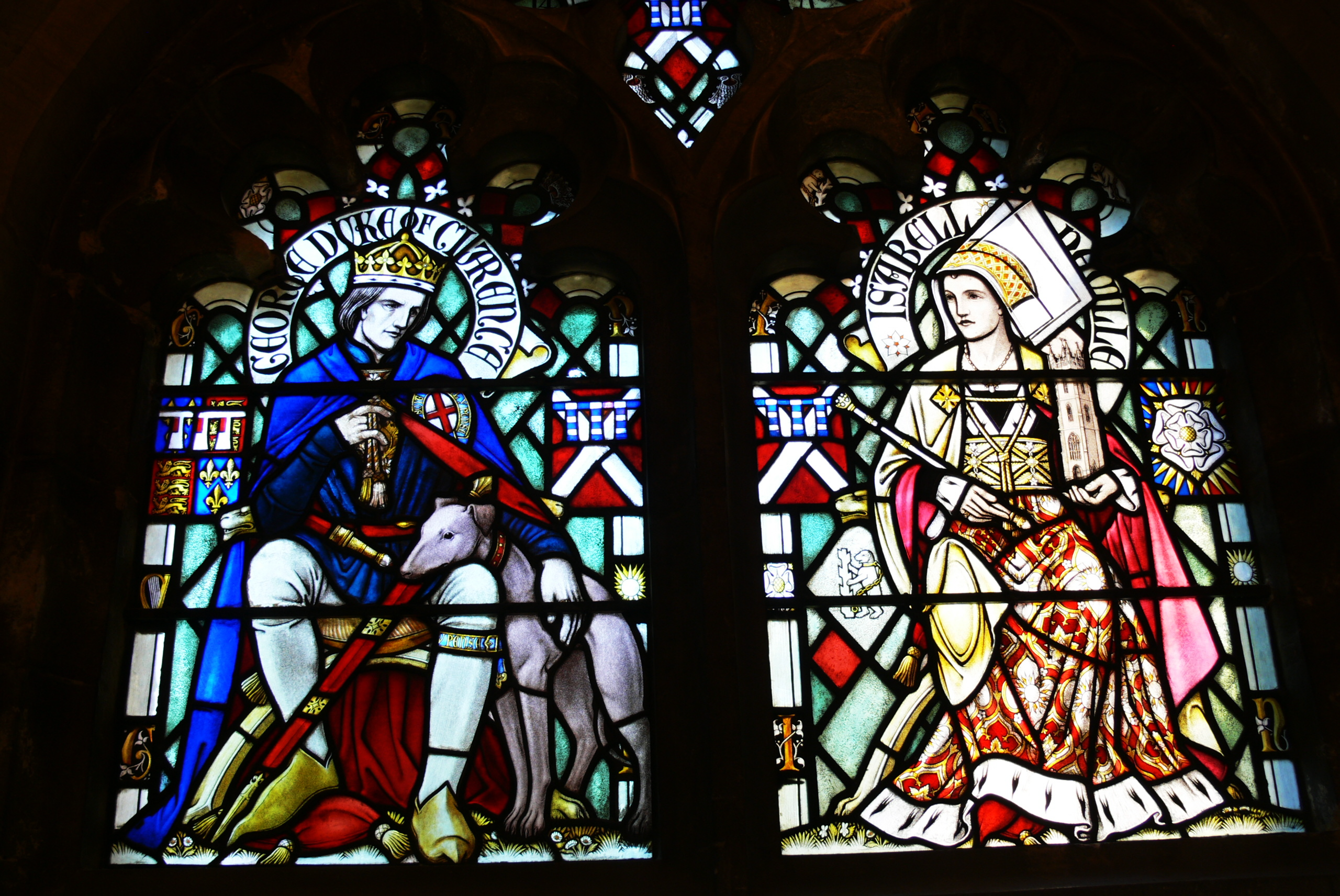
The Duke and Duchess of Clarence, Cardiff Castle. From WikiCommons, no copyright.

The Duke and Duchess of Clarence, Cardiff Castle. From WikiCommons, no copyright.

Another bad day for the Nevilles’ — 18 February 1478 — death of the Duke of Clarence, husband of Lady Isabella Neville, both cousins of Elizabeth Parr (grandmother of Queen Catherine). The Duke was granted the titles of 1st Earl of Salisbury and Warwick, which had last been held by Isabella’s father, Richard, who was the 16th Earl of Warwick and 6th Earl of Salisbury. George, Duke of Clarence was the third son of Richard Plantagenet, 3rd Duke of York, and Lady Cecily Neville (great-aunt of Isabella Neville and Elizabeth Parr), and the brother of kings Edward IV and Richard III. He played an important role in the dynastic struggle known as the Wars of the Roses. He is also remembered as the character in William Shakespeare’s play Richard III who was drowned in a butt of Malmsey wine. The Duke and Duchess were parents to the last Plantagenet’s which included Lady Margaret, suo jure 8th Countess of Salisbury, who was executed by Henry VIII.

BBC ‘THE WHITE QUEEN’: Queen Katherine Parr Family Relations

The White Queen covers to promote the series by Philippa Gregory.

The White Queen covers to promote the series by Philippa Gregory.

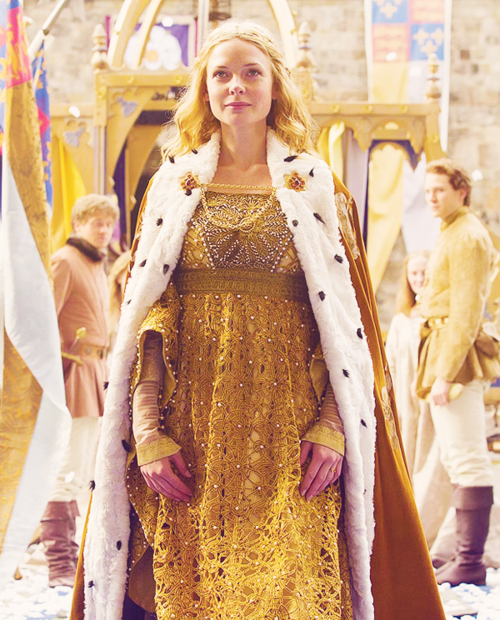
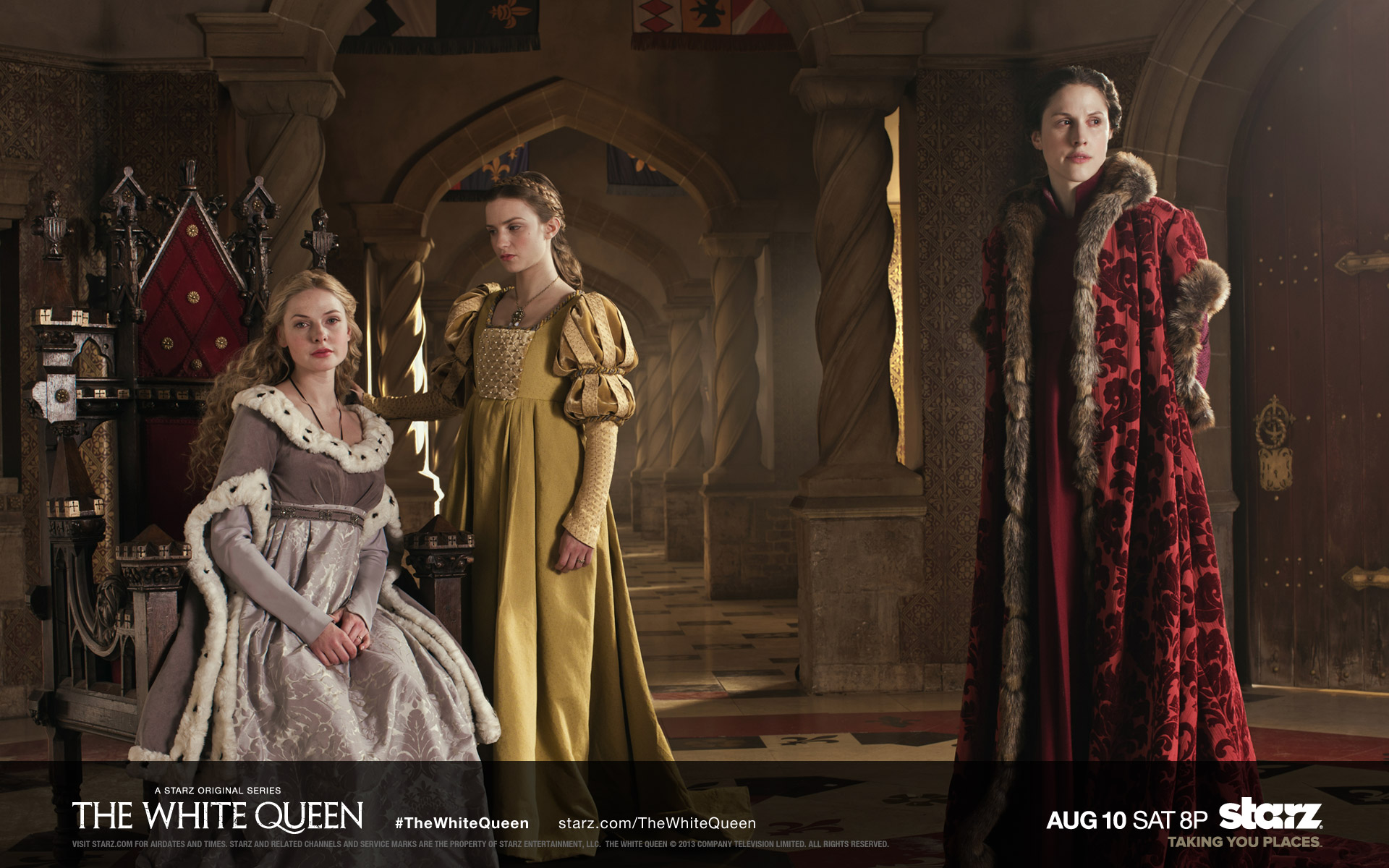
The 3 cousins are coming to tv soon in the BBC Series “The White Queen”; which features Lady Anne Neville (daughter of Warwick, the Kingmaker and later Queen to Richard III), Elizabeth Woodville (mother of Elizabeth of York), and Lady Margaret Beaufort (mother of Henry VII Tudor). All three women were cousins to Katherine Parr. The series will air on STARZ in the US in August.

The White Queen

The White Queen

The White Queen Elizabeth Woodville.

The White Queen Elizabeth Woodville.

Based on the The Cousin’s War series of novels by Phillipa Gregory and developed for TV by Emma Frost, The White Queen is set in 1464, during the height of the War of the Roses, and tells the story of the women caught up in the ongoing conflict for the throne. The House of York’s young and devilishly handsome Edward IV is crowned King of England with the help of the master manipulator Lord Warwick “The Kingmaker.” But when Edward falls in love and secretly marries a beautiful young widow, the commoner Elizabeth Woodville, Warwick’s plan for control over the English throne comes crashing down around him. Frustrated by the new Queen’s influence he will stop at nothing to maintain his grip on the King. The ten-part drama series stars Max Irons, James Frain, Rebecca Ferguson, Janet McTeer, Amanda Hale, Faye Marsay, Aneurin Bernard, David Oakes, Juliet Aubrey, Eleanor Tomlinson, Frances Tomelty, Michael Maloney, Ben Lamb, Hugh Mitchell, Simon Ginty, Eve Ponsenby and Robert Pugh. Company Pictures is producing with John Griffin, George Faber, Charles Pattinson, Eurydice Gysel and Polly Hill serving as executive producers. — (Patrick Munn)

Lord and Lady Warwick, Sir Richard Neville (James Frain) and Lady Anne Beauchamp (Juliet Aubrey). STARZ "The White Queen" (2013)

Lord and Lady Warwick, Sir Richard Neville, “Warwick, the Kingmaker” (James Frain) and Lady Anne Beauchamp, suo jure 16th Countess of Warwick (Juliet Aubrey). STARZ “The White Queen” (2013)

Lady Anne Neville, daughter of Richard Neville, 16th Earl of Warwick (“Warwick, the Kingmaker”) was a first cousin of Hon. Elizabeth FitzHugh, Lady Parr/Vaux [so she would have been Queen Katherine’s first cousin, twice removed].

Lady Isabel (Eleanor Tomlinson) and Lady Anne (Faye Marsay); daughters of Lord and Lady Warwick.

Lady Isabel (Eleanor Tomlinson) and Lady Anne (Faye Marsay); daughters of Lord and Lady Warwick.

Elizabeth and her mother, Lady Alice [sister of Warwick], were appointed personally by Queen Anne to be ladies when she became queen and participated in the coronation, receiving gifts from Richard III himself. They were close.[1]

Lady Margaret Beaufort portrayed by Amanda Hale.

Lady Margaret Beaufort portrayed by Amanda Hale.

Sir Thomas Parr’s father, William, 1st Baron Parr of Kendal, had once been Lady Margaret Beaufort’s revisionary heir to her substantial lands in Westmoreland, known as the “Richmond fee.” Lord Parr married to Hon. Elizabeth FitzHugh, daughter of Henry, 5th Baron FitzHugh and Lady Alice Neville (sister of Warwick). Lady Margaret Beaufort was a double second cousin to Elizabeth FitzHugh, Lady Parr [so she would have been a double second cousin, thrice removed of Katherine]. After the death of Lord Parr, his widow made a marriage with the Lancastrian family, the Vauxs’ of Harrowden. The Vaux family was close to Margaret, enjoying a long-term relationship with her. The previous Lady Vaux, mother of Thomas Parr’s step-father Nicholas, had been lady and friend to the Lancastrian queen Margaret of Anjou. Katherine, Lady Vaux served the queen during her exile. Nicholas Vaux (later 1st Baron Vaux) was a protege of Lady Margaret Beaufort. The young Thomas Parr [Katherine’s father and Margaret’s cousin] most likely studied under Maurice Westbury of Oxford who had been installed as a teacher by Lady Margaret Beaufort at her estate of Colyweston. It was at Colyweston that certain gentlemen, including the son of the Earl of Westmoreland [cousin of Sir Thomas], not only received an education but also gained political connections that would prove useful in their future careers.[1][2]

The "White Queen," Elizabeth Woodville.

The “White Queen,” Elizabeth Woodville.

Elizabeth Woodville was the niece of Queen Katherine’s maternal great-great-grandmother Joan Wydeville [Katherine would have been a first cousin, thrice removed of Queen Elizabeth by her mother, Maud Green]. Joan Wydeville married Sir William Haute/Hawte. Their daughter, Alice, married Sir John Fogge. The Haute family which Joan married into was quite prominent during the reign of Edward IV and Richard III. Fogge had originally been a supporter of the Lancastrian king, but in 1460 Fogge joined the Yorkist earls in Kent. It is obvious however that he was a Yorkist by the families which he married into; Alice Kyriel (daughter of Yorkist Sir Thomas) and Alice Haute c. 1465 who was a cousin of Queen Elizabeth. The previous year, Elizabeth Woodville had married Edward. Queen Elizabeth brought her favorite female relatives to court to serve her.[2] Lady Alice Fogge (Haute) would be one of five ladies-in-waiting to her cousin, queen consort Elizabeth Woodville during the 1460s.[2] The other ladies included her sister Lady Anne (wife of William Bourchier, Viscount Bourchier and George Grey, 2nd Earl of Kent) and her sister-in-law Lady Elizabeth Scales (wife of Sir Anthony Woodville, 2nd Earl Rivers).[2]

WQS1_wallpaper1920x1200Concept3

The White Queen BBC one commercial – Directors cut from Jamie Childs on Vimeo.

SEE ALSO

STARZ ‘The White Queen’: Elizabeth Woodville

STARZ ‘The White Queen’: The Kingmaker’s Daughters

STARZ ‘The White Queen’: Lady Margaret Beaufort

References

  1. Linda Porter. “Katherine the Queen; The Remarkable Life of Katherine Parr, the Last Wife of Henry VIII.” Macmillan, 2010.
  2. Barbara J. Harris. “English Aristocratic Women, 1450-1550 : Marriage and Family, Property and Careers: Marriage and Family, Property and Careers,” Oxford University Press, Jul 26, 2002. pg 218.

Links

Family of Queen Katherine: Lady Cecily, Duchess of Warwick

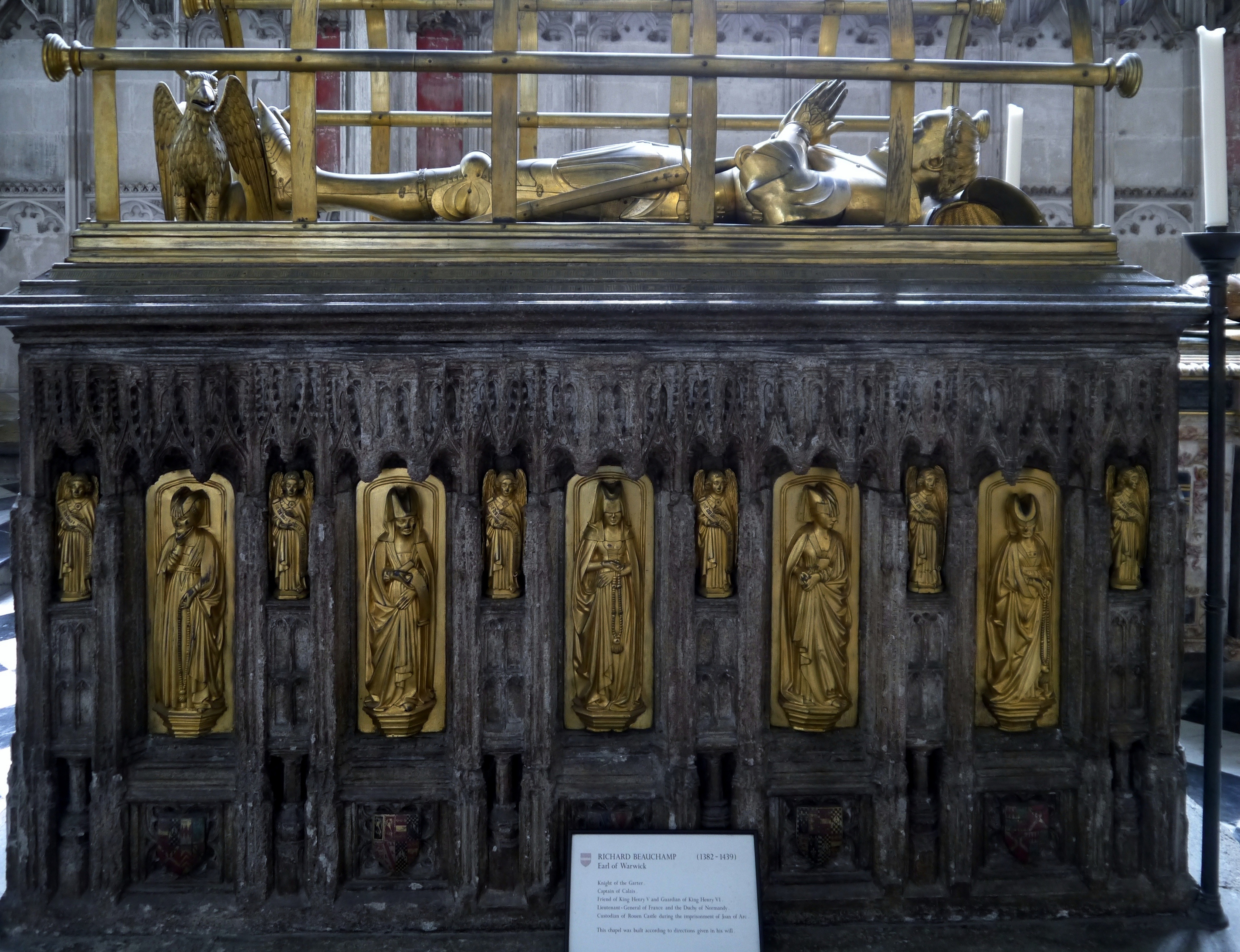
Detail of the magnificent tomb chest that bears the effigy of Richard Beauchamp, 13th Earl of Warwick in the chapel he founded at St Mary's, Warwick. This effigy is that of his daughter-in-law, Lady Cecily Neville.

Detail of the magnificent tomb chest that bears the effigy of Richard Beauchamp, 13th Earl of Warwick in the chapel he founded at St Mary’s, Warwick. This effigy is that of his daughter-in-law, Lady Cecily Neville.

Lady Cecily Neville, Duchess of Warwick, Countess of Worcester (c.1425[2][5] – 26 July 1450[3]) was the second child and daughter of Sir Richard Neville, 5th Earl of Salisbury and Lady Alice Montacute, suo jure 5th Countess of Salisbury.[2] Her nine siblings included Richard Neville, 16th Earl of Warwick; John Neville, 1st Marquess of Montagu; George Neville, (Archbishop of York and Chancellor of England); Sir Thomas Neville; Lady Joan, Countess of Arundel; Lady Katherine, Baroness Hastings; Lady Alice, Baroness FitzHugh; Lady Eleanor, Countess of Derby; and Lady Margaret, Countess of Oxford.[2]

She was most likely named after her paternal aunt, Lady Cecily Neville, later Duchess of York.[2] Her first cousins by the Duchess of York included Anne of York; Edmund, Earl of Rutland; Elizabeth of York; Margaret of York; George Plantagenet, 1st Duke of Clarence; and Kings Edward IV and Richard III. Other cousins included John Mowbray, 3rd Duke of Norfolk; Lord Humphrey Stafford, 7th Earl of Stafford [father of 2nd Duke of Buckingham]; Lady Katherine Stafford, Countess of Shrewsbury [wife of the 3rd Earl]; Henry Percy, 3rd Earl of Northumberland; Ralph, 2nd Earl of Westmorland; George Neville, 4th and 2nd Baron of Abergavenny; Thomas Dacre, 1st Baron Dacre of Gillesland; and Ralph Greystoke, 5th Baron.

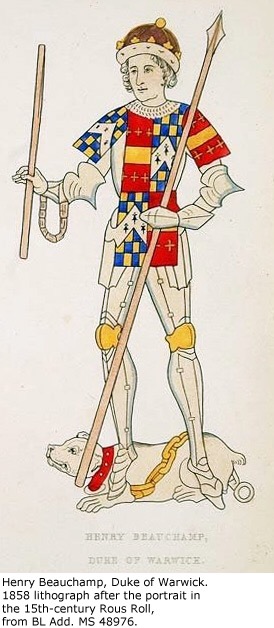
In 1436, it was decided that Cecily would marry Henry de Beauchamp, Lord Despenser (later 1st Duke of Warwick and King of the Isle of Wight, as well as of Jersey and Guernsey).[2] Henry was the son and heir of son of Richard de Beauchamp, 13th Earl of Warwick and Lady Isabel le Despenser, the sole heiress of Thomas le Despenser, 1st Earl of Gloucester (d.1399) by his wife, Constance of York. At the same time, it was decided that her elder brother, Richard, would marry Beauchamp’s younger sister, Lady Anne.[2] The marriage negotiations were not easy or inexpensive; Salisbury had to promise to pay Warwick a large sum of 4, 700 marks (£3, 233.66).[2] In 1436, the two couples married in a double marriage ceremony.[2]

After the death of the Duke of Warwick in 11 June 1446, the Dowager Duchess married to Sir John Tiptoft, 1st Earl of Worcester. They had no children.

By the Duke of Warwick, Cecily gave birth to a daughter and their heiress, Lady Anne, who was most likely named after her aunt, who had married Cecily’s brother Richard [later known as “Warwick the Kingmaker”]. Richard’s wife, Lady Anne, would inherit the Beauchamp fortunes and became Countess of Warwick in “her own right” after the death of her niece in 1449.

The Warwick Inheritance

The advantage of this marriage, which came in the form of Cecily’s husband being created Duke of Warwick on 14 April 1445, was short lived as her husband died on 11 June 1446 and the couple’s only daughter, Lady Anne Beauchamp, was allowed to succeed only as suo jure 15th Countess of Warwick. Upon the death of Cecily’s daughter in 1449, the title was inherited by her paternal aunt, also named Lady Anne Beauchamp. Lady Anne, who had married Cecily’s brother Sir Richard Neville, became suo jure 16th Countess of Warwick thus making Neville jure uxoris 16th Earl of Warwick. There were no objections as the elder half-sisters from the 13th Earl of Warwick’s marriage to his first wife, Elizabeth Berkeley; their husband’s, John Talbot, 1st Earl of Shrewsbury and Edmund Beaufort, 2nd Duke of Somerset, were off defending Normandy.[2] The third half-sister had been married to George Neville, 1st Baron Latimer who had been declared insane and his brother Salisbury already possessed his lands.[2] The three sisters had to settle for nine manors, while the Despenser lands were preserved for George Neville, later 4th Baron Bergavenny, the heir of the 16th Countess of Warwick’s maternal sister, Lady Elizabeth Beauchamp, suo jure Baroness Bergavenny.[2] Cecily and her second husband, the Earl of Worcester, however had custody of the land up until two months before Cecily died in July 1540.[2] Upon that time, the lands were handed over to Cecily’s brother, Warwick.[2] However in 1457, when Bergavenny became of age — the rights were ignored and Warwick’s wife, Anne, became the sole heiress of her mother’s inheritance in the first parliament of Edward IV in 1461.[2] Both Warwick and Bergavenny were cousins to the King, however Warwick was the older brother of Bergavenny’s father. Warwick’s wife was also the daughter of the 13th Earl of Warwick, who was senior to his cousin, Richard Beauchamp, 1st Earl of Worcester — first husband of Lady Isabel le Despenser.

The Future of the Warwick Inheritance

Richard Neville, Earl of Warwick was a supporter of the House of York as cousin to the King and his siblings. However, at the Battle of Barnet, Warwick and his brother-in-law, Oxford, both sided with the Lancastrian King.[2] Warwick’s allegiance to the House of York was damaged after Edward IV married the Lancastrian widow, Lady Elizabeth Grey [born Woodville]. As Lady Elizabeth’s large family followed her to court, so did the titles, marriages, and grants. The Woodvilles were of common descent, but their fortunes improved when a Woodville squire married the Dowager Duchess of Bedford [widow of John of Lancaster, son of Henry IV]. The marriage was not favored by the nobles at court and the favors granted to the Woodvilles did not stop–in that, the nobility became extremely frustrated and resentful. Warwick rebelled and paid the price with his life. His only children were two daughters. Warwick had no male heir. However, his two daughters both married a brother of King Edward IV and became Royal Duchesses. After the Battle of Barnet, Warwick’s wife Anne [the holder of the title Countess of Warwick and inheritance], forfeited her right to all of her inheritance due to being the wife of the traitor, Warwick. The inheritance was eventually divided between Warwick’s eldest daughter, Isabel, the Duchess of Clarence and Anne, who would become the Duchess of Gloucester [later queen consort]. The Duke of Clarence forfeited his right to any of the inheritance after his execution [his wife was already dead]. Their son, Edward, was imprisoned in The Tower and was executed by order of Henry VII in 1499.[7]

An ironic twist to the history of this Abbey came during the reign of the Tudor King Edward VI; the Manor of Tewkesbury, a possession of the Beauchamps, was granted to Lord Seymour of Sudeley. Sudeley was non other than the husband of the Dowager Queen Katherine Parr. Parr, herself, was a descendant of Warwick’s sister, Lady Alice; her paternal great-grandmother.[7]

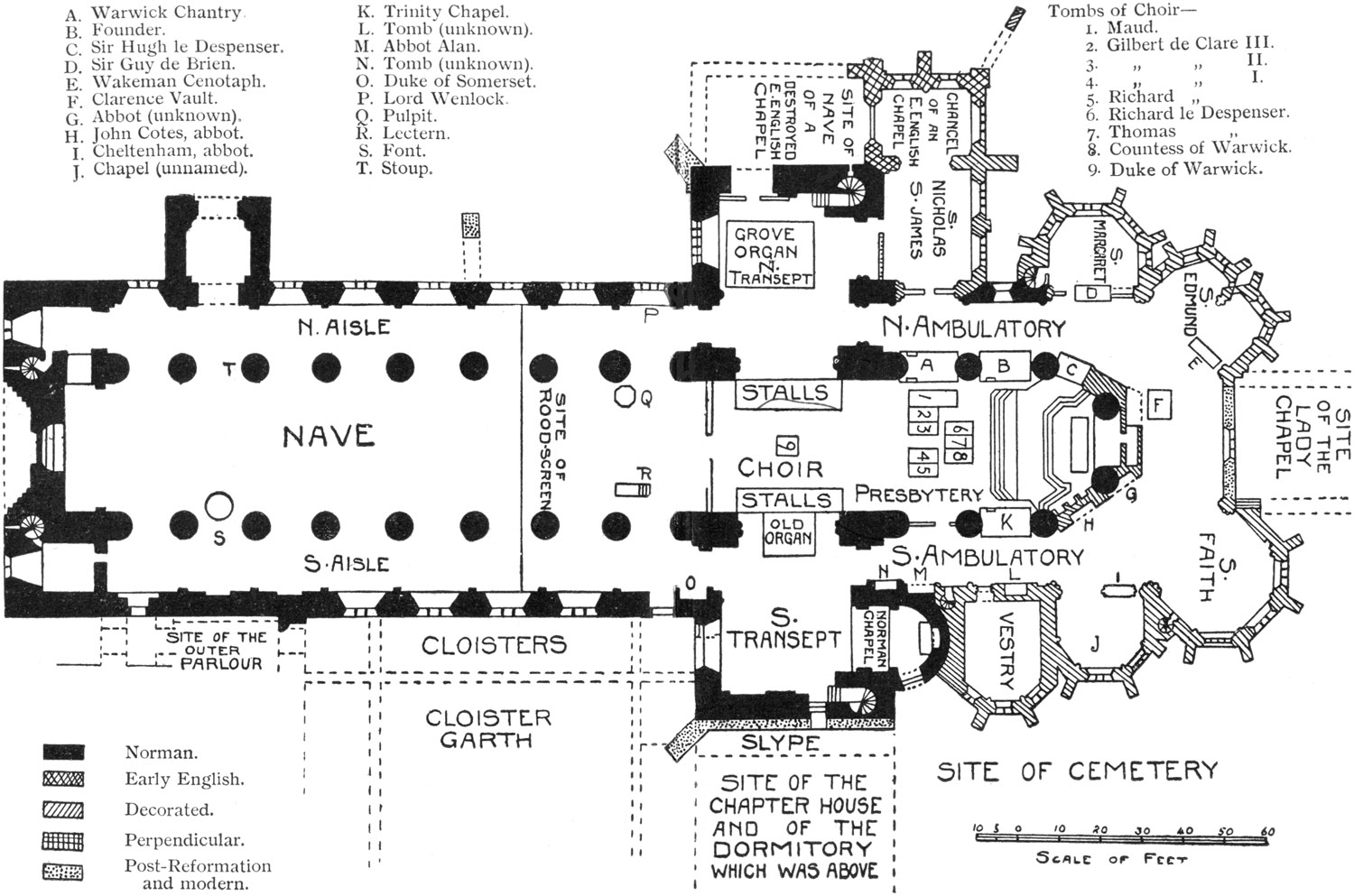
A map of Tewksbury Abbey.

A map of Tewksbury Abbey.

Lady Cecily, the Dowager Duchess of Warwick and Countess of Worcester died on 26 July 1450. She was buried with her first husband, the Duke of Warwick, at Tewkesbury Abbey; with no monument.[1] Warwick was buried at his own request between the stalls in the choir upon his death in 1446. At the time the choir was repaved in 1875, a grave of stone filled with rubble was found together with some bones of a man of herculean size. These, no doubt, were those of the Duke who was buried here. The large marble slab that formerly covered the grave disappeared early in this century but the brasses that were originally in it had been taken away long before, Cecily, the Dowager Duchess of Warwick was buried in the same place on 31 July 1450.[3][4]

Effigy of John Tiptoft and his two wives which included Cecily, Dowager Duchess of Warwick.

Effigy of John Tiptoft and his second and third wives, Elizabeth Greyndour and Elizabeth Hopton at Ely Cathedral

Cecily is portrayed on the tomb of her father-in-law, Richard Beauchamp, 13th Earl of Warwick, within the Chapel. The Purbeck Marble tomb chest is decorated with a superb and complete set of 14 gilt bronze mourners (all male to the south, all female to the north) complimented by 18 smaller figures of angels. The mourners are identified by their enamelled coats of arms which survive beneath them. English medieval bronze sculpture of this kind (c.1460), of this quality and in such excellent preservation is extremely rare! (Aidan McRae Thomson)

Beauchamp Chapel, Warwick. Also buried near this monument is Katherine Parr's brother, the Marquess of Northampton whose funeral and burial was paid for by Elizabeth I.

Beauchamp Chapel, Warwick. Also buried near this monument is Katherine Parr’s brother, the Marquess of Northampton whose funeral and burial was paid for by Elizabeth I.

The 1448 contract for making this tomb survives: it indicates that it is not a portrait and refers to the following who were involved in its making: John Bourde of Corfe supplied the Purbeck Marble, William Austen of London cast the metal, John Massingham, carver, made the model, Bartholomew Lambespring, goldsmith, polished and gilded the effigy; one Roger Webb is also referred to in this contract but it is not known what his role was in the construction. A separate contract of the following year with William Austen to cast the effigy. A third contract of 1453 is for brass plates for the lid, sides and the hearse; in this contract John Essex of London, marbler and Thomas Stevyns of London, coppersmith, also appear with William Austen.
Cast gilt bronze effigy in armour on a Purbeck marble tomb chest. The Earl’s hands are held in a curious separated position. Head on helmet with crest of a swan and his feet on both a bear and griffin. The details of the armour are very fine. Charles Stothard lifted the effigy down from the tomb chest to draw its dorsal surface where the armour is again shown in very fine detail. Over the whole is a hooped framework – the ‘hearse’ referred to above; this would have supported a fabric cover and only be removed when masses were said for his soul. Around the tomb chest are gilt bronze ‘mourners’ – seven male and seven female. The mourners include the 13th Earl’s children and in-laws. They include [among others] his son Henry who became Duke of Warwick, his daughter-in-law Duchess Cecily [daughter of the 5th Earl of Salisbury], the 5th Earl and Countess of Salisbury [Richard Neville and Lady Alice Montacute], his daughter Lady Anne [sister of the Duke] and her husband Richard Neville [brother of Duchess Cecily], who inherited the Beauchamp estates to become Earl and Countess of Warwick.[6]
Richard Beauchamp fought with Henry IV and Henry V and was guardian of the infant Henry VI. At the time of his death he was Governor of Normandy.

Ancestry of Cecily, Duchess of Warwick

Ancestry of Cecily, Duchess of Warwick

References

  1. Henri Jean Louis Joseph Massé. “The Abbey Church of Tewkesbury:with some account of the Priory Church of Deerhurst, Gloucestershire,” G. Bell. 1906. pg 79.
  2. David Baldwin. “The Kingmaker’s Sisters: Six Powerful Women in the Wars of the Roses,” The History Press; First Edition edition, 1 August 2009.
  3. Michael Hicks. “Warwick, the Kingmaker,” John Wiley & Sons, 15 April 2008. pg 47.
  4. G.E. Cokayne; with Vicary Gibbs, H.A. Doubleday, Geoffrey H. White, Duncan Warrand and Lord Howard de Walden, editors, The Complete Peerage of England, Scotland, Ireland, Great Britain and the United Kingdom, Extant, Extinct or Dormant, new ed., 13 volumes in 14 (1910-1959; reprint in 6 volumes, Gloucester, U.K.: Alan Sutton Publishing, 2000), volume XII/2, page 845.
  5. The eldest child of the Salisbury’s, Lady Joan (later Countess of Arundel) was born before 2 November 1424. Lady Cecily, the second child, was followed by Richard Neville (later 16th Earl of Warwick) in 1428. Cecily is noted to be born shortly after Joan in Baldwin’s “The Kingmaker’s Sisters.
  6. Anne MacGee Morganstern, John A. A. Goodall. “Gothic Tombs of Kinship in France, the Low Countries, and England,” Penn State Press, Jan 1, 2000. pg 137.
  7. H.J.L.J. Masse. The Project Gutenberg Ebook of Bell’s Cathedrals: The Abbey Church of Tewksbury, [1906] Public Domain: 2007. Gutenberg eBook

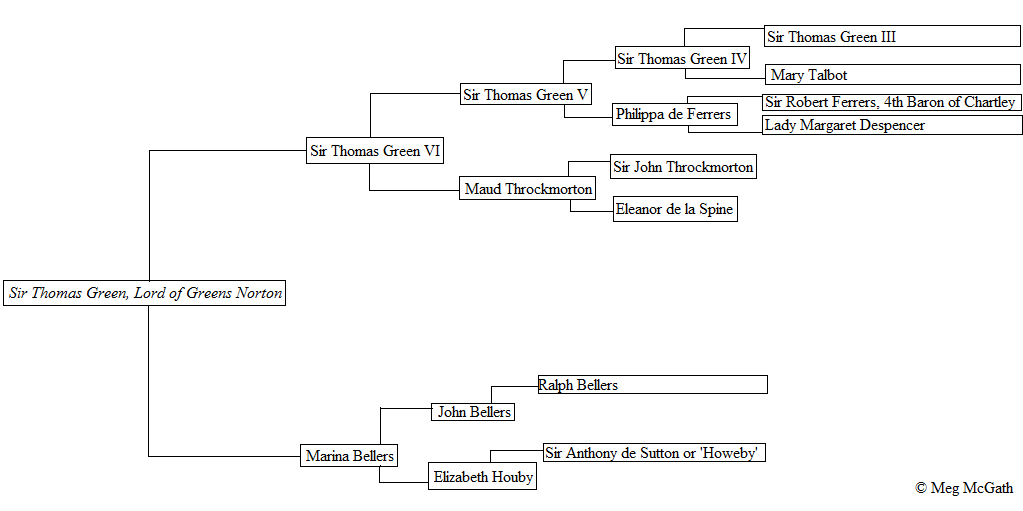
Family of Queen Katherine Parr: Sir Thomas Green, Lord of Greens Norton

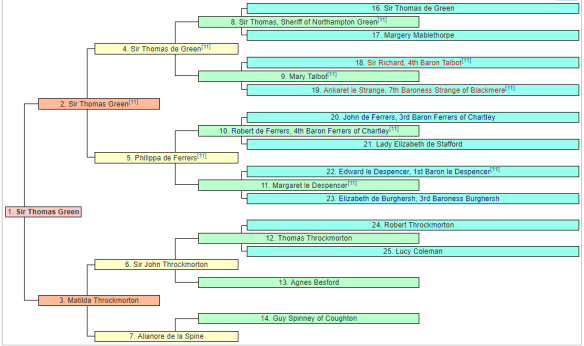
Sir Thomas Green V (c.1461 – 9 November 1506)[2] was Lord of Greens Norton and Boughton, Northamptonshire, England.[1] He was the son of Sir Thomas Green (IV), Lord of Greens Norton, and Maud Throckmorton. Sir Thomas was the grandson of Sir Thomas Greene (d. 18 January 1462) and Philippa de Ferrers, the daughter of Robert de Ferrers, 4th Baron Ferrers of Chartley (d.1413), and Margaret le Despenser, daughter of Edward le Despencer, 1st Baron le Despencer (see bottom of article for genealogy chart). He is best known for being the father of Lady Maud Parr and grandfather to queen consort Katherine Parr.

The Lords of Greens Norton came from Northamptonshire, England. The heirs to each generation were continually named either Thomas or Henry. One of the earliest ancestors recorded is Thomas de Green (b. 1292), son of Sir Thomas de Green, Lord of Boughton. He married to Lucy le Zouche, daughter of Eudo le Zouche. Thus Lord Green would be the fifth heir to be named Thomas. This branch of Lord Nortons were descendants of the Norwich branch of Greens. Thomas’ ancestor, Sir Henry de Green, Lord of Greens Norton and Lord Chief Justice of England, is credited to have bought the village of Greens Norton, a village in Northamptonshire for a price of 20 shillings. Sir Henry married Katherine Drayton (ancestress to the pioneer settler Anne Hutchinson, born Anne Marbury)[3]

Sir Thomas Green (IV) tomb at St. Bartholomew's in Greens Norton with wife Lady Matilda (Throckmorton).

Sir Thomas Green (IV) tomb at St. Bartholomew’s in Greens Norton with wife Lady Matilda (Throckmorton).

He received Boughton, Greens Norton, and large monetary grants through his inheritance upon the death of his father in 1462.

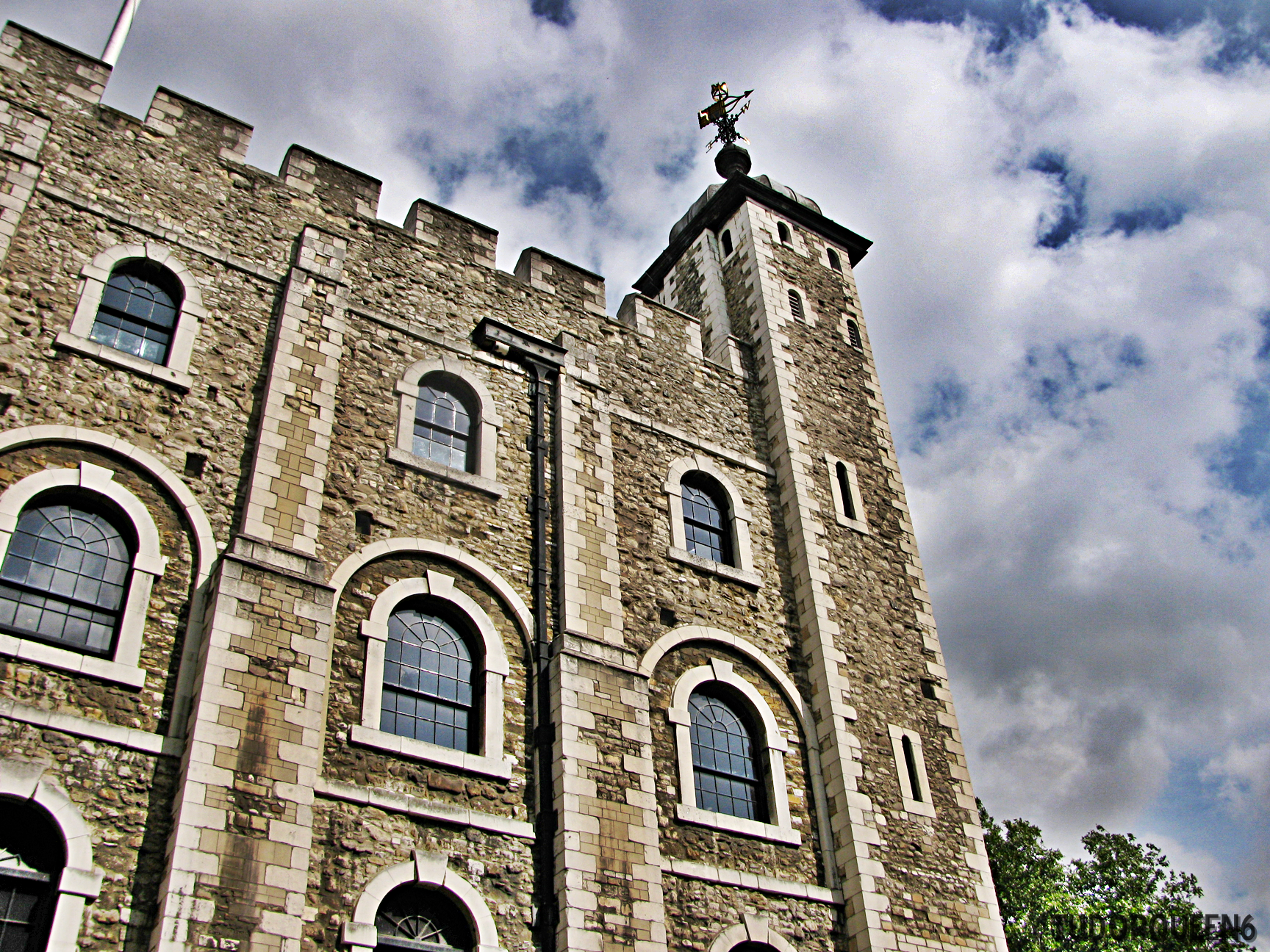
Sir Thomas’ traits were that of any man of the time. He was conservative in religion, quarrelsome, “conniving”, and was one to take the law into his own hands. Sir Thomas was sent to the Tower of London due to trumped up charges of treason and died there in 1506. The last of his line, Thomas left two fatherless daughters.[3]

On 6 and 17 November 1505, inquisitions post mortem were taken concerning his lands in which the jurors found that he was 43 years of age at that date, and that his father, Sir Thomas Greene the elder, had died 9 September 1462 seised in fee of certain manors, and that his mother, Maud Greene, had ‘entered and intruded into the premises and received all the issues thereof’ from the date of his father’s death until Michaelmas (29 September) 1482, ‘immediately after which feast the said Thomas Grene, the son, entered and intruded without ever suing or obtaining licence from Edward IV or the present king or livery out of the king’s hands, and has received the issues thereof ever since’.[7]

He was sent to the Tower of London about that time on a trumped up charge of treason, and died there on 9 November 1506.[7] The circumstances of the treason charge are set forth in Hardying’s Chronicle:[8]

Also shortly after the departing of [the earl] PhilipGeorge Neville, Lord of Bergavenny, and Sir Thomas Grene, knight, were suspected to be guilty of the treason that Edmund Pole had wrought, and so cast in prison, but shortly after, when they had purged themselves of that suspicion and crime, they were delivered, albeit this knight, Sir Thomas Grene, died in prison. The other lord, for his soberness of living & true heart that he bare to his prince, was had in greater estimation than ever he was before.

In connection with the treason charge, Green was mentioned in a deposition by an unnamed person who had been urged to enter Edmund de la Pole’s service, but who had determined to consult with ‘astronomers’ as to what would be Pole’s ‘likely fortune’ before doing so.[9]

An inquisition post mortem taken on 13 March 1507 found that Green had died seised of the keepership of Whittlewood Forest and the manors of Norton Davy, Boughton, Little Brampton, Pysford, Great Houghton and Great Doddington, and 30 messuages, 600 acres of land, 300 acres of meadow, 1000 acres of pasture, £20 rent and 200 acres of wood in Norton Davy, Boughton, Little Brampton, Pysford, Great Houghton, Great Doddington, Sewell, Potcote, Higham Parva alias Cold Higham, and Middleton, and that his heirs were his two daughters, Anne Greene, aged 17 years and more, and Maud Green, aged 13 years and more.[7]

The White Tower, The Tower of London.

The White Tower, The Tower of London.

Family and issue

Joan Fogge, Lady Green’s tomb in Greens Norton with her husband.

Sir Thomas married Joan “Jane” Fogge (born c. 1466), the daughter of Sir John of Ashford Fogge.[4]

Sir Thomas Green and Joan Fogge had two children, both daughters:

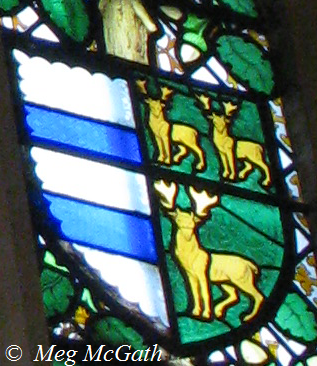
The arms of Parr and Green from the Pedigree window of Katherine Parr in the great hall of Hampton Court Palace, London.

The arms of Parr and Green from the Pedigree window of Katherine Parr in the great hall of Hampton Court Palace, London.

  • Maud Green, Lady Parr (6 April 1492 – 1 December 1531)[5], married Sir Thomas Parr, son of William Parr, 1st Baron Parr of Kendal and Hon. Elizabeth FitzHugh.
  • Anne Green, Lady Vaux of Harrowden (c.1489-before 14 May 1523), who would go on to marry the second husband of the before mentioned, Hon. Elizabeth FitzHugh, Nicholas Vaux, 1st Baron Vaux of Harrowden. Their eldest son, Thomas, would succeed as the 2nd Baron. By her daughter Maud, she was an ancestress to Elizabeth Bowes-Lyon, mother of Queen Elizabeth II.

This line of Green’s was buried at St. Bartholomew’s Church in Greens Norton, Northamptonshire, England. The family lived at Greens Norton from the fourteenth century up until the death of Sir Thomas in 1506. His estates passed through his daughters marriages in to the Parr and Vaux families. This line of Greens is not for obvious reasons the Greens who immigrated into the United States.

Ancestry

Sir_Thomas_Green_ancestry

Lord Green descended directly from many noble and royal lines. Interestingly enough, Parr’s maternal line was very involved in the royal courts. Most people, who know nothing of Parr’s ancestry, dismiss Maud [Green] Parr as having no connections and of being of no stature. Her mother’s link the Fogge family no doubt helped her establish herself at court. And of course, Maud would become a lady to Queen Katherine of Aragon; serving her until her own death in 1531.

Too name a few of the ancestors of Lord Green..

  • Edward I and Eleanor of Castile three times by his daughters Princess Joan of Acre [by her daughters Lady Margaret, Countess of Gloucester and Lady Eleanor, Lady Despenser, wife of Hugh “the Younger”] and Princess Elizabeth of Rhuddlan [by her daughter Lady Eleanor or Alianore, Countess of Ormonde].
  • John I of England [three times via Joan of Wales]
  • Henry II of England [twice illegitimately and legit by Eleanor of England]
  • Henry I [ten times by Robert of Caen, 1st Earl of Gloucester, twice by Maud of Normandy, Duchess of Brittany and once by Henry of Narberth]
  • Blanche de Brienne, granddaughter of Berenguela of Leon, Empress of Constantinople, herself the daughter of Alfonso IX, King of Leon and Berengaria of Castile [daughter of Eleanor of England, Queen consort of Castile].
  • Alfred ‘the great’, King of Wessex.[3] 
  • David I of Scotland via Dervorguilla, Lady of Galloway, granddaughter of David of Scotland, 9th Earl of Huntingdon, Lady Margaret of Huntingdon, Duchess of Brittany [three times], and Lady Marjory of Huntingdon, Countess of Angus.
  • Llewelyn, Prince of Wales via his daughters.
  • Louis VI [twice by Isabella of Angouleme, Queen of the English by her second husband Hugh X of Lusignan].

Written by (c) Meg McGath

  1. ^ Browning, Charles Henry. Americans of royal descent: A collection of genealogies of American families whose lineage is traced to the legimate issue of kings. Porter & Costes, 1891. Pg 259.
  2. ^ The Lineage and Ancestry of H.R.H. Prince Charles, Prince of Wales, by Gerald Paget, Vol. I, p. 95.
  3. ^ Fraser, Antonia. The Wives of Henry VIII. Vintage Publishing, 30 November 1993. Chapter: Catherine Parr.
  4. ^ Oxford Dictionary of National Biography, Rosemary Horrox, ‘Fogge, Sir John (b. in or before 1417, d. 1490)’, first published 2004; online edn, Jan 2008, 692 words.
  5. No longer using Alison Weir as a source.
  6. ^ ‘Medbourne’, A History of the County of Leicestershire: Volume 5: Gartree Hundred (1964), pp. 229–248. URL: [1] Date accessed: 17 January 2011.
  7. Evans, D.L., ed. (1955). Calendar of Inquisitions Post MortemIII. London: Her Majesty’s Stationery Office.
  8. Ellis, Henry, ed. (1812). The Chronicle of John Hardyng. London: London: F.C. and J. Rivington.
  9. Gairdner, James, ed. (1861). Letters and Papers Illustrative of the Reigns of Richard III and Henry VII.

Ancestral Lineage of Queen Katherine Parr

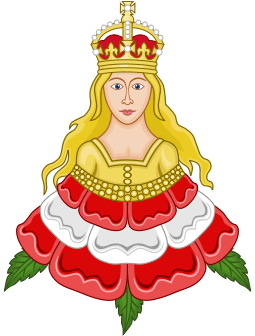
Royal Emblem of Queen Katherine Parr

“Like the family of King Henry’s second wife, the Boleyns, the Parr family had gone up in the world as a result of royal favor and successful marriages.”[3] Historian Agnes Strickland quotes that Katherine’s paternal ancestry was more distinguished than that of Thomas Boleyn and John Seymour. Also, according to David Starkey, Katherine’s lineage, “unlike that of Henry’s second wife, Anne Boleyn, was better and more established at Court.”[3]
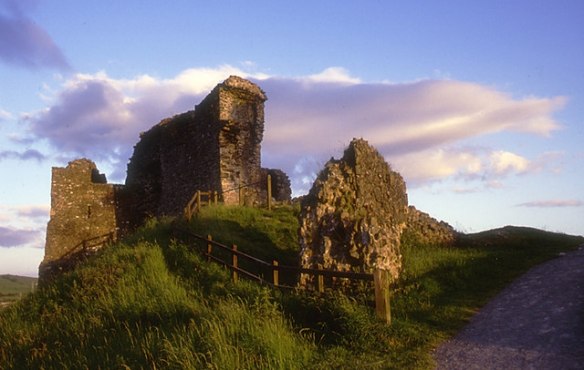
Kendal Castle was acquired through the marriage of Sir William de Parr to the heiress and only child of Sir John de Ros of Kendal, Elizabeth de Ros in 1383.

Katherine’s 3x great-grandfather was Sir William Parr (d.1405); in 1383, Sir William de Parre married Elizabeth, only daughter and heiress of Sir John de Ros and Elizabeth le Latimer, daughter of Sir Thomas le Latimer, 1st Baron Latimer of Braybrooke and Lora de Hastings. Elizabeth de Ros was the granddaughter and heiress of Sir Thomas de Ros, Baron of Kendal and had livery of her inheritance. On the accession of the Duke of Lancaster as Henry IV of England, Sir William stood so high in the estimation of the new monarch that he was deputed with the bishop of St. Asaph to announce the revolution to the court of Castile; the King claimed Castile by right of his father, even though his half-sister, Katherine [daughter of the Titular Queen Constanza of Castile], had taken her rightful position as Queen consort after the debate of her Regency. He died on 4 October 1405 being then seized of the fourth part of the manor of Kirby in Kendal. In right of the heiress of Ros and was succeeded by his eldest son, Sir John of Kendal.
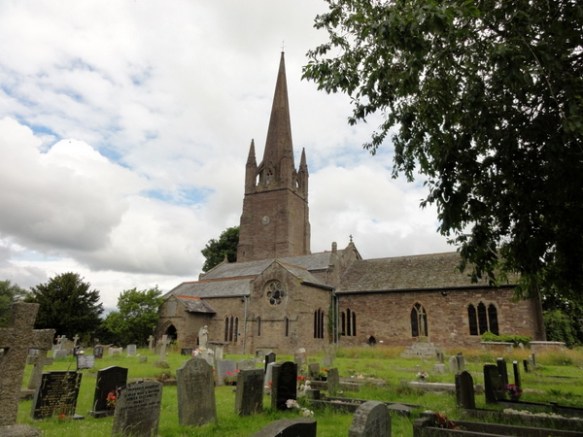
Church of St. Peter and St. Paul, Weobley, Hertforshire. Agnes is buried with her 3rd husband. Her first husband, Sir Walter Devereux, has his own tomb and effigy.

Church of St. Peter and St. Paul, Weobley, Hertforshire. Agnes Crophull is buried with her 3rd husband, John Merbery. Her first husband, Sir Walter Devereux, has his own tomb and effigy.

Katherine’s great-great-grandfather, Sir John Parr (b. circa 1383) married to Agnes de Crophull, the sole heiress to Sir Thomas de Crophull of Weobley Castle and Sybil de Bere. Agnes’s grandfather, Sir John of Bonnington was styled Seigneur of Weobley Castle as owner of Weobley Castle in Hertfordshire. The Castle had been gained through his marriage to Margery de Verdun. The Verdun’s descended from John I of England (Joan, Princess of Wales and Llewelyn Ap ‘The Great’, Prince of Wales) and his sister Princess Eleanor, Queen of Castile (Infanta Berengaria of Castile, Queen Consort of Leon and Alfonso IX, King of Leon). They also descended from King David I of Scotland. Agnes was married firstly to Sir Walter Devereux, Sheriff of Herefordshire by whom she had issue. In 1386, Devereux had livery of her lands through which Weobley Castle passed to his children by Agnes. Agnes’s cousin, Sir John de Crophull had Lordship of Ludlow Castle. Her descendants include Anne Devereux (wife of Sir William Herbert, 1st Earl of Pembroke, 1408 creation) and Sir Walter Devereux, 1st Earl of Essex who married to Lettice Knollys. She was also a great-grandmother to Blanche Milbourne, Lady Troy and thus a great-great-grandmother to Blanche Perry. Agnes’s third husband was Sir John Merbury, Chief Justice of South Wales. The couple had no children, however Merbery had issue from his first marriage, Elizabeth, who ended up marrying her step-brother’s son, Sir Walter Devereux. This connection to Agnes Crophull gave the Parr’s more than a few connections to the gentry and courtiers.

Katherine’s great-grandfather, Sir Thomas Parr (b.1407) was Sheriff of Westmorland and Escheator of Cumberland & Westmorland. He married Alice Tunstall, co-heiress of Sir Thomas Tunstall of Thurland Castle and Isabel Harrington. By this connection she was a cousin to Bishop Cuthbert Tunstall who served Henry VIII and all of his children. Under Elizabeth I, he was put under “house arrest” in Lambeth Palace where he died. Isabel Harrington’s sister, Elizabeth, married Sir John Stanley; they were grandparents to Sir Thomas Stanley, 1st Earl of Derby making him a first cousin, three times removed. Derby married Katherine’s great-aunt, Eleanor Neville, by whom he had issue. Upon his second marriage to Lady Margaret Beaufort, Derby became step-father to King Henry VII. Derby was a key figure in the Battle of Bosworth and crowned Henry upon the battlefield. Upon the death of Isabel, Lady Tunstall, Tunstall re-married to Hon. Joan Mowbray, daughter of Sir John de Mowbray, 4th Baron and Hon. Elizabeth Segrave, herself the daughter of Lady Margaret Plantagenet, daughter of Thomas of Brotherton. The marriage produced no children, but the Tunstall’s had step-siblings from Joan’s first marriage to Sir Thomas Grey which included John Grey, Earl of Tankerville.

Katherine’s grandfather, Sir William Parr, was part of King Edward IV’s court. William held the office of comptroller of the household from 1471 to 1475 and again in 1481 till Edward’s death in 1483.[4][5][6] William was held in high favour and close friend to the King and was one of only two courtiers to become Knight of the Garter in the second reign of Edward IV. Elder generations of the Parr family had served in the household of John of Gaunt, 1st Duke of Lancaster, ancestor of Queen Katherine. Sir William Parr could claim royal descent through many lines, a few including:

  • Blanche de Brienne and William Fieness, Baron of Tingry; Blanche was the granddaughter of Emperor Jean of Brienne, King of Jerusalem and Infanta Berenguela of León, Empress of Constantinople. By this lineage the Parr’s descended from Eleanor of England, Queen of Castile, daughter of Henry II of England and his consort Eleanor of Aquitaine. By this lineage the Parr’s also descended from the Jimenez Kings of Navarre; the infamous Garcia Ramirez, King of Navarre who “restored” the independence of the Navarrese crown after 58 years of union with the Kingdom of Aragon. The Jimenez dynasty had been ruling Pamplona, later Navarre, since 905 AD. Garcia Ramirez was the grandson of the illegitimate son of Garcia Sanchez III of Navarre. After the assassination of the King’s son, Sancho IV, Navarre was taken over by the Aragonese.
  • King John of England [through his illegitimate daughter Joan, Lady of Wales and her husband Llewelyn, Prince of Wales],[1]
  • King David of Scotland, sister of Matilda, Queen of the English [thrice through his son Henry, Earl of Huntingdon], [1]
  • King William “the Lion” of Scotland [twice through his illegitimate daughter Isabella, Lady Ros],[1]
  • Geoffrey Plantagenet, founder of the Plantagenet Kings of England through several lines.[1]
  • King Henry I of England via several illegitimate children such as Robert de Caen, 1st Earl of Gloucester
  • Stephen Blois, Count of Aumule.
  • Several times by Henry I, King of France
  • Adela of England and Stephen of Blois
  • Adeliza of Louvain, Queen consort of the English
  • The Brus family from which came Robert de Brus, King of the Scots.[1]
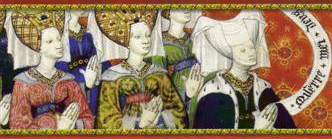
Lady Joan Beaufort and her daughters

Katherine descended from every King of England who had issue up to King Edward III. Katherine Parr was also the only queen of King Henry VIII to descend from the Beaufort’s; the illegitimate, later legitimized issue of  Prince John of Gaunt, 1st Duke of Lancaster and his third wife, Katherine Swynford Roet. King Henry’s first wife, Katherine of Aragon, also descended from John of Gaunt by his first two wives.
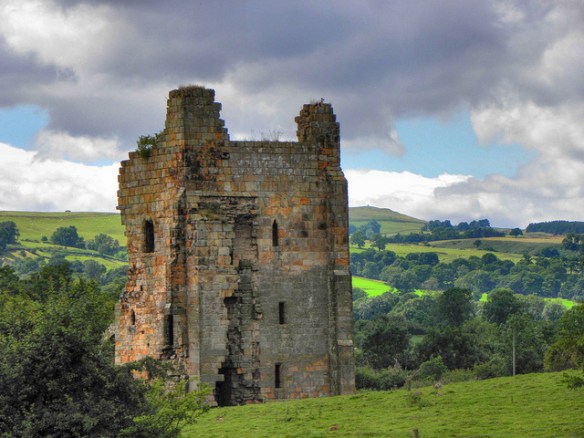
Ravensworth Castle, ancestral home to the Barons FitzHugh

Sir William Parr’s wife, the Hon. Elizabeth FitzHugh, was the daughter of Henry, 5th Baron FitzHugh of Ravensworth Castle and Lady Alice Neville. FitzHugh, himself, descended from Henry I (several times), Henry II, and John I (twice); all from illegitimate children. His family was an old baronial family of England descending from Akarius Fitz Bardolph, Lord of Ravensworth (d.1161), the son of Bardolph an 11th century nobleman living in Richmondshire, the area encompassing the Ure, Tees and Swale valleys in northern England.[5] The 5th Baron was the son of William, 4th Baron FitzHugh and Margery Willoughby; by his mother he was a nephew of Richard Willoughby, 6th Baron Willoughby of Eresby.

Lady Alice was sister to Richard Neville, 16th Earl of Warwick and 6th Earl of Salisbury [best known as “Warwick, the Kingmaker”] and other prominent noblemen and women. Her cousin, Sir George Neville, 1st Duke of Bedford was intended to marry Elizabeth of York [mother of King Henry VIII]; this obviously fell through due to his father and nephew’s [Warwick] rebellion against Edward IV. The Neville’s were already established at court being grandchildren of John of Gaunt’s legitimized daughter Lady Joan Beaufort, Countess of Westmorland. Katherine was just about related to every noble and royal at court who came before or during her time; Edward IV and Richard III were first cousins (thrice removed of Katherine Parr). Their wives, Queen Anne Neville and Queen Elizabeth Woodville, were also a first cousins. [The Woodville connection comes from Katherine’s mother, Maud Green — Queen Elizabeth was a first cousin, thrice removed of Katherine]. This connection made her related to all of her husbands in one way or another.
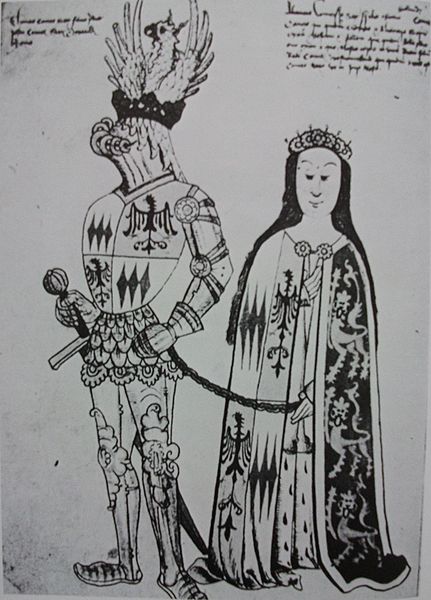
Sir Thomas Montacute, 4th Earl of Salisbury and Lady Eleanor Holland
Princess Joan of Acre, eldest daughter of Edward I and Eleanor of Castile

Lady Alice Neville’s mother Lady Alice Montacute was suo jure 5th Countess of Salisbury being the only surviving child of Sir Thomas, 4th Earl of Salisbury and Lady Eleanor Holland [pictured above]. Salisbury married to Alice Chaucer. Salisbury descended from:

  • Princess Joan of Acre, eldest daughter of King Edward I and his first wife, Eleanor of Castile,
  • Henry I of England by his illegitimate sons Robert de Caen, 1st Earl of Gloucester [twice] and Reynold of Dunstanville, 1st Earl of Cornwall,
  • William the Lion, King of Scots by his illegitimate daughter Isabella, Lady Ros,
  • William the Conqueror by his illegitimate son William Peverell and legitimate daughter, Adela of Normandy.

Lord Salisbury’s siblings included Lady Anne who married thrice. By her marriage to Sir Richard Hankford they were ancestors to Anne Boleyn. After being widowed, she became Duchess of Exeter as wife to the 2nd Duke of Exeter (nephew of the 2nd Earl of Kent, ancestor to Queen Katherine Parr).

Lady Eleanor Holland descended from
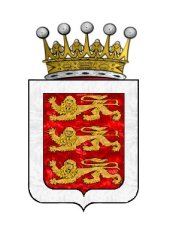
Coat of arms of Prince Edmund of Woodstock, 1st Earl of Kent

  • Edward I of England by his son from his second marriage to Marguerite of France [daughter of Philip III of France and Maria of Brabant], Edmund of Woodstock, 1st Earl of Kent,
  • Henry III of England by his son Prince Edmund, 1st Earl of Lancaster [whose wife was Blanche of Artois, Queen of Navarre and mother to another of Queen Katherine’s ancestors, Jeanne I, Queen Regnant of Navarre]. Their son was Sir Henry, 3rd Earl of Lancaster who married Maud Chaworth [descendant of Louis VI of France],
  • John I of England twice by his illegitimate daughter Lady Joan, Lady of Wales,
  • Henry II of England by his legitimate daughter by Queen Eleanor of Aquitaine, Eleanor of England, Queen of Castile and by his illegitimate son William Longespee, 1st Earl of Salisbury,
  • Henry I of England twice by his illegitimate daughter Lady Maud of Normandy, Duchess of Brittany and twice by his illegitimate son, Robert de Caen, 1st Earl of Gloucester,
  • Duncan II of Scotland by his son the Earl of Moray
  • David I of Scotland, twice by his son Henry, Earl of Huntingdon,
  • Louis VI of France by his son Pierre of Courtenay,
  • Geoffrey Plantagenet twice by his son Sir Hamelin Warrenne, Earl of Surrey,
  • William, the Conqueror twice by his daughter Adela of Normandy and his illegitimate son William Peverell.
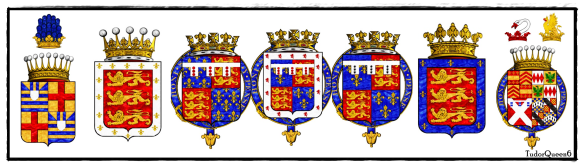
Coat of arms relating to those mentioned below who married or are in the Holland family.

Coat of arms relating to those mentioned below who are members of, descendants of, or married into the Holland family. L to R: Mortimer, 2nd Earl of Kent, 1st Duke of York, 3rd Earl of Cambridge, Duke of Clarence, 3rd Duke of Lancaster, 16th Earl of Warwick

Lady Salisbury’s siblings included:

  • Lord Thomas Holland, 1st Duke of Surrey, 3rd Earl of Kent.
  • Lord Edmund of Woodstock, 4th Earl of Kent who had a child by Lady Constance of York, daughter of Edmund of Langley, Duke of York (husband of his sister, Lady Joan). In 1403, there was a betrothal of Lord Edmund of Woodstock to Lady Constance of York; not apparent as to whether or not they actually married. [Richardson, Plantagenet Ancestry]
  • Lady Elizabeth who married Sir John Neville; ancestors to the Earls of Westmorland (Neville was the heir to the 1st Earl and his first wife Lady Margaret Stafford. The Earl would later marry Lady Joan Beaufort — the two were ancestors to Queen Katherine Parr).
  • Lady Joan married to Edmund of Langley, Duke of York — no issue. Nevertheless she was styled Duchess of York.
  • Lady Alianore, Countess of March, wife to the 4th Earl of March — and through them the crown of Edward IV was claimed by their daughter, Lady Anne Mortimer, Countess of Cambridge (wife of Richard of York, 3rd Earl of Cambrige, brother to Lady Constance of York). The Countess would marry again to the 5th Baron of Powis, their grandson would marry the illegitimate daughter of the Duke of Gloucester (son of King Henry IV), Lady Antigone.
  • Lady Margaret, Countess of Somerset and Duchess of Clarence married John Beaufort, 1st Earl of Somerset (illegitimate son of John of Gaunt by Katherine Swynford) and by him they were ancestors to Lady Margaret Beaufort, mother of Henry VII. Margaret would re-marry to Thomas of Lancaster, Duke of Clarence, grandson of John of Gaunt by his son King Henry IV.
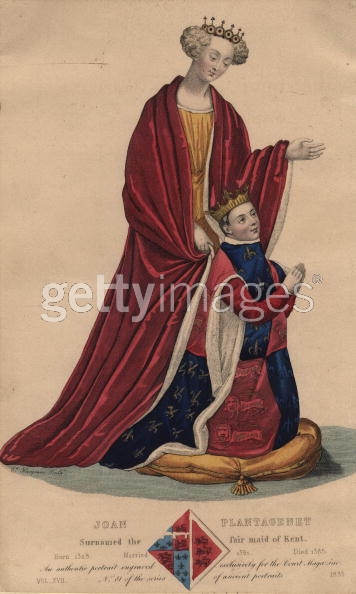
Princess Joan of Kent and her son, King Richard II

Lady Salisbury’s [Lady Eleanor Holland] paternal grandmother was Princess Joan of Kent, suo jure 4th Countess of Kent and later Princess of Wales. Her story is one of interest. She married firstly to Sir Thomas Holland who became 1st Earl of Kent through her inheritance. By him she had Lady Salisbury’s father, Sir Thomas Holland, 2nd Earl of Kent. Her uncle was Sir John, 1st Duke of Exeter who married Lady Elizabeth of Lancaster, daughter of Prince John of Gaunt and his first wife, Blanche of Lancaster. They were parents to John Holland, 2nd Duke of Lancaster who married thrice; Lady Anne Stafford, Beatrice of Portugal, and Lady Anne Montacute. His second wife, Beatrice of Portugal was half-sister to Edward I of Portugal; John, Lord of Reguengos de Monsaraz; and Afonso, Duke of Braganza. Lord of Reguengos was a grandfather to Queen Isabella of Castile (mother of Queen Katherine of Aragon) while the Duke of Braganza was a great-grandfather.

Lady Salisbury’s paternal aunts were Lady Joan, Duchess of Brittany [wife to John V of Brittany] and Lady Maud, Countess of Ligny [wife to Waleran III of Luxembourg; their daughter Jeanne married Antoine de Valois, Duke of Brabant]. Joan of Kent’s third marriage was to Edward, Prince of Wales [eldest son and heir of King Edward III]; their son was King Richard II of England and thus granduncle to Lady Salisbury.
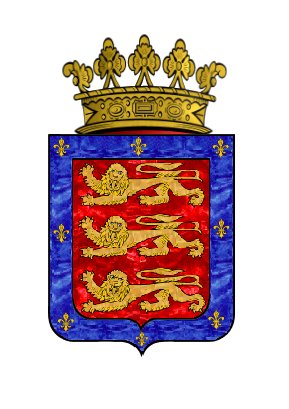
John Holland, Duke of Lancaster.

John Holland, 1st Duke of Lancaster.

Lady Salisbury’s maternal grandparents were Sir Richard “Copped Hat” FitzAlan, 10th Earl of Arundel and Lady Eleanor of Lancaster, daughter of the 3rd Earl of Lancaster and his wife, Maud Chaworth. The Earl and Countess were parents to Lady Alice FitzAlan, Countess of Kent (wife to the 2nd Earl). By her mother, Lady Kent had half-siblings by Lady Arundel’s first marriage to Sir John Beaumont, 2nd Baron; Maud, the ancestress of the Courtenay Earls of Devon and Lord Henry (who were both half-siblings themselves to Sir William Devereux, father of Sir Walter, first husband to Agnes Crophull, later Lady Parr of Kendal as wife to Sir John Parr.) Lady Kent’s siblings included:

  • Lady Joan of Arundel, mother to the uncrowned Mary de Bohun, wife of Henry IV and mother to Henry V. Her other daughter became Duchess of Gloucester as wife to Lord Thomas of Woodstock, Duke of Gloucester, youngest son of King Edward III.
  • Sir Richard, 11th Earl of Arundel who’s daughter Margaret became Duchess of Norfolk; another daughter Joan became Lady Bergavenny, ancestress to Lords Bergavenny, Earls of Shrewsbury, and grandparents to the 7th Earl of Ormonde (ancestor of Queen Anne Boleyn).
  • Sir John, 1st Lord Arundel — ancestor to the later Earls of Arundel and Dukes of Norfolk. Lord Arundel’s great-grandson married Lady Joan Neville, sister of “Warwick, the Kingmaker” and Alice (great-grandmother to Queen Katherine Parr).
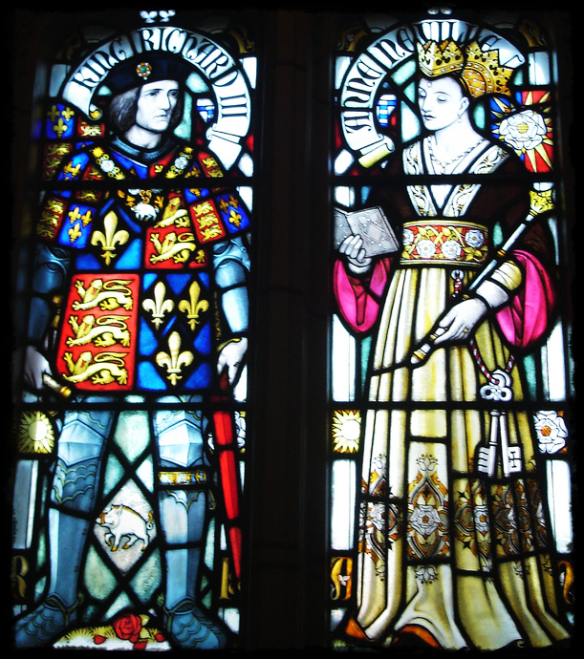
King Richard III and consort Lady Anne Neville were both cousins to Queen Katherine’s paternal grandmother

When the Duke of Gloucester became King in 1483, as Richard III, both Elizabeth and her mother Alice were appointed ladies-in-waiting to Alice’s niece, queen consort Lady Anne Neville. The profession would span five generations down to Katherine’s sister, Anne, who would serve all six of King Henry VIII’s wives. by Lady Parr (Golden Aged writer)

Katherine’s father, Sir Thomas Parr, was a close friend of King Henry VIII; Parr’s step-father, Sir Nicholas Vaux, had been educated in the household of Lady Margaret Beaufort, Henry’s grandmother, where Parr is also believed to have spent some time. Sir Thomas was present at court and was in the circle of Henry VIII which included Sir Thomas Boleyn. Both were knighted in 1509 at Henry’s coronation; Parr was also made a Knight of the Garter and appointed Sheriff of Northamptonshire on that occasion. Parr became Master of the Wards and Comptroller of the household of Henry VIII. Parr’s brother, William [later Baron Parr of Horton], was also a part of the King’s circle. They kept company with the Stafford’s and their cousins, the Neville’s. They were also friend’s with the Carew’s and Sir Thomas Boleyn, father Queen Anne Boleyn. In 1515, Parr was entrusted with escorting Queen Margaret of Scotland [the king’s elder sister] from Newcastle back to London.

The “lowly” marriage of Mary Boleyn to Sir William Stafford — unlike “The Tudors” insistence that he was a “nothing” — Stafford was actually the grandson of Sir John Fogge and Alice Haute (cousin to Queen Elizabeth Woodville). This connection made Stafford a cousin to Parr’s mother, Maud Green (her aunt was Stafford’s mother, Margaret).

Katherine’s brother, William, entered the household of Henry Fitzroy, the King’s illegitimate son, at the age of eleven. It was there that he met Henry Howard, Earl of Surrey. They were educated together and Katherine’s uncle, Sir William, Baron Parr of Horton, was part of the head of the household for Fitzroy.

From Sir Thomas’ grandmother to his own daughter, Anne, were all ladies-in-waiting to the queens of England. His grandmother and mother both personally served under special appointment by Richard III’s consort herself, Lady Anne Neville. Anne was the niece of Parr’s grandmother, Lady Alice Neville. Katherine’s sister, Anne Parr [Herbert], was one of the few women to serve all six of Henry’s wives. Maud Parr nee Green, his wife, was good friend’s with Queen Katherine of Aragon and a lady-in-waiting to her. She was given private chambers next to the queen’s and Queen Katherine was supposedly Katherine Parr’s godmother. Lady Parr’s grandmother, Lady Alice Fogge (Haute) was a lady to Queen Elizabeth Woodville (see below).

If Sir Thomas had not died at such an early age he would have been given the title which his brother received or another barony. He was also co-heir to the FitzHugh barony; which is still in abayence between the descendants of his aunt Alice FitzHugh, Lady Fiennes and his daughter, Anne Parr, Countess of Pembroke.

Green Family

Katherine’s mother also descended from royal blood. Maud Green’s family had long served the crown.

Sir Henry Green (died 6 August 1369) was an English lawyer, and Chief Justice of the King’s Bench from 24 May 1361 to 29 October 1365. Early in his career he served both Queen Isabella (consort of Edward II) and Edward the Black Prince. He was made justice of the Court of Common Pleas in 1354, and knighted by King Edward III.

By her grandfather, Sir Thomas Greene of Greens Norton, Queen Katherine directly descended from King Fergus of Galloway and many nobles and Kings of England which included William the Conqueror, John of England, Henry I by three illegitimate children and Empress Matilda, Edward I, and Henry II of England by two legitimate children and one illegitimate. By both husbands of Isabella of Angoulême, Queen Consort of England;  from Welsh nobility like Nest Ferch, Princess of Wales, Llewelyn Ap ‘The Great’, Gwladys Dhu verch; Spanish royals such as Alfonso II of Aragon, Alfonso IX of Aragon; they also descended from French royalty Charles I, Henry I, Louis VII of France and Scottish royals such as David I, Maud of Huntingdon; and from Jean of Brienne, King of Jerusalem through her connections with the Ferrers of Groby, Talbot, Despencer, FitzAlan, De Clare, Earls of Ormonde, and other noble families.

By her mother, Joan Fogge, Lady Parr was a cousin to Elizabeth Woodville, queen consort of Edward IV; descending from Queen Elizabeth’s grandfather, Sir Richard Woodville. When Elizabeth became queen to Edward IV, she brought her favorite female relatives to court to serve her. Lady Parr’s grandmother, Lady Alice Fogge (born Haute), was one of five ladies-in-waiting to her cousin Elizabeth Woodville in the 1460s.[4]

Relations to Husbands

Queen Katherine and Henry VIII’s closest relations: Third cousins (through Sir Richard Wydeville and Joan Bedlisgate); third cousins once removed (through Ralph Neville, 1st Earl of Westmorland and Lady Joan Beaufort); and double fourth cousins once removed (through Thomas Holland, 2nd Earl of Kent and Lady Alice FitzAlan and John of Gaunt, 1st Duke of Lancaster and Katherine Swynford). Queen Katherine also shared ancestors with her 4th husband, Thomas Seymour, but the closest one is Edward III and Philippa.

Sources:

  1. Douglas Richardson. “Plantagenet Ancestry,” 2005.
  2. Douglas Richardson. “Magna Carta Ancestry,” 2nd Edition, 2011.
  3. David Starkey. “Six Wives: The Queens of Henry VIII,” HarperCollins, May 4, 2004. pg 690. Google eBook.
  4. Barbara J. Harris. “English Aristocratic Women, 1450-1550 : Marriage and Family, Property and Careers: Marriage and Family, Property and Careers,” Oxford University Press, Jul 26, 2002. pg 218.
  5. John Burke. “A general and heraldic dictionary of the peerages of England, Ireland, and Scotland, extinct, dormant, and in abeyance,” 1831.

Some of her ancestry can be viewed here:  

Tudors Wiki: Ancestry of Queen Catherine Parr

Thoroughly researched. One line still in question: Sir Roger, 4th Baron Strange of Knockyn’s wife, Maud, who has been theorized as the illegitimate daughter of Enguerrand VII de Coucy, 1st Earl of Bedford which would relate her back to ancestors like the Habsburgs; the Chatillions; the Wittlesbachs; Beatrice of England, Duchess of Brittany [daughter of Henry III of England and Eleanor of Provence]; Matilda of England, Duchess of Saxony [daughter of Henry II of England and Eleanor of Aquitaine]; the Champagne and Jiminez Kings of Navarre;  and more.

Family of Queen Katherine: Fogge of Kent

Sir John Fogge is know for being the great-grandfather of Queen Katherine Parr and other prominent Tudor courtiers.

Sir John Fogge (c.1417-1490) was Lord of the manor of Repton. His family was one of the first families in Kent, England. It was this John Fogge of Ashford who built and endowed the noble Church and the College at Ashford, Kent circa 1450, where he is also buried.

There is some uncertainty over the parents of Fogge. The most well-known source, “The Family Chronicle of Richard Fogge” shows John as the son of Sir William Fogge and an un-named daughter of William Wadham (his second wife).[17] “The Antiquary” states that he was the son of Sir William and his first wife, a daughter of Sir William Septvans.[15] However, Rosemary Horrox argues that he was the son of another John [and Jane Cotton]; Sir William’s younger brother.[12] Horrox also states he must have been born about 1417, since he was of legal age in 1438, and came to prominence when he inherited the senior line of the family by February 1447.[12]

John Fogge was for certain the grandson of Sir Thomas Fogge, who died in 1407. Fogge was buried in Canterbury Cathedral. He had been a soldier and courtier under King Richard II and his successor, the Lancastrian usurper, King Henry IV. Fogge’s standing in Kent was owed much to his early career as a Captain of war in France. His military service began in the retinue of Henry, Duke of Lancaster, the King’s lieutenant in Brittany from 1356. Like the Parrs’, he served John, Duke of Lancaster; the third surviving son of Edward III. He was of service to Lancaster in Spain in 1386.[13] It is uncertain for how long Fogge had been a retainer of Lancaster, but on 13 June 1372, the Duke formally retained him for life. Lancaster made mention of Fogge’s good service in the past and indicated by the size of the annuity granted (100 marks) that he ranked him high in his esteem. Under Lancaster, Fogge was Captain of Calais among other high postings.[19]

Thomas Fogge’s eldest son, John, came to the court of the Lancastrian King Henry IV. John served on a number of commissions and was appointed Sheriff of Kent in 1453.  John would continue to hold favor under the new King and gained the esteemed office of Comptroller of the Household in 1460 and keeper of the wardrobe to Henry VI in the last year of his first reign. John was knighted by the King in 1461.

In 1461 and 1463, under the Yorkist King, Edward IV, John Fogge was elected to Parliament as knight of the shire for Kent. Fogge became a Privy Councillor. From 1461-68, he was Comptroller and Treasurer of the Household [later known as Lord Chamberlain under the Tudor monarchs]. Fogge would continue that role for the Prince of Wales (later King Edward V). In 1461, Fogge was granted the office of keeper of the writs of the Court of Common Pleas.[2] He took part in the investigation of the possible treason of Sir Thomas Cooke. In 1467, he was MP for Canterbury and Sheriff of Kent, again, in 1472 and 1479. He represented Kent in parliament in 1478 and 1483.[1] It is thought that Fogge may have accompanied Edward into exile.[16] For Fogge’s continued loyalty to the Crown, he was awarded the Constableship of Rochester Castle, the keeping of Hothfield Manor, and the manors of Towton and Dane, which had formerly belonged to the Lancastrian loyalist, Sir Thomas Brown.[16]

From 1473, he was on the council and one of the tutors of Prince Edward (the future King Edward V).[16] He undertook administration of his property and was made Chamberlain jointly with Sir John Scott.[1] Fogge’s kinsman, Anthony, Earl of Rivers, was appointed the Prince’s Governor.[16] Fogge’s Haute kinsmen also rose in royal favor; Richard Haute had also become one of Prince Edward’s tutors and councilors and by 1483 Haute was controller of this household.[16]

In 1483, he supported Richard Guildford in Kent against Richard III, this rising being in support of Edward V, and becoming part of the unsuccessful Buckingham’s rebellion.[4] This was despite an apparent reconciliation with the king as soon as he came to the throne, after Fogge had taken sanctuary in June 1483 at the time of Richard’s coup in Westminster Abbey.[5][6] The rising was blocked at Gravesend by John Howard, 1st Duke of Norfolk; and the rebel force retreated.[7] The king acted mercifully once order had been restored;[8] but Fogge later did have lands in Kent confiscated and given to Sir Ralph Ashton.[9]Throughout the many conflicts which arose with the War of the Roses, Sir John was lucky enough to survive, especially when Richard III came to the throne. Sir John was a supporter of Henry Tudor and reportedly had a role in the Battle of Bosworth field. Because of this, Sir John’s lands that were attained during King Richard’s reign were restored as soon as King Henry VII came to power.

There is some confusion as to which wife he married first; they were both named Alice. It is thought that Alice Haute was Fogge’s first wife. His second wife was Alice de Criol or Kyriell, the daughter of the Yorkist Sir Thomas de Kyriell who was killed at the second battle of St. Albans. This marriage brought him Westenhanger Castle.[10]The “History of Ashford” states that Alice de Kyriell was Fogge’s first wife and that Alice Haute was his subsequent marriage. However, it then states that Alice was formerly married to a Woodville; which is not true. She was the daughter of a Woodville.

Fogge’s switch from the Red Rose of Lancaster to the White Rose of York was most likely due to his marriage into either the Woodville or Kyriel family; both families joined the Duke of York [later King Edward IV] in 1460. Fogge, Sir William Haute [father of Alice], and Sir Thomas Kyriel [father of Alice] were part of the first group to join the Yorkist earls when they arrived at Kent in 1460.[16]

Family

Edward IV and Elizabeth Woodville by Sophie Carter.

Edward IV and Elizabeth Woodville by Sophie Carter.

Fogge’s first wife was Alice Haute or Hawte (born circa 1444),[11] whom he had married c. 1465. She was the daughter of Sir William Haute of Hautsbourne, Kent (c.1390-1462) and Joan Woodville, sister of Richard Woodville, 1st Earl Rivers; and as so Alice was first cousin to Elizabeth Woodville, queen consort to Edward IV, and mother to Elizabeth of York.[12][13] When Elizabeth became queen, she brought her favorite female relatives to court.[21] As Lady Alice Fogge, Alice was one of the queen’s five ladies-in-waiting during the 1460s.[21]

According to Susan James and Linda Porter, they believe Sir John Fogge was the great-grandfather of Queen Katherine Parr.[11]  The other children included Sir John Fogge of Repton Manor and Margaret, Lady Stafford (mother of Sir William Stafford, husband to Mary Boleyn).[14][18]

His son Sir Thomas Fogge, Sgt of Calais was the son of his second marriage to Alice Kyriell.[14][15] His daughters Anne and Elisabeth were probably from the second marriage as well.[12]Illegitimate Daughter of Richard III Theory

There is a very slight possibility that Richard III’s mistress (or one of them) and mother to his illegitimate daughter was the sister-in-law to Lady Fogge. Katherine was the wife of James Haute (son of William Haute and Joan Woodville). Little is known about her; however in 1477 Richard in a grant gave to Katherine Haute 100 shillings per annum for life (DL29/637/10360A). There is no apparent reason for Richard to give her an annuity, and her Christian name is of course that of Richard’s illegitimate daughter, an uncommon one in the Yorkist Neville families. All of this may of course be far from the truth, although it is suggestive.[23]

Burial

The tomb of Sir John Fogge and his two wives at Repton Church, Kent, England. An inscription round the margin of the slab, of which only a part remained in the days of Dering, completed the memorial. It seems to have recorded “that Sir John was a special friend of Edward IV., … and departed this world universally esteemed by the common people.”

Fogge died in 1490. The tomb in which he’s buried stands on the North side of the altar between the chancel and Fogge Chapel. The original ornaments have been stripped, but there were originally brass effigies of his two wives, Alice Kyriell and Alice Haute. The mantels of the wives were fastened with a rose. At their feet were crouched dogs with knotted leading strings. On the south side of the tomb had been enriched with Gothic arches where three shields were found; Kryiell, Haute, and Valoignes impaling Fogge. Fogge’s effify was attired in rich armor and decorated with the Yorkist collar of suns and roses with the white lion of Marche. His head reclined on his helmet, adorned with mantlings and crest. At his feat sat an Italian greyhound. On the north side the center ornament was an angel supporting an inscription panel with an endless circle formed of rose sapling sticks firmly bound together perhaps to show the stability of the family unity, the vitality of which is indicated four small sprouts of rose branches with leaves and blossoms. Four large bosses of the united Roses proclaimed a Yorkist’s acquiescence in the peaceable conclusion of the commotion.[22]

Coat of Arms

Fogge of Kent

Fogge of Kent

Their arms, Argent, on a fess, between three annulets, sable, three mullets, pierced of the first, which coat is carved in stone on the porch of Ashford church, on the roof of the cloysters at Canterbury, and in several windows of the cathedral there.[20]

Images

  • Drawings by Sir Edward Dering, 17th Century, published in Archaelogica Cantiana, Vol 2, 1859 [out of copyright].

Notes

    1. Charles Ross, Richard III (1981), p.106.
    2. J. R. Lander, Conflict and Stability in Fifteenth-century England (1971), p. 180.
    3. Arelene Okerlund, Elizabeth, England’s Slandered Queen (2006), p. 104.
    4. Paul Murray Kendall, Richard III (1972), p. 261.
    5. Ross, p. 112.
    6. Michael Bennett, The Battle of Bosworth (1987), p. 41 and p. 43.
    7. Kendall p. 271.
    8. Kendall p. 276.
    9. Ross, p. 119.
    10. http://www.fortifiedengland.com/Home/Categories/ViewItem/tabid/61/Default.aspx?IID=3415
    11. The Lineage and Ancestry of H.R.H. Prince Charles, Prince of Wales, by Gerald Paget, Vol. I, p. 95.
    12. Rosemary Horrox. “Fogge, Sir John“, on the website of the Oxford Dictionary of National Biography
    13. Peter Fleming. “Haute family“, on the website of the Oxford Dictionary of National Biography
    14. ‘Parishes: Stanford’, The History and Topographical Survey of the County of Kent: Volume 8 (1799), pp. 63-78. URL: http://www.british-history.ac.uk/report.aspx?compid=63459&strquery=fogge Date accessed: 05 December 2012.
    15. E.W. Allen. “The Antiquary,” Vol. 3-4, 1873.
    16. Sheila Sweetinburgh. “Later Medieval Kent, 1220-1540,” Boydell & Brewer, Nov 18, 2010. pg 258.
    17. Archaelogica Cantiana, Vol 5, 1863
    18. Douglas Richardson. “Plantagenet Ancestry: A Study In Colonial And Medieval Families,” 2nd Edition, 2011. pg 219-25.
    19. The History of Parliament: the House of Commons 1386-1421, ed. J.S. Roskell, L. Clark, C. Rawcliffe., 1993.
    20. Edward Hasted. ‘The town and parish of Ashford’, The History and Topographical Survey of the County of Kent: Volume 7 (1798), pp. 526-545.
    21. Barbara J. Harris. “English Aristocratic Women, 1450-1550 : Marriage and Family, Property and Careers: Marriage and Family, Property and Careers,” Oxford University Press, Jul 26, 2002. pg 218.
    22. Rev. A. J. Pearman. “History of Ashford,” H. Igglesden, 1868.
    23. Peter Hammond. “His Illegitimate Children,” Dr Rosemary Horrox notes. Richard III Society: Richard III — His Family.

Sir Thomas Burgh, 1st Baron Burgh of Gainsborough

Sir Thomas Burgh, 1st Baron Burgh of Gainsborough

Sir Thomas Burgh (pronounced: Borough), 1st Baron Burgh of Gainsborough KG (c. 1431[1] – 18 March 1496[2]) was an English peer. Sir Thomas was the son of Thomas Burgh and Elizabeth Percy, daughter of Sir Henry of Athol Percy (grandson of Henry Percy, 1st Earl of Northumberland and Margaret Neville). Sir Henry of Athol’s mother was Elizabeth Strathbogie, the daughter of David of Strathbogie, titular 12th Earl of Atholl (d. 10 October 1369) and his wife Elizabeth Ferrers. David was also the de jure Earl of Strathbogi; a title that would pass to the Baron Burgh’s as Baron Strabolgi.[2][3]

The family sprang from Hubert de Burgh, younger son of Hubert de Burgh, 1st Earl of Kent and his wife Beatrice de Warrenne, daughter of William de Warrenne, Lord of Wormegay, and Beatrice de Pierrepont.[4] The Burghs were rich, flamboyant and powerful people. Thomas was in great favour with the King as many offices, positions, land grants, and pensions were bestowed upon him. Thomas was Esquire of the Body to King Edward IV and by Christmas 1462, Thomas was created a Knight by the King and a Privy Councillor. Sir Thomas slowly became the King’s chief man in Lincolnshire where he held manors, land, tenemants from Northumberland (from his mother’s inheritance, which he shared with her sister Margaret, Baroness Grey of Codnor) through Westmorland, Yorkshire, and Lincolnshire, down to his wife’s dower lands in Somerset. Thomas became a rich man who was backed by the King and soon found himself giving advice and legal help to the people of Lincolnshire as well as becoming their Sheriff and representative in Parliament.

It was Sir Thomas Burgh with Sir Thomas Stanley who rescued King Edward IV from the Earl of Warwick whom the Earl had kept prisoner in his castle of Middleham. In 1471, when Edward IV reclaimed his throne it was Sir Thomas who was first to rally to his side. Sir Thomas fought at the battles of Barnet and Tewkesbury.(Sir Bernard Burke. A genealogical history of the dormant, abeyant, forfeited, and extinct peerages of the British empire. Harrison, 1866. pg 90.)

After the unexpected death of Edward IV, Sir Thomas was courted by King Richard III who made Thomas a Knight of the Garter. Thomas initially support King Richard, but was more interested in securing the future of Henry Tudor, Earl of Richmond, who would become King in 1485. Sir Thomas was part of the Battle of Bosworth, but his role was kept silent by chroniclers and he soon found himself in the King’s graces. After his accession to the throne, King Henry confirmed Thomas as Knight of the Body and Privy Councillor. It was King Henry VII who, on 1September 1487, created Thomas the first Baron Burgh of Gainsborough.[9]

This slideshow requires JavaScript.

In 1460, Sir Thomas built the great Old Hall in Gainsborough, Lincolnshire. Gainsborough Old Hall was not only their home, but also a demonstration of their wealth and importance. Sir Thomas was a great benefactor to Newark Church and also the founder of the Chantry and Alms House at Gainsborough. In 1470, the manor was attacked by Sir Robert Welles over a clash about lands, status, and honour, but it was not severely damaged. It was in 1484 that Sir Thomas entertained King Richard III in his hall. Today, the Hall with its elaborate timber roof survives as well as the kitchen — possibly the most complete medieval kitchen in England. The Hall is over five hundred years old and one of the best preserved medieval manor houses in England.[5]
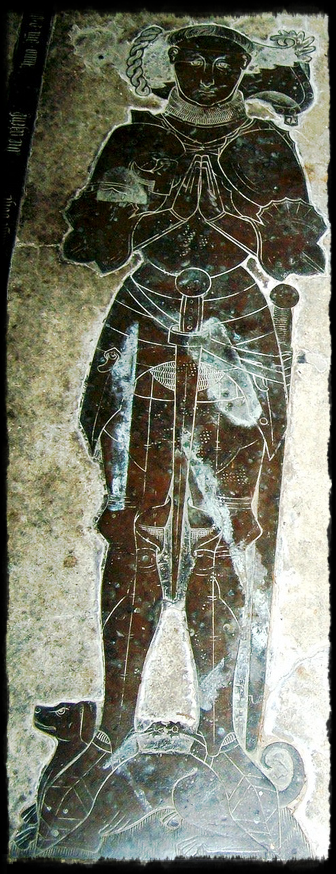
Marriage

Sir Thomas married Margaret de Ros (1432-1488) widow of William Botreaux, 3rd Baron Bocastle. Margaret was the daughter of Sir Thomas de Ros, 9th Baron de Ros and Lady Eleanor Beauchamp, second daughter of Richard Beauchamp, 13th Earl of Warwick and Elizabeth Berkeley. Lady Eleanor was an older paternal half-sister of Henry de Beauchamp, 1st Duke of Warwick and Anne Neville, Countess of Warwick. After the death of the 9th Baron Ros, Margaret’s mother, Lady Eleanor, married Edmund Beaufort, 2nd Duke of Somerset thus making Margaret a maternal half-sister of the 3rd and 4th Duke of Somerset.[6][7]
Sir Thomas and Margaret had the following children:

  • Sir Edward Burgh, 2nd Baron Burgh, married the Hon. Anne Cobham, daughter of Sir Thomas Cobham, 5th Baron Cobham and Lady Anne Stafford and had issue.[7] His grandson, Sir Edward Burgh, would marry Katherine Parr, later Queen consort to King Henry VIII.[8]
  • Hon. Elizabeth Burgh (d. 1 August 1507), married Richard FitzHugh, 6th Lord FitzHugh [brother of Hon. Elizabeth FitzHugh; therefore the queen’s paternal great-grand uncle] and secondly Sir Henry Willoughby.[7]
  • Hon. Margaret Burgh (d. before April 1493), married Sir George Tailboys.[7]
  • Hon. Thomas Burgh[7]
  • Hon. Anne Burgh[7]

Lord Thomas died on 18 March 1496. He was buried next to his wife, Margaret, in the family vault in Holy Trinity Church, Gainsborough. His son, Edward succeeded him in title as the 2nd Baron Burgh of Gainsborough, but was never called to Parliament as such. Lord Thomas’s grandson by Edward, was created 1st Baron Burgh in a new creation in 1529.[9]

References

  1. ^ Charles Mosley, editor, Burke’s Peerage, Baronetage & Knightage, 107th edition, 3 volumes (Wilmington, Delaware, U.S.A.: Burke’s Peerage (Genealogical Books) Ltd, 2003), volume 1, page 587.
  2. ^ a b George Edward Cokayne. The Complete Peerage of England, Scotland, Ireland, Great Britain, and the United Kingdom, Vol. II. p. 422.
  3. ^ G.E. Cokayne; with Vicary Gibbs, H.A. Doubleday, Geoffrey H. White, Duncan Warrand and Lord Howard de Walden, editors, The Complete Peerage of England, Scotland, Ireland, Great Britain and the United Kingdom, Extant, Extinct or Dormant, new ed., 13 volumes in 14 (1910-1959; reprint in 6 volumes, Gloucester, U.K.: Alan Sutton Publishing, 2000), volume I, page 308.
  4. ^ Sir Bernard Burke. A genealogical history of the dormant, abeyant, forfeited, and extinct peerages of the British empire. Harrison, 1866. pg 90.
  5. ^ John Julius Norwich. Treasures of Britain; the architectural, cultural, historical and natural heritage of Britain. W. W. Norton & Company, 2002. pg 262.
  6. ^ George Edward Cokayne. The Complete Peerage of England, Scotland, Ireland, Great Britain, and the United Kingdom, Vol. II, p. 422.
  7. ^ a b c d e f Douglas Richardson, Plantagenet Ancestry, p. 503.
  8. ^ Linda Porter. Katherine, the Queen. Macmillan. 2010. pg 49, 53.
  9. ^ Charles Mosley, editor, Burke’s Peerage, Baronetage & Knightage, 107th edition, 3 volumes (Wilmington, Delaware, U.S.A.: Burke’s Peerage (Genealogical Books) Ltd, 2003), volume 1, page 587.
© Meg McGath, 6 March 2011