Portraits: The Wives of the Marquess of Northampton

When in doubt–don’t post a portrait of an unknown noble in the place for someone who has no known portrait. I have noticed that certain blogs have taken unknown portraits of Tudor women and used them as an example for their blog. What’s wrong with this? Well thanks to PinInterest and other sites, people come by web pages and snatch the portraits without properly identifying them. I should know, it’s happened to me several times. And due to this..there is a circulation of one portrait for a certain relation of Queen Katherine Parr who in fact has no known portrait. What’s worse is the woman in the painting is pregnant when we know there were no children by her husband, but rather by her lover.

Unknown Woman by Gower, 1578 is NOT Anne Bourchier.

Unknown Woman by Gower, 1578 is NOT Anne Bourchier.

So let’s get this straight. Wives 1, “2”, and 3. Sir William Parr, Baron Parr of Kendal, Earl of Essex, and eventually 1st Marquess of Northampton had three wives. Only two are known to have legit portraits. That’s William’s common law wife, Elisabeth Brooke, whom he wasn’t technically allowed to marry due to the fact that he could not get a divorce from his first wife, Lady Anne Bourchier who had left him for her lover. William could only file for an Act of Parliament to keep any illegitimate offspring of Anne and her lover from inheriting from him. This, he was granted during Henry VIII, Edward VI, and Elizabeth I’s reign. In the reign of Mary I, however, Parr had to endure his wife after being thrown in the Tower for trying to put Lady Jane Grey on the throne. People think that Lady Anne saved Parr’s life — honestly, she was only after money and property. Queen Mary finally relented however and let him go free but without his titles, etc.

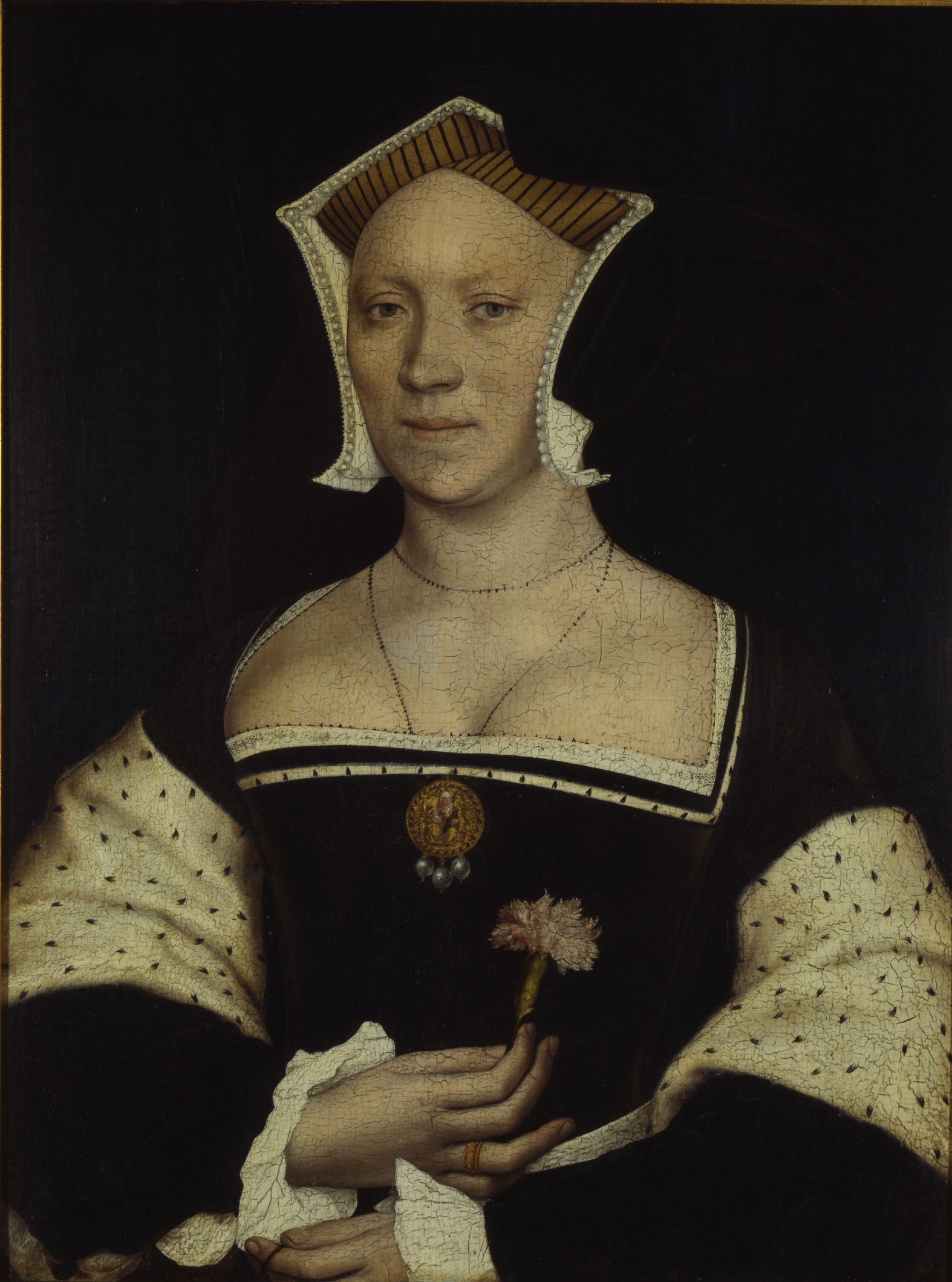
Back to the portraiture — Elisabeth Brooke and his third wife, Helena were painted.

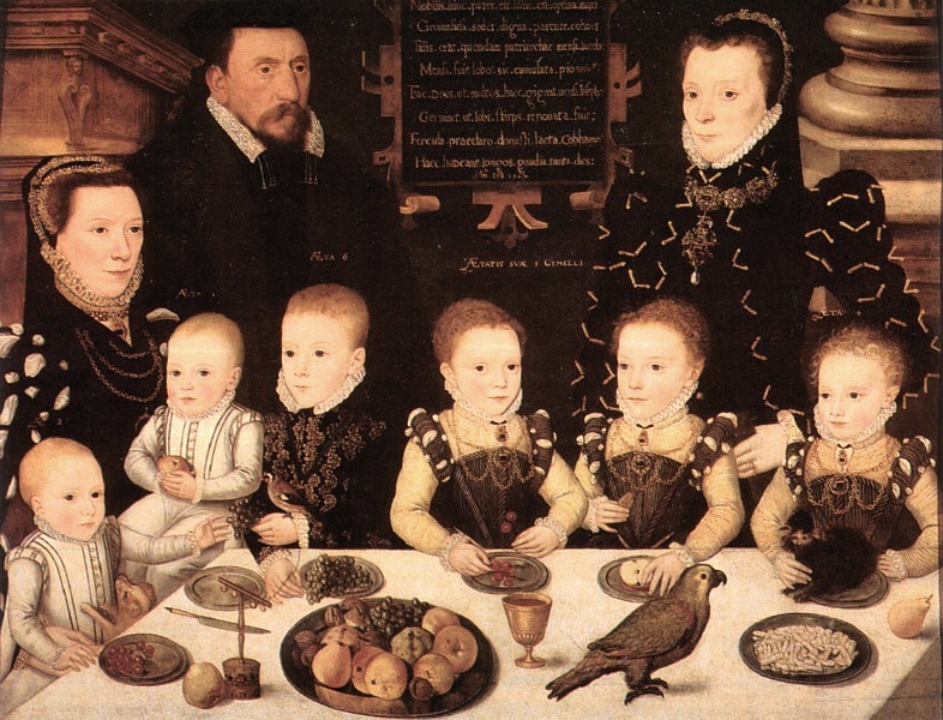
Elisabeth Brooke, Lady Northampton from the family portrait of the Brooke family.

Elisabeth Brooke, Lady Northampton from the family portrait of the Brooke family.

Elisabeth Brooke’s portrait is from a larger portrait of her family. There is also a coin issued for her.

The Brooke Family of Elisabeth Brooke.

The Brooke Family of Elisabeth Brooke.

The portrait of Helena — there are thought to possibly be two.

Snakenborg,Helena(MNorthampton)

Thought to be Helena, Marchioness of Northampton

Helena, Marchioness of Northampton c.1603

Helena, Marchioness of Northampton c.1603

Family of Queen Katherine: Lady Alice, suo jure 5th Countess of Salisbury

Alice Montacute, suo jure 5th Countess of Salisbury.

Alice Montacute, suo jure 5th Countess of Salisbury.

Lady Alice Montacute (1407 – bef. 9 December 1462) was an English noblewoman in her own right as the suo jure 5th Countess of Salisbury, 6th Baroness Monthermer, and 7th and 4th Baroness Montacute having succeeded to the titles in 1428.

Alice was born in 1407, the daughter and only legitimate child, of Sir Thomas Montacute, 4th Earl of Salisbury [descendant of Edward I] and Lady Eleanor Holland, who was the daughter of Sir Thomas Holland, 2nd Earl of Kent and Lady Alice FitzAlan. The Earl of Kent was a grandson of Lady Joan of Kent who became Princess of Wales upon her marriage to Edward, the Black, Prince of Wales, heir to King Edward III. As the Prince of Wales predeceased his father, Edward was succeeded by his grandson by Lady Joan, Richard who became King Richard II. The Earl of Kent’s wife, Lady Alice FitzAlan, was a daughter of Sir Richard FitzAlan, 10th Earl of Arundel and Lady Eleanor of Lancaster; granddaughter of Prince Edmund, 1st Earl of Lancaster and his wife Blanche of Artois. The 1st Earl of Lancaster was the younger son of Henry III and as such was brother to Edward I. Blanche was the widow of Henry I of Navarre and mother to Queen Regnant Joan I of Navarre. Coincidentally, Queen Joan married Philip IV of France by whom she had Isabel of France, queen consort of England and ancestress to most of the royalty and nobility at court as the mother of King Edward III of England.

In 1420, she married Richard Neville, who became the 5th Earl of Salisbury by right of his wife on the death of her father the 4th Earl in 1428. Richard was the eldest son of Sir Ralph, Earl of Westmorland and his second wife Lady Joan Beaufort, the legitimized daughter of Prince John of Gaunt, 1st Duke of Lancaster and Titular King of Castile. As the grandson of the Duke of Lancaster, Richard was put above his brothers and sisters from his father’s first marriage to Lady Margaret Stafford. Richard did not inherit the title of Earl of Westmorland, but the marriage to the heiress of the Earl of Salisbury was a  good match which gave him a title. In short, the children by Westmorland and his second wife, Lady Joan, were given precedence over the children of his first marriage due to Joan’s status. This would cause rifts within the family for quite some time.

The Neville family was one of the oldest and most powerful families of the North. They had a long standing tradition of military service and a reputation for seeking power at the cost of the loyalty to the crown as would be demonstrated by the Earl and Countess’s eldest son, Richard, the 16th Earl of Warwick.[1] Warwick would become  the wealthiest and most powerful English peer of his age, with political connections that went beyond the country’s borders. One of the main protagonists in the Wars of the Roses, he was instrumental in the deposition of two kings, a fact which later earned him his epithet of “Kingmaker”.

The principal seat of the family was at Bisham Manor in Berkshire although their lands lay chiefly around Christchurch in Hampshire and Wiltshire.

Bisham Abbey where the Montacute Earls of Salisbury are buried.

She died some time before 9 December 1462 and was buried in the Montacute Mausoleum at Bisham Abbey.

Alice and Richard had ten children who survived infancy including Katherine Parr’s great-grandmother, Lady Alice Neville and Richard Neville, 16th Earl of Warwick [“Warwick, the Kingmaker”]. By Warwick, she was the grandmother of Queen Anne Neville and great-grandmother to Margaret Pole [Plantagenet], 8th Countess of Salisbury. Another daughter, Eleanor Neville, married the would be fourth husband of Lady Margaret Beaufort, Thomas Stanley, Earl of Derby and had issue. Another daughter, Lady Katherine Neville would go on to marry William Bonville, Baron of Harrington and would become mother to Cecily Bonville, the great-grandmother of Lady Jane Grey.

Lady Salisbury was mother to Queen Katherine Parr’s paternal great-grandmother also named Alice [born Neville]. Lady Salisbury was also great-grandmother to Lady [Princess] Margaret of Clarence who would become the 8th Countess of Salisbury in her own right during the reign of King Henry VIII as the daughter of Lady Isabel, Duchess of Clarence; the eldest daughter of Richard Neville, 16th Earl of Warwick [Warwick, the Kingmaker]. She was the last descendant of the Plantagenet House of York who would be executed by the man who elevated her, Henry VIII.

References

[1] Linda Porter. Katherine the Queen; The Remarkable Life of Katherine Parr, the Last Wife of Henry VIII. Macmillan, 2010.

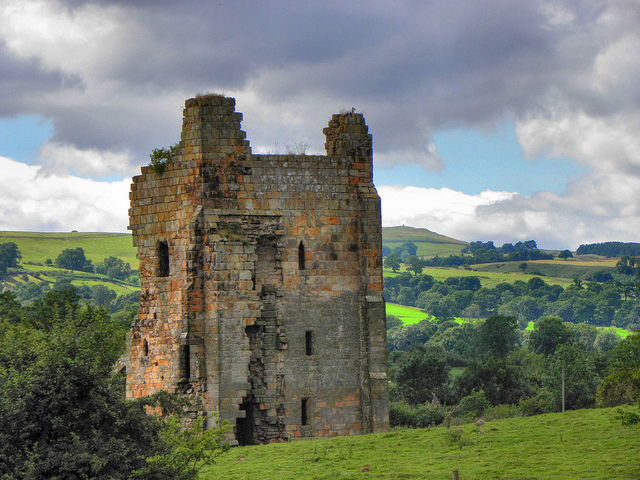
Kendal Castle and Katherine Parr

Many books and local legends of Cumbria place the birth of Queen Katherine Parr at Kendal Castle in 1512. Is this true? No.

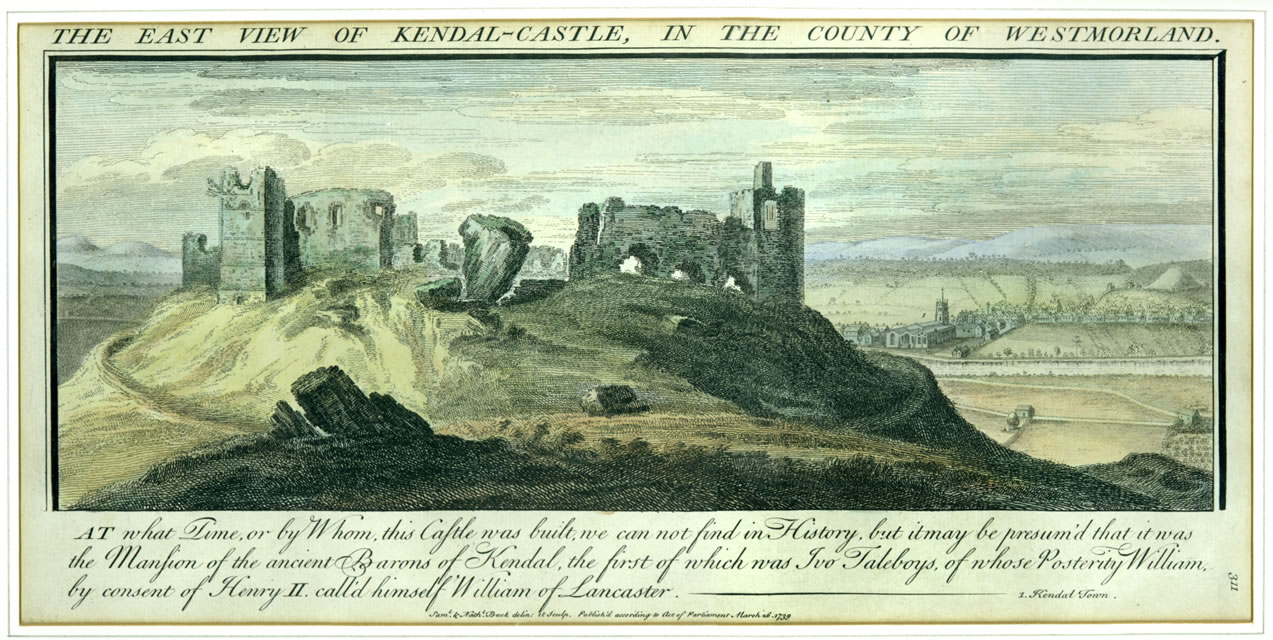
Kendal Castle, 1739.

Kendal Castle, 1739.

It’s false of course. By the time of her birth — her father, Sir Thomas, had abandoned the castle which was falling into disrepair for the court life. Who wouldn’t want to be at the court of Henry VIII? It was THE place to be! Plus, Catherine’s mother was in attendance upon the Queen. It would appear that Catherine’s grandfather, William, was the last to reside in the Castle. Shortly after the coronation of Richard III, Parr left for Kendal to distance himself from Edward IV’s “successor.” He died a few months later and is buried in Kendal Parish Church.

No one knows where Katherine, her brother William and sister Anne were born.

In spite of long held beliefs and old stories, the future Queen Katherine was not born in Kendal Castle which, after years of neglect, was becoming ruinous and by 1572 it was derelict and left in the hands of the Steward.

More probably the children were born in the house in Blackfriars which Sir Thomas Parr had leased shortly before Katherine was born, or in one of the other properties owned by the family in the south of England.(The Stricklandgate House Trust Limited)

28 February 1552: The Burial of the Queen’s Sister

Lady Anne Herbert [Parr], Countess of Pembroke died at Baynard’s Castle on 20 February 1552; at the age of thirty-six. Lady Pembroke had out-lived her sister, the Dowager Queen Katherine (d. 5 September 1548), who had also died in the year of her thirty-sixth birthday (Katherine was born in 1512, no official date is recorded). Unlike her sister and brother, the Marquess of Northampton, Lady Pembroke left two sons and a daughter to continue her legacy. Lady Pembroke  was buried with huge pomp in Old St. Paul’s Cathedral in London next to her ancestor Prince John of Gaunt, 1st Duke of Lancaster [and his first wife, Blanche of Lancaster] on 28 February 1552.

On the 28th February was buried the noble countess of Pembroke, sister to the late Queen Katharine, wife of King Henry VIII. She died at Baynard’s Castle and was so carried into Paul’s. There were a hundred poor men and women who had mantle frieze gowns, then came the heralds; after this the corpse, and about her, eight banner rolls of arms. Then came the mourners both lords and knights and gentlemen, also the lady and gentlewomen mourners to the number of two hundred. After these were two hundred of her own and other servants in coats. She was buried by the tomb of the Duke of Lancaster. Afterwards her banners were set up over her and her arms set on divers pillars. (Diary of Henry Machin citizen of London Camden Soc vol 42)

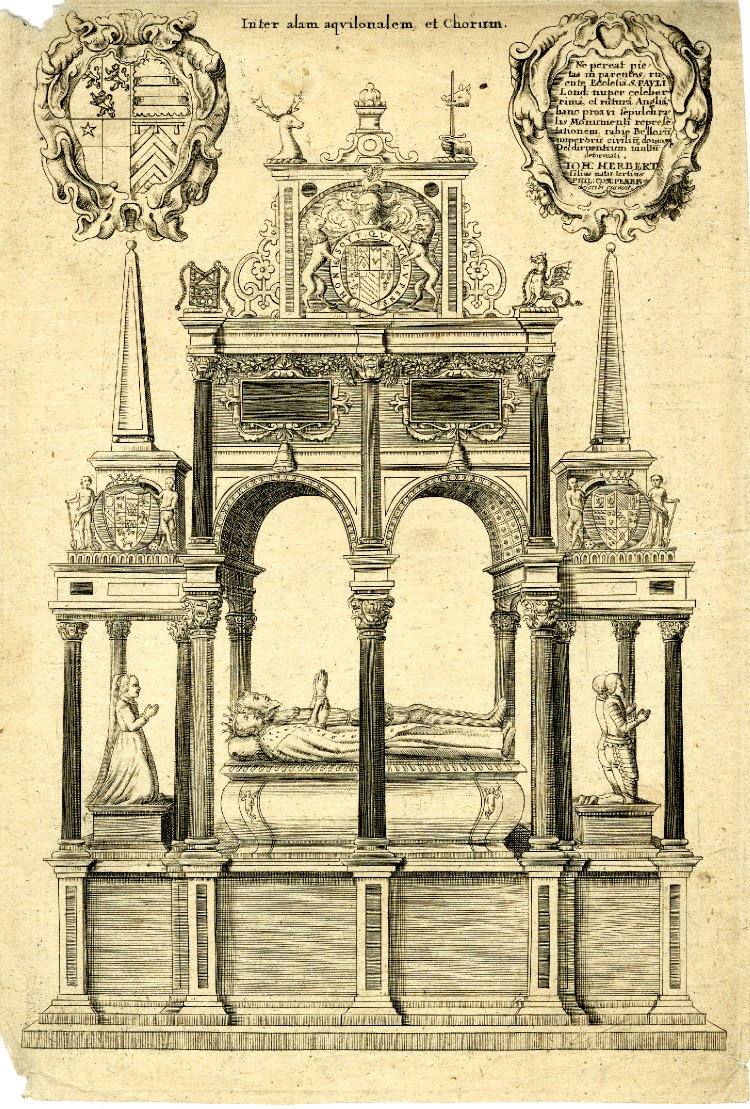
Tomb of William, Earl of Pembroke, in St Paul's; the tomb on a tall base on which lie a man and wife, in ermine robes, heads to left; eleven columns support a double arch above and obelisk topped extensions at the sides; two cartouches at top, to the left with coat of arms and to the right with dedication by 'Ioh Herbert'; illustration to William Dugdale's 'History of St Paul's' (London, 1658 and 1716)

Tomb of William, Earl of Pembroke, in St Paul’s; the tomb on a tall base on which lie a man and wife, in ermine robes, heads to left; eleven columns support a double arch above and obelisk topped extensions at the sides; two cartouches at top, to the left with coat of arms and to the right with dedication by ‘Ioh Herbert’; illustration to William Dugdale’s ‘History of St Paul’s’ (London, 1658 and 1716)

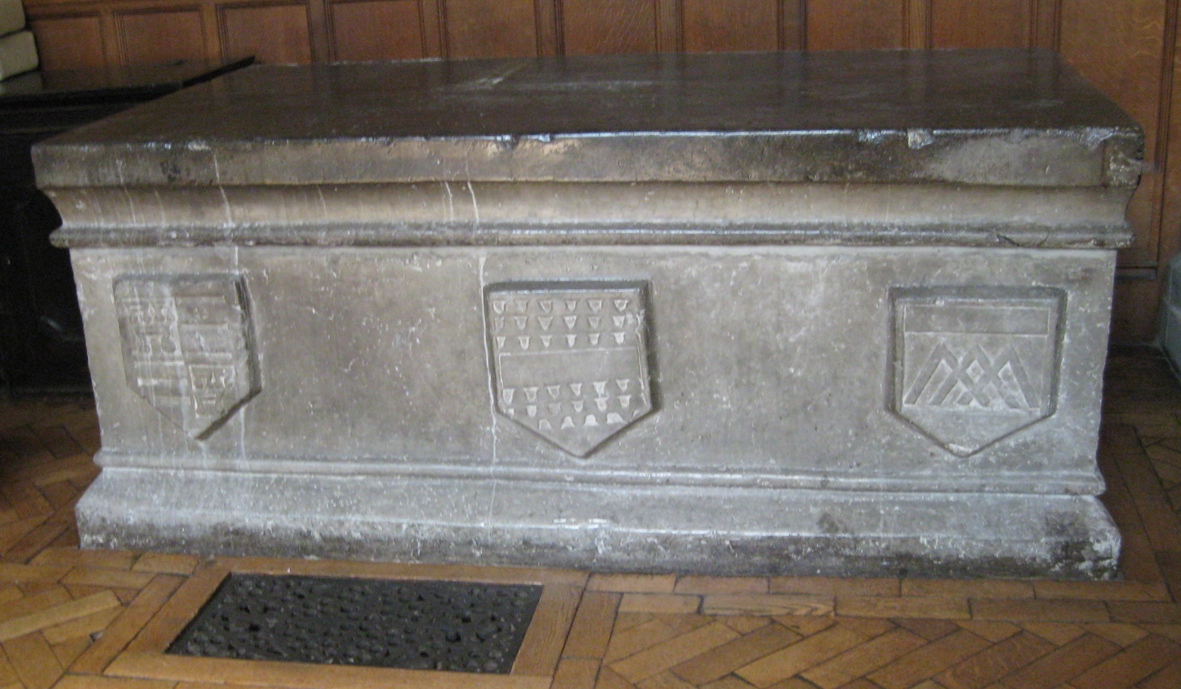
The tomb is located between the choir and the North aisle. The tomb was by the magnificent tomb of John of Gaunt, Duke of Lancaster and Blanche of Lancaster, between the pillars of the 6th bay of the Choir. (Benham) The Pembroke tomb was a magnificent structure consisting of effigies of the earl and his Lady Pembroke lying on a sarcophagus, attended by kneeling children, and the whole covered by an elaborate canopy resting on stone shafts. (Clinch) Her memorial there read: “a most faithful wife, a woman of the greatest piety and discretion” and “Her banners were set up over her arms set on divers pillars.“ On her tomb her epitath read that she had been “very jealous of the fame of a long line of ancestors.“ Her husband, Lord Pembroke, died on 17 March 1570 and by his wishes was also buried in St. Paul’s Cathedral on 18 April 1570 next to Lady Pembroke.

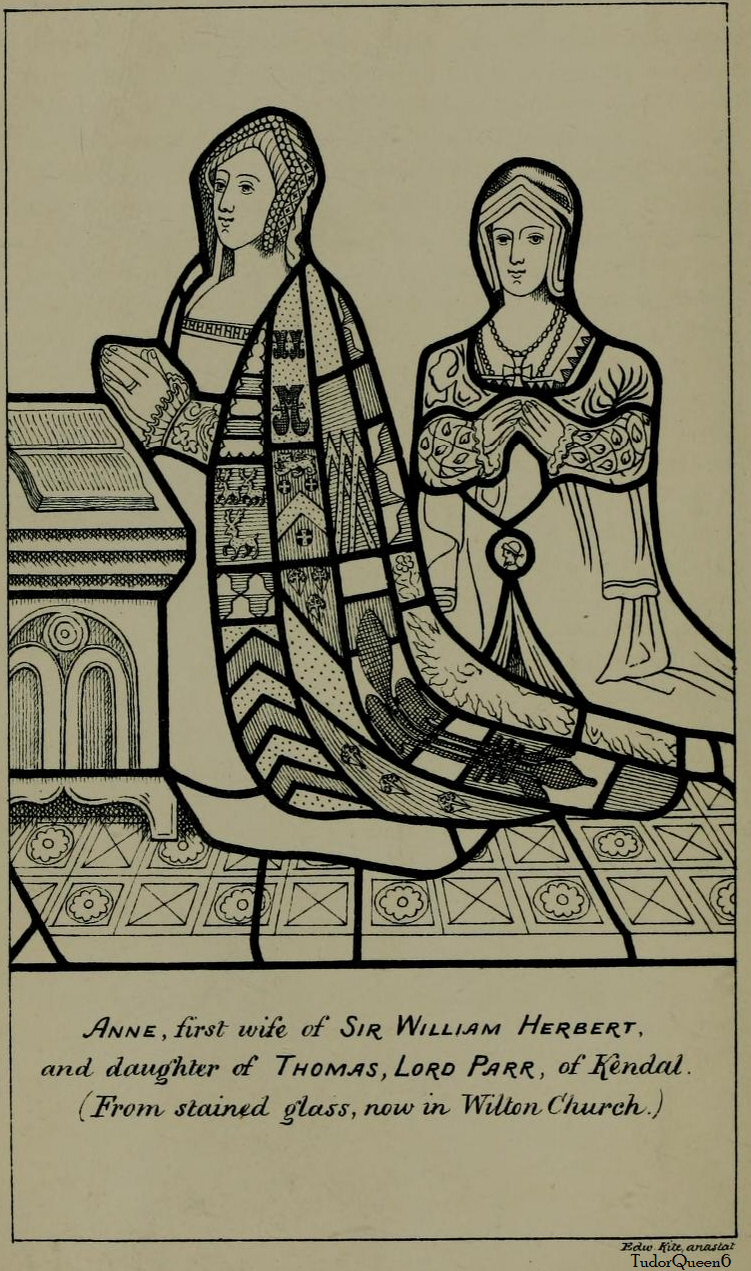
Lady Pembroke figure, Wiltshire Archeological and Natural History, 1879, pg 98.

Lady Pembroke figure, Wiltshire Archeological and Natural History Magazine, 1879, pg 98.

In her honor, in the old chapel at Wilton House was preserved a stained glass window in which were painted the kneeling figures of Lord Pembroke and his two sons also that of his wife Anne Parr and her daughter (also named Anne). The glass is now removed to the new Church at Wilton and will be found in the first window to the right on entering. Lady Pembroke is represented as wearing a rich mantle covered with her armorial bearings.

Lady Pembroke and her daughter, also named Anne (Lady Talbot). Wilton Church.

Lady Pembroke and her daughter, also named Anne (Lady Talbot). Wilton Church.

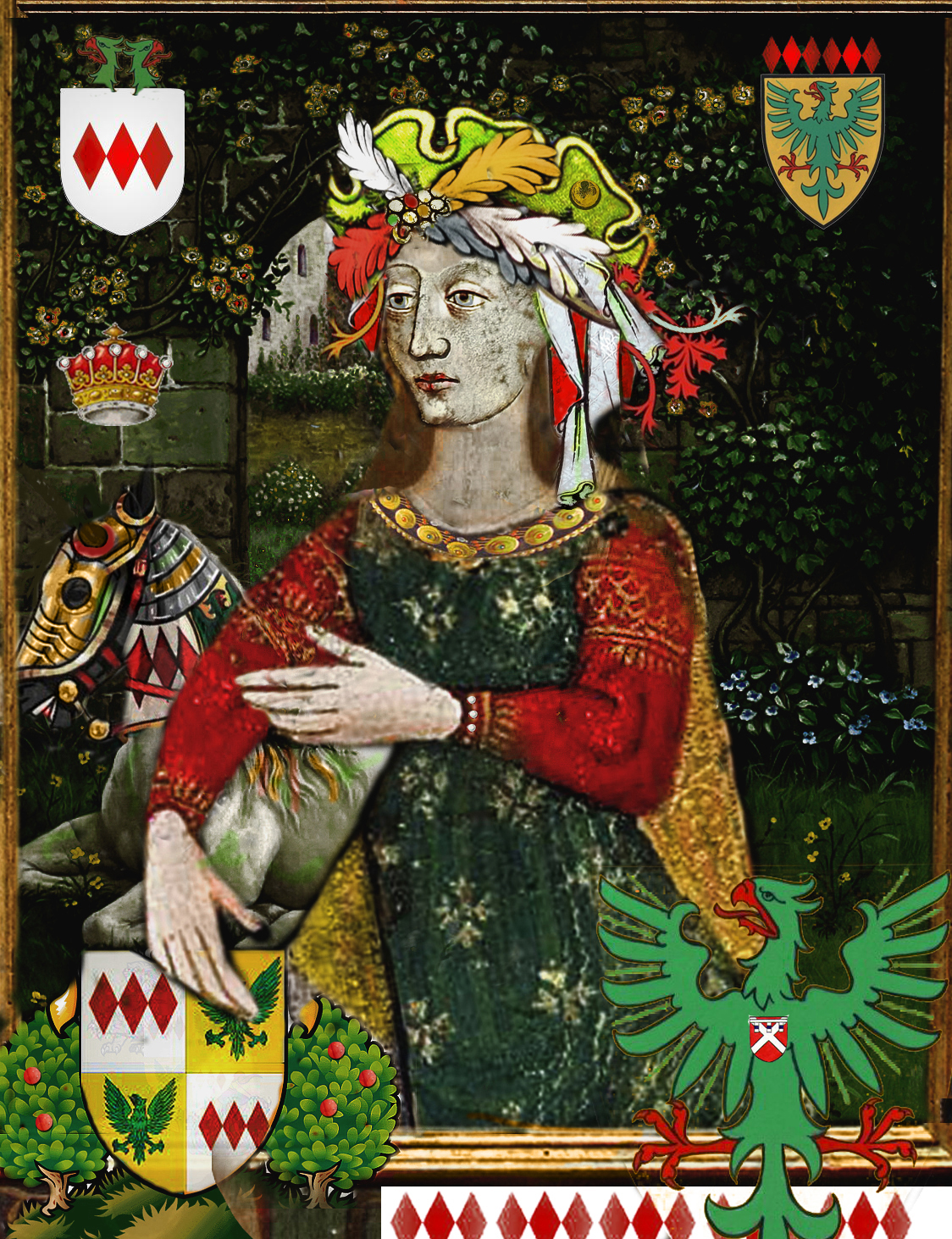
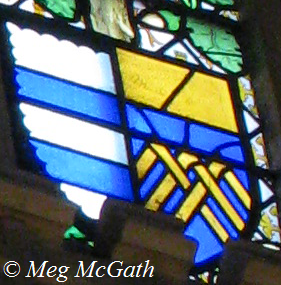
The lady’s mantle bears the following quarterings

  1. Argent, two bars azure within a bordure engrailed Sable–Parr
  2. Or, three water bougets Sable–Ros of Kendal
  3. Azure, three bucks trippant Vert–Green
  4. Gules, a chevron between three cross-crosslets, and in chief a lion passant Or–Mablethorpe
  5. Azure, three chevronels braced in base, and a chief Or–Fitzhugh
  6. Vaire, a fess Gules–Marmion
  7. Or, three chevronels Gules, a chief Vaire–St. Quentin
  8. Gules, a bend between six cross-crosslets Or–Furneaux
  9. Barry of eight Argent and Gules a fleur-de-lis Sable–Stavely
  10. This last quartering now replaced by a fragment of flowered glass was no doubt that of Gernegan–barry of ten Or and Azure an eagle displayed Argent.

Sources

See also

Family of Queen Katherine: Sir William Parr of Kendal

Impaled arms of Parr and FitzHugh, Hampton Court Palace Pedigree window of Katherine Parr. Impaled arms of Parr and FitzHugh, Hampton Court Palace Pedigree window of Katherine Parr.

Sir William Parr of Kendal (1434-bef. 26 February 1484[2, see notes]/Autumn 1483[1]) KG was a courtier and soldier best known for being the grandfather of Queen Katherine Parr, Lady Anne Herbert, and William, 1st Marquess of Northampton. His granddaughter would become the sixth and final queen of King Henry VIII and his grandson would become one the most powerful men during the reigns of Edward VI (as the king’s “beloved uncle”) and Elizabeth I.

Family

Parr was the eldest son of Sir Thomas Parr and Alice Tunstall, daughter of Sir Thomas Tunstall of Thurland. His paternal grandparents were Sir John Parr of Kendal Castle and the heiress Agnes Crophull of Weobley, widow of Sir Walter Devereux. Her family owned Weobley Castle in Herefordshire which passed to her children by Devereux. By his mother Agnes, Thomas Parr was a half-brother of Walter Devereux Esq. Parr’s grand-nieces and nephews included Sir Walter, 1st Baron Ferrers of Chartley and Lady Elizabeth (Devereux), Countess of Pembroke [wife to William Herbert, 1st Earl of Pembroke] which would give the Parr’s connections to some of the most important nobility at court. Thomas Parr’s other brother, Bryan, became Lord of Parr Manor from which a branch of the Parr family, which still resides in England, descends.  His maternal grandparents were Sir Thomas Tunstall of Thurland Castle and Isabel Harrington, daughter of Sir Nicholas and Isabel English. Sir Thomas Tunstall would go on to marry Hon. Joan Mowbray, daughter of Lord Mowbray and Lady Segrave and thus become the step-father of her children by Sir Thomas Grey which included the 1st Earl of Tankerville.

Kendal Castle was acquired through the marriage of Sir William de Parr to the heiress and only child of Sir John de Ros of Kendal, Elizabeth de Ros in 1383. Kendal Castle was acquired through the marriage of Sir William de Parr to the heiress and only child of Sir John de Ros of Kendal, Elizabeth de Ros in 1383. Lord Parr was the last to reside at Kendal.

Life

Lancaster_vs_York

The Parr family had been long established in Parr, Lancashire. Parr’s family resided in Kendal. By marriage they inherited Kendal Castle and 1/4 of the Barony of Kendal which would come to be known as the “Marquis Fee.” Parr’s father, Thomas, was part of the War of the Roses and fought on the Yorkist side. He was attained in 1459 with the other Yorkists’, but the attainder was reversed in 1461 as he died in 1464. All of Parr’s siblings married into prominent families. His brother, Sir John, also a Yorkist, was rewarded in 1462 by being made Sheriff of Westmorland for life. Sir John would marry a daughter of Sir John Yonge, Lord Mayor of London. Parr’s other brother, Sir Thomas, was killed at Barnet. His sister, Mabel, married to Sir Humphrey Dacre, Baron Dacre of the North. Another sister, Agnes, would marry to Sir Thomas Strickland of Sizergh Castle. And Margaret married Sir Thomas Radcliffe.

Lord Parr was high in favor and a close friend with King Edward IV and repaid it with great fidelity. In 1469, he was on the side of the Nevilles during the battle of Banbury. In 1470, before the battle of Lose-coat-Fields he was sent by Clarence (the King’s brother) and Warwick (his wife’s uncle) and was entrusted with his answer. In 1471, Parr was one of the commissioners appointed to adjust with James III of Scotland of some alleged violations of the truce, which including a marriage treaty. On the return of King Edward again to contest his right to the crown, with Margaret Anjou supported by Warwick, Parr met him at Northampton with a considerable force and thence inarched to Barnet field where he was decided in favour of his royal master. Also in 1471, Sir Henry Stafford and his wife, Lady Margaret Beaufort (mother of King Henry VII), conveyed to him two parts of the lordships of Grasmere, Loghrigge, Longdon, Casterton, Hamelsett, and Troutbeck with their members, the hamlets of Applethwaite, Undermilbeck, and all lands in them; the close or park of Calgarth, the herbage and pannage of the same, the fishery in and of the water in Windermere, etc. Westmorland.

For his loyalty and part at Barnet, Parr was rewarded with the office of Comptroller of the Household which he held from 1471 to 1475 and again in 1481 till Edward’s death in 1483.[1][2][3]  Lord Parr was created a knight barrenet and was one of only two courtiers to become a Knight of the Garter in the second reign of Edward IV.  He was MP for Westmoreland in the 6th and 12th Edward IV and served as sheriff of Cumberland in 1473. in 1475, he travelled with the King on his expedition to France. In 1483, he was constituted chief commissioner for exercising the office of constable of England and was made ambassador to treat with the embassy from Alexander, Duke of Albany (son of James II of Scotland and uncle to James IV). Upon the death of King Edward, he was part of the funeral.

Life under Richard III

Richard III with his queen Anne and son, Edward, Prince of Wales. Richard III with his queen Anne and son, Edward, Prince of Wales.
Neville arms Arms of the heirs of Sir Richard Neville, 5th Earl of Salisbury, eldest son of Sir Ralph, 1st Earl of Westmorland by his second wife, Lady Joan Beaufort, daughter of John of Gaunt, 1st Duke of Lancaster and Katherine Swynford.

Sometime after 1475, Parr married secondly to Hon. Elizabeth FitzHugh, daughter of Lord FitzHugh and Lady Alice Neville (sister of Warwick and cousin to Edward IV and Richard III). Lord FitzHugh was the associate of Richard Neville, 5th Earl of Salisbury (Elizabeth’s grandfather). Lord FitzHugh had been a long-standing supporter of the Neville family; he supported the Earl of Salisbury in his dispute with the Percy family in the 1450s. FitzHugh also served with the earl on the first protectorate council. Lord FitzHugh would go on to become a close ally of Richard Neville, 16th Earl of Warwick [“Warwick, the Kingmaker”] during the War of the Roses. In about 1452, FitzHugh would marry into the Neville family, marrying a sister of Warwick, Alice.

Due to the affiliation of Parr’s second wife to the Royal family, Parr was pressured by his mother-in-law, Lady FitzHugh, to follow the rule of her cousin, the Duke of Gloucester (later King Richard III), while he was serving as Lord Protector of the Realm.[1] Parr, however, was not persuaded that Richard’s determination for the throne was justified. The murder of William, Lord Hastings on 13 June 1483 was the tipping point.[1] Hastings had been a close friend and adviser of the late King Edward IV.[1] Parr was no doubt a friend as well as a relation (Hastings was Parr’s uncle by marriage; Hastings was married to Lady Katherine Neville, another sister of Warwick). Parr was loyal to the institution of the monarchy, but deserted the idea of usurpation, however justified it was in political terms.[1] When Richard became King, Lord Parr chose not attend the coronation.[1] Parr had even been given a position in the coronation as canopy bearer.[1] Lady Parr and her mother, however, were present.[1] Both were dressed in fine dresses made by cloth that the new King himself had given them. Elizabeth received seven yards of gold and silk; her mother received material for two gowns, one of blue velvet and crimson satin as well as one of crimson and velvet with white damask. It is not known which gown Elizabeth wore. Her mother, Alice, Dowager Lady FitzHugh, her sister Anne, Lady Lovell, and her sister-in-law, Elizabeth, Lady FitzHugh were three of the seven noble ladies given the honour to ride behind behind Queen Anne in her coronation train. After the coronation, Lady Parr was personally appointed by the new Queen and served as lady-in-waiting to her cousin, whom she was close to. Queen Anne was the younger daughter of Lady Parr’s uncle, Lord Warwick.

Tomb of William Parr, Kendal Parish Church. Tomb of William Parr, Kendal Parish Church.

Lord Parr is thought to be buried in Kendal Parish Church in Kendal, Cumbria, England. The tomb is not majestic and is tucked away behind chairs. His coat of arms can be seen on his tomb. The Church also features the famous “Parr Chapel.”

Marriages and Issue

Before July 1468, Lord Parr was married firstly to Joan Trusbut (d.1475).[2] The marriage produced no known children, however, Joan left a son, John, from her previous marriage to Thomas Colt Esq. of Roydon (d.1467). After Joan’s death, her son’s wardship was granted to Lord Parr. (The Manors of Suffolk) Colt most likely grew up with the children of Parr’s second marriage. Colt would marry and have a daughter, Jane, the first wife of Sir Thomas More.

After Joan’s death in 1475, Lord Parr married Elizabeth, daughter of Sir Henry FitzHugh, 5th Baron FitzHugh of Ravensworth and his wife Lady Alice Neville by whom he had three sons and two daughters. After Parr’s death, his widow would remarry to Sir Nicholas Vaux (later 1st Baron) and by him she had further issue. (Plantagenet Ancestry)

  1. Anne Parr, Lady Cheney (AFT 1475–4 November 1513), who married Sir Thomas Cheney of Irthlingborough. Their daughter Elizabeth, would go on to marry the son of Nicholas Vaux, 1st Baron Vaux of Harrowden (Elizabeth FitzHugh’s second husband) by his second marriage to Anne Green; maternal aunt to Katherine Parr. When Elizabeth Cheney married Lord Vaux, she was age 18 and he was age 14. While there were no blood relations,  Lord Vaux’s father had issue by his marriage to his first wife (see below); thus making Hon. Katherine, Hon. Alice, and Hon. Anne Vaux her maternal aunts. Through these relations, Elizabeth Cheney and her husband, the 2nd Lord Vaux, would have Throckmorton cousins in common.[2]
    Elizabeth_Cheney_Lady_Vaux Elizabeth Cheney (or Cheyne), Lady Vaux of Harrowden; daughter of Anne Parr and Sir Thomas Cheney. Sketch by Holbein.
  2. Sir Thomas Parr, Lord of Kendal (AFT 1475–11 November 1517), who was the eldest son, was knighted and was sheriff of Northamptonshire in 1509; he was master of the wards and comptroller to Henry VIII. He was rich, owing to his succeeding, in 1512, to half the estates of his cousin, Lord FitzHugh, and also to his marriage with Maud Green, daughter and coheiress of Sir Thomas Green of Boughton and Greens Norton in Northamptonshire. He died on 12 November 1518, and was buried in Blackfriars Church, London. His widow died on 1 September 1532, and was buried beside him. They were parents to Queen Katherine Parr, William Parr [1st Marquess of Northampton], and Anne Parr [Countess of Pembroke].[2]
  3. Sir William Parr, 1st Baron Parr of Horton (BEF 1483–10 September 1547), the second son, was knighted on 25 December 1513, was sheriff of Northamptonshire in 1518 and 1522, and after his niece’s Katherine Parr’s promotion became her chamberlain. On 23 December 1543 he was created Baron Parr of Horton, Northamptonshire. He died on 10 September 1547, and was buried at Horton (for his tomb, see Bridges, Northamptonshire, i. 370). By Mary, daughter of Sir William Salisbury, he left four daughters.[2]
  4. John Parr, Esq. (BEF 1483–8 September 1508), married Constance, daughter of Sir Henry Vere of Addington, Surrey. They had no issue.[2]
  5. Alice, died young (b. before 1483).[2]

After her husband Sir William Parr died in 1483, Elizabeth, who was twenty three at the time, was left with four small children. A familiar situation which Queen Katherine’s own mother would find herself in when her husband died in 1517, leaving her with three small children. Instead of choosing not to re-marry, like Maud Parr, Lady Parr made a dubious second marriage with a protege of Lady Margaret Beaufort [mother of the new King], Sir Nicholas Vaux, the future 1st Baron Vaux of Harrowden, which saved the family fortunes.[3]

References

  1. Linda Porter. “Katherine, the queen,” Macmillan, 2010.
  2. Douglas Richardson. “Plantagenet Ancestry,” Genealogical Publishing Com, 2011. pg 662.
  3. James, Susan. Catherine Parr: Henry VIII’s Last Love. (2009), pg 15, 81.
  • Sir Leslie Stephen. “Dictionary of National Biography,” Vol 43, Smith, Elder, 1895. pg 366. Google eBook

Family of Queen Katherine: Elizabeth FitzHugh, Lady Parr and Vaux

Impaled arms of Parr and FitzHugh, Hampton Court Palace Pedigree window of Katherine Parr.

Impaled arms of Parr and FitzHugh, Hampton Court Palace Pedigree window of Katherine Parr.

Hon. Elizabeth FitzHugh Lady Parr of Kendal and Lady Vaux of Harrowden (1455/65 – 29 January 1508) was an English noblewoman and the co-heiress to her father, Hon. Sir Henry FitzHugh, 5th Baron FitzHugh of Ravensworth. Lady Parr is best known for being the grandmother of the sixth queen of Henry VIII, Katherine Parr and her siblings Lady Anne Herbert, Countess of Pembroke and William Parr, 1st Marquess of Northampton.

Ravensworth Castle, ancestral home to the Barons FitzHugh

Ravensworth Castle, ancestral home to the Barons FitzHugh

Elizabeth FitzHugh was born at her family’s ancestral home, Ravensworth Castle, in North Yorkshire, England. She was the daughter of Sir Henry FitzHugh, 5th Baron Fitzhugh of Ravensworth Castle. Her family was of the Northern gentry. Lady Parr’s mother was born Lady Alice Neville, daughter of Sir Richard Neville, 5th Earl of Salisbury and Lady Alice Montacute, suo jure 5th Countess of Salisbury, only daughter and heiress of Sir Thomas Montague, 4th Earl of Salisbury and Lady Eleanor Holland. Her paternal grandparents were Sir William FitzHugh, 4th Baron Fitzhugh of Ravensworth and Marjory Willoughby, daughter of Sir William Willoughby, 5th Baron Willoughby de Eresby and his first wife, Lucy Le Strange. Through her mother Lady FitzHugh, Lady Parr descended from Edward III by his son Prince John of Gaunt, 1st Duke of Lancaster and Titular King of Castile. Lady FitzHugh was sister to Sir Richard Neville, 16th Earl of Warwick (“Warwick, the Kingmaker”). Her paternal aunts included Lady Cecily, Duchess of York making her a cousin to King Edward IV, Richard III, and his siblings. Elizabeth had nine siblings[1], including Alice FitzHugh, Lady Fiennes and Henry, 6th Baron FitzHugh who married Elizabeth Burgh, daughter of Sir Thomas Burgh, 1st Baron Burgh of Gainsborough. Their son George, the 7th Lord FitzHugh, inherited the barony but after his death in 1513, the barony fell in abeyance between Lady Parr and her older sister Alice, Lady Fiennes. This abeyance continues today between the two families.[2]

The current co-heirs to the barony are:

  • Hon. Emily Douglas-Home, suo jure 29th Baroness Dacre (b. 1983)
  • Hon. Tessa Ogilvie Thompson née Brand (b. 1934)
  • Francis Brand, 7th Viscount Hampden (b. 1970)
  • William Herbert, 18th Earl of Pembroke (b. 1978), a descendant of Lady Anne [Parr], Countess of Pembroke

Lancaster_vs_York

Life

Elizabeth FitzHugh had an easy-going and pleasure-loving disposition. As Lady Parr, she joined the household of her cousin, the Duchess of Gloucester.[7] The Duchess of Gloucester was born Lady Anne Neville, the youngest daughter of Sir Richard Neville, 16th Earl of Warwick (“Warwick, the Kingmaker”) and Lady Anne Beauchamp. Lady Parr was close to her cousin which showed in her positions under Anne as Duchess and Queen consort. Because of the family connections, Elizabeth’s mother, Lady FitzHugh pressured Lady Parr’s husband, Lord Parr, to follow the rule of the Duke of Gloucester (later King Richard III) while he was serving as Lord Protector of the Realm. When the Duchess became queen in 1483, Lady Parr was appointed by the Queen herself and served as lady-in-waiting. Lady Parr and her mother were both present at the coronation on 6 July 1483. Both were dressed in fine dresses made by cloth that the King himself had given them. Elizabeth received seven yards of gold and silk; her mother received material for two gowns, one of blue velvet and crimson satin as well as one of crimson and velvet with white damask. It is not known which gown Elizabeth wore as she rode behind Queen Anne; but she was one of the seven noble ladies given this honour. Her husband who had been deeply devoted to Edward IV declined his role in the coronation and headed north where he died shortly after.[8]

After her husband Sir William Parr died in 1483, Elizabeth, who was twenty three at the time, was left with four small children. As a widow, Elizabeth’s life revolved around the court. Elizabeth would be second in a four generation span of family that would serve England’s queens which started in 1483 with her mother, the redoubtable Alice Neville, Lady Fitzhugh. Her granddaughter, Anne Parr would continue the tradition by becoming lady-in-waiting to all six of Henry VIII’s wives. Even Anne’s sister, Catherine Parr, who would later become queen served in the household of the Lady Mary until she caught the eye of King Henry.[3]
Elizabeth was lucky enough to remarry. After the overthrow of Richard III and The House of York, Elizabeth made a dubious second marriage with a protege of Lady Margaret Beaufort, Sir Nicholas Vaux, the future 1st Baron Vaux of Harrowden, which saved the family fortunes.[3]

Marriages and Issue

FitzHugh was married twice. She married firstly, at the age of 12, Sir William Parr (d.1483), a man twenty eight years her senior. William was a Knight of the Garter, among other high positions at court, who was held high in favour with King Edward IV; who by marriage to Elizabeth became a cousin. He fought as a Yorkist on the side of the Neville’s at Banbury. The couple did not produce their first child until Elizabeth was sixteen years of age. Lord and Lady Parr had three sons and two daughters:
  1.  Anne Parr, Lady Cheney (AFT 1475–4 November 1513), who married Sir Thomas Cheney of Irthlingborough. Their daughter Elizabeth, would go on to marry the son of Nicholas Vaux, 1st Baron Vaux of Harrowden (Elizabeth FitzHugh’s second husband) by his second marriage to Anne Green; maternal aunt to Katherine Parr. When Elizabeth Cheney married Lord Vaux, she was age 18 and he was age 14. While there were no blood relations,  Lord Vaux’s father had issue by his marriage to his first wife (see below); thus making Hon. Katherine, Hon. Alice, and Hon. Anne Vaux her maternal aunts. Through these relations, Elizabeth Cheney and her husband, the 2nd Lord Vaux, would have Throckmorton cousins in common.[4]
    Elizabeth, Lady Vaux of Harrowden, wife to the 2nd Baron Vaux.

    Elizabeth Cheney (or Cheyne), Lady Vaux of Harrowden; daughter of Anne Parr and Sir Thomas Cheney.

    Elizabeth was originally drawn by Holbein c.1536. For more on the original drawing and copies of paintings, see: The OTHER Elizabeth Cheney

  2. Sir Thomas Parr, Lord of Kendal (AFT 1475–11 November 1517), who was the eldest son, was knighted and was sheriff of Northamptonshire in 1509; he was master of the wards and comptroller to Henry VIII. He was rich, owing to his succeeding, in 1512, to half the estates of his cousin, Lord FitzHugh, and also to his marriage with Maud Green, daughter and coheiress of Sir Thomas Green of Boughton and Greens Norton in Northamptonshire. He died on 12 November 1518, and was buried in Blackfriars Church, London. His widow died on 1 September 1532, and was buried beside him. Of their children, Katherine Parr, queen of Henry VIII, and William Parr (afterwards Marquess of Northampton), are separately noticed; while a daughter, Anne, married William Herbert, 1st Earl of Pembroke of the tenth creation. The couple also had two other children who died as infants; a son was born before their eldest, Katherine, but was stillborn. The second infant who was conceived after their fourth child, Anne; but was either miscarried, dead at birth, or died shortly after, the same year their father died, 1517. The only descendants alive today are the descendants of their youngest surviving daughter, Anne. Her descendants include the current Earls of Pembroke, Earls of Montgomery, Earls of Carnarvon, and more.[4]
  3. Sir William Parr, 1st Baron Parr of Horton (BEF 1483–10 September 1547), the second son, was knighted on 25 December 1513, was sheriff of Northamptonshire in 1518 and 1522, and after his niece’s Katherine Parr’s promotion became her chamberlain. On 23 December 1543 he was created Baron Parr of Horton, Northamptonshire. He died on 10 September 1547, and was buried at Horton (for his tomb, see Bridges, Northamptonshire, i. 370). By Mary, daughter of Sir William Salisbury, he left four daughters.[4]
  4. John Parr, Esq. (BEF 1483–8 September 1508), married Constance, daughter of Sir Henry Vere of Addington, Surrey. They had no issue.[4]
  5. Alice, died young (b. before 1483).

Second Marriage

After the death of Sir William Parr in fall of 1483, Elizabeth re-married Sir Nicholas Vaux c.1484/5 (probably right before the fall of Richard III), who later became 1st Baron Vaux of Harrowden as his first wife.[4] Vaux was the protege of Lady Margaret Beaufort, mother of King Henry VII, so the marriage came at a good time, saving the family fortunes. Vaux’s mother, Katherine Peniston, had been lady to Margaret of Anjou and as such, the Vauxs’ were sympathetic to the Lancastrian cause bringing the Parr family back in to favor. Lady Katherine Vaux (Peniston) would remain with Margaret of Anjou in exile and died in her service.[6] After the accession of Henry VII, Vaux was raised by Lady Margaret Beaufort.[6] Elizabeth’s son by her first marriage, Sir Thomas Parr (father of Katherine), is thought to have been educated under Beaufort’s tutelage (Susan James) which would explain the closeness he formed with her grandson, King Henry VIII. Vaux became close to his Parr step-children. After the death of Elizabeth, Vaux would re-marry to Anne Green, sister to Lady Maud Parr and thus sister-in-law to Sir Thomas Parr.

Their issue:

  1. Hon. Katherine Vaux (abt 1490-1552/1571)[5], married the Catholic Sir George Throckmorton of Coughton Court. Sir George was one of those opposed to the divorce of Henry VIII and Queen Katherine of Aragon. He also opposed the break from Rome. As the divorce of Queen Katherine and the marriage of Anne Boleyn was still pending, Sir George said that the king “had meddled with both the mother and sister.” The couple had 19 children and in his life time 112 grandchildren who were mostly ardent Catholics.[4] For over 500 years now, their family has remained one of England’s oldest Catholic families.

    British English School An Unknown Lady once called Katherine Vaux, Lady Throckmorton National Trust Collections Coughton Court, Warwickshire 1576.

    British English School An Unknown Lady once called Katherine Vaux, Lady Throckmorton National Trust Collections Coughton Court, Warwickshire 1576.

  2. Hon. Alice Vaux (d. 1543), married Sir Richard Sapcott/Sapcote c. 1501. No issue; some genealogies state she was the mother of one of Sapcott’s younger sons, but that has not been proven.[4]
  3. Hon. Anne Vaux, married Sir Thomas Le Strange (1493-1545) and had issue.[4]

Sources:

  1. The Complete Peerage vol. V, pp. 428-429.
  2. Crofts Peerage Online, Baron FitzHugh
  3. Susan James. Catherine Parr: Henry VIII’s Last Love,” (2009), pg 15, 81.
  4. Douglas Richardson. “Plantagenet Ancestry,” Genealogical Publishing Com, 2004. pg 144, 561.
  5. Peter Marshall, Geoffrey Scott (OSB.) “Catholic Gentry in English Society: The Throckmortons of Coughton from Reformation to Emancipation,” Ashgate Publishing, Ltd., Nov 17, 2009. (several errors, i.e. Katherine Parr’s relation to the Throckmorton’s and Lord Throckmorton died in 1552, pretty sure his wife didn’t die in the same year.)
  6. Barbara J. Harris. “English Aristocratic Women, 1450-1550 : Marriage and Family, Property and Careers: Marriage and Family, Property and Careers,” Oxford University Press, Jul 26, 2002. pg 218.
  7. Michael Hicks. “Anne Neville: Queen to Richard III,” Tempus, 2006. pg 189.
  8. Linda Porter. “Katherine, the Queen,” Macmillan, 2010.

See also

copyright_meg_tudorqueen

25 February 1475: THE BIRTH of Edward, Earl of Warwick

Coat of arms of Edward Plantagenet, 17th Earl of Warwick, the last male Plantagenet.

Coat of arms of Edward Plantagenet, 17th Earl of Warwick, the last male Plantagenet. European Heraldry: War of the Roses

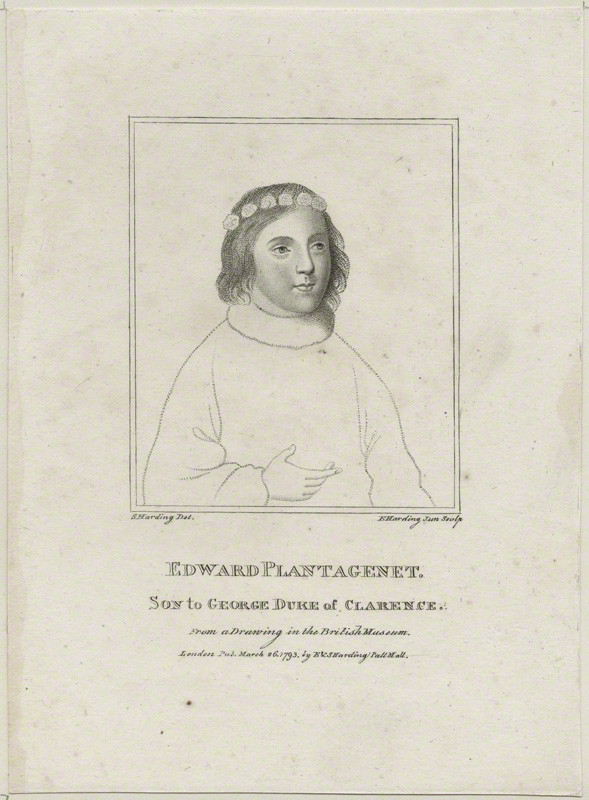
Today, 25 February, in 1475, birth of Edward Plantagenet, Earl of Warwick and Salisbury, son of George Plantagenet, Duke of Clarence and Lady Isabel Neville. Edward was a potential claimant to the English throne during the reigns of both Richard III and his successor, Henry VII. Edward was a double 2nd cousin to Queen Katherine Parr’s father. He was also a younger brother of Lady Margaret Pole, 8th Countess of Salisbury, Governess to Princess Mary, daughter of King Henry VIII and Katherine of Aragon.

Edward was born at Warwick, ancestral home to his mother, the Duchess of Clarence. His paternal grandparents were Richard, Duke of York and Lady Cecily Neville, great-aunt to his mother. His maternal grandparents were Richard Neville, 16th Earl of Warwick (known as “Warwick, the Kingmaker”) and Lady Anne Beauchamp, suo jure 16th Countess of Warwick.

He succeeded to the title of Earl of Salisbury on 12 December 1476. He was created Earl of Warwick in 1478 shortly after the attainder and execution of his father for treason. With the title, he received Warwick Castle which had belonged to his grandfather. His potential claim to the throne following the deposition of his cousin Edward V in 1483 was overlooked because of the argument that the attainder of his father also barred Warwick from the succession, although an Act of Parliament could have reversed that.

Edward (Plantagenet), Earl of Warwick and Salisbury by Edward Harding, published by  E. & S. Harding, after  Sylvester Harding, stipple engraving, published 26 March 1793.

Edward (Plantagenet), Earl of Warwick and Salisbury by Edward Harding, published by E. & S. Harding, after Sylvester Harding, stipple engraving, published 26 March 1793. © National Portrait Gallery, London

Edward, at the age of only ten years old, was kept as prisoner in the Tower of London by Henry VII. He remained a prisoner until 1499 when a plot between Warwick and Warbeck (pretender of Edward of Shrewsbury and claimant to the throne) for Warwick’s escape was alleged. Warwick didn’t escape, was brought to trial on 21 November, plead guilty, and was executed. He was in his early 20s.

King Richard III, Queen Anne, Edward, Prince of Wales, Margaret, Countess of Salisbury and Edward, Earl of Warwick after Unknown artist

(L to R) Lord Edward, Earl of Warwick; Lady Margaret, Countess of Salisbury; Queen Anne (Neville); King Richard III; and Edward, Prince of Wales after Unknown artist. © National Portrait Gallery, London

Sudeley Castle History: Ralph Boteler, 1st Baron Sudeley

Boteler of Sudeley coat of arms.

Boteler of Sudeley coat of arms; bore gules, a fess countercompony argent and sablo between six crosses pattee or

Ralph Boteler, 1st Baron Sudeley and 7th Baron Sudeley KG (c. 1394 – 2 May 1473[1]) was an English baron and aristocrat. He was the Captain of Calais and Treasurer of England (from 7 July 1443).

Family

Ralph Boteler was the youngest surviving son of Sir Thomas Boteler, de jure 4th Baron of Sudeley Castle, Gloucestershire and Alice Beauchamp (d. 1443), daughter of Sir John Beauchamp of Powick, Worcestershire.[1]

His paternal grandparents were Sir William le Boteler, 2nd Baron Boteler and co-heiress Joan de Sudeley, daughter of John de Sudeley, 2nd Baron Sudeley.

Life

Boteler was a military commander and member of the King’s Household under both Henry V and Henry VI. In 1418, Boteler was part of the retinue of Humphrey, Duke of Gloucester (son of Henry IV) on the occasion of Henry V’s visit to Troyes.[6] He was present for the signing of the Treaty of Troyes which agreed that after the death of Charles VI of France, his heirs male would inherit the throne of France.[6] The treaty also required that Henry espouse the Princess Katherine of Valois, a younger daughter of Charles VI and sister to Isabella of Valois, the second queen to Richard II of England.[6] In 1420-21, Boteler was awarded grants of land in France most likely for his service to the King. After the signing of the treaty, Boteler was part of the attack against the Dauphin of France to keep him from trying to reclaim his right to the succession.

Dugdale quotes, “he was retained by indenture to serve the King in his wars of France with twenty men-at-arms and sixty archers on horseback.” (Dent)

Again, “In the beginning of the following reign, he had liscence to travel beyond the sea; was again in the wars of France and of the retinue of John, Duke of Bedford (brother of Henry V).” (Dent)

The Duke of Bedford was named Protector of the Realm and carried on the wars of France. Dent states that after the fall of Joan of Arc, Boteler rejoined Bedford at Rouen and was present for her burning at the stake.

He was made a Knight of the Garter in 1420.[4] He was captain of Arques and Crotoy in 1423 and took muster in Calais in 1425.[3] In 1441, Boteler became Lord Chamberlain of the King’s household.[6] The following year, Boteler was made Treasurer of the King’s Exchequer.[6] He was then sent as an ambassador with Richard, Duke of York, to negotiate a treaty with France. He served as Lord High Treasurer of England from 1443 to 1446. In 1447, he was associated with John, Viscount Beaumont in the Governorship of the “Isle of Jersey, Garnesey, Serke, and Erme” with the priories-alien and all their possessions in those islands; to hold during the minority of Anne, daughter and heiress of Henry Beauchamp, 1st Duke of Warwick (husband to Lady Cecily Neville, sister to Lady Alice, great-grandmother of Queen Katherine Parr).[6] The employment was short as the young heiress died in 1449. Boteler then joined commission with James Butler, Earl of Wiltshire, in the Governorship of the town, marches, and castle of Calais.

In 1458, Boteler was acknowledged for his great service done to King Henry V and Henry VI in France and Normandy. Upon the fall of Henry VI, things drastically turned. Boteler excused himself from Parliament due to his age. He then devoted himself to the re-construction of Sudeley Castle.

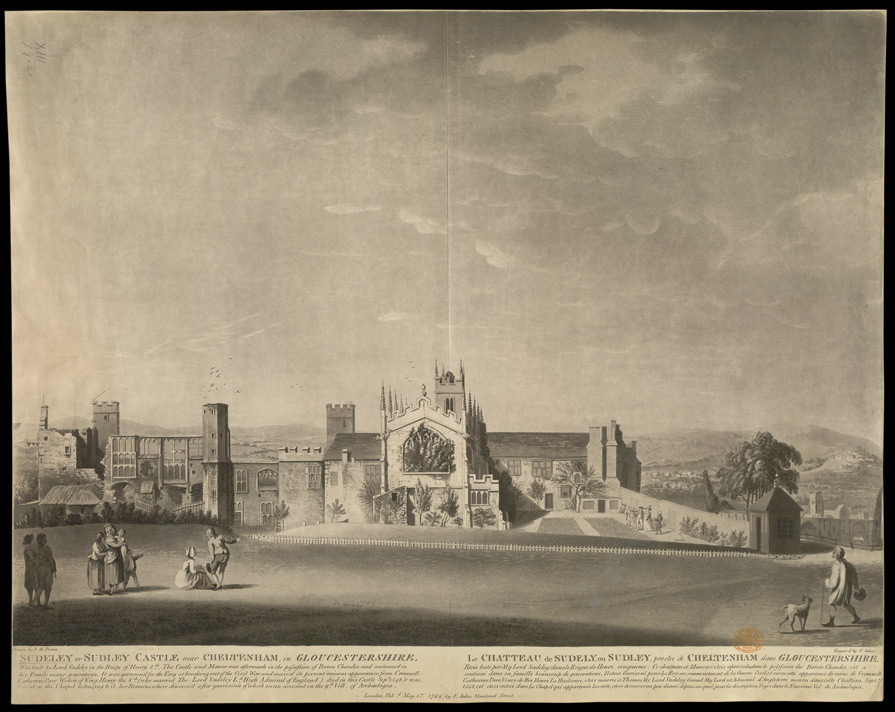
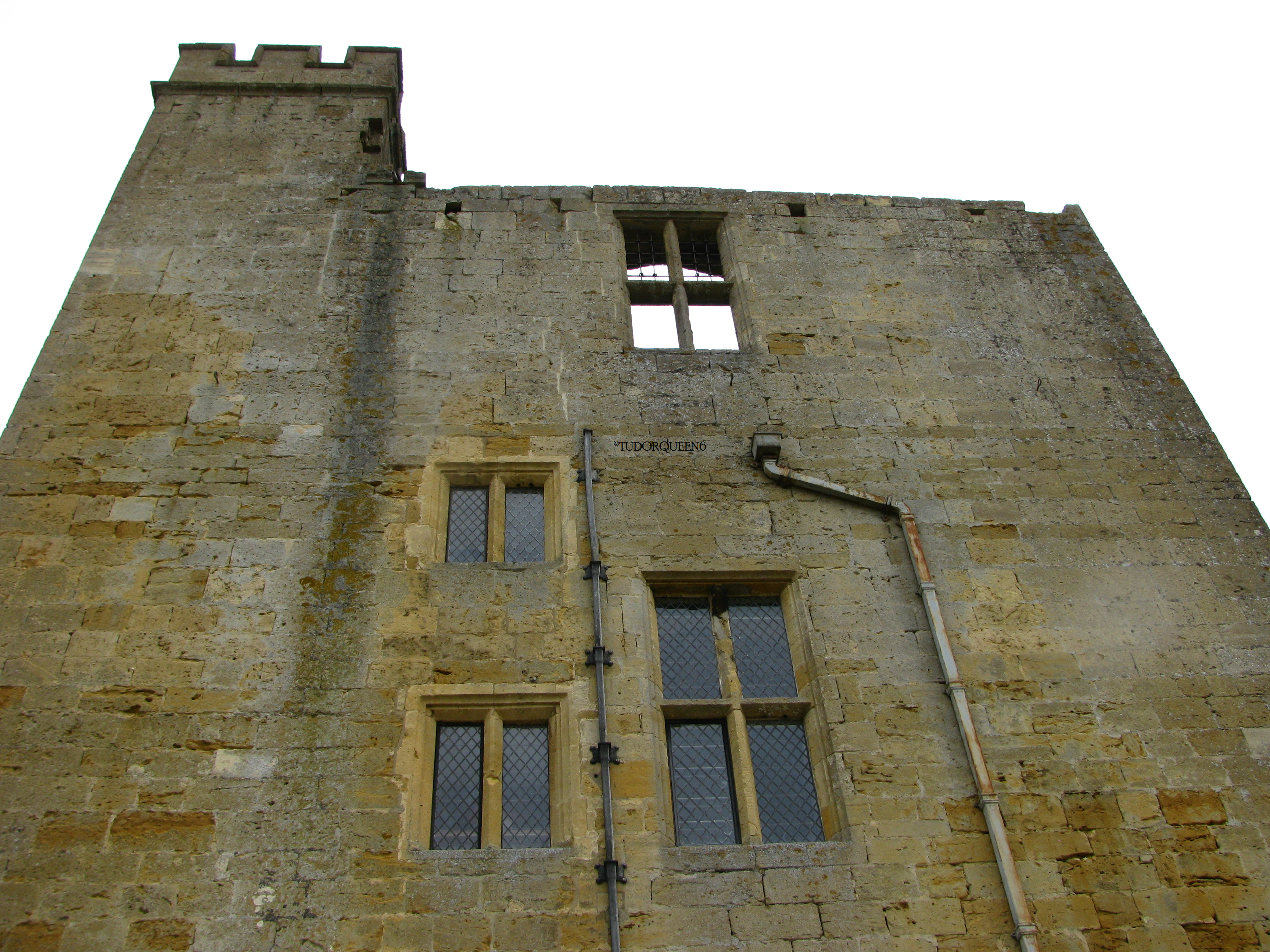
View of the back of Sudley Castle in Gloucestershire showing the landscape it overlooks. Sudley is one of the grandest late medieval houses in Gloucestershire. Many of the buildings are ruined but the long medieval hall appears habitable. The Castle Chapel is striking, very much in the Gothic Perpendicular style with heavily pinnacled roof. It has a Royal connection, as Katherine Parr, the last Queen of Henry VIII died here in 1548 and was buried in this Chapel. The large rear window of the chapel is obscured by foliage, which suggests that the Chapel was at this date in a bad state of repair. Between 1554 and 1813, it was held by the Chandos family, although it was damaged during the Civil War, which made it largely inhabitable.

View of the back of Sudeley Castle in Gloucestershire showing the landscape it overlooks. Sudeley is one of the grandest late medieval houses in Gloucestershire. Many of the buildings are ruined but the long medieval hall appears habitable. The Castle Chapel is striking, very much in the Gothic Perpendicular style with heavily pinnacled roof. It has a Royal connection, as Katherine Parr, the last Queen of Henry VIII died here in 1548 and was buried in this Chapel. The large rear window of the chapel is obscured by foliage, which suggests that the Chapel was at this date in a bad state of repair. Between 1554 and 1813, it was held by the Chandos family, although it was damaged during the Civil War, which made it largely inhabitable.

The original Castle was built during King Stephen’s reign. His His capture of several French ships added to his wealth which he spent on restoring the Castle. Tradition says that the Portmare Tower was where Boteler held a French Admiral who he had taken prisoner. Boteler received ransom from the King adding more to his considerable wealth.[6]

Boteler was a huge benefactor to the churches. He erected St. Mary’s Chapel and aided the parishioners of Winchcombe to restore their Parish Church.[6]

The Dungeon Tower of Sudeley Castle.

The Dungeon Tower of Sudeley Castle.

In May 1455, Boteler took up arms again for the King at the first Battle of St. Alban’s. The First Battle of St Albans, fought on 22 May 1455 at St Albans, 22 miles (35 km) north of London, traditionally marks the beginning of the Wars of the Roses. Richard, Duke of York (husband to Lady Cecily Neville and father to Edward IV and Richard III) and his ally, Richard Neville, Earl of Warwick (Warwick, the Kingmaker, uncle to Elizabeth Parr, grandmother of Queen Katherine), defeated the Lancastrians under Edmund, Duke of Somerset, who was killed. York captured Henry VI.[6]

When Edward IV took the throne, things turned for the bad for Boteler. Boteler was forced to give up Sudeley Castle — Edward was depriving the Lancastrians of their lands, etc. leaving some of them in poverty while the Yorks’ flourished with the new grants that had been transferred from the Lancastrians to them. Records show Boteler reluctantly handing over the Castle. It states that he confirmed the Castle over to Richard, Earl of Rivers; William, Earl of Pembroke; Antony Wydville; Lord Scales; William Hastings; Lord Hastings; Thomas Bonyfaunt, Dean of the Chapel Royal; Thomas Vaughan; and Richard Fowler.[6] With this went the inheritance of his heirs as well.

When the Lancastrian party rose again in 1470, there was hope that Sudeley would be restored to Boteler, but the House of York refused. The Castle was handed over to the Earl of Rivers and the others named above, but it was not meant to stay with them. Instead, Edward IV granted the Castle to his brother, Richard, Duke of Gloucester (later King Richard III).[6] It would remain Crown property until a grant to Thomas, Lord Seymour, the husband of Queen Katherine Parr, widow of King Henry VIII, in 1547 by his nephew King Edward VI (son of Henry VIII and Jane Seymour, wife 3). Shortly after Sudeley was taken from Lord Seymour, the Castle would temporarily pass to the late Queen’s brother, Marquess of Northampton (Sir William Parr) until the accession of Queen Mary I.

Lord Sudeley
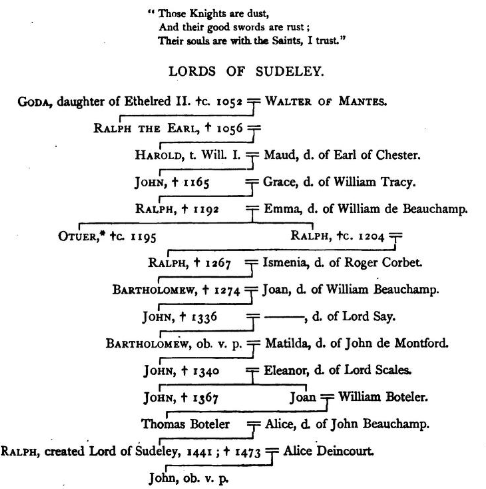
Tree of the Lords of Sudeley from "Annals of Winchcombe and Sudeley" by Emma Dent, Lady Sudeley, 1877.

Tree of the Lords of Sudeley from “Annals of Winchcombe and Sudeley” by Emma Dent, Lady Sudeley, 1877.

The Boteler’s elevation to the aristocracy arose from the second marriage of Ralph’s grandfather, William le Botiler of Wem, de jure 2nd Baron Boteler, to the co-heiress of John de Sudeley, de jure 2nd Baron Sudeley, Joan de Sudeley.[1] In 1367, Thomas Boteler became co-heir to his uncle, John de Sudeley, de jure 3rd Baron Sudeley.[1] This eventually led to his father succeeding to the title of Lord of Sudeley. The title passed to both of Ralph’s elder brothers, John (5th Baron Sudeley) who died unmarried and childless in 1410 and William (6th Baron Sudeley), who despite being married, also died childless seven years later. William’s widow, Alice, was appointed governess of Henry VI in 1424.[2] On 10 September 1441, Ralph Boteler was created by a new writ and letters patent, Baron of Sudeley by King Henry VI.[1] With the title he was granted an annuity of 100 marks to himself and his heirs for the better support of his dignity, to be received out of the farm of the county of Lincoln.[6]

Ralph inherited Sudeley Castle from his mother; he started rebuilding in 1442.[4][6] Unfortunately he failed to gain royal permission to crenellate it and had to seek Henry VI’s pardon.[5] Boteler was a supporter of the House of Lancaster during the War of the Roses. In 1469, Boteler was forced to sell Sudeley to King Edward IV due to his support for the Lancastrian cause. Sudeley became Royal property.

Marriage and Family

Lord Sudeley married twice. Before 6 July 1419, he married commercial wealth, in the person of Elizabeth Norbury, widow of John Hende (d. 1418), late Mayor of London, and daughter of John Norbury.[1] They had two sons, Ralph and Thomas, Knt.[1] She died 28 August 1462, and in the following year he married Alice (d. 1474), daughter of John, Baron Deyncourt, and widow of William, Baron Lovel of Titchmarsh, Northamptonshire, who survived him.[1] They had no issue.[1]

Sudeley’s only surviving son from his first marriage, Thomas, predeceased him, also without a male heir.[1] Thomas’ widow Eleanor was the Lady Eleanor Boteler[7] (known as the Holy Harlot) whose alleged pre-contract of marriage to Edward IV of England was claimed to have invalidated Edward’s marriage to Elizabeth Woodville, and so legitimized the usurpation of Richard III of England. Lady Eleanor describes herself as “lately the wife of Thomas Boteler, knight, now deceased.”[7]

References

  1. Douglas Richardson. Plantagenet Ancestry: A Study In Colonial And Medieval Families, 2nd Edition, 2011. pg 230-32.
  2. John Ashdown-Hill, “Eleanor The Secret Queen“, The History Press, 2009, pg 50 ISBN 978-0-7524-5669-0
  3. John Ashdown-Hill, “Eleanor The Secret Queen“, The History Press, 2009. pg 52 ISBN 978-0-7524-5669-0
  4. Sudeley Castle Online: History Timeline URL: http://www.sudeleycastle.co.uk/history
  5. John Ashdown-Hill, “Eleanor The Secret Queen“, The History Press, 2009. pg 51 ISBN 978-0-7524-5669-0
  6. Emma Dent. ”Annals of Winchcombe and Sudeley,” J. Murray, 1877.
  7. John Ashdown-Hill, “Eleanor The Secret Queen”, The History Press, 2009. pg 140

18 FEBRUARY 1478: THE DEATH of the Duke of Clarence

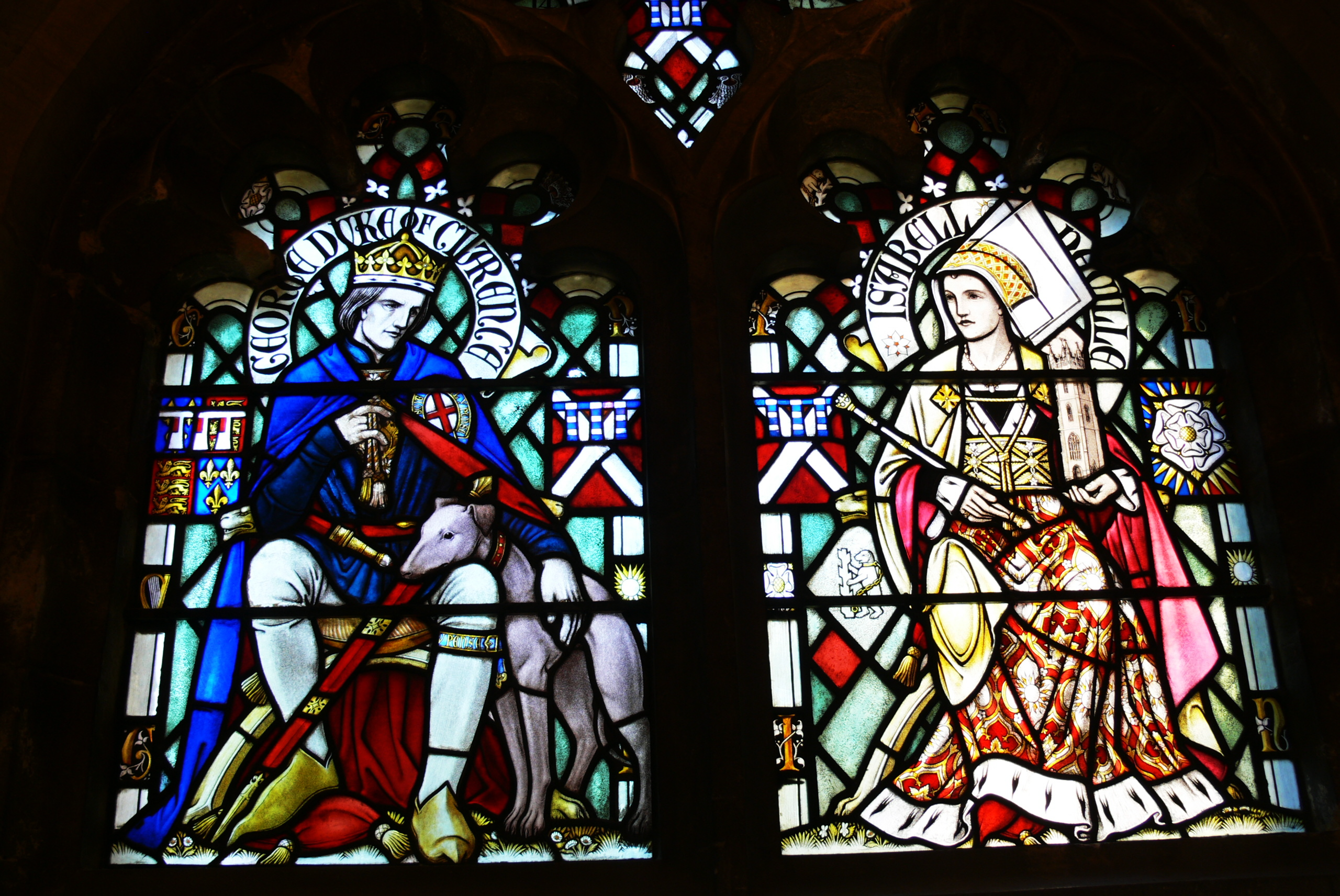
The Duke and Duchess of Clarence, Cardiff Castle. From WikiCommons, no copyright.

The Duke and Duchess of Clarence, Cardiff Castle. From WikiCommons, no copyright.

Another bad day for the Nevilles’ — 18 February 1478 — death of the Duke of Clarence, husband of Lady Isabella Neville, both cousins of Elizabeth Parr (grandmother of Queen Catherine). The Duke was granted the titles of 1st Earl of Salisbury and Warwick, which had last been held by Isabella’s father, Richard, who was the 16th Earl of Warwick and 6th Earl of Salisbury. George, Duke of Clarence was the third son of Richard Plantagenet, 3rd Duke of York, and Lady Cecily Neville (great-aunt of Isabella Neville and Elizabeth Parr), and the brother of kings Edward IV and Richard III. He played an important role in the dynastic struggle known as the Wars of the Roses. He is also remembered as the character in William Shakespeare’s play Richard III who was drowned in a butt of Malmsey wine. The Duke and Duchess were parents to the last Plantagenet’s which included Lady Margaret, suo jure 8th Countess of Salisbury, who was executed by Henry VIII.

12 FEBRUARY: The Throckmorton Brothers

Coughton Court, Warwickshire, England

Coughton Court, Warwickshire, England

The Throckmorton family of Coughton Court in Warwickshire is one of the oldest Catholic families in England. The Throckmortons were prominent in the reigns of Henry VIII, Edward VI, Mary I, and Elizabeth I (Tudor). Sir George Throckmorton was a favorite of King Henry VIII during his early years as King. He owed his position probably due to his brother-in-law, Sir Thomas Parr, comptroller of the King’s household and loyal friend of the King. However, his marriage to the Lancastrian Vaux family may have had something to do it. Throckmorton’s wife, Lady Katherine (Vaux), was the younger half-sister of Lord Parr, both being children from one of Lady Elizabeth’s (born FitzHugh) two marriages; Lord Parr and Lord Vaux. The Vaux family was loyal to Henry VI and especially Margaret of Anjou when she was exiled to France. George’s father-in-law, Nicholas, became a protege and favorite of Lady Margaret Beaufort, mother of Henry VII Tudor. As the stepson of Lord Vaux (Lord William Parr died shortly after the coronation of Richard III in 1483), Thomas Parr is noted to have been a possible pupil in the household of Henry VIII’s grandmother as a young lad.

The connection to the Parr family made Throckmorton an uncle by marriage to queen consort Katherine Parr, the Marquess of Northampton, and Lady Anne Herbert (wife of William, 1st Earl of Pembroke). The Parrs also shared common ancestry with the Throckmorton’s through their maternal great-grandmother Matilda Throckmorton (Lady Green), daughter of Sir John Throckmorton and Eleanor de la Spiney (great-grandparents of Sir George). George Throckmorton, however, would become involved in a scandal to keep the King from divorcing his first wife, Queen Katherine of Aragon, to marry her lady-in-waiting, Anne Boleyn. Throckmorton didn’t approve and supported the queen. Most members, including Sir Thomas Parr’s widow and his cousin, Lady Maud Parr (Green), stuck by Katherine of Aragon until her household was dissolved.

12 FEBRUARY 1570: THE DEATH of Sir Nicholas Throckmorton

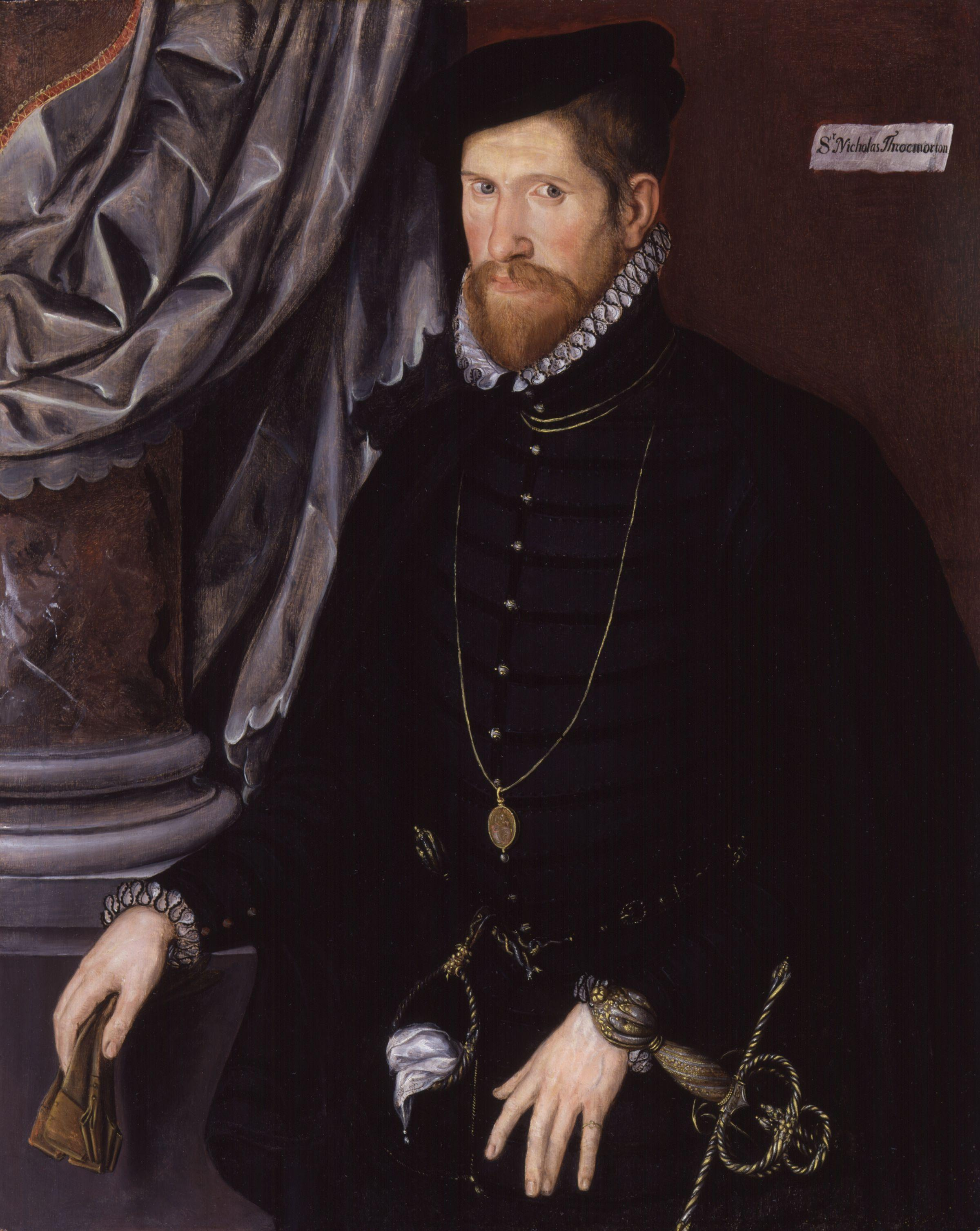
Sir Nicholas Throckmorton by Unknown Anglo-Netherlandish artist. © National Portrait Gallery, London

Sir Nicholas Throckmorton by Unknown Anglo-Netherlandish artist. © National Portrait Gallery, London

A cousin of Katherine Parr, Throckmorton was a staunch Protestant, and a supporter of Lady Jane Grey, though he served as a Member of Parliament under all the Tudor monarchs including the Catholic queen, Mary I. His importance during the reign of Elizabeth I was mainly as an ambassador to France and to Scotland. Throckmorton was the son of Katherine’s paternal aunt, Hon. Katherine Vaux and cousin Sir Robert Throckmorton of Coughton Court (a supporter of Queen Katherine of Aragon). Throckmorton was a page in the household of Henry Fitzroy, Duke of Richmond by 1532-6; his cousin, William Parr (brother of Queen Katherine) had been raised and educated with Fitzroy and the Earl of Surrey and his maternal uncle, also named William Parr, was head of the household there. Throckmorton then became a servant in the household of his cousin, William, Baron Parr by 1543. Throckmorton, along with his brother Clement, would go on to serve in the household of their cousin Queen Katherine Parr by 1544-7 or 8. After the reign of Henry VIII, Throckmorton continued to serve at court. Upon the death of the Dowager Queen, he returned to the household of his cousin, the 1st Marquess of Northampton (William Parr).

12 FEBRUARY 1581: THE DEATH of Sir Robert Throckmorton

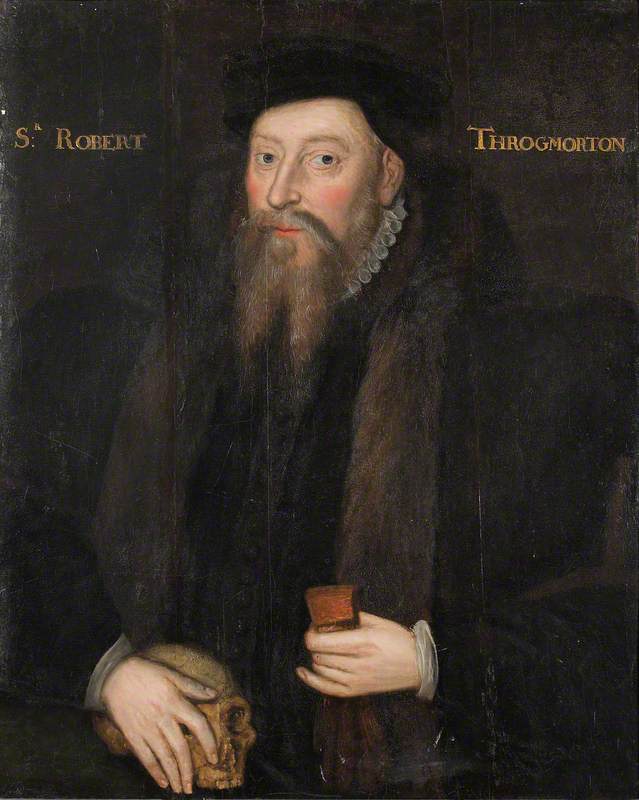
Robert Throckmorton by British School (c) National Trust, Coughton Court; Supplied by The Public Catalogue Foundation

Robert Throckmorton by British School (c) National Trust, Coughton Court; Supplied by The Public Catalogue Foundation

Sir Robert Throckmorton (c.1513-12 February 1581) was the eldest son of Sir George Throckmorton of Coughton Court and Hon. Katherine Vaux. As such, Robert was the elder brother of Nicholas, above. Throckmorton, like his father, was Catholic. His role in the succession crisis of Queen Mary is not clear, but it seems that he backed Mary’s claim because of the positions he was given. He was knighted in 1553 and appointed Constable of Warwick Castle among other positions. His Catholicism explains his disappearance from the Commons in the reign of Elizabeth I, although the most Catholic of his brothers, Anthony Throckmorton, was to sit in the Parliament of 1563. Judged an ‘adversary of true religion’ in 1564, Throckmorton remained active in Warwickshire until his refusal to subscribe to the Act of Uniformity led to his removal from the commission of the peace. (A. L. Rowse) Throckmorton married twice and had issue by both wives who would continue his legacy at Coughton Court.

References