Queen Katherine Parr: Not Important Enough?

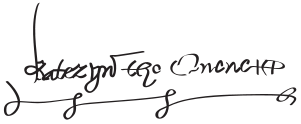
I love how much people dismiss Queen Kateryn Parr. There may be evidence that she WAS supposed to be Regent for Edward VI. See her signature AFTER Henry died.

Credit: Elizabeth Norton

She was apparently signing as “Kateryn, the quene regente KP”. The theory goes that she was indeed made Regent for her stepson, King Edward VI. Which would make sense with the use of her signature. It is believed that Edward Seymour, Duke of Somerset, Kateryn’s brother the Marquess of Northampton, her brother-in-law the Earl of Pembroke and the council ousted her and rewrote the will. She would have made a wonderful Queen Regent. She proved she was capable of being Regent while Henry went to war with France. Perhaps she would have lived longer and prevented the succession from being rewritten. She gets credit for the placement of Princesses Mary & Elizabeth back into the line of succession behind their brother in 1545. That succession act seems to have overwritten or they disregarded King Edward’s will and supported the actual heir to the throne, Mary. Mary WAS the rightful heir. Jane was further down the approved line of succession. Why would you accept someone below the status of the actual daughters of King Edward’s father, Henry VIII? Kateryn Parr’s brother and brother in law were again involved in matters of the state and actually pulled off putting Lady Jane Grey on the throne for 9 days! Jane somehow outranked her own mother who was STILL alive and technically would have been the next heiress to the throne after Princesses Mary & Elizabeth. I never understood that. The Protestants feared the Catholic “Bloody Mary” (her nickname was started as Protestant propaganda, the pro Queen Elizabeth movement, lol) would try to return the country to the Pope and Catholicism. Mary was deeply religious. Kateryn Parr and Mary got on despite differences in matters like religion. Parr’s mother, Lady Maud, had served Mary’s own mother, Queen Katherine of Aragon, the first wife and crowned Queen consort to King Henry. The two women were pretty close. The Parrs backed Queen Katherine of Aragon when her lady in waiting became the Kings new obsession. Parr let Mary be and encouraged her every chance she could. One could argue she loved Mary more than Elizabeth. Heck, Kateryn named her only daughter and child, Mary, before the queen passed on 5 September 1548. Don’t think there were any other important Marys. The French Queen, Mary Tudor, had died long before Parr became Queen. Pretty sure it’s not after The Virgin Mary. Protestants aren’t that attached to her, right? I was raised Catholic, so I honestly don’t know. Anyway, Queen Kateryn Parr was VERY important. Read a book. She wasn’t an ex-queen. She remained Queen (consort) of England, Ireland, and France until she died. She was the LAST Tudor Queen Consort as King Edward died young. She was also the FIRST Queen of Ireland. Her funeral was the FIRST Protestant funeral for a Queen. Her mourner was none other than Lady Jane Grey, who would have probably stayed with Kateryn had the queen lived. Having Parr around seemed to pacify things. She knew how to handle tricky and dangerous situations. For Gods sake, she almost lost her head after she spoke with the King. It was overheard by the queens enemy, Bishop Gardiner, who saw an opportunity to “get rid” of Kateryn. I mean why not? He already KILLED TWO WIVES!! Lordy, so Gardiner tried to fuck with the Kings head. Saying shit like “it is a petty thing when a woman should instruct her husband” or some stupid sexist bs! Story goes, Kateryn was warned by an anonymous source who found her death warrant lying on the ground. YEAH RIGHT!! That’s straight up narcissistic abuse, my man!! Why do I feel like Henry set her up to test her loyalty? He was such a theatrical douche bag. No, no love for King Henry here. I have yet to see the film “Firebrand” which follows the reign of Kateryn as queen consort and queen Regente I believe. It’s based off Elizabeth Freemantle’s “Queen’s Gambit”. Anyway, Kateryn talked her way out of being arrested or worse by stroking the Kings ego and basically submitting to him just to fuvking survive. Imagine going through this marriage without psych meds like Benzos. I do believe they dabbled in potions however and she was known to “treat” melancholy with herbs from the gardens. Sudeley Castle where she is buried has a garden full of deadly herbs. Physic gardens. I have photos somewhere…

My page: Queen Catherine Parr

© 2024 Meg McGath. All research and original commentary belong to the author.

7 September 1548: THE FUNERAL of the Dowager Queen

Evesham Journal

7 September 1548: THE FUNERAL of the Dowager Queen Katherine Parr. It was the first Protestant funeral held in English. Her chief mourner was Lady Jane Grey. She was buried in St Mary’s Chapel on the grounds of Sudeley Castle, Gloucestershire, England.

‘A Breviate of the Internment of the lady Katherine Parr, Queen Dowager, late wife to King Henry VIII, and after, wife to Sir Thomas, Lord Seymour of Sudeley, and High Admiral of England.

Item – On Wednesday, the fifth of September, between two and three of the clock in the morning, died the aforesaid lady, late Queen Dowager, at the castle of Sudeley in Gloucestershire, 1548, and lieth buried in the chapel of the said castle.

Item – She was cered and chested in lead accordingly, and so remained in her privy chamber until things were in a readiness.

Hereafter followeth the provision in the chapel.

Item – It was hanged with black cloth garnished with escutcheons of marriages viz. King Henry VIII and her in pale, under the crown; her own in lozenge, under the crown; also the arms of the Lord Admiral and hers in pale, without crown.

Items – Rails covered with black cloth for the mourners to sit in, with stools and cushions accordingly, without either hearse, majesty’s valence, or tapers – saving two tapers whereon were two escutcheons, which stood upon the corpse during the service.

The order in proceeding to the chapel.

First, two conductors in black, with black staves.
Then, gentlemen and esquires.
Then, knights.
Then, officers of houshold, with their white staves.
Then, the gentlemen ushers.
Then, Somerset Herald in the King’s coat.
Then, the corpse borne by six gentlemen in black gowns, with their hoods on their heads.
Then, eleven staff torches borne on each side by yeomen about the corpse, and at each corner a knight for assistance – four, with their hoods on their heads.
Then, the Lady Jane, daughter to the lord Marquis Dorset, chief mourner, led by a estate, her train borne up by a young lady.
Then, six other lady mourners, two and two.
Then, all ladies and gentlewomen, two and two.
Then yeomen, three and three in a rank.
Then, all other following.

The manner of the service in the church.

Item – When the corpse was set within the rails, and the mourners placed, the whole choir began, and sung certain Psalms in English, and read three lessons. And after the third lesson the mourners, according to their degrees and as it is accustomed, offered into the alms-box. And when they had all done, all other, as gentlemen or gentlewomen, that would.

The offering done, Doctor Coverdale, the Queen’s almoner, began his sermon, which was very good and godly. And in one place thereof, he took a occasion to declare unto the people how that there should none there think, say, nor spread abroad that the offering which was there done, was done anything to profit the dead, but for the poor only. And also the lights which were carried and stood about the corpse were for the honor of the person, and for none other intent nor purpose. And so went through with his sermon, and made a godly prayer. And the whole church answered, and prayed the same with him in the end. The sermon done, the corpse was buried, during which time the choir sung Te Deum in English.

And this done, after dinner the mourners and the rest that would, retruned homeward again. All which aforesaid was done in a morning.’

(p.180-182, ‘Katherine Parr: Complete Works and Correspondence’ edited by Janel Mueller.)

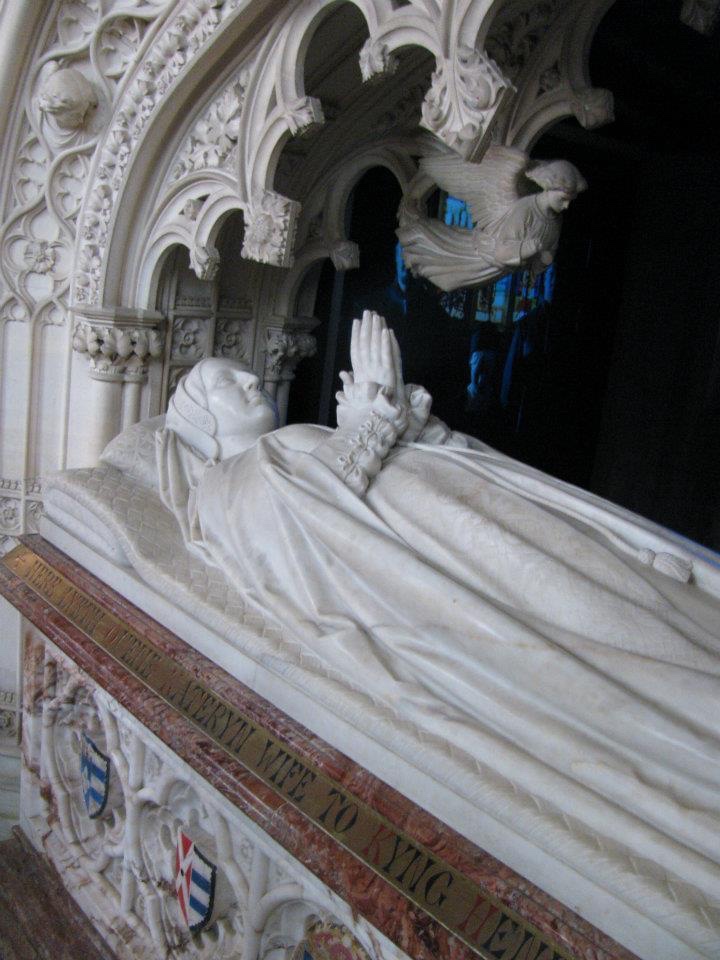
Tomb of Queen Kateryn Parr at Sudeley Castle. (c) Meg Mcgath, 2012.

20 MARCH 1549: THE EXECUTION of Lord Seymour of Sudeley

Seymour_Thomas1

Portrait of Thomas Seymour (1508-49) 1st Baron of Sudeley from ‘Memoirs of the court of Queen Elizabeth’ — Sarah of Essex, out of copyright

Following the death of Queen Katherine Parr in September 1548, Lord Seymour didn’t even wait for his wife’s funeral before he returned to London. As he was free to marry Lady Elizabeth Tudor again, Seymour went straight to her for the second time. Seymour bombarded Elizabeth with letters, lent her his house in London, and coerced her governess Kat Ashley into pleading his case on any and every occasion possible. Of course, Elizabeth refused to comply, a move that probably kept her from being beheaded herself.

Stewart Granger and Jean Simmons as Lord Seymour and Lady Elizabeth in "Young Bess" (1953)

Stewart Granger and Jean Simmons as Lord Seymour and Lady Elizabeth in “Young Bess” (1953)

In his head, Seymour had a grand plan for himself and had acquired ten thousand men and was preparing for a military coup. As things started to go awry, Seymour refused to wait. He took a gun and broke into the private quarters of the King. On his way to the King, the boy King’s spaniel awoke and started to bark. Seymour shot the dog and the whole household was awoken. Seymour was arrested, thrown in the Tower, and accused of 33 charges of High Treason and misdemeanor.

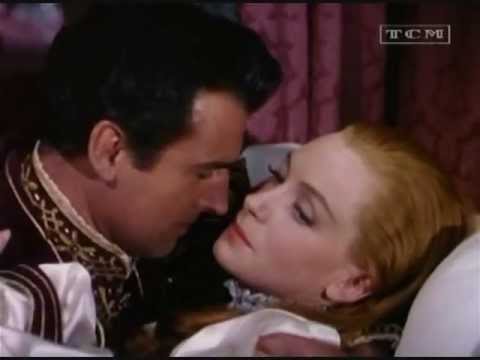
Death scene of Queen Katherine played by Deborah Kerr and Stewart Granger as Thomas Seymour in "Young Bess." Kerr had a strong resemblance to the real Queen Katherine.

Death scene of Queen Katherine played by Deborah Kerr and Stewart Granger as Thomas Seymour in “Young Bess” (1953). Kerr had a strong resemblance to the real Queen Katherine.

The authorities had thrown everything they could at Seymour. They even accused him in a possible connection to the death of his wife, the Dowager Queen. That ‘he helped to her end to hasten forth his other purposes.’ Seymour was never given a trial before his peers. Instead, an Act of Attainder (the same legal process that had be used to rid Henry VIII of Katherine Howard) was introduced to Parliament. It passed unopposed in the House of Lords on 25 February, and in the House of Commons on March 5, where it was only opposed by a handful of members.

The Act lists thirty-three charges trumped up against Seymour. In “The Annals of Winchcombe and Sudeley” by Emma Dent, she summarizes the charges:

“Articles of High Treason and other Misdemeanors against the King’s Majesty and his Crown objected to Sir Thomas Seymour Kt Lord Seymour of Sudeley and High Admiral of England Article

  1. He was charged with endeavouring to get into his own hands the government of the king

  2. With bribing certain members of the Privy Chamber

  3. With dictating a letter for the king to send to Parliament tending to the disturbance of the government

  4. For endeavouring to gain several of the nobility to join him in making changes in the affairs of state

  5. For threatening to make the Blackest Parliament ever known in England

  6. For refusing to answer a summons to explain certain things laid to his charge

  7. For prejudicing the king against the protector

  8. For suggesting to the king to take upon himself the affairs of government

  9. For plotting to take the king into his custody

  10. For plotting that the king should apply to him alone for all he needed

  11. For intending to control the king’s marriage

  12. For confederating with discontented noblemen to make a strong party abroad ready to serve them when occasion required

  13. 13 For planning that certain noble partisans should counteract those who opposed him

  14. For winning over the yeomanry to be ready to serve in case of need

  15. For strengthening his party by giving away various stewardships

  16. For retaining in his service too great a number of gentlemen and yeomen ready to strengthen his cause if needed

  17. For having 10,000 available men

  18. And having in readiness sufficient money to support the 10,000 for a month

  19. For endeavouring to bring about a clandestine marriage with the Princess Elizabeth second heir to the throne

  20. For having married the queen scandalously soon after the death of the king

  21. For deceiving the king and others in persuading them to plead with the queen they being already married

  22. For refusing to promote every way tl at was to the king’s advantage and of so strengthening his own party by sea and land as to bring within his reach the power of aspiring to the throne

  23. For endeavouring to obtain the public authority for his having the Mint of Bristol and which by fraud he had already got into his hands

  24. For having aided and abetted Sir Wm Sherrington who was known to be a traitor to the king

  25. For defrauding the king of 2,800 having conspired for this object with Sir Wm Sherrington

  26. For extorting large sums of money from ships

  27. For having taken possession of goods seized by pirates

  28. For wrongfully imprisoning those who had captured pirates

  29. For letting go free head pirates thus captured and brought before him

  30. For openly disobeying the Protector’s orders for the restitution of goods taken from pirates

  31. For robbing foreign ships wrecked on the English coast

  32. For betraying the king’s secret counsel

  33. For laying in provisions and money for a great number of men for his servants spreading the report the king was dead of a riot in consequence being expected had it not been stopped by his apprehension and committal to prison”(Dent)

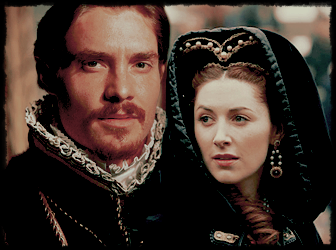
Edward and Anne from "The Tudors"

Edward and Anne Seymour from “The Tudors”

He was sentenced to death; his own brother signed his death warrant. Later it was said that his fate was sealed by the Duchess of Somerset, Anne, who had threatened to leave her husband if he did not act against his own brother. Whether or not that is true we do not know. It may simply be speculation.

The Act of Attainder concluded:

‘considering that he is a member so unnatural, unkind and corrupt and such a heinous offender of your majesty and your laws as he cannot be suffered to remain in body of your grace’s commonwealth but to the extreme danger of your highness and it is too dangerous an example that such a person, so much bound and so forgetful of it … should remain among us.’ He was to be ‘adjudged and attained of high treason and … shall suffer such pains of death as in cases of high treason have been accustomed.’

Stewart Granger and Jean Simmons and Lord Seymour and Lady Elizabeth "Young Bess" (1953)

Stewart Granger and Jean Simmons and Lord Seymour and Lady Elizabeth “Young Bess” (1953)

Seymour remained optimistic to the end and in his last moments tried to send Lady Elizabeth a message sewn into his servants velvet shoes. However, he retreated into silence as far as those who condemned him were concerned. While in the Tower, Seymour made his peace with the God others accused him of rejecting, writing the following lines:

‘Forgetting God
to love a king
Hath been my rod
Or else nothing:
In this frail life
being a blast
of care and strife
till in be past.
Yet God did call
me in my pride
lest I should fall
and from him slide
for whom loves he
and not correct
that they may be
of his elect
The death haste thee
thou shalt me gain
Immortally
with him to reign
Who send the king
Like years as noye
In governing
His realm in joy
And after this
frail life such grace
As in his bliss
he may have place.’ (Harington)

On the even of his death, Seymour requested his daughter should be given into the care of the Dowager Duchess of Suffolk, Katherine Willoughby. A few days later, Lady Mary Seymour, who was now about seven months old, was taken from Syon House (home to the Lord Protector and his wife, Anne) to the Duchess’s home — Grimsthorpe Castle in Lincolnshire. Upon the death of Mary’s mother, Queen Katherine, she had left all her wealth and possessions to her husband. Therefore upon his execution, Seymour’s wealth and possessions (which included that which he inherited by the Dowager Queen) reverted to the Crown and there was no money for his daughter.

Seymour was executed early in the morning of 20 March 1549. It took two blows of the axe to sever his head. He was buried in St. Peter’s Chapel in the Tower of London where other royals like Anne Boleyn, Lady Salisbury (the last Plantagenet “Princess”, daughter of the Duke and Duchess of Clarence), and Katherine Howard had been buried. Seymour’s own brother, Somerset (Edward), would join him in January of 1552 after his own execution under Edward VI; two uncles in one reign.

Elizabeth said, upon hearing of his death: “There died this day a man of much whit and very little judgement.”

References

  • Linda Porter. “Katherine, the queen,” St. Martin’s Press, 2010.
  • John Harington, “Nugae Antiquae,” (London, 1769), vol. 3, pg 259. (Linda Porter)
  • Susan James. “Catherine Parr: Henry VIII’s Last Love,” The History Press, 2009.
  • Young Bess” (1953)

Belinda Durrant Exhibit at Sudeley Castle: Where’s Mary?

Belinda Durrant has three new works on display at Sudeley Castle as part of their exhibition celebrating the quincentenary of the birth of Katherine Parr. She was gracious enough to share them with us and to even write what inspired her to make these works. 

Sudeley Exhibit by Belinda Durrant ©

“It [the exhibit] was made as a direct response to visiting the castle. I am no history scholar…just couldn’t understand why there was so little info about the poor little child at the Castle and decided I was going to find out myself….and promptly discovered that there was nothing much more to find, which just made it all worse, somehow.

Katherine Parr was the 6th wife of Henry VIII. After his death in 1547 she married Thomas Seymour and moved to his country residence, Sudeley Castle in 1548 where she gave birth to a daughter, Mary on August 30th of that year. She died from puerperal (childbed) fever just seven days later and is buried in St Mary’s Church within the castle grounds. The site of baby clothing often provokes unexplained sentimental reactions, particularly from women. Freud tells us that this is fetish. Such clothing reminds us of the child itself and is embraced as a substitute for the ‘lost’ child. Freud means ‘lost’ in terms of the fleeting period of babyhood, but in this case, Lady Mary Seymour was apparently quite literally ‘lost’.

We are told that Mary became an orphan at just a few months old when her father was executed for treason and that she was sent to live with Katherine Willoughby, the Duchess of Suffolk. I have been able to find out very little else. It seems all record of her disappears after August 29 1550, the eve of her second birthday.

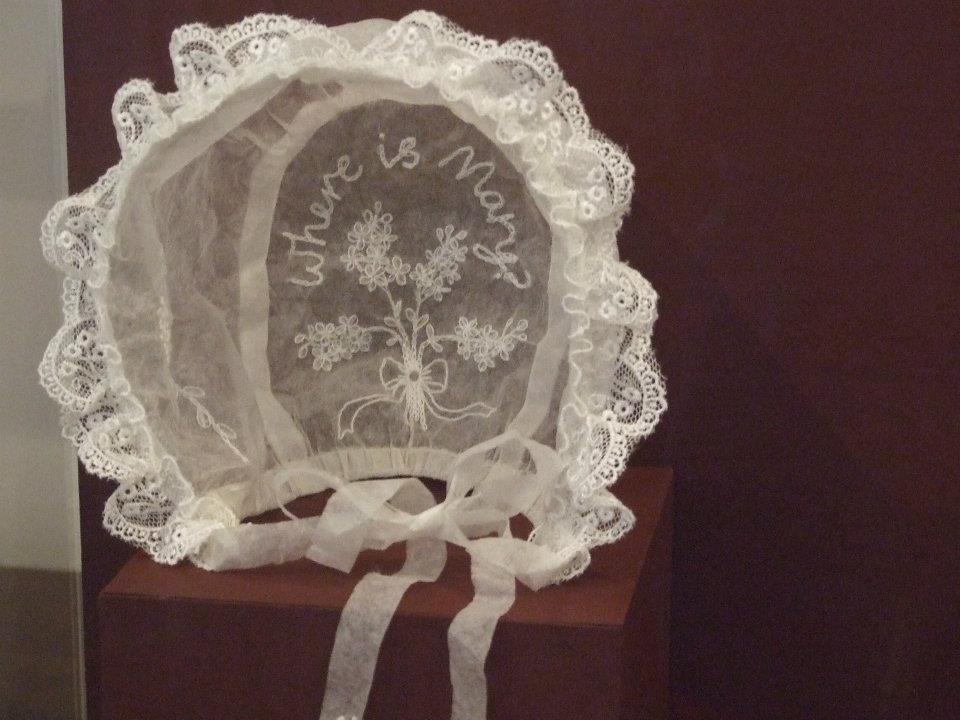
The three works I have displayed in the Castle exhibition centre, ‘Where is Mary? Bonnet, Mittens, Bib’ were made as a direct response to a visit I made to the castle in July 2011. The work is not about embroidery and stitch.

It is about the ACTS of embroidering and stitching; the almost ritualistic time, care and love which goes into the making of those very special first clothes which celebrate the arrival of a new child.

Bonnet which reads “Where is Mary” by Belinda Durrant, picture by Sudeley Castle.
 © 13 April 2012

Katherine Parr’s Letter to Lord Seymour: February 1547

The actual letter from Katherine to Seymour as shown at Sudeley Castle, February 1547.

The actual letter from Katherine to Seymour as shown at Sudeley Castle, c. February 1547.

THE DOWAGER QUEEN TO THE LORD ADMIRAL
my lord j send yow my moost humble and harty comendations beyng desyrous to knowe how ye haue done syns j sawe yow. I pray yow be not offended with me in that j send soner to yow than I sayd I wold. for my promys was but such one ones in fourtened how be yt the tyme ys well abrevyated by what meanes I knowe not except the weakes be schorter at chelsey than in other places my lord, your brother hathe dyffered answer consernyng suche requestes as I made to hym tyll hys comyng hether wyche he sayth schalbe immediatly after the terme thys ys not hys fyrst promys I haue receyued of hys comyng and yett vnperfourmed I thynke my lady hath tawght hym that lesson for yt ys her coustome to promys many comynges to her frendes and to perfourme none I trust in greatter matters sche ys more cyrcumspect. And thus my lord I make an ende byddyng yow moost hartely farewell wyschyng yow the good I wold my self. from chelsey
[postscript] I wold not haue yow to thynke that thys myne onest God Wyll towarde yow to procede of any sodayne motyon or passyon for as truly as god ys god my mynd was fully bent the other tyme I was at lybertye to marye yow [which clearly shows she was at the time free to marry again] before any man I knewe howbeyt god withsode my wyll theryn moost vehemently for atyme and through hys grace and goodnes made that possible wyche semeth to me moost vnpossible that was made me to renownce utterly myne one wyll, and to folowe hys wyll most wyllyngly yt wer to long to wryte [all] the processe of thys mater yf I lyue I trust schall declare yt to yow my self I can [say] nothyng but as my lady of suffolke saith god ys amervelous man.
by her that ys yowrs to serue and obey duryng her lyf,
Kateryn the Quene KP

Actual letter written in the queen's hand at Sudeley Castle, c. February 1547.

by her that ys yowrs to serue and obey duryng her lyf,
Kateryn the Quene KP

*transcription from “Katherine Parr: Complete Works & Correspondences” compiled by Janel Mueller
My Lord I send you my most humble and hearty commendations, being desirous know how ye have done since I saw you. I pray you be not offended with me in that I send sooner to you than I said I would. For my promise was but such one once in a fortnight. Howbeit the time is well abbreviated: by what means I know not, except the weeks be shorter at Chelsea than in other places. My Lord your brother hath deferred answer concerning such requests as I made to him till his coming hither, which he saith shall immediately after the term. This is not his first promise I have received of his coming, and yet unperformed. I think my Lady hath taught him that lesson, for it is her custom to promise many comings to her friends, and to perform none. I trust in greater matters she is more circumspect. And thus, my Lord, I make an end, bidding you most heartily farewell, wishing you the good I would myself. From Chelsea.
[Addition to body of letter]
I would not have you to think that this mine honest goodwill towards you to proceed of any sudden motion or passion. For as truly as God is God, my mind was fully bent the other time I was at liberty to marry you before any man I knew. Howbeit, God withstood my will therein most vehemently for a time and, through His grace and goodness, made that possible which seemeth to me most unpossible–that was, made me to renounce utterly mine own will, and to follow His will most willingly. It were too long to write all the process of this matter. If I live, I shall declare it to you myself. I can say nothing but, as my Lady of Suffolk saith, “God is a marvelous man.”
By her that is yours to serve and obey during her life,
Kateryn, the quene, KP
Signature of Katherine Parr
This letter was written as Dowager Queen according to Janel Mueller’s compilation of Katherine Parr’s works. The letters started in mid-February of 1547, AFTER the death of King Henry VIII. This particular letter was written in mid-February 1547 and is featured at Sudeley Castle.A recent publication in a British newspaper put forth letters discovered between Queen Catherine and Lord Seymour. The paper was unsure as to when letters were exchanged between the two. The letters, which reveal a different side of the queen, are compiled and preserved in the 2011 compilation “Katherine Parr: Complete Works & Correspondences” by Janel Mueller. According to Mueller, the letters started mid-February, 1547, AFTER the death of King Henry. As Dowager Queen, Katherine was free to express her true feelings towards Seymour. Her feelings about herself as a woman were also revealed within her book “Lamentations of a Sinner” which was published after Henry’s death.

Source:

  • Katherine Parr (Author), Janel Mueller (Editor). Katherine Parr: Complete Works & Correspondences, University of Chicago Press, Jun 30, 2011. pg 129-31.
© Meg McGath
23 May 2012