Family of Queen Katherine Parr: Sir John Neville, 3rd Lord Latimer

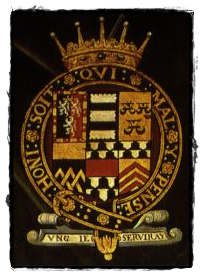
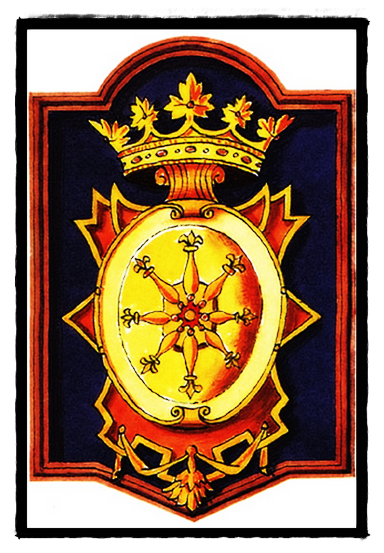
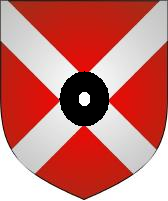
Coat of Arms of the Neville Barons Latimer of Snape.

Sir John Neville, 3rd Baron Latimer of Snape Castle (17 November 1493–2 March 1543) was an English nobleman of the House of Neville. Latimer was Katherine Parr’s second husband and Latimer’s third and final wife. His family was one of the oldest and most powerful families of the North. They had a long standing tradition of military service and a reputation for seeking power at the cost of the loyalty to the crown as shown by Sir Richard Neville, 16th Earl of Warwick [Warwick, the Kingmaker], John’s 1st cousin, twice removed.[2]

Latimer’s branch of the Neville family was in line for the Earldom of Warwick; his great-grandmother, Lady Elizabeth Beauchamp was a daughter of the 13th Earl of Warwick by his first wife. The 13th Earl’s heir was his only son, Henry, by his second marriage Lady Isabel le Despenser [granddaughter of Edmund of Langley, 1st Duke of York]; he was created Duke of Warwick. Warwick married to the future “Warwick, the Kingmaker’s” sister, Lady Cecily Neville. The Duke’s only child and heir by Cecily was a daughter, Lady Anne, who became Countess in her own right. After her early death the Earldom and inheritance became an issue.[see note 1] Due to the affiliation, Lord Latimer dealt with quite a bit of sibling rivalry. Legal actions were taken by his younger brothers and Latimer, at the time of his marriage to Katherine in 1534, was having financial difficulties. He lived chiefly at Snape Castle, Yorkshire, but sometimes at Wyke in Worcestershire.

Born about 17 November 1493,[1] he was eldest son of Sir Richard Neville, 2nd Baron Latimer by Anne, daughter of Sir Humphrey Stafford. His grandfather and heir to the Barony, Sir Henry, had been involved in the War of the Roses and in 1469 was killed at the battle of Edgecote fighting for Henry VI [the last Lancastrian king]. The fortunes of this branch of Nevilles were saved by Neville’s sympathetic granduncle, Cardinal Thomas Bourchier [uncle of Neville’s paternal grandmother Joan], who procured the wardship of the 2nd Baron and preserved his inheritance.

He came to court where he was one of the gentlemen-pensioners. Neville doesn’t really enter into history until 1513 when he accompanied Henry VIII to Northern France and was knighted after the taking of Tournai. He had taken part in about 1517 in the investigation of the case of the Holy Maid of Leominster. He was knight of the shire (MP) for Yorkshire in 1529 which was a step in progress even if he owed it to his father. The representation of the county was somewhat of a family affair as his fellow knight was Sir Marmaduke Constable, whom Neville took precedence over most likely due to his noble inheritance. He was not a member of the Commons for long as his father died before the end of 1530 and he had livery of his lands and succeeded to the House of Lords as the 3rd Baron on 17 March 1531.

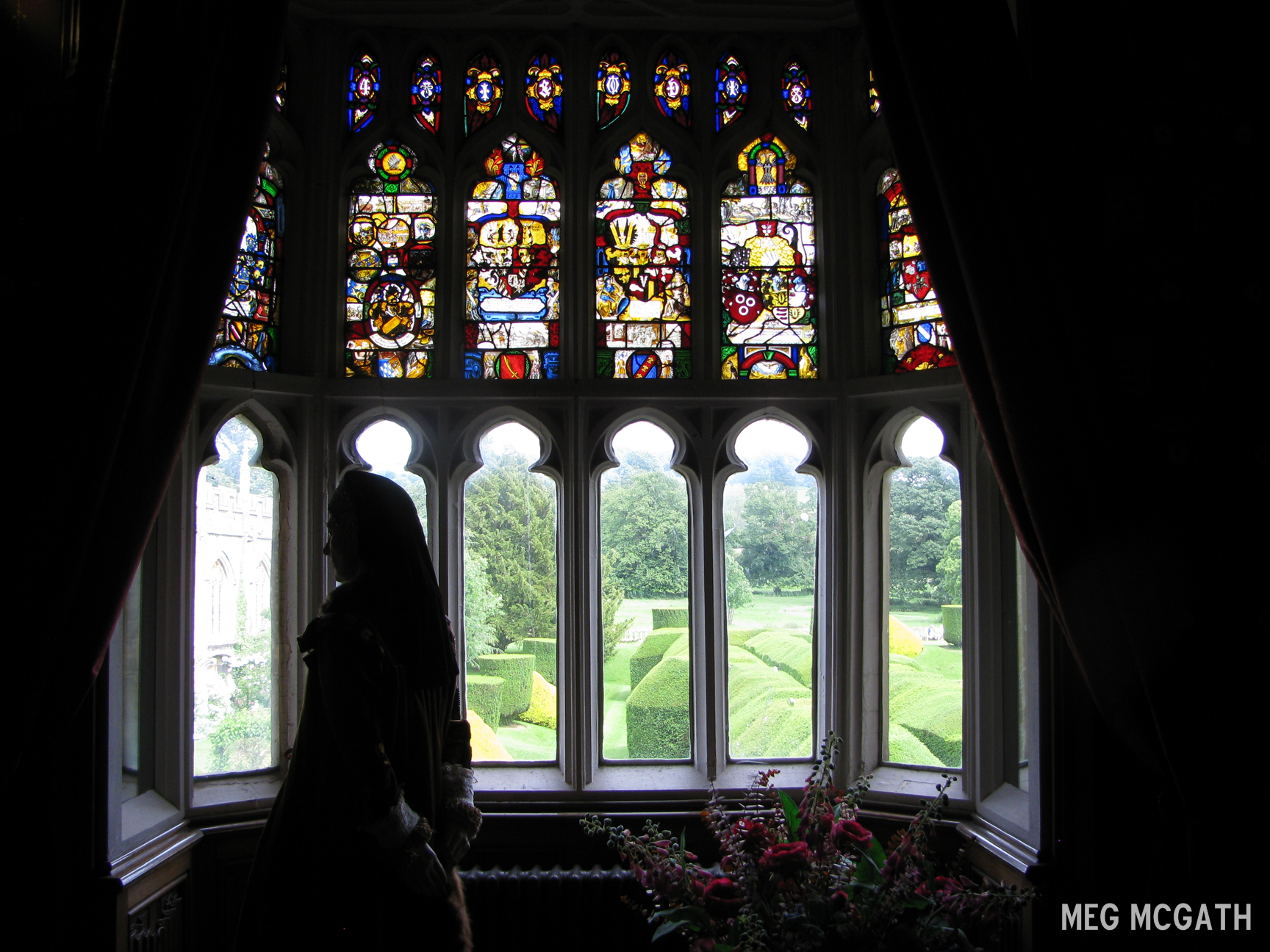
Tomb of Queen Katherine at Sudeley features the her family arms impaled with that of her four husbands [Latimer & Parr]. Copyright Meg McGath

Tomb of Queen Katherine at Sudeley features the her family arms impaled with that of her four husbands [Latimer & Parr]. © Meg McGath [2012]

In the summer of 1534, Latimer married the widowed Lady Borough, Katherine Parr. At age 40, Lord Latimer was twice Katherine’s age. Latimer was a 2nd cousin to Katherine’s paternal grandmother, Elizabeth [at the time of Latimer’s birth, she had become Lady Vaux after re-marrying]. The match was credited to several family members which included Katherine’s uncle, Sir William, who had taken over as a father figure when her father died in 1517. From the beginning of the marriage, Katherine tried to be a good wife. Her affection for her husband would grow deep enough to cherish a remembrance of him, his New Testament with his name inscribed inside, which she kept until her death. Katherine would also prove to be a good step-mother to her step-children; a trait which she would again show after her marriage to the King. Her “teenage” step-son, John, proved to be difficult. There is some indication that Margaret, his sister, was the couple’s favorite. Never the less, Katherine would continue a relationship with the two after her marriage to King Henry, bringing Margaret to court as her maid-in-waiting and securing a position for John’s wife, Lucy, the new Lady Latimer in her household.[10]

The Pilgrimage of Grace

Latimer was a supporter of the old religion and bitterly opposed the king’s divorce and remarriage and it’s religious ramifications. In 1536, within two weeks of the riot in Louth, a mob appeared before the Latimer’s home threatening violence if Lord Latimer did not join their cause. Katherine watched as her husband was dragged away by the rebels. As prisoner of the rebels, conflicting stories of which side Latimer was truly on began to reach Cromwell and the King in London. The rebellion in Yorkshire put him in a terrible dilemma. If he was found guilty of any kind of treason his estates would be forfeited leaving Katherine and her step-children penniless. The King himself, wrote to the Duke of Norfolk pressing him to make sure Latimer would ‘condemn that villain Aske and submit [himself] to our clemency’.[11] Latimer was more than happy to comply. Both Katherine’s brother, William Parr and uncle, William Parr, 1st Baron Parr of Horton fought with the Duke of Norfolk and the Duke of Suffolk against the rebellion. Katherine’s brother, Sir William Parr, who had been in the service of the Duke of Richmond [natural son of King Henry VIII and Elizabeth Blount], blocked the Great North Road at Stamford, with a large force of armed men, they were in the way of anyone coming up from London. The only substantial Lincolnshire landowner that the King could depend on was his friend and brother-in-law, the Duke of Suffolk.It is to most likely to Katherine’s credit that Lord Latimer survived; both her brother and uncle probably intervened at one point and saved Lord Latimer’s life.[10] Never the less, Latimer represented the insurgents at the conferences with the royal leaders in November 1536, and helped to secure amnesty.[12]

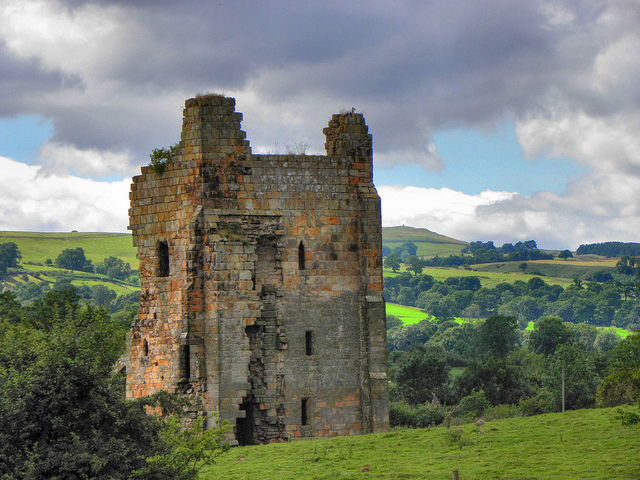
Ruins of Snape Castle.

In January 1537, Katherine and her step-children were held hostage at Snape Castle during the uprising of the North; the “Bigod Rebellion” which was lead by Sir Francis Bigod of Settrington. The rebels ransacked the house and sent word to Lord Latimer, who was returning from London, that if he did not return immediately they would kill his family. When Lord Latimer returned to the castle he somehow talked the rebels into releasing his family and leaving, but the aftermath to follow with Lord Latimer would prove to be taxing on the whole family.[10] It is probable that Katherine made sure that her husband did not join the uprising.[12]

The family would later move south after the executions of the rebels which pleased Cromwell and the King. Although now charges were found, Latimer’s reputation which reflected upon Katherine, was tarnished for the rest of his life. He spent the last seven years of his life blackmailed by Cromwell. Latimer was called away frequently to do the biding of Cromwell and the King and be present during Parliament from 1537-42. With Cromwell’s fall in 1540, the Latimer’s reclaimed some dignity and as Lord Latimer attended Parliament in 1542 he and Katherine spent time in London that winter. The atmosphere of the court was much different from the rural and parochial estates. It was at court that Katherine could find the latest trends, not only in religious matters, but in frivolous matters such as fashion and jewellery which she loved.[10]

By the winter of 1542, Lord Latimer’s health had broken down after a grueling life of what some would call ‘political madness’. Katherine spent the winter of 1542-1543 nursing her husband. John Neville, Lord Latimer, died in 1543. In Lord Latimer’s will, Katherine was named guardian of his daughter, Margaret, and was put in charge of Lord Latimer’s affairs which were to be given over to his daughter at the age of her majority. Latimer left Katherine Stowe Manor, Wyke [or Wike] Manor, and other properties. He also bequeathed money for supporting his daughter and in the case that his daughter did not marry within five years, Katherine, was to take £30 per annum out of the income to support her step-daughter. Katherine was left a rich widow faced with the possibility of having to return north after Lord Latimer’s death.[10]

Wyke Manor in Wick, Worcestershire. [Wikipedia]

Wyke Manor in Wick, Worcestershire. [Wikipedia]

He died on 2 March 1543 in London, and was buried in St. Paul’s Cathedral. In Weever’s Monuments, ed 1631, page 371, he says in speaking of old St Paul’s,

“Here in a monument broken all a pieces lieth entombed the body of John Nevill Lord Latimer whose widow Katherine Parr daughter of Sir Thomas Parre of Kendal and sister to William Lord Parre Marquesse of Northampton was the sixth and last wife to King Henry the Eight. He died in the year 1542 [incorrect date].”[9]

Family

Latimer married three times:

1. By 1520,[3] Dorothy de Vere (d. 7 February 1527), the daughter of Sir George de Vere and Margaret Stafford. Dorothy was the sister and co-heiress of John de Vere, 14th Earl of Oxford. She is buried in Wells, North Yorkshire in St. Michael’s; which is next to Snape Castle. The couple had two children:

  • John Neville, 4th Baron Latimer (1520[4]-1577), married Lady Lucy, daughter of Henry Somerset, 2nd Earl of Worcester and Anne Browne [daughter of Sir Anthony Browne and Lady Lucy, herself a daughter of John Neville, 1st Marquess of Montagu]  by whom he left four daughters and co-heiresses, of whom Dorothy married Thomas Cecil, 1st Earl of Exeter.[2] On his death, the Barony of Latimer fell into abeyance between his four daughters and co-heirs, and so remained until 1913, when Francis Burdett Thomas Coutts-Nevill was summoned to Parliament by writ, dated 11 February 1913.[5][6] Latimer was buried near Snape Castle in St. Michael’s Church, Wells, within Nevilles’ Chapel.[7]
Effigy and tomb of the 4th Lord Latimer in Nevilles' Chapel, Wells, North Yorkshire Well Village Website © Well Parish Council 2011

Effigy and tomb of the 4th Lord Latimer in Nevilles’ Chapel, Wells, North Yorkshire Well Village Website © Well Parish Council 2011

  • Hon. Margaret Neville (1525[7]-1546), was betrothed to her cousin Ralph Bigod in 1534, before the Bigod Rebellion. Ralph was the son of the rebel Sir Francis Bigod. The betrothal was broken most likely to the Rebellion. She died at age twenty-one, unwed, and d.s.p. [no children].[2]

2. On 20 June 1528, he obtained a marriage license to Elizabeth Musgrave (d. 1530), daughter of Sir Edward Musgrave of Hartley and Joan Warde, by whom he had no issue.[1][2] Elizabeth was in fact a cousin to Katherine Parr sharing Sir Thomas Tunstall and Isabel Harrington [3rd cousins, twice removed]; the 3rd Lord FitzHugh and Elizabeth Grey [4th cousins]; and both Sir Ralph Neville, 1st Earl of Westmorland and Lady Joan Beaufort — Elizabeth descended from Westmorland’s children, Sir Ralph [4th cousin, once removed] and Hon. Philippa [4th cousin], by his first wife, Lady Margaret Stafford, who married his stepmother’s (Lady Joan Beaufort) daughter, Hon. Mary Ferrers, the daughter from Lady Joan’s first marriage to of Robert, Lord Ferrers [4th cousin, once removed]. These last three connections to Westmorland, Lady Joan Beaufort, and Lady Margaret Stafford also made Elizabeth a cousin of her husband Lord Latimer.
3. In Summer 1534, Katherine, daughter of Sir Thomas Parr of Kendal and widow of Sir Edward Borough (d. circa April 1533), son of Thomas Burgh, 1st Baron Burgh.[2]

Ancestry

By his father, Latimer descended from King Edward III of England twice. Latimer’s grandparents were Sir Henry Neville, heir to the barony of Latimer and Earldom of Warwick, and the Hon. Joan Bourchier. Henry Neville was the heir and eldest son of Sir George, 1st Baron Latimer of Snape and Lady Elizabeth Beauchamp [through whom the Latimer’s claimed the Earldom of Warwick; Elizabeth was a daughter of the 13th Earl of Warwick by his first wife Hon. Elizabeth Berkeley, both descendants of Edward I]. George was a younger son of Sir Ralph Neville, 1st Earl of Westmorland and his second wife, Lady Joan Beaufort. Lady Joan was the legitimized daughter of Prince John of Gaunt, 1st Duke of Lancaster [son of Edward III and father of Henry IV of England] by his mistress, later wife, Katherine Roet.

Joan Bourchier was a granddaughter of Sir William, 1st Count of Eu and Lady Anne of Gloucester, daughter of Prince Thomas of Woodstock [youngest son of Edward III] and his wife, Lady Eleanor de Bohun [descendant of Edward I and Henry III]. This connection to the Bourchier family made Latimer a cousin of the Earls of Bath, Lords Dacre of the South, the Lady Margaret Bryan [governess of the King’s children], Lady Anne Bourchier [husband of Katherine Parr’s brother William Parr], and even the Duchess of Somerset Anne Stanhope. Perhaps the connection to the Bourchier’s, specifically Anne, wife of Sir William Parr, brought Katherine and Latimer together. Credit is usually given to Parr’s uncle also named Sir William and her cousin Bishop Cuthbert Tunstall.

Ancestry of John Neville, 3rd Lord Latimer; Queen Katherine and Latimer shared Lady Joan Beaufort and Sir Ralph, 1st Earl of Westmorland as common ancestors.

Notes

  1. The earldom passed to the 13th Earl’s male heir, Henry, from his second marriage to Lady Isabel le Despenser [a granddaughter of Edmund of Langley, 1st Duke of York]. Henry married Lady Cecily, a sister of the future Lord Warwick [Richard Neville] in 1436. At the same ceremony, Henry’s sister Lady Anne was married to Richard Neville, son of the 5th Earl of Salisbury. After the marriage, Henry was created Duke of Warwick in 1445. The couple had one child, a daughter Lady Anne, who inherited as suo jure 15th Countess of Warwick after the death of her father in 1446 [women could not inherit Dukedoms]. Lady Anne died young (d.1449). The title went to her her paternal aunt Lady Anne Beauchamp [whom she was most likely named after]. The title was passed to her husband, Richard Neville, who was also the maternal uncle of the last Countess. For the full story, see “Warwick Inheritance” on Lady Cecily’s page. The Warwick inheritance would be the subject of another feud after the death of Lord Warwick between his two daughters, Lady Isabel, Duchess of Clarence, and Lady Anne, Duchess of Gloucester and future queen of England. The title was bestowed upon Lady Isabel’s husband, George, Duke of Clarence (brother of King Edward IV and Richard III) and would go to his son, Edward, 17th Earl of Warwick, the last male Plantagenet.

References

  1. History of Parliament: a biographical dictionary of Members of the House of Commons, ed. Stephen Bindoff ‘Neville, Sir John I (1493-1543), of Snape, Yorks.,‘ 1982.
  2. Linda Porter. Katherine, the Queen. Macmillan, 2010.
  3. Cokayne, and others, The Complete Peerage, volume VII, page 483.
  4. Linda Porter. Katherine, the Queen, Macmillian, 2010. pg 65. *At the time of his father’s marriage to Katherine Parr in 1543, Neville was 14 yrs old.
  5. Charles Mosley, editor, Burke’s Peerage, Baronetage & Knightage, 107th edition, 3 volumes (Wilmington, Delaware, U.S.A.: Burke’s Peerage (Genealogical Books) Ltd, 2003), volume 1, page 1363.
  6. G.E. Cokayne; with Vicary Gibbs, H.A. Doubleday, Geoffrey H. White, Duncan Warrand and Lord Howard de Walden, editors, The Complete Peerage of England, Scotland, Ireland, Great Britain and the United Kingdom, Extant, Extinct or Dormant, new ed., 13 volumes in 14 (1910-1959; reprint in 6 volumes, Gloucester, U.K.: Alan Sutton Publishing, 2000), volume VII, page 484.
  7. History of Village of Well, North Yorkshire, St. Michael’s
  8. Linda Porter. Katherine, the Queen, MacMillian, 2010. pg 66. *At the time of her father’s marriage to Catherine Parr in 1543, Margaret was aged 9.
  9. Richard Simpson. Some Accounts of the Monuments in Hackney Church, Billing and Sons, 1881; Chapter: Lady Latimer.
  10. Susan E. James. Catherine Parr: Henry VIII’s Last Love. The History Press, 2009 US Edition. pg 61-73.
  11. Letters and Papers, Foreign & Domestic of the Reign of Henry VIII, II, no. 1174.
  12. Sir Sidney Lee. Dictionary of the National Biography, Vol XL, Smith, Elder and Co., 1894. pg 269.

Links

History of Parliament: Neville, Sir John I (1493-1543), of Snape, Yorks.

Katherine Parr: Vellutello’s Edition of Petrarch Works

Katherine Parr’s copy of Vellutello’s edition of Petrarch’s works (1544).

Katherine Parr: Vellutello’s Edition of Petrarch Works © The British Library Board

Thanks to the British Library, in this photo we can see the BEAUTIFUL purple velvet and detail of Katherine’s personal copy of Vellutello’s Edition of Petrarch Words. Most photos on the net show the book as a bluish green back round.

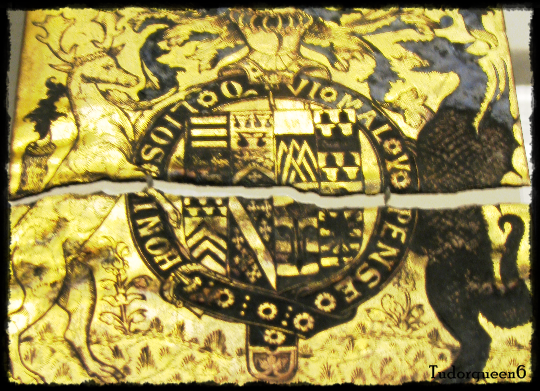
This volume of Petrarch’s works, with an exposition by Alessandro Vellutello, was first published in Venice. The book is bound in purple velvet and embroidered with gold and silver thread and coloured silks. The coat of arms topped with the royal crown may have been embroidered by Katherine. The book appears to have been bound after the death of Henry VIII (in January 1547) and before Katherine’s marriage to Sir Thomas Seymour (in May of the same year). Had it been bound whilst Henry was still alive, it would be expected that the supporters (the creatures flanking the coat of arms) would be the lion and the greyhound. As there is no reference to Seymour, it seems it was made sometime in the short space of Katherine’s widowhood.

Vellutello's edition of Petrarch's works. Close up of arms.

Vellutello’s edition of Petrarch’s works. Close up of arms.

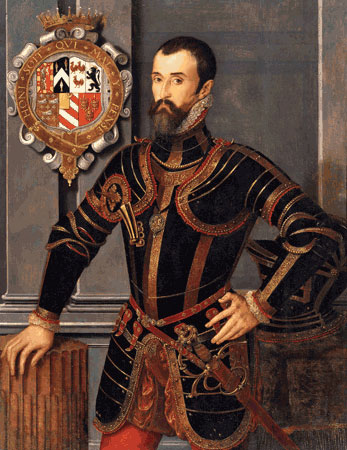
The British Library site states that the coat of arms are that of Katherine Parr, but my recent review of the coat of arms reveals perhaps that it is the arms of Katherine’s brother, Sir William Parr, 1st Marquess of Northampton and Earl of Essex. The coat of arms and quartertings are the same for the most part when compared to his stall plates from Windsor Chapel that were taken down and broken during the reign of Mary I and are now featured in the British Museum in London.
Garter stall plate of William Parr, 1st Marquess of Northampton, 1552. The plate was in St. George's Chapel, Windsor Castle, among other Garter plates, but upon the ascension of Queen Mary, Parr was stripped of his titles. His stall plate was taken down and broken apart.

Garter stall plate of William Parr, 1st Marquess of Northampton, 1552. The plate was in St. George’s Chapel, Windsor Castle, among other Garter plates, but upon the ascension of Queen Mary, Parr was stripped of his titles. His stall plate was taken down and broken apart.

It was subsequently owned by the Fitzhugh family (whose emblem of the creature breathing flames and gorged with a coronet, is depicted on the left). The creature on the right – a wyvern argent also gorged with a coronet – belongs to the Parr family.

The book went on public display in 2009 for the Henry VIII: Man and Monarch exhibit at the British Library. The event was to mark the 500th anniversary of Henry VIII’s accession.

Copy of Il Petrarcha con l’espositione d’A. Vellutello; con le figure a i triomphi et con piu cose utili in varii luoghi aggiunte (1544) owned by Katherine Parr, Henry VIII’s sixth wife. British Library, C.27.e.19.
Shelfmark: c27e19
Held By: BL [British Library]
Country: England
Period: 16c
Cover Material: Velvet
Decorative Technique: Embroidered
Style: Armorial
Edges: Gilt and gauffered
BookBinder Owner: Parr, Katharine, Queen Consort of Henry VIII (1512-1548)
Author: Petrarch
Title: aIl Petrarcha con l:espositione d:A. Vellutello
Place of Publication: Venice.
Date of Publication: 1544.
Notes: Rebacked by BM/BL bindery. Edges gilt, gauffered and painted in red. Arms of Queen Katherine Parr of England.

http://www.bl.uk/catalogues/bookbindings/LargeImage.aspx?RecordId=020-000000590&ImageId=ImageId%3D39900&Copyright=BL

The Queen’s Sister: Lady Anne Herbert, Countess of Pembroke

Anne Parr, Lady Pembroke from Wilton Parish Church

Lady Anne Herbert [Parr], Countess of Pembroke, Baroness Herbert of Cardiff (15 June 1515 – 20 February 1552) was a noblewoman and the younger sister of Queen Katherine Parr, the sixth and last wife of King Henry VIII.

Anne is one of the few Tudor women to boast the fact that she was a lady-in-waiting to each of Henry’s six wives. Anne had an older brother, Sir William Parr, who among other creations, became Earl of Essex and 1st Marquess of Northampton. William was an influential man during the late reign of Henry VIII and that of Edward VI. Northampton was known as “the King’s uncle.” Northampton would also go on to become a loyal friend and ally of Queen Elizabeth I. Anne’s husband, Lord Pembroke, was also one of the most influential men during the reign of Edward VI and was rewarded with the title of 1st Earl of Pembroke.

Anne Parr was born on 15 June 1515 to Sir Thomas Parr of Kendal and Dame Maud Green, co-heiress of Sir Thomas Green, Lord of Greens Norton. She was the youngest surviving child of five; having an older sister Katherine, later Queen of England and Ireland, her brother William, and two other siblings. The first baby born to Anne’s mother was a boy. He died shortly after and Maud did not have another child until the birth of Katherine in 1512. In 1517, when she was two years old, her father died of the sweating sickness leaving her mother a widow, pregnant at twenty-five, and with the grave responsibility of guarding the inheritance of the Parr children.[3] It is not certain what happened to Maud’s baby but it did not survive.

Maud, Lady Parr was a maid-of-honour and good friend to Queen consort Katherine of Aragon. She was also apparently head of the Royal school at court where Anne was educated alongside her sister Katherine and other daughters of the nobility. Anne would have been taught French, Latin, philosophy, theology, and the Classics. Lady Parr had already taught her children to read and write when they were small. Anne herself later said that her education at home was based on the approach used in the family of Sir Thomas More where the boys and girls were educated together; as was the case with the Parr’s until her brother left home in 1525 to join the household of Henry Fitzroy, Duke of Richmond; the recognized natural son of King Henry by his mistress Elizabeth Blount, a lady-in-waiting to the Queen.[3]

The Six Queens

At court

Sometime in 1528, Lady Parr secured her 13 year-old daughter, Anne, a post at Court as maid-of-honour to Queen Katherine of Aragon. Anne was then made a ward of King Henry. When Anne Boleyn was crowned queen in 1533, Anne Parr continued in the same capacity as maid-of-honour. She quickly succumbed to the spell of Queen Anne’s charismatic personality and following the Queen’s example, she became an ardent supporter of the New Faith.[5] After Anne Boleyn’s fall from power and subsequent execution, Anne remained at Court in the service of the new queen, Jane Seymour. She was one of the few present at the baptism of Prince Edward on 15 October 1537 and was part of the funeral cortege of Jane Seymour.[3] Some sources state that Anne carried the train of the Lady Elizabeth at Prince Edward’s baptism, while others believe it was Lady Herbert ‘of Troye’, wife of her future husband’s paternal half-uncle, Sir William Herbert, son of the 1st Earl of Pembroke of the eighth creation.

When King Henry took as his fourth wife Anne of Cleves, Anne returned to her role as maid-of-honour, which she remained in when Queen Anne was supplanted by Katherine Howard. Following Queen Katherine’s arrest for adultery, Anne Parr was entrusted with the Queen’s jewels.[6]

Marriage

Sir William Herbert, 1st Earl of Pembroke

In February 1538, Anne married Sir William Herbert (c.1501-17 March 1570), Esquire of the King’s Body. Herbert was the son of Sir Richard Herbert of Ewyas, the illegitimate son of William Herbert, 1st Earl of Pembroke [of the before mentioned]. It is without a doubt that Anne met her husband at court. It is not known whether or not the marriage was a love match or not, but it is interesting to note that both Anne and her sister Katherine had been attracted to dashing men of action who were slightly disreputable.[3] The Herbert’s, due to King Henry’s newly found infatuation for Anne’s sister Katherine, appeared to be in the King’s favour; as for the next few years Anne and her husband received a succession of Royal grants which included the Abbey of Wilton in Wiltshire (pulled down and built over for Wilton House in the 1540s), Remesbury (north Wiltshire), and Cardiff Castle. They also used Baynard’s Castle as their London residence.

Anne had three children by her husband: Henry, who succeeded his father; Edward Herbert; and Anne Herbert.[7]

The Queen’s sister

King Henry VIII and Queen Katherine

Anne was a witness to the wedding ceremony performed at Hampton Court Palace on 12 July 1543, when King Henry married her sister Katherine, the Dowager Lady Latimer.

In June 1544, the Queen lent her sister her manor, Hanworth for the lying-in for her second child. It was there that Anne gave birth to another son, Edward (his elder brother was named Henry, was this a coincidence?). The Queen sent regular messengers to Hanworth to inquire on the health of her sister. For the christening, the queen provided a large delegation (five yeo-men, two grooms, and Henry Webbe) from her household to attend. Letters continued well into July between the two sisters while Anne remained at Hanworth. After the birth, Anne visited Lady Hertford, who had also just given birth, at Syon House near Richmond.[19]

In August 1544, the queen paid for a barge to bring Anne by river from Syon House (home to the Hertford’s) to Westminster. The queen’s involvement in the birth and christening of her nephew would eventually lead her to take him in as part of her household after the death of King Henry.[19]

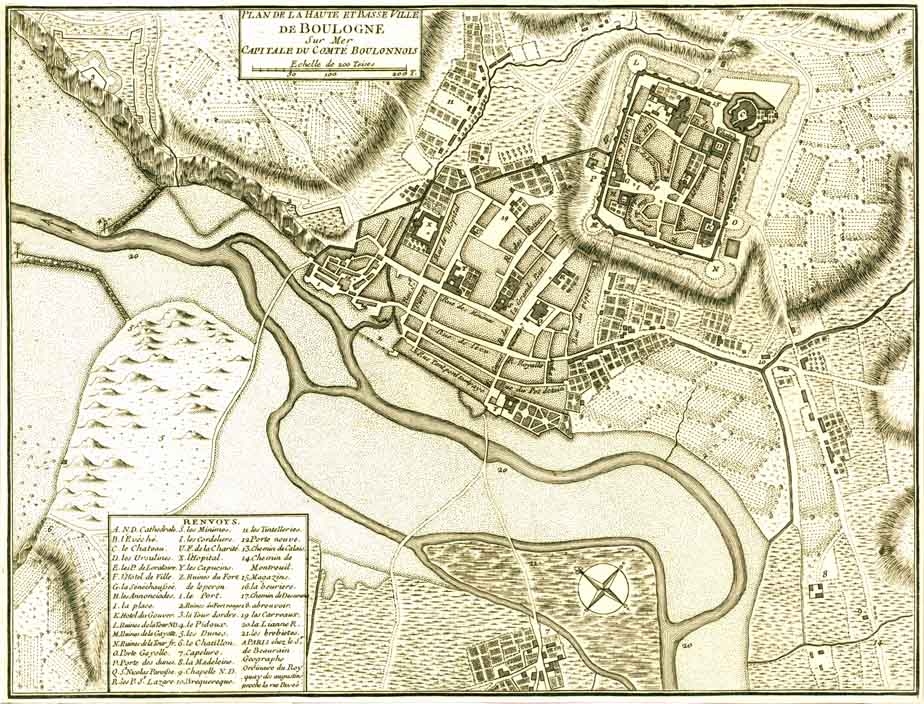
In September 1544, William Herbert was knighted on the battlefield at the Siege of Boulogne during the King’s campaign against the French. Anne, now Lady Herbert, was her sister’s principal lady-in-waiting and the sisters were close. Anne was also part of the circle of Protestants who surrounded the new Queen. In 1546, fellow Protestant Anne Askew was arrested for heresy. Those who opposed the Queen tried to gain a confession from Askew that the Queen, her sister, and the other women were Protestants. Queen Katherine and some of her closest friends had previously shown favour to the arrested woman. Bishop Stephen Gardiner, Thomas Wriothesley, and Sir Richard Rich were involved in torturing Anne Askew and interrogating her about her supposed connections to the ladies at court who were suspected to be Protestants. Askew was asked particularly about the Queen, her sister Lady Herbert, the Duchess of Suffolk [Katherine Willoughby], Lady Hertford [Anne Stanhope, wife of Edward, later Lord Protector], and the Countess of Sussex [Anne Calthorpe].

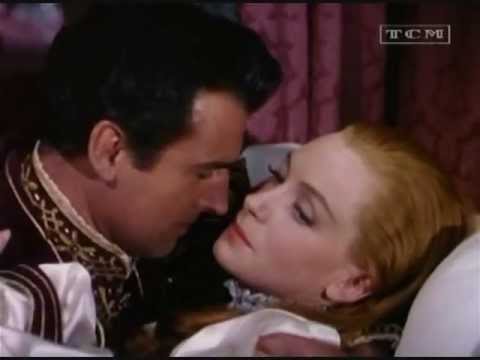
The warrant for the arrest of Queen Katherine from “The Tudors”

Gardiner and Wriothesley obtained the King’s permission to arrest and question the Queen about her religious beliefs.[3] Luckily Katherine intercepted the warrant and/or was warned by the King’s doctor that she was to be arrested and questioned. Katherine visited the King in his bedchamber and adroitly managed to persuade the King that her interest in the new religion had been undertaken solely as a means to provide stimulating conversation to distract the King from the pain caused by his ulcerous leg. Henry was appeased, and before the arrests were due to take place, he was reconciled to Katherine. Wriothesley, who had not been informed of the reconciliation, came for the queen while the King was with her. The King burst into an angry fit calling Wriothesley names such as “Knave”, etc. Katherine had escaped the wrath of the King and on 28 January 1547, the King died leaving Katherine the Dowager Queen.

After Henry VIII’s death, when the queen dowager’s household was at Chelsea, both Anne and her son Edward were part of the household there. The Dowager queen, as always, was keen to have her family close to her. Anne’s husband, William Herbert was appointed as one of the guardians to the new king, Edward VI. Katherine shortly afterward married Thomas Seymour, Lord of Sudeley, Lord High Admiral of England, who was an uncle of King Edward. In September 1548, following the birth of a daughter, Lady Mary Seymour [named after the queen’s step-daughter], Katherine Parr died of puerperal fever.

Arms of Sir William Herbert, 1st Earl of Pembroke (10th creation)

Arms of Sir William Herbert, 1st Earl of Pembroke (10th creation)

Later life

Drawing by Holbein thought to be Anne Parr

On 10 October 1551, Anne’s husband was raised to the peerage as Baron Herbert of Cardiff and Earl of Pembroke on 11 October 1551. He received the disgraced Duke of Somerset’s Wiltshire estates, including Ramsbury and a newly built mansion at Bedwin Broil, and much woodland on the borders of the New Forest in 1553. The relationship between the Herbert’s and Edward Seymour had been one of friendship until Seymour fell from favour.[3] Herbert was also granted, one Sir Thomas Arundel’s attainder, Wardour Castle and park, and obtained some property belonging to the see of Winchester. The Wardour property subsequently reverted to the Arundel family by exchange and purchase, but Pembroke’s increase of wealth exceeded that of any of his colleagues.[8]

Anne died on 20 February 1552 at Baynard’s Castle in London.[17] At the time of her death, Anne was one of Lady Mary Tudor’s [the future Queen Mary I] ladies.

William married as his second wife Lady Anne Talbot, daughter of George Talbot, 4th Earl of Shrewsbury and Elizabeth Walden, but the marriage produced no children.

Anne was buried with huge pomp in St. Paul’s Cathedral in London next to her ancestor John of Gaunt, 1st Duke of Lancaster on 28 February 1552. Her husband died on 17 March 1570 and by his wishes was also buried in St. Paul’s Cathedral. Her memorial there reads: “a most faithful wife, a woman of the greatest piety and discretion” and “Her banners were set up over her arms set on divers pillars.[17] Pembroke obviously loved his wife for when he wrote his will, despite being married again, he wanted nothing more than to be buried “near the place where Anne my late wife doth lie buried” in St. Paul’s.[17]

Monument of William Herbert, Earl of Pembroke, in old St Paul's Cathedral, City of London, 1656. Artist: Wenceslaus Hollar.  the tomb on a tall base on which lie a man and wife, in ermine robes, heads to left; eleven columns support a double arch above and obelisk topped extensions at the sides; two cartouches at top, to the left with coat of arms and to the right with dedication by 'Ioh Herbert'.

Monument of William Herbert, 1st Earl of Pembroke and his first wife Lady Anne (Parr), in old St Paul’s Cathedral, City of London, 1656. Artist: Wenceslaus Hollar. the tomb on a tall base on which lie a man and wife, in ermine robes, heads to left; eleven columns support a double arch above and obelisk topped extensions at the sides; two cartouches at top, to the left with coat of arms and to the right with dedication by ‘Ioh Herbert’.[21]

Issue

Lord and Lady Pembroke had three children:

Henry Herbert, 2nd Earl of Pembroke

  1. Henry Herbert, later 2nd Earl of Pembroke (c.1539-1601), who married three times:
  • On 25 May 1553,[22] he married Lady Katherine Grey (1540-1568), granddaughter of Mary Tudor, Dowager Queen of France. On the same day, her sister Lady Jane married Lord Guildford Dudley. The two couples were married at Durham House in London. After the wedding, Katherine went to live with her husband at Baynard’s Castle on the Thames.[18] When Lord Herbert’s sister-in-law, Jane, failed to ascend to the throne of England due to a lack of popular support, the Earl of Pembroke sought to distance himself from the Grey family. Pembroke separated his son from Katherine and sought the annulment of the marriage.[18] With this smart move, Pembroke secured Queen Mary’s favour and the marriage was annulled in 1554.
  • His second wife was Lady Catherine Talbot (c.1552-1575) [a favorite of Queen Elizabeth], daughter of George Talbot, 6th Earl of Shrewsbury and Lady Gertrude Manners. Catherine was the sister of Lord Francis Talbot who married his younger sister, Lady Anne.
  • His third wife was Mary Sidney, daughter of Sir Henry Sidney and Lady Mary Dudley, daughter of the executed John Dudley, Duke of Northumberland. By her, the couple had children including William [3rd Earl] and Philip [4th Earl], both of whom would accede to the Earldom of Pembroke.

2. Sir Edward Herbert (June 1544-1595), married Mary Stanley, by whom he had issue including William Herbert, 1st Baron Powis. Their descendants would become Marquess’s and then later Earls of Powis which is still in existence to this day.[9] According to Susan James, biographer of Katherine Parr, the queen was invested in Edward’s birth and christening. She took in young Edward as a toddler about the time of her marriage to Seymour. They are also supposedly ancestors to Sarah Ferguson, Duchess of York through their granddaughter, Hon. Catherine Herbert, Lady Palmer. The paternity of Lady Palmer’s granddaughter, Lady Anne, is questioned as her mother was Lady Barbara Villiers, mistress to King Charles II of Great Britain. At the time of Lady Anne Palmer’s birth Barbara was married to Roger Palmer, 1st Earl of Castlemaine, but the King recognized Anne as his and she adopted the name “Fitzroy.”

3. Lady Anne Herbert (1550-1592), married Francis, Lord Talbot, son of George Talbot, 6th Earl of Shrewsbury and Lady Gertrude Manners. There is no known issue from this marriage.[8]

Legacy

The arms of the 2nd Earl of Pembroke

William Herbert’s career started after a recommendation from King Francis I of France. He shortly became esquire of the body to King Henry VIII. Two years later he was granted arms. The year before Katherine Parr married the king, grants and advancement started for Herbert and his wife. The first grants dated March and April, 1542, include the site of the late monastery, the manor of Washerne adjoining also the manors of Chalke. These were given to “William Herbert, Esquire and Anne his wife for the term of their lives with certain reserved rents to King Henry VIII.“[20] When Edward VI re-granted the manors to the family, it was explicitly “to the aforenamed Earl, by the name of Sir William Herbert, knight, and the Lady Anne his wife and the heirs male of their bodies between them lawfully begotten.“[17] Anne had been the joint creator of this extraordinary enterprise.[17] Lady Anne had brought legitimacy to the Herberts. Anne also gave the family grace and courage.

A stained glass window in Wilton Church shows Anne kneeling before a prayer book or Bible; there is no evidence of religious imagery. In a long armorial mantle are embroidered the many quarterings of the arms of her distinguished ancestry [see below]. It was the Parr-inheritance which gave the Herbert family any legitimate claim to ancient nobility; and she knew it. On her tomb in St. Paul’s her epitath reads that she had been “very jealous of the fame of a long line of ancestors.“[17]

Stained glass window of the Pembroke’s in Wilton Parish Church

Through her sons, Anne Parr has many descendants, including the Earls of Pembroke, Earls of Montgomery, and the Earls of Carnarvon.[8]

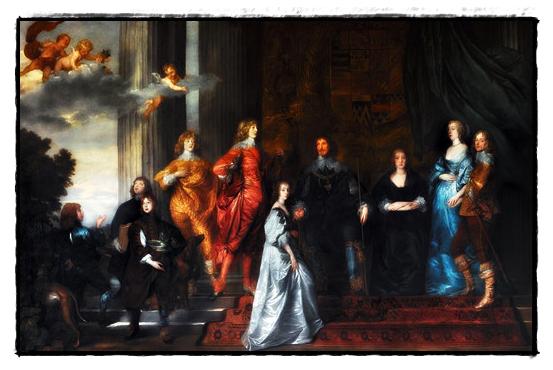
Philip Herbert, 4th Earl of Pembroke with his family by Anthony van Dyck. Notice the coat of arms above them which continue to incorporate Anne’s lineage. The painting is on display in Wilton House.

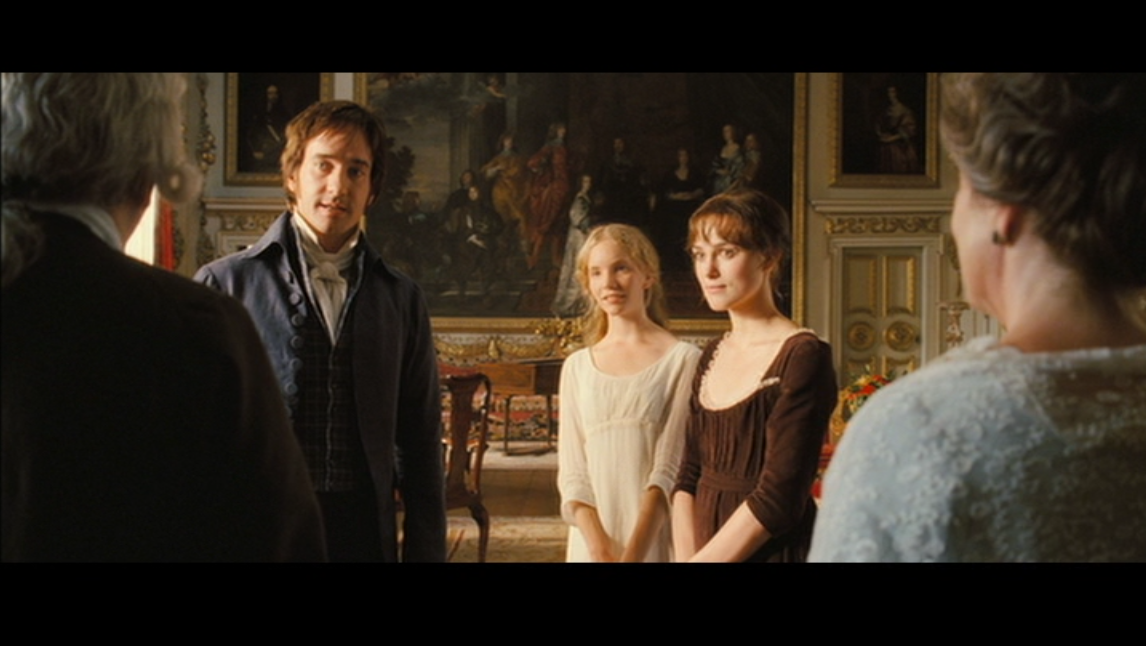
Several of the homes of her descendants have been used in movies and major television shows. In 2005, Wilton House substituted for “Pemberley”, home to Mr. Darcy in “Pride & Prejudice” (starring Keira Knightley and Matthew MacFayden). The impressive portrait by Van Dyke, of the 4th Earl of Pembroke [grandson of the 1st Earl and Lady Anne] and his family, was most likely painted at their home in London, Durham House. It is the largest canvas which upon Van Dyke has ever painted, measuring 17×11 feet. A great deal of care went into transferring the painting to their estate in Wilton once the double cube room was finished being renovated by Inigo Jones.[23]

Wilton House Pride and Prejudice (2005) Pemberley_periodpieces_blogspot

Pride and Prejudice” (2005). The painting can be seen during Lizzie’s visit to “Pemberley”. [Photo courtesy of Period Pieces]

The popular BBC/PBS series “Downton Abbey” is filmed at Highclere Castle in Hampshire where Anne’s descendants, the Earls of Carnarvon, have been seated since 1793. In 1684, the castle came into the possession of the Herbert’s through the marriage of Margaret Sawyer of Highclere to the 8th Earl of Pembroke; their second son Robert inherited the castle but died without issue. Robert’s nephew and heir, Henry Herbert, inherited the castle in 1769. Henry was created 1st Earl of Carnarvon in 1793 by King George III.

Saloon of Highclere Castle which features the coat of arms of the lineage of the Carnarvon branch of the Herbert family, from the 1st Earl of Pembroke; the first one on the left is that of William, 1st Earl of Pembroke and Anne Parr.

Titles and Styles

  • Mistress Anne Parr
  • Lady Anne Herbert, Lady Herbert of Cardiff
  • Lady Anne Herbert, Countess of Pembroke
  • References:

    1. ^ Note: Katherine Parr’s biographer, Susan E. James is of the opinion that the subject of this Holbein drawing is Anne Parr
    2. ^ Besant, Sir Walter (1903), The Thames, London: A. & C. Black, pp. 84–7
    3. ^ a b c d e f Linda Porter. Katherine the Queen. Macmillan, 2010.
    4. ^ Anthony Martienssen “Queen Katherine Parr”, page 21
    5. ^ Martienssen, pages 64-5
    6. ^ Martienssen, page 137
    7. ^ Martienssen, page 137
    8. ^ a b c Dictionary of National Biography. Vol XXVI. Sidney Lee, Ed. London: Smith, Elder, & Co., 1891. 220-223.
    9. ^ George Edward Cokayne, The Complete Peerage of England, Scotland, Ireland, Great Britain, and the United Kingdom, Vol. X, p. 643.
    10. ^ “thePeerage”. http://thepeerage.com/p10151.htm#i101510. Retrieved 2010-04-09
    11. ^ Douglas Richardson, Plantagenet Ancestry, p. 565.
    12. ^ “thePeerage”. http://thepeerage.com/p10152.htm#i101511. Retrieved 2010-04-09
    13. ^ a b c d e f g h i j k The Lineage and Ancestry of H.R.H. Prince Charles, Prince of Wales, by Gerald Paget, Vol. I, p. 95.
    14. ^ The Family Chronicle of Richard Fogge, Archaelogica Cantiana, Vol 5, 1863.
    15. ^ E.W. Allen. The Antiquary, Volume 3. 1873. (Google eBook)
    16. ^ “thePeerage”. http://thepeerage.com/p338.htm#i3376. Retrieved 2010-04-09
    17. Anthony Nicolson, Quarrel with the King: The Story of an English Family on the High Road to Civil War, Harper Collins, 3 November 2009. pg 63-4. (Google eBook)
    18. Chapman, Hester, Two Tudor Portraits: Henry Howard, Earl of Surrey and Lady Katherine Grey, Jonathan Cape 1960. pg 165; 166-167; 169.
    19. Susan James. “Catherine Parr: Henry VIII’s Last Love,”The History Press, 2009. pg 275-76.
    20. Sir Nevile Rodwell Wilkinson. ”Wilton House Guide: A Handbook for Visitors,” Chiswick Press, 1908. pg 80.
    21. Tomb of William Herbert,” Heritage Images.
    22. Leanda de Lisle says “The date is almost always given as the 21st but this is drawn from Commendone writing after the event. It was booked to take place on a Thursday (see Albert Feuillerat, Documents Relating to the Revels at Court, p 306) and when I calculated the day from other known dates – e.g. Jane’s entry to the Tower – it confirmed my suspicion that it was the 25th.” p 328 in Notes of “The Sisters Who Would be Queen”, by Leanda de Lisle.
    23. Pembroke, Sidney Charles. A Catalogue of the Paintings & Drawings in the Collection at Wilton House, Salisbury, 
      Wiltshire. London: Phaidon, 1968.

    Researched by Meg McGath

    © 4 March 2011

Ancestral Lineage of Queen Katherine Parr

Royal Emblem of Queen Katherine Parr

“Like the family of King Henry’s second wife, the Boleyns, the Parr family had gone up in the world as a result of royal favor and successful marriages.”[3] Historian Agnes Strickland quotes that Katherine’s paternal ancestry was more distinguished than that of Thomas Boleyn and John Seymour. Also, according to David Starkey, Katherine’s lineage, “unlike that of Henry’s second wife, Anne Boleyn, was better and more established at Court.”[3]

Kendal Castle was acquired through the marriage of Sir William de Parr to the heiress and only child of Sir John de Ros of Kendal, Elizabeth de Ros in 1383.

Katherine’s 3x great-grandfather was Sir William Parr (d.1405); in 1383, Sir William de Parre married Elizabeth, only daughter and heiress of Sir John de Ros and Elizabeth le Latimer, daughter of Sir Thomas le Latimer, 1st Baron Latimer of Braybrooke and Lora de Hastings. Elizabeth de Ros was the granddaughter and heiress of Sir Thomas de Ros, Baron of Kendal and had livery of her inheritance. On the accession of the Duke of Lancaster as Henry IV of England, Sir William stood so high in the estimation of the new monarch that he was deputed with the bishop of St. Asaph to announce the revolution to the court of Castile; the King claimed Castile by right of his father, even though his half-sister, Katherine [daughter of the Titular Queen Constanza of Castile], had taken her rightful position as Queen consort after the debate of her Regency. He died on 4 October 1405 being then seized of the fourth part of the manor of Kirby in Kendal. In right of the heiress of Ros and was succeeded by his eldest son, Sir John of Kendal.

Church of St. Peter and St. Paul, Weobley, Hertforshire. Agnes is buried with her 3rd husband. Her first husband, Sir Walter Devereux, has his own tomb and effigy.

Church of St. Peter and St. Paul, Weobley, Hertforshire. Agnes Crophull is buried with her 3rd husband, John Merbery. Her first husband, Sir Walter Devereux, has his own tomb and effigy.

Katherine’s great-great-grandfather, Sir John Parr (b. circa 1383) married to Agnes de Crophull, the sole heiress to Sir Thomas de Crophull of Weobley Castle and Sybil de Bere. Agnes’s grandfather, Sir John of Bonnington was styled Seigneur of Weobley Castle as owner of Weobley Castle in Hertfordshire. The Castle had been gained through his marriage to Margery de Verdun. The Verdun’s descended from John I of England (Joan, Princess of Wales and Llewelyn Ap ‘The Great’, Prince of Wales) and his sister Princess Eleanor, Queen of Castile (Infanta Berengaria of Castile, Queen Consort of Leon and Alfonso IX, King of Leon). They also descended from King David I of Scotland. Agnes was married firstly to Sir Walter Devereux, Sheriff of Herefordshire by whom she had issue. In 1386, Devereux had livery of her lands through which Weobley Castle passed to his children by Agnes. Agnes’s cousin, Sir John de Crophull had Lordship of Ludlow Castle. Her descendants include Anne Devereux (wife of Sir William Herbert, 1st Earl of Pembroke, 1408 creation) and Sir Walter Devereux, 1st Earl of Essex who married to Lettice Knollys. She was also a great-grandmother to Blanche Milbourne, Lady Troy and thus a great-great-grandmother to Blanche Perry. Agnes’s third husband was Sir John Merbury, Chief Justice of South Wales. The couple had no children, however Merbery had issue from his first marriage, Elizabeth, who ended up marrying her step-brother’s son, Sir Walter Devereux. This connection to Agnes Crophull gave the Parr’s more than a few connections to the gentry and courtiers.

Katherine’s great-grandfather, Sir Thomas Parr (b.1407) was Sheriff of Westmorland and Escheator of Cumberland & Westmorland. He married Alice Tunstall, co-heiress of Sir Thomas Tunstall of Thurland Castle and Isabel Harrington. By this connection she was a cousin to Bishop Cuthbert Tunstall who served Henry VIII and all of his children. Under Elizabeth I, he was put under “house arrest” in Lambeth Palace where he died. Isabel Harrington’s sister, Elizabeth, married Sir John Stanley; they were grandparents to Sir Thomas Stanley, 1st Earl of Derby making him a first cousin, three times removed. Derby married Katherine’s great-aunt, Eleanor Neville, by whom he had issue. Upon his second marriage to Lady Margaret Beaufort, Derby became step-father to King Henry VII. Derby was a key figure in the Battle of Bosworth and crowned Henry upon the battlefield. Upon the death of Isabel, Lady Tunstall, Tunstall re-married to Hon. Joan Mowbray, daughter of Sir John de Mowbray, 4th Baron and Hon. Elizabeth Segrave, herself the daughter of Lady Margaret Plantagenet, daughter of Thomas of Brotherton. The marriage produced no children, but the Tunstall’s had step-siblings from Joan’s first marriage to Sir Thomas Grey which included John Grey, Earl of Tankerville.

Katherine’s grandfather, Sir William Parr, was part of King Edward IV’s court. William held the office of comptroller of the household from 1471 to 1475 and again in 1481 till Edward’s death in 1483.[4][5][6] William was held in high favour and close friend to the King and was one of only two courtiers to become Knight of the Garter in the second reign of Edward IV. Elder generations of the Parr family had served in the household of John of Gaunt, 1st Duke of Lancaster, ancestor of Queen Katherine. Sir William Parr could claim royal descent through many lines, a few including:

  • Blanche de Brienne and William Fieness, Baron of Tingry; Blanche was the granddaughter of Emperor Jean of Brienne, King of Jerusalem and Infanta Berenguela of León, Empress of Constantinople. By this lineage the Parr’s descended from Eleanor of England, Queen of Castile, daughter of Henry II of England and his consort Eleanor of Aquitaine. By this lineage the Parr’s also descended from the Jimenez Kings of Navarre; the infamous Garcia Ramirez, King of Navarre who “restored” the independence of the Navarrese crown after 58 years of union with the Kingdom of Aragon. The Jimenez dynasty had been ruling Pamplona, later Navarre, since 905 AD. Garcia Ramirez was the grandson of the illegitimate son of Garcia Sanchez III of Navarre. After the assassination of the King’s son, Sancho IV, Navarre was taken over by the Aragonese.
  • King John of England [through his illegitimate daughter Joan, Lady of Wales and her husband Llewelyn, Prince of Wales],[1]
  • King David of Scotland, sister of Matilda, Queen of the English [thrice through his son Henry, Earl of Huntingdon], [1]
  • King William “the Lion” of Scotland [twice through his illegitimate daughter Isabella, Lady Ros],[1]
  • Geoffrey Plantagenet, founder of the Plantagenet Kings of England through several lines.[1]
  • King Henry I of England via several illegitimate children such as Robert de Caen, 1st Earl of Gloucester
  • Stephen Blois, Count of Aumule.
  • Several times by Henry I, King of France
  • Adela of England and Stephen of Blois
  • Adeliza of Louvain, Queen consort of the English
  • The Brus family from which came Robert de Brus, King of the Scots.[1]

Lady Joan Beaufort and her daughters

Katherine descended from every King of England who had issue up to King Edward III. Katherine Parr was also the only queen of King Henry VIII to descend from the Beaufort’s; the illegitimate, later legitimized issue of  Prince John of Gaunt, 1st Duke of Lancaster and his third wife, Katherine Swynford Roet. King Henry’s first wife, Katherine of Aragon, also descended from John of Gaunt by his first two wives.

Ravensworth Castle, ancestral home to the Barons FitzHugh

Sir William Parr’s wife, the Hon. Elizabeth FitzHugh, was the daughter of Henry, 5th Baron FitzHugh of Ravensworth Castle and Lady Alice Neville. FitzHugh, himself, descended from Henry I (several times), Henry II, and John I (twice); all from illegitimate children. His family was an old baronial family of England descending from Akarius Fitz Bardolph, Lord of Ravensworth (d.1161), the son of Bardolph an 11th century nobleman living in Richmondshire, the area encompassing the Ure, Tees and Swale valleys in northern England.[5] The 5th Baron was the son of William, 4th Baron FitzHugh and Margery Willoughby; by his mother he was a nephew of Richard Willoughby, 6th Baron Willoughby of Eresby.

Lady Alice was sister to Richard Neville, 16th Earl of Warwick and 6th Earl of Salisbury [best known as “Warwick, the Kingmaker”] and other prominent noblemen and women. Her cousin, Sir George Neville, 1st Duke of Bedford was intended to marry Elizabeth of York [mother of King Henry VIII]; this obviously fell through due to his father and nephew’s [Warwick] rebellion against Edward IV. The Neville’s were already established at court being grandchildren of John of Gaunt’s legitimized daughter Lady Joan Beaufort, Countess of Westmorland. Katherine was just about related to every noble and royal at court who came before or during her time; Edward IV and Richard III were first cousins (thrice removed of Katherine Parr). Their wives, Queen Anne Neville and Queen Elizabeth Woodville, were also a first cousins. [The Woodville connection comes from Katherine’s mother, Maud Green — Queen Elizabeth was a first cousin, thrice removed of Katherine]. This connection made her related to all of her husbands in one way or another.

Sir Thomas Montacute, 4th Earl of Salisbury and Lady Eleanor Holland

Princess Joan of Acre, eldest daughter of Edward I and Eleanor of Castile

Lady Alice Neville’s mother Lady Alice Montacute was suo jure 5th Countess of Salisbury being the only surviving child of Sir Thomas, 4th Earl of Salisbury and Lady Eleanor Holland [pictured above]. Salisbury married to Alice Chaucer. Salisbury descended from:

  • Princess Joan of Acre, eldest daughter of King Edward I and his first wife, Eleanor of Castile,
  • Henry I of England by his illegitimate sons Robert de Caen, 1st Earl of Gloucester [twice] and Reynold of Dunstanville, 1st Earl of Cornwall,
  • William the Lion, King of Scots by his illegitimate daughter Isabella, Lady Ros,
  • William the Conqueror by his illegitimate son William Peverell and legitimate daughter, Adela of Normandy.

Lord Salisbury’s siblings included Lady Anne who married thrice. By her marriage to Sir Richard Hankford they were ancestors to Anne Boleyn. After being widowed, she became Duchess of Exeter as wife to the 2nd Duke of Exeter (nephew of the 2nd Earl of Kent, ancestor to Queen Katherine Parr).

Lady Eleanor Holland descended from

Coat of arms of Prince Edmund of Woodstock, 1st Earl of Kent

  • Edward I of England by his son from his second marriage to Marguerite of France [daughter of Philip III of France and Maria of Brabant], Edmund of Woodstock, 1st Earl of Kent,
  • Henry III of England by his son Prince Edmund, 1st Earl of Lancaster [whose wife was Blanche of Artois, Queen of Navarre and mother to another of Queen Katherine’s ancestors, Jeanne I, Queen Regnant of Navarre]. Their son was Sir Henry, 3rd Earl of Lancaster who married Maud Chaworth [descendant of Louis VI of France],
  • John I of England twice by his illegitimate daughter Lady Joan, Lady of Wales,
  • Henry II of England by his legitimate daughter by Queen Eleanor of Aquitaine, Eleanor of England, Queen of Castile and by his illegitimate son William Longespee, 1st Earl of Salisbury,
  • Henry I of England twice by his illegitimate daughter Lady Maud of Normandy, Duchess of Brittany and twice by his illegitimate son, Robert de Caen, 1st Earl of Gloucester,
  • Duncan II of Scotland by his son the Earl of Moray
  • David I of Scotland, twice by his son Henry, Earl of Huntingdon,
  • Louis VI of France by his son Pierre of Courtenay,
  • Geoffrey Plantagenet twice by his son Sir Hamelin Warrenne, Earl of Surrey,
  • William, the Conqueror twice by his daughter Adela of Normandy and his illegitimate son William Peverell.
Coat of arms relating to those mentioned below who married or are in the Holland family.

Coat of arms relating to those mentioned below who are members of, descendants of, or married into the Holland family. L to R: Mortimer, 2nd Earl of Kent, 1st Duke of York, 3rd Earl of Cambridge, Duke of Clarence, 3rd Duke of Lancaster, 16th Earl of Warwick

Lady Salisbury’s siblings included:

  • Lord Thomas Holland, 1st Duke of Surrey, 3rd Earl of Kent.
  • Lord Edmund of Woodstock, 4th Earl of Kent who had a child by Lady Constance of York, daughter of Edmund of Langley, Duke of York (husband of his sister, Lady Joan). In 1403, there was a betrothal of Lord Edmund of Woodstock to Lady Constance of York; not apparent as to whether or not they actually married. [Richardson, Plantagenet Ancestry]
  • Lady Elizabeth who married Sir John Neville; ancestors to the Earls of Westmorland (Neville was the heir to the 1st Earl and his first wife Lady Margaret Stafford. The Earl would later marry Lady Joan Beaufort — the two were ancestors to Queen Katherine Parr).
  • Lady Joan married to Edmund of Langley, Duke of York — no issue. Nevertheless she was styled Duchess of York.
  • Lady Alianore, Countess of March, wife to the 4th Earl of March — and through them the crown of Edward IV was claimed by their daughter, Lady Anne Mortimer, Countess of Cambridge (wife of Richard of York, 3rd Earl of Cambrige, brother to Lady Constance of York). The Countess would marry again to the 5th Baron of Powis, their grandson would marry the illegitimate daughter of the Duke of Gloucester (son of King Henry IV), Lady Antigone.
  • Lady Margaret, Countess of Somerset and Duchess of Clarence married John Beaufort, 1st Earl of Somerset (illegitimate son of John of Gaunt by Katherine Swynford) and by him they were ancestors to Lady Margaret Beaufort, mother of Henry VII. Margaret would re-marry to Thomas of Lancaster, Duke of Clarence, grandson of John of Gaunt by his son King Henry IV.

Princess Joan of Kent and her son, King Richard II

Lady Salisbury’s [Lady Eleanor Holland] paternal grandmother was Princess Joan of Kent, suo jure 4th Countess of Kent and later Princess of Wales. Her story is one of interest. She married firstly to Sir Thomas Holland who became 1st Earl of Kent through her inheritance. By him she had Lady Salisbury’s father, Sir Thomas Holland, 2nd Earl of Kent. Her uncle was Sir John, 1st Duke of Exeter who married Lady Elizabeth of Lancaster, daughter of Prince John of Gaunt and his first wife, Blanche of Lancaster. They were parents to John Holland, 2nd Duke of Lancaster who married thrice; Lady Anne Stafford, Beatrice of Portugal, and Lady Anne Montacute. His second wife, Beatrice of Portugal was half-sister to Edward I of Portugal; John, Lord of Reguengos de Monsaraz; and Afonso, Duke of Braganza. Lord of Reguengos was a grandfather to Queen Isabella of Castile (mother of Queen Katherine of Aragon) while the Duke of Braganza was a great-grandfather.

Lady Salisbury’s paternal aunts were Lady Joan, Duchess of Brittany [wife to John V of Brittany] and Lady Maud, Countess of Ligny [wife to Waleran III of Luxembourg; their daughter Jeanne married Antoine de Valois, Duke of Brabant]. Joan of Kent’s third marriage was to Edward, Prince of Wales [eldest son and heir of King Edward III]; their son was King Richard II of England and thus granduncle to Lady Salisbury.

John Holland, Duke of Lancaster.

John Holland, 1st Duke of Lancaster.

Lady Salisbury’s maternal grandparents were Sir Richard “Copped Hat” FitzAlan, 10th Earl of Arundel and Lady Eleanor of Lancaster, daughter of the 3rd Earl of Lancaster and his wife, Maud Chaworth. The Earl and Countess were parents to Lady Alice FitzAlan, Countess of Kent (wife to the 2nd Earl). By her mother, Lady Kent had half-siblings by Lady Arundel’s first marriage to Sir John Beaumont, 2nd Baron; Maud, the ancestress of the Courtenay Earls of Devon and Lord Henry (who were both half-siblings themselves to Sir William Devereux, father of Sir Walter, first husband to Agnes Crophull, later Lady Parr of Kendal as wife to Sir John Parr.) Lady Kent’s siblings included:

  • Lady Joan of Arundel, mother to the uncrowned Mary de Bohun, wife of Henry IV and mother to Henry V. Her other daughter became Duchess of Gloucester as wife to Lord Thomas of Woodstock, Duke of Gloucester, youngest son of King Edward III.
  • Sir Richard, 11th Earl of Arundel who’s daughter Margaret became Duchess of Norfolk; another daughter Joan became Lady Bergavenny, ancestress to Lords Bergavenny, Earls of Shrewsbury, and grandparents to the 7th Earl of Ormonde (ancestor of Queen Anne Boleyn).
  • Sir John, 1st Lord Arundel — ancestor to the later Earls of Arundel and Dukes of Norfolk. Lord Arundel’s great-grandson married Lady Joan Neville, sister of “Warwick, the Kingmaker” and Alice (great-grandmother to Queen Katherine Parr).

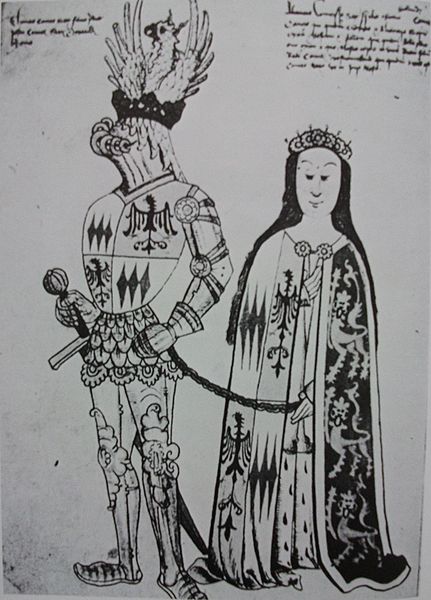
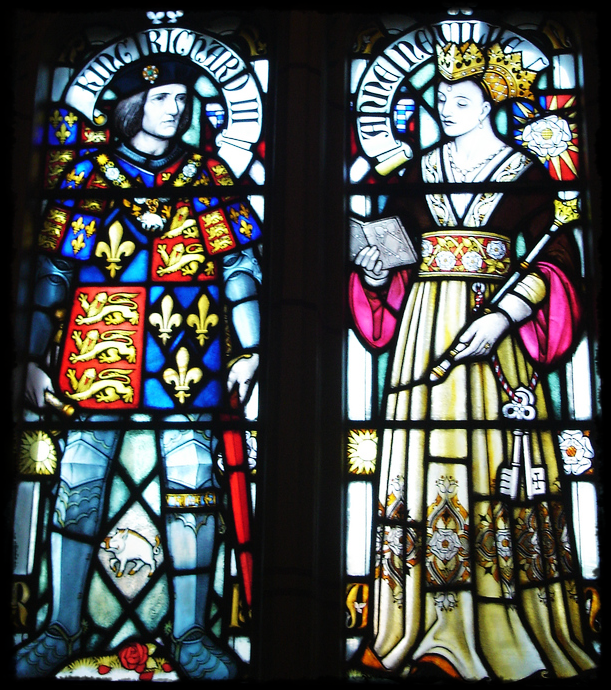
King Richard III and consort Lady Anne Neville were both cousins to Queen Katherine’s paternal grandmother

When the Duke of Gloucester became King in 1483, as Richard III, both Elizabeth and her mother Alice were appointed ladies-in-waiting to Alice’s niece, queen consort Lady Anne Neville. The profession would span five generations down to Katherine’s sister, Anne, who would serve all six of King Henry VIII’s wives. by Lady Parr (Golden Aged writer)

Katherine’s father, Sir Thomas Parr, was a close friend of King Henry VIII; Parr’s step-father, Sir Nicholas Vaux, had been educated in the household of Lady Margaret Beaufort, Henry’s grandmother, where Parr is also believed to have spent some time. Sir Thomas was present at court and was in the circle of Henry VIII which included Sir Thomas Boleyn. Both were knighted in 1509 at Henry’s coronation; Parr was also made a Knight of the Garter and appointed Sheriff of Northamptonshire on that occasion. Parr became Master of the Wards and Comptroller of the household of Henry VIII. Parr’s brother, William [later Baron Parr of Horton], was also a part of the King’s circle. They kept company with the Stafford’s and their cousins, the Neville’s. They were also friend’s with the Carew’s and Sir Thomas Boleyn, father Queen Anne Boleyn. In 1515, Parr was entrusted with escorting Queen Margaret of Scotland [the king’s elder sister] from Newcastle back to London.

The “lowly” marriage of Mary Boleyn to Sir William Stafford — unlike “The Tudors” insistence that he was a “nothing” — Stafford was actually the grandson of Sir John Fogge and Alice Haute (cousin to Queen Elizabeth Woodville). This connection made Stafford a cousin to Parr’s mother, Maud Green (her aunt was Stafford’s mother, Margaret).

Katherine’s brother, William, entered the household of Henry Fitzroy, the King’s illegitimate son, at the age of eleven. It was there that he met Henry Howard, Earl of Surrey. They were educated together and Katherine’s uncle, Sir William, Baron Parr of Horton, was part of the head of the household for Fitzroy.

From Sir Thomas’ grandmother to his own daughter, Anne, were all ladies-in-waiting to the queens of England. His grandmother and mother both personally served under special appointment by Richard III’s consort herself, Lady Anne Neville. Anne was the niece of Parr’s grandmother, Lady Alice Neville. Katherine’s sister, Anne Parr [Herbert], was one of the few women to serve all six of Henry’s wives. Maud Parr nee Green, his wife, was good friend’s with Queen Katherine of Aragon and a lady-in-waiting to her. She was given private chambers next to the queen’s and Queen Katherine was supposedly Katherine Parr’s godmother. Lady Parr’s grandmother, Lady Alice Fogge (Haute) was a lady to Queen Elizabeth Woodville (see below).

If Sir Thomas had not died at such an early age he would have been given the title which his brother received or another barony. He was also co-heir to the FitzHugh barony; which is still in abayence between the descendants of his aunt Alice FitzHugh, Lady Fiennes and his daughter, Anne Parr, Countess of Pembroke.

Green Family

Katherine’s mother also descended from royal blood. Maud Green’s family had long served the crown.

Sir Henry Green (died 6 August 1369) was an English lawyer, and Chief Justice of the King’s Bench from 24 May 1361 to 29 October 1365. Early in his career he served both Queen Isabella (consort of Edward II) and Edward the Black Prince. He was made justice of the Court of Common Pleas in 1354, and knighted by King Edward III.

By her grandfather, Sir Thomas Greene of Greens Norton, Queen Katherine directly descended from King Fergus of Galloway and many nobles and Kings of England which included William the Conqueror, John of England, Henry I by three illegitimate children and Empress Matilda, Edward I, and Henry II of England by two legitimate children and one illegitimate. By both husbands of Isabella of Angoulême, Queen Consort of England;  from Welsh nobility like Nest Ferch, Princess of Wales, Llewelyn Ap ‘The Great’, Gwladys Dhu verch; Spanish royals such as Alfonso II of Aragon, Alfonso IX of Aragon; they also descended from French royalty Charles I, Henry I, Louis VII of France and Scottish royals such as David I, Maud of Huntingdon; and from Jean of Brienne, King of Jerusalem through her connections with the Ferrers of Groby, Talbot, Despencer, FitzAlan, De Clare, Earls of Ormonde, and other noble families.

By her mother, Joan Fogge, Lady Parr was a cousin to Elizabeth Woodville, queen consort of Edward IV; descending from Queen Elizabeth’s grandfather, Sir Richard Woodville. When Elizabeth became queen to Edward IV, she brought her favorite female relatives to court to serve her. Lady Parr’s grandmother, Lady Alice Fogge (born Haute), was one of five ladies-in-waiting to her cousin Elizabeth Woodville in the 1460s.[4]

Relations to Husbands

Queen Katherine and Henry VIII’s closest relations: Third cousins (through Sir Richard Wydeville and Joan Bedlisgate); third cousins once removed (through Ralph Neville, 1st Earl of Westmorland and Lady Joan Beaufort); and double fourth cousins once removed (through Thomas Holland, 2nd Earl of Kent and Lady Alice FitzAlan and John of Gaunt, 1st Duke of Lancaster and Katherine Swynford). Queen Katherine also shared ancestors with her 4th husband, Thomas Seymour, but the closest one is Edward III and Philippa.

Sources:

  1. Douglas Richardson. “Plantagenet Ancestry,” 2005.
  2. Douglas Richardson. “Magna Carta Ancestry,” 2nd Edition, 2011.
  3. David Starkey. “Six Wives: The Queens of Henry VIII,” HarperCollins, May 4, 2004. pg 690. Google eBook.
  4. Barbara J. Harris. “English Aristocratic Women, 1450-1550 : Marriage and Family, Property and Careers: Marriage and Family, Property and Careers,” Oxford University Press, Jul 26, 2002. pg 218.
  5. John Burke. “A general and heraldic dictionary of the peerages of England, Ireland, and Scotland, extinct, dormant, and in abeyance,” 1831.

Some of her ancestry can be viewed here:  

Tudors Wiki: Ancestry of Queen Catherine Parr

Thoroughly researched. One line still in question: Sir Roger, 4th Baron Strange of Knockyn’s wife, Maud, who has been theorized as the illegitimate daughter of Enguerrand VII de Coucy, 1st Earl of Bedford which would relate her back to ancestors like the Habsburgs; the Chatillions; the Wittlesbachs; Beatrice of England, Duchess of Brittany [daughter of Henry III of England and Eleanor of Provence]; Matilda of England, Duchess of Saxony [daughter of Henry II of England and Eleanor of Aquitaine]; the Champagne and Jiminez Kings of Navarre;  and more.

Katherine Parr: Lady Latimer of Snape Castle

Lady Latimer

Katherine’s arms as Lady Latimer from her tomb at Sudeley Castle ©Meg McGath

In the year of 1533, Katherine is thought to have spent her widowhood with her cousins, the Strickland family at Sizergh Castle in Westmorland (now Cumbria). In the summer of 1534 she married John Neville, 3rd Baron Latymer, of Snape, North Yorkshire. At age 40, Lord Latimer was twice Katherine’s age. Latimer was her father’s second cousin, a twice-widowed descendant of George Neville, 1st Baron Latimer; Warwick, the ‘Kingmaker’s’, ‘idiot uncle’ and a 2nd great-grand uncle to Katherine [The Kingmaker’s sister, Lady Alice, was Katherine’s paternal great-grandmother]. From his first marriage to Dorothy de Vere, sister of John de Vere, 14th Earl of Oxford [m. by 1520], he had two children, his son and heir John and Margaret. After the death of his first wife on 7 February 1527, Neville remarried to Elizabeth Musgrave, daughter of Sir Edward Musgrave, c. 20 June 1528. They had no children and Neville was widowed again in 1530.[3] Neville was one of fifteen children born to Richard Neville, 2nd Lord Latimer and Anne Stafford, daughter of Sir Humphrey Stafford. Latimer’s branch of the Neville family was in line for the title of Earl of Warwick [via his great-grandmother, Lady Elizabeth Beauchamp, daughter of the 13th Earl of Warwick] and because of this, Lord Latimer, dealt with quite a bit of sibling rivalry. Legal actions were taken by his younger brothers and Latimer, at the time of his marriage to Katherine, was having financial difficulties. But as Lady Latimer, Katherine now had a home of her own, a husband with a position and influence in the north, a ready-made family, and a title. Katherine would become the only female Parr, apart from her great-aunt, Mabel, to marry into the peerage. Katherine’s brother-in-law, William Herbert, would later become Earl of Pembroke during the reign of Edward VI promoting her sister from Lady Herbert to Countess of Pembroke from which the current Earls and other branches descend from. From the beginning of the marriage, Katherine tried to be a good wife. Her affection for her husband would grow deep enough to cherish a remembrance of him, his New Testament with his name inscribed inside, which she kept until her death. Katherine would also prove to be a good step-mother to her step-children; a trait which she would again show after her marriage to the King. Her “teenage” step-son, John, proved to be difficult. There is some indication that Margaret, his sister, was their father’s favorite. Never the less, Katherine would continue a relationship with the two after her marriage to King Henry, bringing Margaret to court as her maid-in-waiting and securing a position for John’s wife, Lucy, the new Lady Latimer in her household.[1]

Latimer was a supporter of the old religion and bitterly opposed the king’s divorce and remarriage and it’s religious ramifications. In 1536, within two weeks of the riot in Louth, a mob appeared before the Latimer’s home threatening violence if Lord Latimer did not join their cause. Katherine watched as her husband was dragged away by the rebels. As prisoner of the rebels, conflicting stories of which side Latimer was truly on began to reach Cromwell and the King in London. The rebellion in Yorkshire put him in a terrible dilemma. If he was found guilty of any kind of treason his estates would be forfeited leaving Katherine and her step-children penniless. The King himself, wrote to the Duke of Norfolk pressing him to make sure Latimer would ‘condemn that villain Aske and submit [himself] to our clemency’.[2] Latimer was more than happy to comply. Both Katherine’s brother, William Parr and uncle, William Parr, 1st Baron Parr of Horton fought with the Duke of Norfolk and the Duke of Suffolk against the rebellion. It is to most likely to Katherine’s credit that Lord Latimer survived; both her brother and uncle probably intervened at one point and saved Lord Latimer’s life.[1]

From the months of October 1536 and April 1537 Lady Latimer lived alone in fear with her step-children, struggling to survive. It is probable that in these uncertain times that Katherine’s strong reaction against the rebellion strengthened her adherence to the reformed church. In January 1537, Katherine and her step-children were held hostage at Snape Castle during the uprising of the North. The rebels ransacked the house and sent word to Lord Latimer, who was returning from London, that if he did not return immediately they would kill his family. When Lord Latimer returned to the castle he somehow talked the rebels into releasing his family and leaving, but the aftermath to follow with Lord Latimer would prove to be taxing on the whole family.[1]

The family would later move south after the executions of the rebels which pleased Cromwell and the King. Although now charges were found, Latimer’s reputation which reflected upon Katherine, was tarnished for the rest of his life. He spent the last seven years of his life blackmailed by Cromwell. Katherine would spend much of her time in the south during the years of 1537-42. Her husband was called away frequently to do the biding of Cromwell and the King and be present during Parliament. With Cromwell’s fall in 1540, the Latimer’s reclaimed some dignity and as Lord Latimer attended Parliament in 1542 he and Katherine spent time in London that winter. Her brother, William and sister, Anne had been present at court. Anne entered court service in 1531 as maid-in-waiting to Henry’s queens. It was here that she made acquaintances and met her future fourth husband Sir Thomas Seymour. The atmosphere of the court was much different from the rural and parochial estates. It was at court that Katherine could find the latest trends, not only in religious matters, but in frivolous matters such as fashion and jewellery which she loved.[1]

By the winter of 1542, Lord Latimer’s health had broken down after a grueling life of what some would call ‘political madness’. Katherine spent the winter of 1542-1543 nursing her husband. John Neville, Lord Latimer, died in 1543. In Lord Latimer’s will, Katherine was named guardian of his daughter, Margaret, and was put in charge of Lord Latimer’s affairs which were to be given over to his daughter at the age of her majority. Latimer left Katherine Stowe Manor and other properties. He also bequeathed money for supporting his daughter and in the case that his daughter did not marry within five years, Katherine, was to take £30 per annum out of the income to support her step-daughter. Katherine was left a rich widow faced with the possibility of having to return north after Lord Latimer’s death.[1]

Using her late mother’s relationship with Henry’s first queen Katherine of Aragon, Katherine took the opportunity to renew her friendship with Lady Mary. By 16 February 1543, Katherine had established herself with Mary and was now part of her household although this has been disputed.

This slideshow requires JavaScript.

References:

  1. Susan E. James. Catherine Parr: Henry VIII’s Last Love. The History Press, 2009 US Edition. pg 61-73.
  2. Letters and Papers, Foreign & Domestic of the Reign of Henry VIII, II, no. 1174.
  3. The History of Parliament: the House of Commons 1509-1558, ed. S.T. Bindoff, 1982. ‘NEVILLE, Sir John I (1493-1543), of Snape, Yorks.

© Meg McGath

2 April 2011

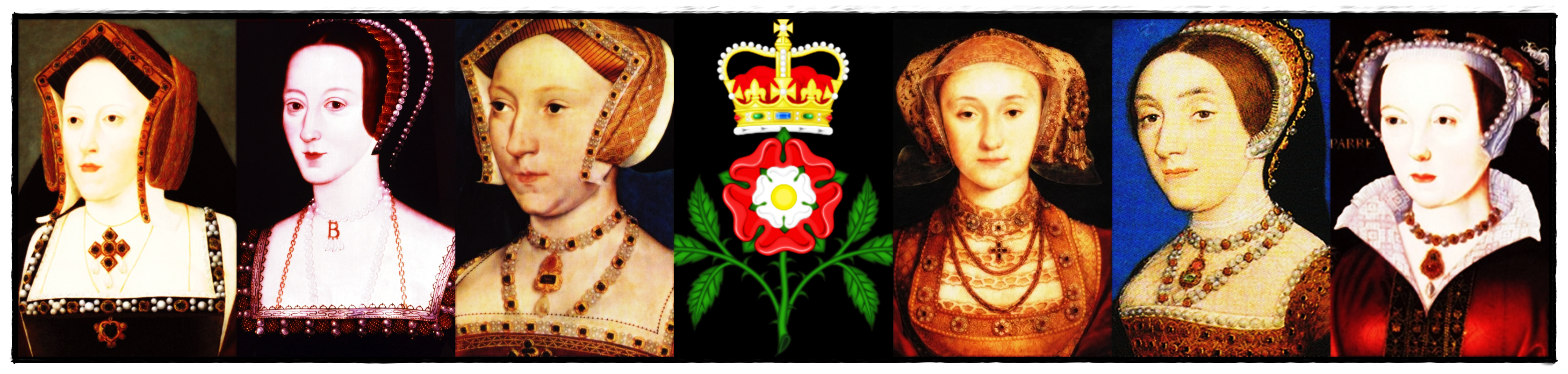
English Ancestry of The Six Wives: Descent from Edward I

The Six Wives of King Henry VIII

Yes, all six wives of King Henry VIII had English ancestry; some more than others.

Henry VIII after Hans Holbein c. 1535-44

Miniature of Henry VIII [1540-1570] after Hans Holbein the Younger. Watercolour and bodycolour on vellum, diameter 3.6 cm, Royal Collection, Windsor Castle.

FACT: King Henry VIII descends from Edward I of England only six times!

  • By his paternal grandmother, Lady Margaret Beaufort, Henry descended from Edward I by Margaret’s paternal grandparents; John Beaufort, 1st Earl of Somerset and his wife Lady Margaret of Kent [born Holland], later Duchess of Clarence.
    • Lord Somerset was a grandson of Edward III [grandson of Edward I and his first wife, Eleanor of Castile] by his father Prince John of Gaunt, 1st Duke of Lancaster.
    • Lady Margaret of Kent was a granddaughter of Princess Joan of Kent, Princess of Wales [wife of Edward, Princes of Wales, heir to Edward III, and mother to Richard II]; granddaughter of Edward I and his second wife, Marguerite of France, by their second son, Edmund of Woodstock, 1st Earl of Kent.
  • By his maternal grandfather, Edward IV, Henry descended from Edward I by Edward’s parents; Lord Richard, Duke of York and Lady Cecily [born Neville], Duchess of York:
    • The Duke of York’s parents, Lord Richard, 3rd Earl of Cambridge and his wife Lady Anne [born Mortimer], Countess of Cambridge both descended from Edward I.
      • Cambridge was a grandson of Edward III by his father, Edmund of Langley, Duke of York, 4th surviving son of Edward III.
      • Lady Anne Mortimer was a granddaughter of Edward III by her paternal grandmother, Lady Philippa of Clarence, 5th Countess of Ulster; granddaughter of Edward III by his second surviving son, Lionel of Antwerp, 1st Duke of Clarence. Lady Anne also had a second connection to Edward I, by her maternal grandfather, Sir Thomas Holland, 2nd Earl of Kent; son of Princess Joan, Princess of Wales. Princess Joan was, as mentioned before, a granddaughter of Edward I and his second wife Marguerite.
    • Lady Cecily, Duchess of York, was the youngest daughter of Sir Ralph, Earl of Westmorland and his second wife, Lady Joan Beaufort. Lady Joan was the only daughter of Prince John of Gaunt, 1st Duke of Lancaster and his third wife, Katherine [Roet]. John of Gaunt was of course the son of Edward III.

292px-Tudor_Rose_Royal_Badge_of_England.svgWould it surprise you to know that even Katherine of Aragon and Anne of Cleves had Edward I in their pedigree?

In fact, Katherine of Aragon descended from two wives of Prince John of Gaunt, 1st Duke of Lancaster, Titular King of Castile [the son of Edward III of England and Philippa of Hainault]; Blanche of Lancaster AND Constanza of Castile, heir to the throne of Castile.

Royal Emblem of Queen Katherine of Aragon

1. Katherine of Aragon – daughter of Ferdinand II of Aragon and Isabella I of Castile [2 times]

  • By her mother — Isabella of Castile’s paternal grandmother, Katherine of Lancaster, daughter of Prince John of Gaunt [son of Edward III] and his second wife, Constanza of Castile, she descended from Edward I and Eleanor of Castile.
  • Isabella of Castile’s maternal great-grandmother, Philippa of Lancaster, was also a daughter of Prince John of Gaunt, but by his first wife, Blanche of Lancaster. Lady Philippa was brother to King Henry IV [Bolingbroke]. Queen Katherine’s Hampton Court Pedigree shows this line from Edward I’s son, Edward II, onwards.

Royal Emblem of Queen Anne Boleyn

2. Anne Boleyn – daughter of Sir Thomas Boleyn and Lady Elizabeth Howard [5 times]

  • By both paternal great-great-grandparents [through the Butler’s of Ormonde], Sir James, 4th Earl of Ormonde and Joan Beauchamp; she descended from Edward I and Eleanor’s daughter Princess Elizabeth of Rhuddlan. The Earl and Countess of Ormonde were parents to the 7th Earl of Ormonde.
  • By her paternal great-great-grandmother, Lady Anne Montacute, daughter of the 3rd Earl of Salisbury [also an ancestor of Queen Katherine Parr] she descends from Princess Elizabeth’s elder sister, Princess Joan of Acre. Lady Anne was the mother of Anne Hankford, Countess of Ormonde as wife to the 7th Earl.
  • By her maternal [Howard] line she descended from Edward I and Eleanor of Castile via her great-great-grandmother Lady Margaret Mowbray, wife of Sir Robert Howard; Lady Margaret descended from Elizabeth of Rhuddlan, by way of Lady Eleanor Fitzalan [wife of Thomas Mowbray, 1st Duke of Norfolk].
  • By Sir Thomas Mowbray, 1st Duke of Norfolk, she descended from Edward I and Marguerite of France through their son, Thomas of Brotherton Plantagenet, Duke of Norfolk [Hampton Court Pedigree shows this line from Edward I’s son, Thomas of Brotherton onwards]

Royal Emblem of Queen Jane Seymour

3. Jane Seymour – daughter of Sir John Seymour and Margery Wentworth [twice]

  • By her maternal great-grandmother, Hon. Margaret Clifford, whose father John Clifford, 7th Lord descended from Joan of Acre, daughter of Edward I and Eleanor of Castile. Lord Clifford’s great-great-grandmother was Lady Margaret de Clare, Countess of Gloucester [daughter of Princess Joan] who married Sir Hugh Audley, 1st and last Earl of Gloucester.
  • By Hon. Margaret Clifford’s mother, Lady Elizabeth Percy, whose grandmother was Lady Philippa of Clarence, 5th Countess of Ulster who was the daughter of Lionel of Antwerp, the second son of Edward III. [Hampton Court Pedigree shows this line from Edward I’s son, Edward II, onward]

Royal Emblem of Queen Anne of Cleves

4. Anne of Cleves – daughter of John III, Duke of Cleves and Marie von Julich [twice]

  • By both paternal great-grandparents, Johan I Duke of Cleves and Elizabeth of Nevers; who were great-grandchildren of Marguerite of Dampierre, suo jure Countess of Flanders. Marguerite was the great-granddaughter of Margaret of England, Duchess of Brabant; daughter of Edward I and Eleanor. [Hampton Court Pedigree shows the lineage of Johan I of Cleves from Edward’s daughter, Margaret of England who’s son became Johan III, Duke of Brabant]

Royal Emblem of Queen Katherine Howard

5. Katherine Howard – daughter of Lord Edmund Howard and Jocasa Culpepper [3 times]

  • Like Anne Boleyn, by her paternal line [Howard] she descended from Edward I and Eleanor by Elizabeth of Rhuddlan by way of Lady Eleanor Fitzalan [wife of Thomas Mowbray, 1st Duke of Norfolk].
  • By Sir Thomas Mowbray, 1st Duke of Norfolk, she descended from Edward I and Marguerite of France through their son, Thomas of Brotherton Plantagenet, 1st Duke of Norfolk [Katherine’s Hampton Court Pedigree shows this line from Edward I’s son, Thomas of Brotherton onwards]
  • By her maternal great-great-grandfather, Sir William Ferrers, 5th Baron Groby, she descends from Princess Joan of Acre, daughter of Edward I and Eleanor, via her daughter Lady Elizabeth de Clare, wife of Sir Theobald, 2nd Lord Verdun.

Royal Emblem of Queen Katherine Parr

6. Katherine Parr – daughter of Sir Thomas Parr of Kendal and Maud Greene [6 times]

  • By her paternal grandmother the Hon. Elizabeth FitzHugh, daughter of Lady Alice Neville [sister of “Warwick, the Kingmaker”] she descended from Lady Joan Beaufort and her second husband Sir Ralph Neville, 1st Earl of Westmorland; Lady Joan was the legitimized daughter of Prince John of Gaunt, 1st Duke of Lancaster, third son of Edward III and thus she descended from Edward I and Eleanor of Castile. [Katherine’s Hampton Court Pedigree shows this line from Edward I’s son, Edward II onwards]
  • By her paternal great-great-grandmother, Lady Alice Montacute, suo jure Countess of Salisbury [wife of Sir Richard, 5th Earl of Salisbury, son of Lady Joan and Sir Ralph mentioned above]. Both parents of the Countess of Salisbury descended from Edward I; by her father the 4th Earl of Salisbury she descended from Princess Joan of Acre, daughter of Edward I and Eleanor by her son 2nd Lord Monthermer by her second husband Lord Monthermer, Earl of Gloucester. By her mother Lady Eleanor de Holland [daughter of Lady Joan of Kent, Princess of Wales and niece of King Richard II] she descended from Prince Edmund of Woodstock, son of Edward I and his second wife Marguerite of France.
  • By her maternal great-great-grandfather, Sir Thomas Greene, Sheriff of Northamptonshire, she descended from Princess Elizabeth of Rhuddlan, daughter of Edward I and Eleanor; Sir Thomas Greene descended from Princess Elizabeth’s daughter Lady Eleanor Bohun, Countess of Ormonde. His wife, Hon. Philippa de Ferrers descended from Elizabeth of Rhuddlan’s elder sister, Princess Joan of Acre, TWICE; by her daughters Lady Margaret de Clare, Countess of Gloucester and Lady Eleanor de Clare, Lady Despenser.

For more on their pedigrees, featuring the windows from Hampton Court Palace — see also —

The Hampton Court Pedigrees

Written and researched by Meg McGath, 2012.

3 September 1548: The State of Mind of the Dowager Queen

Lady Anne Herbert stands in the nursery looking out the window. Lady Herbert (now Countess of Pembroke) was the First Lady of the Privy Chamber and Groom of the stool. Photo credit: Meg McGath.


In early February of 1549, the late Dowager Queen’s good friend and former lady-in-waiting, Elizabeth Tyrwhitt [or Tyrwhyt, born Elizabeth Oxenbridge], gave her account of the state of mind and behavior of Queen Katherine on 3 September 1547 as she lay dying. Lady Tyrwhitt made this sworn deposition during the time that the Lord Seymour was being interrogated for treason. The original was transcribed and published by Samuel Haynes in ‘A Collection of State Papers, Relating to Affairs..From the Year 1542-1570, Transcribed from Original Letters and other Authentick Memorials, Never before Publish’d, Left by William Cecill Lord Burghley, and Now remaining at Hatfield House in the Library of the Right Honourable the present Earl of Salisbury,’ (London, 1740), 103-4. The document is not listed in the interrogation of Lord Seymour; Haynes seems to be the unique source for a presumably lost original.

Death scene of Queen Katherine played by Deborah Kerr and Stewart Granger as Thomas Seymour in "Young Bess." Kerr had a strong resemblance to the real Queen Katherine.

Death scene of Queen Katherine played by Deborah Kerr and Stewart Granger as Thomas Seymour in “Young Bess.” Kerr had a strong resemblance to the real Queen Katherine.

“There are many witnesses, who under pressure, have testified to this shameless love affair. A love affair of which even Queen Katherine accused you on her death bed.” — Edward, Duke of Somerset
“You’re lying! She knew me, she loved me, she was my friend.” — Lady Elizabeth
“But you were not hers.” — Edward, Duke of Somerset (“Young Bess” 1953)

Lady Elizabeth Tyrwhitt left an eyewitness account of Katherine’s last hours:

“Two days afore the death of the Queen, at my coming to her in the morning, she asked me where I had been so long, and said unto me, she did fear such things in herself, that she was sure she could not live: Whereunto I answered, as I thought, that I saw no likelihood of death in her. She then having my Lord Admiral by the hand, and divers others standing by, spake these words, partly, as I took it, idly [deliriously], ‘My Lady Tyrwhitt, I am not well handled, for those that be about me careth not for me, but standeth laughing at my grief, and the more good I will to them, the less good they will to me:’ Whereunto my Lord Admiral answered ‘why sweetheart, I would you no hurt.’ And she said to him again aloud, ‘No, my Lord, I think so’: and immediately she said to him in his ear, ‘but my Lord you have given me many shrewd taunts.’ Those words I percieved she spoke with good memory, and very sharply and earnestly, for her mind was far unquieted. My Lord Admiral perceiving that I heard it, called me aside, and asked me what she said; and I declared it plainly to him.”

Although Lady Tyrwhitt was not found of Seymour, she believed that the statements and accusations by her mistress were spoken in delirium. Seymour’s tenderness towards his wife at this moment were apparent as she recounts:

“Then he [Seymour] consulted with me, that he would lie down on the bed by her, to look if he could pacify her unquietness with gentle communication; whereunto I agreed. And by that time he had spoken three or four words to her, she answered him very roundly and shortly, saying ‘My Lord, I would have given a thousand marks to have had my full talk with Huicke, the first day I was delivered, but I durst not, for displeasing of you’: And I hearing that, perceived her trouble to be so great, that my heart would serve me to her no more. She like communication she had with him the space of an hour; which they did hear that sat by her bedside.”

Katherine Parr lies in state at Sudeley Castle © Meg McGath, 2012.

See also:

Sources:

  • Linda Porter. ‘Katherine, the queen,’ Macmillan, 2011.
  • Susan James. ‘Catherine Parr: Henry VIII’s Last Love,’ The History Press, Gloucestershire, 2008, 2009 [US Edition].
  • Janel Mueller. ‘Katherine Parr: Complete Works and Correspondences,’ University of Chicago Press, Jun 30, 2011.

Tudor Conflict and Disease: the Reformation and Plague

The uniting of the House of York [technically Elizabeth of York was, after the death of her brothers, heiress to the throne of England, but she was a female] and the House of Lancaster [Henry Tudor who became King Henry VII of England].

The Tudor period was a time of change. The War of the Roses between the two Royal houses of Lancaster and York had just ended [1485]. The newly crowned King was Henry Tudor [VII], a direct descendant of John of Gaunt Plantagenet (3rd surviving son of Edward III; father to the Lancastrian Kings) and his mistress (later wife) Katherine Roet through his mother Lady Margaret Beaufort. Although there were plenty of nobility who could claim the throne based on a more legitimate line; Henry Tudor was crowned King of England in 1485 on the battle field directly after the Battle of Bosworth [in which he defeated Richard III of the House of York]. Henry VII, who had fought his way to the throne of England, was crowned on 20 October 1485. In an attempt to keep the Nation from going to War again, he married Princess Elizabeth of York [Plantagenet of the House of York]; daughter of King Edward IV and his queen consort Elizabeth Woodville. Through this union Henry’s hope was to unify the two houses. Henry’s children, when born, would have a stronger claim to the throne because the blood of both the houses of York and Lancaster would be inherited. Having married Elizabeth, who some saw as the sole heiress of Edward IV, the children of the two would leave no question as to who should rule England. 

Although Henry VII’s intentions were good, over the next two generations the House of Tudor would go through some very unsettling times. Due to the fact that England had become bankrupt during the reign of his predecessor, there would be economic difficulties that Henry VII would have to resolve. His oldest son, Arthur, Prince of Wales, would die young leaving his only other living son, Henry, the throne.[1] Henry VIII had a long and grueling reign. His reign saw the demise of the Catholic Church due to his “great matter” which will be discussed further in this paper. The plague of “sweating sickness” began around 1485, when Henry VIII’s father came to power and lasted until 1551. With Henry VIII’s rule and the ascension of his daughters, Mary and Elizabeth, a whole new lifestyle was created. There was a constant fight over religion and disease played a huge part in everyday life.

In this paper there will be two main topics discussed; conflict and disease. The conflict for this paper deals with Henry VIII’s conflict with the Catholic Church over his “great matter” and how he transformed England into a Protestant nation even though he died as a Catholic in the end. I then chose to write about the history of the plague of “Sweating Sickness” which hit London during the reign of the Tudor dynasty. Both issues had an impact on England. The change to Protestantism over the King’s “great matter” sent the whole country into an uproar. There were major disputes between the clergy and King Henry. Even the people had issues with the change. Then in between all of this came the plague to make things worse. It swept through London killing anyone it came into contact with. 

The original Tudor heir, Prince Arthur, was Henry’s older sibling.

Henry VII and Elizabeth of York gave birth to a son in September of 1486. They named him Arthur, Prince of Wales. As the oldest son Arthur was to be the heir to the English throne. Arthur grew up being taught the ways of the Kingdom. He was sure to be King of England one day. Arthur was betrothed to a Spanish princess named Katherine of Aragon at an early age. The match was one of allegiance for Katherine was the daughter of the two great Spanish monarchs, Ferdinand II of Aragon and Isabella I of Castile. The two were to be married as soon as they turned of age. They married in 1501. The couple was not together long before the two of them became sick. Katherine eventually recovered, but only to find herself a widow. At the age of 15, Arthur died after suffering from a mysterious sickness at Ludlow Castle. Sweating sickness was thought to be one of the causes.[2]
The sweating sickness was an epidemic that started originally in the late 1400s. It was an epidemic that would have sudden outbreaks. The worst outbreak recorded in the book “The Epidemics of the Middle Ages” by Justus Friedrich Carl Hecker was recorded during 1517. In July of that year many people were infected and within the span of two or three hours they were dead. The epidemic was extremely contagious and if you came into contact with it your chances of living were slim to none. The poor were affected the most, but even the rich who thought they were beyond getting the epidemic got caught by surprise. Christmas celebrations of that year were cancelled in the Palaces. King Henry VIII retreated from London to the countryside to stay away from the epidemic. He would constantly move around in fear and would shut himself up alone in castles until the epidemic passed through. The sickness began to spread though into other parts of England like Oxford and Cambridge. Soon it had reached the English occupied part of France, Calais. [3]
The causes of the epidemic are unknown, but one can certainly imagine personal hygiene had something to do with it. Also, English people were not known for eating healthy. There would be excess overeating of salted meats, over indulging in wine, etc. The living habits were not very healthy basically. People did not know how to take care of themselves. People did not take baths, there was no soap, and the poor were not taken care of. They were left to rot on the streets.

The towns people and nobility try to flee from London.

If you were to escape the sickness you would have to leave the city. There were also mystic pills and herbs that people took, but only the rich could afford them. Basically, unless you were of high status and had a lot of money you would have to stay in town and try to wait it out, but as stated before, your chances of surviving were slim to none.[4]

King Henry VIII shortly after his coronation in 1509.

Henry, who had been titled Duke of York, became the next heir apparent after Arthur died and took on the title of Prince of Wales. Henry had grown up in a carefree environment. He was educated, but not as Arthur had been. After the death of his brother Arthur, Henry VII was left with Infanta Katherine who had become the dowager Princess of Wales. Since Katherine had been married once already she was seen as less of an attractive match. She did not return to Spain. As a solution to accommodate Katherine of Aragon [more likely to better suit Henry VII and to be able to keep her dowry], Henry VII discussed the possible proposal of marriage to Katherine himself with her parents Ferdinand and Isabella. Henry VII’s son Henry VIII was only eleven and his chances of surviving to adulthood were at stake. Henry VII thought that if he married Katherine of Aragon himself, he would be able to have another son as a safeguard. Of course the match was not approved. Henry VII was about 30 years older than Katherine and he had more experience and knowledge in politics. Eventually the idea of marrying Katherine to Henry VII’s son, Henry, Prince of Wales, was put forth.

Katherine of Aragon and Henry VIII were betrothed and later married on 11 June 1509. Katherine of Aragon and Henry VIII’s marriage was a good match. At the time, it provided an alliance with Spain through Katherine’s nephew The Holy Roman Emperor Charles V.[5] Katherine’s English ancestry was also a plus. Katherine descended from Edward III of England, twice, by his son Prince John of Gaunt. 1st Duke of Lancaster [father of Henry IV]. Katherine descended from John’s first two wives, Lady Blanche of Lancaster, the heiress to the Lancaster inheritance and Infanta Caterina of Castile who was Titular Queen of Castile in her own right. Technically, Katherine had a stronger claim to the throne of England than Henry if Henry was to use his paternal ancestry as the basis of his rise to the throne. So any future children by Prince Henry and Katherine would have a stronger claim to the throne.

King Henry with his first wife, Katherine of Aragon.

Shortly after being married, Katherine gave birth to a son. Henry and Katherine named him Prince Henry. He was given the title Duke of Cornwall. Henry was ecstatic. There were lavish gatherings and jousting matches held in the new baby’s honor. But only a few months later the baby Henry would die. Katherine became pregnant again soon after the death of her child. This time around she lost the baby which was in fact a boy. Katherine would have many more of these unfortunate events happen before she gave birth to a healthy baby girl on 18 February 1516. The couple named her Mary. Shortly after her birth Katherine became pregnant again, but lost the child. Princess Mary would be the only surviving child between the union of Henry and Katherine; which became a problem.

Princess Mary was for a time the heiress to the English throne.

At this point in time King Henry was starting to question Katherine’s ability to conceive a male heir. Katherine was getting old and her chances of having a healthy boy were diminishing. It was during these times that Henry started to stray from his marriage and as a result, his mistress Elizabeth Blount, had a son by Henry named Henry Fitzroy. Of course the child was not legitimate, so the baby could not become his heir. This didn’t stop Henry from celebrating his birth and bestowing the title of Duke of Richmond and Somerset upon him. Henry was in fact quite proud of his new born son.[6]

When King Henry saw that it was possible for him to conceive a son with another woman he then saw the issue of producing a male heir as Katherine of Aragon’s fault. King Henry continued to dispute whether his marriage to Katherine was valid. In the Bible he had read a passage from Leviticus 18:16: “Thou shalt not uncover the nakedness of thy brother’s wife: it is thy brother’s nakedness” and Leviticus 20:21: “If a man shall take his brother’s wife, it is an unclean thing…they shall be childless.” Therefore Henry convinced himself that God was punishing him for marrying his brother’s widow.[7][8]

Henry Fitzroy was the only illegitimate child the King acknowledged; he was created Duke of Richmond and Somerset which infuriated the Queen.

At the death of Arthur, there was a question of whether or not the marriage had been consummated. This proof would be needed if Katherine was to marry Henry VIII for Arthur and Henry were brothers. Papal Dispensation was needed before the two could even marry. Katherine of Aragon had to vow that her marriage to Arthur Tudor had never been consummated. So twenty-four years later King Henry tried to use this plea as a way of getting a divorce so he could marry his new love, a lady-in-waiting to Queen Katherine, named Anne Boleyn.[9]

When Henry met Anne, he became infatuated with her. He suddenly declared that he wanted a divorce and was willing to do anything to get it. Henry eventually got his way, but not without turning the whole country upside down. Cardinal Wolsey, Henry’s confident, was to get this divorce by partitioning the Pope in Rome starting in 1526.
Anne Boleyn came from a family that was known to support the “new” religion. At the time, the people of Europe were being swept over by the Catholic Church or so they were led to believe. The money that the congregation spent was to be for the poor and the needy, but instead it was used for personal gain. The people were also led to believe that if you paid a handsome sum, you could save your loved ones soul from purgatory and God would grant them forgiveness. The Catholic Churches were not all like this. The few that were gave the whole religion a bad name. So when a man named Martin Luther started to talk about the misfortunes of the Catholic Church and how they should be overturned, people started to listen. They were tired of the old faith and wanted a religion that did not corrupt and steal money. They also wanted personal access to a Bible that was written in English. For the only way the people could learn about scripture in the Catholic Church was through listening to a Priest read from the Bible in Latin. Many people were not educated enough to understand Latin and therefore were led to believe what they heard was the word of God.

Anne Boleyn, a lady-in-waiting to the queen, caused quite a stir at court. The Queen’s ladies would start to take sides over the queen or the new mistress; or “the whore” which Anne was known as by the Catholics and those in favour of the queen.

In the middle of all this a war broke out between France, Spain, and the Catholic Church. The French King, Francois I, was captured and taken to Rome, but later released on the authority of King Henry. This war would interrupt and delay the Pope’s decision on Henry’s matter. On 17 May 1527, the King called a meeting. In this meeting he brought up the matter declaring that his marriage was not legal, but the Cardinals begged to differ. At this point in time, Katherine who had been kept in the dark about the whole matter for over two years was now just being informed of the whole situation. Katherine immediately knew that she needed the support of her nephew the Emperor Charles V if she was to stay married to the King. Katherine claimed that the marriage to Arthur had never been consummated and she had come to King Henry a virgin. In an altercation that would follow, the King was quoted as saying that they had been living in immortal sin and that Katherine was not his legal wife.
Wolsey, who was Catholic, was not popular at Court. Katherine of Aragon did not like him because he was pleading for Henry’s divorce and the Boleyn’s did not like him because they were opposed to the Catholic faith. The Boleyn’s were Protestant, true believers of the movement Martin Luther had started. Anne, her family, and a rising courtier named Cromwell, were in favor of this “new” religion. Not only did they believe it would end the “corruption” of the Catholic Church, but thought it might be the way for Henry to finally get an annulment from Katherine.
The King was granted the title “Supreme Head of the Church of England.” Even with this title, he could not declare his marriage as null and void. He still needed a decision from the Pope. The Pope did not see the marriage as being null so he declared that Katherine was the rightful wife of Henry VIII and they were still legally married. After receiving this final letter, Henry decided that he would deny the Pope’s authority. Henry then decided to sever himself from Rome. Cromwell was appointed Chancellor after Thomas More retired due to conflicting views with his faith. More did not see Henry as the Head of the Church, he was Catholic, therefore he agreed with Rome when it came to their decision. He did agree to the decree that made Anne Boleyn Henry’s legal wife, but that was not enough for Henry. Therefore, Thomas was executed at the Tower.

The English Bible approved by King Henry VIII; The Bible in Englyshe, London: Richard Grafton and Edward Whitechurch, 1540. Rare Book and Special Collections Division, Library of Congress.

The Reformation of England was a political issue, not a doctrinal. The first action to be taken was to put an end to the tyrannical power that the clergy had over the people. Then the superstition that you should not question your faith, that it was a sin to, had to be broken. The King began to hand out the English Bible to his servants.[10]  Although Henry was adamant about giving his people a Bible which could be read in English, through out his reign he became concerned about the consequences of letting the lower classes reading the bible for themselves. Restrictions and certain versions were restricted.

Queen Katherine by unknown artist, NPG

Henry’s last wife, Katherine Parr, a supporter of the Reformation and a believer in allowing the people to read the Gospels and the Bible in English, would come to know the restrictions and would almost be condemned herself for her genuine attempt to spread the word of God. Katherine Parr would go on to publish the first book by an English woman and queen in her own name called “Prayers or Meditations“. After the death of Henry and during the reign of the Protestant king, Edward VI, son of Henry and his third wife Jane Seymour, Katherine would go on to write and publish another book called “Lamentations of a Sinner” which became a huge success among the English people.

Henry imposed Royal Supremacy. This meant that Henry would have supremacy over the laws of the Church in England. The Act of Supremacy passed by Parliament and Henry stated that the King was “the only supreme head on earth of the Church in England’ and that the English crown shall enjoy “all honours, dignities, preeminence’s, jurisdictions, privileges, authorities, immunities, profits, and commodities to the said dignity.”[11]

Queen Katherine’s “Lamentations” on display at the Vivat Rex Exhibition at the Folger Shakespeare Library © Meg McGath

The Reformation of the Church in England changed religion in the Nation forever. Instead of answering to Rome, England answered to only the Sovereign in power. King Henry saw himself as the Supreme Head of the Church in England. He felt that he should have say over the laws of religion and he passed an act that would only allow him to be answerable to God himself. In the end, I think the whole break from Rome was a mix of wanting to break away from the religious dogma of the Catholic Church and Henry’s desire for an annulment so he could marry Anne Boleyn and have a son. Henry VIII was obsessed with having an heir. After his father, Henry VII had won the War of a Hundred years you can understand why he wanted the Tudor dynasty to continue on. Henry VIII’s father worked tirelessly to build up England again. As for the topic of sweating sickness, it was a lot like today’s Swine Flu disease only worse.  It spread faster and killed 99% of its victims. There was no hygiene in London. Most of London’s population at the time was poor. They were packed into small houses. Their diet was not good and they had no medicines or vaccines to prevent the spread of the epidemic. No one knew what to do. This was during the time when doctors thought bleeding a patient would get rid of the sickness. Today we know better. The Tudor period was a harsh period. Not just because of the disease, but the fact that each day you woke up you had no idea whether or not you would live or die.[12]
Bibliography
Alexander, Michael Van Cleave. “The First of the Tudors: Study of Henry VII and His Reign.” Croom Helm. February 1981.
Bucholz, Robert and Key, Newton. “Early Modern England, 1485-1714: A Narrative History.” Wiley, John & Sons, Incorporated. January 2008.
Carlton, Charles. “Royal Childhoods.” Routledge & Kegan Paul Books Ltd. January 1986.
Carroll, Robert. “Bible: King James Version (KJV).” Oxford University Press, USA. August 1998.
Fraser, Antonia. “The Wives of Henry VIII.” Knopf Doubleday Publishing Group. November 1993.
Froude, James Anthony. “The Divorce of Catherine of Aragon: The Story as Told by the Imperial Ambassadors Resident at the Court of Henry VIII. In Usum Laicorum.”
Adamant Media Corporation. 30 Nov 2005
Hecker, J.F.C. “The epidemics of the middle ages.” Translated by B. G. Babington.
G. Woodfall and Son for The Sydenham Society. London. 1844.
Ross, David. “Henry VIII ‘s Act of Supremacy (1534) – Original Text.” Britain Express.
< “http://www.britainexpress.com/History/tudor/supremacy-henry-text.htm”>
Thurston, Herbert. “Henry VIII.” The Catholic Encyclopedia. Vol. 7. New York: Robert Appleton Company, 1910. 16 Jul 2009. <http://www.newadvent.org/cathen/07222a.htm&gt;.

[1] Robert Bucholz and Newton Key’s Early Modern England, 1485-1714: A Narrative History, Wiley, Johnson and Sons, 2008.
[2] Robert Bucholz, Newton Key, Early Modern England, 1485-1714: A Narrative History, Wiley, John and Sons, Incorporated, 2008.
[3] J. F. C. Hecker, The epidemics of the middle ages. Translated by B. G. Babington, G. Woodfall and Son for The Sydenham Society, London, 1844.
[4] J. F. C. Hecker, The epidemics of the middle ages. Translated by B. G. Babington, G. Woodfall and Son for The Sydenham Society, London, 1844.
[5] Robert Bucholz, Newton Key, Early Modern England, 1485-1714: A Narrative History, Wiley, John and Sons Incorporated, 2008.
[6] James Anthony Froude, The Divorce of Catherine of Aragon: The Story as Told by the Imperial Ambassadors Resident at the Court of Henry VIII. In Usum Laicorum, Adamant Media Corporation, 30 Nov 2005.
[7] Antonia Fraser, The Wives of Henry VIII, Knopf Doubleday Publishing Group, November 1993.
[8] Carroll, Robert. “Bible: King James Version (KJV).” Oxford University Press, USA. August 1998.
[9] Antonia Fraser, The Wives of Henry VIII, Knopf Doubleday Publishing Group, November 1993.
[10] Robert Bucholz, Newton Key, Early Modern England, 1485-1714: A Narrative History, Wiley, John and Sons Incorporated, 2008.
[11] Henry VIII’s Act of Supremacy (1534) – original text, English History. David Ross and Britain Express
[12] J. F. C. Hecker, The epidemics of the middle ages. Translated by B. G. Babington, G. Woodfall and Son for The Sydenham Society, London, 1844.
© Meg McGath 16 July 2009, London, UK

Queen Katherine’s Letter: “The Tudors” vs. the real deal

From The Tudors, episode 7. Katherine Parr’s letter to Henry while Regent of England; during his siege of Boulogne, France.

Although Your Majesty’s absence has not been long, yet the want of your presence means that I cannot take pleasure in anything until I hear from Your Majesty. Time hangs heavily. I have a great desire to know how Your Majesty has done since you left, for your prosperity and health I prefer and desire more than my own. And although I know Your Majesty’s absence is never without great need, still love and affection compel me to desire your presence. Thus love makes me set aside my own convenience and pleasure for you at whose hands I have received so much love and goodness that words cannot express it. We hear word of ill weather and delays besetting you and though we thank God for your good health we anxiously await the joyous news of the success of your great venture and for your safe and triumphant return for which all England offers daily prayers. I fear am I but a poor substitute for Your Majesty in the matter of the guidance of your kingdom. I long for your return. I commit you to God’s care and governance.
By Your Majesty’s humble obedient wife, and servant,
Katherine, the Queen

17th-century plan of Boulogne, Fortified Places, by David Flintham.

The actual letter which she wrote in July 1544; it was written during Henry’s six-week absence while he was in Boulogne, France and during the Regency of Queen Katherine. Its tone is loving and respectful.

Letter from Katherine Parr to Henry VIII, July 1544. Extract from the letter: ‘God, the knower of secrets, can judge these words not to be only written with ink, but most truly impressed in the heart’. Queen Katherine Parr to King Henry VIII. in his absence, full of duty and respect, and requesting to hear from him. No date. . A Volume, containing Letters, &c. written by royal, noble, and eminent Persons of Great Britain, from the time of King Henry VI. to the reign of his present Majesty. These are originals, except where otherwise expressed. July 1544. Source: Lansdowne 1236, f.9.

Although the distance of time and account of days neither is long nor many of your majesty’s absence, yet the want of your presence, so much desired and beloved by me, maketh me that I cannot quietly pleasure in anything until I hear from your majesty. The time, therefore, seemeth to me very long, with a great desire to know how your highness hath done since your departing hence, whose prosperity and health I prefer and desire more than mine own. And whereas I know your majesty’s absence is never without great need, yet love and affection compel me to desire your presence.
Again, the same zeal and affection force me to be best content with that which is your will and pleasure. Thus love maketh me in all things to set apart mine own convenience and pleasure, and to embrace most joyfully his will and pleasure whom I love. God, the knower of secrets, can judge these words not to be written only with ink, but most truly impressed on the heart. Much more I omit, lest it be thought I go about to praise myself, or crave a thank; which thing to do I mind nothing less, but a plain, simple relation of the love and zeal I bear your majesty, proceeding from the abundance of the heart. Wherein I must confess I desire no commendation, having such just occasion to do the same.
I make like account with your majesty as I do with God for his benefits and gifts heaped upon me daily, acknowledging myself a great debtor to him, not being able to recompense the least of his benefits; in which state I am certain and sure to die, yet I hope in His gracious acceptation of my goodwill. Even such confidence have I in your majesty’s gentleness, knowing myself never to have done my duty as were requisite and meet for such a noble prince, at whose hands I have found and received so much love and goodness, that with words I cannot express it. Lest I should be too tedious to your majesty, I finish this my scribbled letter, committing you to the governance of the Lord with long and prosperous life here, and after this life to enjoy the kingdom of his elect.
From Greenwich, by your majesty’s humble and obedient servant,
Kateryn the Quene, KP

9 August 1548: Princess Mary to Dowager Queen Katherine

A portrait of Queen Mary I hangs in the Queen’s chambers at Sudeley Castle where Queen Katherine gave birth to her daughter, the Lady Mary Seymour ©www.facebook.com/Queen.Catherine.Parr

Madam,

Although I have troubled your Highness lately with sundry letters, yet that not-withstanding, seeing my lord Marquess (who hath taken the pains to come to me at this present) intends to see your grace shortly, I could not be satisfied without writing to the same, and especially because I purpose tomorrow (with the help of God) to begin my journey towards Norfolk, where I shall be further from your grace. Which journey I have intended since Whitsuntide, but the lack of health hath stayed me all the while. Which, although it be as yet unstable, nevertheless I am enforced to remove for a time, hoping with God’s grace to return again about Michaelmas. At which time, or shortly after, I trust to hear good success of your grace’s great belly;[see below for explanation of such a phrase] and, in the meantime, shall desire much to hear of your health, which I pray almighty God continue and increase to His pleasure, as much as your own heart can desire. And thus with my most humble commendations to your highness, I take my leave of the same, desiring your grace to take the pain to make my commendations to my Lord Admiral. From Beaulieu the ninth of August.

Your highness’s humble and assured loving daughter,

Mary

Mary_Tudor


* “your great belly“: a variation of the typical close of a letter written by Mary to her father, assuring him that she prayed for his health and that, for example, God would shortly send his queen (whether her own mother or a successor) “a prince” or “issue,” “which shall be gladder tidings to me that I can express in writing.” (Bodleian, Smith MS 47, fols. 2a, 5a, 6a, 8a, 22, 28, 30, transcribed by Hearne, Sylloge Epistolarum, 124-5, 128, 129, 130, 142, 148, 149.)

Source:

  • Katherine Parr. Complete Works and Correspondence, editor Janel Mueller, University of Chicago Press, Jun 30, 2011. pg 174-5.

Original source:

  • Thomas Hearne, Sylloge Epistolarum, a variis Angliae principilus scriptarum (A Collection of Letters Written by Various Royal Persons of England), appended to his Titi Livii Foro-Juliensis Vita Henrici Quinti, regis Angliae (Oxford, 1716), 151-2, referencing “small volume 47, fol. 33” in the collection of Thomas Smith of Magdalen College, Oxford. John Strype, Ecclesiastical Memorials of the Reign of Edward VI (London, 1721), bk 1, chap. 5 also prints the letter with an erroneous source reference: “Cotton MS Otho, C.X”; this BI, manuscript  compendium does not contain Mary’s letter. Janel Mueller transcribed from Hearne and note Strype’s two minor variants.