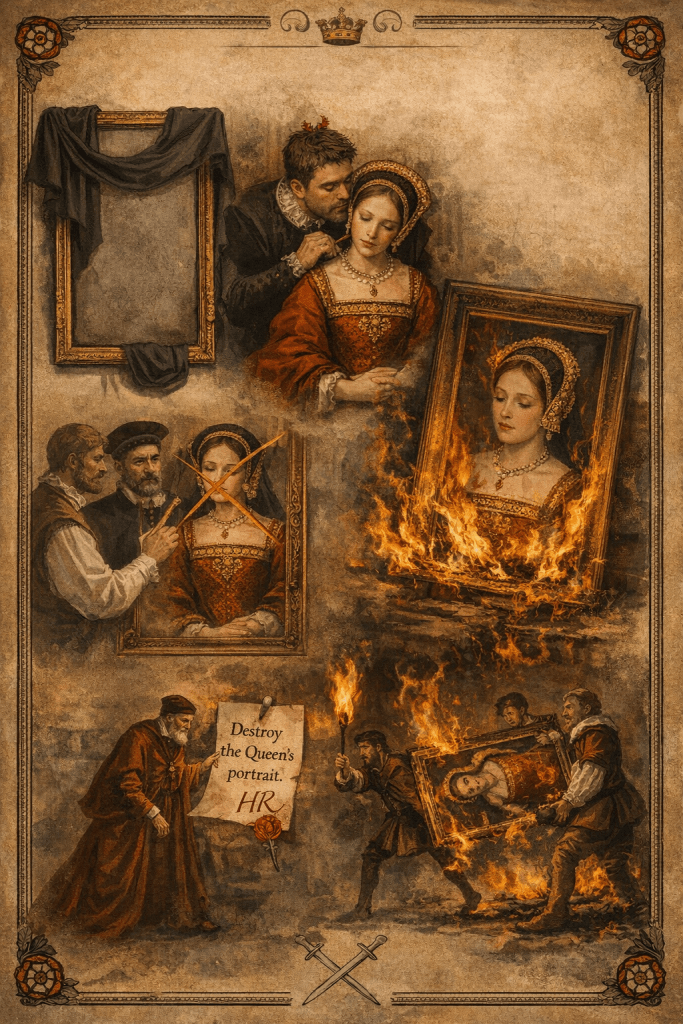
AI: Henry & his consort Kateryn surrounded by the ghost of Anne Boleyn, Henry Howard & Katherine Howard. The three cousins who Henry VIII executed.
Henry VIII didn’t just execute Anne Boleyn and Katherine Howard — he erased them.
Not because they were guilty.
Not because they were dangerous.
But because they injured his ego, and Henry VIII could not tolerate narcissistic shame.
He ERASED them. • Their coats of arms torn down • Initials removed from palaces • Portraits hidden or destroyed • Their reputations smeared • Their names forbidden at court • Their supporters scattered • His daughter by Anne was sent away immediately and lost her status as Princess Elizabeth. She was hence Lady Elizabeth Tudor.
This is classic narcissistic annihilation: “If you injure me, you cease to exist.”
He literally rewrote history documents to frame himself as: • righteous • innocent • betrayed • the victim • morally justified
He needed to believe he wasn’t the problem — THEY were.
Typical narcissistic rewriting of the narrative.
The charges against both women were manufactured or exaggerated — not to seek justice, but to restore Henry’s fragile self-image.
Henry VIII’s entire marital history reads like a narcissistic abuse cycle
He: • love bombed • isolated • tested loyalty • demanded admiration • punished perceived slights • rewrote narratives • replaced women quickly • destroyed those who “shamed” him
The man was a pathological narcissist with absolute power.
(ChatGPT)
And Anne Boleyn and Katherine Howard were two women who suffered the worst aspect of that pathology: Total erasure as punishment for wounding him.
Anne and Katherine weren’t executed because they were guilty. They were executed because Henry was “wounded” by them. He became the victim in his eyes.
“How misfortunate I am to have so many ill-conditioned wives!” — King Henry VIII in ‘The Tudors’ (S4E5)
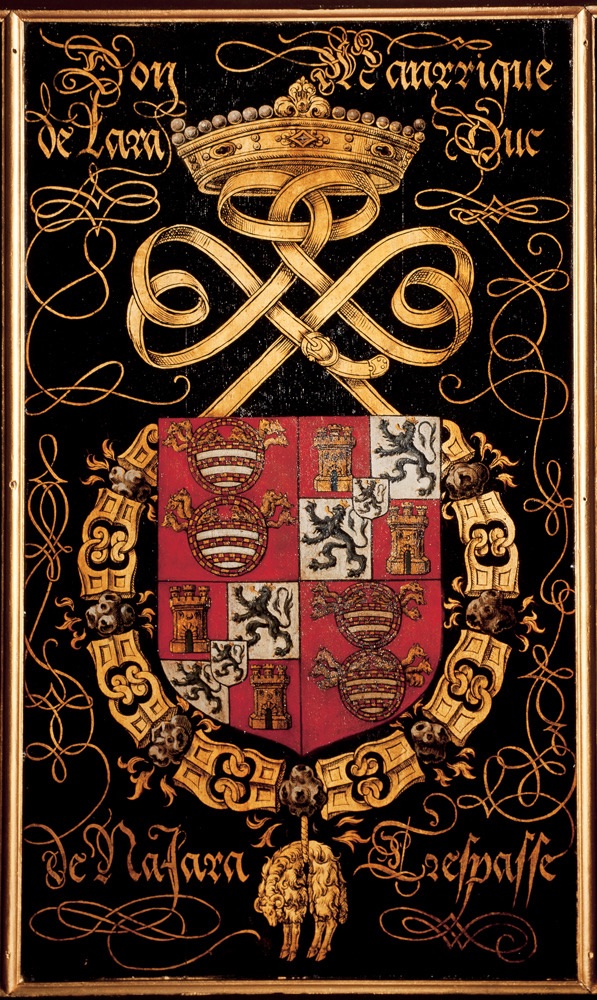
Coat of arms of the 3rd Duke of Nájera, knight of the Order of the Golden Fleece, in the Cathedral of Ghent (Wikipedia)
Written by Meg McGath
On 17 FEBRUARY 1544, Sir William Parr, Earl of Essex and Sir Henry Howard, Earl of Surrey dined with the Spanish envoy to Charles V of Spain, Don Juan Esteban, Manriquez de Lara, the Duke of Najera, at his Palace lodgings and afterwards they took the Duke to Westminster to introduce him to King Henry VIII who received him graciously.
Juan Esteban Manrique de Lara y Cardona, 3rd Duke of Najera (1504-1558) was a Spanish diplomat from the court of Charles V, King of Spain and Holy Roman Emperor, who was cousin to Lady Mary.
On the occasion of the visit of the Duke of Najera, the Queen was called to entertain as the King was indisposed. The Queen and her ladies were dressed in different silks, with splendid headdresses. The Queen was sumptuously clothed and adorned by jewels. Kateryn was praised as having “a lively and pleasing appearance,” and for being “a virtuous woman.” (Armbruster) The Lady Mary, future Queen, was also there to entertain as well as Henry’s niece, Lady Margaret Douglas.
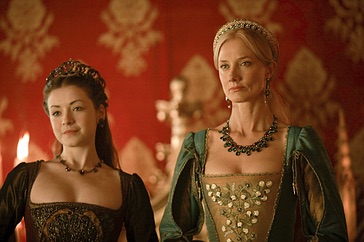
Queen Kateryn (Catherine) Parr (Joely Richardson) and the Lady Mary (Sarah Bolger) in “The Tudors” (2010)
In Season 4 of “The Tudors”, we see the actress Joely Richardson as Queen Kateryn (Catherine) Parr along with Lady Mary played by Sarah Bolger. In the show, the Duke of Najera is sent to the court of King Henry VIII of England in London, and he is entertained by Henry Howard, Earl of Surrey. There is no mention of the Queen’s brother, William, the Earl of Essex, in the show. The Duke of Najera talks about seeing the Tower of London and the swans along the River Thames before being brought to meet with the King. He speaks of the marvels of the River Thames and the circus show that Surrey brought him to.
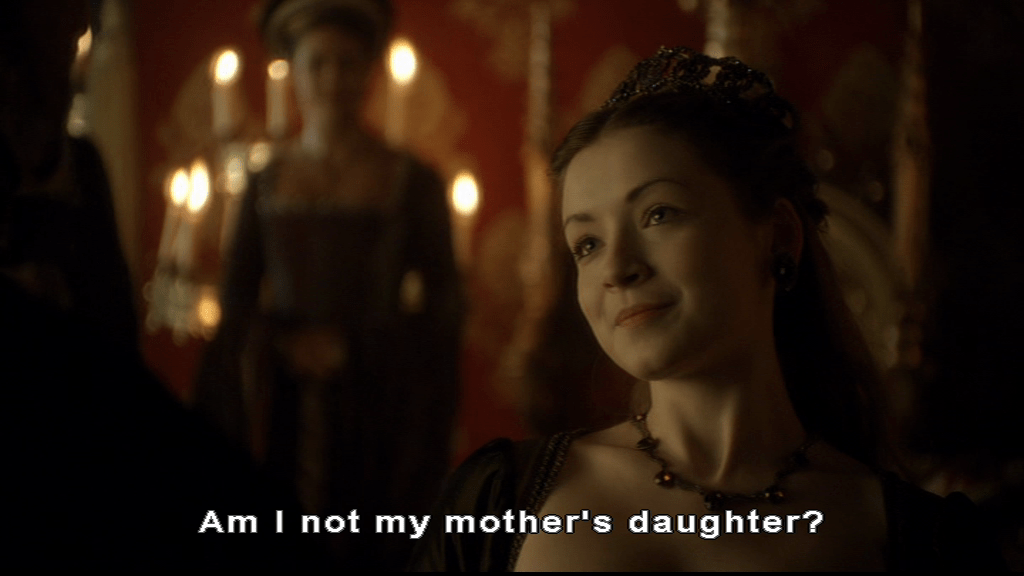
The Queen introduces the Duke of Najera to the Lady Mary in “The Tudors” (2010)
Later on he attends festivities at court led by Queen Kateryn and Lady Mary. The Queen introduces herself and Mary who speaks to the Duke in almost perfect Spanish, to his surprise, to which she responds, “Am I not my mother’s daughter?”.
Lady Mary as played by Sarah Bolger in “The Tudors” (2010)
He is introduced to the Queen and kisses her hand, and the Queen immediately introduces him to Princess Mary, who intends to reduce this handsome Iberian to dust with a charm and awe offensive. She starts, as she was reported actually historically doing, by giving the Duke the good old “English Gentlewoman’s Formal Hello”, an often surprising kiss right on the lips.
Before the poor, young, worldly general has time to recover, The Tudors‘ Mary follows it up with dropping into what (to my uneducated and unpractised ear) sounds like maybe not completely fluent but pretty good Spanish that gets more confident as she goes on.
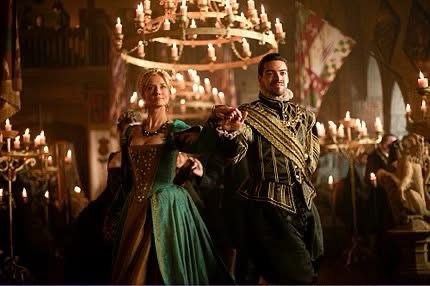
During the visit of the Duke of Najera, Kateryn is recorded historically as wearing her favorite colour, crimson — sadly, not the lovely shade of green shown in “The Tudors”! The color name “jade green” was first used in Spanish in the form “piedra de ijada” in 1569. The first recorded use of “jade green” as a color name in English was in 1892.
The Queen (Joely Richardson) and the Duke of Najera (Fabio Tassone) dance together in “The Tudors”, Season 4, episode 7 (2010).
The song used in “The Tudors” scene where the Queen and Duke dance together is “Dansereye: Rondes I & VII”. The song was also used in the movie “Elizabeth” in 1998 during the scene where Robert Dudley proposes and there is attempt on the Queen’s life.
“I embraced ignorance as perfect knowledge; and knowledge seemed to me superfluous and vain. I had little regard for God’s Word, but gave myself to vanities and shadows of the world. I forsook Him, in whom is all truth, and followed the vain, foolish imaginations of my own heart. I covered my sins with the pretense of holiness. I called superstition, “godly meaning”, and true holiness, “error”.” — Kateryn Parr
The official date of the letter is actually confusing. It was either written while Katherine Parr was Queen Regent in 1544 or as Dowager Queen in 1547.
The messenger mentioned in the letter is most likely Walter Erle, groom of the Queen’s privy chamber, who also served as her musician on the virginals, but possible Robert Cooch, steward of her wine cellar whose skill in music was commended by Parr’s chaplain, John Pankhurst.
Also mentioned in the letter is Francis Mallet who became chaplain to the Princess Mary in 1544 leaving the employment of Parr. (Wikipedia)
While the reasons are many, most notable and most beloved lady, that readily invite me at this time to writing, still nothing quite so much moves me as care for your health, which as I hope it is the best, so I very greatly desire to be made of certain of it. Wherefore, I send you this messenger who, I judge, will be very pleasing to you both because of his skill in music, in which, I am not unaware, you as well as I delight exceedingly, and also because he, having been in service to me, can report to you most certainty on my whole state and health. And truly, before this day it was in my mind to have made a journey to you and greeted you in person, but indeed not all things answer to my will: I hope now that, at a very early day this winter, you will be visiting us. Then which truly nothing will be a greater joy or a greater pleasure.
Since, however, as I have heard, the last touch has now been put by Mallet on Erasmus’s work On John (which he saw through translation), and nothing else now remain except some due attention and care to be applied in correcting it, I pray you to send to me this very fine and very useful work, now emended by Mallet or someone of yours, that it may be given to the press in its time. And further, that you signify whether you wish it to go out most happily into the light under your name, or whether rather by an unknown author. To which work really, in my opinion, you will be seen to do an injury, if you refuse the book to be transmitted to posterity on the authority of your name: for the most accurate translating of which you have undertaken so many labors for the highest good of the commonwealth; and more than these (as is well enough known) you would have undertaken, if the health of tour body had permitted. Since no one does not know the amount of sweat that you have laboriously put into this work, I do not see why you should reject the praise that all confer on you deservedly. However, I leave this whole matter to your prudence, so that whatever position you wish to take, I will esteem it most greatly to be approved.
As for the sum of money you sent to me as a gift, I thank you exceedingly. I pray the most good and most great God that He will think it fit to bless you perpetually with true and unblemished happiness: in whom, indeed, may you fare well a very long while. From Hanworth September 20.
You most devoted and most loving, Katherine the Queen KP
During her regency in 1544, Queen Kateryn Parr issued five proclamations. The following was written on the 18th of September in 1544. The proclamation was made at the outbreak of plague to keep people who had been exposed away from the court at Oking (Woking) Palace in Surrey where she and the children of the King resided.
No. 19 The Queen Regent’s proclamation that no person exposed to the plague may come to court, September 18, 1544
[Headed] The 36th year of Henry VIII. 1544.
A proclamation that no person, in whose house the infection of the plague doth reign, shall repair to the court.
King Henry VIII to the mayor, alderman, and the citizens of London, greetings. We charge you that
Forasmuch as the Queen’s highness, General Regent of the realm in the King’s majesty’s absence, hath been incredibly informed that the infection of the plague reigneth in sundry parts within these the cities of London and Westmister, whereby great danger might ensure to her grace’s person, the Prince’s grace, and the other the King’s majesty’s children, in case any of the inhabitants of the said cities, who have had the infection in their houses, or have resorted to any infected persons, or dwell near any place where the infection is or lately hath been, should repair to court or permit any of those which attend in the court to enter their houses:
Her highness straitly chargeth and commandeth that no manner of person or persons, in whose houses the plague is or hath been, or have resorted to any other infected persons, or dwell near any place where the infection is or lately hath been, do from henceforth repair to the court, or do suffer any of the attendant of the said court to enter their houses where the infection hath been, upon pain of her grace’s indignation, and further punishment at her highness’s pleasure.
And of this, under the applicable legal penalty, let nothing to all be omitted. By Katherine, Queen of England, and its General Regent. From Oking, the eighteenth day of September, the thirty-sixth year of our reign.
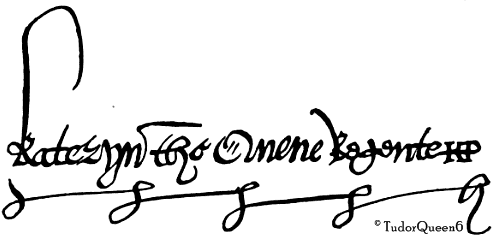
Here is one of the documents found at the National Archives from 1547, after the death of Henry that was signed “Kateryn the quene Regente-KP”
I love how much people dismiss Queen Kateryn Parr. There may be evidence that she WAS supposed to be Regent for Edward VI. See her signature AFTER Henry died.
Credit: Elizabeth Norton
She was apparently signing as “Kateryn, the quene regente KP”. The theory goes that she was indeed made Regent for her stepson, King Edward VI. Which would make sense with the use of her signature. It is believed that Edward Seymour, Duke of Somerset, Kateryn’s brother the Marquess of Northampton, her brother-in-law the Earl of Pembroke and the council ousted her and rewrote the will. She would have made a wonderful Queen Regent. She proved she was capable of being Regent while Henry went to war with France. Perhaps she would have lived longer and prevented the succession from being rewritten. She gets credit for the placement of Princesses Mary & Elizabeth back into the line of succession behind their brother in 1545. That succession act seems to have overwritten or they disregarded King Edward’s will and supported the actual heir to the throne, Mary. Mary WAS the rightful heir. Jane was further down the approved line of succession. Why would you accept someone below the status of the actual daughters of King Edward’s father, Henry VIII? Kateryn Parr’s brother and brother in law were again involved in matters of the state and actually pulled off putting Lady Jane Grey on the throne for 9 days! Jane somehow outranked her own mother who was STILL alive and technically would have been the next heiress to the throne after Princesses Mary & Elizabeth. I never understood that. The Protestants feared the Catholic “Bloody Mary” (her nickname was started as Protestant propaganda, the pro Queen Elizabeth movement, lol) would try to return the country to the Pope and Catholicism. Mary was deeply religious. Kateryn Parr and Mary got on despite differences in matters like religion. Parr’s mother, Lady Maud, had served Mary’s own mother, Queen Katherine of Aragon, the first wife and crowned Queen consort to King Henry. The two women were pretty close. The Parrs backed Queen Katherine of Aragon when her lady in waiting became the Kings new obsession. Parr let Mary be and encouraged her every chance she could. One could argue she loved Mary more than Elizabeth. Heck, Kateryn named her only daughter and child, Mary, before the queen passed on 5 September 1548. Don’t think there were any other important Marys. The French Queen, Mary Tudor, had died long before Parr became Queen. Pretty sure it’s not after The Virgin Mary. Protestants aren’t that attached to her, right? I was raised Catholic, so I honestly don’t know. Anyway, Queen Kateryn Parr was VERY important. Read a book. She wasn’t an ex-queen. She remained Queen (consort) of England, Ireland, and France until she died. She was the LAST Tudor Queen Consort as King Edward died young. She was also the FIRST Queen of Ireland. Her funeral was the FIRST Protestant funeral for a Queen. Her mourner was none other than Lady Jane Grey, who would have probably stayed with Kateryn had the queen lived. Having Parr around seemed to pacify things. She knew how to handle tricky and dangerous situations. For Gods sake, she almost lost her head after she spoke with the King. It was overheard by the queens enemy, Bishop Gardiner, who saw an opportunity to “get rid” of Kateryn. I mean why not? He already KILLED TWO WIVES!! Lordy, so Gardiner tried to fuck with the Kings head. Saying shit like “it is a petty thing when a woman should instruct her husband” or some stupid sexist bs! Story goes, Kateryn was warned by an anonymous source who found her death warrant lying on the ground. YEAH RIGHT!! That’s straight up narcissistic abuse, my man!! Why do I feel like Henry set her up to test her loyalty? He was such a theatrical douche bag. No, no love for King Henry here. I have yet to see the film “Firebrand” which follows the reign of Kateryn as queen consort and queen Regente I believe. It’s based off Elizabeth Freemantle’s “Queen’s Gambit”. Anyway, Kateryn talked her way out of being arrested or worse by stroking the Kings ego and basically submitting to him just to fuvking survive. Imagine going through this marriage without psych meds like Benzos. I do believe they dabbled in potions however and she was known to “treat” melancholy with herbs from the gardens. Sudeley Castle where she is buried has a garden full of deadly herbs. Physic gardens. I have photos somewhere…
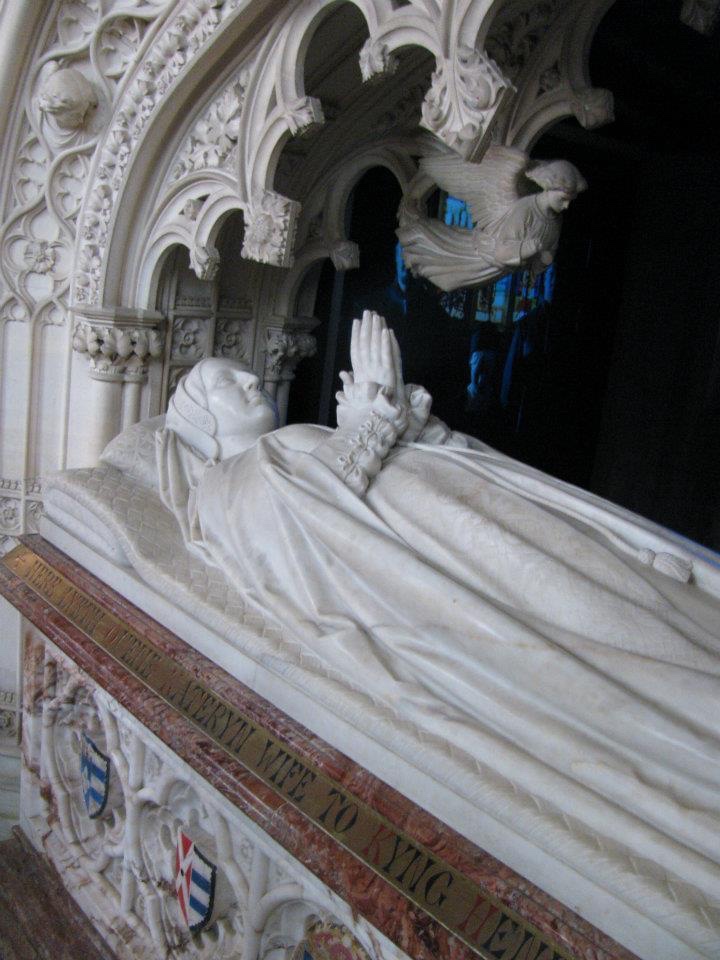
7 September 1548: THE FUNERAL of the Dowager Queen Katherine Parr. It was the first Protestant funeral held in English. Her chief mourner was Lady Jane Grey. She was buried in St Mary’s Chapel on the grounds of Sudeley Castle, Gloucestershire, England.
‘A Breviate of the Internment of the lady Katherine Parr, Queen Dowager, late wife to King Henry VIII, and after, wife to Sir Thomas, Lord Seymour of Sudeley, and High Admiral of England.
Item – On Wednesday, the fifth of September, between two and three of the clock in the morning, died the aforesaid lady, late Queen Dowager, at the castle of Sudeley in Gloucestershire, 1548, and lieth buried in the chapel of the said castle.
Item – She was cered and chested in lead accordingly, and so remained in her privy chamber until things were in a readiness.
Hereafter followeth the provision in the chapel.
Item – It was hanged with black cloth garnished with escutcheons of marriages viz. King Henry VIII and her in pale, under the crown; her own in lozenge, under the crown; also the arms of the Lord Admiral and hers in pale, without crown.
Items – Rails covered with black cloth for the mourners to sit in, with stools and cushions accordingly, without either hearse, majesty’s valence, or tapers – saving two tapers whereon were two escutcheons, which stood upon the corpse during the service.
The order in proceeding to the chapel.
First, two conductors in black, with black staves. Then, gentlemen and esquires. Then, knights. Then, officers of houshold, with their white staves. Then, the gentlemen ushers. Then, Somerset Herald in the King’s coat. Then, the corpse borne by six gentlemen in black gowns, with their hoods on their heads. Then, eleven staff torches borne on each side by yeomen about the corpse, and at each corner a knight for assistance – four, with their hoods on their heads. Then, the Lady Jane, daughter to the lord Marquis Dorset, chief mourner, led by a estate, her train borne up by a young lady. Then, six other lady mourners, two and two. Then, all ladies and gentlewomen, two and two. Then yeomen, three and three in a rank. Then, all other following.
The manner of the service in the church.
Item – When the corpse was set within the rails, and the mourners placed, the whole choir began, and sung certain Psalms in English, and read three lessons. And after the third lesson the mourners, according to their degrees and as it is accustomed, offered into the alms-box. And when they had all done, all other, as gentlemen or gentlewomen, that would.
The offering done, Doctor Coverdale, the Queen’s almoner, began his sermon, which was very good and godly. And in one place thereof, he took a occasion to declare unto the people how that there should none there think, say, nor spread abroad that the offering which was there done, was done anything to profit the dead, but for the poor only. And also the lights which were carried and stood about the corpse were for the honor of the person, and for none other intent nor purpose. And so went through with his sermon, and made a godly prayer. And the whole church answered, and prayed the same with him in the end. The sermon done, the corpse was buried, during which time the choir sung Te Deum in English.
And this done, after dinner the mourners and the rest that would, retruned homeward again. All which aforesaid was done in a morning.’
(p.180-182, ‘Katherine Parr: Complete Works and Correspondence’ edited by Janel Mueller.)
Tomb of Queen Kateryn Parr at Sudeley Castle. (c) Meg Mcgath, 2012.
[Endorsed] The queen’s Grace to the King’s majesty 25 August 1544
[Addressed] To the King’s most excellency majesty
Pleaseth it your majesty to be advertised: albeit I had at this present none occurrences of importance to be signified unto your highness, your realm being, thanks to almighty God, in very good order and quiet: yet, foreasmuch as Richard Higham is at this time dispatched hence unto your majesty with a mass of twenty thousand pounds, I thought it my duty to advertise your majesty of the sending of the same, praying almighty God to send your majesty continuance of health and most prosperous success in all your highness’s most notable enterprises.
My Lord Prince and the rest of your majesty’s children be in very good health. And thus, with my most humble commendations unto your majesty, I pray almighty God have the same in His most blessed keeping. From your majesty’s honor of Hampton Court, the twenty-fifth of August, the thirty-sixth year of your majesty’s most noble reign.
Your grace’s most humble, loving wife and servant,
It was in August of 1544 that the General Regent is recorded as signing her letter “Kateryn the quene Regente, KP” keeping with her signature of “Kateryn the quene, KP” as consort.
Source: “Henry VIII: July 1544, 21-25.” Letters and Papers, Foreign and Domestic, Henry VIII, Volume 19 Part 1, January-July 1544. Eds. James Gairdner, and R H Brodie. London: His Majesty’s Stationery Office, 1903. 581-596. British History Online. Web. 26 August 2023. http://www.british-history.ac.uk/letters-papers-hen8/vol19/no1/pp581-596.
The King has proclaimed that all who claim to do services on Coronation day shall be in the White Hall at Westminster Palace, 20 June next, and has authorised the Earl of Surrey, Treasurer of England, the Earl of Oxford, Sir John Fyneux, Chief Judge, Sir Thomas Englefeld, and others to determine claims. He has ordered 26 honorable persons to repair to the Tower of London on 22 June, to serve him at dinner, where those who are to be made knights shall bear dishes “in token that that they shall never bear none after that day”; and on 23 June, at the Tower, they are to be made Knights of the Bath; “whose names follow in order as they were made,” viz., Richard (sic) Radclyff lord Fitzwater, the lord Scroop of Bolton, the lord Fitzhugh, the lord Mountjoye, the lord Dawbeney, the lord Brooke, Sir Henry Clyfford, Sir Maurice Berkeley, Sir Thomas Knyvet, Sir Andrew Wyndesore, Sir Thomas Parr, Sir Thomas Boleyne, Sir Richard Wentworth, Sir Henry Owtrede, Sir Francis Cheyny, Sir Henry Wyotte, Sir George Hastynges, Sir Thomas Metham, Sir Thomas Bedyngfeld, Sir John Shelton, Sir Giles Alyngton, Sir John Trevanyon, Sir William Crowmer, Sir John Heydon, Sir Godarde Oxenbrige and Sir Henry Sacheverell.
‘Henry VIII: June 1509, 16-30 ‘, in Letters and Papers, Foreign and Domestic, Henry VIII, Volume 1, 1509-1514, ed. J S Brewer (London, 1920), pp. 36-55. British History Onlinehttp://www.british-history.ac.uk/letters-papers-hen8/vol1/pp36-55 [accessed 8 July 2023].
Sir Thomas Parr was knighted and Sir Thomas Boleyn followed behind him…wonder if the order in which they were knighted means anything…
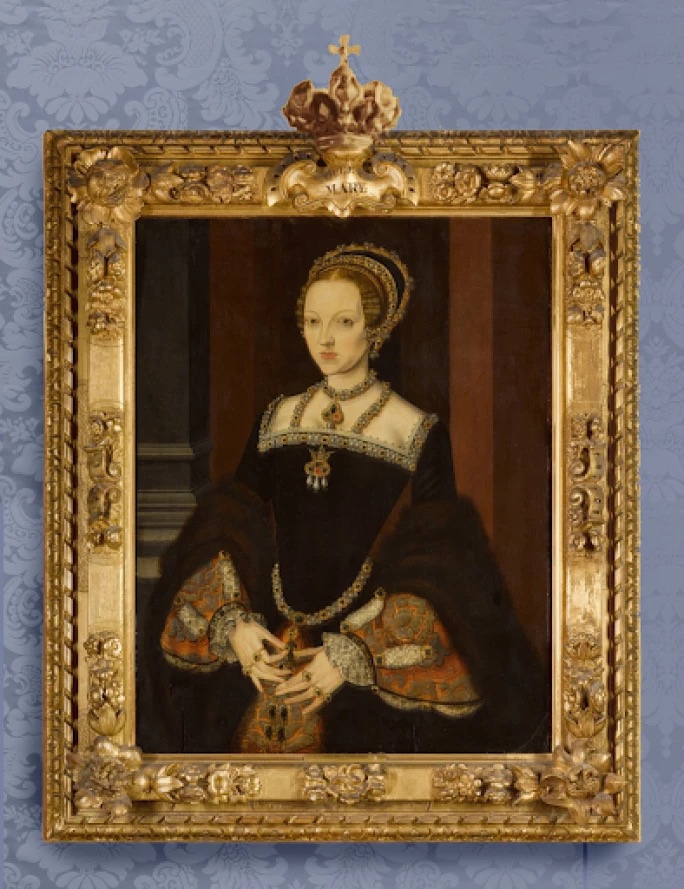
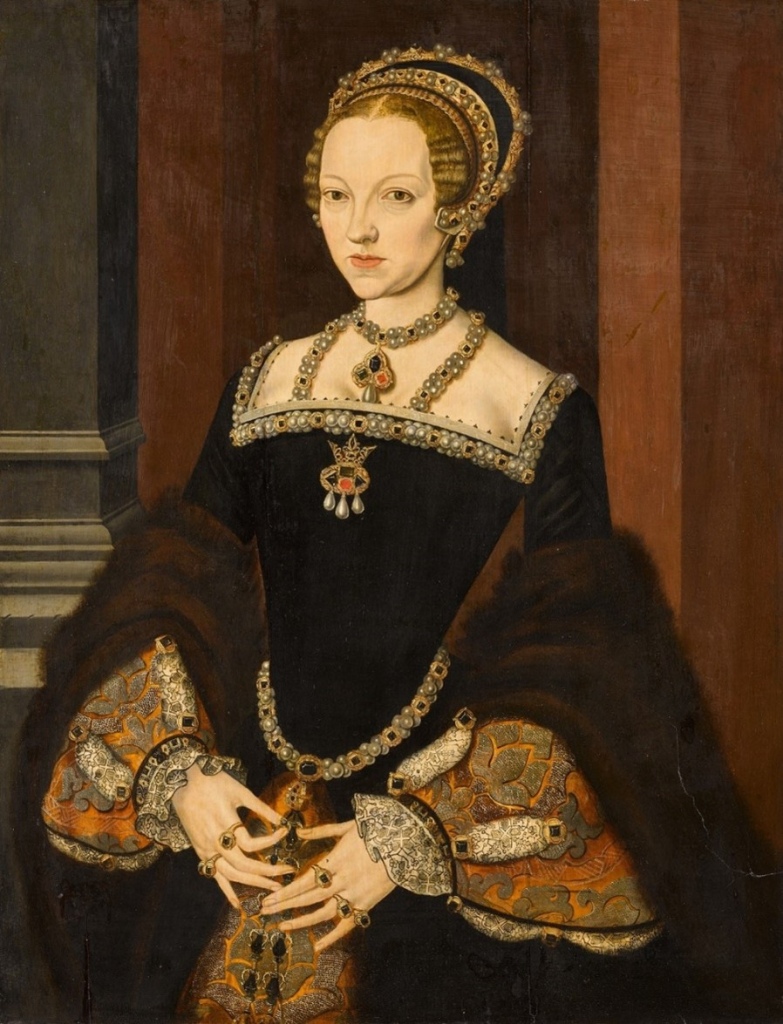
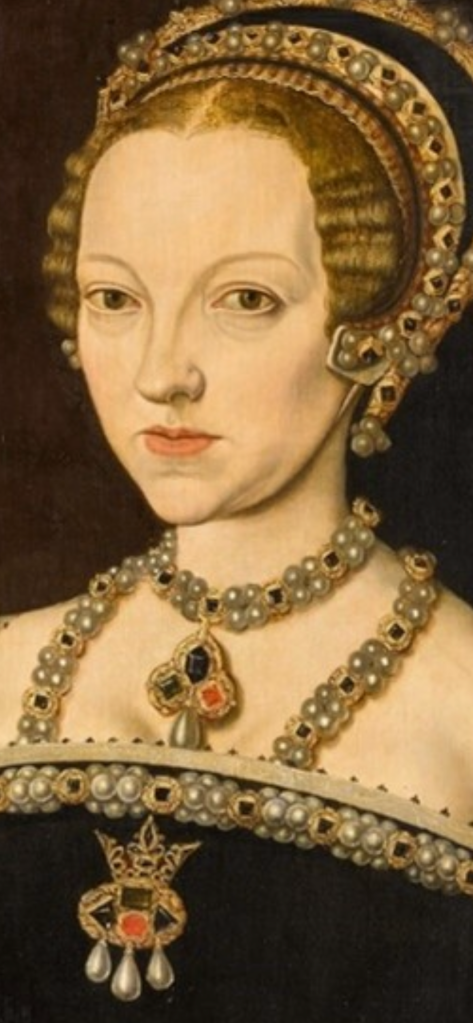
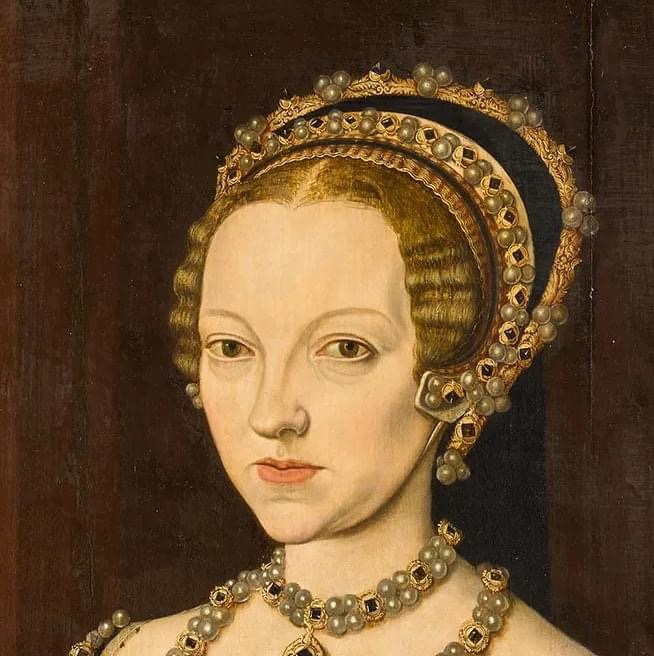
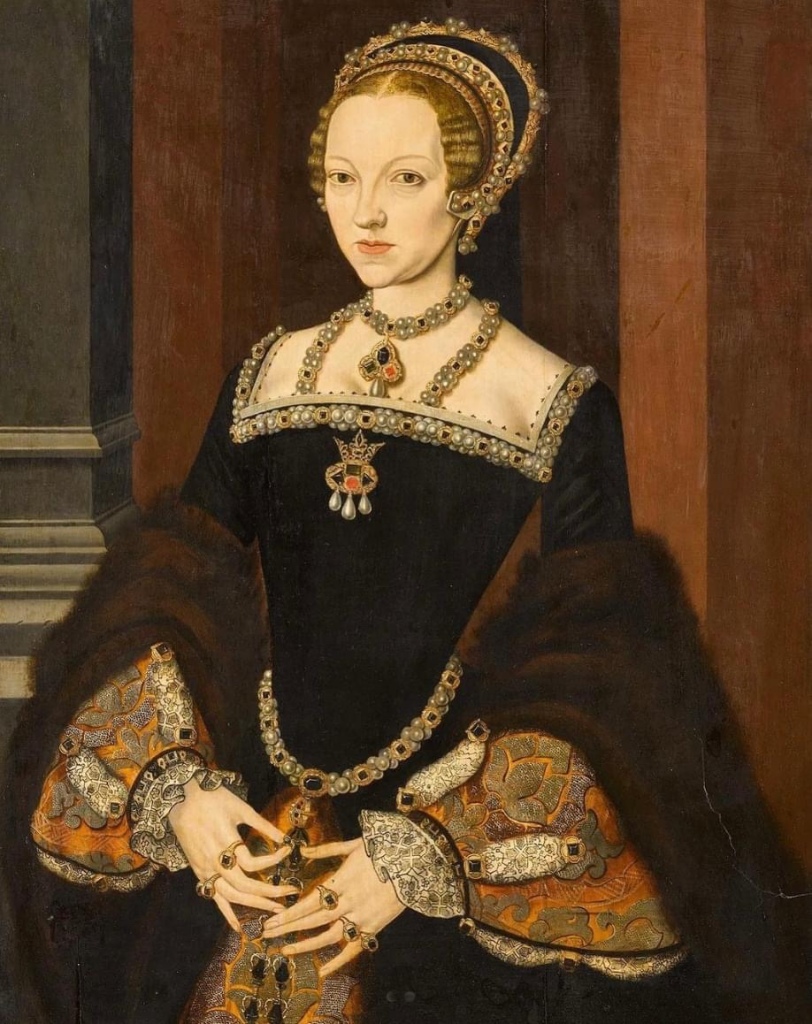
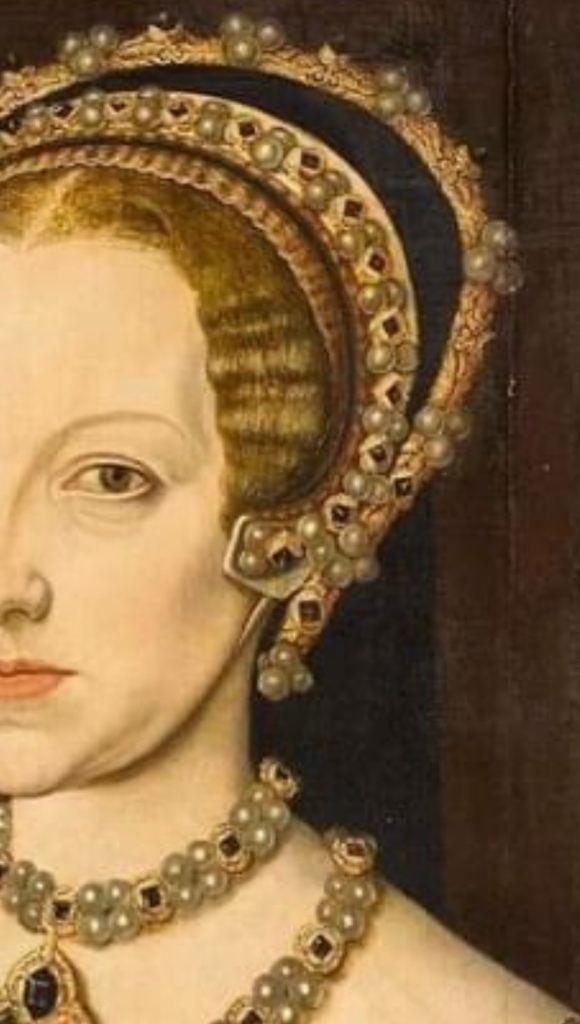
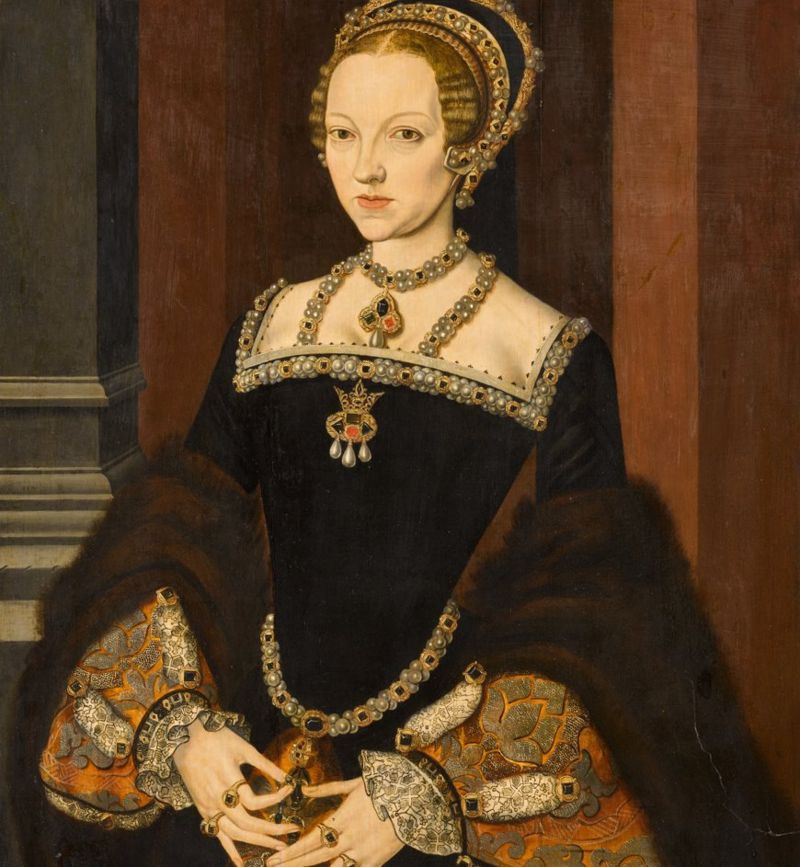
A rare portrait of Katherine Parr, the sixth wife of Henry VIII and an accomplished woman in her own right, shattered records yesterday (June 5) to become the most expensive Tudor painting of all time. Selling to a U.K. collector at Sotheby’s Old Master & 19th Century Paintings Evening Auction, the work realized $4.4 million, more than four times its initial high estimate.
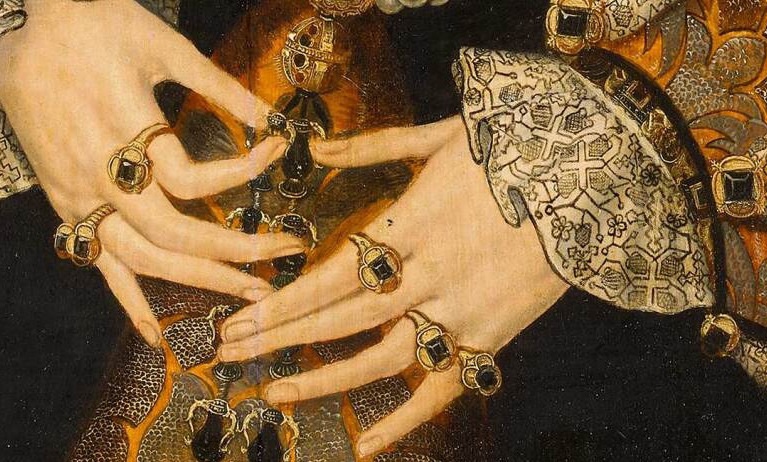
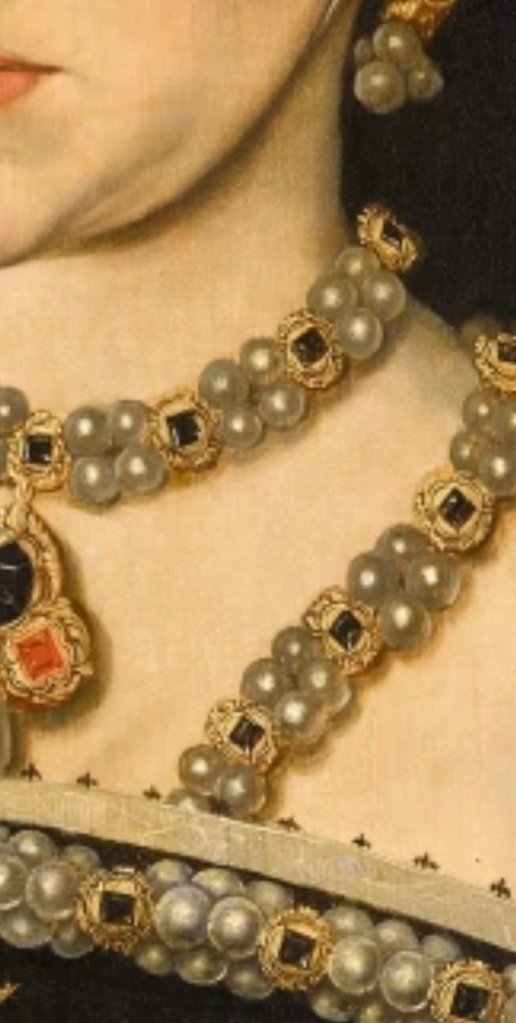
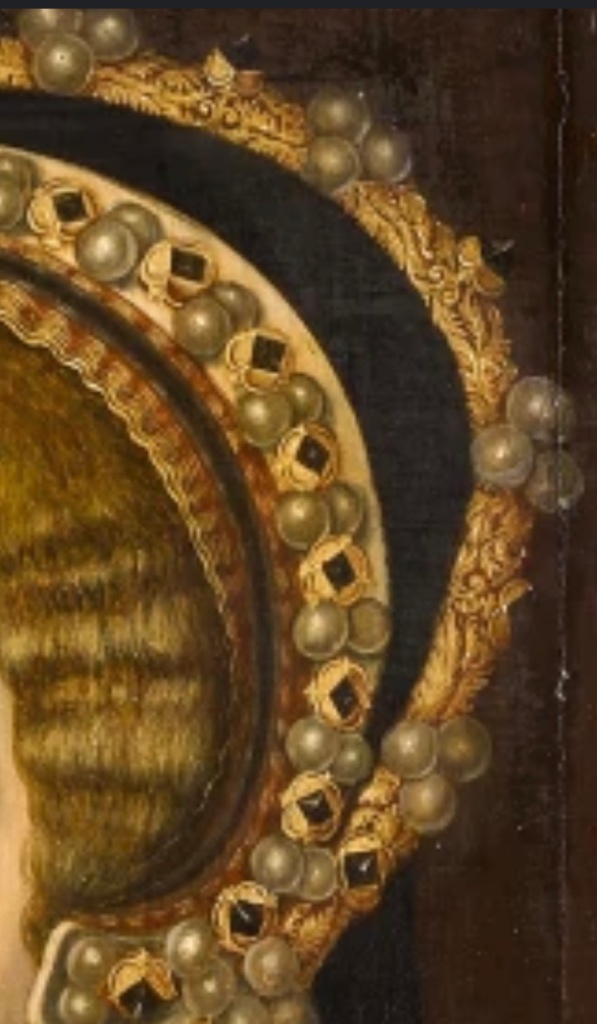
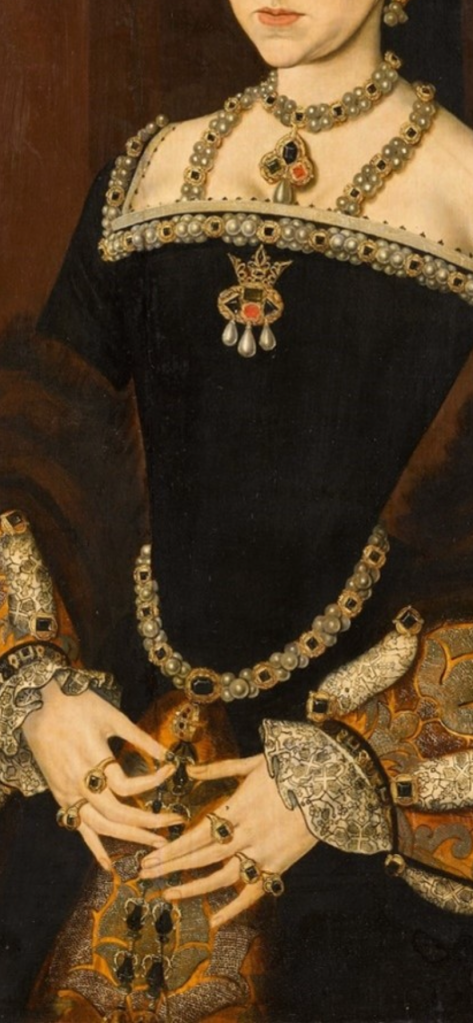
The Jersey portrait is one of only two surviving contemporary portraits of Queen Katherine Parr, the other being the slightly earlier, related full-length in the National Portrait Gallery previously mentioned. In both, the Queen’s jewellery is of further significance in identifying the sitter. In the 1960s both paintings were identified as likenesses of Lady Jane Grey by Strong, largely on the basis of comparison with an engraving in Henry Holland’s Herwologia Anglica of 1620, and a portrait at Seaton Delaval – which appears to be a derivation of the present work, on canvas, dating to the seventeenth or eighteenth century, and erroneously called ‘Lady Jane’.4Throughout the nineteenth century and until Strong’s publication, the Jersey portrait was in fact also erroneously identified as Queen Mary I. Both portraits were correctly reidentified in 1996 by Susan James (see Literature) on account of the jewellery the sitter is shown wearing, specifically the distinctive crown-headed brooch which appears on her bodice (fig. 2). This brooch, which may have been made for Katherine by her favourite goldsmith, the Dutch jeweller Peter Richardson, is traceable through three Tudor lists of jewels dating to before, during, and after Katherine’s time as Queen, one of which is entitled: ‘The Quene’s Jewells in a cofer having written upon it, “the Quene’s Juelles”’ [sic], and for all of which there is good evidence pointing to Katherine Parr’s ownership (the earliest list of 1542 is an inventory of the jewels belonging to Catherine Howard, which subsequently passed to her successor).5
The last list, from 1550, describes the brooch as ‘one ouche or flower with a crown containing two diamonds, one ruby, one emerald; the crown being garnished with diamonds, three pearls pendant.’6 Interestingly, overpaint in the full-length portrait at the National Portrait Gallery now means that the square-cut emerald there appears red, but the brooch’s true character is plainly obvious in the present painting, where all the precious stones are clearly distinguished from one another. The accuracy of the depiction of the brooch – thus underlining the portrait’s royal status and sovereignty of the sitter – is further corroborated by its description in the jewel list of Elizabeth I, to whom the brooch passed with the rest of the royal jewellery in 1587, which specifies that the crown is ‘garnished with XV small diamonds’7 – all fifteen stones are clearly discernible here. At Elizabeth’s death the brooch passed to Anne of Denmark, queen of James I; it is found in her jewellery inventory of 1606, but an annotation recounts that in 1609, having lost the two triangular-cut diamonds, the brooch was broken up for ‘the making of Gold plate’.8
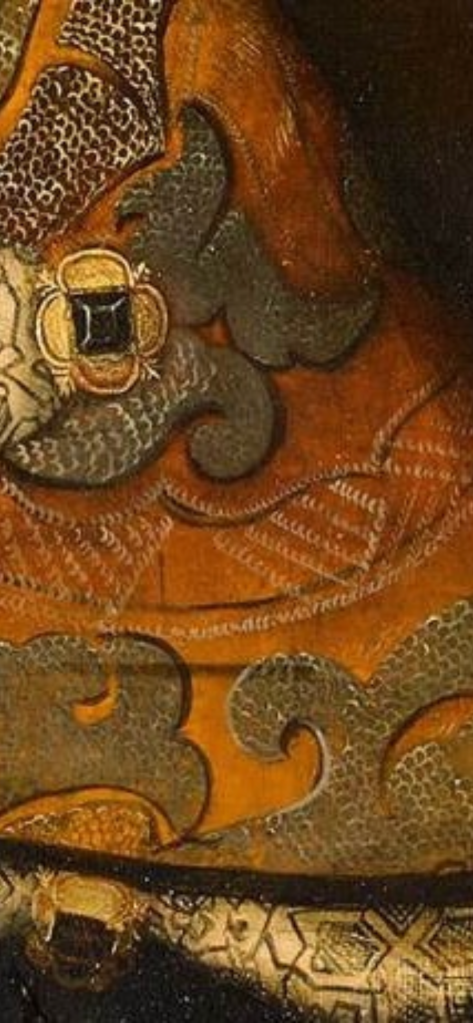
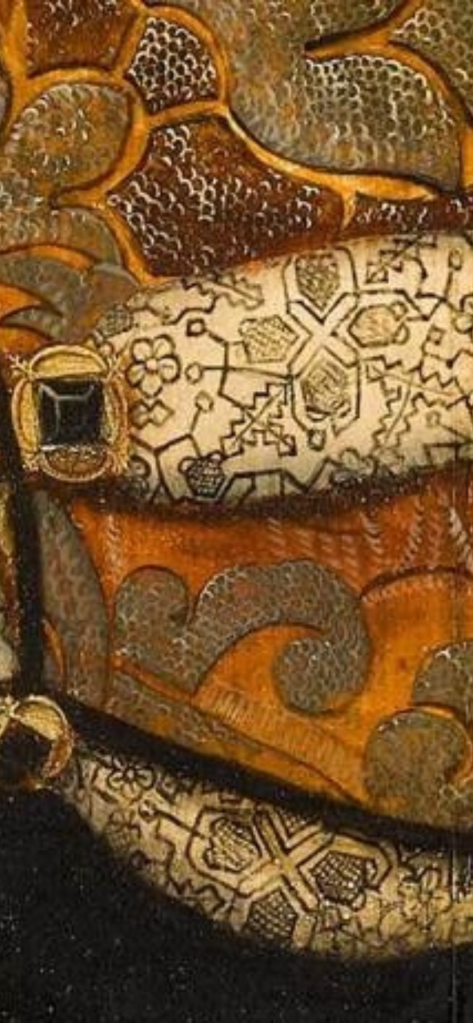
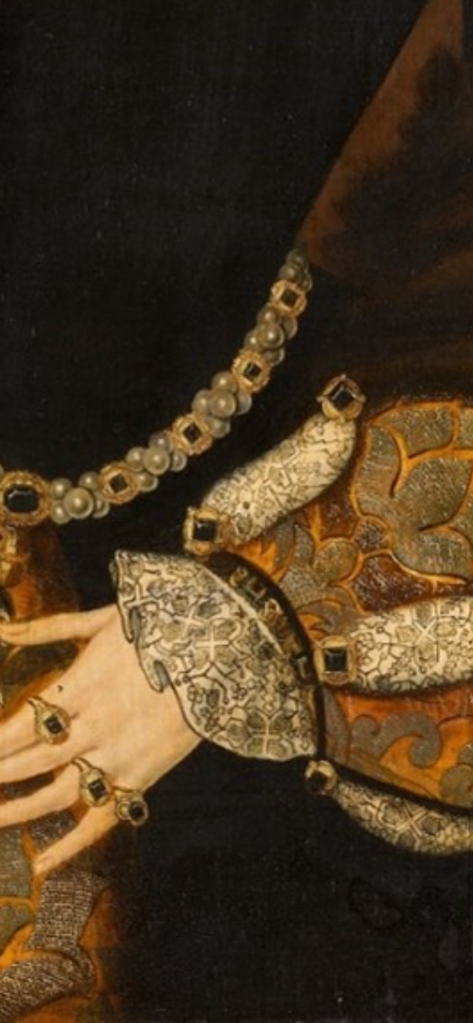
In the full-length portrait, and in a slightly later half-length portrait from the late sixteenth century, previously attributed to William Scrots (also in the National Portrait Gallery; fig. 3),9Katherine wears a pendant – probably another brooch adapted to be worn on a necklace – which may be identified as that described in the 1542 list of Catherine Howard’s jewels: ‘oone other Ooche of Golde wherein is averey feir large ruby and a rounde diamond with a verey feir peerle hangyng at the same [sic].’10 The pendant in the present portrait, by contrast, would appear also to include an emerald; nor does the sitter wear the girdle of antique cameos that appears in the full-length painting, and which is also identifiable in the 1542 list. Instead, here Katherine’s waist is encircled by a belt of large pearls and diamonds in gold settings, with pomanders and small antique urn-shaped pendants, which, together with the matching adornment to the line of her bodice across the chest and the pattern of her necklace, bears a remarkable similarity to that in a portrait of Elizabeth I, when Princess, in the Royal Collection, at Windsor.11The portrait of Princess Elizabeth and the Jersey portrait of Katherine also share similar embroidery in the sleeves and both sitters wear almost identical diamond rings, which display the latest styles in diamond cutting – the table-cut and pointed cut – which were symbolic of fidelity, though the pattern of their display follows that in the the portrait of Katherine in the National Portrait Gallery. Unlike either of these other two portraits, however, the jewels in Katherine’s cuffs, and the pomanders on her girdle, in the Jersey portrait are all inscribed multiple times with the words ‘LAVS DEVS’ (‘praise God’).






















 tudorqueen6 by Meg McGath