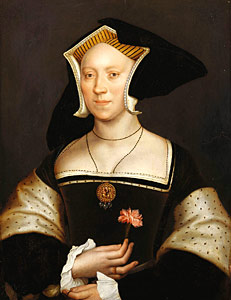
The Relationships of Lady Mary Tudor: Henry VIII and his consort Katherine Parr pt. 1

A modern interpretation of Lady Mary’s stepmother’s was shown in the historical fiction series “The Tudors.”

Throughout the reign of Henry VIII, as many know, he had six different wives. The first of these wives was the daughter of King Ferdinand II of Aragon and Queen Isabella I of Castile, Infanta Catalina; or as most have come to know her in England – Katherine of Aragon. Katherine came to England to marry the older brother of Henry who was then heir to the throne of England; Arthur, Prince of Wales. Shortly after their marriage Arthur died and Katherine was left a widow at an early age. To avoid returning her large dowry to her father Katherine was married to Arthur’s younger brother, then Henry, Duke of York. The marriage between Katherine and Henry produced only one child who would live to adulthood, a girl, the future Queen Mary I of England. In Tudor times, not having a male heir was particularly troublesome as the country had just been through a civil war in which Henry’s father seized the crown. Henry VIII was only the second Tudor monarch, a son of both the houses of Lancaster and York. Henry felt that a male heir was essential; after all, the last woman to reign as queen regent was the tumultuous reign of Empress Matilda, daughter of Henry I.

Born Princess Mary of England, Mary was the daughter of King Henry VIII and his first wife Katherine of Aragon. Her mother, after two decades of marriage to the King, had given birth to six children. Out of the six, only one would survive infancy, their daughter Mary. Katherine had produced no surviving sons, leaving their daughter, the future Mary I of England, as heiress presumptive at a time when there was no established precedent for a woman on the throne. At this time is when Henry began to take interest in one of Katherine’s ladies, Anne Boleyn. In Anne, Henry saw the possibility of having a male heir; to continue his father’s legacy. After going through a great bit of trouble – which included a break from Rome – Henry “divorced” Katherine and “married” Anne under his Church of England. This break and marriage would come to change England and inevitably changed Henry for the rest of his life. Henry would go on to have again, one daughter, with Anne. During this marriage, Princess Mary, now within her teens, went from being a legitimate Princess and daughter of Henry VIII to an illegitimate “bastard” under Henry’s new succession act. Mary was forced to live below the standards of what she had become accustomed to and was forced to accept that her mother was no longer queen of England. After only a few years of marriage to Anne, Henry became convinced that his second wife could not produce a male heir and literally disposed her for yet another lady-in-waiting, Jane Seymour. During her short reign, Jane tried to reconcile Henry with his daughter Mary. It was through this “precious” lady that Henry finally got what he wanted; a male heir, named Edward. To Henry’s misfortune, only twelve days after giving birth to Edward, Jane died. Henry would go on to marry three more times after Jane. Anne of Cleves, Katherine Howard, and a woman named Katherine Parr. It was the last of Henry’s wives who would come to reconcile Mary, along with her half-siblings, with Henry.
Katherine Parr was born in 1512. By both parents, Princess Mary was related to Katherine Parr. By her paternal grandparents, Mary was related by Katherine’s descent from the Beaufort’s, children of John of Gaunt, a son of Edward III making Mary by her paternal grandmother, Elizabeth of York, a 4th cousin. By the Woodville connection, they were 4th cousins. By her paternal grandfather, Henry VII (by Beaufort and Holland), Mary was a double 5th cousin, once removed. By her maternal grandmother, Isabel of Castile (by John of Gaunt), she was a fifth cousin and a fifth cousin, once removed. Jane Seymour is the next closest after Parr sharing Edward III (6th cousins, once removed).
Katherine was a few years older than Mary who was born in 1516. Katherine’s mother, Maud, had become a lady-in-waiting to Princess Mary’s mother shortly after her marriage to Sir Thomas Parr. Katherine was named after the queen and it is thought that the queen was her godmother.
Maud’s relationship with the Queen was unlike that of most queens and their ladies. It was a relationship that went much deeper than “giddy pleasure”. Both knew what it was like to lose a child in stillbirths and in infancy. It was Katherine Parr’s mother, Maud, who shared in the horrible miscarriages and deaths in which Queen Katherine would endure from 1511 to 1518. The two bonded over the issue, as Maud had experienced the death of her eldest, an infant boy, and later a miscarriage or early infant mortality after the birth of three healthy children. Because of these shared experiences, the queen and Maud became close.
After her husband died in 1517, Maud continued her position at court as one of Katherine of Aragon’s household and stayed close to the Queen even when her relationship with Henry started to decline in the 1520s. In 1525, when Henry’s infatuation with one of Katherine’s ladies, Anne Boleyn, became apparent, inevitably the ladies began to take sides. In these times, Queen Katherine never lost the loyalty and affection of women like Maud Parr, Gertrude Courtenay, and Elizabeth Howard, who had been with the Queen since the first years of her reign. Maud stayed with Queen Katherine until the end of her own life in 1531.
It has been said that Katherine Parr and Princess Mary were educated together. While Katherine’s mother attended on the queen, Katherine was at Parr house in Blackfriars, London. Katherine was not brought to court with her mother and probably the only time, if any, that she was in contact with the royal family was at her christening. Katherine and other daughters of the court were taught separately while Princess Mary, who had her own household, was taught by private tutors.

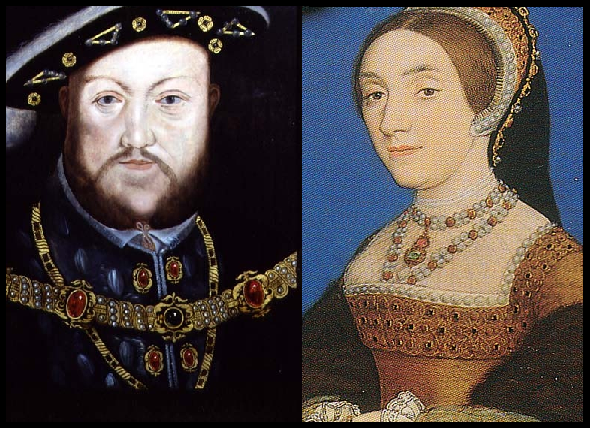
King Henry and his fifth consort Katherine Howard

After the disastrous marriage of the King and Katherine Howard, the King was no longer looking for flighty relationships that stirred his passions. Henry had learned a tough lesson with Katherine Howard and was determined more than ever to find an intelligent, honest, loving, and devoted wife. He wanted someone he could hold an actual conversation with; a companion. Another quality Henry looked for in a wife was someone who could be a perfect companion to his eldest daughter, now styled The Lady Mary Tudor. After years of tension and multiple step-mothers whom Mary had mixed relations with, Henry must have felt he owed her that much.
After the death of Katherine Howard, Mary enjoyed far greater favor from her father and presided over court feasts as if she was queen herself. For New Year’s, Mary was showered with lavish gifts from her father. Within the presents were ‘two rubies of inestimable value.’ However, it was during this time that Mary suffered from chronic ill-health linked to anxiety, depression, and irregular menstruation. These health issues along with others would continue until Mary’s death. Thankfully by Christmas 1542, Mary had recovered and was summoned to court for the great Christmas festivities. Her quarters at Hampton court were worked on day and night to prepare for her arrival. The Imperial Ambassador, Chapuys, reported that the King ‘spoke to her in the most gracious and amiable words that a father could address to his daughter.’
Katherine Parr would marry twice before her marriage to King Henry in 1543. Her first marriage would be to her distant relative, Sir Edward Borough in 1529; which ended in about 1533 with his death. Her next marriage was to her father’s second cousin, Sir John Neville, 3rd Baron Latimer of Snape in 1534. With this marriage, Katherine became Lady Latimer. She was the first of her family to marry into peerage since her great-aunt, Maud Parr, Lady Dacre. With this marriage also came two step-children from Latimer’s first marriage to Dorothy De Vere. For about a decade, Katherine would experience the joy of being a step-mother. It was during this time that she became extremely close to her step-daughter, Margaret, which was somewhat of a pre-cursor to Katherine’s future relationship with the Lady Elizabeth, Henry’s youngest daughter. By the time Lord Latimer had died, Katherine was left a rich widow and was asked by Latimer to look after his daughter until the age of her maturity. It has been said that Katherine became a lady in the household of Lady Mary during this time, but biographers Susan James and Linda Porter have different opinions. It was thought by James that because Mary remembered the kindness Katherine’s mother had shown her mother that she gladly took Katherine as one of her ladies. Porter disputes this saying it would have been below Katherine’s standing as the widow of a peer who had her own establishments and a large settlement from her husband’s death. Truth be told, many courtiers and wives of peers were ladies to royals in Tudor England. It was a wonderful opportunity, kept them busy, and at the center of court. Katherine’s sister, Anne, would serve all of Henry’s wives, including her. After the death of Lord Latimer, Katherine began a fling with the brother of former queen Jane Seymour, Sir Thomas Seymour. The two were most likely planning to be wed, but before the two could marry, Katherine would first catch the attention of King who quickly proposed.

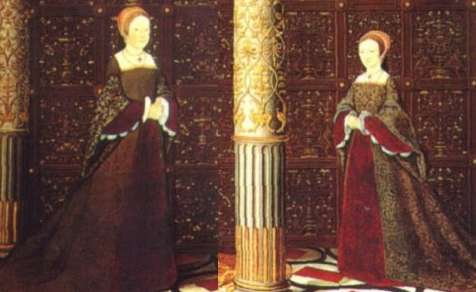
Lady Mary and Lady Elizabeth from the “Succession Portrait” which was commissioned while Katherine Parr was queen.

In spring before the wedding, Katherine would appear at court with both Lady Mary and Lady Elizabeth. The fact that the two had not been together earlier that spring and were now with Katherine and her sister at court was seen as significant. Katherine believed that a good relationship with the two was fundamental to her strategy. Once married, and confident as queen, she could develop the relationships further.

Katherine would go on to marry the King in July of that year. Within those who were present were the Ladies Mary and Elizabeth. With the marriage came three new step-children for Katherine to take care of. Instead of seeing it as her “duty”, she saw it as an opportunity as she had still not produced any children of her own.

Sources:

  • Susan James. Catherine Parr: Henry VIII’s Last Love, The History Press, 2009.
  • Linda Porter. Katherine the queen: The Remarkable Life of Katherine Parr, the Last Wife of Henry VIII, MacMillan, 2010.
  • Linda Porter. The Myth of “Bloody Mary”: A Biography of Queen Mary I of England, St. Martin Griffins, 2010.
  • Anna Whitelock. Mary Tudor: England’s First Queen, Bloomsbury Publishing PLC, 2009.

Review of “The Royals” by Leslie Carroll

This book was a major disappointment and had major flaws in The Tudors section. First off, Henry VII was basically skipped over, no picture — the Tudors section starts with the portrait of Elizabeth I. According to the author “Henry Tudor’s blood was barely blue being five generations from Edward III” and “Henry was not born to the crown” — the latter being true, but to skip such an important figure along with Elizabeth of York is unforgivable.

Image thought by some, uh who, to be Anne Boleyn

Another major error was the portrait of Anne Boleyn; the style of the clothes and hair is from the late 16th/early 17th century – Anne would not have worn the ‘Elizabethan collar’. It may be a modern interpretation, but to use it as the sole portrait of Anne is rather odd.

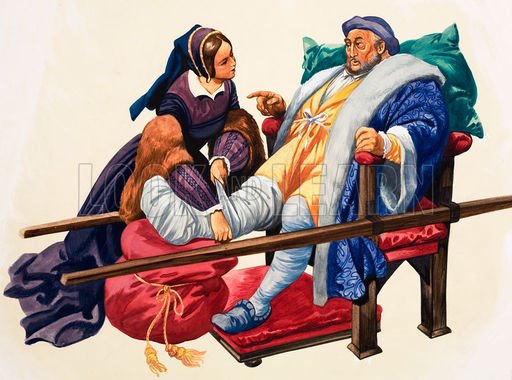
Queen Katherine nurses her husband the King.

I also disliked how Katherine Parr’s section was full of errors and made her look like a harlot after the death of Henry VIII.

First off, there is no proof that Katherine was romantically involved [meaning sleeping with] with Thomas Seymour before the death of Lord Latimer or before the marriage of Henry and Katherine. Also, Thomas was sent away on business for the king, he didn’t make himself scarce.

The statement that four out of six wives were redheads is incorrect.

Historians are not 100% sure that Katherine was part of Lady Mary’s household.

The discussion of theology became a problem when Katherine started preaching to the King — after the whole scandal they continued talking about religion, but it was more toned down.

I’m not sure where the info is coming from that Henry told his physician that he wanted to “get rid of” Katherine Parr. There were rumors, set up most likely by the Catholics at court, which also included Henry wanting to marry the Dowager Duchess of Suffolk, Queen Katherine’s friend, who was even more prone to speak her mind when it came to matters of religion. There was no doctor involved in telling Queen Katherine about Henry’s intentions. A warrant was drawn up which was taken to Queen Katherine. She went to King Henry arguing that she was “but a woman” and that she was merely trying to distract the King from his infirmities.

Katherine pushed Henry’s wheelchair in the gardens?? The correct info has the two sitting in the garden when they were approached by Henry’s guards.
The Queen Dowager, Katherine, waited a few MONTHS, not weeks, before re-entering into her “relationship” with Seymour. I don’t think Katherine would have been that disrespectful, but just to be clear — the King gave her the go ahead to re-marry who she wanted. They were thought to be married in the spring months, possibly May of that year.

Where the statement that Katherine was acting like a “trollop” came from, I would love to know. Seymour asked the King for permission to marry the Dowager Queen. Yes, Lady Mary was upset and thought Catherine should have waited a tad longer but in the two biographies I’ve read on Mary (Anna Whitelock and Linda Porter) she never once called Katherine a trollop. In fact, Mary disliked Seymour more than anything as he pestered her about matters of state. Mary eventually came to forgive Katherine — Katherine received a letter from Mary while she was pregnant and Katherine named the baby girl after her step-daughter.

The stories of Seymour and Elizabeth are quite interesting and many theories have been put out there, but what actually happened in that household is another story as Elizabeth’s lady, Kat Ashley, was the main contributor to the testimony. Kat herself encouraged Elizabeth to flirt with Seymour and had a crush on him herself. “But the doctor’s dirty hands caused an infection”… there are many contributing factors to the fever that caused Katherine to die, much like the death of Jane Seymour. And the last sentence of Lady Jane being raised as a surrogate daughter — she was a ward. This book and this chapter reads more like a romance novel then an actual history book.

The author put an actual biography of Katherine Parr (Susan James) within her chapter full of sources that is actually well respected; perhaps the author should have actually read the book before “quoting” it.

The chapter on The Tudors reads more like a romance novel than a history book; that might explain why the author chose the “romanticized” portrait of Anne Boleyn. No citations are given as to where the info comes from and major mistakes were made. The only good thing about the book is the reproduction of one of Anne Boleyn’s letters and the letter from Katherine Howard to Master Culpepper.

One positive note the author made about Katherine Parr:

“Perhaps the most mature and educated of Henry’s wives.”

So why did she paint Katherine as such a “trollop”?? You’ve got me! Other then that, don’t waste your money. Historically inaccurate indeed!

King Henry VIII: the account of marriage to wife no. 6 to Kateryn Parr

Letters and Papers, Foreign and Domestic, Henry VIII, Volume 18 Part 1: January-July 1543

The wedding of Henry and Kateryn, Dowager Baroness Latimer as recorded
Written by Meghan McGath

Notarial instrument witnessing that, on 12 July 1543, 35 Hen. VIII., in an upper oratory called “the Quynes Pryevey closet” within the honor of Hampton Court, Westm. dioc., in presence of the noble and gentle persons named at the foot of this instrument and of me, Ric. Watkins, the King’s prothonotary, the King and lady Katharine Latymer alias Parr being met there for the purpose of solemnising matrimony between them, Stephen bp. of Winchester proclaimed in English (speech given in Latin) that they were met to join in marriage the said King and Lady Katharine, and if anyone knew any impediment thereto he should declare it. The licence for the marriage without publication of banns, sealed by Thos. abp. of Canterbury and dated 10 July 1543, being then brought in, and none opposing but all applauding the marriage, the said bp. of Winchester put the questions (recited) to which the King, hilari vultu, replied “Yea” and the lady Katharine also replied that it was her wish; and then the King taking her right hand, repeated after the Bishop the words, “I, Henry, take thee, Katharine, to my wedded wife, to have and to hold from this day forward, for better for worse, for richer for poorer, in sickness and in health, till death us depart, and thereto I plight thee my troth.” Then, releasing and again clasping hands, the lady Katharine likewise said “I, Katharine, take thee Henry to my wedded husband, to have and to hold from this day forward, for better for worse, for richer for poorer, in sickness and in health, to be bonayr and buxome in bed and at board, till death us depart, and thereto I plight unto thee my troth.” The putting on of the wedding ring and proffer of gold and silver (described) followed; and the Bishop, after prayer, pronounced a benediction. The King then commanded the prothonotary to make a public instrument of the premises. Present : John lord Russell, K.G., keeper of the Privy Seal, Sir Ant. Browne, K.G., captain of the King’s pensioners, and Thos. Henage, Edw. Seymer, Hen. Knyvet, Ric. Long, Thos. Darcy, Edw. Beynton, and Thos. Speke, knights, and Ant. Denny and Wm. Herbert, esquires, also the ladies Mary and Elizabeth the King’s children, Margaret Douglas his niece, Katharine duchess of Suffolk, Anne countess of Hertford, and Joan lady Dudley, and Anne Herbert.
Notarial attestation by Ric. Watkins, Ll. B., King’s prothonotary.
Large parchment.

The marriage of Henry VIII and Kateryn Parr ©Meghan McGath (2009)
Source: 

James Gairdner and R. H. Brodie (editors). “Henry VIII: July 1543, 11-15.” Letters and Papers, Foreign and Domestic, Henry VIII, Volume 18 Part 1: January-July 1543 (1901): 480-489. British History Online. Web. 10 January 2012. <http://www.british-history.ac.uk/report.aspx?compid=76754&strquery=queen+catherine&gt;

Review of The Broadview Anthology of Sixteenth-Century Poetry and Prose: Queen Katherine Parr

The Broadview Anthology of Sixteenth-Century Poetry and Prose (Broadview Anthologies of English Literature)

The Broadview Anthology of Sixteenth-Century Poetry and Prose (Broadview Anthologies of English Literature)

Review of the Chapter on Queen Katherine Parr within The Broadview Anthology of Sixteenth-Century Poetry and Prose by Sandra Bell, Marie Loughlin, and Patricia Brace

First off, the fact that this book was published in 2011 gives them no excuse for the authors to get major facts incorrect in the chapter on Queen Katherine Parr; to top it off they use Susan James as a source! After all the recent biographies and research done on her there is absolutely no excuse for it. Katherine did not marry at age 13 to the Lord Borough of Gainsborough. She married in 1529 the grandson of the 2nd Lord Borough of Gainsborough who had not even been called to Parliament as such since he was declared insane. The two shared the same name and the younger Edward would have inherited the barony after his father Thomas’s death, but he died in 1533 before his father. Proof of who she really married is stated in her mother’s will.

What is interesting about the chapter is that the authors state that “Parr” became a lady-in-waiting to Katherine of Aragon after the death of her first husband and that she was on her way to marry her second husband when the King married Anne Boleyn in 1533. FACT: In 1533, Katherine had just been widowed and was in no hurry to re-marry. She was never lady-in-waiting to any of Henry’s other wives. Her mother and her sister were the only ones to attend upon one of the wives; her sister served all six. Maud Parr, her mother, attended Queen Katherine of Aragon until her own death in 1531.

Moving on, Lord Latimer was not the “head” of the Uprising of the North. In fact, he himself was captured by the rebels while Katherine and her step-children were held hostage. The fact that Katherine changed her views after she married King Henry is simply untrue. There is no set date as to when Parr may have converted to Protestant views, but it is thought that it might have happened after the rise of Anne Boleyn or during the time that she was held hostage. As for the undertaking of translating Erasmus, Katherine Parr encouraged the Lady Mary Tudor to translate it and when she became too sick to complete it, it was finished by Mallet. Mary and Katherine got along and were good friends through out her reign. It is known to be the happiest time of Mary’s life.

I love how the author quotes using Susan James’s as a source for her biographical information when it completely contradicts what she actually wrote in her book. Apparently these authors did not read the book carefully enough.

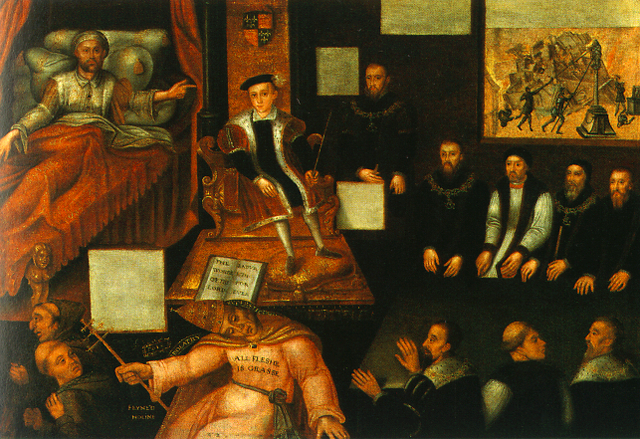
The Dowager Queen and Henry VIII’s Last Will

The Vultures are circling as Henry lies on his death bed. He is surrounded by his son, Edward, as the king prepares him to become the next Tudor king.

In 1544, it was apparent that Queen Katherine Parr had been acquainted with the terms of King Henry VIII’s will for it named Katherine regent for the young Prince Edward if he were to die while in France. The fact that Katherine had been named possible regent in the event of the sudden death of the king makes one wonder what the will of King Henry looked like when he died on 28 January 1547. For three days after the King’s death, the council convened while the outside world was unaware of what had happened. Even Henry’s other children were not told. This extremely disturbed the Lady Mary who at one time had been named Princess and heiress to her father’s throne.

After the death of King Henry, Mary was not told of his death for several days. Edward’s minority council took elaborate precautions to ensure all was in place before they made an official announcement. This action made Mary extremely angry, but she could do nothing about it. Yet how ever wary Edward’s councillors were, nothing could alter the fact that Mary was in her own right heiress to the throne. For the time being, Mary would stay with the now Dowager Queen, Katherine, who was again for the third time, a widow. At the time of her father’s death Mary was aged 31. Mary’s reaction to her father’s death was never recorded as she never publicly mourned his death.  She was apparently more irritated at the fact that no one had told her that her father had died until days later. Most likely her reaction to the news was mixed grief and some kind of relief.

The "Succession Portrait", c. 1544, artist, after Holbein.Hampton Court Palace. © TudorQueen6 The portrait was done while Katherine Parr was queen, features Prince Edward's mother, Queen Jane Seymour.

The “Succession Portrait”, c. 1544, artist, after Holbein.
Hampton Court Palace.  The portrait which was done while Katherine Parr was queen, features Prince Edward’s mother, Queen Jane Seymour. © TudorQueen6

As for the Will of Henry VIII, it is quite possible that during those three days the men of the council were convening on how to alter the will to exclude the now Queen Dowager from any further power or influence over the boy King Edward. These conspiracy theories have been examined within Susan James’s biography on Queen Katherine. One theory is that Henry’s will was originally set up to pass the kingdom to his heir and that the regency council was to be led by the Earl of Hertford. Another version has Sir Anthony Denny, Sir William Paget, and Sir William Herbert (the Queen’s brother-in-law) rigging the whole will to give the Earl full control and some even go as far to name them as the masterminds of the fall of Gardiner and the execution of the Earl of Surrey. This theory of course can be refuted as the king was in control of his kingdom up until the last few hours of his life.

Although the king’s abilities had been diminished it is true that Sir Anthony Denny and Sir William Paget had control of those who accessed the privy chamber but not against the king’s will. In December 1546, the Privy Council meetings no longer took place at Westminster and were now being held at Hertford’s Somerset House. So if the queen had been summoned to the king at some point, the command would have been obeyed, but it is not for certain if the queen gave a command to see him that it would have been honored. It is not even sure whether or not the king would have been informed if she had demanded to see him.

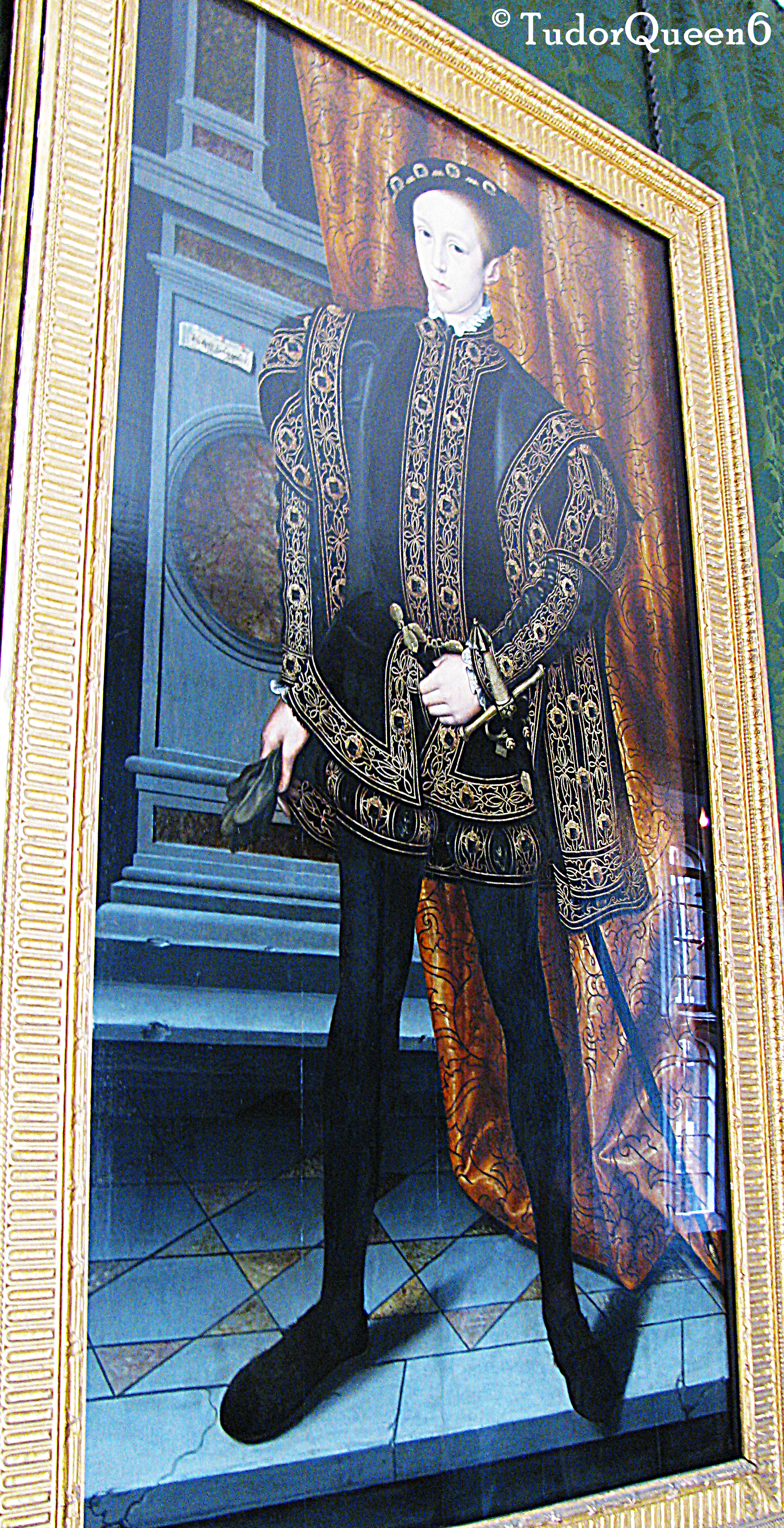
Hampton Court Palace -- King Edward VI

King Edward VI, c.1550, attributed to William Scrots. Hampton Court Palace. artist, after Holbein. Hampton Court Palace. © TudorQueen6.

Another theory to support that the will had been tampered with is the final will that was produced did not have a signature, but was stamped and was registered a month later. So in that is a possibility that the will had been changed in support of the Earl of Hertford’s wishes. It seems obvious to readers that the men of the council, including Hertford, didn’t want to be dependent upon a woman’s approval. The actions of King Henry and his mission to produce a male heir instead of depending upon his only daughter from his first marriage shows that men were still not willing to depend upon or even accept a woman governor of the realm. I tend to find this odd seeing how in other countries, including that of their neighbor Scotland, consorts had been given the position of Regent. In fact, Henry’s sister Margaret, for a time had been Regent in Scotland and even Henry’s first wife, Katherine of Aragon acted as Regent for a longer period then Queen Katherine Parr had. Still, the feeling of having a woman in a position of power was not accepted and in some cases like Katherine of Aragon’s sister, Juana I of Castile, they were driven out by other men. Juana was driven out by the men in her life; her husband, father, and eventually her son who took over as the Holy Roman Emperor.

It is also thought that perhaps Katherine’s moral sense might have been an impediment as to the acquisition of Crown lands to which the council helped themselves to after they had been established. Henry’s second wife and queen, Anne Boleyn, had at one time felt the same way during the dissolution of the monasteries. Her opinions and interactions that condemned the way the properties and money were being dispersed had some doing in her downfall. Katherine completely disapproved of the way the lands were dispersed and her opinion was recorded as such. In 1549, Sir Robert Trywhitt testified that Katherine had said, “Mr. Trywhit, you will see the king, when he cometh to his full age, he will call his lands again, as fast as they be now given from him.”

The enraged presence of a mother defending her son’s inheritance from the depredations of his omnivorous council would have been the last thing the lord protector or the council wanted.”

Yet despite all of this, the one responsible may in fact have been King Henry himself. Henry’s opinion of having women rule was and is more then obvious due to his split with Katherine of Aragon and marriage to Anne Boleyn. Henry did not believe that a woman could rule alone. It was one thing to use Katherine as an unofficial councillor during her lifetime, but to leave her to run the kingdom while his son was a minor was a completely different thing. He didn’t want a wife to tell him what to do in pretty much anything so it is understandable as to why he sent Katherine away at the end of his life. He obviously didn’t want to deal with her suggestions on how to dispose of his crown. That he did not inform Katherine of his decision left her to suppose in a way that she was to be head of the regency council upon his death. Henry left Katherine this bitter gift after all that she had done as queen, including enduring his constant immortalizing of his “true wife”, Jane Seymour. He did this not only in his painting of the royal family but in his request to be buried next to her upon his death.

The fact that Henry sent all the women in his life away a month before his death may have also influenced him in his final decisions. In not having them around he wouldn’t have been prone to lamentations and fuss made by the women who might have been brought in to be included in the rule of the kingdom after his death. James states that Katherine’s preference to be near Henry during the last month of his life may have partly been due to her political motivations. She was very protective of the royal children and that was adamant from day one.

In the early hours of the 28th of January, King Henry VIII died. For three days court continued on schedule. Even the royal dishes were escorted into the King’s chambers accompanied by the sounds of trumpets to make it look like the King was still alive. During this time, the top members to be part of the council lobbied and devised for position and the final settlement. Sir William Paget was the last to hear the devised plan from the king himself. Within the three days it would come to pass that the Earl of Hertford would make himself Duke of Somerset and appoint himself as Lord Protector of the Realm which had not been Henry’s wishes according to his will or any other knowledge of those apparent.

Katherine's signature as Queen Regent.

Katherine’s signature as Queen Regent. (Cotton MSS Vesp. F III fol. 16. b)

The position of power and the door to the regency council was shut in the Queen Dowager’s face and once again, Katherine was left to mourn a dead husband. Despite the outcome of the situation, a piece of history may provide proof that she was to be head of the regent council as shortly after Henry’s death, Katherine signed two documents as “Kateryn the Quene-Regent, KP.”


Sources:

  • Susan James. Catherine Parr: Henry VIII’s Last Love, The History Press, US Edition, 2009. pg 356-59.
  • Linda Porter. The Myth of “Bloody Mary”: A Biography of Queen Mary I of England, St. Martin Griffins, 2010.
  • Anna Whitelock. Mary Tudor: England’s First Queen, Bloomsbury Publishing PLC, 2009.
© 28 January 2012
Meg McGath

Family of Queen Katherine: Sir Thomas Vaux, 2nd Baron Vaux of Harrowden

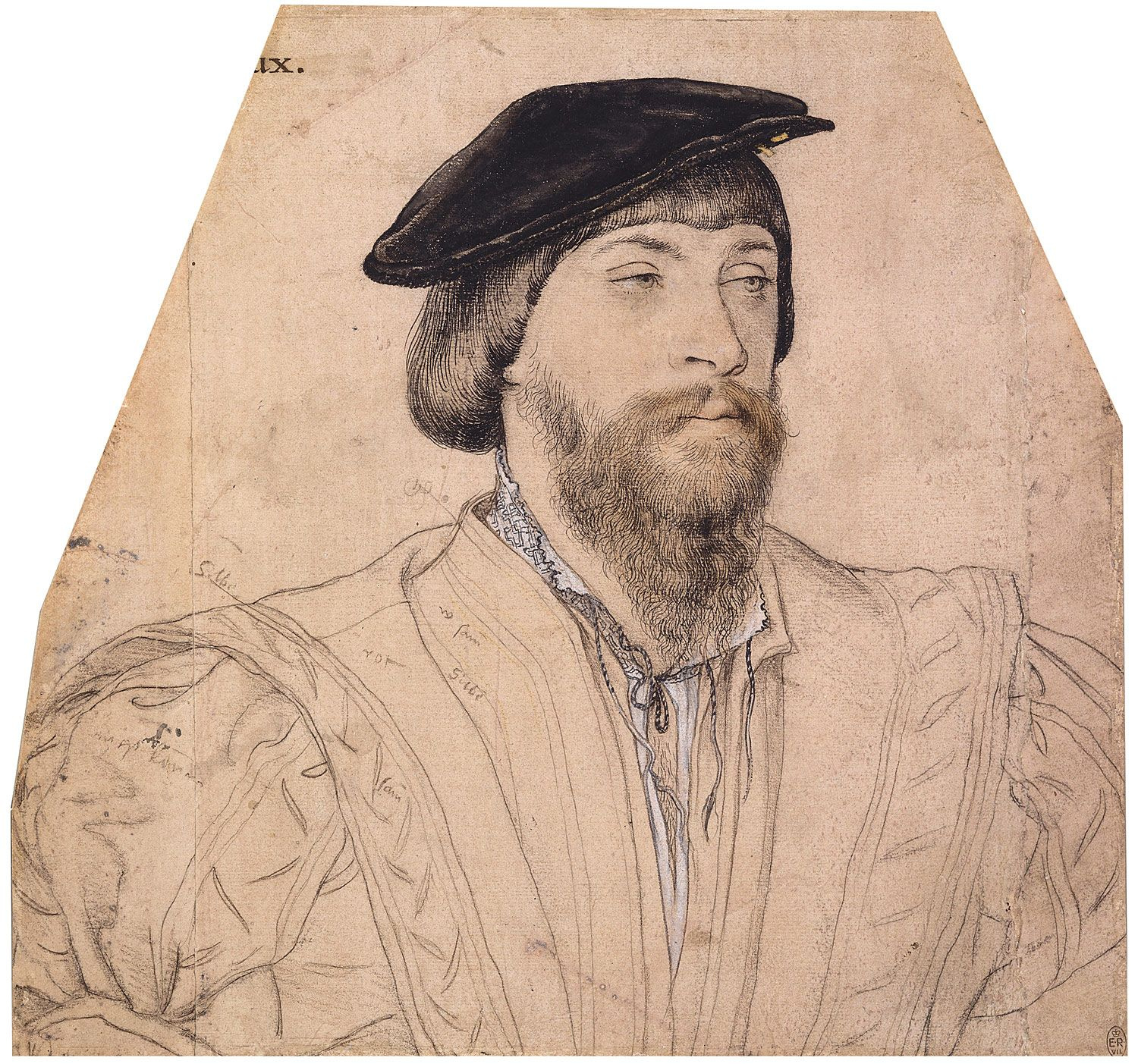
2nd Baron Vaux, sketch by Holbein.

2nd Baron Vaux, sketch by Holbein.

Sir Thomas Vaux, 2nd Baron Vaux of Harrowden K.B. (25 April 1509[1] – October 1556), an English poet, was the eldest son of Sir Nicholas Vaux, 1st Baron Vaux and his second wife, Lady Anne [Green] (born circa 1489), daughter of Sir Thomas Green, Lord of Greens Norton, and Joan Fogge [cousin to Edward IV’s consort Elizabeth], daughter of Sir John of Ashford.[2][3] Vaux was educated at Cambridge University.[4]  Vaux’s mother was the maternal aunt of queen consort Katherine Parr, while his wife, Elizabeth Cheney, was a paternal first cousin through her mother, Anne Parr.

Life
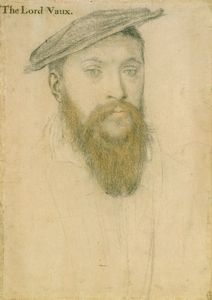
Lord Vaux by Holbein

Lord Vaux by Holbein

In 1527, Vaux accompanied Cardinal Wolsey on his embassy to France.

Vaux privately disapproved of Henry VIII’s divorce from his first queen consort, Katherine of Aragon.[5]

It is interesting to note the family circle that he was in. The Parrs and their extended family stuck by the queen and all had an opinion of Henry’s “Great Matter.” Vaux’s aunt, Lady Maud Parr, was a lady-in-waiting and good friend to Queen Katherine of Aragon. Lady Parr was given her own quarters at court to attend the queen and when she gave birth to a baby girl in 1512, it is thought that she named her after the queen who may have been her godmother. Lady Parr stayed with the queen until her household was divided; Parr died in 1531. Lord Vaux’s sister, Katherine, would marry the staunch Catholic Sir George Throckmorton; the outspoken courtier who dared to speak out against the king.

In 1531, Lord Vaux took his seat in the House of Lords. In 1532, he attended Henry VIII to Calais and Boulogne and was made Knight of the Bath at the coronation of Anne Boleyn on 1 June 1533. He was Lieutenant Governor of Jersey in 1536. Schism from Rome caused him to sell his offices; his position as Governor was sold to Sir Edward Seymour [later Lord Protector and Duke of Somerset]. He did not attend Parliament between 1534 and 1554.[5] Instead, Vaux retired to his country seat until the accession of Mary I, when he returned to London for her coronation.[5] Vaux was a friend of other court poets such as Sir Thomas Wyatt and Henry Howard, Earl of Surrey.[5]

Family and issue
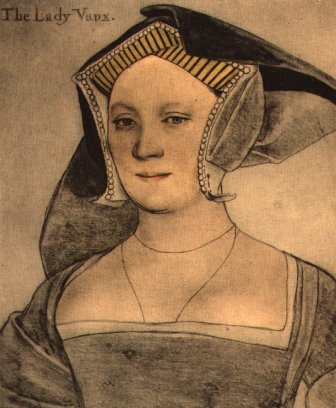
Elizabeth_Cheney_Lady_Vaux

Lady Elizabeth Vaux [born Cheney] was cousin to Queen Katherine by her mother, Lady Anne [Parr].

Vaux’s father, Nicholas, had been previously married to Hon. Elizabeth FitzHugh, daughter of Henry FitzHugh, 5th Lord FitzHugh of Ravensworth Castle and Lady Alice Neville, as her second husband.[3] By Elizabeth’s first marriage to Lord William Parr, she was the mother of Anne Parr, the mother of Thomas’ wife, Elizabeth Cheney, as well as Sir Thomas Parr, father to Queen Katherine.[3]

From the marriage of Nicholas Vaux and the dowager Lady Parr, the 2nd Lord Vaux had three older paternal half-sisters; Katherine, Lady Throckmorton; Alice, Lady Sapcote; and Anne, Lady Strange.[3] After the death of Elizabeth in about 1507, the 1st Lord Vaux married secondly, in about 1508, to Anne Green, the older sister of Maud Green, Lady Parr who had married Sir Thomas Parr; thus making the 2nd Lord Vaux a first cousin to queen Katherine. At the time of the marriage, Lord Vaux was aged c.47, she was aged c.18.

Sir Thomas had been contracted to marry Elizabeth Cheney, daughter and heir of Sir Thomas Cheney of Irtlingburgh and Anne Parr (aunt to Queen Katherine), since 6 May 1511 [he was aged 2].[3] Thomas married Elizabeth between 25 April 1523 and 10 November 1523.[3] They had three children.

  • Hon. William Vaux, 3rd Baron Vaux of Harrowden (born 1535), married firstly before 1557 to Elizabeth Beaumont, a distant cousin, by whom he had issue. In 1563, Vaux married to his second cousin, once removed, Mary Tresham, great-granddaughter of Sir William Parr, Baron Parr of Horton (uncle to Queen Katherine Parr) and had issue.
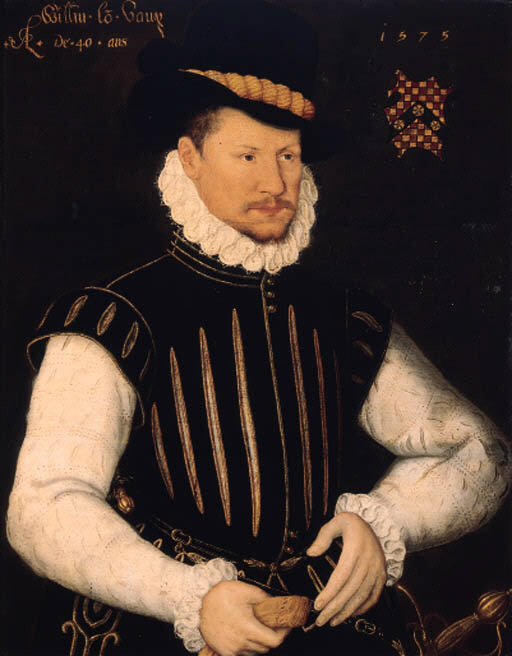
William, Lord Vaux of Harrowden (1535-1595), oil on panel 31 x 24½in. (78.8 x 62.2cm.). Inscribed

William, Lord Vaux of Harrowden (1535-1595), oil on panel 31 x 24½in. (78.8 x 62.2cm.). Inscribed “Willm. Lo. Vaux AE. ?de 40. ?ans 1575” 1575; Circle of Cornelius Ketel

  • Hon. Nicholas Vaux
  • Hon. Anne Vaux, married Reginald Bray of Stene, nephew of Edmund Braye, 1st Baron Braye; had issue.

Thomas Vaux died in October 1556.

Descendants

Among the many descendants of Thomas, Lord Vaux and his wife Elizabeth, Lady Vaux are:

  • Lady Diana Spencer, Princess of Wales and thus HRH Prince William, Duke of Cambridge and HRH Prince Henry of Wales.
  • Sarah, Duchess of York [by both parents], who was married to Prince Andrew, Duke of York and is mother to TRH Princess Beatrice and Princess Eugenie.
  • HRH Princess Alice [Montagu-Douglas-Scott], Duchess of Gloucester, who married HRH Prince Henry, 1st Duke of Gloucester [son of King George V and Queen Mary]. They were parents to HRH Prince Richard, 2nd Duke of Gloucester (b.1944).
  • Henry George Lascelles, 6th Earl of Harewood, husband to HRH Princess Mary, Princess Royal [only daughter of King George V and Queen Mary]. They had two sons including the 7th Earl of Harewood.

Art

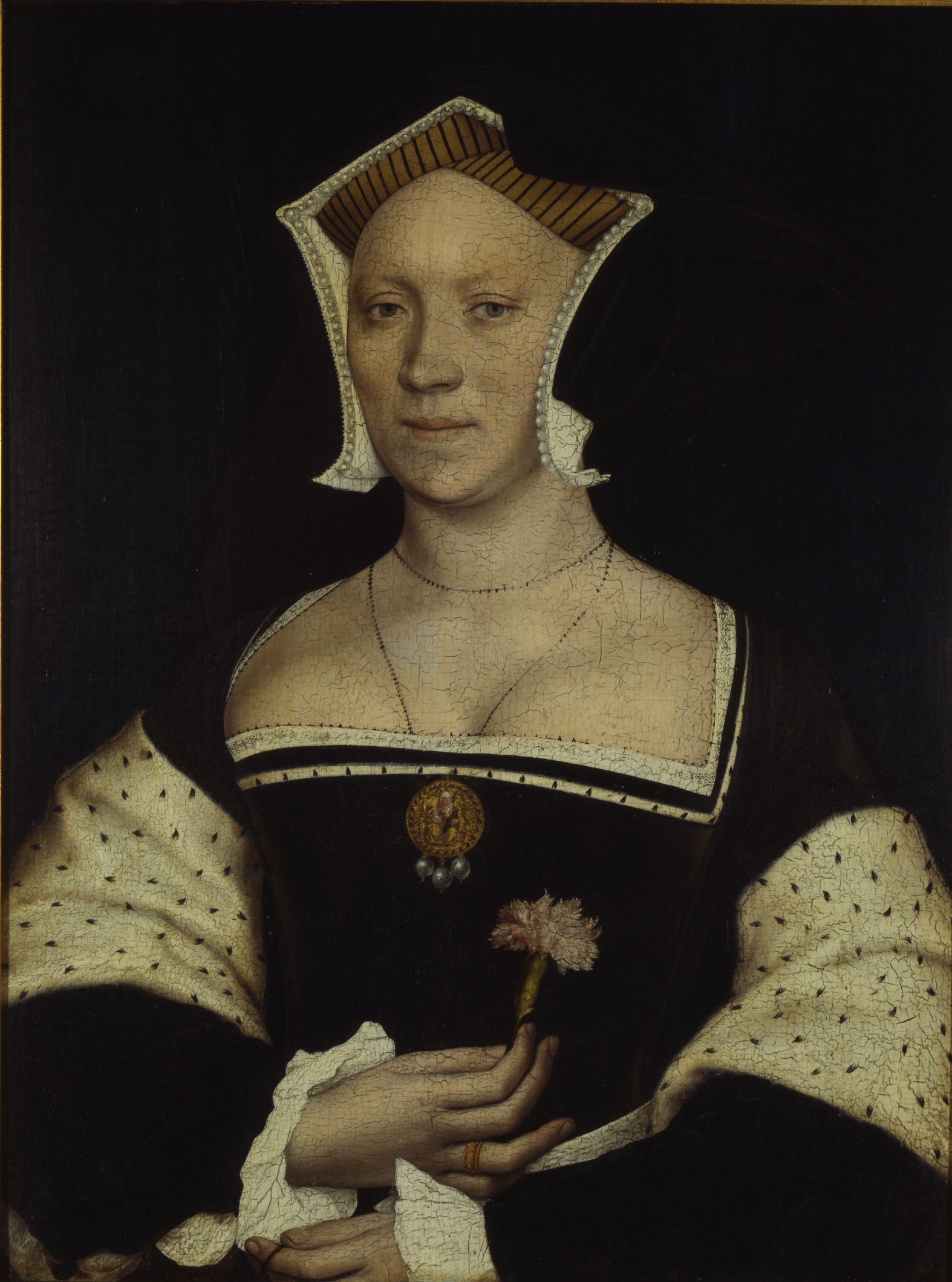
Sketches of Vaux and his wife by Holbein are at Windsor, and a finished portrait of Lady Vaux is at Hampton Court. Another hangs in Prague. More info: The OTHER Elizabeth Cheney
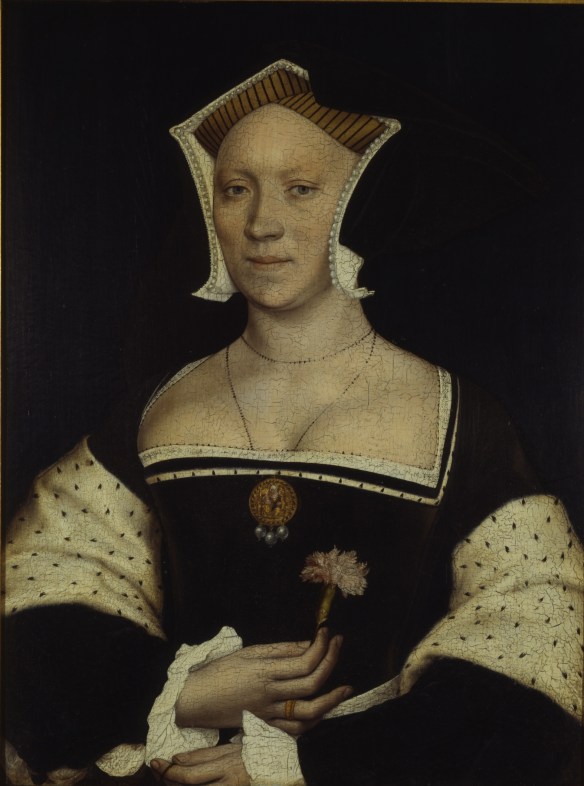
Elizabeth, Lady Vaux of Harrowden, wife to the 2nd Baron Vaux.

Elizabeth, Lady Vaux of Harrowden, wife to the 2nd Baron Vaux.

Elizabeth, Lady Vaux

Works

Two of his poems were included in the Songes and Sonettes of Surrey (Tottel’s Miscellany, published in 1557 (see 1557 in poetry). They are “The assault of Cupid upon the fort where the lover’s hart lay wounded, and how he was taken,” and the “Dittye … representinge the Image of Deathe,” which the grave-digger in Shakespeare’s Hamlet misquotes.[4]
Thirteen pieces in the Paradise of Dainty Devices, published in 1576 (see 1576 in poetry), are signed by him.[4] These are reprinted in Alexander Grosart’s Miscellanies of the Fuller Worthies Library (vol. iv, 1872).

Lord Vaux wrote during Queen Mary’s reign. The following lines by Vaux were first printed in The Paradise of Devices (1576).

OF A CONTENTED MIND
When all is done and said, in the end thus shall you find,
He most of all doth bathe in bliss that hath a quiet mind:
And, clear from worldly cares, to deem can be content
The sweetest time in all his life in thinking to be spent.
The body subject is to fickle Fortune’s power,
And to a million of mishaps is casual every hour:
And Death in time doth change it to a clod of clay:
Whenas the mind, which is divine, runs never to decay.
Companion none is like unto the mind alone; [or none]
For many have been harmed by speech, through thinking, few,
Fear oftentimes restraincth words, but makes not thought cease; [peace]
And he speaks best, that hath the skill when for to hold his
Our wealth leaves us at death; our kinsmen at the grave;
But virtues of the mind unto the heavens with us we have.
Wherefore, for virtue’s sake, I can bo well content,
The sweetest time of all my life to deem in thinking spent.

The introduction of a rhyme at the cesura or pause of the longer line in this measure breaks of its couplets into a four lined stanza. We have example of this by the same poet in what a MS copy describes as, “a dytte or sonet made by Lord Vaux in the time of the noble quene Marye representing the image of Death.” The first, third, and eighth stanzas of this poem, with a line from the last but one transferred to the third, were chosen by Shakespeare for the grave-digger’s song in fifth act of Hamlet; the clown giving, of course, his rudely remembered version of them [see Hamlet, act five].

So Shakespeare’s clown quoted it. This is the poem itself as written in Queen Mary’s reign by Lord Vaux:
THE IMAGE OF DEATH
I loathe that I did love,
In youth that I thought sweet,
As time requires for my behove
Methinks they are not meet.
My lusts they do me leave,
My fancies all arc fled,
And tract of time begins to weave
Grey hairs upon my head.
For Age with stealing steps
Hath clawed me with his crutch,
And lusty Life away she leaps
As there had been none such.
My Muse doth not delight
Me as she did before;
My hand and pen arc not in plight,
As they have been of yore.
For Reason me denies
This youthly idle rhyme;
And day by day to me she cries,
“Leave off these toys in time.”
The wrinkles in my brow,
The furrows in my face,
Say, limping Age will lodge him now.
Where Youth must give him place.
The harbinger of Death,
To mo I see him ride :
The cough, the cold, the gasping breath
Doth bid mo to provide.
A pickaxe and a spade,
And eke a shrouding sheet,
A house of clay for to be made
For such a guest most meet.
Methinks I hear the clerk,
That knolls the careful knell,
And bids mo leave my woeful work,
Ero Nature me compel.
My keepers knit the knot
That Youth did laugh to scorn,
Of me that clean shall be forgot,
As I had not been born.
Thus must I Youth give up,
Whose badge I long did wear;
To them I yield the wanton cup
That better may it bear.
Lo, here the bared skull,
By whose bald sign I know,
That stooping Age away shall pull
Which youthful years did sow.
For Beauty with her band
These crooked cares hath wrought,
And shipped me into the land
From whence I first was brought.
And ye that bide behind,
Have ye none other trust :
As ye of clay were cast by kind,
So shall ye waste to dust.
From: Cassell’s library of English Literature, selected, ed. and arranged by H. Morley
By Cassell, ltd.

References

  1. George Edward Cokayne. The Complete Peerage of England, Scotland, Ireland, Great Britain, and the United Kingdom, Vol. XII/2, p. 219-221.
  2. Unknown author, David Faris. Plantagenet Ancestry of 17th Century Colonists, p. 39.
  3. Douglas Richardson, Plantagenet Ancestry, pg 326, 561-562, 566.
  4. Dominic Head. The Cambridge Guide To Literature In English, Cambridge University Press, Jan 26, 2006. pg 1151.
  5. John Saward, John Morrill, Michael Tomko. Firmly I Believe and Truly: The Spiritual Tradition of Catholic England, Oxford University Press, Nov 15, 2011. pg 92.
Researched and written by Meg McGath

© 26 March 2012

Belinda Durrant Exhibit at Sudeley Castle: Where’s Mary?

Belinda Durrant has three new works on display at Sudeley Castle as part of their exhibition celebrating the quincentenary of the birth of Katherine Parr. She was gracious enough to share them with us and to even write what inspired her to make these works. 

Sudeley Exhibit by Belinda Durrant ©

“It [the exhibit] was made as a direct response to visiting the castle. I am no history scholar…just couldn’t understand why there was so little info about the poor little child at the Castle and decided I was going to find out myself….and promptly discovered that there was nothing much more to find, which just made it all worse, somehow.

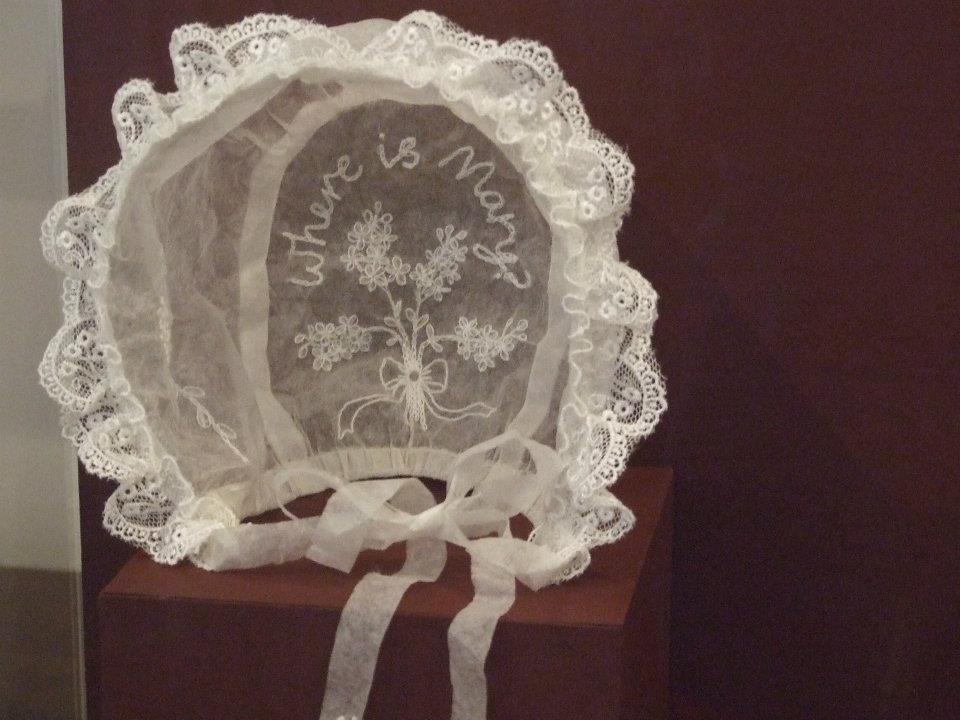
Katherine Parr was the 6th wife of Henry VIII. After his death in 1547 she married Thomas Seymour and moved to his country residence, Sudeley Castle in 1548 where she gave birth to a daughter, Mary on August 30th of that year. She died from puerperal (childbed) fever just seven days later and is buried in St Mary’s Church within the castle grounds. The site of baby clothing often provokes unexplained sentimental reactions, particularly from women. Freud tells us that this is fetish. Such clothing reminds us of the child itself and is embraced as a substitute for the ‘lost’ child. Freud means ‘lost’ in terms of the fleeting period of babyhood, but in this case, Lady Mary Seymour was apparently quite literally ‘lost’.

We are told that Mary became an orphan at just a few months old when her father was executed for treason and that she was sent to live with Katherine Willoughby, the Duchess of Suffolk. I have been able to find out very little else. It seems all record of her disappears after August 29 1550, the eve of her second birthday.

The three works I have displayed in the Castle exhibition centre, ‘Where is Mary? Bonnet, Mittens, Bib’ were made as a direct response to a visit I made to the castle in July 2011. The work is not about embroidery and stitch.

It is about the ACTS of embroidering and stitching; the almost ritualistic time, care and love which goes into the making of those very special first clothes which celebrate the arrival of a new child.

Bonnet which reads “Where is Mary” by Belinda Durrant, picture by Sudeley Castle.
 © 13 April 2012