Lady Jane Grey Revisited: The Jersey Portrait & Katherine Parr
Reply


Written by Meg McGath
Lady Anne Herbert was the daughter of Sir William Herbert, 1st Earl of Pembroke & his first wife, Anne Parr. As such, she was the niece of Queen Kateryn Parr. In 1563, at Baynard’s Castle, Lady Anne married Sir Francis, Lord Talbot (d.1582) in a double marriage between the two children of the 6th Earl of Shrewsbury and the two children of the 1st Earl of Pembroke. Lady Talbot’s brother, Henry, the future 2nd Earl of Pembroke, married Lady Catherine Talbot. Lord Talbot and Lady Catherine were child of Sir George Talbot, 6th Earl of Shrewsbury and his first wife, Lady Gertrude Manners, daughter of Sir Thomas Manner, 1st Earl of Rutland and his second wife, Eleanor Paston. In addition to the double marriage, Lord Talbot’s great-aunt, Lady Anne Talbot, had married secondly to Lady Anne Herbert’s father, the 1st Earl of Pembroke (d.1570) after the death of his first wife, Anne Parr, in 1552. This may have been the reason for the double marriage.
In her letter, Lady Talbot talks about how her sister, Lady Catherine, Countess of Pembroke, was frequently visited by Queen Elizabeth I at Baynard’s Castle. The Queen was fond of her. By 1575, Lady Catherine had become gravely ill and developed a fatal illness. The Queen even gave the Pembroke’s a ship to even travel to the continent in search of a cure. She returned to England without success by September 1575 and died on 24 April 1576. They had no issue.
Lady Anne Talbot writes to her husband’s stepmother, Bess of Hardwick, the Countess of Shrewsbury.
To the ryght honorable and my assured good lady, and mouther the Countes of Shrowsbery:
Good madam, acordynge to my dewty, I would haue wrytene oftener, yf I could haue learned, any newes worthey the wryrtynge, but my comeynge to the court, Is so selldome, as I knowe your Ladyshype, doth here from thensse, by othersse, a great dell more, then I can hereof, yet I truste your Ladyship wyll geue me leue, to remember my dewtye, In wrytynge, after my olde acoustemed manner. whych I wyll not slake god wyllynge, though my matter be never so small, yet my dewtyfull good wyll I hope your Ladyship wyll exepte, In as good part, as I meane yt, yf I could haue sent, any good newes of my syster of Penbrokes good delyuery, your Ladyship should haue hard of yt or nowe, but I fear yt wyll not fall out so well as I could wyshe yt had and for thys tyme, I humbly take my leue, besycheing, god to send your Ladyship your hartes desyre, From Eareth the xxjxth of Maye:
your Ladyship’s assured louyng daughter to comande:
Anne Talbott

From: Anne Talbot (Earith, Huntingtonshire);
To: Bess of Hardwick;
Date: 29 May [1575]
Summary: Anne Talbot (née Herbert) writes to Bess (countess of Shrewsbury) that she has
little news to report due to her infrequent visits to court. She promises to write ‘after my old
accustomed manner’ and expresses fears that ‘my sister of Pembroke’s good delivery [. . .] will
not fall out so well as I could wish’.
Archive: Folger Shakespeare Library, Cavendish-Talbot MSS, X.d.428 (122)
Delivery status: to Bess, sent
Letter features: Seal intact – no. Ribbon/floss – no. Letter packet – accordion
Hands: Anne Talbot | archivist |
Version: 1.0
Further information on copyright and citation can be found at:- (URL: http://
http://www.bessofhardwick.org/background.jsp?id=171) https://www.bessofhardwick.org/letter.jsp?letter=93
© 2024 Meg McGath. All research and original commentary belong to the author.


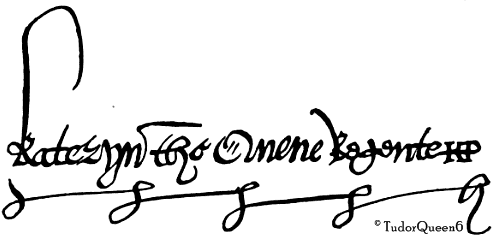
I love how much people dismiss Queen Kateryn Parr. There may be evidence that she WAS supposed to be Regent for Edward VI. See her signature AFTER Henry died.

She was apparently signing as “Kateryn, the quene regente KP”. The theory goes that she was indeed made Regent for her stepson, King Edward VI. Which would make sense with the use of her signature. It is believed that Edward Seymour, Duke of Somerset, Kateryn’s brother the Marquess of Northampton, her brother-in-law the Earl of Pembroke and the council ousted her and rewrote the will. She would have made a wonderful Queen Regent. She proved she was capable of being Regent while Henry went to war with France. Perhaps she would have lived longer and prevented the succession from being rewritten. She gets credit for the placement of Princesses Mary & Elizabeth back into the line of succession behind their brother in 1545. That succession act seems to have overwritten or they disregarded King Edward’s will and supported the actual heir to the throne, Mary. Mary WAS the rightful heir. Jane was further down the approved line of succession. Why would you accept someone below the status of the actual daughters of King Edward’s father, Henry VIII? Kateryn Parr’s brother and brother in law were again involved in matters of the state and actually pulled off putting Lady Jane Grey on the throne for 9 days! Jane somehow outranked her own mother who was STILL alive and technically would have been the next heiress to the throne after Princesses Mary & Elizabeth. I never understood that. The Protestants feared the Catholic “Bloody Mary” (her nickname was started as Protestant propaganda, the pro Queen Elizabeth movement, lol) would try to return the country to the Pope and Catholicism. Mary was deeply religious. Kateryn Parr and Mary got on despite differences in matters like religion. Parr’s mother, Lady Maud, had served Mary’s own mother, Queen Katherine of Aragon, the first wife and crowned Queen consort to King Henry. The two women were pretty close. The Parrs backed Queen Katherine of Aragon when her lady in waiting became the Kings new obsession. Parr let Mary be and encouraged her every chance she could. One could argue she loved Mary more than Elizabeth. Heck, Kateryn named her only daughter and child, Mary, before the queen passed on 5 September 1548. Don’t think there were any other important Marys. The French Queen, Mary Tudor, had died long before Parr became Queen. Pretty sure it’s not after The Virgin Mary. Protestants aren’t that attached to her, right? I was raised Catholic, so I honestly don’t know. Anyway, Queen Kateryn Parr was VERY important. Read a book. She wasn’t an ex-queen. She remained Queen (consort) of England, Ireland, and France until she died. She was the LAST Tudor Queen Consort as King Edward died young. She was also the FIRST Queen of Ireland. Her funeral was the FIRST Protestant funeral for a Queen. Her mourner was none other than Lady Jane Grey, who would have probably stayed with Kateryn had the queen lived. Having Parr around seemed to pacify things. She knew how to handle tricky and dangerous situations. For Gods sake, she almost lost her head after she spoke with the King. It was overheard by the queens enemy, Bishop Gardiner, who saw an opportunity to “get rid” of Kateryn. I mean why not? He already KILLED TWO WIVES!! Lordy, so Gardiner tried to fuck with the Kings head. Saying shit like “it is a petty thing when a woman should instruct her husband” or some stupid sexist bs! Story goes, Kateryn was warned by an anonymous source who found her death warrant lying on the ground. YEAH RIGHT!! That’s straight up narcissistic abuse, my man!! Why do I feel like Henry set her up to test her loyalty? He was such a theatrical douche bag. No, no love for King Henry here. I have yet to see the film “Firebrand” which follows the reign of Kateryn as queen consort and queen Regente I believe. It’s based off Elizabeth Freemantle’s “Queen’s Gambit”. Anyway, Kateryn talked her way out of being arrested or worse by stroking the Kings ego and basically submitting to him just to fuvking survive. Imagine going through this marriage without psych meds like Benzos. I do believe they dabbled in potions however and she was known to “treat” melancholy with herbs from the gardens. Sudeley Castle where she is buried has a garden full of deadly herbs. Physic gardens. I have photos somewhere…
My page: Queen Catherine Parr
© 2024 Meg McGath. All research and original commentary belong to the author.


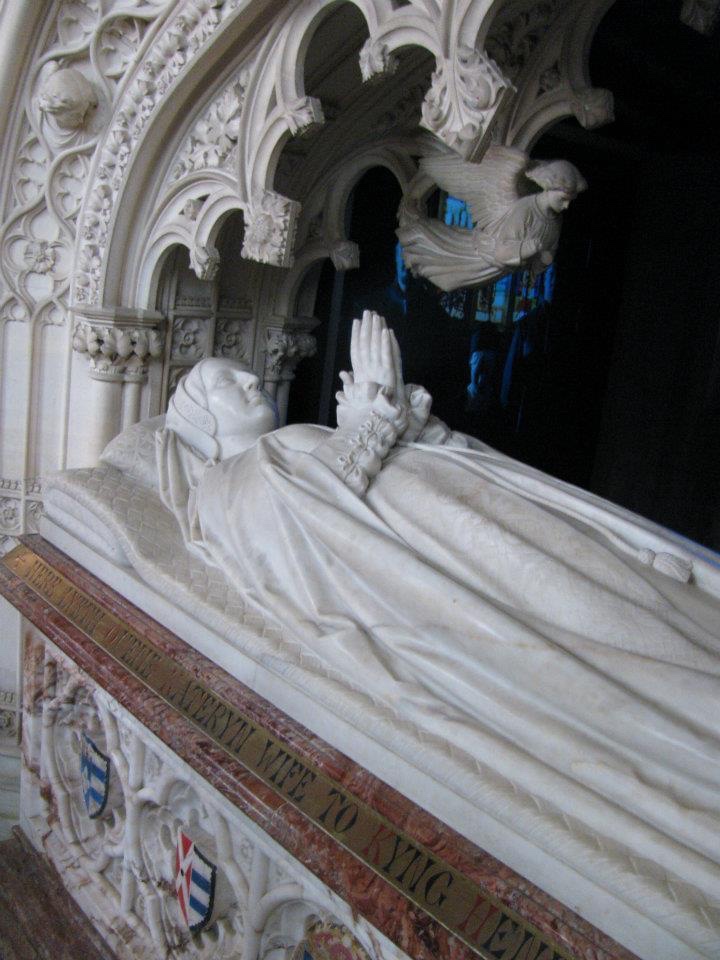
7 September 1548: THE FUNERAL of the Dowager Queen Katherine Parr. It was the first Protestant funeral held in English. Her chief mourner was Lady Jane Grey. She was buried in St Mary’s Chapel on the grounds of Sudeley Castle, Gloucestershire, England.
‘A Breviate of the Internment of the lady Katherine Parr, Queen Dowager, late wife to King Henry VIII, and after, wife to Sir Thomas, Lord Seymour of Sudeley, and High Admiral of England.
Item – On Wednesday, the fifth of September, between two and three of the clock in the morning, died the aforesaid lady, late Queen Dowager, at the castle of Sudeley in Gloucestershire, 1548, and lieth buried in the chapel of the said castle.
Item – She was cered and chested in lead accordingly, and so remained in her privy chamber until things were in a readiness.
Hereafter followeth the provision in the chapel.
Item – It was hanged with black cloth garnished with escutcheons of marriages viz. King Henry VIII and her in pale, under the crown; her own in lozenge, under the crown; also the arms of the Lord Admiral and hers in pale, without crown.
Items – Rails covered with black cloth for the mourners to sit in, with stools and cushions accordingly, without either hearse, majesty’s valence, or tapers – saving two tapers whereon were two escutcheons, which stood upon the corpse during the service.
The order in proceeding to the chapel.
First, two conductors in black, with black staves.
Then, gentlemen and esquires.
Then, knights.
Then, officers of houshold, with their white staves.
Then, the gentlemen ushers.
Then, Somerset Herald in the King’s coat.
Then, the corpse borne by six gentlemen in black gowns, with their hoods on their heads.
Then, eleven staff torches borne on each side by yeomen about the corpse, and at each corner a knight for assistance – four, with their hoods on their heads.
Then, the Lady Jane, daughter to the lord Marquis Dorset, chief mourner, led by a estate, her train borne up by a young lady.
Then, six other lady mourners, two and two.
Then, all ladies and gentlewomen, two and two.
Then yeomen, three and three in a rank.
Then, all other following.
The manner of the service in the church.
Item – When the corpse was set within the rails, and the mourners placed, the whole choir began, and sung certain Psalms in English, and read three lessons. And after the third lesson the mourners, according to their degrees and as it is accustomed, offered into the alms-box. And when they had all done, all other, as gentlemen or gentlewomen, that would.
The offering done, Doctor Coverdale, the Queen’s almoner, began his sermon, which was very good and godly. And in one place thereof, he took a occasion to declare unto the people how that there should none there think, say, nor spread abroad that the offering which was there done, was done anything to profit the dead, but for the poor only. And also the lights which were carried and stood about the corpse were for the honor of the person, and for none other intent nor purpose. And so went through with his sermon, and made a godly prayer. And the whole church answered, and prayed the same with him in the end. The sermon done, the corpse was buried, during which time the choir sung Te Deum in English.
And this done, after dinner the mourners and the rest that would, retruned homeward again. All which aforesaid was done in a morning.’
(p.180-182, ‘Katherine Parr: Complete Works and Correspondence’ edited by Janel Mueller.)

[Endorsed] The queen’s Grace to the King’s majesty 25 August 1544
[Addressed] To the King’s most excellency majesty
Pleaseth it your majesty to be advertised: albeit I had at this present none occurrences of importance to be signified unto your highness, your realm being, thanks to almighty God, in very good order and quiet: yet, foreasmuch as Richard Higham is at this time dispatched hence unto your majesty with a mass of twenty thousand pounds, I thought it my duty to advertise your majesty of the sending of the same, praying almighty God to send your majesty continuance of health and most prosperous success in all your highness’s most notable enterprises.
My Lord Prince and the rest of your majesty’s children be in very good health. And thus, with my most humble commendations unto your majesty, I pray almighty God have the same in His most blessed keeping. From your majesty’s honor of Hampton Court, the twenty-fifth of August, the thirty-sixth year of your majesty’s most noble reign.
Your grace’s most humble, loving wife and servant,
Kateryn the quene, KP
Katherine Parr: Complete Works and Correspondences edited by Janel Mueller, 2011. (Google eBooks preview)
It was in August of 1544 that the General Regent is recorded as signing her letter “Kateryn the quene Regente, KP” keeping with her signature of “Kateryn the quene, KP” as consort.
Source: “Henry VIII: July 1544, 21-25.” Letters and Papers, Foreign and Domestic, Henry VIII, Volume 19 Part 1, January-July 1544. Eds. James Gairdner, and R H Brodie. London: His Majesty’s Stationery Office, 1903. 581-596. British History Online. Web. 26 August 2023. http://www.british-history.ac.uk/letters-papers-hen8/vol19/no1/pp581-596.

The King has proclaimed that all who claim to do services on Coronation day shall be in the White Hall at Westminster Palace, 20 June next, and has authorised the Earl of Surrey, Treasurer of England, the Earl of Oxford, Sir John Fyneux, Chief Judge, Sir Thomas Englefeld, and others to determine claims. He has ordered 26 honorable persons to repair to the Tower of London on 22 June, to serve him at dinner, where those who are to be made knights shall bear dishes “in token that that they shall never bear none after that day”; and on 23 June, at the Tower, they are to be made Knights of the Bath; “whose names follow in order as they were made,” viz., Richard (sic) Radclyff lord Fitzwater, the lord Scroop of Bolton, the lord Fitzhugh, the lord Mountjoye, the lord Dawbeney, the lord Brooke, Sir Henry Clyfford, Sir Maurice Berkeley, Sir Thomas Knyvet, Sir Andrew Wyndesore, Sir Thomas Parr, Sir Thomas Boleyne, Sir Richard Wentworth, Sir Henry Owtrede, Sir Francis Cheyny, Sir Henry Wyotte, Sir George Hastynges, Sir Thomas Metham, Sir Thomas Bedyngfeld, Sir John Shelton, Sir Giles Alyngton, Sir John Trevanyon, Sir William Crowmer, Sir John Heydon, Sir Godarde Oxenbrige and Sir Henry Sacheverell.
‘Henry VIII: June 1509, 16-30 ‘, in Letters and Papers, Foreign and Domestic, Henry VIII, Volume 1, 1509-1514, ed. J S Brewer (London, 1920), pp. 36-55. British History Online http://www.british-history.ac.uk/letters-papers-hen8/vol1/pp36-55 [accessed 8 July 2023].
Sir Thomas Parr was knighted and Sir Thomas Boleyn followed behind him…wonder if the order in which they were knighted means anything…

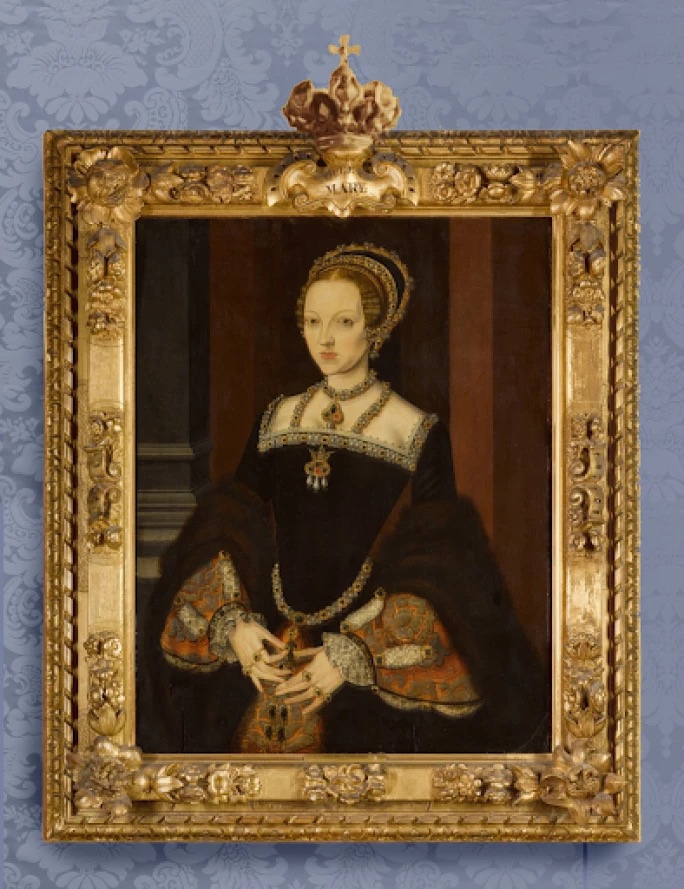
A rare portrait of Katherine Parr, the sixth wife of Henry VIII and an accomplished woman in her own right, shattered records yesterday (June 5) to become the most expensive Tudor painting of all time. Selling to a U.K. collector at Sotheby’s Old Master & 19th Century Paintings Evening Auction, the work realized $4.4 million, more than four times its initial high estimate.
Observer: A Rare Portrait of Henry VIII’s Sixth Wife Breaks Auction Records
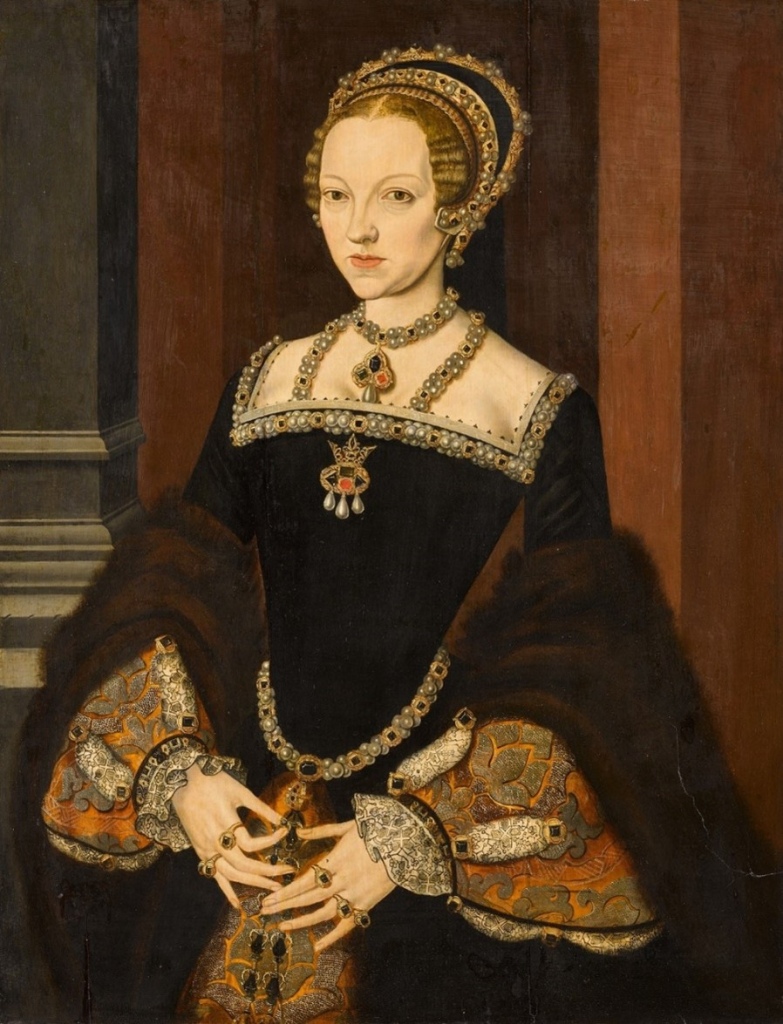
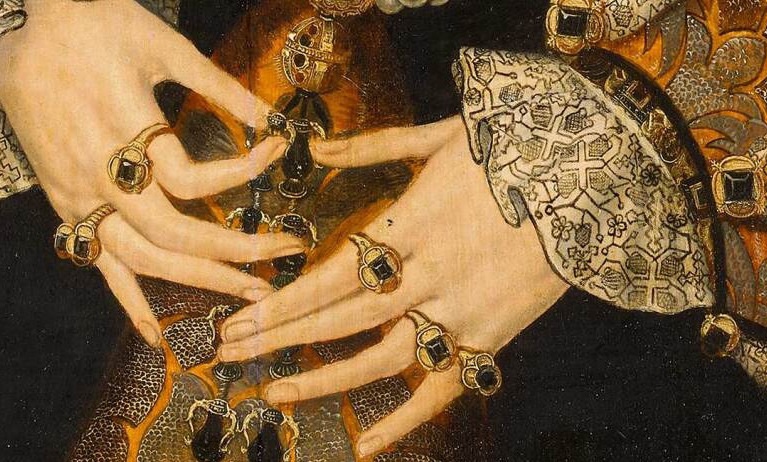
The Jersey portrait is one of only two surviving contemporary portraits of Queen Katherine Parr, the other being the slightly earlier, related full-length in the National Portrait Gallery previously mentioned. In both, the Queen’s jewellery is of further significance in identifying the sitter. In the 1960s both paintings were identified as likenesses of Lady Jane Grey by Strong, largely on the basis of comparison with an engraving in Henry Holland’s Herwologia Anglica of 1620, and a portrait at Seaton Delaval – which appears to be a derivation of the present work, on canvas, dating to the seventeenth or eighteenth century, and erroneously called ‘Lady Jane’.4Throughout the nineteenth century and until Strong’s publication, the Jersey portrait was in fact also erroneously identified as Queen Mary I. Both portraits were correctly reidentified in 1996 by Susan James (see Literature) on account of the jewellery the sitter is shown wearing, specifically the distinctive crown-headed brooch which appears on her bodice (fig. 2). This brooch, which may have been made for Katherine by her favourite goldsmith, the Dutch jeweller Peter Richardson, is traceable through three Tudor lists of jewels dating to before, during, and after Katherine’s time as Queen, one of which is entitled: ‘The Quene’s Jewells in a cofer having written upon it, “the Quene’s Juelles”’ [sic], and for all of which there is good evidence pointing to Katherine Parr’s ownership (the earliest list of 1542 is an inventory of the jewels belonging to Catherine Howard, which subsequently passed to her successor).5
The last list, from 1550, describes the brooch as ‘one ouche or flower with a crown containing two diamonds, one ruby, one emerald; the crown being garnished with diamonds, three pearls pendant.’6 Interestingly, overpaint in the full-length portrait at the National Portrait Gallery now means that the square-cut emerald there appears red, but the brooch’s true character is plainly obvious in the present painting, where all the precious stones are clearly distinguished from one another. The accuracy of the depiction of the brooch – thus underlining the portrait’s royal status and sovereignty of the sitter – is further corroborated by its description in the jewel list of Elizabeth I, to whom the brooch passed with the rest of the royal jewellery in 1587, which specifies that the crown is ‘garnished with XV small diamonds’7 – all fifteen stones are clearly discernible here. At Elizabeth’s death the brooch passed to Anne of Denmark, queen of James I; it is found in her jewellery inventory of 1606, but an annotation recounts that in 1609, having lost the two triangular-cut diamonds, the brooch was broken up for ‘the making of Gold plate’.8
In the full-length portrait, and in a slightly later half-length portrait from the late sixteenth century, previously attributed to William Scrots (also in the National Portrait Gallery; fig. 3),9Katherine wears a pendant – probably another brooch adapted to be worn on a necklace – which may be identified as that described in the 1542 list of Catherine Howard’s jewels: ‘oone other Ooche of Golde wherein is averey feir large ruby and a rounde diamond with a verey feir peerle hangyng at the same [sic].’10 The pendant in the present portrait, by contrast, would appear also to include an emerald; nor does the sitter wear the girdle of antique cameos that appears in the full-length painting, and which is also identifiable in the 1542 list. Instead, here Katherine’s waist is encircled by a belt of large pearls and diamonds in gold settings, with pomanders and small antique urn-shaped pendants, which, together with the matching adornment to the line of her bodice across the chest and the pattern of her necklace, bears a remarkable similarity to that in a portrait of Elizabeth I, when Princess, in the Royal Collection, at Windsor.11The portrait of Princess Elizabeth and the Jersey portrait of Katherine also share similar embroidery in the sleeves and both sitters wear almost identical diamond rings, which display the latest styles in diamond cutting – the table-cut and pointed cut – which were symbolic of fidelity, though the pattern of their display follows that in the the portrait of Katherine in the National Portrait Gallery. Unlike either of these other two portraits, however, the jewels in Katherine’s cuffs, and the pomanders on her girdle, in the Jersey portrait are all inscribed multiple times with the words ‘LAVS DEVS’ (‘praise God’).
Sotheby’s

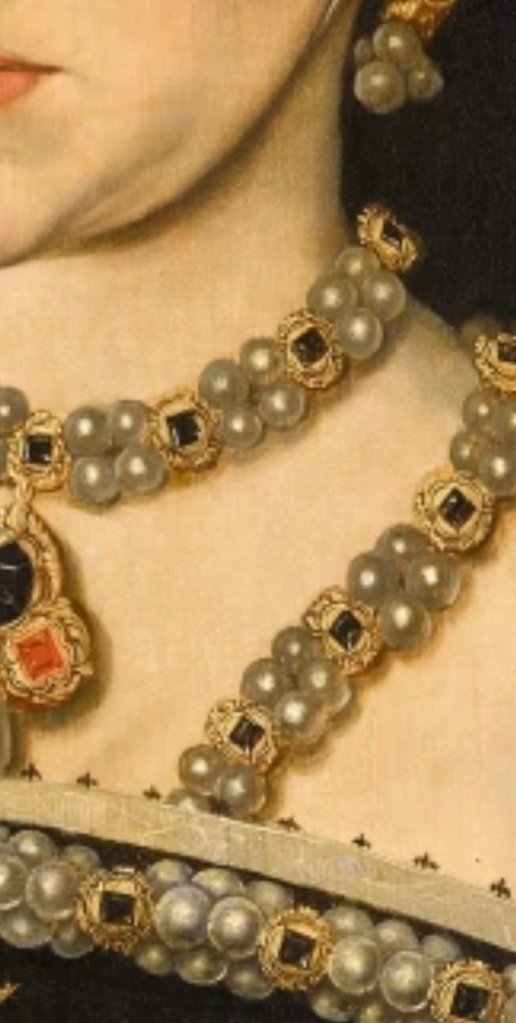
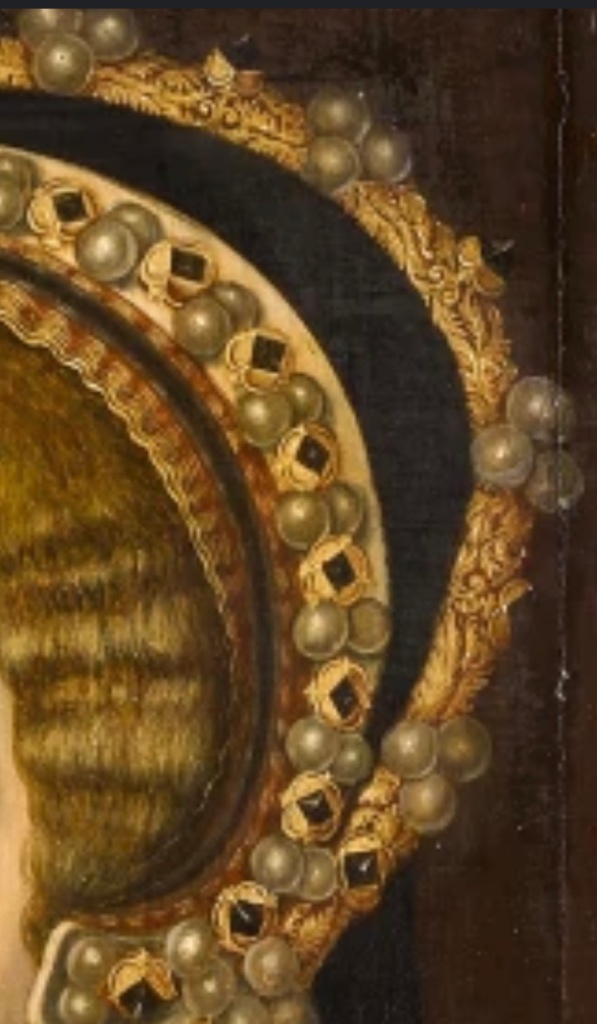

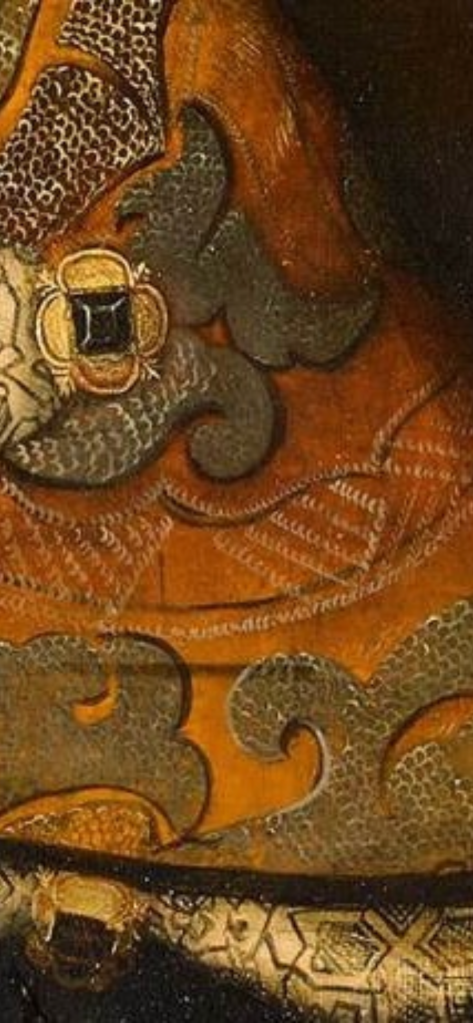
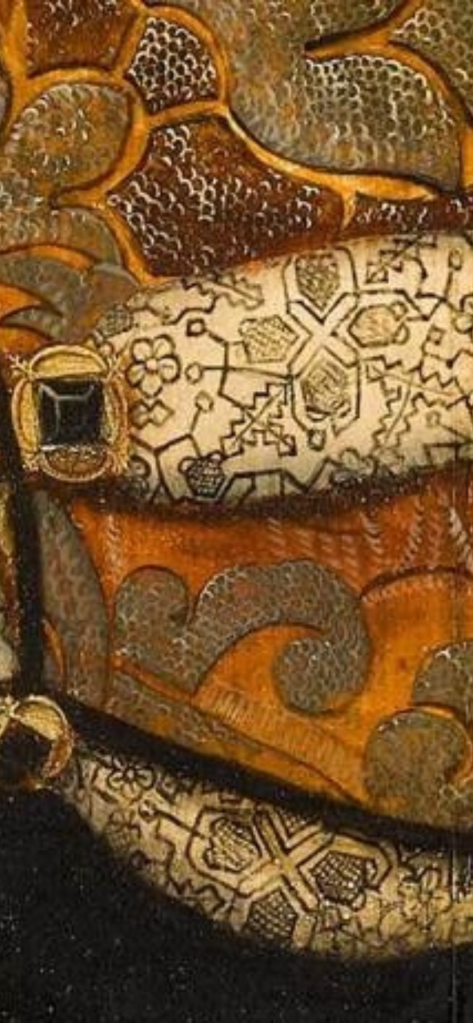


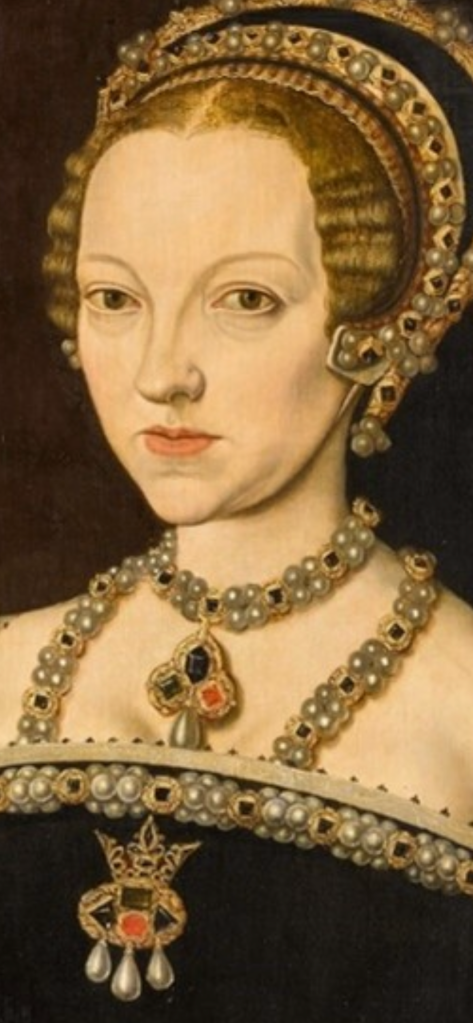


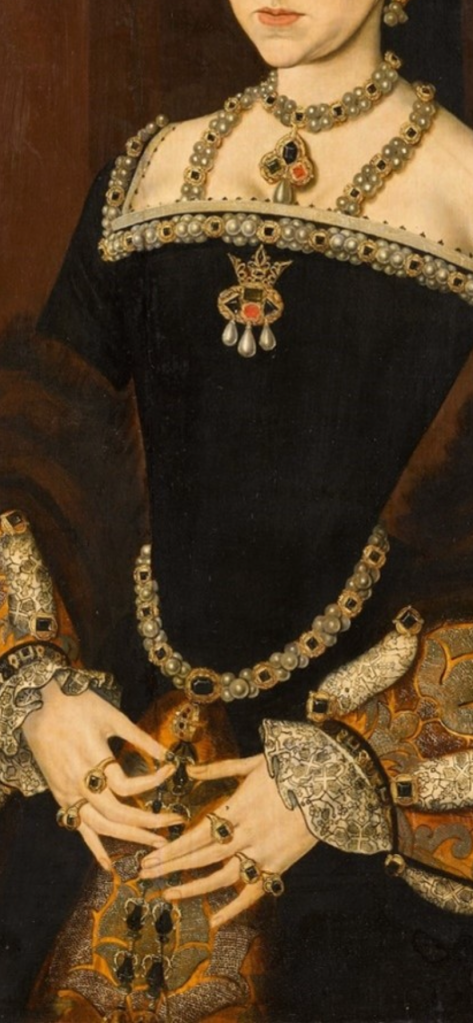
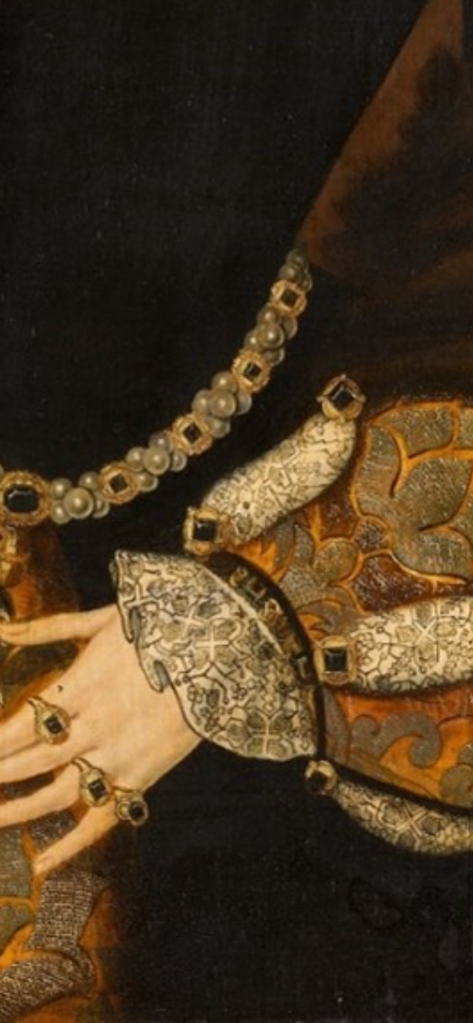
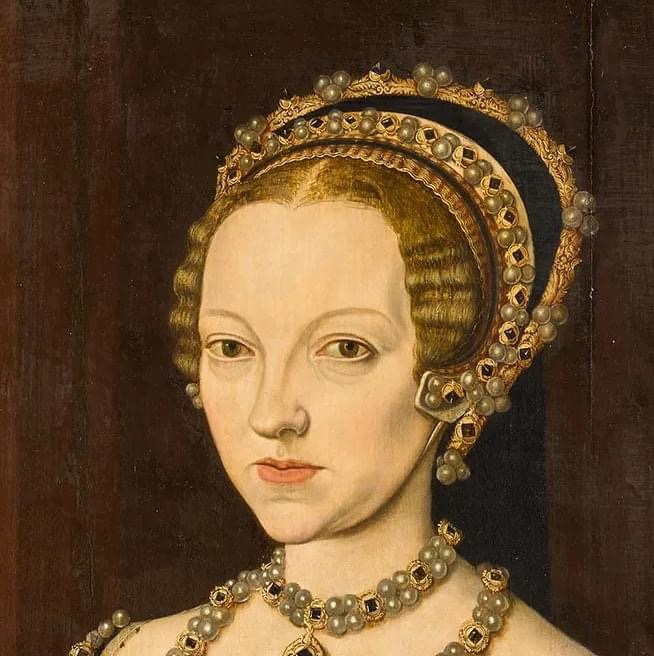


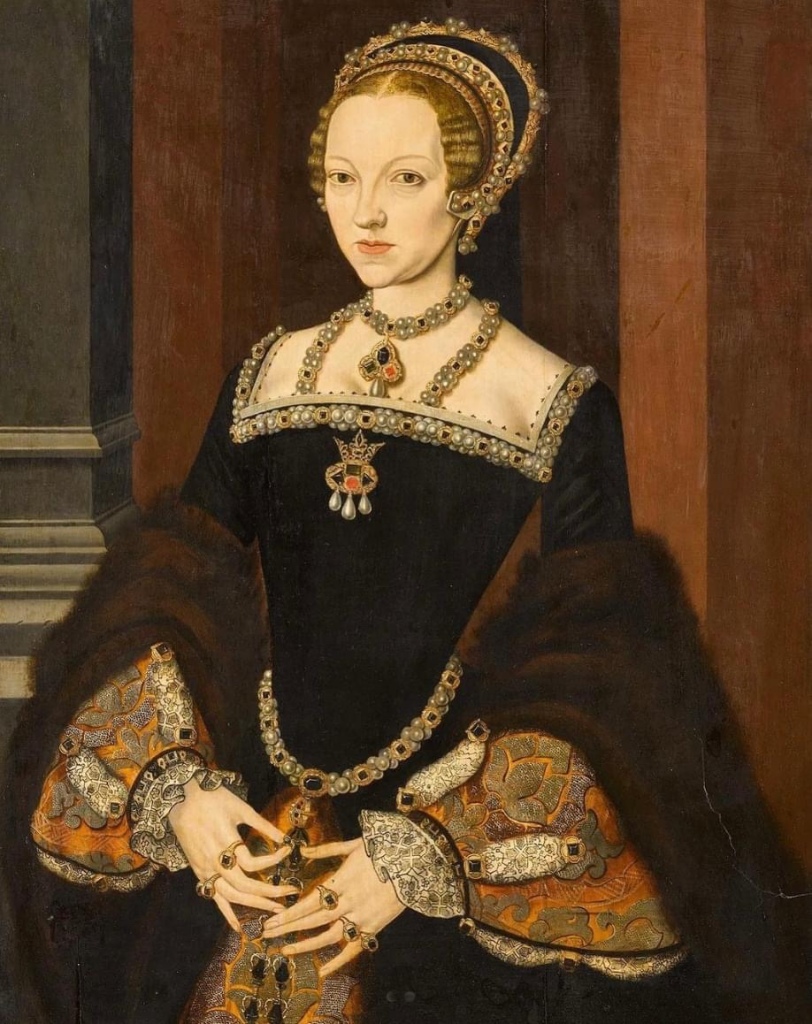
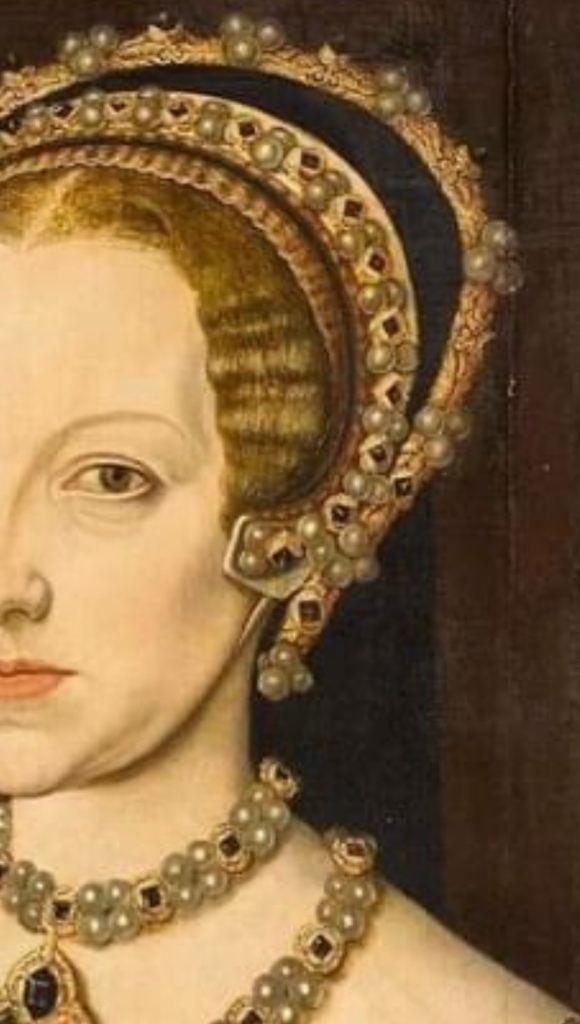
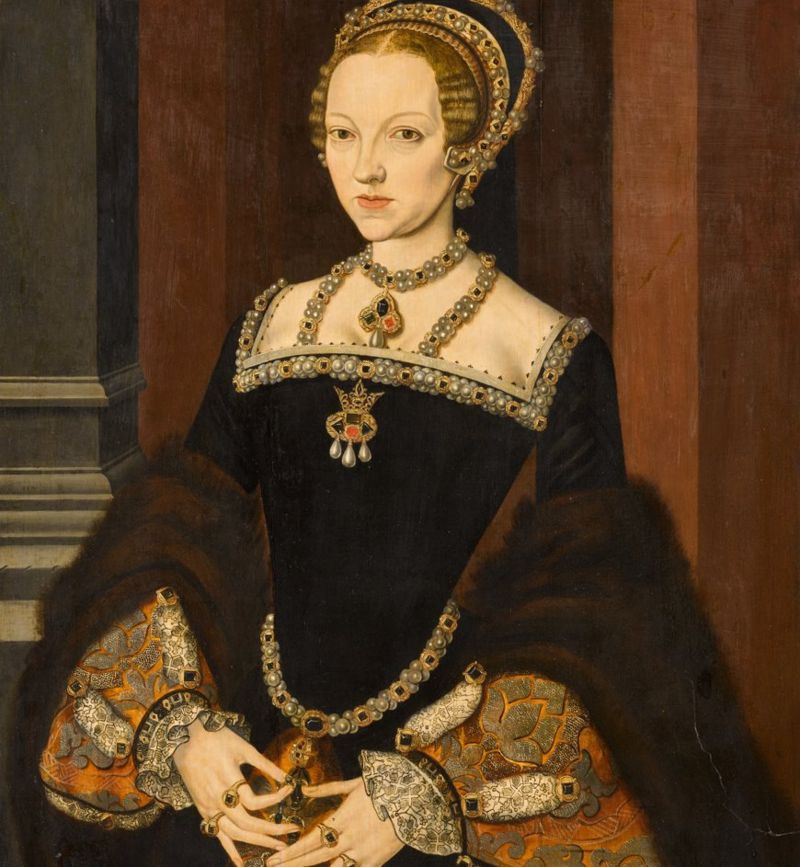

Attributed to Master John: Portrait of Katherine Parr (1512-1548), Queen of England and Ireland

To Queen Katherine Parr, the king’s letter congratulatory, upon her marriage with the Lord Admiral
We thank you heartily, not only for the gentle acceptation of our suit moved unto you, but also for the loving accomplishing of the same, wherein you have declared, not only a desire to gratify us, but also moved us to declare the good will, likewise, that we bear to you in all your requests. Wherefore, ye shall not need to fear any grief to come or to suspect lack of aide in need, seeing that he, being mine uncle, is of so good a nature that he will not be troublesome by any means unto you, and I of such mind, that, for divers just causes, I must favour you.
But even as without cause you merely require help against him whom you have put in trust with the carriage of these letters, so may I merely return the same request unto you, to provide that he may live with you also without grief, which hath given him wholly unto you; and I will so provide for you both, that if hereafter any grief befall, I shall be a sufficient succour in your godly and praiseworthy enterprises.
Fare ye well, with much increase of honour and virtue in Christ.
From St James, the 25th day of June
Edward
Letters of the Kings of England: Now First Collected from the Originals in Royal Archives, and from Other Authentic Sources, Private as Well as Public · Volume 2 By James Orchard Halliwell-Phillipps · 1846
Katherine Parr: Complete Works and Correspondence By Katherine Parr, editor Janel Mueller · 2011, pg 147

The letter was addressed in two different hands: “The Lady Mary to the Lord Admiral, 4th June.” “From the Lady Mary’s Grace“
Addressed to: “To my Lord Admiral”
My lord,
After my hearty commendations, these shall be to declare to you, according to your accustomed gentleness, I have received six warrants from you by your servant, this bearer: for the which, I do give you my hearty thanks. By whom also I have also received your letter, wherein, as me thinketh, I perceive strange news concerning a suit you have in hand to the Queen for marriage. For the sooner obtaining whereof, you seem to think that my letters might do you pleasure.
My lord, in this case I trust your wisdom doth consider that, if it were for my nearest kinsman and dearest friend alive, of all other creatures in the world, it standeth least with my poor honor to be a meddler in this matter, considering whose wife her grace was of late. And besides that, if she be minded to grant your suit, my letters shall do you but small pleasure. On the other side, if the remembrance of the King’s majesty, my father (whose soul God pardons), will not suffer her to grant your suit, I am nothing able to persuade her to forget the loss of him, who is at yet very ripe in my own remembrance.
Wherefore I shall most earnestly require you, the premises considered to think none unkindness in me, though I refuse to be a meddler any ways in this matter. Assuring you that, wooing matters set apart (wherein I, being a maid, am nothing cunning), if other ways it still lie in my little power to do you pleasure, I shall be as glad to do it as you to require it: both for his blood’s sake, that you be of, and also for the gentleness which I have always found in you. As knoweth almighty God, to whose tuition I commit you. From Wanstead this Saturday at night, being the fourth of June.
Your assured friend to my power,
Mary
Katherine Parr: Complete Works and Correspondence ed. by Janel Mueller, 2011. Pg 146-7.


 tudorqueen6 by Meg McGath