The Elizabeth & Thomas Soap Opera

BRAVO @katherineparrsociety!!

The “Elizabeth and Thomas” Soap Opera we dare not discuss. Did Parr try to protect Elizabeth? What did Kat Ashley mean when she confessed that the Dowager Queen held Elizabeth? We’ve discussed it so many times. And Parr’s name has been dragged through the gutter by so many. What really happened?

Elizabeth was welcomed into the household of the Dowager Queen in 1547 at Chelsea Manor. The Queen had remarried to Sir Thomas Seymour, now 1st Baron Seymour of Sudeley, months after King Henry died. Weep some more. Henry only gave her a few months to mourn Lord Latimer. She could do what she wanted at this point. She didn’t have to remarry. She could have retained her status at court, but chose to retire to Chelsea after they made it clear she was no longer needed.

In the 16th century—the age a girl could get married was 12.

In 1508, Lady Maud Parr married Sir Thomas who was about 30 yrs old.

Lady Elizabeth Parr, daughter to the Baron FitzHugh, niece of the Kingmaker, married before 14 to King Edward IV’s friend, Sir William Parr. This gave the Parrs royal blood. Elizabeth’s birthdate needs to be researched further.

The Duchess of Suffolk was married to 40 something, Charles Brandon, at 14.

Lady Margaret Beaufort, grandmother to Elizabeth, was only 12.

Lady Anne Vaux, the aunt of the Queen and older sister of Lady Maud Parr, married Sir Nicholas, Baron Vaux who was born around 1460. See above for Maud’s marriage date and age.

Marriage contracts were made as early as 2 yrs old.

It’s a Sign of the Times.

We have evolved. We live longer now. We know more about the human body and the human brain. 🤷🏻‍♀️

Child Marriage in Tudor Times

See also

Till death do us part? Divorce in medieval England|Claire Kennan|— National Archives (London)

© 2025 Meg McGath. All research and original commentary belong to the author.

Lamentation of a Sinner Quote

“I embraced ignorance as perfect knowledge; and knowledge seemed to me superfluous and vain. I had little regard for God’s Word, but gave myself to vanities and shadows of the world. I forsook Him, in whom is all truth, and followed the vain, foolish imaginations of my own heart. I covered my sins with the pretense of holiness. I called superstition, “godly meaning”, and true holiness, “error”.” — Kateryn Parr

© 2024 Meg McGath. All research and original commentary belong to the author.

20 September: Queen Katherine Parr’s Letter in Latin to Princess Mary

Written by Meg McGath

The official date of the letter is actually confusing. It was either written while Katherine Parr was Queen Regent in 1544 or as Dowager Queen in 1547.

The messenger mentioned in the letter is most likely Walter Erle, groom of the Queen’s privy chamber, who also served as her musician on the virginals, but possible Robert Cooch, steward of her wine cellar whose skill in music was commended by Parr’s chaplain, John Pankhurst.

Also mentioned in the letter is Francis Mallet who became chaplain to the Princess Mary in 1544 leaving the employment of Parr. (Wikipedia)

While the reasons are many, most notable and most beloved lady, that readily invite me at this time to writing, still nothing quite so much moves me as care for your health, which as I hope it is the best, so I very greatly desire to be made of certain of it. Wherefore, I send you this messenger who, I judge, will be very pleasing to you both because of his skill in music, in which, I am not unaware, you as well as I delight exceedingly, and also because he, having been in service to me, can report to you most certainty on my whole state and health. And truly, before this day it was in my mind to have made a journey to you and greeted you in person, but indeed not all things answer to my will: I hope now that, at a very early day this winter, you will be visiting us. Then which truly nothing will be a greater joy or a greater pleasure.

Since, however, as I have heard, the last touch has now been put by Mallet on Erasmus’s work On John (which he saw through translation), and nothing else now remain except some due attention and care to be applied in correcting it, I pray you to send to me this very fine and very useful work, now emended by Mallet or someone of yours, that it may be given to the press in its time. And further, that you signify whether you wish it to go out most happily into the light under your name, or whether rather by an unknown author. To which work really, in my opinion, you will be seen to do an injury, if you refuse the book to be transmitted to posterity on the authority of your name: for the most accurate translating of which you have undertaken so many labors for the highest good of the commonwealth; and more than these (as is well enough known) you would have undertaken, if the health of tour body had permitted. Since no one does not know the amount of sweat that you have laboriously put into this work, I do not see why you should reject the praise that all confer on you deservedly. However, I leave this whole matter to your prudence, so that whatever position you wish to take, I will esteem it most greatly to be approved.

As for the sum of money you sent to me as a gift, I thank you exceedingly. I pray the most good and most great God that He will think it fit to bless you perpetually with true and unblemished happiness: in whom, indeed, may you fare well a very long while. From Hanworth September 20.

You most devoted and most loving,
Katherine the Queen KP

Hanworth by David Bridges

Sources

Katherine Parr: Works and Correspondence by Katherine Parr, Janel Mueller (Google eBook preview)

© 2024 Meg McGath. All research and original commentary belong to the author.

Queen Katherine Parr: Not Important Enough?

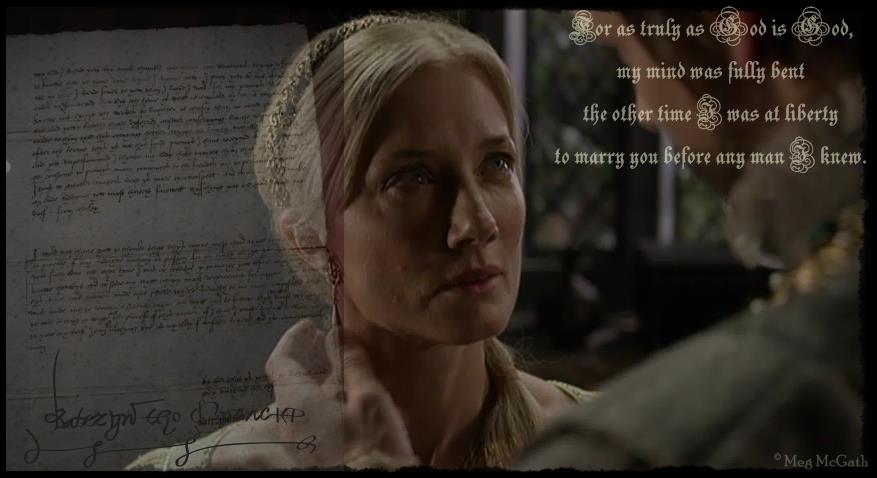
I love how much people dismiss Queen Kateryn Parr. There may be evidence that she WAS supposed to be Regent for Edward VI. See her signature AFTER Henry died.

Credit: Elizabeth Norton

She was apparently signing as “Kateryn, the quene regente KP”. The theory goes that she was indeed made Regent for her stepson, King Edward VI. Which would make sense with the use of her signature. It is believed that Edward Seymour, Duke of Somerset, Kateryn’s brother the Marquess of Northampton, her brother-in-law the Earl of Pembroke and the council ousted her and rewrote the will. She would have made a wonderful Queen Regent. She proved she was capable of being Regent while Henry went to war with France. Perhaps she would have lived longer and prevented the succession from being rewritten. She gets credit for the placement of Princesses Mary & Elizabeth back into the line of succession behind their brother in 1545. That succession act seems to have overwritten or they disregarded King Edward’s will and supported the actual heir to the throne, Mary. Mary WAS the rightful heir. Jane was further down the approved line of succession. Why would you accept someone below the status of the actual daughters of King Edward’s father, Henry VIII? Kateryn Parr’s brother and brother in law were again involved in matters of the state and actually pulled off putting Lady Jane Grey on the throne for 9 days! Jane somehow outranked her own mother who was STILL alive and technically would have been the next heiress to the throne after Princesses Mary & Elizabeth. I never understood that. The Protestants feared the Catholic “Bloody Mary” (her nickname was started as Protestant propaganda, the pro Queen Elizabeth movement, lol) would try to return the country to the Pope and Catholicism. Mary was deeply religious. Kateryn Parr and Mary got on despite differences in matters like religion. Parr’s mother, Lady Maud, had served Mary’s own mother, Queen Katherine of Aragon, the first wife and crowned Queen consort to King Henry. The two women were pretty close. The Parrs backed Queen Katherine of Aragon when her lady in waiting became the Kings new obsession. Parr let Mary be and encouraged her every chance she could. One could argue she loved Mary more than Elizabeth. Heck, Kateryn named her only daughter and child, Mary, before the queen passed on 5 September 1548. Don’t think there were any other important Marys. The French Queen, Mary Tudor, had died long before Parr became Queen. Pretty sure it’s not after The Virgin Mary. Protestants aren’t that attached to her, right? I was raised Catholic, so I honestly don’t know. Anyway, Queen Kateryn Parr was VERY important. Read a book. She wasn’t an ex-queen. She remained Queen (consort) of England, Ireland, and France until she died. She was the LAST Tudor Queen Consort as King Edward died young. She was also the FIRST Queen of Ireland. Her funeral was the FIRST Protestant funeral for a Queen. Her mourner was none other than Lady Jane Grey, who would have probably stayed with Kateryn had the queen lived. Having Parr around seemed to pacify things. She knew how to handle tricky and dangerous situations. For Gods sake, she almost lost her head after she spoke with the King. It was overheard by the queens enemy, Bishop Gardiner, who saw an opportunity to “get rid” of Kateryn. I mean why not? He already KILLED TWO WIVES!! Lordy, so Gardiner tried to fuck with the Kings head. Saying shit like “it is a petty thing when a woman should instruct her husband” or some stupid sexist bs! Story goes, Kateryn was warned by an anonymous source who found her death warrant lying on the ground. YEAH RIGHT!! That’s straight up narcissistic abuse, my man!! Why do I feel like Henry set her up to test her loyalty? He was such a theatrical douche bag. No, no love for King Henry here. I have yet to see the film “Firebrand” which follows the reign of Kateryn as queen consort and queen Regente I believe. It’s based off Elizabeth Freemantle’s “Queen’s Gambit”. Anyway, Kateryn talked her way out of being arrested or worse by stroking the Kings ego and basically submitting to him just to fuvking survive. Imagine going through this marriage without psych meds like Benzos. I do believe they dabbled in potions however and she was known to “treat” melancholy with herbs from the gardens. Sudeley Castle where she is buried has a garden full of deadly herbs. Physic gardens. I have photos somewhere…

My page: Queen Catherine Parr

© 2024 Meg McGath. All research and original commentary belong to the author.

7 September 1548: THE FUNERAL of the Dowager Queen

Evesham Journal

7 September 1548: THE FUNERAL of the Dowager Queen Katherine Parr. It was the first Protestant funeral held in English. Her chief mourner was Lady Jane Grey. She was buried in St Mary’s Chapel on the grounds of Sudeley Castle, Gloucestershire, England.

‘A Breviate of the Internment of the lady Katherine Parr, Queen Dowager, late wife to King Henry VIII, and after, wife to Sir Thomas, Lord Seymour of Sudeley, and High Admiral of England.

Item – On Wednesday, the fifth of September, between two and three of the clock in the morning, died the aforesaid lady, late Queen Dowager, at the castle of Sudeley in Gloucestershire, 1548, and lieth buried in the chapel of the said castle.

Item – She was cered and chested in lead accordingly, and so remained in her privy chamber until things were in a readiness.

Hereafter followeth the provision in the chapel.

Item – It was hanged with black cloth garnished with escutcheons of marriages viz. King Henry VIII and her in pale, under the crown; her own in lozenge, under the crown; also the arms of the Lord Admiral and hers in pale, without crown.

Items – Rails covered with black cloth for the mourners to sit in, with stools and cushions accordingly, without either hearse, majesty’s valence, or tapers – saving two tapers whereon were two escutcheons, which stood upon the corpse during the service.

The order in proceeding to the chapel.

First, two conductors in black, with black staves.
Then, gentlemen and esquires.
Then, knights.
Then, officers of houshold, with their white staves.
Then, the gentlemen ushers.
Then, Somerset Herald in the King’s coat.
Then, the corpse borne by six gentlemen in black gowns, with their hoods on their heads.
Then, eleven staff torches borne on each side by yeomen about the corpse, and at each corner a knight for assistance – four, with their hoods on their heads.
Then, the Lady Jane, daughter to the lord Marquis Dorset, chief mourner, led by a estate, her train borne up by a young lady.
Then, six other lady mourners, two and two.
Then, all ladies and gentlewomen, two and two.
Then yeomen, three and three in a rank.
Then, all other following.

The manner of the service in the church.

Item – When the corpse was set within the rails, and the mourners placed, the whole choir began, and sung certain Psalms in English, and read three lessons. And after the third lesson the mourners, according to their degrees and as it is accustomed, offered into the alms-box. And when they had all done, all other, as gentlemen or gentlewomen, that would.

The offering done, Doctor Coverdale, the Queen’s almoner, began his sermon, which was very good and godly. And in one place thereof, he took a occasion to declare unto the people how that there should none there think, say, nor spread abroad that the offering which was there done, was done anything to profit the dead, but for the poor only. And also the lights which were carried and stood about the corpse were for the honor of the person, and for none other intent nor purpose. And so went through with his sermon, and made a godly prayer. And the whole church answered, and prayed the same with him in the end. The sermon done, the corpse was buried, during which time the choir sung Te Deum in English.

And this done, after dinner the mourners and the rest that would, retruned homeward again. All which aforesaid was done in a morning.’

(p.180-182, ‘Katherine Parr: Complete Works and Correspondence’ edited by Janel Mueller.)

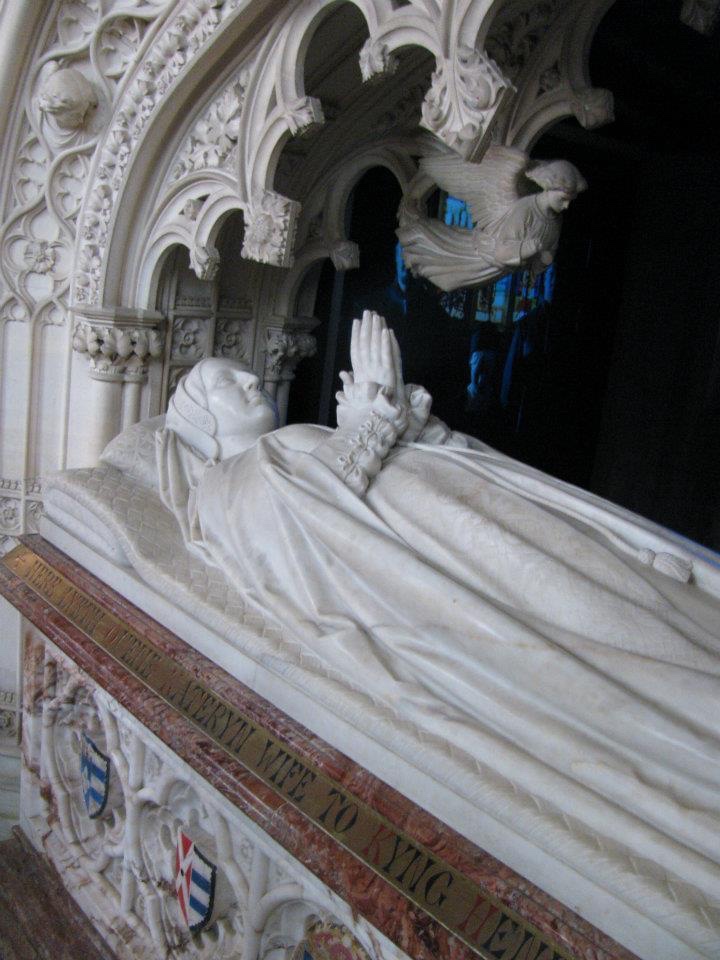
Tomb of Queen Kateryn Parr at Sudeley Castle. (c) Meg Mcgath, 2012.

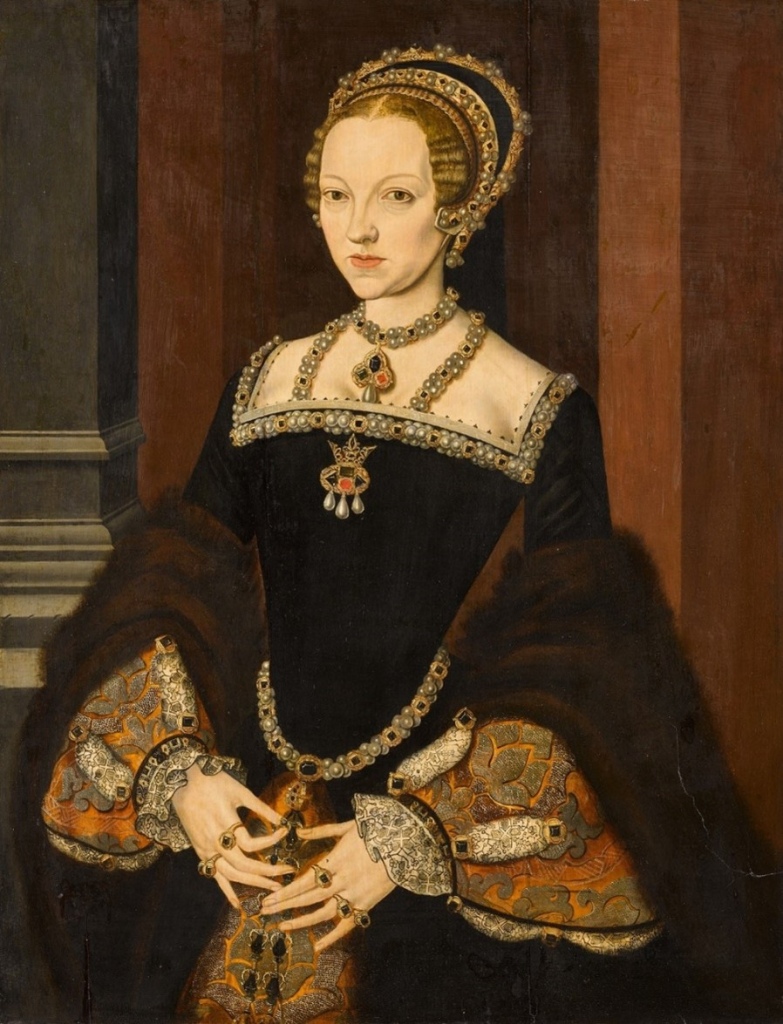
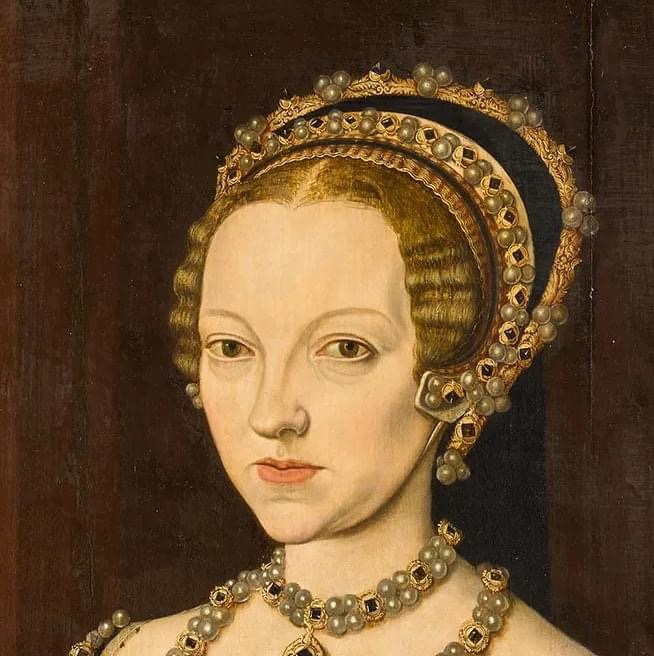
Jersey Portrait of Queen Katherine Parr: sold for £3.4 million

By Meg Mcgath
Sotheby’s The frame for a Portrait of Katherine Parr

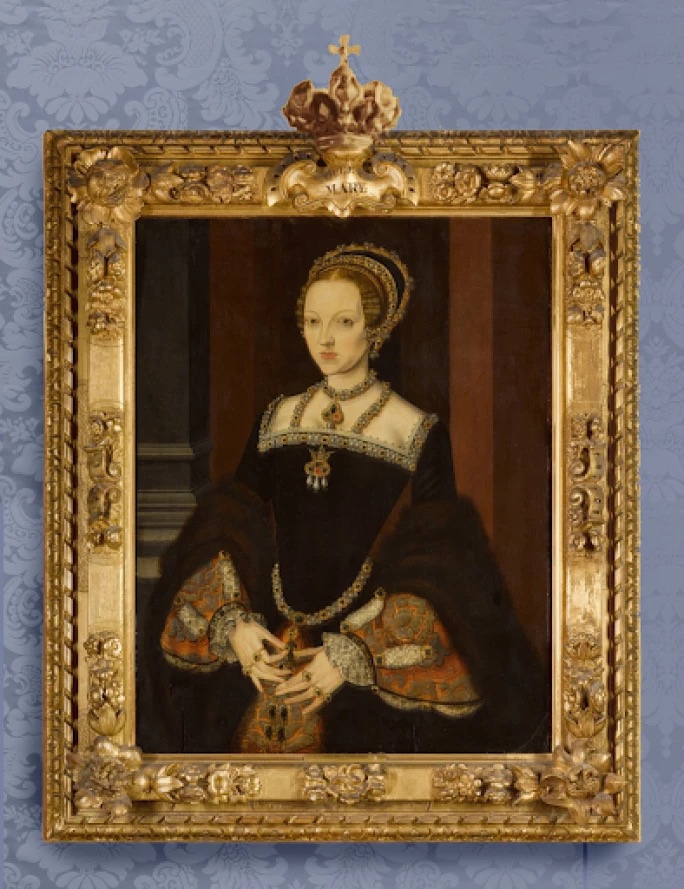
A rare portrait of Katherine Parr, the sixth wife of Henry VIII and an accomplished woman in her own right, shattered records yesterday (June 5) to become the most expensive Tudor painting of all time. Selling to a U.K. collector at Sotheby’s Old Master & 19th Century Paintings Evening Auction, the work realized $4.4 million, more than four times its initial high estimate.

Observer: A Rare Portrait of Henry VIII’s Sixth Wife Breaks Auction Records

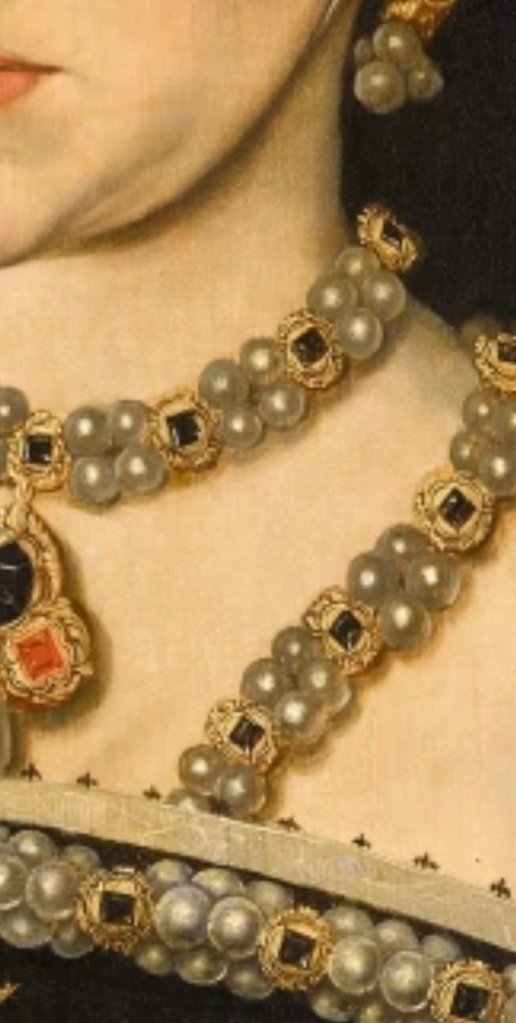
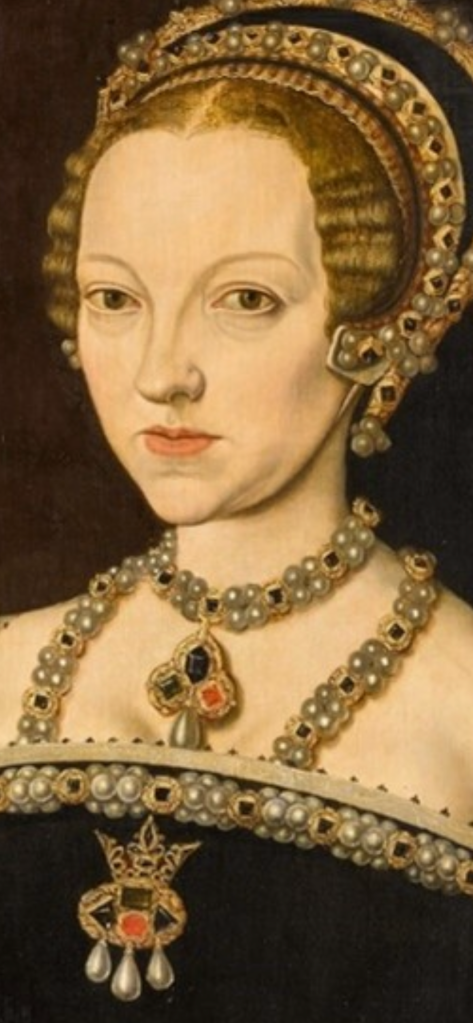
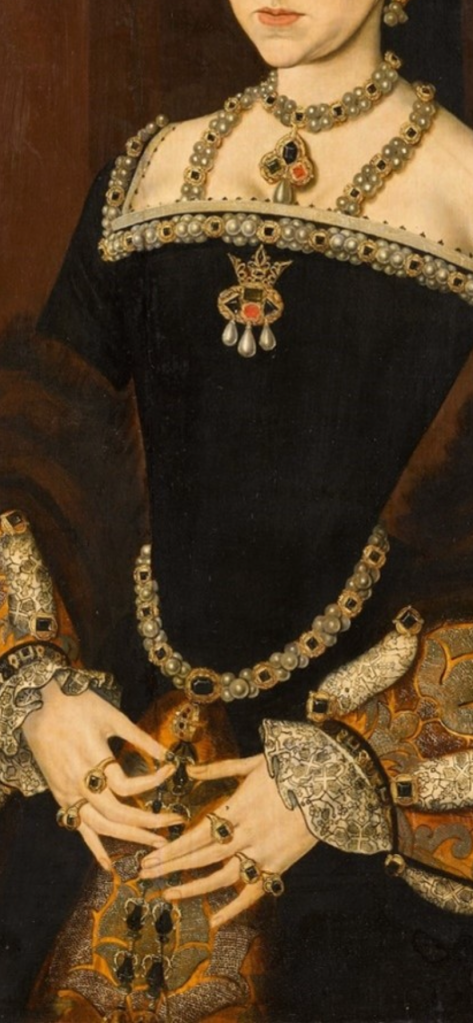
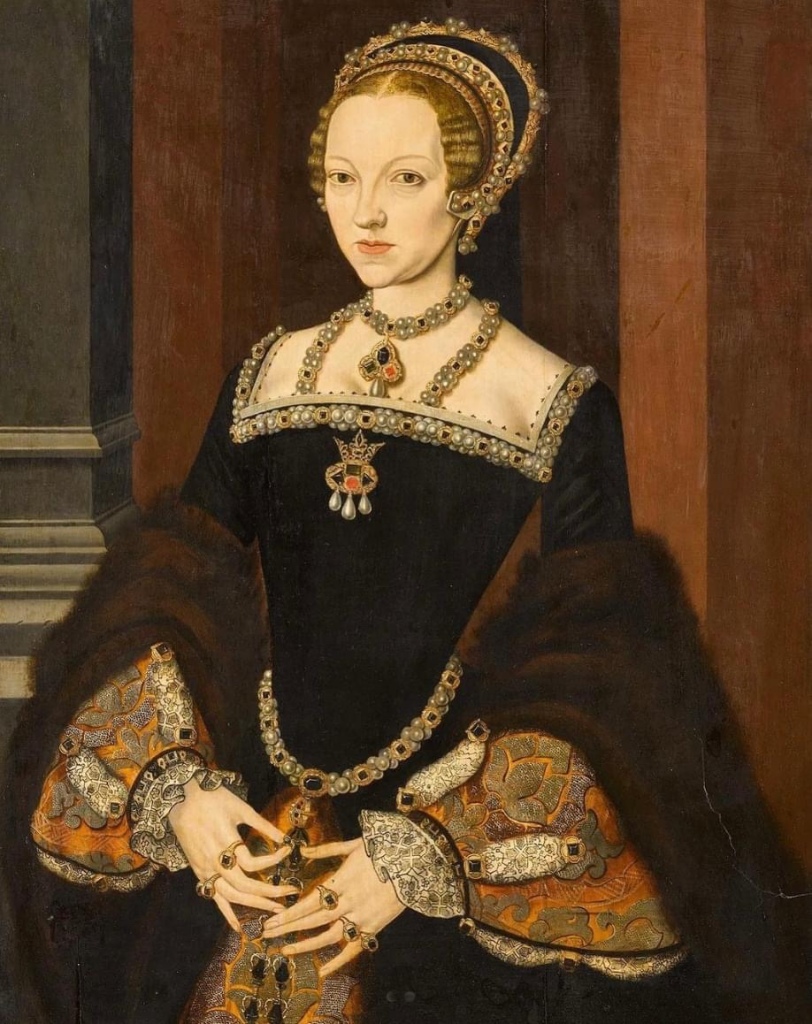
The Jersey portrait is one of only two surviving contemporary portraits of Queen Katherine Parr, the other being the slightly earlier, related full-length in the National Portrait Gallery previously mentioned. In both, the Queen’s jewellery is of further significance in identifying the sitter. In the 1960s both paintings were identified as likenesses of Lady Jane Grey by Strong, largely on the basis of comparison with an engraving in Henry Holland’s Herwologia Anglica of 1620, and a portrait at Seaton Delaval – which appears to be a derivation of the present work, on canvas, dating to the seventeenth or eighteenth century, and erroneously called ‘Lady Jane’.4Throughout the nineteenth century and until Strong’s publication, the Jersey portrait was in fact also erroneously identified as Queen Mary I. Both portraits were correctly reidentified in 1996 by Susan James (see Literature) on account of the jewellery the sitter is shown wearing, specifically the distinctive crown-headed brooch which appears on her bodice (fig. 2). This brooch, which may have been made for Katherine by her favourite goldsmith, the Dutch jeweller Peter Richardson, is traceable through three Tudor lists of jewels dating to before, during, and after Katherine’s time as Queen, one of which is entitled: ‘The Quene’s Jewells in a cofer having written upon it, “the Quene’s Juelles”’ [sic], and for all of which there is good evidence pointing to Katherine Parr’s ownership (the earliest list of 1542 is an inventory of the jewels belonging to Catherine Howard, which subsequently passed to her successor).5

The last list, from 1550, describes the brooch as ‘one ouche or flower with a crown containing two diamonds, one ruby, one emerald; the crown being garnished with diamonds, three pearls pendant.’6 Interestingly, overpaint in the full-length portrait at the National Portrait Gallery now means that the square-cut emerald there appears red, but the brooch’s true character is plainly obvious in the present painting, where all the precious stones are clearly distinguished from one another. The accuracy of the depiction of the brooch – thus underlining the portrait’s royal status and sovereignty of the sitter – is further corroborated by its description in the jewel list of Elizabeth I, to whom the brooch passed with the rest of the royal jewellery in 1587, which specifies that the crown is ‘garnished with XV small diamonds’7 – all fifteen stones are clearly discernible here. At Elizabeth’s death the brooch passed to Anne of Denmark, queen of James I; it is found in her jewellery inventory of 1606, but an annotation recounts that in 1609, having lost the two triangular-cut diamonds, the brooch was broken up for ‘the making of Gold plate’.8

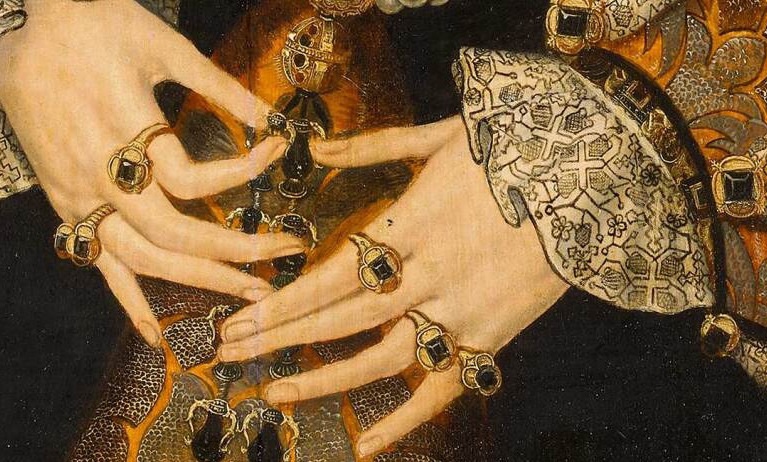
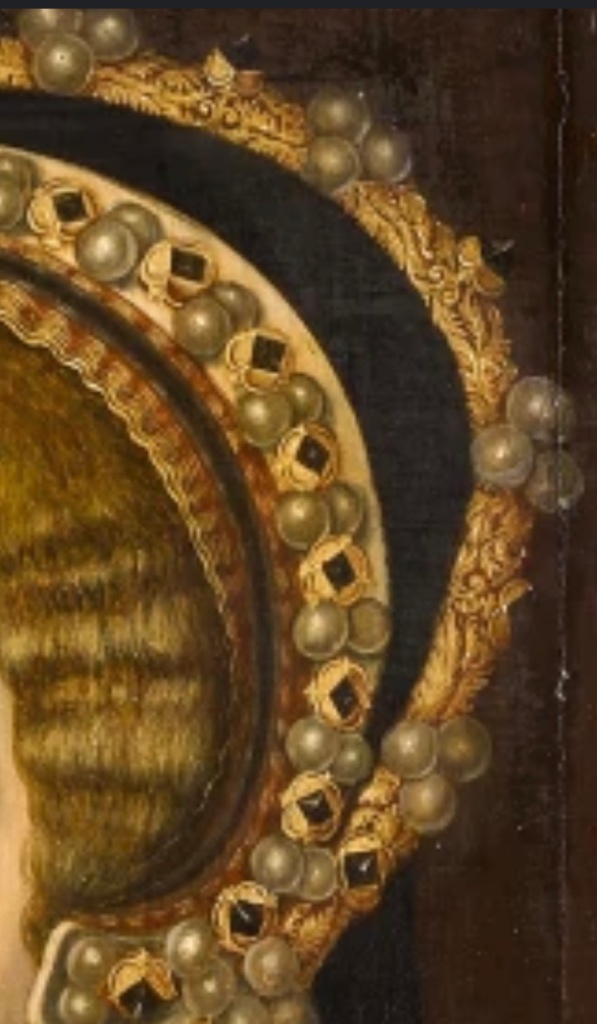
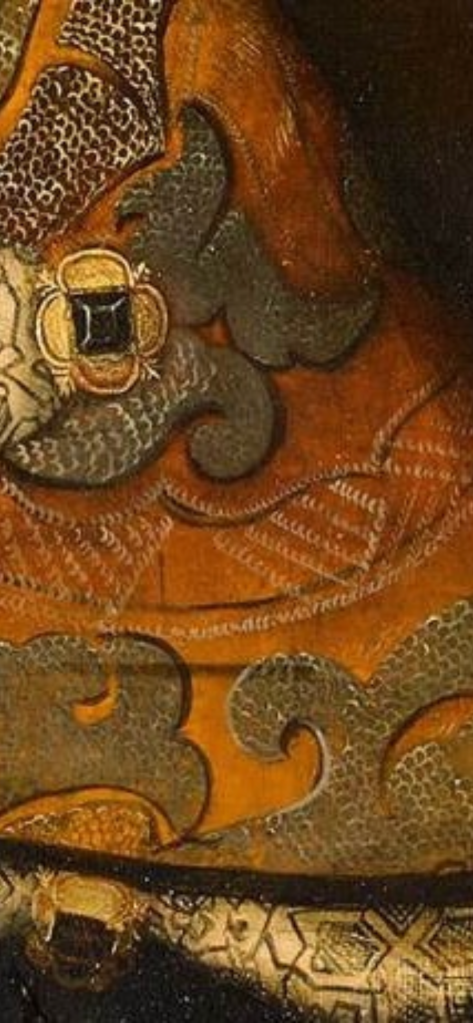
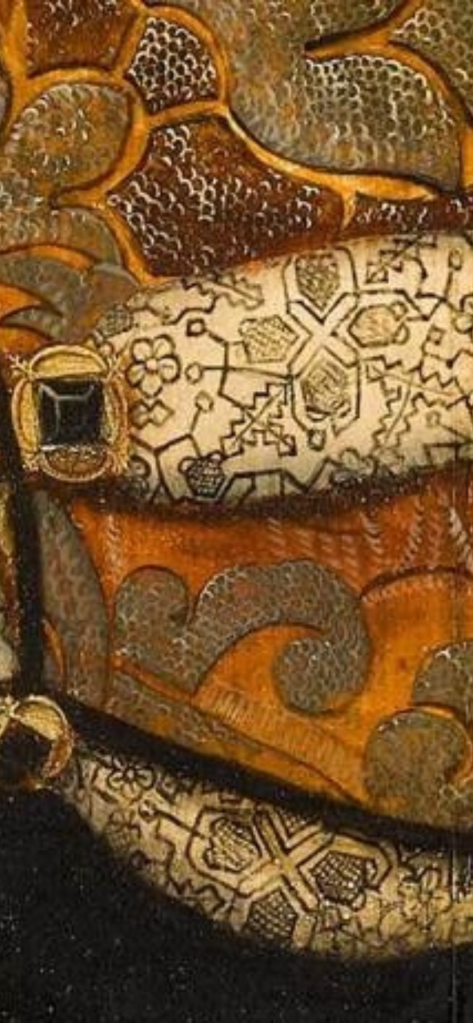
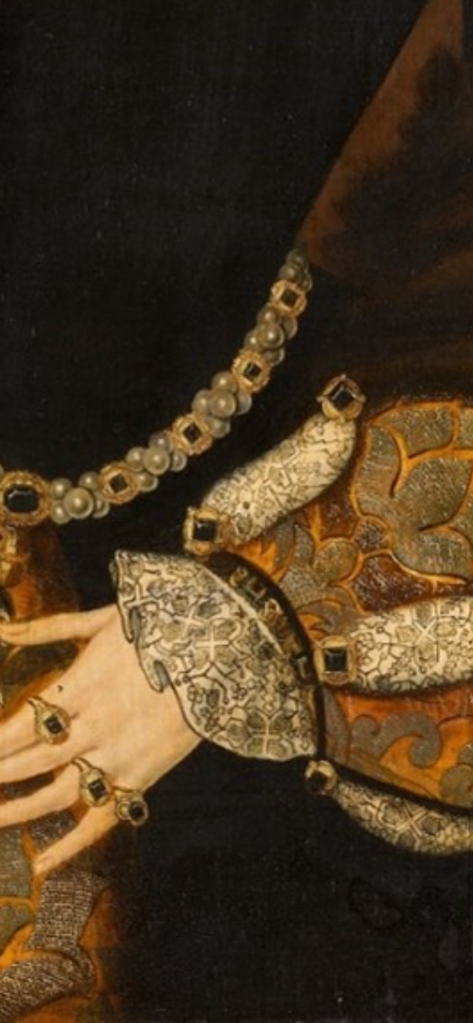
In the full-length portrait, and in a slightly later half-length portrait from the late sixteenth century, previously attributed to William Scrots (also in the National Portrait Gallery; fig. 3),9Katherine wears a pendant – probably another brooch adapted to be worn on a necklace – which may be identified as that described in the 1542 list of Catherine Howard’s jewels: ‘oone other Ooche of Golde wherein is averey feir large ruby and a rounde diamond with a verey feir peerle hangyng at the same [sic].’10 The pendant in the present portrait, by contrast, would appear also to include an emerald; nor does the sitter wear the girdle of antique cameos that appears in the full-length painting, and which is also identifiable in the 1542 list. Instead, here Katherine’s waist is encircled by a belt of large pearls and diamonds in gold settings, with pomanders and small antique urn-shaped pendants, which, together with the matching adornment to the line of her bodice across the chest and the pattern of her necklace, bears a remarkable similarity to that in a portrait of Elizabeth I, when Princess, in the Royal Collection, at Windsor.11The portrait of Princess Elizabeth and the Jersey portrait of Katherine also share similar embroidery in the sleeves and both sitters wear almost identical diamond rings, which display the latest styles in diamond cutting – the table-cut and pointed cut – which were symbolic of fidelity, though the pattern of their display follows that in the the portrait of Katherine in the National Portrait Gallery. Unlike either of these other two portraits, however, the jewels in Katherine’s cuffs, and the pomanders on her girdle, in the Jersey portrait are all inscribed multiple times with the words ‘LAVS DEVS’ (‘praise God’).

Sotheby’s
London, UK. 30 June 2023. Technicians present “Portrait of Katherine Parr (1512–1548), Queen of England and Ireland”, 1544–1545, attributed to Master John (Est. £600,000 – 800,000) at a preview of highlights Sotheby’s Old Masters & 19th Century Paintings Summer Sales. Works will be auctioned at Sotheby’s New Bond Street galleries 5 to 7 July. Credit: Stephen Chung / Alamy Live News

Attributed to Master John: Portrait of Katherine Parr (1512-1548), Queen of England and Ireland

Links

25 JUNE 1547: Edward VI to the Dowager Queen

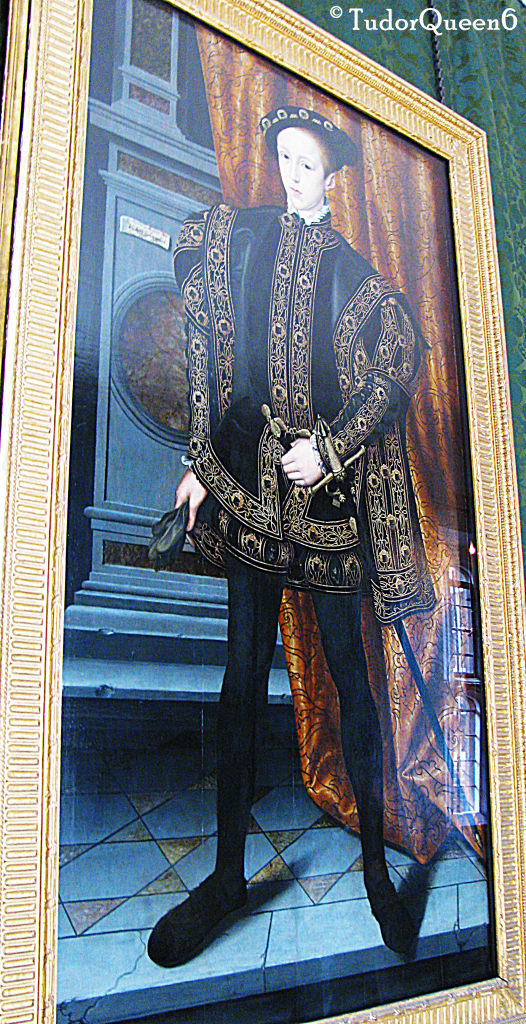
Hampton Court Palace -- King Edward VI
King Edward VI, c.1550, attributed to William Scrots. Hampton Court Palace. artist, after Holbein. RCT405751, Royal Collection Trust © tudorqueen6 (Meg McGath).

To Queen Katherine Parr, the king’s letter congratulatory, upon her marriage with the Lord Admiral

We thank you heartily, not only for the gentle acceptation of our suit moved unto you, but also for the loving accomplishing of the same, wherein you have declared, not only a desire to gratify us, but also moved us to declare the good will, likewise, that we bear to you in all your requests. Wherefore, ye shall not need to fear any grief to come or to suspect lack of aide in need, seeing that he, being mine uncle, is of so good a nature that he will not be troublesome by any means unto you, and I of such mind, that, for divers just causes, I must favour you.

But even as without cause you merely require help against him whom you have put in trust with the carriage of these letters, so may I merely return the same request unto you, to provide that he may live with you also without grief, which hath given him wholly unto you; and I will so provide for you both, that if hereafter any grief befall, I shall be a sufficient succour in your godly and praiseworthy enterprises.

Fare ye well, with much increase of honour and virtue in Christ.

From St James, the 25th day of June

Edward

Letters of the Kings of England: Now First Collected from the Originals in Royal Archives, and from Other Authentic Sources, Private as Well as Public · Volume 2 By James Orchard Halliwell-Phillipps · 1846

Katherine Parr: Complete Works and Correspondence By Katherine Parr, editor Janel Mueller · 2011, pg 147

4 JUNE 1547: Lady Mary writes The Lord Admiral

The letter was addressed in two different hands: “The Lady Mary to the Lord Admiral, 4th June.” “From the Lady Mary’s Grace“

Addressed to: “To my Lord Admiral”

My lord,

After my hearty commendations, these shall be to declare to you, according to your accustomed gentleness, I have received six warrants from you by your servant, this bearer: for the which, I do give you my hearty thanks. By whom also I have also received your letter, wherein, as me thinketh, I perceive strange news concerning a suit you have in hand to the Queen for marriage. For the sooner obtaining whereof, you seem to think that my letters might do you pleasure.

My lord, in this case I trust your wisdom doth consider that, if it were for my nearest kinsman and dearest friend alive, of all other creatures in the world, it standeth least with my poor honor to be a meddler in this matter, considering whose wife her grace was of late. And besides that, if she be minded to grant your suit, my letters shall do you but small pleasure. On the other side, if the remembrance of the King’s majesty, my father (whose soul God pardons), will not suffer her to grant your suit, I am nothing able to persuade her to forget the loss of him, who is at yet very ripe in my own remembrance.

Wherefore I shall most earnestly require you, the premises considered to think none unkindness in me, though I refuse to be a meddler any ways in this matter. Assuring you that, wooing matters set apart (wherein I, being a maid, am nothing cunning), if other ways it still lie in my little power to do you pleasure, I shall be as glad to do it as you to require it: both for his blood’s sake, that you be of, and also for the gentleness which I have always found in you. As knoweth almighty God, to whose tuition I commit you. From Wanstead this Saturday at night, being the fourth of June.

Your assured friend to my power,

Mary

Katherine Parr: Complete Works and Correspondence ed. by Janel Mueller, 2011. Pg 146-7.

Ladies-in-Waiting: Elizabeth, Countess of Lincoln

elizabeth fitzgerald countess lincoln

Portrait of Lady Elizabeth FitzGerald, Countess of Lincoln, known as “The Fair Geraldine” (1527-1589), second daughter by his second wife of the 9th Earl of Kildare. After Master of Countess of Warwick.

Lady Elizabeth FitzGerald, Countess of Lincoln (1527 – March 1590) was the daughter of Gerald “Gearóid Óg” FitzGerald, 9th Earl of Kildare, Lord Deputy of Ireland, and his second wife, Lady Elizabeth Grey. By her mother, she was a great-granddaughter of Queen consort Elizabeth Woodville and Lady Katherine Neville; sister of “Warwick, the Kingmaker”.

Her father was a prisoner in The Tower of London. In 1533, as a young girl, she came to England with her mother. In 1537, her half-brother and five uncles were executed at Tyburn for their part in the uprising and rebellion against King Henry VIII. At the time, Elizabeth was sent to the household of Lady Mary Tudor, eldest daughter of Henry VIII, at Hunsdon. Her younger brothers were sent to be raised alongside Prince Edward; heir to the throne.

When Elizabeth was eleven or twelve, the Earl of Surrey (Henry Howard) decided to write a poem about her–probably to improve her chances at marrying. Truth being that Elizabeth was an impoverished, Irish born gentlewoman who depended upon the welfare of The Tudors to improve her lot in life. The poem that is believed to be written about “Fair Geraldine” reads:

From Tuscane came my lady’s worthy race ;
Fair Florence was sometime her ancient seat.
The western isle whose pleasant shore doth face
Wild Camber’s cliffs, did give her lively heat.
Foster’d she was with milk of Irish breast :
Her sire an Earl, her dame of Prince’s blood.
From tender years, in Britain doth she rest,
With Kinges child ; where she tasteth costly food.
Hunsdon did first present her to mine eyen :
Bright is her hue, and Geraldine she hight.
Hampton me taught to wish her first for mine ;
And Windsor, alas ! doth chase me from her sight.
Her beauty of kind ; her virtues from above ;
Happy is he that may obtain her love!.

In 1543, Elizabeth married Sir Anthony Browne of Cowdray Park, son of Sir Anthony and Lady Lucy Neville, daughter of Sir John Neville, 1st Marquess of Montagu; brother to “Warwick, the Kingmaker”. As such, the two were cousins. This marriage also made Elizabeth aunt to another lady-in-waiting of Queen Katherine Parr, Lucy, Lady Latimer. Elizabeth was Browne’s second wife. With this marriage, Elizabeth took on the raising of stepchildren. Her stepdaughter, Mabel Browne, would marry Elizabeth’s brother, Gerald, 11th Earl of Kildare and become Countess of Kildare. His other daughter, Lucy, would marry a grandson of Sir Thomas More, Thomas Roper.

Anthony Browne’s mother had been previously married to Sir Thomas FitzWilliam and was thus a half brother to Sir William FitzWilliam, later Earl of Southampton. FitzWilliam had been an executor of Lady Maud Parr’s will. The FitzWilliam family was kin to the Parr family.

Browne’s career at court started around 1518. His career somewhat resembled that of his half-brother, William FitzWilliam. However, since the age of ten, William had been brought up in the household of Henry VIII. Browne probably owed his career at court to his mother who had been a niece of “Warwick, the Kingmaker”. Browne became friends with people such as Sir Thomas Boleyn. He had probably been previously acquainted with Sir Thomas Parr, who’s mother was also a niece of Warwick. Sadly, Parr died in 1517 cancelling any chances of becoming a greater Tudor statesman. Browne went to France where he spent time with Boleyn. By 1519, he was recalled to England. In his youth he took to jousting and was at the Field of the Cloth of Gold where he distinguished himself as a fine jouster. He became Ambassador to France in 1527 and as he spent more time at the court, his antipathy grew towards the French. He took part in the suppression of the Northern Rebellion. In 1538, Lady Margaret of Clarence, Countess of Salisbury was imprisoned at Cowdray until September 1539. Margaret was the last Plantagenet from the House of York. She had been the niece of Edward IV and Richard III, and cousin to Browne, by his mother, as Margaret descended from Warwick. Browne was then part of the commission that questioned Queen Catherine Howard after her supposed infidelities had been made known to the King. Browne even had hand written evidence given to him by one of the Queen’s ladies. He examined the Duchess of Norfolk on Catherine’s previous relations and was part of the commission that tried Dereham and Culpepper at Guildhall. By 1542, he had been appointed Captain of the gentlemen pensioners. In 1543, Browne was an attendant at the wedding of Henry VIII to his sixth and final wife, the Dowager Lady Latimer (Katherine Parr). In 1544, he served under Norfolk in the French War. In the defensive wars of 1545 and 1546, he was securing coastal defenses and advising the Earl of Hertford’s on troops and other such things. In 1547, Browne took part in the trial of the Earl of Surrey and questioned the Duke of Norfolk; of which he had been well acquainted.

Upon the death of Sir Anthony on 28 April 1548, Elizabeth joined the household of the Dowager Queen Katherine (Parr) at Chelsea. At this point, Katherine had married Lord Seymour and the two were living together. It is said, at this point, that Elizabeth renewed her friendship with Lady Elizabeth Tudor, who was also living with the Queen. However, Elizabeth Tudor would later be sent away from the household after the Queen would discover what her husband’s real intentions for Elizabeth were. So it’s not known how much time the two actually spent together.

Edward Fiennes Clinton, 1st Earl of Lincoln

“Edward Clinton, Earl of Lincoln, 1584”, portrait by unknown artist, National Portrait Gallery, London, NPG 900

In 1552, Elizabeth married to Edward Clinton, 9th Baron Clinton who was later created Earl of Lincoln. Elizabeth was the third wife of Lord Clinton. By his previous wives he had, had children and once again, Elizabeth would take on the role of stepmother. One stepdaughter was Katherine Clinton, who married William Burgh, who became the 2nd Baron Burgh. William was the younger brother to Queen Katherine Parr’s first husband, Sir Edward Burgh. Another stepdaughter, Frances, would marry to Giles Brydges, 3rd Baron Chandos of Sudeley Castle; where Queen Katherine Parr is buried.

Edward Clinton was the son of Thomas, 8th Baron Clinton and Jane Poynings. His stepfather was Sir Robert Wingfield, who was a nephew of Elizabeth Wingfield, grandmother of Charles Brandon, Duke of Suffolk. He married firstly to Elizabeth Blount, the mistress of King Henry VIII and mother to Henry Fitzroy, Duke of Richmond in 1534. As such, there was a connection to the Parr family as Elizabeth Blount had been a lady to Queen Katherine of Aragon with Lady Maud Parr and Parr’s son, William, grew up in the household of Fitzroy. The two families were no doubt close to each other. After the death of Elizabeth, Clinton married secondly to Ursula Stourton, a niece of John Dudley, later Duke of Northumberland. By Ursula, Clinton had further issue, including his male heir.

Clinton became the 9th Lord Clinton upon his father’s death. He appears in history when King Henry VIII took on Boulogne, France in 1532. Lord Clinton took part in the suppression of the Northern Rebellion in 1536. Certain land holdings of the Abbeys were leased to Clinton, but later give to the King’s brother-in-law, the Duke of Suffolk. When the Duke of Richmond died in 1536, Clinton took on the role of Admiral of England. At that time, his wife, Elizabeth Blount, returned to court as a lady to Anne of Cleves. She would die shortly after. His next wife, Ursula, would take Elizabeth’s place at court as the new Lady Clinton. Clinton would serve in the Royal Navy from 1544-1547. He was knighted in 1544 by Edward, Earl of Hertford. Like Elizabeth FitzGerald’s former husband, Clinton also served Henry VIII in the siege of Boulougne in 1544 while Queen Katherine Parr was Regent of England. Clinton was appointed Governor of Bolougne in 1547 and defended the city against French attacks from 1549-50.

Later on in life, Elizabeth and her husband were involved in the plot to raise Lady Jane Grey to Queen, but like other nobility–they distanced themselves enough to prove to be loyal to Queen Mary. The pardon probably came from Clinton’s willingness to suppress the Wyatt Rebellion. Elizabeth may have also been remembered from her days in Mary’s household and was thus excused from her part in the charade. Others were not so fortunate. For example — Sir William Parr, Marquess of Northampton (brother to the late Queen) was not excused and was sent to The Tower. Anne Parr’s husband, however, who had married his daughter to Lady Jane’s sister, immediately annulled the union and they gained favor with Queen Mary again.

Elizabeth_FitzGerald

When Queen Mary died, her half sister, Elizabeth, became Queen. Elizabeth took on Elizabeth, Lady Clinton, as a lady-in-waiting and the two became good friends. However, Elizabeth got into some sort of trouble with the Queen and was accused of “frailty” and “forgetfulness of her duty”. The charges against Elizabeth were made by Archbishop Parker who also declared that she should be “chastised in Bridewell”. Historian, David Starkey, concludes that Parker thought Elizabeth was a strumpet.

Under the rule of Elizabeth, Lord Clinton continued his role as Lord High Admiral from 1559-1585. In 1569, Elizabeth used her husband’s position as Lord Admiral to seize a ship that had been stolen. The man involved was arrested and Elizabeth kept the ship and cargo. In 1572, Lord Clinton stifled the Rising of the North brought about by the Earls of Northumberland and Westmorland. For his service, Lord Clinton was created Earl of Lincoln.
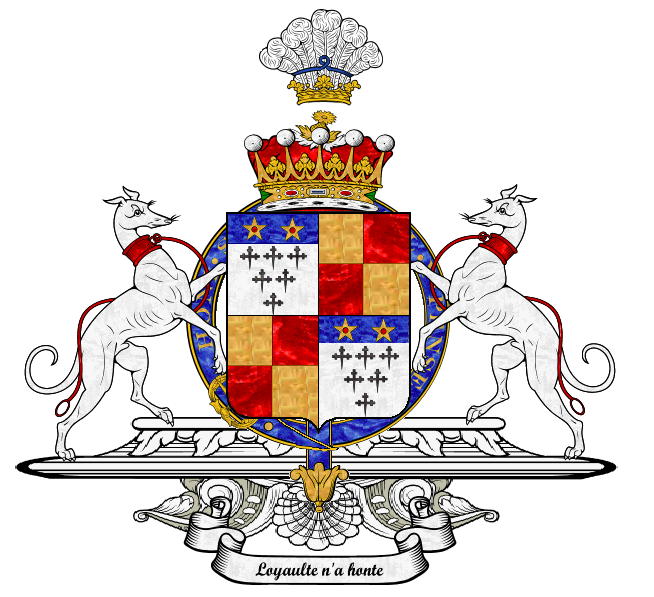
Clinton Fiennes 1st Earl of Lincoln
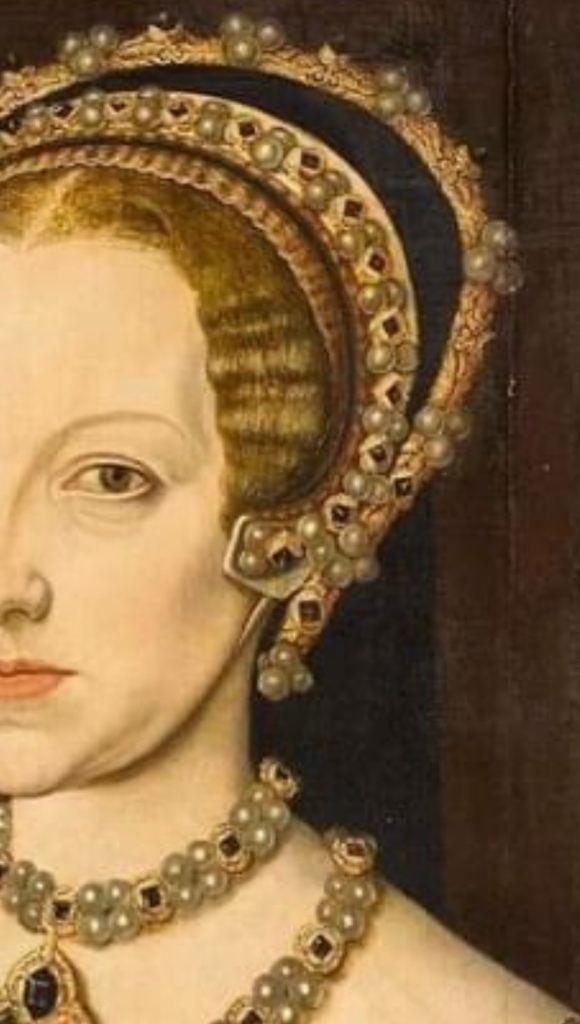
Edward Clinton, (1512–1585) 1st Earl of Lincoln, 9th Baron Clinton KG. Source: European Heraldry

Clinton died in 1585. In his will, he left the bulk of his estates to his wife for life.
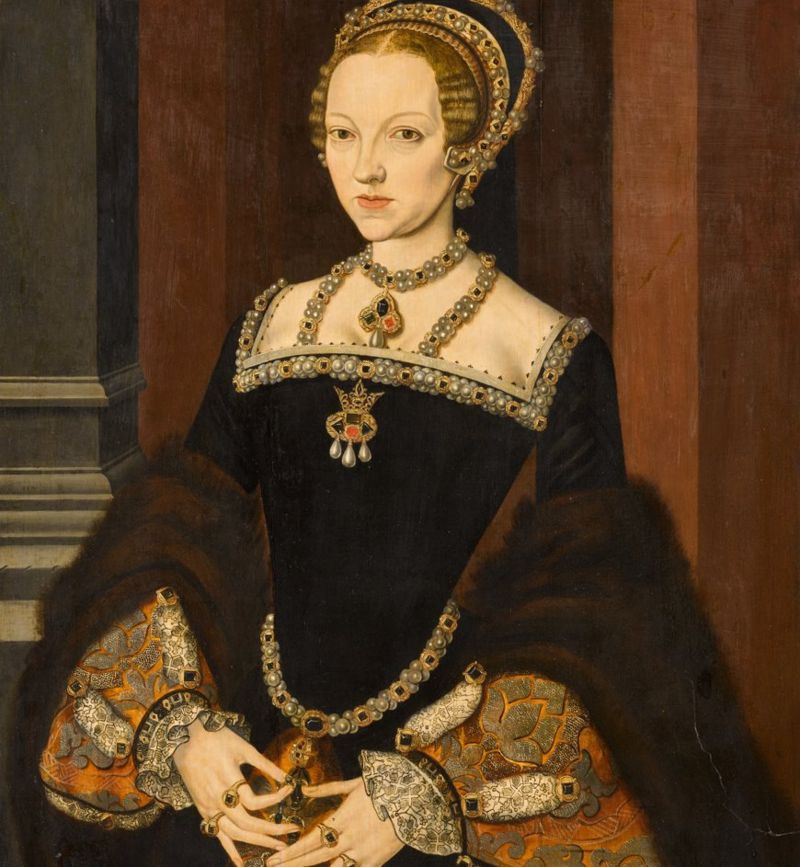
Elizabeth, Countess of Lincoln died in 1590. She was buried in St. George’s Chapel, Windsor Castle, Windsor, UK, with her second husband, the Earl of Lincoln.

Links

Sources