Family of Queen Katherine Parr: Sir John Neville, 4th Baron Latimer

Effigy of John Neville, 4th Lord. By jmc4 – Church Explorer

Sir John Neville, 4th Baron Latimer of Snape Castle (1520[1][2] – 22 April 1577) was an English nobleman of the powerful House of Neville.

Early life

Born about 1520 (he was 23 when his father died, 2 March 1543), he was the only son of John Neville, 3rd Baron Latimer of Snape Castle and his first wife Dorothy, sister and co-heiress of John de Vere, 14th Earl of Oxford. After the death of his mother, Lord Latimer married secondly, Elizabeth Musgrave, by whom he had no children. After her death in 1530, Latimer married again in 1534 the widowed Katherine, Dowager Lady Borough [Parr].

From the beginning of his father’s marriage to Katherine, she tried to be a good step-mother to both children, but John proved to be difficult. There is some indication that Margaret, his sister, was their father and Katherine’s favourite. If that is true, it may explain the turbulence which would follow as John got older. As a “teenager”, John proved to be a confident sulking, lying, and over-sensitive boy. Lord Latimer did not name his son as heir to his properties and made sure that his son could not meddle with his inheritance or father’s legacy. In Lord Latimer’s will, Katherine was named guardian of his daughter and was put in charge of Lord Latimer’s affairs which were to be given over to his daughter at the age of her majority.

In January 1537, John, his sister Margaret, and step-mother Katherine, were held hostage at Snape Castle during the uprising of the North. The rebels ransacked the house and sent word to Lord Latimer, who was returning from London, that if he did not return immediately they would kill his family. When Lord Latimer returned to the castle he somehow talked the rebels into releasing his family and leaving, but the aftermath to follow with Lord Latimer would prove to be taxing on the whole family.[3]

Later life

Nevill became Baron Latimer on his father’s death in 1543. Although the relationship proved difficult during his youth, Katherine, did not forget Nevill. Katherine stayed close with her former stepchildren. In fact, Katherine made John’s wife, Lucy Somerset, a lady-in-waiting when she became queen consort to King Henry VIII.[1][3]

In May 1544, Nevill was involved with the siege of Edinburgh in Scotland and it was there that he was knighted. Nevill then went to war in France where he took part in the siege of Abbeville.

John became an emotionally unstable man later in life. In the summer of 1553, John was sent to Fleet Prison on charges of violence done to a servant. He was arrested for attempted rape and assault in 1557 and in 1563, he killed a man. Of the situation in 1553, Thomas Edwards wrote to the Earl of Rutland describing the violence which had taken place with the servant quoting “too great a villainy for a noble man, my thought.” That this public violence occurred after the death of his step-mother, Katherine, might suggest that at least she had some sort of control over Nevill while she was alive.[3]

Marriage and issue

In 1545, Latimer married Lady Lucy Somerset, daughter of Henry Somerset, 2nd Earl of Worcester and his second wife, Elizabeth Browne.[4] The new Lady Latimer was a cousin to Queen Katherine as the great-granddaughter of the Marquess of Montagu, brother to Lady Alice FitzHugh [great-grandmother of Queen Katherine]. Lady Lucy became a lady-in-waiting to her husband’s former step-mother, Queen Katherine Parr.

Together they had four daughters that all produced children by their first marriages:

  • Hon. Elizabeth Neville (c. 1545 – 1630), married firstly Sir John Danvers of Dauntsey, and secondly Sir Edmund Carey. Elizabeth’s descendants by Danvers included the Dukes of Leeds [extinct in 1964]; Earls of Lichfield; Earls of Leicester of Holkham from which Sarah of York descends.
  • Hon. Katherine Neville (1546 – 28 October 1596), married firstly Henry Percy, 8th Earl of Northumberland, and secondly Francis Fitton of Binfield. Lord and Lady Northumberland were parents to Sir Henry, 9th Earl of Northumberland. Her descendants include Lady Diana Spencer, Princess of Wales; HM Queen Elizabeth II by her mother; Sarah, Duchess of York; and others. Katherine was buried in the Chapel of St. Nicholas in Westminster Abbey, within the Percy family, Dukes of Northumberland.
  • Hon. Dorothy Neville (1547 – 23 March 1609), married Sir Thomas Cecil, Queen Elizabeth’s counselor, later Earl of Exeter. Cecil was the half-brother of the Earl of Salisbury. Her descendants also include Lady Diana Spencer, Princess of Wales.

Latimer’s daughter, the Hon. Dorothy Neville who became Countess of Exeter when her husband Thomas Cecil was elevated to Earl in 1605

  • Hon. Lucy Neville (c. 1549 – April 1608), married Sir William Cornwallis of Brome Hall. Their daughters made advantageous marriages to nobility such as the marriage of their daughter Anne to the 7th Earl of Argyll by whom she had issue. Another daughter, Elizabeth, became Viscountess Lumley as the wife of Sir Richard, 1st Viscount Lumley.

Lord Latimer died without sons in 1577; his four daughters became his joint heiresses. The barony became abeyant until 1913, when its abeyance was terminated in favour of Latimer’s distant descendant Francis Money-Coutts, 5th Baron Latymer.

Effigy and tomb of the 4th Lord Latimer in Nevilles’ Chapel, Wells, North Yorkshire Well Village Website © Well Parish Council 2011

He was buried in St. Michael’s Church, Well, North Yorkshire which adjoined Neville’s home, Snape Castle. The church had a long standing history with the Neville family going back to John and Queen Katherine Parr’s ancestor, Sir Ralph Neville, the 1st Earl of Westmorland. Westmorland married Lady Joan Beaufort; the only daughter of Prince John of Gaunt, 1st Duke of Lancaster by his mistress, later wife, Katherine Roet. Ralph was responsible for the building of the present church c. 1330. Latimer’s mural monument lies in Nevilles’ Chapel within Well’s Church. Latimer’s daughter, Hon. Dorothy, Countess of Exeter inherited Snape Castle and is also buried there with her husband Thomas Cecil, 1st Earl of Exeter.[5] According to a card placed upon the tomb, the four coat of arms on his tomb represent that of his four daughters and their husband.

His wife, Lucy, was buried in Hackney Parish Church in London. Her grand tomb has her effigy surrounded by her four daughters.[6] Her tomb is one of only a few in England which feature such noble bearings; the other being the tomb of George Clifford, Earl of Cumberland at Skipton which is surrounded by no fewer than seventeen richly adorned shields which include that of Brandon, Dacre, de Clare, St. John, and more.[7] The Earl himself was a descendant of Katherine Parr’s great-aunt, Mabel Parr, Lady Dacre. Lady Latimer’s tomb not only includes the arms many of those on Clifford’s tomb as Neville, Beauchamp, Dacre, Berkeley, and Percy but also those of de Vere Earl of Oxford, Walcot, and Cecil.[6] Lord Latimer’s arms (the Neville) are at one end of the tomb. The statues of the four daughters were two on each side of the monument; at the side of each the shield of the husband impaling the Neville arms. These arms are thus repeated five times. At the other end are Lady Latimer’s arms: the lions and fleur de lis that is France and England, quarterly, the arms of the Dukes of Beaufort, descended from the eldest legitimated son of John of Gaunt, her father being Henry Somerset, 2nd Earl of Worcester.[6]

Document on the magnificent tomb of Lady Lucy Somerset, Lady Latimer; wife of the 4th Lord Latimer and lady to HM Queen Katherine Parr. Courtesy of JMC4 Church Explorer.[8]

In Robinson’s History of Hackney we find:

“The effigy of Lady Latimer was exquisitely sculptured and was fixed on the top of the table monument She appears to be dressed in a scarlet robe with a coronet on her head and the other part of the dress was richly gilt This effigy was probably intended for a portrait of her.”[6]

Memorial to Lady Lucy Latimer in the old church. Watercolour by T. Fisher c.1795 [9]

Her epitaph reads:

Such as she, is such surely shall yee bee; Such as shee was, such if yee bee, be glad: Faire in her youth though fatt in age she grew; Virtuous in bothe whose glosse did never fade. Though long alone she ledd a widowe’s life, Yet never ladye live da truer wife. From Wales she sprang, a Branch of Worcester’s race, Grafte in a stock of Brownes her mother’s side: In Court she helde a maide of honor’s place, Whilst youth in her, and she in Court did byde. To John, Lord Latimer, then became she wife; Four daughters had they breathing yet in life. Earl of Northumberland tooke the first to wife; The nexte the heire of Baron Burleigh chose: Cornwallis happ the third for terme of life: And Sir John Danvers pluckt the youngest Rose. Their father’s heirs, them mothers all she sawe: Pray for, or praise her: make your list the Lawe, Made by Sir William Cornwallis, Knight, this Ladye’s Sonne in Lawe.[6]

Ancestry

By his father, Latimer descended from King Edward III of England twice. Latimer’s great-grandparents were Sir Henry Neville, heir to the barony of Latimer and Earldom of Warwick, and the Hon. Joan Bourchier. Neville was a grandson of Sir Ralph Neville, 1st Earl of Westmorland and his second wife, Lady Joan Beaufort. Lady Joan was the legitimized daughter of Prince John of Gaunt, Duke of Lancaster by his mistress, later wife, Katherine Roet. Bourchier was a granddaughter of Sir William, 1st Count of Eu and Lady Anne of Gloucester, daughter of Prince Thomas of Woodstock [youngest son of Edward III] and his wife, Lady Eleanor de Bohun. This connection to the Bourchier family made Latimer a cousin of the Earls of Bath, Lords Dacre of the South, the Lady Margaret Bryan [governess of the King’s children], Lady Anne Bourchier [husband of Katherine Parr’s brother William Parr], and even the Duchess of Somerset Anne Stanhope.

Latimer’s mother was the granddaughter of the 12th Earl of Oxford and Elizabeth Howard. Oxford was himself a descendent of Edward I of England and Eleanor of Castile by their daughter Princess Joan of Acre. The Countess of Oxford, Elizabeth Howard, was a descendant of John I of England by his son Richard of England, Earl of Cornwall, King of the Romans as well as a descendant of Henry I’s illegitimate son Reynold de Dunstanville, 1st Earl of Cornwall.
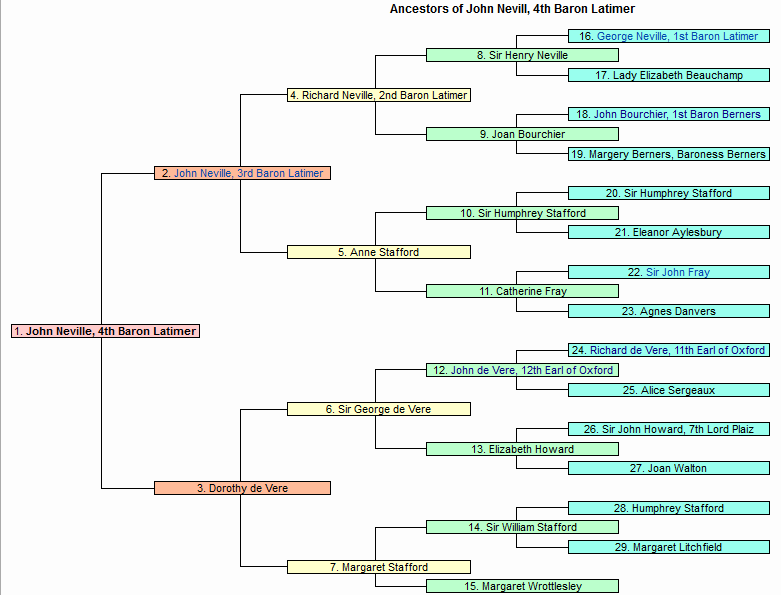
The ancestry of John Neville, 4th Lord Latimer

References

  1. ^ Linda Porter. Katherine the Queen; the Remarkable Life of Katherine Parr, the Last Wife of Henry VIII. Macmillan, 2010. pg 66-67.
  2. According to Linda Porter’s Katherine, the Queen, Neville was 14 at the time of his father’s marriage to Catherine Parr.
  3. Susan E. James. Catherine Parr, Henry VIII’s Last Love. The History Press, 2009.
  4. G. E. Cokayne. The Complete Peerage of England, Scotland, Ireland, Great Britain, and the United Kingdom, Vol. VIII, G. Bell & sons, 1898. pg 200. Google eBook
  5. Village of Well, North Yorkshire, http://www.wellvillage.org.uk/history/
  6. Richard Simpson. Some Accounts of the Monuments in Hackney Church, Billing and Sons, 1881; Chapter: Lady Latimer.
  7. W. Harbutt Dawson. History of Skipton, Simpkin, Marshall, London, 1882.
  8. JMC4 Church Explorer . London, Hackney, Flickr, 2008.
  9. T. Fisher. Hackney Council, The Churchyard Memorials: Memorial to Lady lucy Latimer in the old church, c.1795.

Written and researched by Meg McGath
27 August 2012

30 September 1544: Henry returns from Boulogne, France

Henry greet Queen Katherine after returning from France; “The Tudors”

30 September 1544 – Queen Catherine’s duty as Regent of the Realm was over as Henry VIII returned to England after his victory in Boulogne. The French forces had surrendered on 13th September after a siege which had lasted from 19th July.

Family of Queen Katherine Parr: Bishop Cuthbert Tunstall

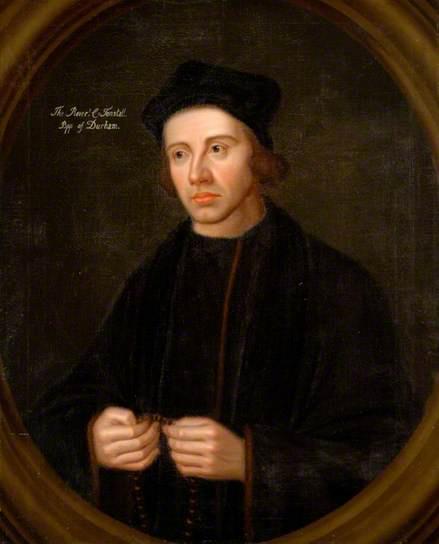
Bishop Cuthbert Tunstall

Cuthbert Tunstall (c. 1474/5 Hatchford, Richmondshire, England – 18 November 1559 Lambeth Palace, London, England) was an English church leader during the reign of four Tudor monarchs. Through out his lengthy career he was Bishop of Durham, Bishop of London, Archdeacon of Chester, Lord Privy Seal, Royal adviser, and a diplomat. He was “lucky” enough to have served as Bishop of Durham [among other offices] and actually survive the reigns of three Tudor monarchs; King Henry VIII, Edward VI [Protestant], Mary I [Catholic]. Under the Protestant Queen Elizabeth I, Tunstall would be arrested in 1559 after refusing to take the Oath of Supremacy and die under house arrest at Lambeth Palace [home to the Archbishops of Canterbury].

“Tunstall’s long career of eighty-five years, for thirty-seven of which he was a bishop, is one of the most consistent and honourable in the sixteenth century. The extent of the religious revolution under Edward VI caused him to reverse his views on the royal supremacy and he refused to change them again under Elizabeth.”The Anglican historian Albert F. Pollard

Tunstall was illegitimate at birth, although his parents later married and the irregular circumstances of his background were never held against him. He was the son of Sir Thomas Tunstall, one of two sons of Sir Thomas of Thurland. Sharing a great-great-grandfather, Sir Thomas of Thurland Castle [Tunstall’s grandfather], Tunstall was a first cousin, twice removed on his father’s side to Queen Katherine Parr and her siblings Lady Anne Herbert and Sir William, 1st Marquess of Northampton. Tunstall was appointed as the executor of Sir Thomas Parr’s will. After his death, Tunstall continued to stay close to the Parr family. Tunstall advised Lady Maud Parr on the education of her children; especially that of her daughters. Maud named Tunstall as one of the executors of her will as well.

Tunstall was an outstanding scholar and mathematician, he had been educated in England, spending time at both Oxford and Cambridge, before a six year spell at the University of Padua in Italy, from which he received two degrees. His Church career began in 1505, after he returned to England. He was ordained four years later. At the time of his ordination four years later he had caught the attention of the Archbishop of Canterbury, William Warham, who sponsored Tunstall’s advancement and brought him to court. Tunstall was also a close to Wolsey, who recognized his potential to serve his country and diplomacy.

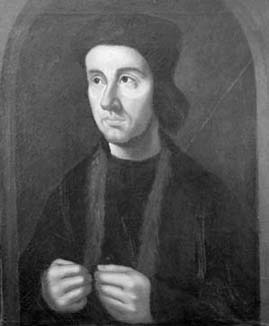
Cuthbert Tunstall [a portrait painted before the Reformation showed him with a rosary. It was obviously painted over].

Tunstall was close to all the great names of English humanism in the early sixteenth century, especially Sir Thomas More. The European humanist Erasmus greatly admired Tunstall’s modesty, scholarship, and charm. Tunstall helped Erasmus in his publishing.

Tunstall was a great publisher of many books including De arte supputandi libri quattuor (1522), which enhanced his reputation among the leading thinkers of Europe. This book would be used later by Mary Tudor and his cousin Catherine Parr as queen.

Like More, Tunstall was on intimate terms with King Henry VIII. During the King’s ‘Great Matter‘, Tunstall defended Queen Katherine of Aragon, but not with the vigour or absolute conviction of Bishop Fisher. Tunstall had been bold enough to tell Henry that he could not be Head of the Church in spiritual matters and he may have been one of the four bishops of the northern convocation who voted against the divorce, but he recognized that the queen’s cause was hopeless and never attempted opposition to the King. In fact, he attended Anne Boleyn’s coronation. But Tunstall felt he could not keep quiet, he wrote a letter personally to Henry about the rejection of Christendom, and other matters that bothered him. Henry disagreed and refuted every point Tunstall made. These exchanges led to a search of Tunstall’s home by order of the King, but no incriminating evidence was found. Rumor was that Sir Thomas More warned Tunstall in time to dispose of anything that might incriminate him.

Bishop Cuthbert Tunstall [right] confronts Katherine of Aragon in "The Tudors".

Bishop Cuthbert Tunstall [right] portrayed by Gordon Sterne confronts Katherine of Aragon in “The Tudors“.

Tunstall agreed to take the oath, unlike More and Fisher. He and Archbishop Lee of York were required to explain to the imperial ambassador, Eustace Chapuys, and subsequently the very angry Katherine of Aragon the justification for the annulment of her marriage. They did not succeed in getting her to agree or acknowledge the fact that she was no longer queen.

After the ‘great matter’ was resolved, Tunstall turned his loyalty back to the King. Tunstall was an executor of King Henry VIII’s will. Tunstall would go on to serve in the reigns of Edward VI, Mary I, and Elizabeth I.

On 19 July 1553, Mary was proclaimed Queen. After being imprisoned in The Tower under the rule of Edward VI, Mary released him and he went back to being Bishop of Durham. During the reign of Mary, Tunstall was very lenient on the Protestants involved in the “Marian Persecutions.”

Lambeth Palace, London. The oldest parts of the present buildings date from the 1400’s. The most obvious external feature is the gatehouse which is framed on either side by two towers, built by in tudor brick by Archbishop Morton in 1495. This is consequently known as Morton’s Tower.

It was during Elizabeth’s reign that Tunstall refused to take Elizabeth’s Oath of Supremacy and was subsequently arrested. Even though he had been Elizabeth’s godfather, he was deprived of his diocese in September 1559, and held prisoner at Lambeth Palace, where he died within a few weeks, aged 85. He was one of eleven Catholic bishops to die in custody during Elizabeth’s reign. He was buried in the chancel of Lambeth church under the expense of the Archbishop that had overseen his confinement, Parker.

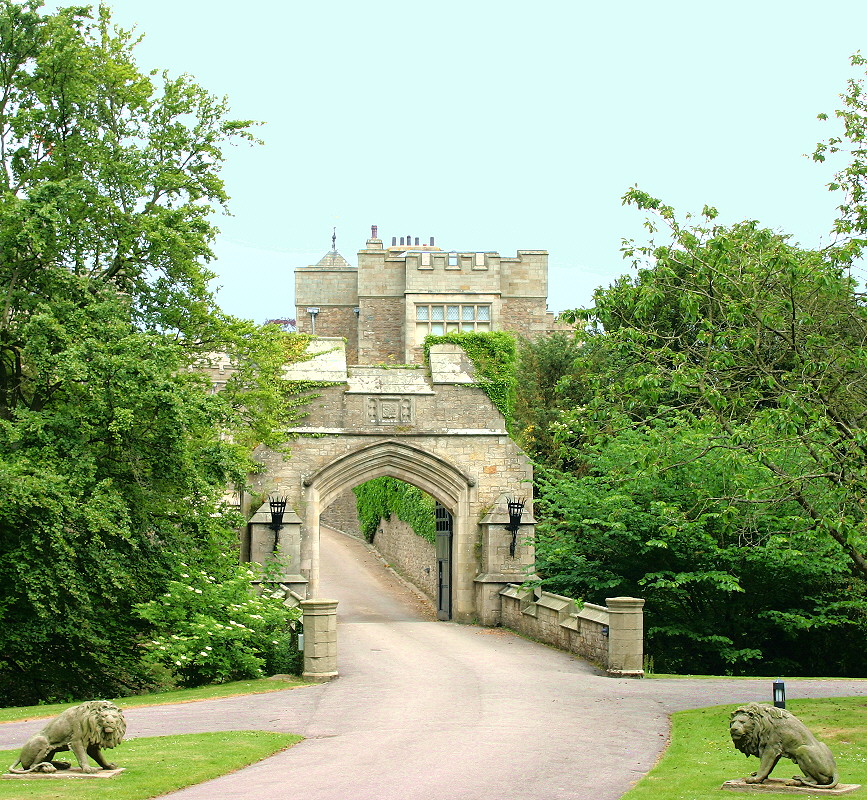
Thurland Castle Gate; Lancashire.gov.uk

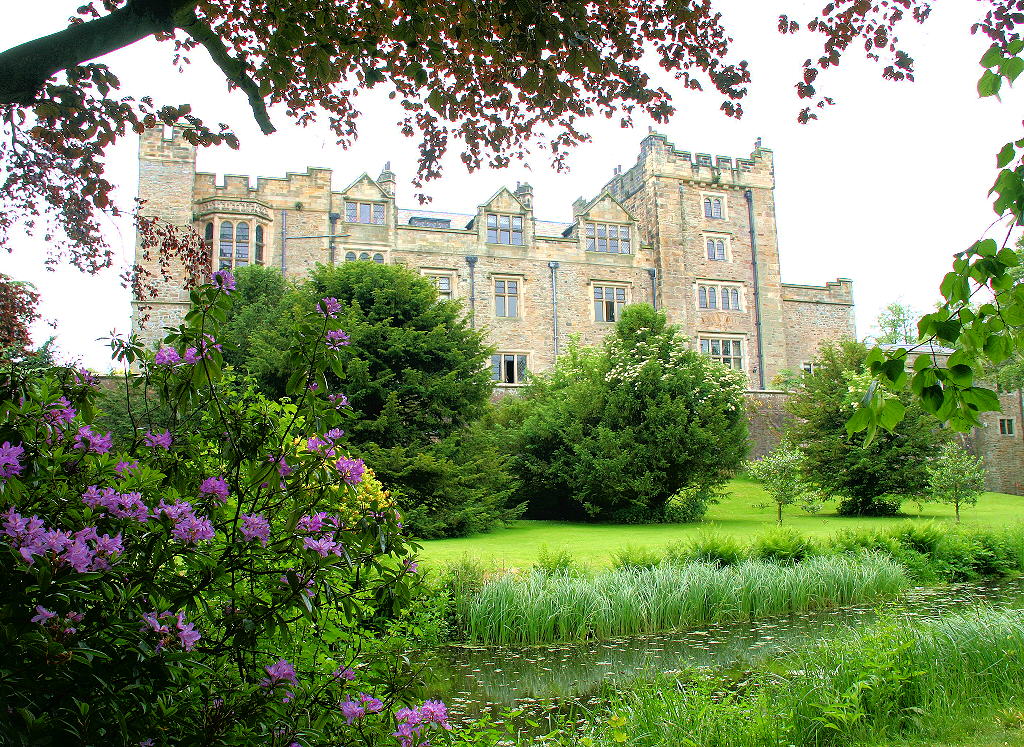
Thurland Castle; Lancashire.gov.uk

De arte supputandi libri quattuor

De arte supputandi libri quattuor Cuthbert Tunstall London: R. Pynson, 1522 [DeM] L.1 [Tunstall] SSR

De arte supputandi libri quattuor
Cuthbert Tunstall
London: R. Pynson, 1522 [DeM] L.1 [Tunstall] SSR

De Morgan in his Arithmetical Books was laudatory about Tunstall: “This book is decidedly the most classical which was ever written on the subject in Latin, both in purity of style and goodness of matter. The author had read every thing on the subject, in every language which he knew … and had spent much time, he says, ad ursi exemplum, in licking what he found into shape. … For plain common sense, well expressed, and learning most visible in the habits it had formed, Tonstall’s book has been rarely surpassed, and never in the subject of which it treats”. As hinted by De Morgan, Tunstall’s work is not original, but a confessed compilation. Tunstall‘s motivation for writing it was a suspicion that that the accounts goldsmiths with whom he was dealing were incorrect; he renewed his study of arithmetic in order to check their figures. His work was the first printed in Great Britain to be devoted wholly to mathematics.

Copy of Tunstall’s book from Lehigh University.

This is the first of three 16th-century editions in De Morgan’s library. De Morgan’s designation of it on the title page as “very rare” has since been disproved: nineteen other copies are recorded in Britain on ESTC, chiefly held in Oxford and Cambridge libraries, with another five in North America. (DeMorgan Library, London)

Tunstall Chapel

In Durham Castle, Tunstall constructed a Chapel in 1540. For more info: Tunstall Chapel.

Sources

  1. William Fordyce. “The history and antiquities of the county palatine of Durham:comprising a condensed account of its natural, civil, and ecclesiastical history, from the earliest period to the present time; its boundaries, ancient, parishes, and recently formed parochial districts and chapelries, and parliamentary and municipal divisions; its agriculture, mineral products, manufactures, shipping, docks, railways, and general commerce; its public buildings, churches, chapels, parochial registers, landed gentry, heraldic visitations, local biography, schools, charities, sanitary reports, population, &c,” Volume 1, A. Fullarton and co., 1857. Google eBook.
  2. Edward Foss. “The Judges of England: With Sketches of Their Lives, and Miscellaneous Notices Connected with the Courts at Westminster, from the Time of the Conquest,” Volume 5, Longman, Brown, Green, and Longmans, 1857. pg 237-40.
  3. Katherine Parr. “Katherine Parr: Complete Works and Correspondence,” editor Janel Mueller, University of Chicago Press, Jun 30, 2011.
  4. Linda Porter. “Katherine, the Queen,” Macmillian, 2010.

English Ancestry of The Six Wives: Descent from Edward I

The Six Wives of King Henry VIII

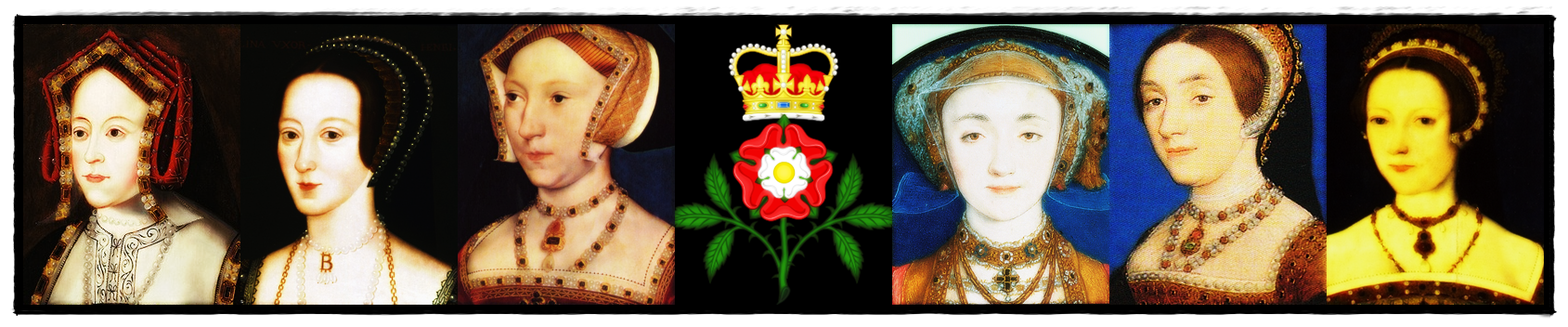
Yes, all six wives of King Henry VIII had English ancestry; some more than others.

Henry VIII after Hans Holbein c. 1535-44

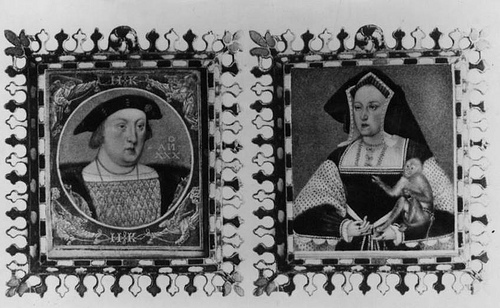
Miniature of Henry VIII [1540-1570] after Hans Holbein the Younger. Watercolour and bodycolour on vellum, diameter 3.6 cm, Royal Collection, Windsor Castle.

FACT: King Henry VIII descends from Edward I of England only six times!

  • By his paternal grandmother, Lady Margaret Beaufort, Henry descended from Edward I by Margaret’s paternal grandparents; John Beaufort, 1st Earl of Somerset and his wife Lady Margaret of Kent [born Holland], later Duchess of Clarence.
    • Lord Somerset was a grandson of Edward III [grandson of Edward I and his first wife, Eleanor of Castile] by his father Prince John of Gaunt, 1st Duke of Lancaster.
    • Lady Margaret of Kent was a granddaughter of Princess Joan of Kent, Princess of Wales [wife of Edward, Princes of Wales, heir to Edward III, and mother to Richard II]; granddaughter of Edward I and his second wife, Marguerite of France, by their second son, Edmund of Woodstock, 1st Earl of Kent.
  • By his maternal grandfather, Edward IV, Henry descended from Edward I by Edward’s parents; Lord Richard, Duke of York and Lady Cecily [born Neville], Duchess of York:
    • The Duke of York’s parents, Lord Richard, 3rd Earl of Cambridge and his wife Lady Anne [born Mortimer], Countess of Cambridge both descended from Edward I.
      • Cambridge was a grandson of Edward III by his father, Edmund of Langley, Duke of York, 4th surviving son of Edward III.
      • Lady Anne Mortimer was a granddaughter of Edward III by her paternal grandmother, Lady Philippa of Clarence, 5th Countess of Ulster; granddaughter of Edward III by his second surviving son, Lionel of Antwerp, 1st Duke of Clarence. Lady Anne also had a second connection to Edward I, by her maternal grandfather, Sir Thomas Holland, 2nd Earl of Kent; son of Princess Joan, Princess of Wales. Princess Joan was, as mentioned before, a granddaughter of Edward I and his second wife Marguerite.
    • Lady Cecily, Duchess of York, was the youngest daughter of Sir Ralph, Earl of Westmorland and his second wife, Lady Joan Beaufort. Lady Joan was the only daughter of Prince John of Gaunt, 1st Duke of Lancaster and his third wife, Katherine [Roet]. John of Gaunt was of course the son of Edward III.

292px-Tudor_Rose_Royal_Badge_of_England.svgWould it surprise you to know that even Katherine of Aragon and Anne of Cleves had Edward I in their pedigree?

In fact, Katherine of Aragon descended from two wives of Prince John of Gaunt, 1st Duke of Lancaster, Titular King of Castile [the son of Edward III of England and Philippa of Hainault]; Blanche of Lancaster AND Constanza of Castile, heir to the throne of Castile.

Royal Emblem of Queen Katherine of Aragon

1. Katherine of Aragon – daughter of Ferdinand II of Aragon and Isabella I of Castile [2 times]

  • By her mother — Isabella of Castile’s paternal grandmother, Katherine of Lancaster, daughter of Prince John of Gaunt [son of Edward III] and his second wife, Constanza of Castile, she descended from Edward I and Eleanor of Castile.
  • Isabella of Castile’s maternal great-grandmother, Philippa of Lancaster, was also a daughter of Prince John of Gaunt, but by his first wife, Blanche of Lancaster. Lady Philippa was brother to King Henry IV [Bolingbroke]. Queen Katherine’s Hampton Court Pedigree shows this line from Edward I’s son, Edward II, onwards.

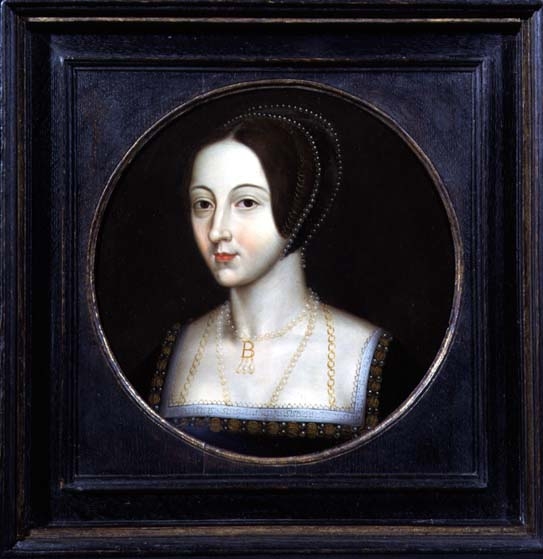
Royal Emblem of Queen Anne Boleyn

2. Anne Boleyn – daughter of Sir Thomas Boleyn and Lady Elizabeth Howard [5 times]

  • By both paternal great-great-grandparents [through the Butler’s of Ormonde], Sir James, 4th Earl of Ormonde and Joan Beauchamp; she descended from Edward I and Eleanor’s daughter Princess Elizabeth of Rhuddlan. The Earl and Countess of Ormonde were parents to the 7th Earl of Ormonde.
  • By her paternal great-great-grandmother, Lady Anne Montacute, daughter of the 3rd Earl of Salisbury [also an ancestor of Queen Katherine Parr] she descends from Princess Elizabeth’s elder sister, Princess Joan of Acre. Lady Anne was the mother of Anne Hankford, Countess of Ormonde as wife to the 7th Earl.
  • By her maternal [Howard] line she descended from Edward I and Eleanor of Castile via her great-great-grandmother Lady Margaret Mowbray, wife of Sir Robert Howard; Lady Margaret descended from Elizabeth of Rhuddlan, by way of Lady Eleanor Fitzalan [wife of Thomas Mowbray, 1st Duke of Norfolk].
  • By Sir Thomas Mowbray, 1st Duke of Norfolk, she descended from Edward I and Marguerite of France through their son, Thomas of Brotherton Plantagenet, Duke of Norfolk [Hampton Court Pedigree shows this line from Edward I’s son, Thomas of Brotherton onwards]

Royal Emblem of Queen Jane Seymour

3. Jane Seymour – daughter of Sir John Seymour and Margery Wentworth [twice]

  • By her maternal great-grandmother, Hon. Margaret Clifford, whose father John Clifford, 7th Lord descended from Joan of Acre, daughter of Edward I and Eleanor of Castile. Lord Clifford’s great-great-grandmother was Lady Margaret de Clare, Countess of Gloucester [daughter of Princess Joan] who married Sir Hugh Audley, 1st and last Earl of Gloucester.
  • By Hon. Margaret Clifford’s mother, Lady Elizabeth Percy, whose grandmother was Lady Philippa of Clarence, 5th Countess of Ulster who was the daughter of Lionel of Antwerp, the second son of Edward III. [Hampton Court Pedigree shows this line from Edward I’s son, Edward II, onward]

Royal Emblem of Queen Anne of Cleves

4. Anne of Cleves – daughter of John III, Duke of Cleves and Marie von Julich [twice]

  • By both paternal great-grandparents, Johan I Duke of Cleves and Elizabeth of Nevers; who were great-grandchildren of Marguerite of Dampierre, suo jure Countess of Flanders. Marguerite was the great-granddaughter of Margaret of England, Duchess of Brabant; daughter of Edward I and Eleanor. [Hampton Court Pedigree shows the lineage of Johan I of Cleves from Edward’s daughter, Margaret of England who’s son became Johan III, Duke of Brabant]

Royal Emblem of Queen Katherine Howard

5. Katherine Howard – daughter of Lord Edmund Howard and Jocasa Culpepper [3 times]

  • Like Anne Boleyn, by her paternal line [Howard] she descended from Edward I and Eleanor by Elizabeth of Rhuddlan by way of Lady Eleanor Fitzalan [wife of Thomas Mowbray, 1st Duke of Norfolk].
  • By Sir Thomas Mowbray, 1st Duke of Norfolk, she descended from Edward I and Marguerite of France through their son, Thomas of Brotherton Plantagenet, 1st Duke of Norfolk [Katherine’s Hampton Court Pedigree shows this line from Edward I’s son, Thomas of Brotherton onwards]
  • By her maternal great-great-grandfather, Sir William Ferrers, 5th Baron Groby, she descends from Princess Joan of Acre, daughter of Edward I and Eleanor, via her daughter Lady Elizabeth de Clare, wife of Sir Theobald, 2nd Lord Verdun.

Royal Emblem of Queen Katherine Parr

6. Katherine Parr – daughter of Sir Thomas Parr of Kendal and Maud Greene [6 times]

  • By her paternal grandmother the Hon. Elizabeth FitzHugh, daughter of Lady Alice Neville [sister of “Warwick, the Kingmaker”] she descended from Lady Joan Beaufort and her second husband Sir Ralph Neville, 1st Earl of Westmorland; Lady Joan was the legitimized daughter of Prince John of Gaunt, 1st Duke of Lancaster, third son of Edward III and thus she descended from Edward I and Eleanor of Castile. [Katherine’s Hampton Court Pedigree shows this line from Edward I’s son, Edward II onwards]
  • By her paternal great-great-grandmother, Lady Alice Montacute, suo jure Countess of Salisbury [wife of Sir Richard, 5th Earl of Salisbury, son of Lady Joan and Sir Ralph mentioned above]. Both parents of the Countess of Salisbury descended from Edward I; by her father the 4th Earl of Salisbury she descended from Princess Joan of Acre, daughter of Edward I and Eleanor by her son 2nd Lord Monthermer by her second husband Lord Monthermer, Earl of Gloucester. By her mother Lady Eleanor de Holland [daughter of Lady Joan of Kent, Princess of Wales and niece of King Richard II] she descended from Prince Edmund of Woodstock, son of Edward I and his second wife Marguerite of France.
  • By her maternal great-great-grandfather, Sir Thomas Greene, Sheriff of Northamptonshire, she descended from Princess Elizabeth of Rhuddlan, daughter of Edward I and Eleanor; Sir Thomas Greene descended from Princess Elizabeth’s daughter Lady Eleanor Bohun, Countess of Ormonde. His wife, Hon. Philippa de Ferrers descended from Elizabeth of Rhuddlan’s elder sister, Princess Joan of Acre, TWICE; by her daughters Lady Margaret de Clare, Countess of Gloucester and Lady Eleanor de Clare, Lady Despenser.

For more on their pedigrees, featuring the windows from Hampton Court Palace — see also —

The Hampton Court Pedigrees

Written and researched by Meg McGath, 2012.

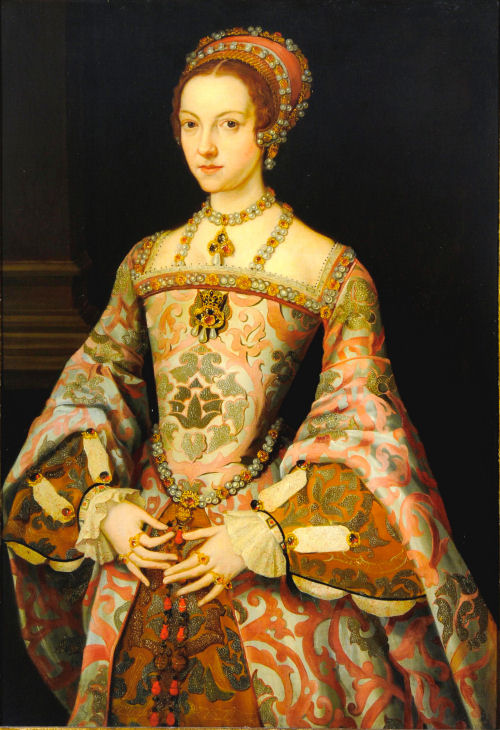
The “Melton Constable” or “Hastings” Portrait of Queen Katherine Parr

It is my pleasure to report that this portrait which was once labeled “Lady Jane Grey” is now officially “Queen Katherine Parr.”

The Melton Constable Portrait of Katherine Parr

According to Dr. J.S. Edwards, Ph.D. and his website “Some Grey Matter“, this portrait owned by the Lord Hastings and now at Seaton Delaval, in Northumberland, is a seventeenth-century copy of a sixteenth-century original formerly in the Royal Collection but lost in the dispersals of 1651-52. The painting was originally held at the seat of the Hasting family in Norfolk, but was moved.

Though long thought to depict Lady Jane Grey, it has recently been relabeled by the National Trust as Katherine Parr.

You will note that the painting is owned by the Barons Hastings. The 1st Baron was Sir William Hastings, husband to Lady Katherine Neville as her second husband. Lady Jane did not descend from the 1st Baron Hastings, but from his wife’s first marriage to Lord Harrington (Sir William Bonville). However, Parr’s great-grandmother, Lady Alice FitzHugh (Neville), was sister to Lady Katherine Hastings.

For more information, see:

Tudor Conflict and Disease: the Reformation and Plague

The uniting of the House of York [technically Elizabeth of York was, after the death of her brothers, heiress to the throne of England, but she was a female] and the House of Lancaster [Henry Tudor who became King Henry VII of England].

The Tudor period was a time of change. The War of the Roses between the two Royal houses of Lancaster and York had just ended [1485]. The newly crowned King was Henry Tudor [VII], a direct descendant of John of Gaunt Plantagenet (3rd surviving son of Edward III; father to the Lancastrian Kings) and his mistress (later wife) Katherine Roet through his mother Lady Margaret Beaufort. Although there were plenty of nobility who could claim the throne based on a more legitimate line; Henry Tudor was crowned King of England in 1485 on the battle field directly after the Battle of Bosworth [in which he defeated Richard III of the House of York]. Henry VII, who had fought his way to the throne of England, was crowned on 20 October 1485. In an attempt to keep the Nation from going to War again, he married Princess Elizabeth of York [Plantagenet of the House of York]; daughter of King Edward IV and his queen consort Elizabeth Woodville. Through this union Henry’s hope was to unify the two houses. Henry’s children, when born, would have a stronger claim to the throne because the blood of both the houses of York and Lancaster would be inherited. Having married Elizabeth, who some saw as the sole heiress of Edward IV, the children of the two would leave no question as to who should rule England. 

Although Henry VII’s intentions were good, over the next two generations the House of Tudor would go through some very unsettling times. Due to the fact that England had become bankrupt during the reign of his predecessor, there would be economic difficulties that Henry VII would have to resolve. His oldest son, Arthur, Prince of Wales, would die young leaving his only other living son, Henry, the throne.[1] Henry VIII had a long and grueling reign. His reign saw the demise of the Catholic Church due to his “great matter” which will be discussed further in this paper. The plague of “sweating sickness” began around 1485, when Henry VIII’s father came to power and lasted until 1551. With Henry VIII’s rule and the ascension of his daughters, Mary and Elizabeth, a whole new lifestyle was created. There was a constant fight over religion and disease played a huge part in everyday life.

In this paper there will be two main topics discussed; conflict and disease. The conflict for this paper deals with Henry VIII’s conflict with the Catholic Church over his “great matter” and how he transformed England into a Protestant nation even though he died as a Catholic in the end. I then chose to write about the history of the plague of “Sweating Sickness” which hit London during the reign of the Tudor dynasty. Both issues had an impact on England. The change to Protestantism over the King’s “great matter” sent the whole country into an uproar. There were major disputes between the clergy and King Henry. Even the people had issues with the change. Then in between all of this came the plague to make things worse. It swept through London killing anyone it came into contact with. 

The original Tudor heir, Prince Arthur, was Henry’s older sibling.

Henry VII and Elizabeth of York gave birth to a son in September of 1486. They named him Arthur, Prince of Wales. As the oldest son Arthur was to be the heir to the English throne. Arthur grew up being taught the ways of the Kingdom. He was sure to be King of England one day. Arthur was betrothed to a Spanish princess named Katherine of Aragon at an early age. The match was one of allegiance for Katherine was the daughter of the two great Spanish monarchs, Ferdinand II of Aragon and Isabella I of Castile. The two were to be married as soon as they turned of age. They married in 1501. The couple was not together long before the two of them became sick. Katherine eventually recovered, but only to find herself a widow. At the age of 15, Arthur died after suffering from a mysterious sickness at Ludlow Castle. Sweating sickness was thought to be one of the causes.[2]
The sweating sickness was an epidemic that started originally in the late 1400s. It was an epidemic that would have sudden outbreaks. The worst outbreak recorded in the book “The Epidemics of the Middle Ages” by Justus Friedrich Carl Hecker was recorded during 1517. In July of that year many people were infected and within the span of two or three hours they were dead. The epidemic was extremely contagious and if you came into contact with it your chances of living were slim to none. The poor were affected the most, but even the rich who thought they were beyond getting the epidemic got caught by surprise. Christmas celebrations of that year were cancelled in the Palaces. King Henry VIII retreated from London to the countryside to stay away from the epidemic. He would constantly move around in fear and would shut himself up alone in castles until the epidemic passed through. The sickness began to spread though into other parts of England like Oxford and Cambridge. Soon it had reached the English occupied part of France, Calais. [3]
The causes of the epidemic are unknown, but one can certainly imagine personal hygiene had something to do with it. Also, English people were not known for eating healthy. There would be excess overeating of salted meats, over indulging in wine, etc. The living habits were not very healthy basically. People did not know how to take care of themselves. People did not take baths, there was no soap, and the poor were not taken care of. They were left to rot on the streets.

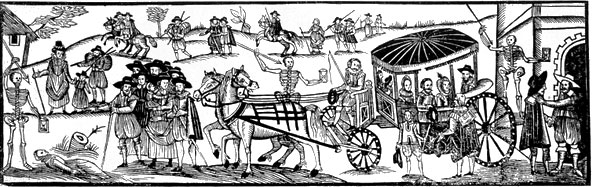
The towns people and nobility try to flee from London.

If you were to escape the sickness you would have to leave the city. There were also mystic pills and herbs that people took, but only the rich could afford them. Basically, unless you were of high status and had a lot of money you would have to stay in town and try to wait it out, but as stated before, your chances of surviving were slim to none.[4]

King Henry VIII shortly after his coronation in 1509.

Henry, who had been titled Duke of York, became the next heir apparent after Arthur died and took on the title of Prince of Wales. Henry had grown up in a carefree environment. He was educated, but not as Arthur had been. After the death of his brother Arthur, Henry VII was left with Infanta Katherine who had become the dowager Princess of Wales. Since Katherine had been married once already she was seen as less of an attractive match. She did not return to Spain. As a solution to accommodate Katherine of Aragon [more likely to better suit Henry VII and to be able to keep her dowry], Henry VII discussed the possible proposal of marriage to Katherine himself with her parents Ferdinand and Isabella. Henry VII’s son Henry VIII was only eleven and his chances of surviving to adulthood were at stake. Henry VII thought that if he married Katherine of Aragon himself, he would be able to have another son as a safeguard. Of course the match was not approved. Henry VII was about 30 years older than Katherine and he had more experience and knowledge in politics. Eventually the idea of marrying Katherine to Henry VII’s son, Henry, Prince of Wales, was put forth.

Katherine of Aragon and Henry VIII were betrothed and later married on 11 June 1509. Katherine of Aragon and Henry VIII’s marriage was a good match. At the time, it provided an alliance with Spain through Katherine’s nephew The Holy Roman Emperor Charles V.[5] Katherine’s English ancestry was also a plus. Katherine descended from Edward III of England, twice, by his son Prince John of Gaunt. 1st Duke of Lancaster [father of Henry IV]. Katherine descended from John’s first two wives, Lady Blanche of Lancaster, the heiress to the Lancaster inheritance and Infanta Caterina of Castile who was Titular Queen of Castile in her own right. Technically, Katherine had a stronger claim to the throne of England than Henry if Henry was to use his paternal ancestry as the basis of his rise to the throne. So any future children by Prince Henry and Katherine would have a stronger claim to the throne.

King Henry with his first wife, Katherine of Aragon.

Shortly after being married, Katherine gave birth to a son. Henry and Katherine named him Prince Henry. He was given the title Duke of Cornwall. Henry was ecstatic. There were lavish gatherings and jousting matches held in the new baby’s honor. But only a few months later the baby Henry would die. Katherine became pregnant again soon after the death of her child. This time around she lost the baby which was in fact a boy. Katherine would have many more of these unfortunate events happen before she gave birth to a healthy baby girl on 18 February 1516. The couple named her Mary. Shortly after her birth Katherine became pregnant again, but lost the child. Princess Mary would be the only surviving child between the union of Henry and Katherine; which became a problem.

Princess Mary was for a time the heiress to the English throne.

At this point in time King Henry was starting to question Katherine’s ability to conceive a male heir. Katherine was getting old and her chances of having a healthy boy were diminishing. It was during these times that Henry started to stray from his marriage and as a result, his mistress Elizabeth Blount, had a son by Henry named Henry Fitzroy. Of course the child was not legitimate, so the baby could not become his heir. This didn’t stop Henry from celebrating his birth and bestowing the title of Duke of Richmond and Somerset upon him. Henry was in fact quite proud of his new born son.[6]

When King Henry saw that it was possible for him to conceive a son with another woman he then saw the issue of producing a male heir as Katherine of Aragon’s fault. King Henry continued to dispute whether his marriage to Katherine was valid. In the Bible he had read a passage from Leviticus 18:16: “Thou shalt not uncover the nakedness of thy brother’s wife: it is thy brother’s nakedness” and Leviticus 20:21: “If a man shall take his brother’s wife, it is an unclean thing…they shall be childless.” Therefore Henry convinced himself that God was punishing him for marrying his brother’s widow.[7][8]

Henry Fitzroy was the only illegitimate child the King acknowledged; he was created Duke of Richmond and Somerset which infuriated the Queen.

At the death of Arthur, there was a question of whether or not the marriage had been consummated. This proof would be needed if Katherine was to marry Henry VIII for Arthur and Henry were brothers. Papal Dispensation was needed before the two could even marry. Katherine of Aragon had to vow that her marriage to Arthur Tudor had never been consummated. So twenty-four years later King Henry tried to use this plea as a way of getting a divorce so he could marry his new love, a lady-in-waiting to Queen Katherine, named Anne Boleyn.[9]

When Henry met Anne, he became infatuated with her. He suddenly declared that he wanted a divorce and was willing to do anything to get it. Henry eventually got his way, but not without turning the whole country upside down. Cardinal Wolsey, Henry’s confident, was to get this divorce by partitioning the Pope in Rome starting in 1526.
Anne Boleyn came from a family that was known to support the “new” religion. At the time, the people of Europe were being swept over by the Catholic Church or so they were led to believe. The money that the congregation spent was to be for the poor and the needy, but instead it was used for personal gain. The people were also led to believe that if you paid a handsome sum, you could save your loved ones soul from purgatory and God would grant them forgiveness. The Catholic Churches were not all like this. The few that were gave the whole religion a bad name. So when a man named Martin Luther started to talk about the misfortunes of the Catholic Church and how they should be overturned, people started to listen. They were tired of the old faith and wanted a religion that did not corrupt and steal money. They also wanted personal access to a Bible that was written in English. For the only way the people could learn about scripture in the Catholic Church was through listening to a Priest read from the Bible in Latin. Many people were not educated enough to understand Latin and therefore were led to believe what they heard was the word of God.

Anne Boleyn, a lady-in-waiting to the queen, caused quite a stir at court. The Queen’s ladies would start to take sides over the queen or the new mistress; or “the whore” which Anne was known as by the Catholics and those in favour of the queen.

In the middle of all this a war broke out between France, Spain, and the Catholic Church. The French King, Francois I, was captured and taken to Rome, but later released on the authority of King Henry. This war would interrupt and delay the Pope’s decision on Henry’s matter. On 17 May 1527, the King called a meeting. In this meeting he brought up the matter declaring that his marriage was not legal, but the Cardinals begged to differ. At this point in time, Katherine who had been kept in the dark about the whole matter for over two years was now just being informed of the whole situation. Katherine immediately knew that she needed the support of her nephew the Emperor Charles V if she was to stay married to the King. Katherine claimed that the marriage to Arthur had never been consummated and she had come to King Henry a virgin. In an altercation that would follow, the King was quoted as saying that they had been living in immortal sin and that Katherine was not his legal wife.
Wolsey, who was Catholic, was not popular at Court. Katherine of Aragon did not like him because he was pleading for Henry’s divorce and the Boleyn’s did not like him because they were opposed to the Catholic faith. The Boleyn’s were Protestant, true believers of the movement Martin Luther had started. Anne, her family, and a rising courtier named Cromwell, were in favor of this “new” religion. Not only did they believe it would end the “corruption” of the Catholic Church, but thought it might be the way for Henry to finally get an annulment from Katherine.
The King was granted the title “Supreme Head of the Church of England.” Even with this title, he could not declare his marriage as null and void. He still needed a decision from the Pope. The Pope did not see the marriage as being null so he declared that Katherine was the rightful wife of Henry VIII and they were still legally married. After receiving this final letter, Henry decided that he would deny the Pope’s authority. Henry then decided to sever himself from Rome. Cromwell was appointed Chancellor after Thomas More retired due to conflicting views with his faith. More did not see Henry as the Head of the Church, he was Catholic, therefore he agreed with Rome when it came to their decision. He did agree to the decree that made Anne Boleyn Henry’s legal wife, but that was not enough for Henry. Therefore, Thomas was executed at the Tower.

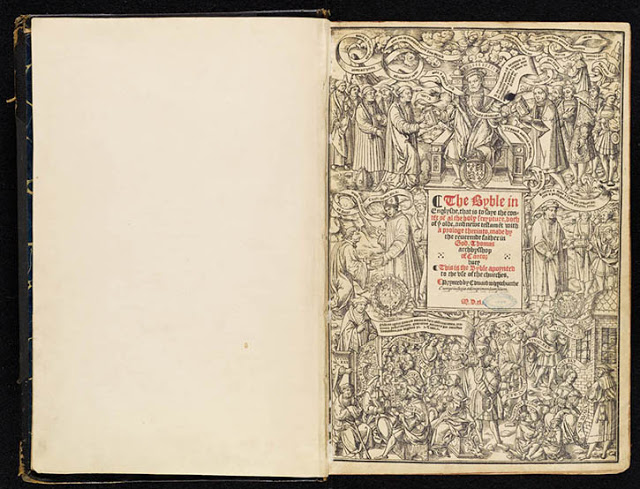
The English Bible approved by King Henry VIII; The Bible in Englyshe, London: Richard Grafton and Edward Whitechurch, 1540. Rare Book and Special Collections Division, Library of Congress.

The Reformation of England was a political issue, not a doctrinal. The first action to be taken was to put an end to the tyrannical power that the clergy had over the people. Then the superstition that you should not question your faith, that it was a sin to, had to be broken. The King began to hand out the English Bible to his servants.[10]  Although Henry was adamant about giving his people a Bible which could be read in English, through out his reign he became concerned about the consequences of letting the lower classes reading the bible for themselves. Restrictions and certain versions were restricted.

Queen Katherine by unknown artist, NPG

Henry’s last wife, Katherine Parr, a supporter of the Reformation and a believer in allowing the people to read the Gospels and the Bible in English, would come to know the restrictions and would almost be condemned herself for her genuine attempt to spread the word of God. Katherine Parr would go on to publish the first book by an English woman and queen in her own name called “Prayers or Meditations“. After the death of Henry and during the reign of the Protestant king, Edward VI, son of Henry and his third wife Jane Seymour, Katherine would go on to write and publish another book called “Lamentations of a Sinner” which became a huge success among the English people.

Henry imposed Royal Supremacy. This meant that Henry would have supremacy over the laws of the Church in England. The Act of Supremacy passed by Parliament and Henry stated that the King was “the only supreme head on earth of the Church in England’ and that the English crown shall enjoy “all honours, dignities, preeminence’s, jurisdictions, privileges, authorities, immunities, profits, and commodities to the said dignity.”[11]

Queen Katherine’s “Lamentations” on display at the Vivat Rex Exhibition at the Folger Shakespeare Library © Meg McGath

The Reformation of the Church in England changed religion in the Nation forever. Instead of answering to Rome, England answered to only the Sovereign in power. King Henry saw himself as the Supreme Head of the Church in England. He felt that he should have say over the laws of religion and he passed an act that would only allow him to be answerable to God himself. In the end, I think the whole break from Rome was a mix of wanting to break away from the religious dogma of the Catholic Church and Henry’s desire for an annulment so he could marry Anne Boleyn and have a son. Henry VIII was obsessed with having an heir. After his father, Henry VII had won the War of a Hundred years you can understand why he wanted the Tudor dynasty to continue on. Henry VIII’s father worked tirelessly to build up England again. As for the topic of sweating sickness, it was a lot like today’s Swine Flu disease only worse.  It spread faster and killed 99% of its victims. There was no hygiene in London. Most of London’s population at the time was poor. They were packed into small houses. Their diet was not good and they had no medicines or vaccines to prevent the spread of the epidemic. No one knew what to do. This was during the time when doctors thought bleeding a patient would get rid of the sickness. Today we know better. The Tudor period was a harsh period. Not just because of the disease, but the fact that each day you woke up you had no idea whether or not you would live or die.[12]
Bibliography
Alexander, Michael Van Cleave. “The First of the Tudors: Study of Henry VII and His Reign.” Croom Helm. February 1981.
Bucholz, Robert and Key, Newton. “Early Modern England, 1485-1714: A Narrative History.” Wiley, John & Sons, Incorporated. January 2008.
Carlton, Charles. “Royal Childhoods.” Routledge & Kegan Paul Books Ltd. January 1986.
Carroll, Robert. “Bible: King James Version (KJV).” Oxford University Press, USA. August 1998.
Fraser, Antonia. “The Wives of Henry VIII.” Knopf Doubleday Publishing Group. November 1993.
Froude, James Anthony. “The Divorce of Catherine of Aragon: The Story as Told by the Imperial Ambassadors Resident at the Court of Henry VIII. In Usum Laicorum.”
Adamant Media Corporation. 30 Nov 2005
Hecker, J.F.C. “The epidemics of the middle ages.” Translated by B. G. Babington.
G. Woodfall and Son for The Sydenham Society. London. 1844.
Ross, David. “Henry VIII ‘s Act of Supremacy (1534) – Original Text.” Britain Express.
< “http://www.britainexpress.com/History/tudor/supremacy-henry-text.htm”>
Thurston, Herbert. “Henry VIII.” The Catholic Encyclopedia. Vol. 7. New York: Robert Appleton Company, 1910. 16 Jul 2009. <http://www.newadvent.org/cathen/07222a.htm&gt;.

[1] Robert Bucholz and Newton Key’s Early Modern England, 1485-1714: A Narrative History, Wiley, Johnson and Sons, 2008.
[2] Robert Bucholz, Newton Key, Early Modern England, 1485-1714: A Narrative History, Wiley, John and Sons, Incorporated, 2008.
[3] J. F. C. Hecker, The epidemics of the middle ages. Translated by B. G. Babington, G. Woodfall and Son for The Sydenham Society, London, 1844.
[4] J. F. C. Hecker, The epidemics of the middle ages. Translated by B. G. Babington, G. Woodfall and Son for The Sydenham Society, London, 1844.
[5] Robert Bucholz, Newton Key, Early Modern England, 1485-1714: A Narrative History, Wiley, John and Sons Incorporated, 2008.
[6] James Anthony Froude, The Divorce of Catherine of Aragon: The Story as Told by the Imperial Ambassadors Resident at the Court of Henry VIII. In Usum Laicorum, Adamant Media Corporation, 30 Nov 2005.
[7] Antonia Fraser, The Wives of Henry VIII, Knopf Doubleday Publishing Group, November 1993.
[8] Carroll, Robert. “Bible: King James Version (KJV).” Oxford University Press, USA. August 1998.
[9] Antonia Fraser, The Wives of Henry VIII, Knopf Doubleday Publishing Group, November 1993.
[10] Robert Bucholz, Newton Key, Early Modern England, 1485-1714: A Narrative History, Wiley, John and Sons Incorporated, 2008.
[11] Henry VIII’s Act of Supremacy (1534) – original text, English History. David Ross and Britain Express
[12] J. F. C. Hecker, The epidemics of the middle ages. Translated by B. G. Babington, G. Woodfall and Son for The Sydenham Society, London, 1844.
© Meg McGath 16 July 2009, London, UK

Queen Katherine’s Letter: “The Tudors” vs. the real deal

From The Tudors, episode 7. Katherine Parr’s letter to Henry while Regent of England; during his siege of Boulogne, France.

Although Your Majesty’s absence has not been long, yet the want of your presence means that I cannot take pleasure in anything until I hear from Your Majesty. Time hangs heavily. I have a great desire to know how Your Majesty has done since you left, for your prosperity and health I prefer and desire more than my own. And although I know Your Majesty’s absence is never without great need, still love and affection compel me to desire your presence. Thus love makes me set aside my own convenience and pleasure for you at whose hands I have received so much love and goodness that words cannot express it. We hear word of ill weather and delays besetting you and though we thank God for your good health we anxiously await the joyous news of the success of your great venture and for your safe and triumphant return for which all England offers daily prayers. I fear am I but a poor substitute for Your Majesty in the matter of the guidance of your kingdom. I long for your return. I commit you to God’s care and governance.
By Your Majesty’s humble obedient wife, and servant,
Katherine, the Queen

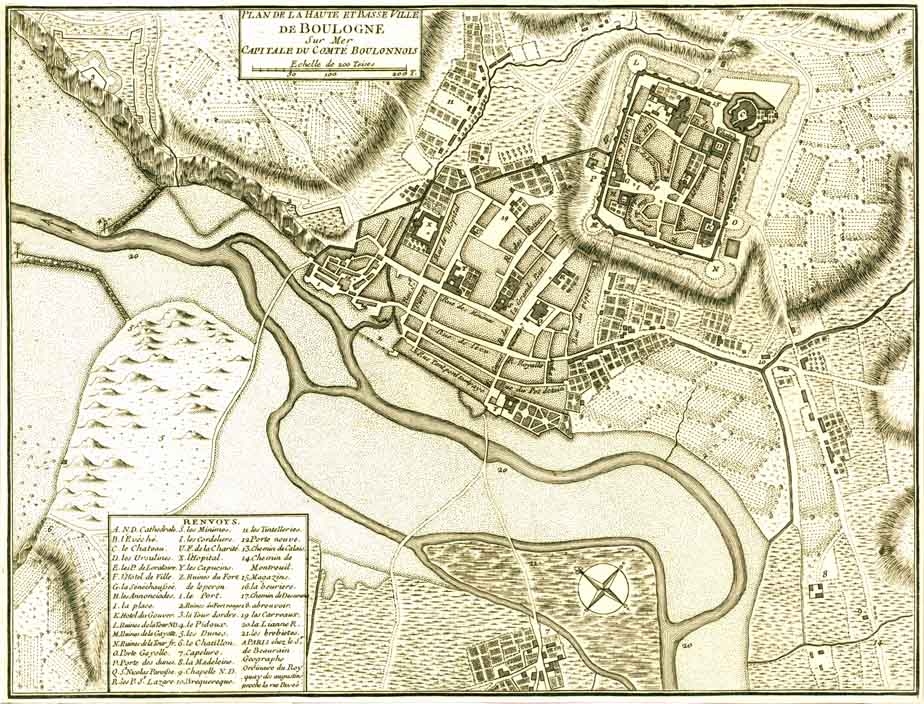
17th-century plan of Boulogne, Fortified Places, by David Flintham.

The actual letter which she wrote in July 1544; it was written during Henry’s six-week absence while he was in Boulogne, France and during the Regency of Queen Katherine. Its tone is loving and respectful.

Letter from Katherine Parr to Henry VIII, July 1544. Extract from the letter: ‘God, the knower of secrets, can judge these words not to be only written with ink, but most truly impressed in the heart’. Queen Katherine Parr to King Henry VIII. in his absence, full of duty and respect, and requesting to hear from him. No date. . A Volume, containing Letters, &c. written by royal, noble, and eminent Persons of Great Britain, from the time of King Henry VI. to the reign of his present Majesty. These are originals, except where otherwise expressed. July 1544. Source: Lansdowne 1236, f.9.

Although the distance of time and account of days neither is long nor many of your majesty’s absence, yet the want of your presence, so much desired and beloved by me, maketh me that I cannot quietly pleasure in anything until I hear from your majesty. The time, therefore, seemeth to me very long, with a great desire to know how your highness hath done since your departing hence, whose prosperity and health I prefer and desire more than mine own. And whereas I know your majesty’s absence is never without great need, yet love and affection compel me to desire your presence.
Again, the same zeal and affection force me to be best content with that which is your will and pleasure. Thus love maketh me in all things to set apart mine own convenience and pleasure, and to embrace most joyfully his will and pleasure whom I love. God, the knower of secrets, can judge these words not to be written only with ink, but most truly impressed on the heart. Much more I omit, lest it be thought I go about to praise myself, or crave a thank; which thing to do I mind nothing less, but a plain, simple relation of the love and zeal I bear your majesty, proceeding from the abundance of the heart. Wherein I must confess I desire no commendation, having such just occasion to do the same.
I make like account with your majesty as I do with God for his benefits and gifts heaped upon me daily, acknowledging myself a great debtor to him, not being able to recompense the least of his benefits; in which state I am certain and sure to die, yet I hope in His gracious acceptation of my goodwill. Even such confidence have I in your majesty’s gentleness, knowing myself never to have done my duty as were requisite and meet for such a noble prince, at whose hands I have found and received so much love and goodness, that with words I cannot express it. Lest I should be too tedious to your majesty, I finish this my scribbled letter, committing you to the governance of the Lord with long and prosperous life here, and after this life to enjoy the kingdom of his elect.
From Greenwich, by your majesty’s humble and obedient servant,
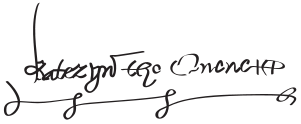
Kateryn the Quene, KP

The Relationships of Lady Mary Tudor: Henry VIII and his consort Katherine Parr pt. 2

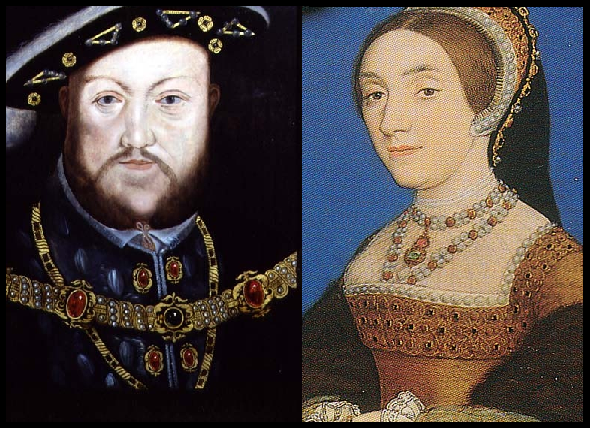
Henry VIII, Lady Mary Tudor, and Katherine Parr

Your Excellency, what I have done for the Lady Mary is much less than I would like to do; as well as being my duty in every respect. As for the friendship between our two countries, I have done and will do nothing to prevent it from growing still further as the friendship is so necessary and both sovereigns [are] so good.”
Katherine’s relationship with Mary was one of friendship rather than motherly. When Katherine became queen the royal children were by then acquainted with her. It is not known whether it was Katherine herself that suggested meeting the Ladies Mary and Elizabeth before the wedding, but Henry obviously approved. In any case, Katherine wanted to establish a good rapport with the king’s daughters before the wedding. While Katherine had been contemplating the kings proposal there is no doubt that the three children and the role in which she would play came to mind. With Mary, Katherine wanted nothing more than to become a supporter and friend to her. Being a mother to another woman’s child was a responsibility that Katherine assumed with grace and dedication.
History may not have viewed Henry as an attentive parent but he cannot be judged by our modern standards as times were different back then. Henry did not visit his children’s establishments on a regular basis, but claimed to love them all. Royal children were brought up separately. A separate household was always established for the Prince of Wales while princesses, often living together, had smaller establishments. As in Katherine’s time, court was not a place for small children and Mary as Princess had a household of her own until her parents’ divorce when she was forced to live with her half-sister, Elizabeth. Buried in a legacy of failed marriages and just the everyday duties of a king, Henry’s affections towards his children were understandably lacking. Katherine was convinced that Henry needed to be more involved with his children. The uncertainty that filled all of their lives, especially Mary and Elizabeth, needed to be relieved. Katherine promised and made sure as long as Henry was alive and she was consort that the children would have a stable future.
Katherine’s marriage to the King gave Mary the longest period of unbroken happiness she had known since childhood. It was much needed after a decade of turmoil. Katherine was a staunch champion of the princess and her regard for Mary certainly helped improve her prospects, as well as enriching her life. Soon after the wedding, Katherine gave Mary a present of gold bracelets. Katherine would go on to exchange purses of money with Mary as was done throughout the aristocracy as a token of female friendship. The two shared a love for clothes and jewels. They also had a love of music in common. The two thrived on conversation and diversion. Both were dedicated to studying and religion. History has made it seem that Katherine and Mary were so set in their ways of religion that they had absolutely nothing in common. In fact some people have gone as far as saying that if Katherine had lived into Mary’s reign, Mary would have had Katherine burned at the stake! Truth be told, within their relationship, neither was firmly set in their ways and their relationship never suffered. Mary had somewhat accepted her father’s religious changes. Katherine’s faith as queen would eventually develop along different lines than that of Mary. But much would change in Mary’s life before she became pegged as “Bloody Mary”.
The Imperial Ambassador, Chapuys, recounts that the two were almost always together and would come to thank Katherine in time, in the name of his Master Charles V, for all that she had done and would continue to do for the Lady Mary.

By 1544, a new act of succession was introduced. Since becoming queen, Katherine had set out to reconcile Henry and Mary and to restore her as a potential heir to the throne. Chapuys was most impressed with the queen’s attempts at favoring the Princess and wrote frequently to Charles V about it. Charles was also most pleased and encouraged Chapuys to continue good relations with Queen Katherine. The act was the first succession act in England to give females the right to succeed to the throne as queen. Lady Mary and Elizabeth were again part of the succession after their brother Edward. Though both Mary and Elizabeth remained illegitimate and were denied the title of princess, they were Henry’s official heirs. This Act signified the rehabilitation of the royal children with their father; which Katherine could take more than a little credit for. Based on ambassadorial reports, it was Katherine who was the chief instrument of Henry’s decision to name all of his children in his will as heirs to the throne. The terms of Henry’s Will would later legitimize both Mary’s seizure of the crown from Lady Jane Grey and Elizabeth’s succession after Mary’s death. It was Katherine who helped insure their legitimacy as queens.

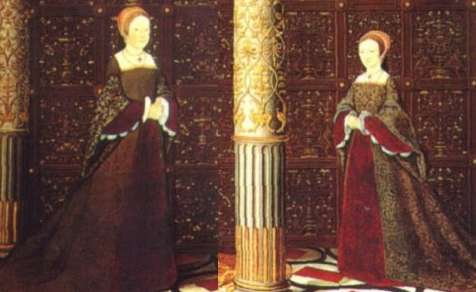
Lady Mary Tudor c.1544 attributed to Master John

It was in 1544, that Mary would be painted by an artist commemorating her re-in-statement to the succession. In the portrait, attributed to Master John, Mary is still young and quite beautiful. Portraiture was another common interest of Katherine Parr. Throughout her reign she would have portraits done of her and the two daughters of Henry. It is thought that perhaps these portraits of Katherine were done to make up for the fact that Henry had commissioned a painting of the royal family during her reign; only to put Jane Seymour in posthumously as queen. Perhaps that is the case, but the portrait of Mary is memorable and a favorite of many admirers to this day.
By summer of 1544, Katherine had been appointed Regent of England as Henry went off to battle in France. During her reign, most historians believe it was Elizabeth who was most affected by watching her step-mother rule over the country. Mary, herself, would also pay close attention to Katherine’s regency which no doubt influenced her. Both daughters would come to see that it was possible for a queen to handle all that was expected of a king; that perhaps one day they too could rule as queen of England. As regent, Katherine possessed a considerable amount of power. During Katherine’s regency five proclamations were issued and she was granted the right to disburse money from the Treasury. Throughout his time in France, Katherine would write often informing Henry of her progress. Often included were her sentiments, her time with the children, and worries about his health.
At the end of Henry’s reign as King he started to not only distant himself from Queen Katherine, but also from his children. Henry knew that his health was failing and that he must make provisions for his son Prince Edward’s minority as the next Tudor king. Henry’s final Christmas was spent alone at Whitehall, apart from Katherine and Mary who were at Greenwich Palace. On 11 January, it is accounted that the queen’s apartments were prepared for her arrival, but there is an uncertainty as to whether or not Katherine saw her husband one last time. On 28 January 1547, King Henry died. Neither Katherine nor his children were present.

Henry VIII with his daughter, the Lady Mary Tudor, later Queen Mary I.

After the death of King Henry, Mary was not told of his death for several days. Edward’s minority council took elaborate precautions to ensure all was in place before they made an official announcement. This action made Mary extremely angry, but she could do nothing about it. Yet how ever wary Edward’s councillors were, nothing could alter the fact that Mary was in her own right heiress to the throne. For the time being, Mary would stay with Katherine who was again for the third time, a widow. At the time of her father’s death Mary was aged 31. Mary’s reaction to her father’s death was never recorded as she never publicly mourned his death.  She was apparently more irritated at the fact that no one had told her that her father had died until days later. Most likely her reaction to the news was mixed grief and some kind of relief. At Henry’s death both Mary and Elizabeth became two of the richest women in England. They both had an income, the promise of a dowry, and extensive holdings of property. Mary was now an owner of 32 houses and manors. These lands had previously belonged to the Duke of Norfolk and his son Surrey but were attained by the King after their arrest. It is noted that after all that the Howard’s had put Mary through she still came out on top owning most of Norfolk, Suffolk, and land in Essex.

Until April 1547, Mary remained in the household of the Dowager Queen Katherine. Mary went into deep mourning and it is not recorded whether or not she attended her father’s funeral or even her brother’s coronation. In her mourning, Mary went into deep reflection upon the way the country was now being run. While Henry was alive, she didn’t dare questioning his advisers. Now with Edward’s council, many of the members she had known for quite a while now, she came to her own opinion and was no longer afraid to voice her opinion as she did not think much of the men who ruled in her brother’s name. By Spring, Mary had left the household of the Dowager queen as a dispute between the Lord Protector and his family was about to devolve. Truth being that Mary was a lady with many households and of age; she was mistress of her own manors and needed to start living her own life. While her father had been alive, Mary had been denied her very own family. She missed out on many marriage proposals and the chance to bear children of her own. Before Henry died, he promised the queen many things and gave her permission to marry again if it pleased her. Within months of his death Mary would find that her step-mother had renewed her liaison with her former love, Sir Thomas Seymour. Thomas was the younger brother of the Lord Protector. Thomas was jealous of his older brother as he had no part in the regency council. Therefore it has been proposed that perhaps he saw that by marrying the queen dowager he would obtain some sort of recognition. After surviving nearly four years of marriage to Henry, which was a feet among itself, Katherine was now letting her heart rule over her head. As she had no political role in Edward’s reign, Katherine looked to the possibility of her own happiness. The two would marry on an unknown date. Of course Katherine’s marriage was solemnized by God, but it had not been sanctioned by the king and his council. There was nothing in the will of Henry saying that Katherine could not marry again – but some saw the marriage as untimely as it was too soon after the king’s death. In attempts to gain favour and have the marriage be accepted, Seymour wrote to Mary asking for her approval and consent. The jest of the letter was strong, but at the same time clever and revealing. Mary knew what had been happening in the household before she left and was not one to play dumb. Mary knew Seymour’s reputation with women and was not fooled by his appeal to win her favour. Mary was still upset over the fact that Katherine would even consider marrying so soon after her father’s death and in a way felt it insulted the memory of her father. Although Mary was unhappy about Katherine’s choices, she realized that she would no longer share in the company of her step-mother who had done so much to re-store her relationship with her father and to re-instate her into the Act of Succession. Katherine had been regarded as an equal by Mary. The two had shared so much time together that it most likely hurt her deeply when she heard the news of Katherine’s death.

A portrait of Queen Mary I hangs in the Queen’s chambers at Sudeley Castle where Queen Katherine gave birth to her daughter, the Lady Mary Seymour, whom the queen named after her step-daughter.

The Relationships of Lady Mary Tudor: Henry VIII and his consort Katherine Parr pt. 1

Sources

  • Susan James. Catherine Parr: Henry VIII’s Last Love, The History Press, 2009.
  • Linda Porter. Katherine the queen: The Remarkable Life of Katherine Parr, the Last Wife of Henry VIII, MacMillan, 2010.
  • Linda Porter. The Myth of “Bloody Mary”: A Biography of Queen Mary I of England, St. Martin Griffins, 2010.
  • Anna Whitelock. Mary Tudor: England’s First Queen, Bloomsbury Publishing PLC, 2009.

The Relationships of Lady Mary Tudor: Henry VIII and his consort Katherine Parr pt. 1

A modern interpretation of Lady Mary’s stepmother’s was shown in the historical fiction series “The Tudors.”

Throughout the reign of Henry VIII, as many know, he had six different wives. The first of these wives was the daughter of King Ferdinand II of Aragon and Queen Isabella I of Castile, Infanta Catalina; or as most have come to know her in England – Katherine of Aragon. Katherine came to England to marry the older brother of Henry who was then heir to the throne of England; Arthur, Prince of Wales. Shortly after their marriage Arthur died and Katherine was left a widow at an early age. To avoid returning her large dowry to her father Katherine was married to Arthur’s younger brother, then Henry, Duke of York. The marriage between Katherine and Henry produced only one child who would live to adulthood, a girl, the future Queen Mary I of England. In Tudor times, not having a male heir was particularly troublesome as the country had just been through a civil war in which Henry’s father seized the crown. Henry VIII was only the second Tudor monarch, a son of both the houses of Lancaster and York. Henry felt that a male heir was essential; after all, the last woman to reign as queen regent was the tumultuous reign of Empress Matilda, daughter of Henry I.

Born Princess Mary of England, Mary was the daughter of King Henry VIII and his first wife Katherine of Aragon. Her mother, after two decades of marriage to the King, had given birth to six children. Out of the six, only one would survive infancy, their daughter Mary. Katherine had produced no surviving sons, leaving their daughter, the future Mary I of England, as heiress presumptive at a time when there was no established precedent for a woman on the throne. At this time is when Henry began to take interest in one of Katherine’s ladies, Anne Boleyn. In Anne, Henry saw the possibility of having a male heir; to continue his father’s legacy. After going through a great bit of trouble – which included a break from Rome – Henry “divorced” Katherine and “married” Anne under his Church of England. This break and marriage would come to change England and inevitably changed Henry for the rest of his life. Henry would go on to have again, one daughter, with Anne. During this marriage, Princess Mary, now within her teens, went from being a legitimate Princess and daughter of Henry VIII to an illegitimate “bastard” under Henry’s new succession act. Mary was forced to live below the standards of what she had become accustomed to and was forced to accept that her mother was no longer queen of England. After only a few years of marriage to Anne, Henry became convinced that his second wife could not produce a male heir and literally disposed her for yet another lady-in-waiting, Jane Seymour. During her short reign, Jane tried to reconcile Henry with his daughter Mary. It was through this “precious” lady that Henry finally got what he wanted; a male heir, named Edward. To Henry’s misfortune, only twelve days after giving birth to Edward, Jane died. Henry would go on to marry three more times after Jane. Anne of Cleves, Katherine Howard, and a woman named Katherine Parr. It was the last of Henry’s wives who would come to reconcile Mary, along with her half-siblings, with Henry.
Katherine Parr was born in 1512. By both parents, Princess Mary was related to Katherine Parr. By her paternal grandparents, Mary was related by Katherine’s descent from the Beaufort’s, children of John of Gaunt, a son of Edward III making Mary by her paternal grandmother, Elizabeth of York, a 4th cousin. By the Woodville connection, they were 4th cousins. By her paternal grandfather, Henry VII (by Beaufort and Holland), Mary was a double 5th cousin, once removed. By her maternal grandmother, Isabel of Castile (by John of Gaunt), she was a fifth cousin and a fifth cousin, once removed. Jane Seymour is the next closest after Parr sharing Edward III (6th cousins, once removed).
Katherine was a few years older than Mary who was born in 1516. Katherine’s mother, Maud, had become a lady-in-waiting to Princess Mary’s mother shortly after her marriage to Sir Thomas Parr. Katherine was named after the queen and it is thought that the queen was her godmother.
Maud’s relationship with the Queen was unlike that of most queens and their ladies. It was a relationship that went much deeper than “giddy pleasure”. Both knew what it was like to lose a child in stillbirths and in infancy. It was Katherine Parr’s mother, Maud, who shared in the horrible miscarriages and deaths in which Queen Katherine would endure from 1511 to 1518. The two bonded over the issue, as Maud had experienced the death of her eldest, an infant boy, and later a miscarriage or early infant mortality after the birth of three healthy children. Because of these shared experiences, the queen and Maud became close.
After her husband died in 1517, Maud continued her position at court as one of Katherine of Aragon’s household and stayed close to the Queen even when her relationship with Henry started to decline in the 1520s. In 1525, when Henry’s infatuation with one of Katherine’s ladies, Anne Boleyn, became apparent, inevitably the ladies began to take sides. In these times, Queen Katherine never lost the loyalty and affection of women like Maud Parr, Gertrude Courtenay, and Elizabeth Howard, who had been with the Queen since the first years of her reign. Maud stayed with Queen Katherine until the end of her own life in 1531.
It has been said that Katherine Parr and Princess Mary were educated together. While Katherine’s mother attended on the queen, Katherine was at Parr house in Blackfriars, London. Katherine was not brought to court with her mother and probably the only time, if any, that she was in contact with the royal family was at her christening. Katherine and other daughters of the court were taught separately while Princess Mary, who had her own household, was taught by private tutors.

King Henry and his fifth consort Katherine Howard

After the disastrous marriage of the King and Katherine Howard, the King was no longer looking for flighty relationships that stirred his passions. Henry had learned a tough lesson with Katherine Howard and was determined more than ever to find an intelligent, honest, loving, and devoted wife. He wanted someone he could hold an actual conversation with; a companion. Another quality Henry looked for in a wife was someone who could be a perfect companion to his eldest daughter, now styled The Lady Mary Tudor. After years of tension and multiple step-mothers whom Mary had mixed relations with, Henry must have felt he owed her that much.
After the death of Katherine Howard, Mary enjoyed far greater favor from her father and presided over court feasts as if she was queen herself. For New Year’s, Mary was showered with lavish gifts from her father. Within the presents were ‘two rubies of inestimable value.’ However, it was during this time that Mary suffered from chronic ill-health linked to anxiety, depression, and irregular menstruation. These health issues along with others would continue until Mary’s death. Thankfully by Christmas 1542, Mary had recovered and was summoned to court for the great Christmas festivities. Her quarters at Hampton court were worked on day and night to prepare for her arrival. The Imperial Ambassador, Chapuys, reported that the King ‘spoke to her in the most gracious and amiable words that a father could address to his daughter.’
Katherine Parr would marry twice before her marriage to King Henry in 1543. Her first marriage would be to her distant relative, Sir Edward Borough in 1529; which ended in about 1533 with his death. Her next marriage was to her father’s second cousin, Sir John Neville, 3rd Baron Latimer of Snape in 1534. With this marriage, Katherine became Lady Latimer. She was the first of her family to marry into peerage since her great-aunt, Maud Parr, Lady Dacre. With this marriage also came two step-children from Latimer’s first marriage to Dorothy De Vere. For about a decade, Katherine would experience the joy of being a step-mother. It was during this time that she became extremely close to her step-daughter, Margaret, which was somewhat of a pre-cursor to Katherine’s future relationship with the Lady Elizabeth, Henry’s youngest daughter. By the time Lord Latimer had died, Katherine was left a rich widow and was asked by Latimer to look after his daughter until the age of her maturity. It has been said that Katherine became a lady in the household of Lady Mary during this time, but biographers Susan James and Linda Porter have different opinions. It was thought by James that because Mary remembered the kindness Katherine’s mother had shown her mother that she gladly took Katherine as one of her ladies. Porter disputes this saying it would have been below Katherine’s standing as the widow of a peer who had her own establishments and a large settlement from her husband’s death. Truth be told, many courtiers and wives of peers were ladies to royals in Tudor England. It was a wonderful opportunity, kept them busy, and at the center of court. Katherine’s sister, Anne, would serve all of Henry’s wives, including her. After the death of Lord Latimer, Katherine began a fling with the brother of former queen Jane Seymour, Sir Thomas Seymour. The two were most likely planning to be wed, but before the two could marry, Katherine would first catch the attention of King who quickly proposed.

Lady Mary and Lady Elizabeth from the “Succession Portrait” which was commissioned while Katherine Parr was queen.

In spring before the wedding, Katherine would appear at court with both Lady Mary and Lady Elizabeth. The fact that the two had not been together earlier that spring and were now with Katherine and her sister at court was seen as significant. Katherine believed that a good relationship with the two was fundamental to her strategy. Once married, and confident as queen, she could develop the relationships further.

Katherine would go on to marry the King in July of that year. Within those who were present were the Ladies Mary and Elizabeth. With the marriage came three new step-children for Katherine to take care of. Instead of seeing it as her “duty”, she saw it as an opportunity as she had still not produced any children of her own.

Sources:

  • Susan James. Catherine Parr: Henry VIII’s Last Love, The History Press, 2009.
  • Linda Porter. Katherine the queen: The Remarkable Life of Katherine Parr, the Last Wife of Henry VIII, MacMillan, 2010.
  • Linda Porter. The Myth of “Bloody Mary”: A Biography of Queen Mary I of England, St. Martin Griffins, 2010.
  • Anna Whitelock. Mary Tudor: England’s First Queen, Bloomsbury Publishing PLC, 2009.

King Henry VIII: the account of marriage to wife no. 6 to Kateryn Parr

Letters and Papers, Foreign and Domestic, Henry VIII, Volume 18 Part 1: January-July 1543

The wedding of Henry and Kateryn, Dowager Baroness Latimer as recorded
Written by Meghan McGath

Notarial instrument witnessing that, on 12 July 1543, 35 Hen. VIII., in an upper oratory called “the Quynes Pryevey closet” within the honor of Hampton Court, Westm. dioc., in presence of the noble and gentle persons named at the foot of this instrument and of me, Ric. Watkins, the King’s prothonotary, the King and lady Katharine Latymer alias Parr being met there for the purpose of solemnising matrimony between them, Stephen bp. of Winchester proclaimed in English (speech given in Latin) that they were met to join in marriage the said King and Lady Katharine, and if anyone knew any impediment thereto he should declare it. The licence for the marriage without publication of banns, sealed by Thos. abp. of Canterbury and dated 10 July 1543, being then brought in, and none opposing but all applauding the marriage, the said bp. of Winchester put the questions (recited) to which the King, hilari vultu, replied “Yea” and the lady Katharine also replied that it was her wish; and then the King taking her right hand, repeated after the Bishop the words, “I, Henry, take thee, Katharine, to my wedded wife, to have and to hold from this day forward, for better for worse, for richer for poorer, in sickness and in health, till death us depart, and thereto I plight thee my troth.” Then, releasing and again clasping hands, the lady Katharine likewise said “I, Katharine, take thee Henry to my wedded husband, to have and to hold from this day forward, for better for worse, for richer for poorer, in sickness and in health, to be bonayr and buxome in bed and at board, till death us depart, and thereto I plight unto thee my troth.” The putting on of the wedding ring and proffer of gold and silver (described) followed; and the Bishop, after prayer, pronounced a benediction. The King then commanded the prothonotary to make a public instrument of the premises. Present : John lord Russell, K.G., keeper of the Privy Seal, Sir Ant. Browne, K.G., captain of the King’s pensioners, and Thos. Henage, Edw. Seymer, Hen. Knyvet, Ric. Long, Thos. Darcy, Edw. Beynton, and Thos. Speke, knights, and Ant. Denny and Wm. Herbert, esquires, also the ladies Mary and Elizabeth the King’s children, Margaret Douglas his niece, Katharine duchess of Suffolk, Anne countess of Hertford, and Joan lady Dudley, and Anne Herbert.
Notarial attestation by Ric. Watkins, Ll. B., King’s prothonotary.
Large parchment.

The marriage of Henry VIII and Kateryn Parr ©Meghan McGath (2009)
Source: 

James Gairdner and R. H. Brodie (editors). “Henry VIII: July 1543, 11-15.” Letters and Papers, Foreign and Domestic, Henry VIII, Volume 18 Part 1: January-July 1543 (1901): 480-489. British History Online. Web. 10 January 2012. <http://www.british-history.ac.uk/report.aspx?compid=76754&strquery=queen+catherine&gt;