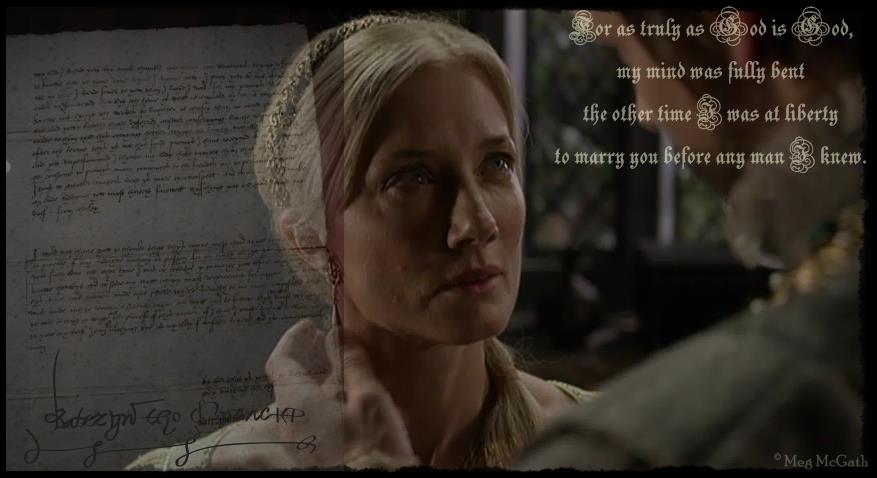
The “Elizabeth and Thomas” Soap Opera we dare not discuss. Did Parr try to protect Elizabeth? What did Kat Ashley mean when she confessed that the Dowager Queen held Elizabeth? We’ve discussed it so many times. And Parr’s name has been dragged through the gutter by so many. What really happened?
Elizabeth was welcomed into the household of the Dowager Queen in 1547 at Chelsea Manor. The Queen had remarried to Sir Thomas Seymour, now 1st Baron Seymour of Sudeley, months after King Henry died. Weep some more. Henry only gave her a few months to mourn Lord Latimer. She could do what she wanted at this point. She didn’t have to remarry. She could have retained her status at court, but chose to retire to Chelsea after they made it clear she was no longer needed.
In the 16th century—the age a girl could get married was 12.
In 1508, Lady Maud Parr married Sir Thomas who was about 30 yrs old.
Lady Elizabeth Parr, daughter to the Baron FitzHugh, niece of the Kingmaker, married before 14 to King Edward IV’s friend, Sir William Parr. This gave the Parrs royal blood. Elizabeth’s birthdate needs to be researched further.
The Duchess of Suffolk was married to 40 something, Charles Brandon, at 14.
Lady Margaret Beaufort, grandmother to Elizabeth, was only 12.
Lady Anne Vaux, the aunt of the Queen and older sister of Lady Maud Parr, married Sir Nicholas, Baron Vaux who was born around 1460. See above for Maud’s marriage date and age.
Marriage contracts were made as early as 2 yrs old.
It’s a Sign of the Times.
We have evolved. We live longer now. We know more about the human body and the human brain. 🤷🏻♀️
Lady Pembroke and her daughter, also named Anne (Lady Talbot). Wilton Church.
Written by Meg McGath
Lady Anne Herbert was the daughter of Sir William Herbert, 1st Earl of Pembroke & his first wife, Anne Parr. As such, she was the niece of Queen Kateryn Parr. In 1563, at Baynard’s Castle, Lady Anne married Sir Francis, Lord Talbot (d.1582) in a double marriage between the two children of the 6th Earl of Shrewsbury and the two children of the 1st Earl of Pembroke. Lady Talbot’s brother, Henry, the future 2nd Earl of Pembroke, married Lady Catherine Talbot. Lord Talbot and Lady Catherine were child of Sir George Talbot, 6th Earl of Shrewsbury and his first wife, Lady Gertrude Manners, daughter of Sir Thomas Manner, 1st Earl of Rutland and his second wife, Eleanor Paston. In addition to the double marriage, Lord Talbot’s great-aunt, Lady Anne Talbot, had married secondly to Lady Anne Herbert’s father, the 1st Earl of Pembroke (d.1570) after the death of his first wife, Anne Parr, in 1552. This may have been the reason for the double marriage.
In her letter, Lady Talbot talks about how her sister, Lady Catherine, Countess of Pembroke, was frequently visited by Queen Elizabeth I at Baynard’s Castle. The Queen was fond of her. By 1575, Lady Catherine had become gravely ill and developed a fatal illness. The Queen even gave the Pembroke’s a ship to even travel to the continent in search of a cure. She returned to England without success by September 1575 and died on 24 April 1576. They had no issue.
Lady Anne Talbot writes to her husband’s stepmother, Bess of Hardwick, the Countess of Shrewsbury.
To the ryght honorable and my assured good lady, and mouther the Countes of Shrowsbery:
Good madam, acordynge to my dewty, I would haue wrytene oftener, yf I could haue learned, any newes worthey the wryrtynge, but my comeynge to the court, Is so selldome, as I knowe your Ladyshype, doth here from thensse, by othersse, a great dell more, then I can hereof, yet I truste your Ladyship wyll geue me leue, to remember my dewtye, In wrytynge, after my olde acoustemed manner. whych I wyll not slake god wyllynge, though my matter be never so small, yet my dewtyfull good wyll I hope your Ladyship wyll exepte, In as good part, as I meane yt, yf I could haue sent, any good newes of my syster of Penbrokes good delyuery, your Ladyship should haue hard of yt or nowe, but I fear yt wyll not fall out so well as I could wyshe yt had and for thys tyme, I humbly take my leue, besycheing, god to send your Ladyship your hartes desyre, From Eareth the xxjxth of Maye:
your Ladyship’s assured louyng daughter to comande:
Anne Talbott
Letter signed by Lady Talbott from letter dated 29 May [1575]. Courtesy of Bess of Hardwick Letters: The Complete Correspondence 1550-1608
Sources
From: Anne Talbot (Earith, Huntingtonshire); To: Bess of Hardwick; Date: 29 May [1575] Summary: Anne Talbot (née Herbert) writes to Bess (countess of Shrewsbury) that she has little news to report due to her infrequent visits to court. She promises to write ‘after my old accustomed manner’ and expresses fears that ‘my sister of Pembroke’s good delivery [. . .] will not fall out so well as I could wish’. Archive: Folger Shakespeare Library, Cavendish-Talbot MSS, X.d.428 (122) Delivery status: to Bess, sent Letter features: Seal intact – no. Ribbon/floss – no. Letter packet – accordion Hands: Anne Talbot | archivist | Version: 1.0 Further information on copyright and citation can be found at:- (URL: http:// http://www.bessofhardwick.org/background.jsp?id=171) https://www.bessofhardwick.org/letter.jsp?letter=93
I love how much people dismiss Queen Kateryn Parr. There may be evidence that she WAS supposed to be Regent for Edward VI. See her signature AFTER Henry died.
Credit: Elizabeth Norton
She was apparently signing as “Kateryn, the quene regente KP”. The theory goes that she was indeed made Regent for her stepson, King Edward VI. Which would make sense with the use of her signature. It is believed that Edward Seymour, Duke of Somerset, Kateryn’s brother the Marquess of Northampton, her brother-in-law the Earl of Pembroke and the council ousted her and rewrote the will. She would have made a wonderful Queen Regent. She proved she was capable of being Regent while Henry went to war with France. Perhaps she would have lived longer and prevented the succession from being rewritten. She gets credit for the placement of Princesses Mary & Elizabeth back into the line of succession behind their brother in 1545. That succession act seems to have overwritten or they disregarded King Edward’s will and supported the actual heir to the throne, Mary. Mary WAS the rightful heir. Jane was further down the approved line of succession. Why would you accept someone below the status of the actual daughters of King Edward’s father, Henry VIII? Kateryn Parr’s brother and brother in law were again involved in matters of the state and actually pulled off putting Lady Jane Grey on the throne for 9 days! Jane somehow outranked her own mother who was STILL alive and technically would have been the next heiress to the throne after Princesses Mary & Elizabeth. I never understood that. The Protestants feared the Catholic “Bloody Mary” (her nickname was started as Protestant propaganda, the pro Queen Elizabeth movement, lol) would try to return the country to the Pope and Catholicism. Mary was deeply religious. Kateryn Parr and Mary got on despite differences in matters like religion. Parr’s mother, Lady Maud, had served Mary’s own mother, Queen Katherine of Aragon, the first wife and crowned Queen consort to King Henry. The two women were pretty close. The Parrs backed Queen Katherine of Aragon when her lady in waiting became the Kings new obsession. Parr let Mary be and encouraged her every chance she could. One could argue she loved Mary more than Elizabeth. Heck, Kateryn named her only daughter and child, Mary, before the queen passed on 5 September 1548. Don’t think there were any other important Marys. The French Queen, Mary Tudor, had died long before Parr became Queen. Pretty sure it’s not after The Virgin Mary. Protestants aren’t that attached to her, right? I was raised Catholic, so I honestly don’t know. Anyway, Queen Kateryn Parr was VERY important. Read a book. She wasn’t an ex-queen. She remained Queen (consort) of England, Ireland, and France until she died. She was the LAST Tudor Queen Consort as King Edward died young. She was also the FIRST Queen of Ireland. Her funeral was the FIRST Protestant funeral for a Queen. Her mourner was none other than Lady Jane Grey, who would have probably stayed with Kateryn had the queen lived. Having Parr around seemed to pacify things. She knew how to handle tricky and dangerous situations. For Gods sake, she almost lost her head after she spoke with the King. It was overheard by the queens enemy, Bishop Gardiner, who saw an opportunity to “get rid” of Kateryn. I mean why not? He already KILLED TWO WIVES!! Lordy, so Gardiner tried to fuck with the Kings head. Saying shit like “it is a petty thing when a woman should instruct her husband” or some stupid sexist bs! Story goes, Kateryn was warned by an anonymous source who found her death warrant lying on the ground. YEAH RIGHT!! That’s straight up narcissistic abuse, my man!! Why do I feel like Henry set her up to test her loyalty? He was such a theatrical douche bag. No, no love for King Henry here. I have yet to see the film “Firebrand” which follows the reign of Kateryn as queen consort and queen Regente I believe. It’s based off Elizabeth Freemantle’s “Queen’s Gambit”. Anyway, Kateryn talked her way out of being arrested or worse by stroking the Kings ego and basically submitting to him just to fuvking survive. Imagine going through this marriage without psych meds like Benzos. I do believe they dabbled in potions however and she was known to “treat” melancholy with herbs from the gardens. Sudeley Castle where she is buried has a garden full of deadly herbs. Physic gardens. I have photos somewhere…



 tudorqueen6 by Meg McGath