Queen Katherine Parr: Not Important Enough?

I love how much people dismiss Queen Kateryn Parr. There may be evidence that she WAS supposed to be Regent for Edward VI. See her signature AFTER Henry died.

Credit: Elizabeth Norton

She was apparently signing as “Kateryn, the quene regente KP”. The theory goes that she was indeed made Regent for her stepson, King Edward VI. Which would make sense with the use of her signature. It is believed that Edward Seymour, Duke of Somerset, Kateryn’s brother the Marquess of Northampton, her brother-in-law the Earl of Pembroke and the council ousted her and rewrote the will. She would have made a wonderful Queen Regent. She proved she was capable of being Regent while Henry went to war with France. Perhaps she would have lived longer and prevented the succession from being rewritten. She gets credit for the placement of Princesses Mary & Elizabeth back into the line of succession behind their brother in 1545. That succession act seems to have overwritten or they disregarded King Edward’s will and supported the actual heir to the throne, Mary. Mary WAS the rightful heir. Jane was further down the approved line of succession. Why would you accept someone below the status of the actual daughters of King Edward’s father, Henry VIII? Kateryn Parr’s brother and brother in law were again involved in matters of the state and actually pulled off putting Lady Jane Grey on the throne for 9 days! Jane somehow outranked her own mother who was STILL alive and technically would have been the next heiress to the throne after Princesses Mary & Elizabeth. I never understood that. The Protestants feared the Catholic “Bloody Mary” (her nickname was started as Protestant propaganda, the pro Queen Elizabeth movement, lol) would try to return the country to the Pope and Catholicism. Mary was deeply religious. Kateryn Parr and Mary got on despite differences in matters like religion. Parr’s mother, Lady Maud, had served Mary’s own mother, Queen Katherine of Aragon, the first wife and crowned Queen consort to King Henry. The two women were pretty close. The Parrs backed Queen Katherine of Aragon when her lady in waiting became the Kings new obsession. Parr let Mary be and encouraged her every chance she could. One could argue she loved Mary more than Elizabeth. Heck, Kateryn named her only daughter and child, Mary, before the queen passed on 5 September 1548. Don’t think there were any other important Marys. The French Queen, Mary Tudor, had died long before Parr became Queen. Pretty sure it’s not after The Virgin Mary. Protestants aren’t that attached to her, right? I was raised Catholic, so I honestly don’t know. Anyway, Queen Kateryn Parr was VERY important. Read a book. She wasn’t an ex-queen. She remained Queen (consort) of England, Ireland, and France until she died. She was the LAST Tudor Queen Consort as King Edward died young. She was also the FIRST Queen of Ireland. Her funeral was the FIRST Protestant funeral for a Queen. Her mourner was none other than Lady Jane Grey, who would have probably stayed with Kateryn had the queen lived. Having Parr around seemed to pacify things. She knew how to handle tricky and dangerous situations. For Gods sake, she almost lost her head after she spoke with the King. It was overheard by the queens enemy, Bishop Gardiner, who saw an opportunity to “get rid” of Kateryn. I mean why not? He already KILLED TWO WIVES!! Lordy, so Gardiner tried to fuck with the Kings head. Saying shit like “it is a petty thing when a woman should instruct her husband” or some stupid sexist bs! Story goes, Kateryn was warned by an anonymous source who found her death warrant lying on the ground. YEAH RIGHT!! That’s straight up narcissistic abuse, my man!! Why do I feel like Henry set her up to test her loyalty? He was such a theatrical douche bag. No, no love for King Henry here. I have yet to see the film “Firebrand” which follows the reign of Kateryn as queen consort and queen Regente I believe. It’s based off Elizabeth Freemantle’s “Queen’s Gambit”. Anyway, Kateryn talked her way out of being arrested or worse by stroking the Kings ego and basically submitting to him just to fuvking survive. Imagine going through this marriage without psych meds like Benzos. I do believe they dabbled in potions however and she was known to “treat” melancholy with herbs from the gardens. Sudeley Castle where she is buried has a garden full of deadly herbs. Physic gardens. I have photos somewhere…

My page: Queen Catherine Parr

© 2024 Meg McGath. All research and original commentary belong to the author.

Queen Katherine Parr: The Pregnancy and Birth of Lady Mary Seymour

From Sex and Sleaze: Time Traveller’s guide to Tudor England:

Childbirth is an exclusively female affair, with only female midwives in attendance and no doctors. After childbirth, babies are rapidly baptised because of high infant mortality, usually in the absence of their mothers. New mothers are not allowed in church until about 30 days after the birth, and then must be ‘churched’, or ritually purified.

In December of 1547, Queen Katherine Parr became pregnant for what most people believe to be the first time by her fourth and final husband, Sir Thomas Seymour. After four husbands and twenty years of marriage, Katherine was about to fulfill what she felt was the primary duty of a wife, to give birth to a healthy baby; boys being preferred in aristocratic circles. Like today, some titles still cannot be inherited by the eldest or only daughter of a peer; meaning a girl cannot inherit the title of her father which is usually then passed to the closest living male relative, that being usually an uncle or cousin.

Queen Katherine found pregnancy difficult. She still had an on-going feud with her brother-in-law, the Lord Protector and his rather nasty wife, had morning sickness, was constantly worrying about her step-daughter Lady Elizabeth, and the temper of her husband and lack of discretion towards his feelings for Lady Elizabeth must have made the early months of pregnancy extremely hard for the Queen Dowager.[1] In 1549, after the death of the Queen, two cramp rings for use against the pains of childbirth and three pieces of unicorn horn, sovereign remedy for stomach pains, were found in the chest of Katherine’s personal belongings which were talismans most likely from her husband and friend’s to alleviate the pains of childbirth and anticipated pangs of childbirth. Katherine was almost thirty-six, an advanced age to begin a pregnancy. The emotional strain of her household with Seymour’s infatuation with Lady Elizabeth couldn’t have helped her early months either.

As Katherine’s pregnancy progressed, her involvement in politics, if not her interest, diminished. She viewed her approaching motherhood with delight despite knowing the risks and the possibility that death in child birth was a very real possibility.

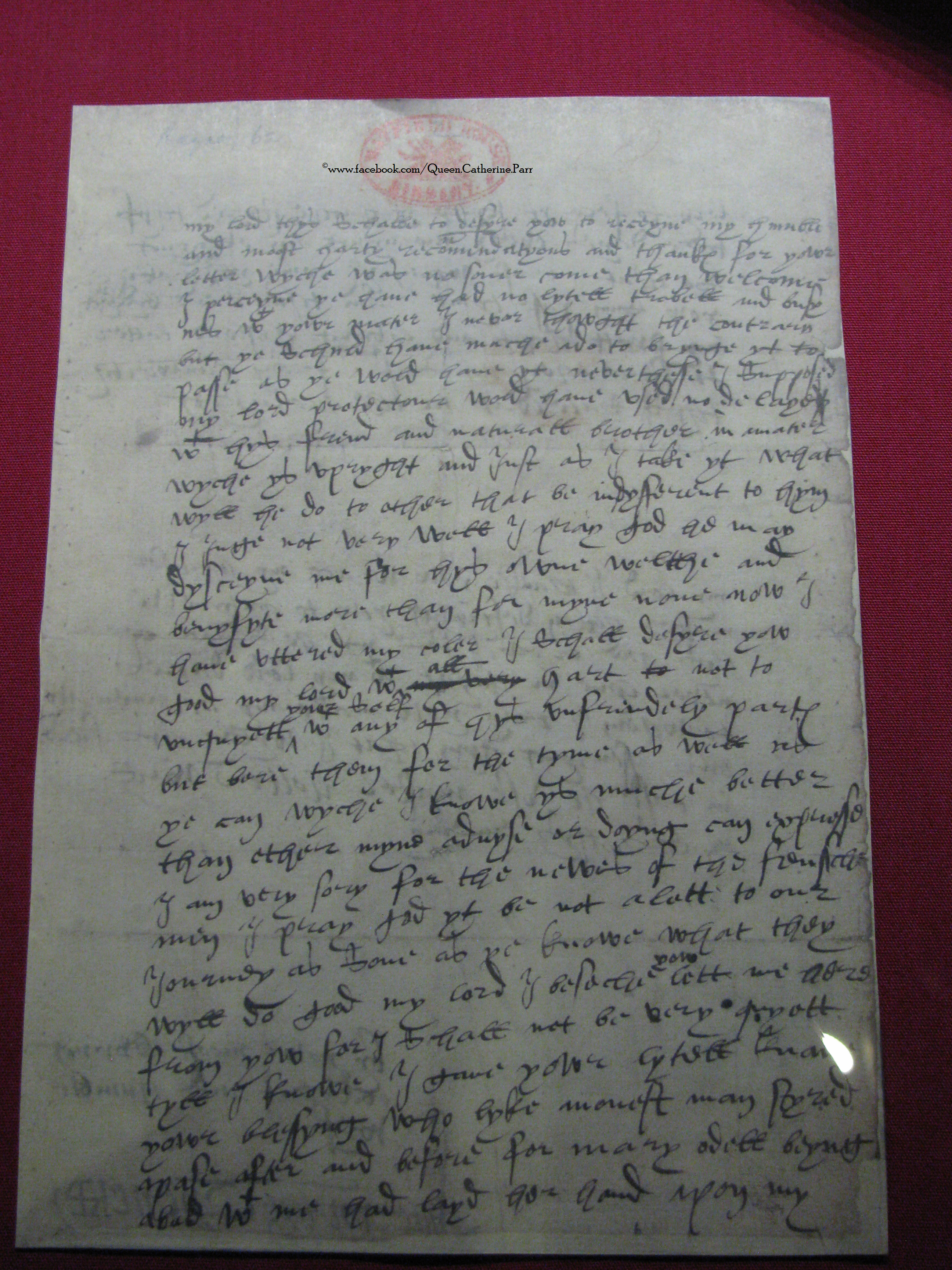
In June Katherine wrote to her husband from Hanworth:

“I gave your little knave your blessing, who like and honest man stirred apace after and before. For Mary Odell being abed with me had laid her hand upon my belly to feel it stir. It hath stirred these three days every morning and evening so that I trust when ye come it will make you some pastime.”[2]

The Dowager Queen’s letter from Hanworth which is preserved at Sudeley Castle © Meg McGath, 2012.

Seymour, who was also aware of the perils of childbirth — from his own sister’s account — replied from Westminster:

“I do desire your highness to keep the little knave so lean and gaunt with your good diet and walking, that he may be so small that he may creep out of a mousehole. I hear my little man doth shake his poll [head], [and] trusting God should give him life to live as long as his father, he will revenge such wrongs as neither you nor I can.”[3]

The last part of the message obviously had to do with Seymour’s friction with his elder brother which at this time was on the verge of paranoia.
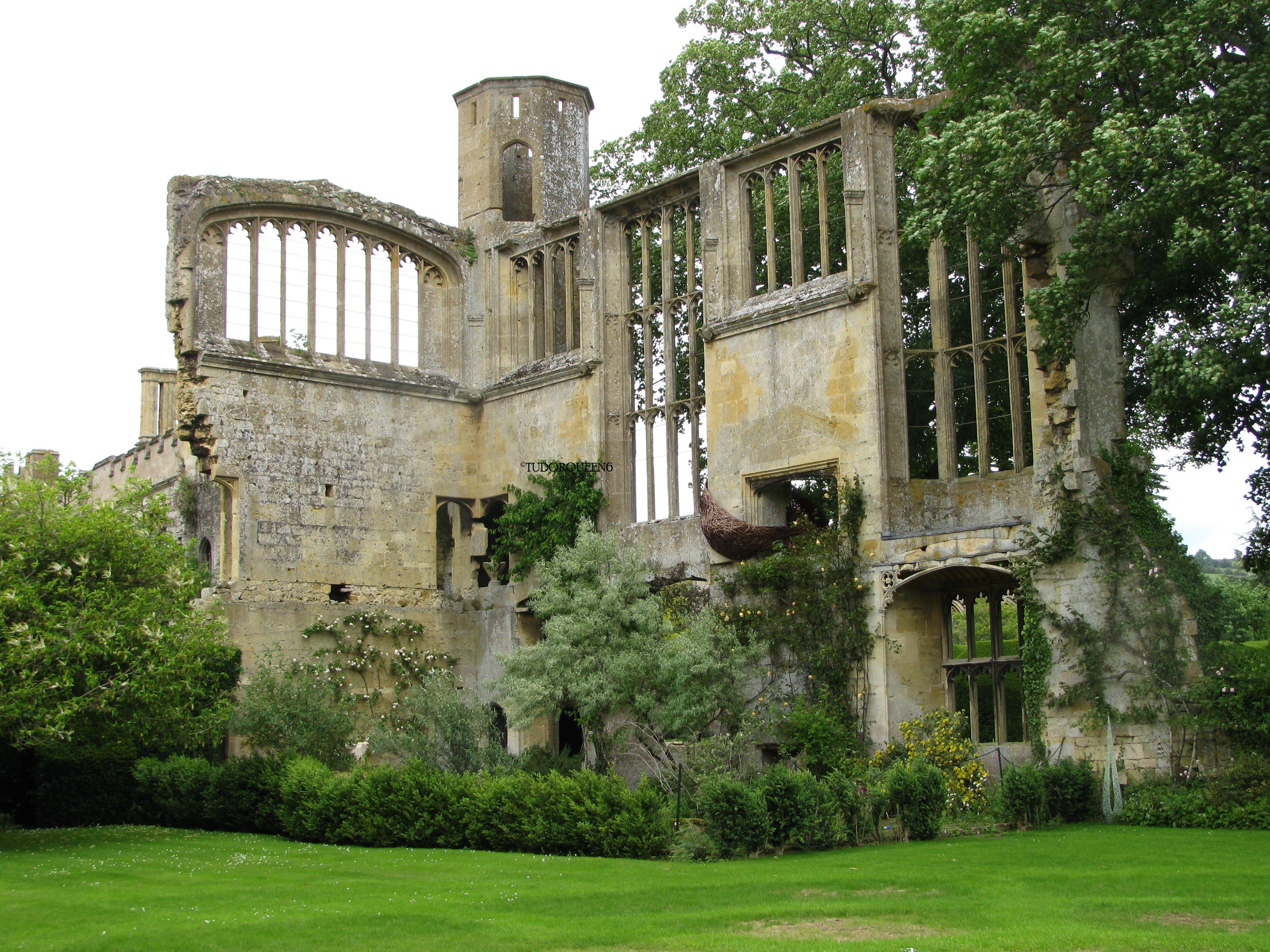
The Ruins of the 15th Century State Apartments, where Katherine would have spent her last few months © Meg McGath, 2012.

Seymour decided that Katherine should be confined as far away possible from the press of business and turmoil of the court as well as the summer plagues of London. Katherine was taken to Sudeley Castle in Winchcombe, England, outside of Cheltenham. The castle has a long history stretching back to William de Tracy. Richard III used the castle as campaign headquarters during the Battle of Tawkesbury; in which Katherine’s grandfather fought. Upon the death of Richard III, the castle reverted to the crown and new monarch, Henry VII; who gave the castle to his uncle, Jasper Tudor. After the death of Jasper Tudor, Sudeley reverted to the crown again, to King Henry VIII. In fact, the King made a visit to the castle with Anne Boleyn in 1535. Upon the ascension of Edward VI, Sir Thomas was created Lord Seymour of Sudeley and was granted the castle. In preperation for her lying-in, Seymour spent 1,000 pounds having the rooms prepared for her in his newly aquired house at Sudeley in Gloucestershire.[4] With beautiful gardens and walks, the castle would have been a perfect place for Katherine to spend the last three months of her pregnancy.

The Nursery at Sudeley Castle

On Wednesday, 13 June 1548, Seymour accompanied his wife, who was now six months pregnant, and his young ward, Lady Jane Grey, from Hanworth to Sudeley Castle in Gloucestershire. Lady Elizabeth Tudor had been sent away that Spring so she did not accompany them. In this castle, Katherine spent the last three months of her pregnancy and the last summer of her life. Typical of Queen Katherine, she spared no expense when it came to attendants. She was attended by her old friend and doctor, Robert Huicke, and was surrounded by other old friends, Miles Coverdale, her chaplain, her almoner, John Parkhurst, Sir Robert Tyrwhitt, and the ladies who had been with her over the years such as Elizabeth Trywhitt and Mary Wodhull. Katherine also had a full compliment of maids-of-honour and gentlewomen as well as 120 gentlemen and yeomen of the guard. In spite of his duties, Sir Thomas Seymour seems to have spent most of that summer with his wife. Katherine whiled away her summer days overseeing the education of Lady Jane Grey while preparing for her baby. Her affections for her husband seemed as strong as ever, as was her belief in the final analysis, Seymour would make the moral choice over the immoral one.

The queen wrote to her husband who had been called away on duty describing the baby as very active.

“I gave your little knave your blessing, who like an honest man stirred apace after and before. For Mary Odell being abed with me had laid her hand upon my belly to fell it stir. It hath stirred these three days every morning and evening so that I trust when you come it will make you some pastime…”

It was during this time that the queen dowager reconciled with Lady Mary who wrote to her stepmother on 9 August:

“I trust to hear good success of your Grace’s great belly; and in the meantime shall desire much to hear of your health, which I pray almighty God to continue and increase to his pleasure as much as your own heart can desire.”[6]

The Lady Elizabeth, who was now living away from her step-mother also wrote, too, answering a letter of Katherine’s in which the queen described the beauties of Sudeley and wished the princess with her once more:

“Although your Highness’ letters be most joyful to me in absence, yet considering what pain it is to you to write, your Grace being so great with child, and so sickly, your commendation were enough in my Lord’s letter. I much rejoice at your health with the well liking of the country. Your Highness were like to be cumbered, if I should not depart, till I were weary being with you; also it were in the worst soil in the world your presence would make it pleasant… God send you a most lucky deliverance.”[7]

One could reflect on this letter — seeing Lady Elizabeth’s concern when it came to childbirth. Perhaps this weariness and the eventual death of her beloved step-mother would confirm that she would never consider having children.
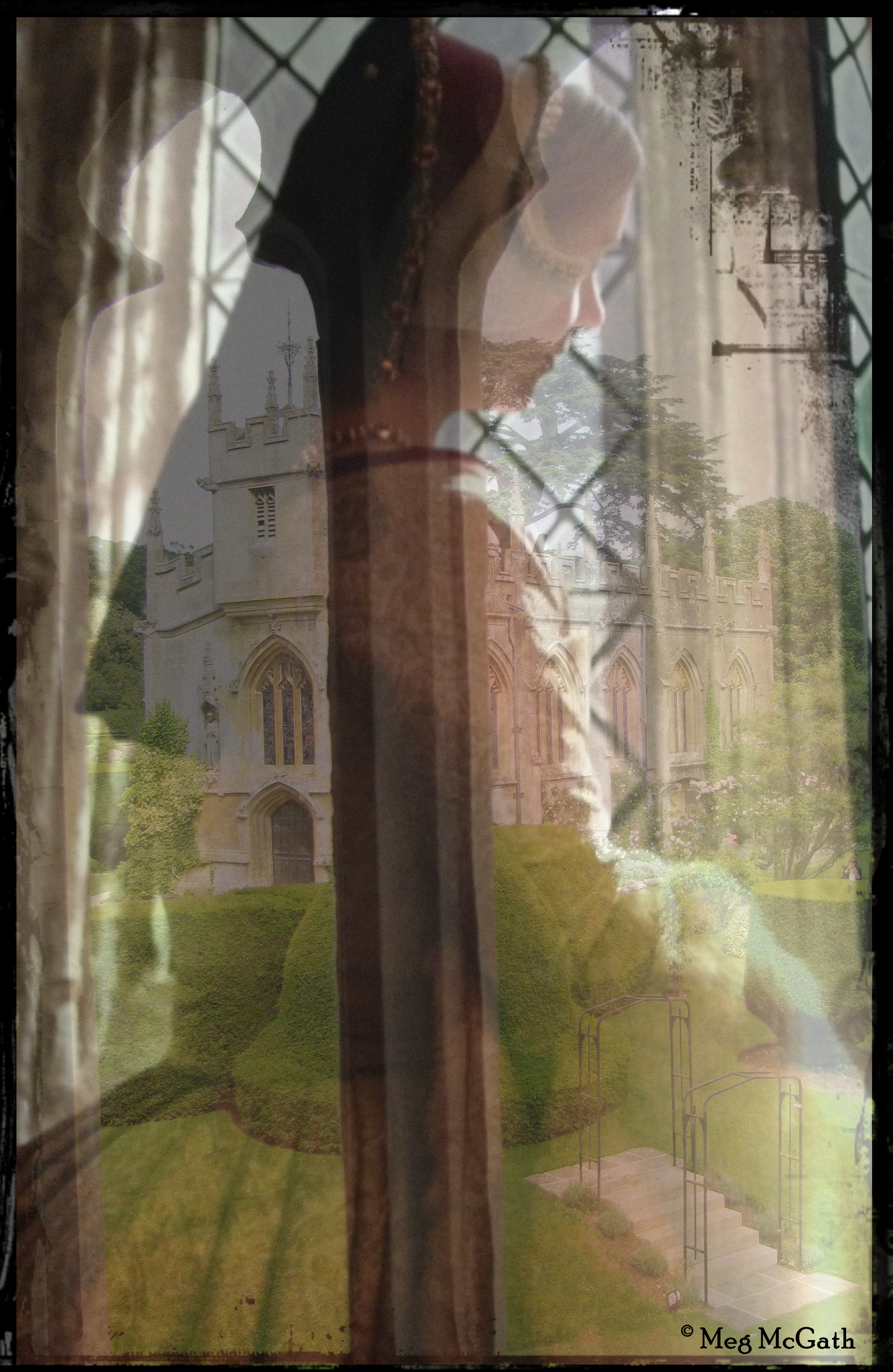
Queen Katherine looks from the window in her nursery which overlooks the gardens and Chapel.

Queen Katherine looks from the window in her nursery which overlooks the gardens and Chapel.

While Katherine awaited her confinement, Katherine continued decorating the nursery which overlooked the gardens and the Chapel. The nursery of an expected heir was done up in crimson and gold velvet and taffeta, with furniture and plate enough for a royal birth. In Seymour’s eyes, the child would be a member of the royal family as Katherine was still officially the only queen in England. After his daughter’s birth, Seymour was overheard telling Sir William Sharington that,

“it would be strange to some when his daughter came of age, taking [her] place above [the duchess of] Somerset, as a queen’s daughter.”[5]

Besides the baby’s cradle was a bed with a scarlet tester and crimson curtains and a separate bed for the nurse.
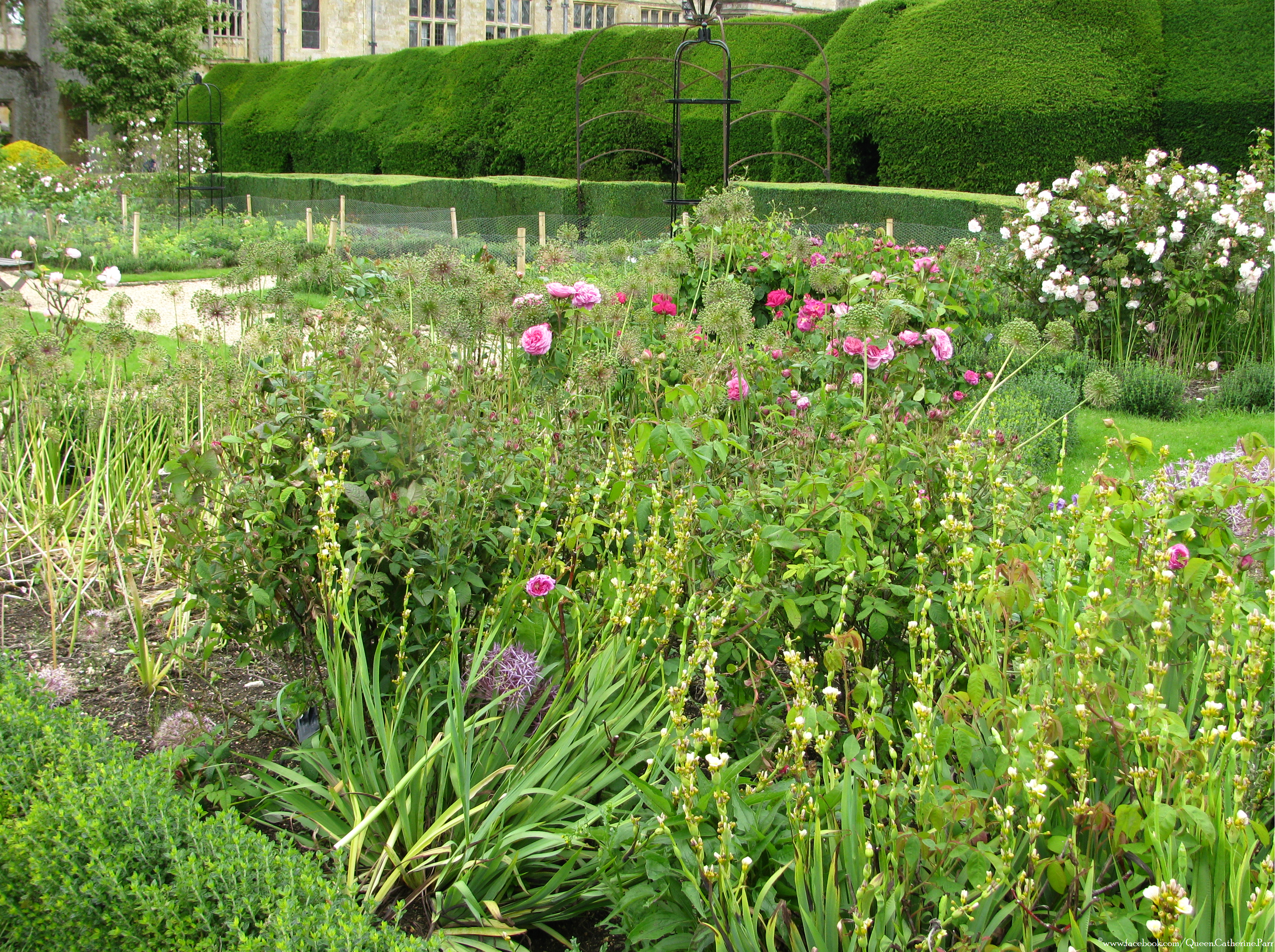
The Queen's Garden where Katherine would have walked.

The Queen’s Garden where Katherine would have walked.

The Queen continued to take the advice of her doctor and walked daily among the grounds of Sudeley, but she was still concerned about the politics and overseeing of the new boy king.

The nursery as it is today; the woman portrayed here is Queen Katherine's sister, Lady Anne Herbert [later Countess of Pembroke] who was Katherine's groom.

The nursery as it is today; the woman portrayed here is Queen Katherine’s sister, Lady Anne Herbert [later Countess of Pembroke] who was Katherine’s groom.

On Thursday, 30 August, [coincidentally in 2012, the celebration of Queen Katherine’s 500th anniversary of her birth, the 30th of August ALSO fell on a Thursday, on the eve of a blue moon] Katherine brought to bed a healthy baby girl who was named Lady Mary in honour of her step-sister, the Lady Mary Tudor. Disappointed briefly that the son and avenger he had hoped for had turned out to be a girl, Seymour rallied quickly and announced his daughter’s birth to the lord protector in ‘glowing terms’ and with a detailed description of her beauty. Somerset, the father of 12, was amused by his brother’s enthusiasm for fatherhood. But Seymour’s joy in his child’s birth was followed by fear at his wife’s worsening condition.

This portrait of a baby/small child hangs in the Nursery at Sudeley Castle. No identification on who it is.

This portrait of a baby/small child hangs in the Nursery at Sudeley Castle. No identification.

Links

Sources:

  • Linda Porter. ‘Katherine, the queen,’ Macmillan, 2012.
  • Susan James. ‘Catherine Parr: Henry VIII’s Last Love,’ The History Press, Gloucestershire, 2008, 2009 [US Edition].
  • Janel Mueller. ‘Katherine Parr: Complete Works and Correspondences,’ University of Chicago Press, Jun 30, 2011.
  • Emma Dent. ‘Annals of Winchcombe and Sudeley,’ London, J. Murray, 1877. Out of copyright; use of images and info.

Written and researched by Meg McGath, 29 August 2012

King Henry VIII: the account of marriage to wife no. 6 to Kateryn Parr

Letters and Papers, Foreign and Domestic, Henry VIII, Volume 18 Part 1: January-July 1543

The wedding of Henry and Kateryn, Dowager Baroness Latimer as recorded
Written by Meghan McGath

Notarial instrument witnessing that, on 12 July 1543, 35 Hen. VIII., in an upper oratory called “the Quynes Pryevey closet” within the honor of Hampton Court, Westm. dioc., in presence of the noble and gentle persons named at the foot of this instrument and of me, Ric. Watkins, the King’s prothonotary, the King and lady Katharine Latymer alias Parr being met there for the purpose of solemnising matrimony between them, Stephen bp. of Winchester proclaimed in English (speech given in Latin) that they were met to join in marriage the said King and Lady Katharine, and if anyone knew any impediment thereto he should declare it. The licence for the marriage without publication of banns, sealed by Thos. abp. of Canterbury and dated 10 July 1543, being then brought in, and none opposing but all applauding the marriage, the said bp. of Winchester put the questions (recited) to which the King, hilari vultu, replied “Yea” and the lady Katharine also replied that it was her wish; and then the King taking her right hand, repeated after the Bishop the words, “I, Henry, take thee, Katharine, to my wedded wife, to have and to hold from this day forward, for better for worse, for richer for poorer, in sickness and in health, till death us depart, and thereto I plight thee my troth.” Then, releasing and again clasping hands, the lady Katharine likewise said “I, Katharine, take thee Henry to my wedded husband, to have and to hold from this day forward, for better for worse, for richer for poorer, in sickness and in health, to be bonayr and buxome in bed and at board, till death us depart, and thereto I plight unto thee my troth.” The putting on of the wedding ring and proffer of gold and silver (described) followed; and the Bishop, after prayer, pronounced a benediction. The King then commanded the prothonotary to make a public instrument of the premises. Present : John lord Russell, K.G., keeper of the Privy Seal, Sir Ant. Browne, K.G., captain of the King’s pensioners, and Thos. Henage, Edw. Seymer, Hen. Knyvet, Ric. Long, Thos. Darcy, Edw. Beynton, and Thos. Speke, knights, and Ant. Denny and Wm. Herbert, esquires, also the ladies Mary and Elizabeth the King’s children, Margaret Douglas his niece, Katharine duchess of Suffolk, Anne countess of Hertford, and Joan lady Dudley, and Anne Herbert.
Notarial attestation by Ric. Watkins, Ll. B., King’s prothonotary.
Large parchment.

The marriage of Henry VIII and Kateryn Parr ©Meghan McGath (2009)
Source: 

James Gairdner and R. H. Brodie (editors). “Henry VIII: July 1543, 11-15.” Letters and Papers, Foreign and Domestic, Henry VIII, Volume 18 Part 1: January-July 1543 (1901): 480-489. British History Online. Web. 10 January 2012. <http://www.british-history.ac.uk/report.aspx?compid=76754&strquery=queen+catherine&gt;

16 February 1547: The Funeral of King Henry VIII

Queen Katherine Parr painted most likely as a young widow, posthumously.

After the news of King Henry’s death became public, the now Dowager Queen Katherine for the third time in her life donned widow’s weeds and mourning jewels. She wore buttons of gold enamelled black. She wore a gold ring with a death’s head. The death’s head of Christian lamentation on her finger, the queen secluded herself while she mourned and prepared for the funeral of the now dead king. Vast amounts of black cloth had been ordered for mourning clothes for the Lady Mary and Lady Elizabeth as well as the queen’s ladies and Henry’s household.
 For ten days the king’s embalmed body lay in the privy chamber in a huge chest lit by tapers. On 8 February, an official announcement was made that the King had indeed died. The bells through out the kingdom rang and prayers and Requiem masses were said for the king’s soul.

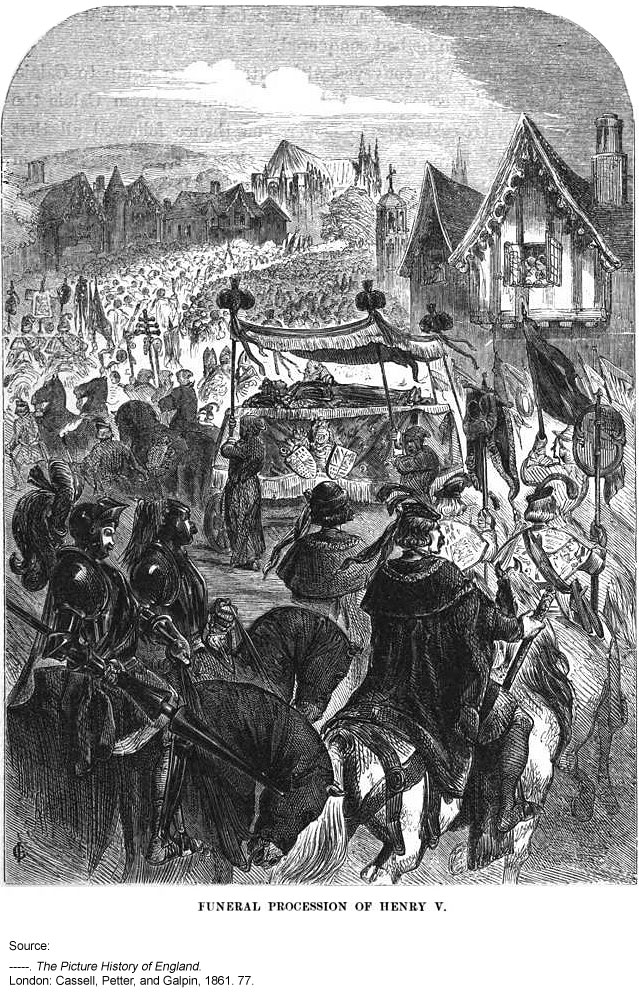
Funeral procession of Henry V; just an image to show how Henry VIII’s probably went, only grander of course!

On 14 February 1547, a great procession of 1,000 horsemen and hundreds of followers formed around a larger then life hearse made for the king. It was seven stories high, adorned with carefully crafted effigy of the monarch. The procession moved from Westminster down to Windsor stopping at night at the new “Lord Protector’s” home in Syon for the night. The road itself had to be repaved and trees had to be cut out of the way in order to bear the weight and size of the King’s hearse.
The funeral cortege arrived at Windsor in the afternoon of the 15th of February. The main Requiem and service would be held the next day.

An edited drawing of Queen Katherine.

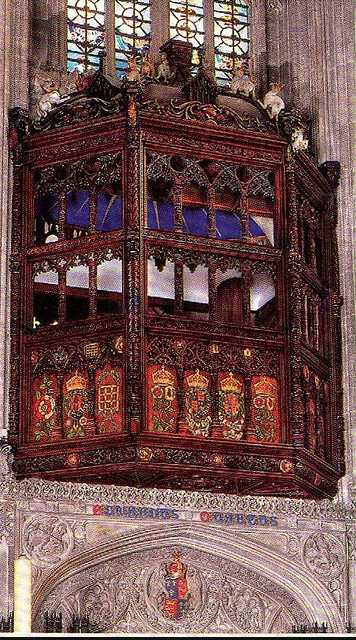
Dressed in blue velvet lined with purple with a ring of gold with a death head, the queen watched the proceedings from her private Chapel above the choir, the Queen’s Closet, in St. George’s Chapel, Windsor. It was the final act of a drama that had begun for Katherine over four years ago. Katherine watched as Henry was interred with his “most beloved” wife, the mother of the new king, Edward VI, Queen Jane Seymour. Ironically, it was Bishop Gardiner who officiated at the Requiem Mass. After all that Henry had done to break from Rome and the fact that he died holding Archbishop Cranmer’s hand; Henry wanted to have the familiar Latin Mass of the old religion to ensure the good of his soul. Katherine surely must have been upset with the situation seeing how much she disliked Gardiner and the form of ceremony. No doubt, with a disbelief of Purgatory notwithstanding, she said at least one prayer for her husband’s soul. The fact that she had been excluded from the Regency council was probably playing in her mind along with other thoughts which were not accounted for. One of them might have been towards her long lost love, Sir Thomas Seymour, who Katherine would now be free to marry.

The King left Katherine a generous lifestyle. He doted her as his “entirely beloved wife” and left her quite comfortably.

“The Queen shall have’, he commanded,  ‘3,000 in plate, jewels and stuff, beside what she shall please to take of what she has already, and further receive in money 1,000 besides the enjoyment of her jointures.’ She was always to be served and waited on as befitted a queen, with a large household (well over one hundred people) and all her dower properties which included her manors at Hanworth and Chelsea. She was still to exercise patronage, continue writing, live a life of privilege and comfort. Katherine would remain till her death the Dowager Queen of England and was the first lady of the Realm followed by Lady Mary, Lady Elizabeth, and Lady Anne of Cleves.

That this rule was followed and upheld becomes a completely different blog and issue entirely after Katherine’s marriage to Sir Thomas Seymour, younger brother of the Lord Protector and uncle to King Edward VI.

 Sources:
  1. Susan James. Catherine Parr: The Last Love of Henry VIII, History Press, Gloucestershire, 2009. pg 259-
  2. Linda Porter. Katherine, the Queen, Macmillan, US Edition, December 2010. pg 275-76.