Queen Katherine’s Letter: “The Tudors” vs. the real deal

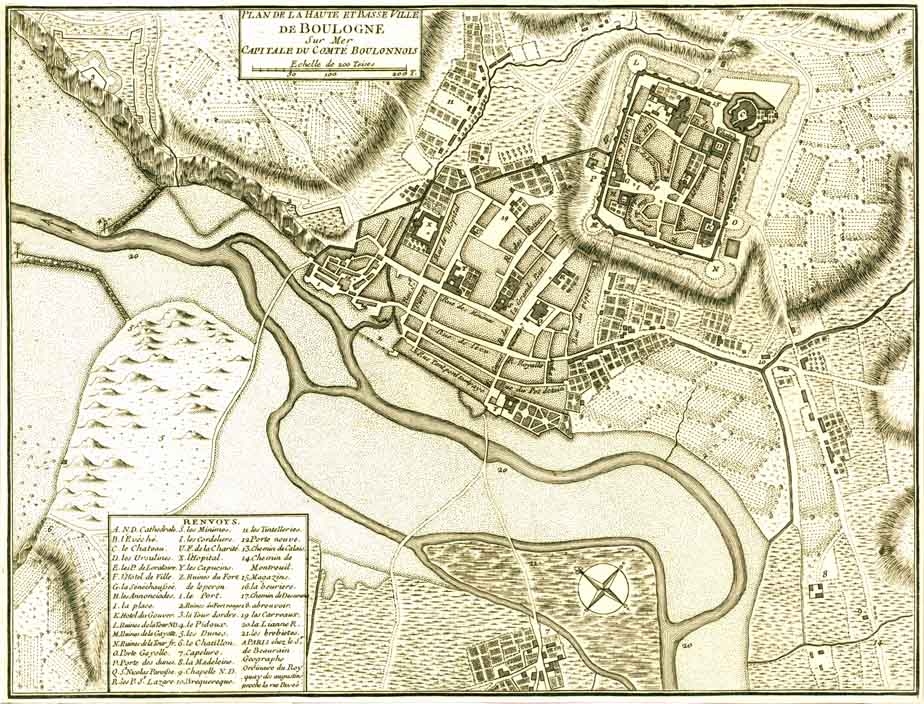
From The Tudors, episode 7. Katherine Parr’s letter to Henry while Regent of England; during his siege of Boulogne, France.

Although Your Majesty’s absence has not been long, yet the want of your presence means that I cannot take pleasure in anything until I hear from Your Majesty. Time hangs heavily. I have a great desire to know how Your Majesty has done since you left, for your prosperity and health I prefer and desire more than my own. And although I know Your Majesty’s absence is never without great need, still love and affection compel me to desire your presence. Thus love makes me set aside my own convenience and pleasure for you at whose hands I have received so much love and goodness that words cannot express it. We hear word of ill weather and delays besetting you and though we thank God for your good health we anxiously await the joyous news of the success of your great venture and for your safe and triumphant return for which all England offers daily prayers. I fear am I but a poor substitute for Your Majesty in the matter of the guidance of your kingdom. I long for your return. I commit you to God’s care and governance.
By Your Majesty’s humble obedient wife, and servant,
Katherine, the Queen

17th-century plan of Boulogne, Fortified Places, by David Flintham.

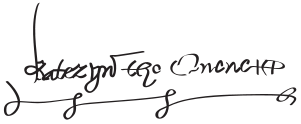
The actual letter which she wrote in July 1544; it was written during Henry’s six-week absence while he was in Boulogne, France and during the Regency of Queen Katherine. Its tone is loving and respectful.

Letter from Katherine Parr to Henry VIII, July 1544. Extract from the letter: ‘God, the knower of secrets, can judge these words not to be only written with ink, but most truly impressed in the heart’. Queen Katherine Parr to King Henry VIII. in his absence, full of duty and respect, and requesting to hear from him. No date. . A Volume, containing Letters, &c. written by royal, noble, and eminent Persons of Great Britain, from the time of King Henry VI. to the reign of his present Majesty. These are originals, except where otherwise expressed. July 1544. Source: Lansdowne 1236, f.9.

Although the distance of time and account of days neither is long nor many of your majesty’s absence, yet the want of your presence, so much desired and beloved by me, maketh me that I cannot quietly pleasure in anything until I hear from your majesty. The time, therefore, seemeth to me very long, with a great desire to know how your highness hath done since your departing hence, whose prosperity and health I prefer and desire more than mine own. And whereas I know your majesty’s absence is never without great need, yet love and affection compel me to desire your presence.
Again, the same zeal and affection force me to be best content with that which is your will and pleasure. Thus love maketh me in all things to set apart mine own convenience and pleasure, and to embrace most joyfully his will and pleasure whom I love. God, the knower of secrets, can judge these words not to be written only with ink, but most truly impressed on the heart. Much more I omit, lest it be thought I go about to praise myself, or crave a thank; which thing to do I mind nothing less, but a plain, simple relation of the love and zeal I bear your majesty, proceeding from the abundance of the heart. Wherein I must confess I desire no commendation, having such just occasion to do the same.
I make like account with your majesty as I do with God for his benefits and gifts heaped upon me daily, acknowledging myself a great debtor to him, not being able to recompense the least of his benefits; in which state I am certain and sure to die, yet I hope in His gracious acceptation of my goodwill. Even such confidence have I in your majesty’s gentleness, knowing myself never to have done my duty as were requisite and meet for such a noble prince, at whose hands I have found and received so much love and goodness, that with words I cannot express it. Lest I should be too tedious to your majesty, I finish this my scribbled letter, committing you to the governance of the Lord with long and prosperous life here, and after this life to enjoy the kingdom of his elect.
From Greenwich, by your majesty’s humble and obedient servant,
Kateryn the Quene, KP

Childbearing: Queen Katherine of Aragon and Lady Maud Parr

Childbearing; the Tale of Katherine of Aragon and Maud Parr

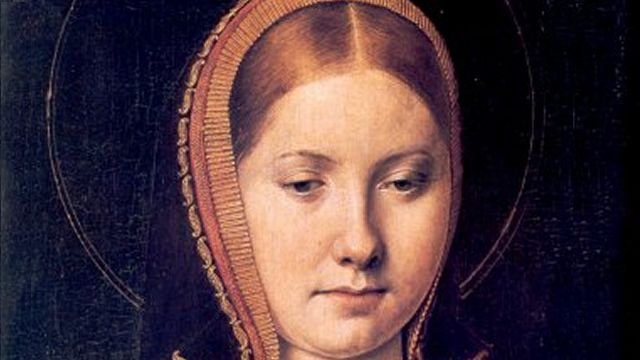
Queen Katherine of Aragon; first wife of Henry VIII and mother to Queen Mary I

As most Tudor enthusiasts know, Katherine of Aragon, first wife of Henry, had many troubles when it came to childbearing. This wasn’t an unusual thing for women in Tudor times. The infant mortality rate was also an issue as many newborns did not live past birth or even their first birthday.

During the first year of Katherine’s marriage to King Henry, Katherine had a miscarriage within the initial six months of pregnancy in January 1510. This mishap began a pattern which resulted in many miscarriages and stillbirths.

On New Year’s day in 1511, a son was finally born. He was christened Henry, Duke of Cornwall. The whole court was ecstatic and a great tournament was thrown in honour of the birth of Henry’s son. But to Katherine and Henry’s dismay, he died fifty-two days later on 23 February 1511. Contemporary reports state that both parents were distraught at the loss of their second child and expected future king. The deeply religious Catherine spent many hours kneeling on cold stone floors praying, to the worry of courtiers. Henry distracted himself from his grief by unsuccessfully waging war against Louis XII of France with his father-in-law, Ferdinand II of Aragon.

By 1513, Katherine was with child again. It was at this time that Katherine was appointed Regent as Henry took on a military mission in France. In was within her regency that she rode north, heavily pregnant, after the Battle at Flodden Field to address soldiers. The journey no doubt was painful as a woman in that stage of pregnancy should have begun her lying in already. When Henry returned from France, instead of embracing a new baby boy, the two were saddened by another death.

Historians have speculated as to the course English history might have taken, had either of the two Henrys, Duke of Cornwall, or any other legitimate son survived. Given that Henry’s search for a male heir, after Catherine’s failure to give birth to any more live sons, was the cited reason which led him to have their marriage annulled, a living male child might have at least forestalled, or even prevented, the marriage to Anne Boleyn and placed England in a different relationship with Roman Catholicism during the Protestant Reformation.

This theme has also been explored in some alternate history science fiction, such as Kingsley Amis’ The Alteration (1976), in which another alternate history English Reformation is depicted, even without the succession crisis caused by the absence of a male heir until the birth of Edward VI to Henry and Jane Seymour. However, Amis’ book within a book does not specify whether this alternate history Henry IX is any specific son of Henry VIII.

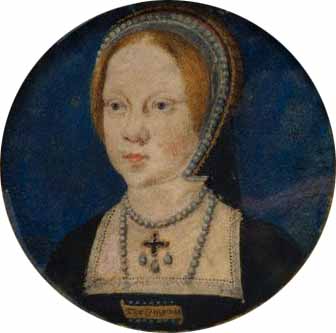
Portrait miniature of Princess Mary at the time of her engagement to Charles V.

After finally giving birth to a healthy baby girl in 1516, christened Mary (the future Queen Mary), Katherine became pregnant yet again in 1518 gave birth to another girl. This baby died within a week of her birth date. It became apparent in 1526 that Katherine’s health was deteriorating which made it highly unlikely that she would have any more children.

Katherine Parr’s mother, Maud, became lady-in-waiting to Queen Katherine of Aragon after she married Sir Thomas Parr. Maud stayed with Queen Katherine until the end of her life; she stayed with her even through the tumultuous times of the 1520s when Henry started his infatuation with one of Katherine’s ladies, Anne Boleyn.

Maud’s relationship with the Queen was a relationship that went much deeper than “giddy pleasure”. Both knew what it was like to lose a child in stillbirths and in infancy. It was Katherine Parr’s mother, Maud, who shared in the horrible miscarriages and deaths in which Queen Katherine would endure from 1511 to 1518. The two bonded over the issue and became close because of it. When Maud Green became Lady Parr she became pregnant shortly after her marriage to Sir Thomas Parr. Most people think that Katherine Parr, the future queen and last wife of Henry, was the first to be born to the Parrs; not so. In or about 1509, a boy was born to Maud and Thomas. The happiness of delivering an heir to the Parr family was short lived as the baby died shortly after — no name was ever recorded. It would be another four years before Maud became pregnant again. In 1512, Maud finally gave birth to a healthy baby girl. She was christened Katherine, after the queen, and speculations are that Queen Katherine was her godmother. In about 1513, Maud would finally give birth to a healthy baby boy who was named William. Then again in 1515, Maud would give birth to another daughter named Anne, possibly after Maud’s sister. This pregnancy and childbirth is usually seen as the last for Maud; that she did not have anymore. Again, not so.

In or about 1517, Maud became pregnant again. It was in autumn of that year that her husband, Sir Thomas, died. It is believed that the stress from his death and leaving Maud with three children to raise alone caused the baby to be lost or die shortly after birth. No further record of the child is recorded. In a way Maud might have been relieved as she already had three young children to provide for.

Maud continued her position at court as one of Katherine of Aragon’s household and stayed close to the Queen even when her relationship with Henry started to decline. Henry’s infatuation with Anne Boleyn, one of the Queen’s ladies, became apparent and inevitably the ladies began to take sides. In these times, Queen Katherine never lost the loyalty and affection of women like Maud Parr, Gertrude Courtenay, and Elizabeth Howard, who had been with the Queen since the first years of her reign.

The theories of if Henry, Duke of Cornwall lived have been written about — but that of if Katherine Parr’s older brother had lived — perhaps the story would have been different and Kat would have never become the last wife of Henry — never have restored the royal family which made way for Lady Mary and Elizabeth to become part of the succession again. Perhaps the cause of the Reformation, which started to entice King Henry in his great matter, would have never been furthered. Kat went on to try continuing what Henry’s second wife, Anne Boleyn, had started yet she wanted to help Henry make peace with his children. She took on the role of step-mother for Lady Elizabeth and Prince Edward, but remained good friend’s with the Lady Mary as Mary was only a few years younger than Kat. Some have called her the perfect combination of all of Henry’s wives; I would like to think they are referring to Henry’s first three wives; Katherine of Aragon, Anne Boleyn, and Jane Seymour. To this day some believe that Kat shaped the little girl who would become the last reigning Tudor; Elizabeth. Certainly many of the characteristics which Kat had were emulated by Elizabeth and she continued the beliefs her own mother and step-mother had in religion. Of the many things that Kat Parr did; many that are not listed here — I would like to think that her best influence and legacy lived on through Elizabeth, as she was basically the daughter she never had the opportunity to raise. Kat Parr would go on to give birth to a baby girl in her 4th and final marriage to Prince Edward’s uncle, Sir Thomas Seymour — but the joy was short lived as Katherine died shortly after.  Her three previous marriage were obviously childless. There has never been recorded evidence that she ever became pregnant or gave birth to any children before Lady Mary Seymour. The Parr legacy would continue within her sister’s family — the Herbert’s — as the Earls of Pembroke, whom today, still hold that title among others.

The Relationships of Lady Mary Tudor: Henry VIII and his consort Katherine Parr pt. 1

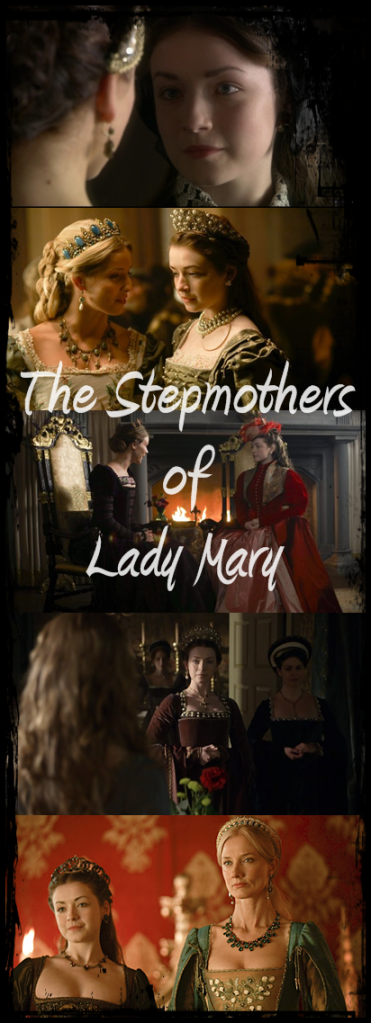
A modern interpretation of Lady Mary’s stepmother’s was shown in the historical fiction series “The Tudors.”

Throughout the reign of Henry VIII, as many know, he had six different wives. The first of these wives was the daughter of King Ferdinand II of Aragon and Queen Isabella I of Castile, Infanta Catalina; or as most have come to know her in England – Katherine of Aragon. Katherine came to England to marry the older brother of Henry who was then heir to the throne of England; Arthur, Prince of Wales. Shortly after their marriage Arthur died and Katherine was left a widow at an early age. To avoid returning her large dowry to her father Katherine was married to Arthur’s younger brother, then Henry, Duke of York. The marriage between Katherine and Henry produced only one child who would live to adulthood, a girl, the future Queen Mary I of England. In Tudor times, not having a male heir was particularly troublesome as the country had just been through a civil war in which Henry’s father seized the crown. Henry VIII was only the second Tudor monarch, a son of both the houses of Lancaster and York. Henry felt that a male heir was essential; after all, the last woman to reign as queen regent was the tumultuous reign of Empress Matilda, daughter of Henry I.

Born Princess Mary of England, Mary was the daughter of King Henry VIII and his first wife Katherine of Aragon. Her mother, after two decades of marriage to the King, had given birth to six children. Out of the six, only one would survive infancy, their daughter Mary. Katherine had produced no surviving sons, leaving their daughter, the future Mary I of England, as heiress presumptive at a time when there was no established precedent for a woman on the throne. At this time is when Henry began to take interest in one of Katherine’s ladies, Anne Boleyn. In Anne, Henry saw the possibility of having a male heir; to continue his father’s legacy. After going through a great bit of trouble – which included a break from Rome – Henry “divorced” Katherine and “married” Anne under his Church of England. This break and marriage would come to change England and inevitably changed Henry for the rest of his life. Henry would go on to have again, one daughter, with Anne. During this marriage, Princess Mary, now within her teens, went from being a legitimate Princess and daughter of Henry VIII to an illegitimate “bastard” under Henry’s new succession act. Mary was forced to live below the standards of what she had become accustomed to and was forced to accept that her mother was no longer queen of England. After only a few years of marriage to Anne, Henry became convinced that his second wife could not produce a male heir and literally disposed her for yet another lady-in-waiting, Jane Seymour. During her short reign, Jane tried to reconcile Henry with his daughter Mary. It was through this “precious” lady that Henry finally got what he wanted; a male heir, named Edward. To Henry’s misfortune, only twelve days after giving birth to Edward, Jane died. Henry would go on to marry three more times after Jane. Anne of Cleves, Katherine Howard, and a woman named Katherine Parr. It was the last of Henry’s wives who would come to reconcile Mary, along with her half-siblings, with Henry.
Katherine Parr was born in 1512. By both parents, Princess Mary was related to Katherine Parr. By her paternal grandparents, Mary was related by Katherine’s descent from the Beaufort’s, children of John of Gaunt, a son of Edward III making Mary by her paternal grandmother, Elizabeth of York, a 4th cousin. By the Woodville connection, they were 4th cousins. By her paternal grandfather, Henry VII (by Beaufort and Holland), Mary was a double 5th cousin, once removed. By her maternal grandmother, Isabel of Castile (by John of Gaunt), she was a fifth cousin and a fifth cousin, once removed. Jane Seymour is the next closest after Parr sharing Edward III (6th cousins, once removed).
Katherine was a few years older than Mary who was born in 1516. Katherine’s mother, Maud, had become a lady-in-waiting to Princess Mary’s mother shortly after her marriage to Sir Thomas Parr. Katherine was named after the queen and it is thought that the queen was her godmother.
Maud’s relationship with the Queen was unlike that of most queens and their ladies. It was a relationship that went much deeper than “giddy pleasure”. Both knew what it was like to lose a child in stillbirths and in infancy. It was Katherine Parr’s mother, Maud, who shared in the horrible miscarriages and deaths in which Queen Katherine would endure from 1511 to 1518. The two bonded over the issue, as Maud had experienced the death of her eldest, an infant boy, and later a miscarriage or early infant mortality after the birth of three healthy children. Because of these shared experiences, the queen and Maud became close.
After her husband died in 1517, Maud continued her position at court as one of Katherine of Aragon’s household and stayed close to the Queen even when her relationship with Henry started to decline in the 1520s. In 1525, when Henry’s infatuation with one of Katherine’s ladies, Anne Boleyn, became apparent, inevitably the ladies began to take sides. In these times, Queen Katherine never lost the loyalty and affection of women like Maud Parr, Gertrude Courtenay, and Elizabeth Howard, who had been with the Queen since the first years of her reign. Maud stayed with Queen Katherine until the end of her own life in 1531.
It has been said that Katherine Parr and Princess Mary were educated together. While Katherine’s mother attended on the queen, Katherine was at Parr house in Blackfriars, London. Katherine was not brought to court with her mother and probably the only time, if any, that she was in contact with the royal family was at her christening. Katherine and other daughters of the court were taught separately while Princess Mary, who had her own household, was taught by private tutors.
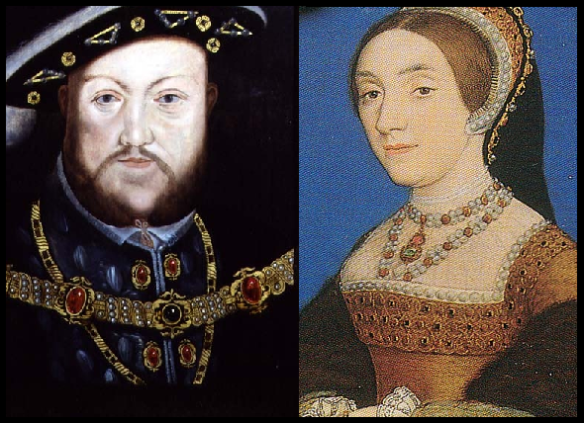
King Henry and his fifth consort Katherine Howard

After the disastrous marriage of the King and Katherine Howard, the King was no longer looking for flighty relationships that stirred his passions. Henry had learned a tough lesson with Katherine Howard and was determined more than ever to find an intelligent, honest, loving, and devoted wife. He wanted someone he could hold an actual conversation with; a companion. Another quality Henry looked for in a wife was someone who could be a perfect companion to his eldest daughter, now styled The Lady Mary Tudor. After years of tension and multiple step-mothers whom Mary had mixed relations with, Henry must have felt he owed her that much.
After the death of Katherine Howard, Mary enjoyed far greater favor from her father and presided over court feasts as if she was queen herself. For New Year’s, Mary was showered with lavish gifts from her father. Within the presents were ‘two rubies of inestimable value.’ However, it was during this time that Mary suffered from chronic ill-health linked to anxiety, depression, and irregular menstruation. These health issues along with others would continue until Mary’s death. Thankfully by Christmas 1542, Mary had recovered and was summoned to court for the great Christmas festivities. Her quarters at Hampton court were worked on day and night to prepare for her arrival. The Imperial Ambassador, Chapuys, reported that the King ‘spoke to her in the most gracious and amiable words that a father could address to his daughter.’
Katherine Parr would marry twice before her marriage to King Henry in 1543. Her first marriage would be to her distant relative, Sir Edward Borough in 1529; which ended in about 1533 with his death. Her next marriage was to her father’s second cousin, Sir John Neville, 3rd Baron Latimer of Snape in 1534. With this marriage, Katherine became Lady Latimer. She was the first of her family to marry into peerage since her great-aunt, Maud Parr, Lady Dacre. With this marriage also came two step-children from Latimer’s first marriage to Dorothy De Vere. For about a decade, Katherine would experience the joy of being a step-mother. It was during this time that she became extremely close to her step-daughter, Margaret, which was somewhat of a pre-cursor to Katherine’s future relationship with the Lady Elizabeth, Henry’s youngest daughter. By the time Lord Latimer had died, Katherine was left a rich widow and was asked by Latimer to look after his daughter until the age of her maturity. It has been said that Katherine became a lady in the household of Lady Mary during this time, but biographers Susan James and Linda Porter have different opinions. It was thought by James that because Mary remembered the kindness Katherine’s mother had shown her mother that she gladly took Katherine as one of her ladies. Porter disputes this saying it would have been below Katherine’s standing as the widow of a peer who had her own establishments and a large settlement from her husband’s death. Truth be told, many courtiers and wives of peers were ladies to royals in Tudor England. It was a wonderful opportunity, kept them busy, and at the center of court. Katherine’s sister, Anne, would serve all of Henry’s wives, including her. After the death of Lord Latimer, Katherine began a fling with the brother of former queen Jane Seymour, Sir Thomas Seymour. The two were most likely planning to be wed, but before the two could marry, Katherine would first catch the attention of King who quickly proposed.
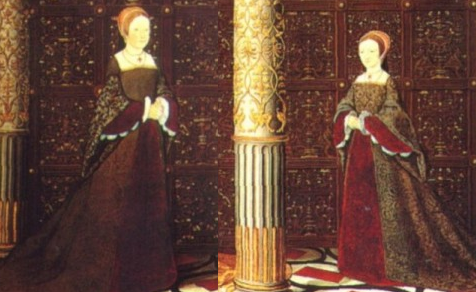
Lady Mary and Lady Elizabeth from the “Succession Portrait” which was commissioned while Katherine Parr was queen.

In spring before the wedding, Katherine would appear at court with both Lady Mary and Lady Elizabeth. The fact that the two had not been together earlier that spring and were now with Katherine and her sister at court was seen as significant. Katherine believed that a good relationship with the two was fundamental to her strategy. Once married, and confident as queen, she could develop the relationships further.

Katherine would go on to marry the King in July of that year. Within those who were present were the Ladies Mary and Elizabeth. With the marriage came three new step-children for Katherine to take care of. Instead of seeing it as her “duty”, she saw it as an opportunity as she had still not produced any children of her own.

Sources:

  • Susan James. Catherine Parr: Henry VIII’s Last Love, The History Press, 2009.
  • Linda Porter. Katherine the queen: The Remarkable Life of Katherine Parr, the Last Wife of Henry VIII, MacMillan, 2010.
  • Linda Porter. The Myth of “Bloody Mary”: A Biography of Queen Mary I of England, St. Martin Griffins, 2010.
  • Anna Whitelock. Mary Tudor: England’s First Queen, Bloomsbury Publishing PLC, 2009.

Review of “The Royals” by Leslie Carroll

This book was a major disappointment and had major flaws in The Tudors section. First off, Henry VII was basically skipped over, no picture — the Tudors section starts with the portrait of Elizabeth I. According to the author “Henry Tudor’s blood was barely blue being five generations from Edward III” and “Henry was not born to the crown” — the latter being true, but to skip such an important figure along with Elizabeth of York is unforgivable.

Image thought by some, uh who, to be Anne Boleyn

Another major error was the portrait of Anne Boleyn; the style of the clothes and hair is from the late 16th/early 17th century – Anne would not have worn the ‘Elizabethan collar’. It may be a modern interpretation, but to use it as the sole portrait of Anne is rather odd.

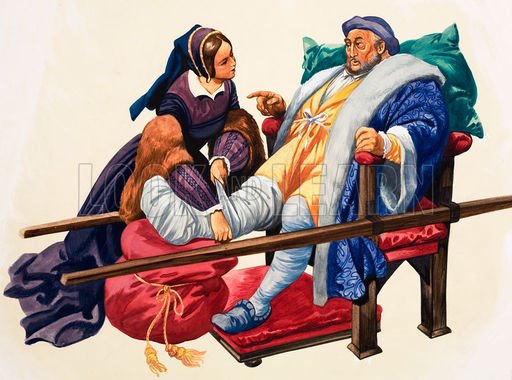
Queen Katherine nurses her husband the King.

I also disliked how Katherine Parr’s section was full of errors and made her look like a harlot after the death of Henry VIII.

First off, there is no proof that Katherine was romantically involved [meaning sleeping with] with Thomas Seymour before the death of Lord Latimer or before the marriage of Henry and Katherine. Also, Thomas was sent away on business for the king, he didn’t make himself scarce.

The statement that four out of six wives were redheads is incorrect.

Historians are not 100% sure that Katherine was part of Lady Mary’s household.

The discussion of theology became a problem when Katherine started preaching to the King — after the whole scandal they continued talking about religion, but it was more toned down.

I’m not sure where the info is coming from that Henry told his physician that he wanted to “get rid of” Katherine Parr. There were rumors, set up most likely by the Catholics at court, which also included Henry wanting to marry the Dowager Duchess of Suffolk, Queen Katherine’s friend, who was even more prone to speak her mind when it came to matters of religion. There was no doctor involved in telling Queen Katherine about Henry’s intentions. A warrant was drawn up which was taken to Queen Katherine. She went to King Henry arguing that she was “but a woman” and that she was merely trying to distract the King from his infirmities.

Katherine pushed Henry’s wheelchair in the gardens?? The correct info has the two sitting in the garden when they were approached by Henry’s guards.
The Queen Dowager, Katherine, waited a few MONTHS, not weeks, before re-entering into her “relationship” with Seymour. I don’t think Katherine would have been that disrespectful, but just to be clear — the King gave her the go ahead to re-marry who she wanted. They were thought to be married in the spring months, possibly May of that year.

Where the statement that Katherine was acting like a “trollop” came from, I would love to know. Seymour asked the King for permission to marry the Dowager Queen. Yes, Lady Mary was upset and thought Catherine should have waited a tad longer but in the two biographies I’ve read on Mary (Anna Whitelock and Linda Porter) she never once called Katherine a trollop. In fact, Mary disliked Seymour more than anything as he pestered her about matters of state. Mary eventually came to forgive Katherine — Katherine received a letter from Mary while she was pregnant and Katherine named the baby girl after her step-daughter.

The stories of Seymour and Elizabeth are quite interesting and many theories have been put out there, but what actually happened in that household is another story as Elizabeth’s lady, Kat Ashley, was the main contributor to the testimony. Kat herself encouraged Elizabeth to flirt with Seymour and had a crush on him herself. “But the doctor’s dirty hands caused an infection”… there are many contributing factors to the fever that caused Katherine to die, much like the death of Jane Seymour. And the last sentence of Lady Jane being raised as a surrogate daughter — she was a ward. This book and this chapter reads more like a romance novel then an actual history book.

The author put an actual biography of Katherine Parr (Susan James) within her chapter full of sources that is actually well respected; perhaps the author should have actually read the book before “quoting” it.

The chapter on The Tudors reads more like a romance novel than a history book; that might explain why the author chose the “romanticized” portrait of Anne Boleyn. No citations are given as to where the info comes from and major mistakes were made. The only good thing about the book is the reproduction of one of Anne Boleyn’s letters and the letter from Katherine Howard to Master Culpepper.

One positive note the author made about Katherine Parr:

“Perhaps the most mature and educated of Henry’s wives.”

So why did she paint Katherine as such a “trollop”?? You’ve got me! Other then that, don’t waste your money. Historically inaccurate indeed!

King Henry VIII: the account of marriage to wife no. 6 to Kateryn Parr

Letters and Papers, Foreign and Domestic, Henry VIII, Volume 18 Part 1: January-July 1543

The wedding of Henry and Kateryn, Dowager Baroness Latimer as recorded
Written by Meghan McGath

Notarial instrument witnessing that, on 12 July 1543, 35 Hen. VIII., in an upper oratory called “the Quynes Pryevey closet” within the honor of Hampton Court, Westm. dioc., in presence of the noble and gentle persons named at the foot of this instrument and of me, Ric. Watkins, the King’s prothonotary, the King and lady Katharine Latymer alias Parr being met there for the purpose of solemnising matrimony between them, Stephen bp. of Winchester proclaimed in English (speech given in Latin) that they were met to join in marriage the said King and Lady Katharine, and if anyone knew any impediment thereto he should declare it. The licence for the marriage without publication of banns, sealed by Thos. abp. of Canterbury and dated 10 July 1543, being then brought in, and none opposing but all applauding the marriage, the said bp. of Winchester put the questions (recited) to which the King, hilari vultu, replied “Yea” and the lady Katharine also replied that it was her wish; and then the King taking her right hand, repeated after the Bishop the words, “I, Henry, take thee, Katharine, to my wedded wife, to have and to hold from this day forward, for better for worse, for richer for poorer, in sickness and in health, till death us depart, and thereto I plight thee my troth.” Then, releasing and again clasping hands, the lady Katharine likewise said “I, Katharine, take thee Henry to my wedded husband, to have and to hold from this day forward, for better for worse, for richer for poorer, in sickness and in health, to be bonayr and buxome in bed and at board, till death us depart, and thereto I plight unto thee my troth.” The putting on of the wedding ring and proffer of gold and silver (described) followed; and the Bishop, after prayer, pronounced a benediction. The King then commanded the prothonotary to make a public instrument of the premises. Present : John lord Russell, K.G., keeper of the Privy Seal, Sir Ant. Browne, K.G., captain of the King’s pensioners, and Thos. Henage, Edw. Seymer, Hen. Knyvet, Ric. Long, Thos. Darcy, Edw. Beynton, and Thos. Speke, knights, and Ant. Denny and Wm. Herbert, esquires, also the ladies Mary and Elizabeth the King’s children, Margaret Douglas his niece, Katharine duchess of Suffolk, Anne countess of Hertford, and Joan lady Dudley, and Anne Herbert.
Notarial attestation by Ric. Watkins, Ll. B., King’s prothonotary.
Large parchment.

The marriage of Henry VIII and Kateryn Parr ©Meghan McGath (2009)
Source: 

James Gairdner and R. H. Brodie (editors). “Henry VIII: July 1543, 11-15.” Letters and Papers, Foreign and Domestic, Henry VIII, Volume 18 Part 1: January-July 1543 (1901): 480-489. British History Online. Web. 10 January 2012. <http://www.british-history.ac.uk/report.aspx?compid=76754&strquery=queen+catherine&gt;