Queen Katherine Parr: Not Important Enough?

I love how much people dismiss Queen Kateryn Parr. There may be evidence that she WAS supposed to be Regent for Edward VI. See her signature AFTER Henry died.

Credit: Elizabeth Norton

She was apparently signing as “Kateryn, the quene regente KP”. The theory goes that she was indeed made Regent for her stepson, King Edward VI. Which would make sense with the use of her signature. It is believed that Edward Seymour, Duke of Somerset, Kateryn’s brother the Marquess of Northampton, her brother-in-law the Earl of Pembroke and the council ousted her and rewrote the will. She would have made a wonderful Queen Regent. She proved she was capable of being Regent while Henry went to war with France. Perhaps she would have lived longer and prevented the succession from being rewritten. She gets credit for the placement of Princesses Mary & Elizabeth back into the line of succession behind their brother in 1545. That succession act seems to have overwritten or they disregarded King Edward’s will and supported the actual heir to the throne, Mary. Mary WAS the rightful heir. Jane was further down the approved line of succession. Why would you accept someone below the status of the actual daughters of King Edward’s father, Henry VIII? Kateryn Parr’s brother and brother in law were again involved in matters of the state and actually pulled off putting Lady Jane Grey on the throne for 9 days! Jane somehow outranked her own mother who was STILL alive and technically would have been the next heiress to the throne after Princesses Mary & Elizabeth. I never understood that. The Protestants feared the Catholic “Bloody Mary” (her nickname was started as Protestant propaganda, the pro Queen Elizabeth movement, lol) would try to return the country to the Pope and Catholicism. Mary was deeply religious. Kateryn Parr and Mary got on despite differences in matters like religion. Parr’s mother, Lady Maud, had served Mary’s own mother, Queen Katherine of Aragon, the first wife and crowned Queen consort to King Henry. The two women were pretty close. The Parrs backed Queen Katherine of Aragon when her lady in waiting became the Kings new obsession. Parr let Mary be and encouraged her every chance she could. One could argue she loved Mary more than Elizabeth. Heck, Kateryn named her only daughter and child, Mary, before the queen passed on 5 September 1548. Don’t think there were any other important Marys. The French Queen, Mary Tudor, had died long before Parr became Queen. Pretty sure it’s not after The Virgin Mary. Protestants aren’t that attached to her, right? I was raised Catholic, so I honestly don’t know. Anyway, Queen Kateryn Parr was VERY important. Read a book. She wasn’t an ex-queen. She remained Queen (consort) of England, Ireland, and France until she died. She was the LAST Tudor Queen Consort as King Edward died young. She was also the FIRST Queen of Ireland. Her funeral was the FIRST Protestant funeral for a Queen. Her mourner was none other than Lady Jane Grey, who would have probably stayed with Kateryn had the queen lived. Having Parr around seemed to pacify things. She knew how to handle tricky and dangerous situations. For Gods sake, she almost lost her head after she spoke with the King. It was overheard by the queens enemy, Bishop Gardiner, who saw an opportunity to “get rid” of Kateryn. I mean why not? He already KILLED TWO WIVES!! Lordy, so Gardiner tried to fuck with the Kings head. Saying shit like “it is a petty thing when a woman should instruct her husband” or some stupid sexist bs! Story goes, Kateryn was warned by an anonymous source who found her death warrant lying on the ground. YEAH RIGHT!! That’s straight up narcissistic abuse, my man!! Why do I feel like Henry set her up to test her loyalty? He was such a theatrical douche bag. No, no love for King Henry here. I have yet to see the film “Firebrand” which follows the reign of Kateryn as queen consort and queen Regente I believe. It’s based off Elizabeth Freemantle’s “Queen’s Gambit”. Anyway, Kateryn talked her way out of being arrested or worse by stroking the Kings ego and basically submitting to him just to fuvking survive. Imagine going through this marriage without psych meds like Benzos. I do believe they dabbled in potions however and she was known to “treat” melancholy with herbs from the gardens. Sudeley Castle where she is buried has a garden full of deadly herbs. Physic gardens. I have photos somewhere…

My page: Queen Catherine Parr

© 2024 Meg McGath. All research and original commentary belong to the author.

7 September 1548: THE FUNERAL of the Dowager Queen

Evesham Journal

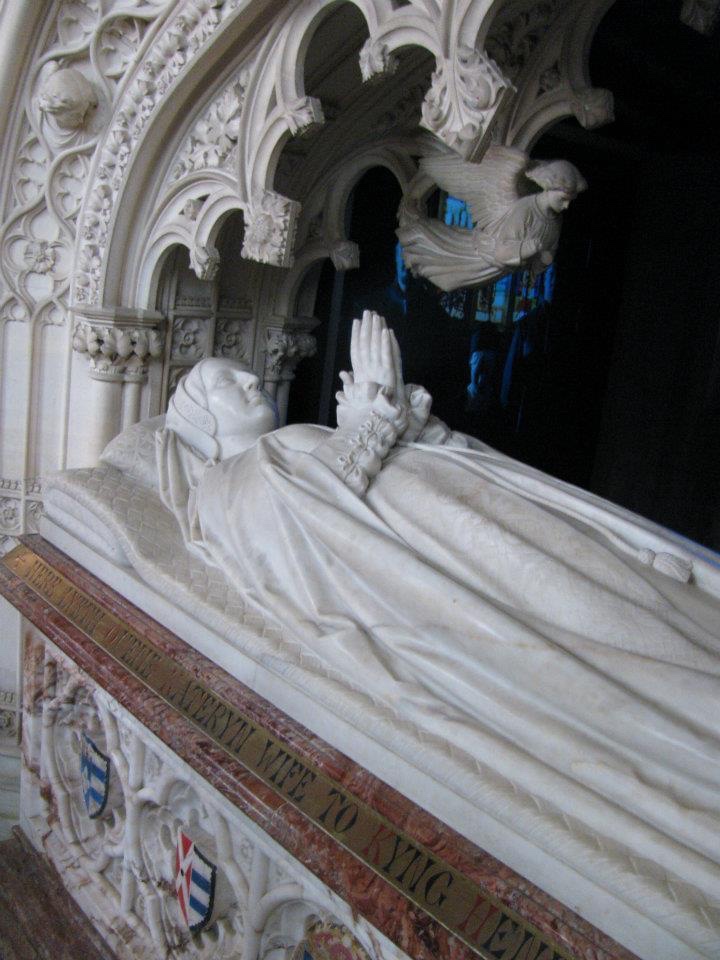
7 September 1548: THE FUNERAL of the Dowager Queen Katherine Parr. It was the first Protestant funeral held in English. Her chief mourner was Lady Jane Grey. She was buried in St Mary’s Chapel on the grounds of Sudeley Castle, Gloucestershire, England.

‘A Breviate of the Internment of the lady Katherine Parr, Queen Dowager, late wife to King Henry VIII, and after, wife to Sir Thomas, Lord Seymour of Sudeley, and High Admiral of England.

Item – On Wednesday, the fifth of September, between two and three of the clock in the morning, died the aforesaid lady, late Queen Dowager, at the castle of Sudeley in Gloucestershire, 1548, and lieth buried in the chapel of the said castle.

Item – She was cered and chested in lead accordingly, and so remained in her privy chamber until things were in a readiness.

Hereafter followeth the provision in the chapel.

Item – It was hanged with black cloth garnished with escutcheons of marriages viz. King Henry VIII and her in pale, under the crown; her own in lozenge, under the crown; also the arms of the Lord Admiral and hers in pale, without crown.

Items – Rails covered with black cloth for the mourners to sit in, with stools and cushions accordingly, without either hearse, majesty’s valence, or tapers – saving two tapers whereon were two escutcheons, which stood upon the corpse during the service.

The order in proceeding to the chapel.

First, two conductors in black, with black staves.
Then, gentlemen and esquires.
Then, knights.
Then, officers of houshold, with their white staves.
Then, the gentlemen ushers.
Then, Somerset Herald in the King’s coat.
Then, the corpse borne by six gentlemen in black gowns, with their hoods on their heads.
Then, eleven staff torches borne on each side by yeomen about the corpse, and at each corner a knight for assistance – four, with their hoods on their heads.
Then, the Lady Jane, daughter to the lord Marquis Dorset, chief mourner, led by a estate, her train borne up by a young lady.
Then, six other lady mourners, two and two.
Then, all ladies and gentlewomen, two and two.
Then yeomen, three and three in a rank.
Then, all other following.

The manner of the service in the church.

Item – When the corpse was set within the rails, and the mourners placed, the whole choir began, and sung certain Psalms in English, and read three lessons. And after the third lesson the mourners, according to their degrees and as it is accustomed, offered into the alms-box. And when they had all done, all other, as gentlemen or gentlewomen, that would.

The offering done, Doctor Coverdale, the Queen’s almoner, began his sermon, which was very good and godly. And in one place thereof, he took a occasion to declare unto the people how that there should none there think, say, nor spread abroad that the offering which was there done, was done anything to profit the dead, but for the poor only. And also the lights which were carried and stood about the corpse were for the honor of the person, and for none other intent nor purpose. And so went through with his sermon, and made a godly prayer. And the whole church answered, and prayed the same with him in the end. The sermon done, the corpse was buried, during which time the choir sung Te Deum in English.

And this done, after dinner the mourners and the rest that would, retruned homeward again. All which aforesaid was done in a morning.’

(p.180-182, ‘Katherine Parr: Complete Works and Correspondence’ edited by Janel Mueller.)

Tomb of Queen Kateryn Parr at Sudeley Castle. (c) Meg Mcgath, 2012.

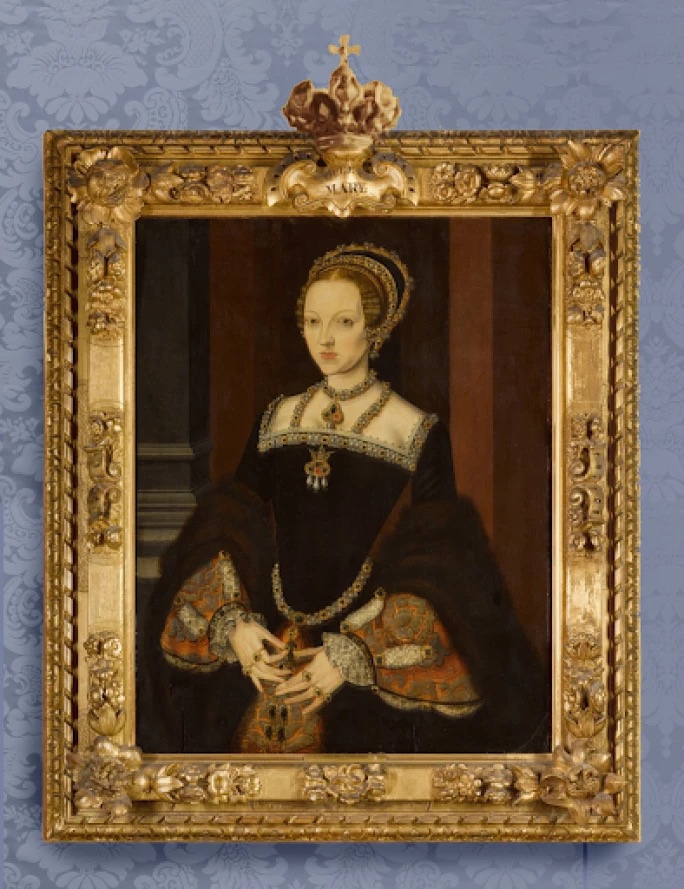
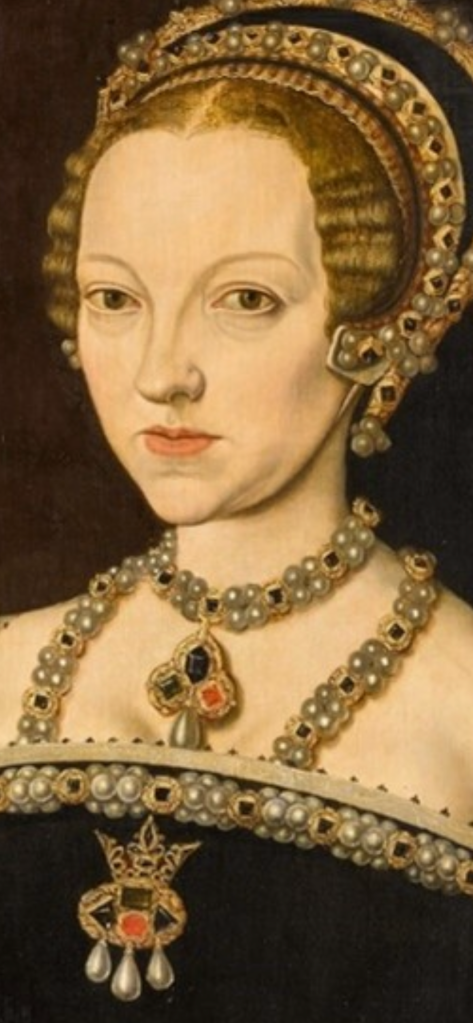
Jersey Portrait of Queen Katherine Parr: sold for £3.4 million

By Meg Mcgath
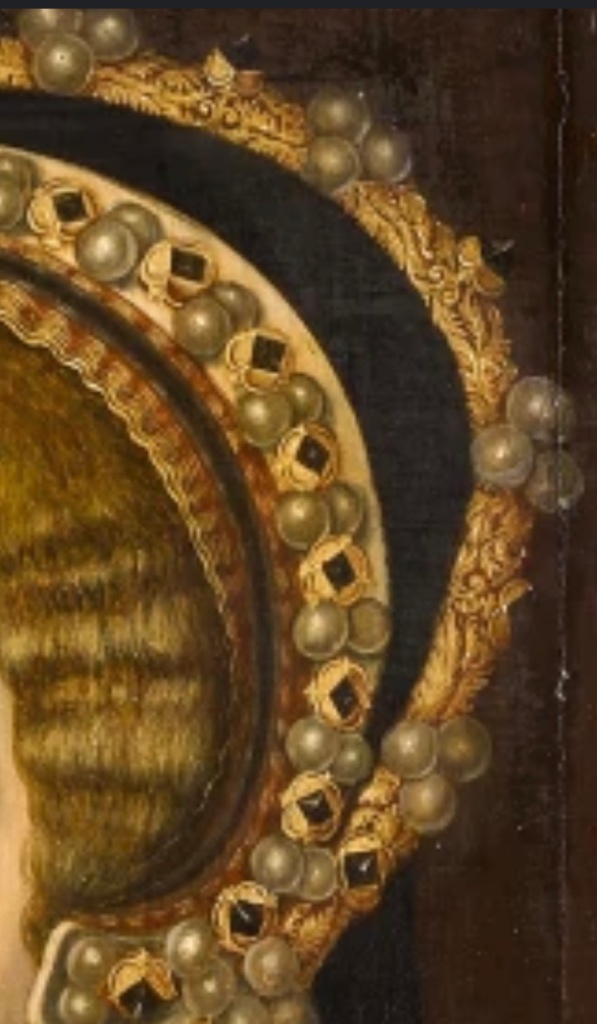
Sotheby’s The frame for a Portrait of Katherine Parr

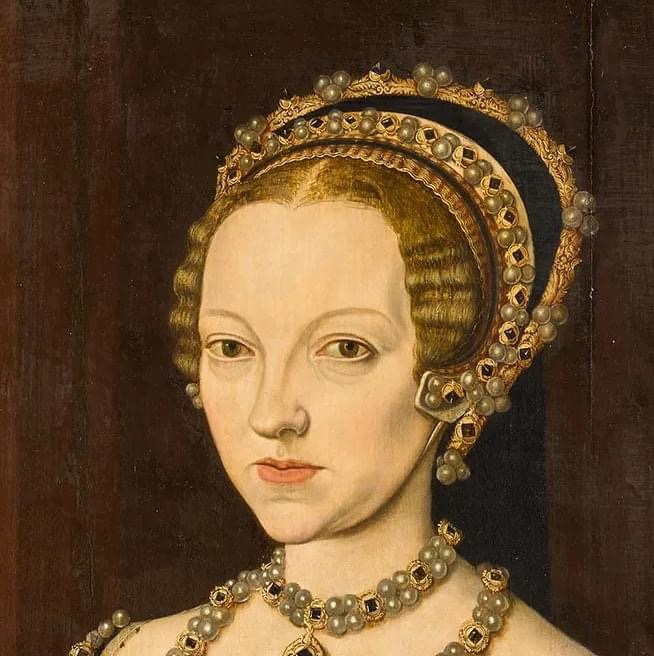
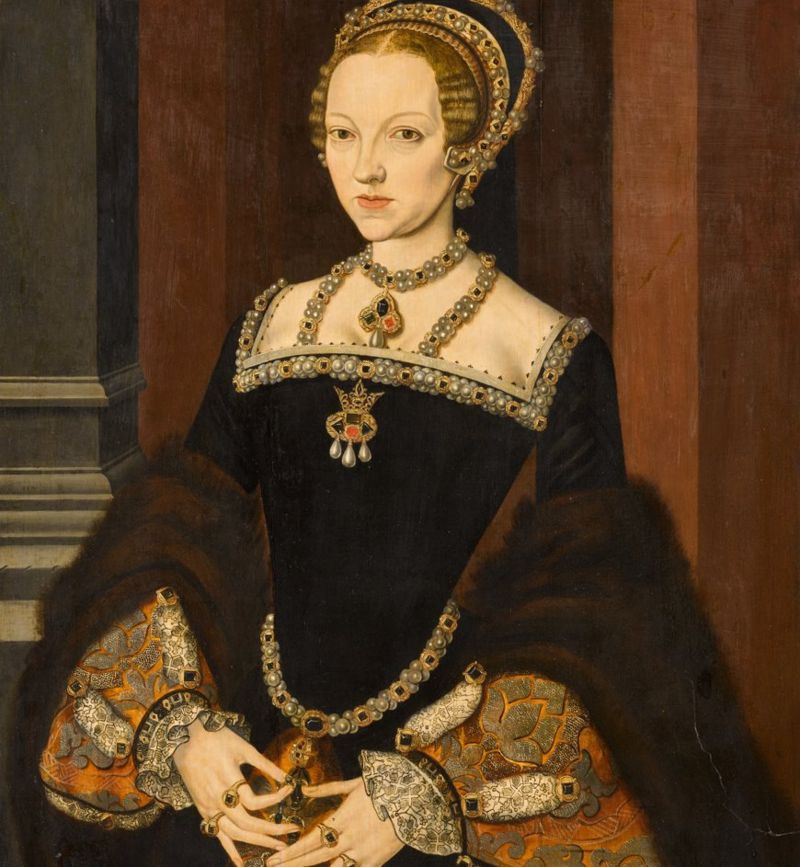
A rare portrait of Katherine Parr, the sixth wife of Henry VIII and an accomplished woman in her own right, shattered records yesterday (June 5) to become the most expensive Tudor painting of all time. Selling to a U.K. collector at Sotheby’s Old Master & 19th Century Paintings Evening Auction, the work realized $4.4 million, more than four times its initial high estimate.

Observer: A Rare Portrait of Henry VIII’s Sixth Wife Breaks Auction Records

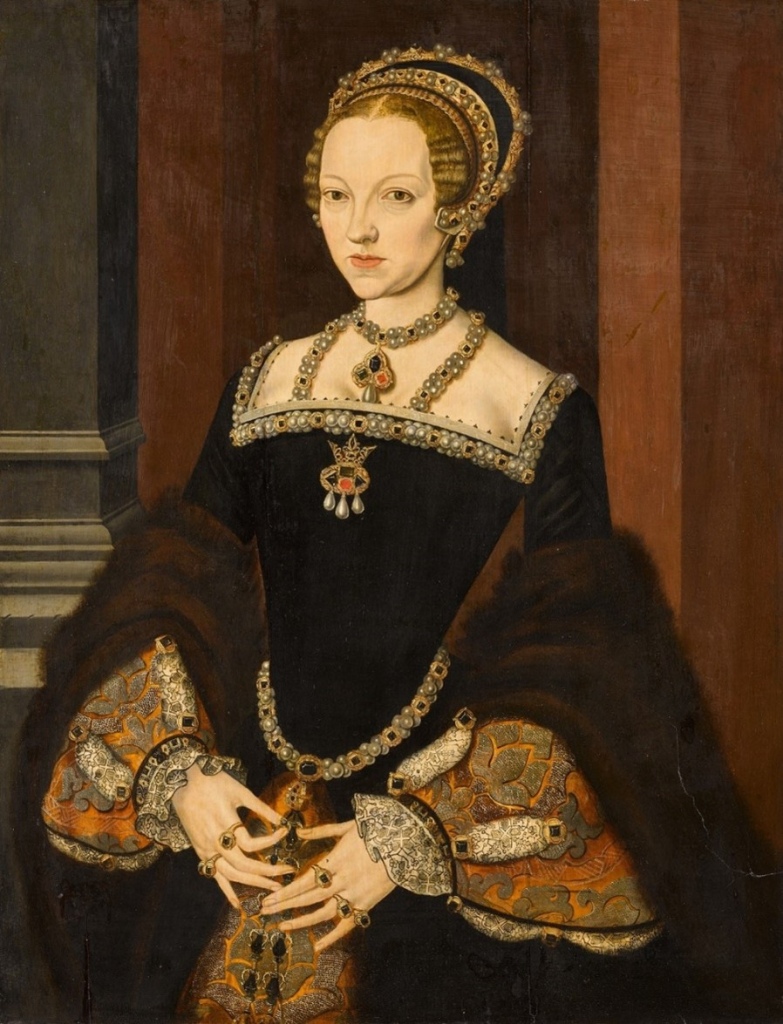
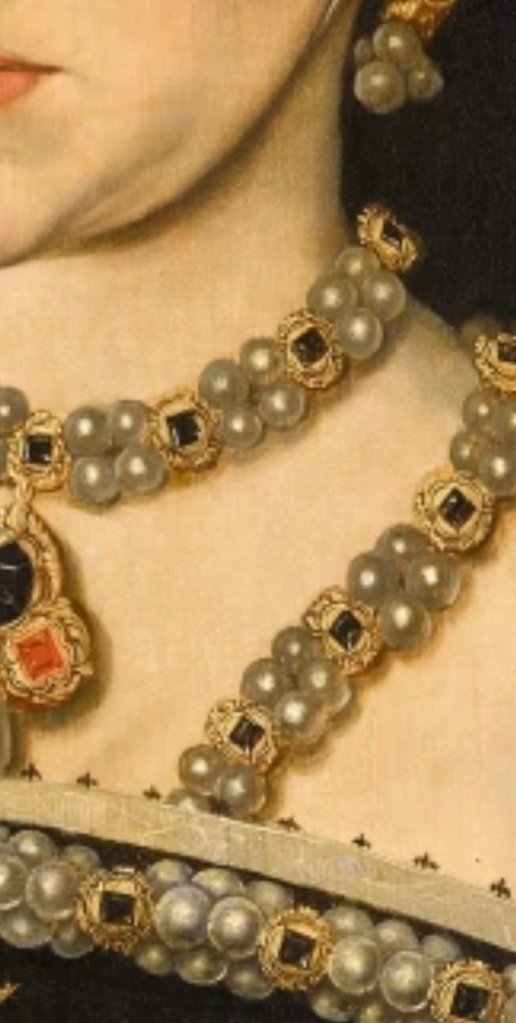
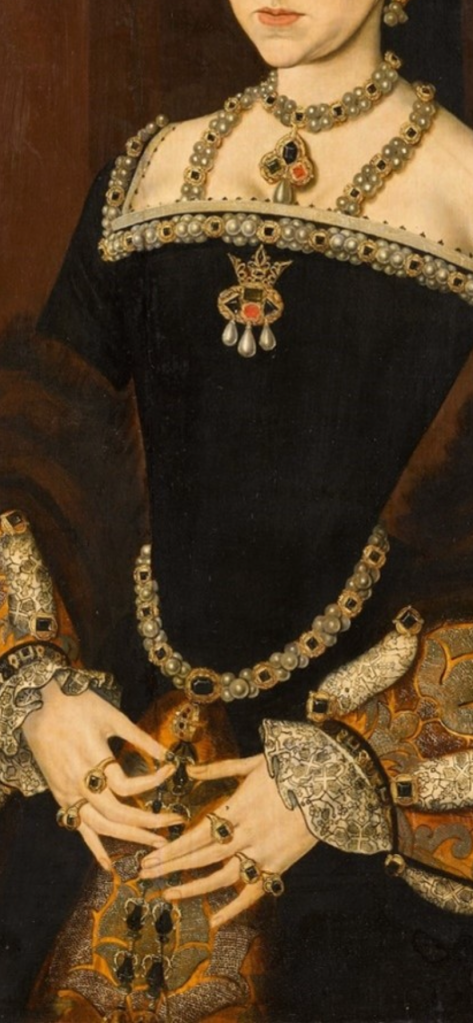
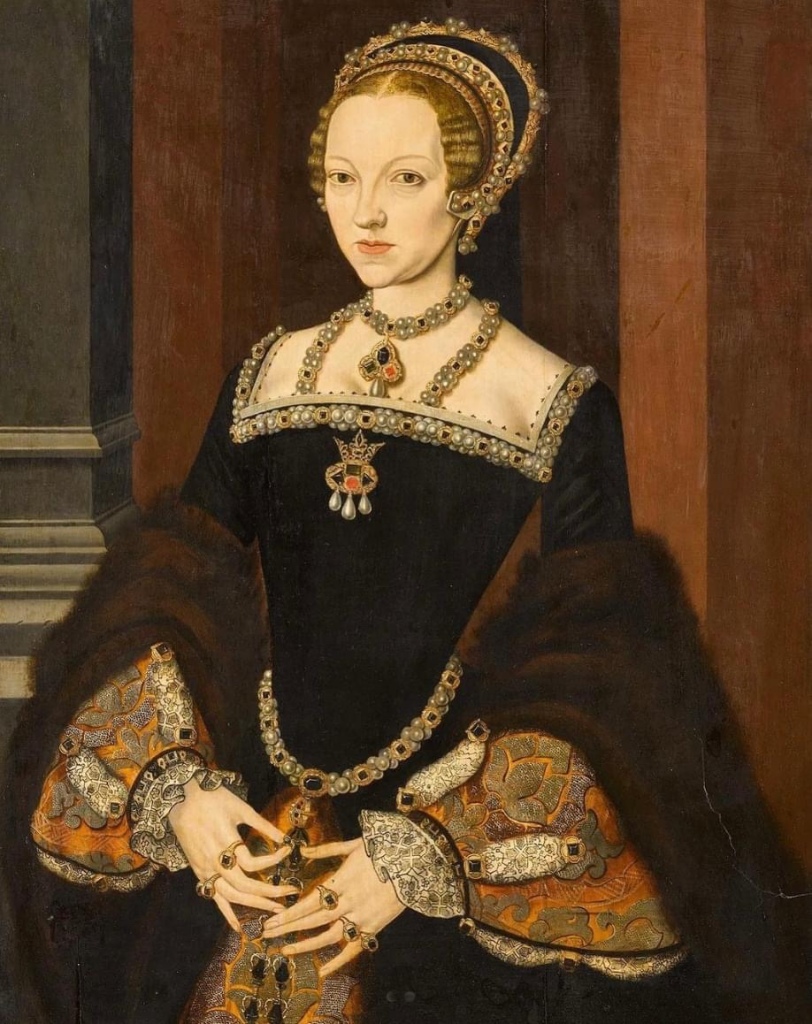
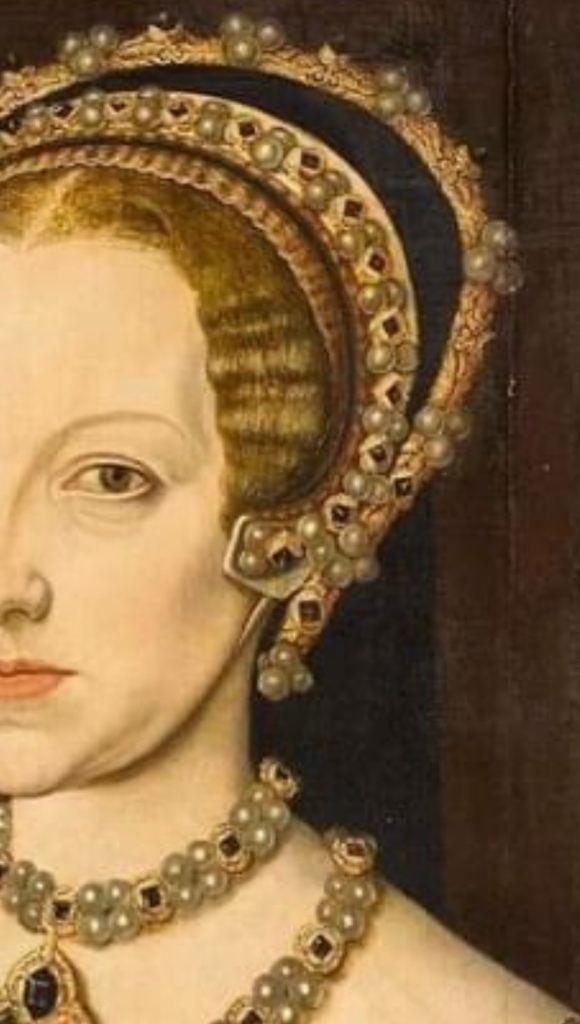
The Jersey portrait is one of only two surviving contemporary portraits of Queen Katherine Parr, the other being the slightly earlier, related full-length in the National Portrait Gallery previously mentioned. In both, the Queen’s jewellery is of further significance in identifying the sitter. In the 1960s both paintings were identified as likenesses of Lady Jane Grey by Strong, largely on the basis of comparison with an engraving in Henry Holland’s Herwologia Anglica of 1620, and a portrait at Seaton Delaval – which appears to be a derivation of the present work, on canvas, dating to the seventeenth or eighteenth century, and erroneously called ‘Lady Jane’.4Throughout the nineteenth century and until Strong’s publication, the Jersey portrait was in fact also erroneously identified as Queen Mary I. Both portraits were correctly reidentified in 1996 by Susan James (see Literature) on account of the jewellery the sitter is shown wearing, specifically the distinctive crown-headed brooch which appears on her bodice (fig. 2). This brooch, which may have been made for Katherine by her favourite goldsmith, the Dutch jeweller Peter Richardson, is traceable through three Tudor lists of jewels dating to before, during, and after Katherine’s time as Queen, one of which is entitled: ‘The Quene’s Jewells in a cofer having written upon it, “the Quene’s Juelles”’ [sic], and for all of which there is good evidence pointing to Katherine Parr’s ownership (the earliest list of 1542 is an inventory of the jewels belonging to Catherine Howard, which subsequently passed to her successor).5

The last list, from 1550, describes the brooch as ‘one ouche or flower with a crown containing two diamonds, one ruby, one emerald; the crown being garnished with diamonds, three pearls pendant.’6 Interestingly, overpaint in the full-length portrait at the National Portrait Gallery now means that the square-cut emerald there appears red, but the brooch’s true character is plainly obvious in the present painting, where all the precious stones are clearly distinguished from one another. The accuracy of the depiction of the brooch – thus underlining the portrait’s royal status and sovereignty of the sitter – is further corroborated by its description in the jewel list of Elizabeth I, to whom the brooch passed with the rest of the royal jewellery in 1587, which specifies that the crown is ‘garnished with XV small diamonds’7 – all fifteen stones are clearly discernible here. At Elizabeth’s death the brooch passed to Anne of Denmark, queen of James I; it is found in her jewellery inventory of 1606, but an annotation recounts that in 1609, having lost the two triangular-cut diamonds, the brooch was broken up for ‘the making of Gold plate’.8

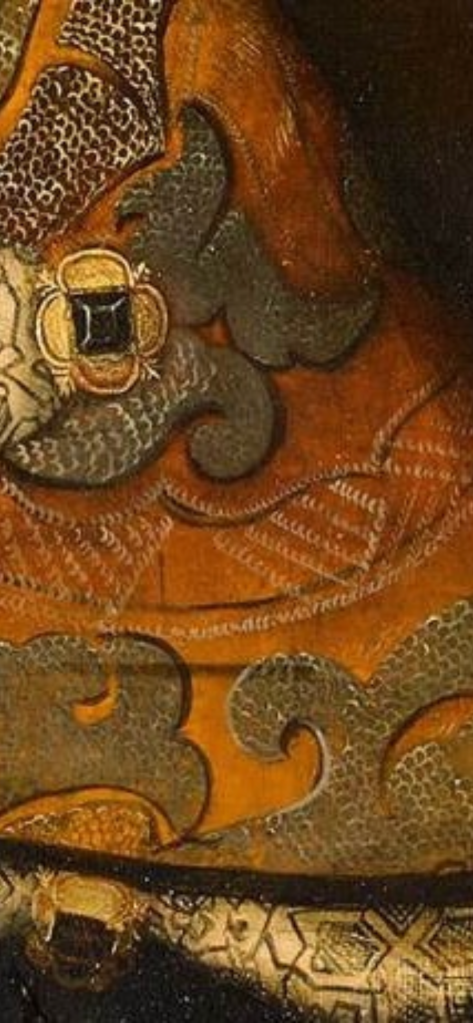
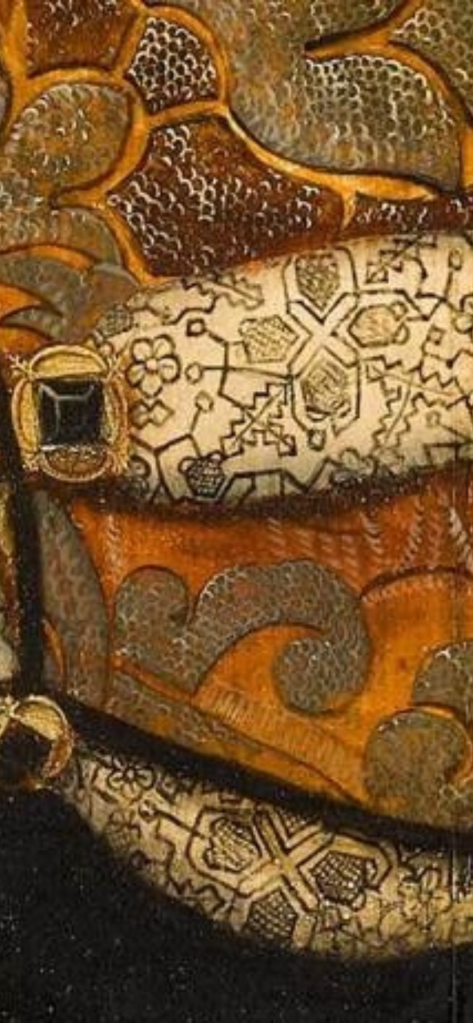
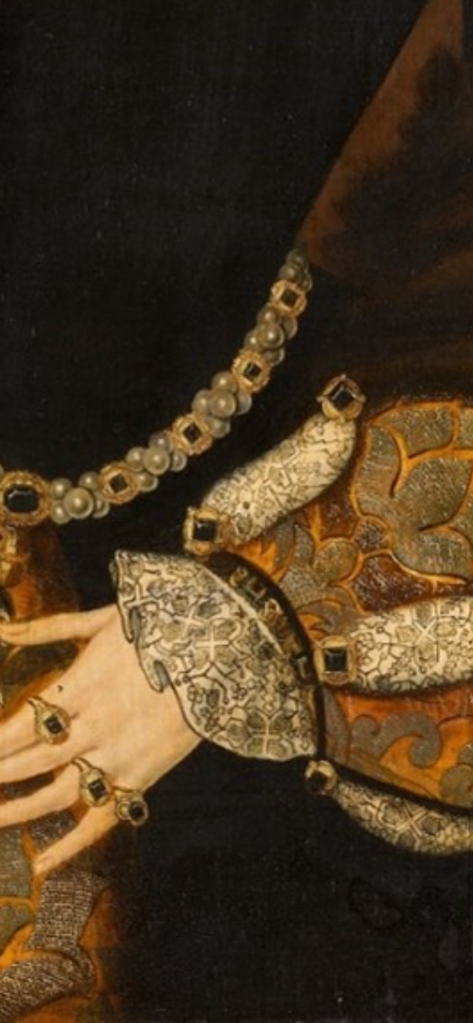
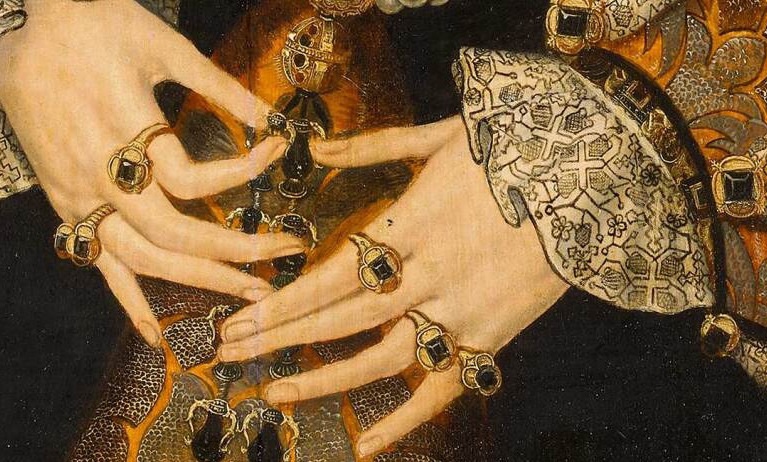
In the full-length portrait, and in a slightly later half-length portrait from the late sixteenth century, previously attributed to William Scrots (also in the National Portrait Gallery; fig. 3),9Katherine wears a pendant – probably another brooch adapted to be worn on a necklace – which may be identified as that described in the 1542 list of Catherine Howard’s jewels: ‘oone other Ooche of Golde wherein is averey feir large ruby and a rounde diamond with a verey feir peerle hangyng at the same [sic].’10 The pendant in the present portrait, by contrast, would appear also to include an emerald; nor does the sitter wear the girdle of antique cameos that appears in the full-length painting, and which is also identifiable in the 1542 list. Instead, here Katherine’s waist is encircled by a belt of large pearls and diamonds in gold settings, with pomanders and small antique urn-shaped pendants, which, together with the matching adornment to the line of her bodice across the chest and the pattern of her necklace, bears a remarkable similarity to that in a portrait of Elizabeth I, when Princess, in the Royal Collection, at Windsor.11The portrait of Princess Elizabeth and the Jersey portrait of Katherine also share similar embroidery in the sleeves and both sitters wear almost identical diamond rings, which display the latest styles in diamond cutting – the table-cut and pointed cut – which were symbolic of fidelity, though the pattern of their display follows that in the the portrait of Katherine in the National Portrait Gallery. Unlike either of these other two portraits, however, the jewels in Katherine’s cuffs, and the pomanders on her girdle, in the Jersey portrait are all inscribed multiple times with the words ‘LAVS DEVS’ (‘praise God’).

Sotheby’s
London, UK. 30 June 2023. Technicians present “Portrait of Katherine Parr (1512–1548), Queen of England and Ireland”, 1544–1545, attributed to Master John (Est. £600,000 – 800,000) at a preview of highlights Sotheby’s Old Masters & 19th Century Paintings Summer Sales. Works will be auctioned at Sotheby’s New Bond Street galleries 5 to 7 July. Credit: Stephen Chung / Alamy Live News

Attributed to Master John: Portrait of Katherine Parr (1512-1548), Queen of England and Ireland

Links

5 September 1548: The Death of Queen Katherine Parr

The nursery and apartments of the dowager queen with Lady Anne Herbert standing by [the queen's sister] © Meg McGath, 2012.

The nursery and apartments of the dowager queen with Lady Anne Herbert standing by [the queen’s sister] © Meg McGath, 2012.

Unfortunately for Katherine, Dr. Huicke, so advanced in matters of diet and exercise for proper prenatal care, was a man of his time when it came to matters of hygiene. Having survived disease, civil insurrection, mob violence, charges of heresy and treason, four husbands including King Henry VIII, and the vicissitudes of life in sixteenth-century England for thirty-six years, Katherine succumbed most likely to puerperal or child-bed fever contracted from her doctor’s dirty hands and just a lack of hygiene in general. Two other Tudor queens had succumbed to the same disease and shortly died after; Jane Seymour [Henry’s third queen and mother of Edward VI who succeeded King Henry in January of 1547] and Elizabeth of York [queen to King Henry VII and mother of King Henry VIII; who gave birth to her final child, coincidentally named Princess Katherine, on 2 February 1503].

The three Tudor queens who would die shortly after giving birth; Queen Elizabeth of York, Queen Katherine, and Queen Jane Seymour. Their death is attributed to child-bed fever which was very common in Tudor times.

On the 5th September 1548, the Queen, lying on her death bed made her final will. Katherine was sick in body, but of good mind, perfect memory and discretion; being persuaded, and perceiving the extremity of death to approach her; disposed and ordained by permission, assent, and consent of her most dear, beloved husband, the Lord Seymour, a certain disportion, gift, testament, and last will of all her goods, chattels, and debts, by these words or other, like in effect, being by her advisedly spoken to the intent of a testament and last will in the presence of the witnesses and records under-named.

The witnesses of the queen’s will were Robert Huick, Doctor of Physic, and John Parkhurst. In her will, the queen gave her husband

“with all her heart and desire, frankly and freely give, will, and bequeath to the said Lord Seymour, Lord High Admiral of England, her married espouse and husband, all the goods, chattels, and debts that she then had, or right ought to have in all the world, wishing them to be a thousand times more in value than they were or been; but also most liberally gave him full power, authority, and order, to dispose and prosecute the same goods, chattels, and debts at his own free will and pleasure, to his most commodity.”

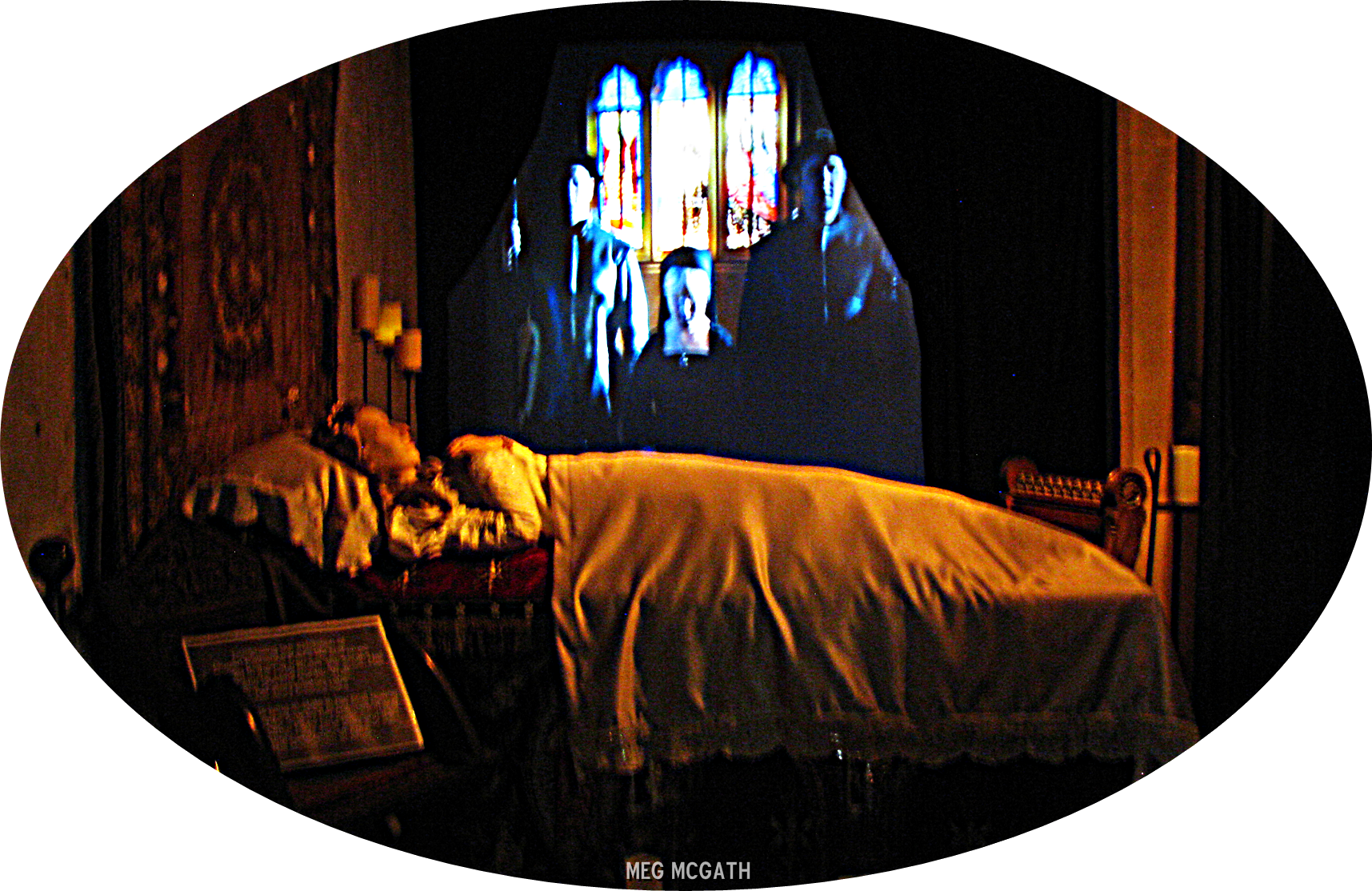
The queen lies in state inside St. Mary's Chapel at Sudeley Castle where she is buried, © Meg McGath, 2012.

The queen lies in state inside St. Mary’s Chapel at Sudeley Castle where she is buried, © Meg McGath, 2012.

Queen Katherine Parr died on Wednesday, the 5th of September, in the year of 1548; ‘between two and three of the clock in the morning.’

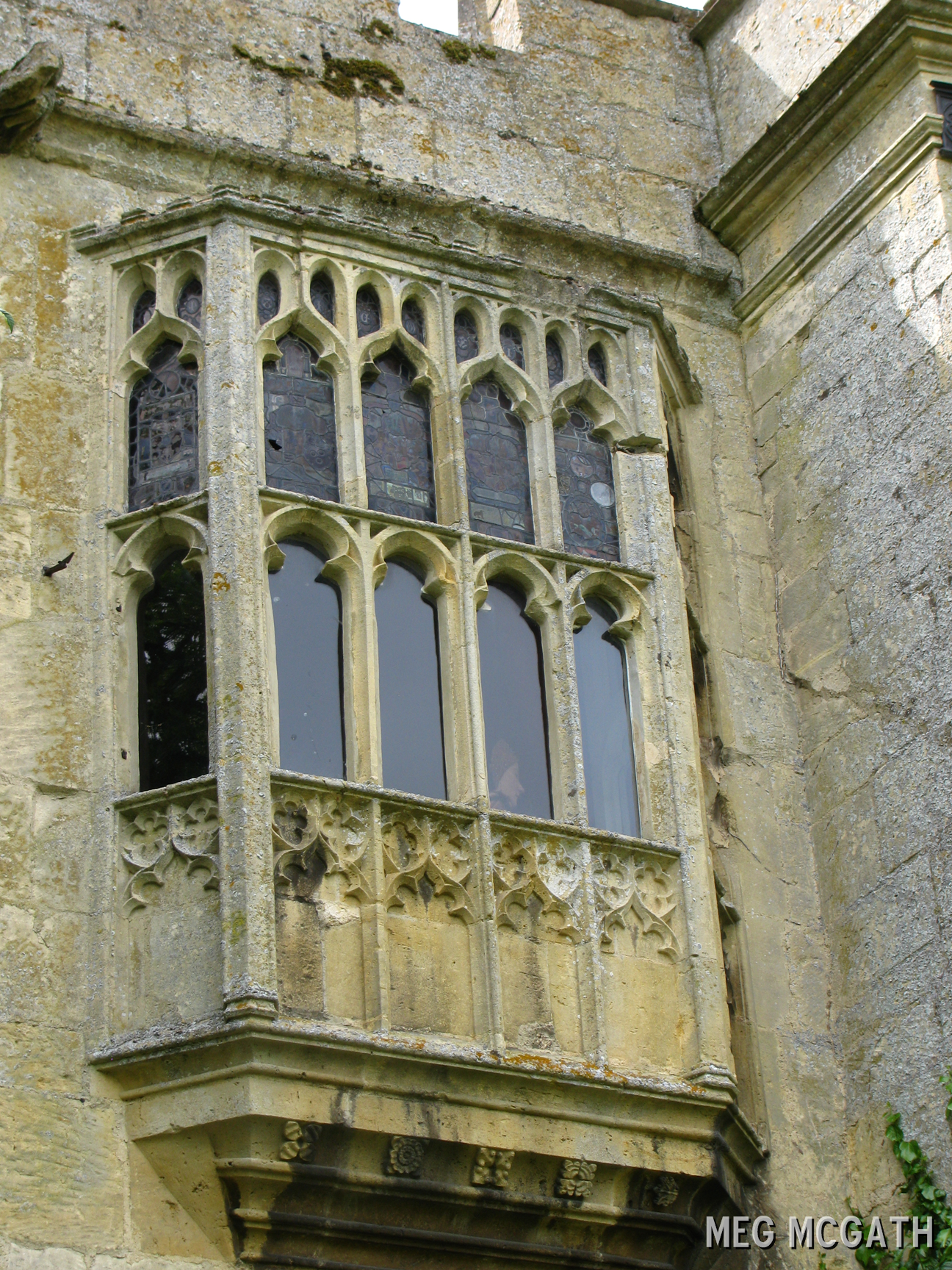
Nursery and Queen's apartment window from outside © Meg McGath, 2012.

Nursery and Queen’s apartment window from outside © Meg McGath, 2012.

John Parkhurst wrote two Latin epitaphs on Katherine Parr, circa 1548. Here is the first one.

On the incomparable woman, Katherine, formerly Queen of England, France, and Ireland, my most gentle mistress. An epitaph, 1547[8].

In this new sepulchre Queen Katherine sleeps,
Flower, honor, and ornament of the female sex.
To King Henry she was a wife most faithful;
Later, when gloomy Fate had taken him from the living,
Thomas Seymour (to whom the trident, Neptune, you extended)
was the distinguished man she wed.
She bore a baby girl; after the birth, when the sun had run
A seventh round, cruel Death did kill her.
For the departed, we her household flow with watery eyes;
Damp is the British earth from moistened cheeks.
Bitter grief consumes us, we unhappy ones;
But she rejoices ‘midst the heavenly host.

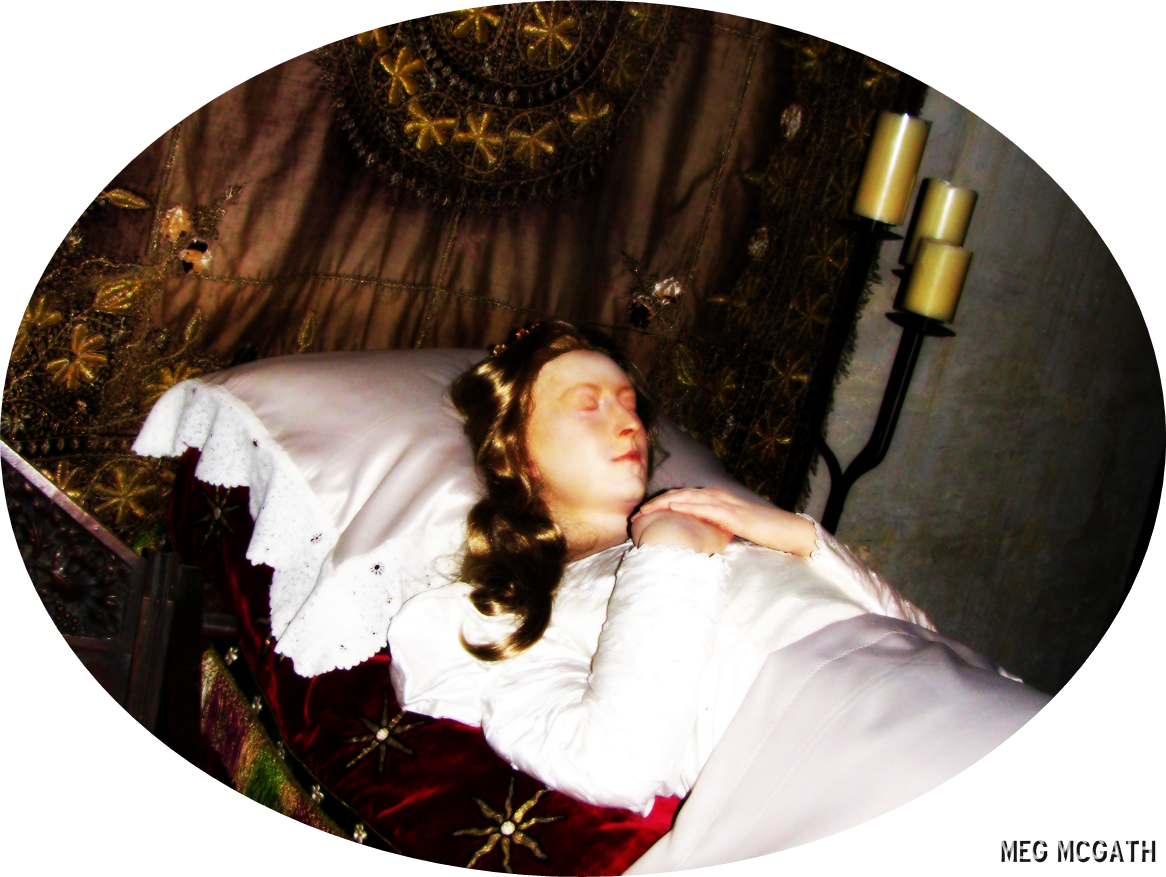
The queen lies in state inside St. Mary's Chapel at Sudeley Castle where she is buried, © Meg McGath, 2012.

The queen lies in state inside St. Mary’s Chapel at Sudeley Castle where she is buried, Lady Jane Grey and two yeomen watch over the queen’s body © Meg McGath, 2012.

Related Articles:

Sources:

  • Linda Porter. ‘Katherine, the queen,’ Macmillan, 2012.
  • Susan James. ‘Catherine Parr: Henry VIII’s Last Love,’ The History Press, Gloucestershire, 2008, 2009 [US Edition].
  • Janel Mueller. ‘Katherine Parr: Complete Works and Correspondences,’ University of Chicago Press, Jun 30, 2011.
  • Emma Dent. ‘Annals of Winchcombe and Sudeley,’ London, J. Murray, 1877.

The Dowager Queen and Henry VIII’s Last Will

The Vultures are circling as Henry lies on his death bed. He is surrounded by his son, Edward, as the king prepares him to become the next Tudor king.

In 1544, it was apparent that Queen Katherine Parr had been acquainted with the terms of King Henry VIII’s will for it named Katherine regent for the young Prince Edward if he were to die while in France. The fact that Katherine had been named possible regent in the event of the sudden death of the king makes one wonder what the will of King Henry looked like when he died on 28 January 1547. For three days after the King’s death, the council convened while the outside world was unaware of what had happened. Even Henry’s other children were not told. This extremely disturbed the Lady Mary who at one time had been named Princess and heiress to her father’s throne.

After the death of King Henry, Mary was not told of his death for several days. Edward’s minority council took elaborate precautions to ensure all was in place before they made an official announcement. This action made Mary extremely angry, but she could do nothing about it. Yet how ever wary Edward’s councillors were, nothing could alter the fact that Mary was in her own right heiress to the throne. For the time being, Mary would stay with the now Dowager Queen, Katherine, who was again for the third time, a widow. At the time of her father’s death Mary was aged 31. Mary’s reaction to her father’s death was never recorded as she never publicly mourned his death.  She was apparently more irritated at the fact that no one had told her that her father had died until days later. Most likely her reaction to the news was mixed grief and some kind of relief.

The "Succession Portrait", c. 1544, artist, after Holbein.Hampton Court Palace. © TudorQueen6 The portrait was done while Katherine Parr was queen, features Prince Edward's mother, Queen Jane Seymour.

The “Succession Portrait”, c. 1544, artist, after Holbein.
Hampton Court Palace.  The portrait which was done while Katherine Parr was queen, features Prince Edward’s mother, Queen Jane Seymour. © TudorQueen6

As for the Will of Henry VIII, it is quite possible that during those three days the men of the council were convening on how to alter the will to exclude the now Queen Dowager from any further power or influence over the boy King Edward. These conspiracy theories have been examined within Susan James’s biography on Queen Katherine. One theory is that Henry’s will was originally set up to pass the kingdom to his heir and that the regency council was to be led by the Earl of Hertford. Another version has Sir Anthony Denny, Sir William Paget, and Sir William Herbert (the Queen’s brother-in-law) rigging the whole will to give the Earl full control and some even go as far to name them as the masterminds of the fall of Gardiner and the execution of the Earl of Surrey. This theory of course can be refuted as the king was in control of his kingdom up until the last few hours of his life.

Although the king’s abilities had been diminished it is true that Sir Anthony Denny and Sir William Paget had control of those who accessed the privy chamber but not against the king’s will. In December 1546, the Privy Council meetings no longer took place at Westminster and were now being held at Hertford’s Somerset House. So if the queen had been summoned to the king at some point, the command would have been obeyed, but it is not for certain if the queen gave a command to see him that it would have been honored. It is not even sure whether or not the king would have been informed if she had demanded to see him.

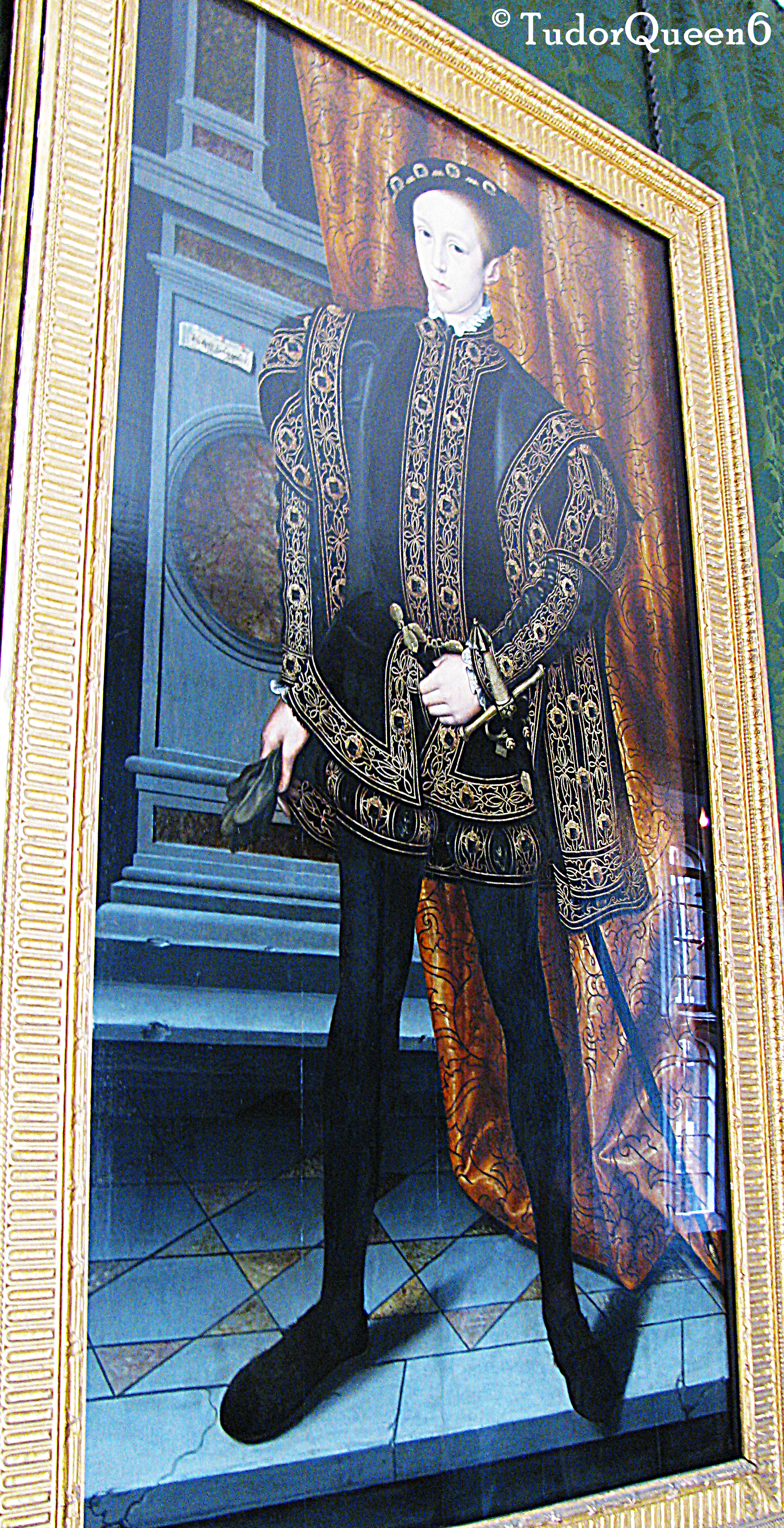
Hampton Court Palace -- King Edward VI

King Edward VI, c.1550, attributed to William Scrots. Hampton Court Palace. artist, after Holbein. Hampton Court Palace. © TudorQueen6.

Another theory to support that the will had been tampered with is the final will that was produced did not have a signature, but was stamped and was registered a month later. So in that is a possibility that the will had been changed in support of the Earl of Hertford’s wishes. It seems obvious to readers that the men of the council, including Hertford, didn’t want to be dependent upon a woman’s approval. The actions of King Henry and his mission to produce a male heir instead of depending upon his only daughter from his first marriage shows that men were still not willing to depend upon or even accept a woman governor of the realm. I tend to find this odd seeing how in other countries, including that of their neighbor Scotland, consorts had been given the position of Regent. In fact, Henry’s sister Margaret, for a time had been Regent in Scotland and even Henry’s first wife, Katherine of Aragon acted as Regent for a longer period then Queen Katherine Parr had. Still, the feeling of having a woman in a position of power was not accepted and in some cases like Katherine of Aragon’s sister, Juana I of Castile, they were driven out by other men. Juana was driven out by the men in her life; her husband, father, and eventually her son who took over as the Holy Roman Emperor.

It is also thought that perhaps Katherine’s moral sense might have been an impediment as to the acquisition of Crown lands to which the council helped themselves to after they had been established. Henry’s second wife and queen, Anne Boleyn, had at one time felt the same way during the dissolution of the monasteries. Her opinions and interactions that condemned the way the properties and money were being dispersed had some doing in her downfall. Katherine completely disapproved of the way the lands were dispersed and her opinion was recorded as such. In 1549, Sir Robert Trywhitt testified that Katherine had said, “Mr. Trywhit, you will see the king, when he cometh to his full age, he will call his lands again, as fast as they be now given from him.”

The enraged presence of a mother defending her son’s inheritance from the depredations of his omnivorous council would have been the last thing the lord protector or the council wanted.”

Yet despite all of this, the one responsible may in fact have been King Henry himself. Henry’s opinion of having women rule was and is more then obvious due to his split with Katherine of Aragon and marriage to Anne Boleyn. Henry did not believe that a woman could rule alone. It was one thing to use Katherine as an unofficial councillor during her lifetime, but to leave her to run the kingdom while his son was a minor was a completely different thing. He didn’t want a wife to tell him what to do in pretty much anything so it is understandable as to why he sent Katherine away at the end of his life. He obviously didn’t want to deal with her suggestions on how to dispose of his crown. That he did not inform Katherine of his decision left her to suppose in a way that she was to be head of the regency council upon his death. Henry left Katherine this bitter gift after all that she had done as queen, including enduring his constant immortalizing of his “true wife”, Jane Seymour. He did this not only in his painting of the royal family but in his request to be buried next to her upon his death.

The fact that Henry sent all the women in his life away a month before his death may have also influenced him in his final decisions. In not having them around he wouldn’t have been prone to lamentations and fuss made by the women who might have been brought in to be included in the rule of the kingdom after his death. James states that Katherine’s preference to be near Henry during the last month of his life may have partly been due to her political motivations. She was very protective of the royal children and that was adamant from day one.

In the early hours of the 28th of January, King Henry VIII died. For three days court continued on schedule. Even the royal dishes were escorted into the King’s chambers accompanied by the sounds of trumpets to make it look like the King was still alive. During this time, the top members to be part of the council lobbied and devised for position and the final settlement. Sir William Paget was the last to hear the devised plan from the king himself. Within the three days it would come to pass that the Earl of Hertford would make himself Duke of Somerset and appoint himself as Lord Protector of the Realm which had not been Henry’s wishes according to his will or any other knowledge of those apparent.

Katherine's signature as Queen Regent.

Katherine’s signature as Queen Regent. (Cotton MSS Vesp. F III fol. 16. b)

The position of power and the door to the regency council was shut in the Queen Dowager’s face and once again, Katherine was left to mourn a dead husband. Despite the outcome of the situation, a piece of history may provide proof that she was to be head of the regent council as shortly after Henry’s death, Katherine signed two documents as “Kateryn the Quene-Regent, KP.”


Sources:

  • Susan James. Catherine Parr: Henry VIII’s Last Love, The History Press, US Edition, 2009. pg 356-59.
  • Linda Porter. The Myth of “Bloody Mary”: A Biography of Queen Mary I of England, St. Martin Griffins, 2010.
  • Anna Whitelock. Mary Tudor: England’s First Queen, Bloomsbury Publishing PLC, 2009.
© 28 January 2012
Meg McGath

16 February 1547: The Funeral of King Henry VIII

Queen Katherine Parr painted most likely as a young widow, posthumously.

After the news of King Henry’s death became public, the now Dowager Queen Katherine for the third time in her life donned widow’s weeds and mourning jewels. She wore buttons of gold enamelled black. She wore a gold ring with a death’s head. The death’s head of Christian lamentation on her finger, the queen secluded herself while she mourned and prepared for the funeral of the now dead king. Vast amounts of black cloth had been ordered for mourning clothes for the Lady Mary and Lady Elizabeth as well as the queen’s ladies and Henry’s household.
 For ten days the king’s embalmed body lay in the privy chamber in a huge chest lit by tapers. On 8 February, an official announcement was made that the King had indeed died. The bells through out the kingdom rang and prayers and Requiem masses were said for the king’s soul.

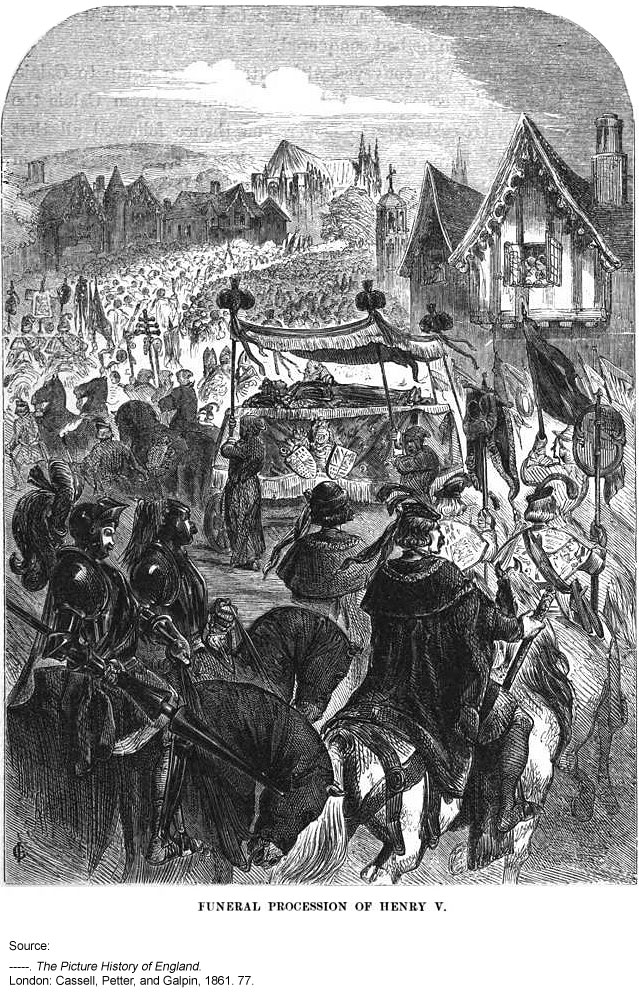
Funeral procession of Henry V; just an image to show how Henry VIII’s probably went, only grander of course!

On 14 February 1547, a great procession of 1,000 horsemen and hundreds of followers formed around a larger then life hearse made for the king. It was seven stories high, adorned with carefully crafted effigy of the monarch. The procession moved from Westminster down to Windsor stopping at night at the new “Lord Protector’s” home in Syon for the night. The road itself had to be repaved and trees had to be cut out of the way in order to bear the weight and size of the King’s hearse.
The funeral cortege arrived at Windsor in the afternoon of the 15th of February. The main Requiem and service would be held the next day.

An edited drawing of Queen Katherine.

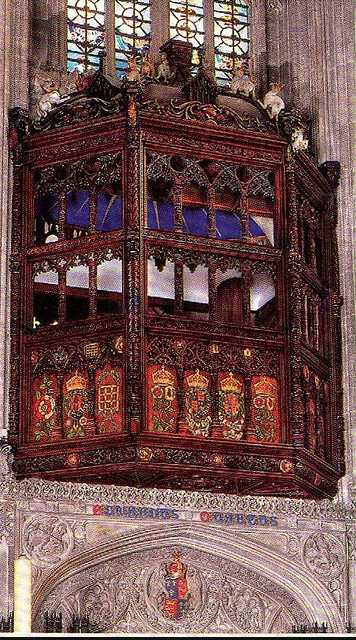
Dressed in blue velvet lined with purple with a ring of gold with a death head, the queen watched the proceedings from her private Chapel above the choir, the Queen’s Closet, in St. George’s Chapel, Windsor. It was the final act of a drama that had begun for Katherine over four years ago. Katherine watched as Henry was interred with his “most beloved” wife, the mother of the new king, Edward VI, Queen Jane Seymour. Ironically, it was Bishop Gardiner who officiated at the Requiem Mass. After all that Henry had done to break from Rome and the fact that he died holding Archbishop Cranmer’s hand; Henry wanted to have the familiar Latin Mass of the old religion to ensure the good of his soul. Katherine surely must have been upset with the situation seeing how much she disliked Gardiner and the form of ceremony. No doubt, with a disbelief of Purgatory notwithstanding, she said at least one prayer for her husband’s soul. The fact that she had been excluded from the Regency council was probably playing in her mind along with other thoughts which were not accounted for. One of them might have been towards her long lost love, Sir Thomas Seymour, who Katherine would now be free to marry.

The King left Katherine a generous lifestyle. He doted her as his “entirely beloved wife” and left her quite comfortably.

“The Queen shall have’, he commanded,  ‘3,000 in plate, jewels and stuff, beside what she shall please to take of what she has already, and further receive in money 1,000 besides the enjoyment of her jointures.’ She was always to be served and waited on as befitted a queen, with a large household (well over one hundred people) and all her dower properties which included her manors at Hanworth and Chelsea. She was still to exercise patronage, continue writing, live a life of privilege and comfort. Katherine would remain till her death the Dowager Queen of England and was the first lady of the Realm followed by Lady Mary, Lady Elizabeth, and Lady Anne of Cleves.

That this rule was followed and upheld becomes a completely different blog and issue entirely after Katherine’s marriage to Sir Thomas Seymour, younger brother of the Lord Protector and uncle to King Edward VI.

 Sources:
  1. Susan James. Catherine Parr: The Last Love of Henry VIII, History Press, Gloucestershire, 2009. pg 259-
  2. Linda Porter. Katherine, the Queen, Macmillan, US Edition, December 2010. pg 275-76.