Unknown's avatar

About tudorqueen6

Meg McGath is the author behind the articles on “tudorqueen6”; she has been studying the history and genealogy of the Parr family for well over a decade. In 2025, she is still writing about her favorite Tudor queen, Kateryn Parr (1512-1548) even after becoming severely disabled. Meg studied at several top colleges which included Richmond University in London. As a violinist, she studied at Penn State Music School & Towson University School of Music where her minor became Women’s Studies. In 2009, ‘10, and ‘12, her summers were spent studying abroad in London where she was lucky enough to see Tudor artifacts, Palaces, and Sudeley Castle where Parr is officially buried. One of her goals is to end the myth that Queen Kateryn Parr was nothing more than a nursemaid to the aging King Henry VIII. "It simply isn't true, she did so much more for the family and her country," says Meg. A book has always been her end game with Parr, but as stated, she is now disabled and can only write on occasion. She was a moderator and heavy editor for the official Tudors Wiki (Showtime), has a massive genealogy tree she’s been working on since the late 2000s on Ancestry which follows Royalty, aristocratic families, and even Colonial Aristocratic lineage. She heavily edits & has started articles on Wikipedia. She also spent a lot of time writing & researching Royal tiaras and jewels of various Royal families & the weddings of the British Royals. Her research can be found on the old Tudor Wiki site under the name “Goldenaged.ER”. In the summer of 2012, she finally took a trip to Sudeley Castle while studying abroad. In London, she was privy to the Queen’s Diamonds at Buckingham Palace which included pieces like the Queen Alexandra Diamond Kokoshnik, the Williamson Brooch, the Delhi Durbar necklace, the small crown of Queen Victoria, and more.

The Dowager Queen and Henry VIII’s Last Will

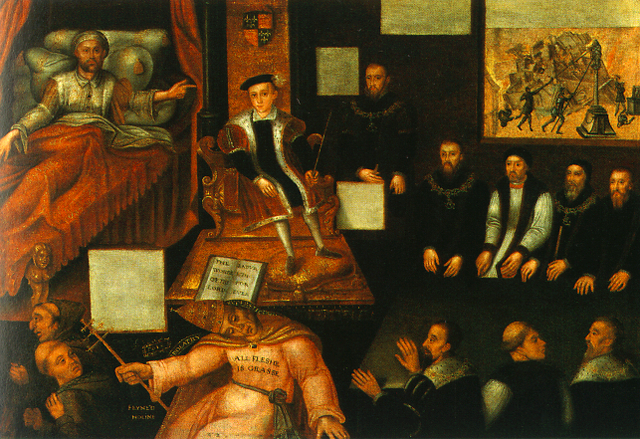
The Vultures are circling as Henry lies on his death bed. He is surrounded by his son, Edward, as the king prepares him to become the next Tudor king.

In 1544, it was apparent that Queen Katherine Parr had been acquainted with the terms of King Henry VIII’s will for it named Katherine regent for the young Prince Edward if he were to die while in France. The fact that Katherine had been named possible regent in the event of the sudden death of the king makes one wonder what the will of King Henry looked like when he died on 28 January 1547. For three days after the King’s death, the council convened while the outside world was unaware of what had happened. Even Henry’s other children were not told. This extremely disturbed the Lady Mary who at one time had been named Princess and heiress to her father’s throne.

After the death of King Henry, Mary was not told of his death for several days. Edward’s minority council took elaborate precautions to ensure all was in place before they made an official announcement. This action made Mary extremely angry, but she could do nothing about it. Yet how ever wary Edward’s councillors were, nothing could alter the fact that Mary was in her own right heiress to the throne. For the time being, Mary would stay with the now Dowager Queen, Katherine, who was again for the third time, a widow. At the time of her father’s death Mary was aged 31. Mary’s reaction to her father’s death was never recorded as she never publicly mourned his death.  She was apparently more irritated at the fact that no one had told her that her father had died until days later. Most likely her reaction to the news was mixed grief and some kind of relief.

The "Succession Portrait", c. 1544, artist, after Holbein.Hampton Court Palace. © TudorQueen6 The portrait was done while Katherine Parr was queen, features Prince Edward's mother, Queen Jane Seymour.

The “Succession Portrait”, c. 1544, artist, after Holbein.
Hampton Court Palace.  The portrait which was done while Katherine Parr was queen, features Prince Edward’s mother, Queen Jane Seymour. © TudorQueen6

As for the Will of Henry VIII, it is quite possible that during those three days the men of the council were convening on how to alter the will to exclude the now Queen Dowager from any further power or influence over the boy King Edward. These conspiracy theories have been examined within Susan James’s biography on Queen Katherine. One theory is that Henry’s will was originally set up to pass the kingdom to his heir and that the regency council was to be led by the Earl of Hertford. Another version has Sir Anthony Denny, Sir William Paget, and Sir William Herbert (the Queen’s brother-in-law) rigging the whole will to give the Earl full control and some even go as far to name them as the masterminds of the fall of Gardiner and the execution of the Earl of Surrey. This theory of course can be refuted as the king was in control of his kingdom up until the last few hours of his life.

Although the king’s abilities had been diminished it is true that Sir Anthony Denny and Sir William Paget had control of those who accessed the privy chamber but not against the king’s will. In December 1546, the Privy Council meetings no longer took place at Westminster and were now being held at Hertford’s Somerset House. So if the queen had been summoned to the king at some point, the command would have been obeyed, but it is not for certain if the queen gave a command to see him that it would have been honored. It is not even sure whether or not the king would have been informed if she had demanded to see him.
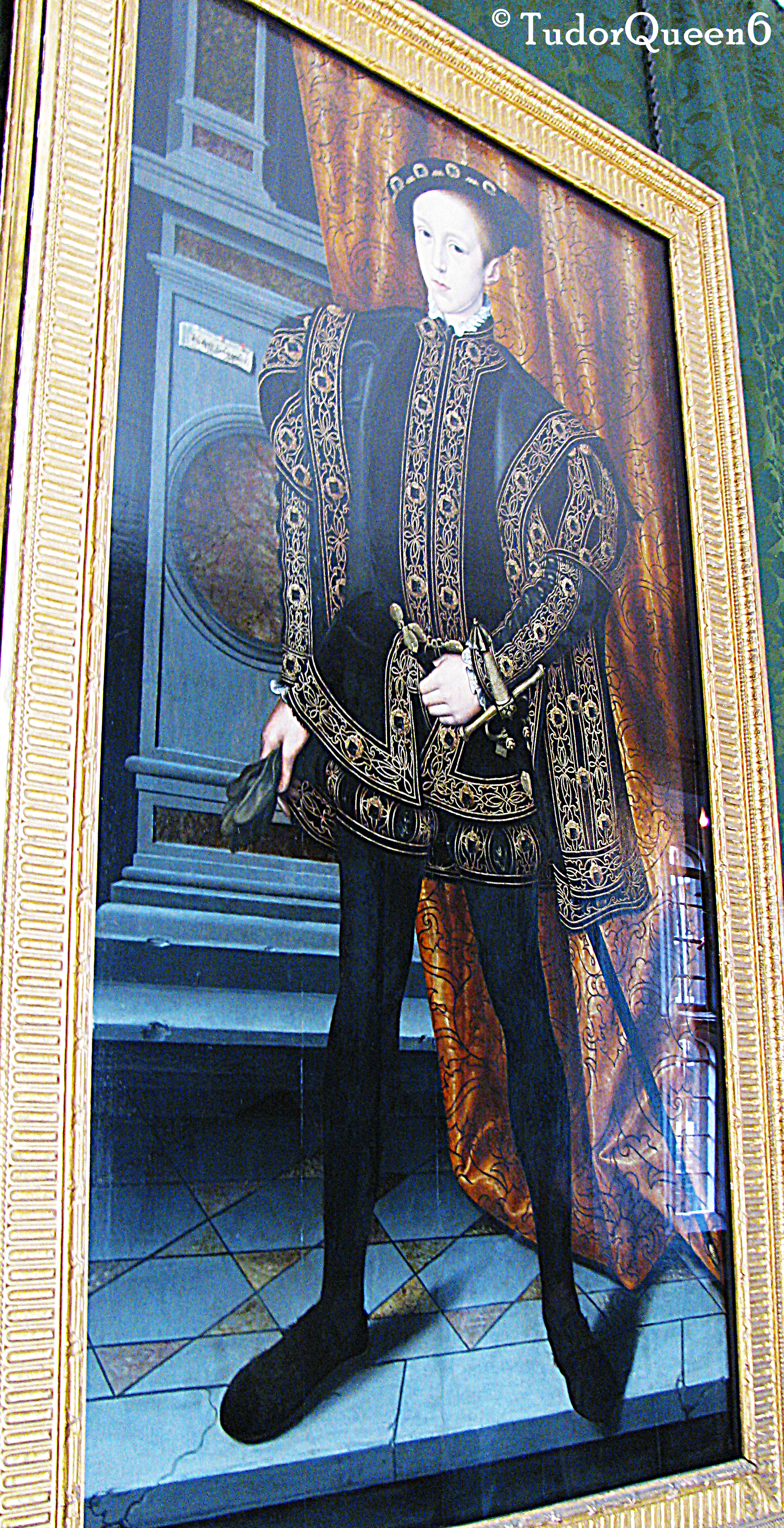
Hampton Court Palace -- King Edward VI

King Edward VI, c.1550, attributed to William Scrots. Hampton Court Palace. artist, after Holbein. Hampton Court Palace. © TudorQueen6.

Another theory to support that the will had been tampered with is the final will that was produced did not have a signature, but was stamped and was registered a month later. So in that is a possibility that the will had been changed in support of the Earl of Hertford’s wishes. It seems obvious to readers that the men of the council, including Hertford, didn’t want to be dependent upon a woman’s approval. The actions of King Henry and his mission to produce a male heir instead of depending upon his only daughter from his first marriage shows that men were still not willing to depend upon or even accept a woman governor of the realm. I tend to find this odd seeing how in other countries, including that of their neighbor Scotland, consorts had been given the position of Regent. In fact, Henry’s sister Margaret, for a time had been Regent in Scotland and even Henry’s first wife, Katherine of Aragon acted as Regent for a longer period then Queen Katherine Parr had. Still, the feeling of having a woman in a position of power was not accepted and in some cases like Katherine of Aragon’s sister, Juana I of Castile, they were driven out by other men. Juana was driven out by the men in her life; her husband, father, and eventually her son who took over as the Holy Roman Emperor.

It is also thought that perhaps Katherine’s moral sense might have been an impediment as to the acquisition of Crown lands to which the council helped themselves to after they had been established. Henry’s second wife and queen, Anne Boleyn, had at one time felt the same way during the dissolution of the monasteries. Her opinions and interactions that condemned the way the properties and money were being dispersed had some doing in her downfall. Katherine completely disapproved of the way the lands were dispersed and her opinion was recorded as such. In 1549, Sir Robert Trywhitt testified that Katherine had said, “Mr. Trywhit, you will see the king, when he cometh to his full age, he will call his lands again, as fast as they be now given from him.”

The enraged presence of a mother defending her son’s inheritance from the depredations of his omnivorous council would have been the last thing the lord protector or the council wanted.”

Yet despite all of this, the one responsible may in fact have been King Henry himself. Henry’s opinion of having women rule was and is more then obvious due to his split with Katherine of Aragon and marriage to Anne Boleyn. Henry did not believe that a woman could rule alone. It was one thing to use Katherine as an unofficial councillor during her lifetime, but to leave her to run the kingdom while his son was a minor was a completely different thing. He didn’t want a wife to tell him what to do in pretty much anything so it is understandable as to why he sent Katherine away at the end of his life. He obviously didn’t want to deal with her suggestions on how to dispose of his crown. That he did not inform Katherine of his decision left her to suppose in a way that she was to be head of the regency council upon his death. Henry left Katherine this bitter gift after all that she had done as queen, including enduring his constant immortalizing of his “true wife”, Jane Seymour. He did this not only in his painting of the royal family but in his request to be buried next to her upon his death.

The fact that Henry sent all the women in his life away a month before his death may have also influenced him in his final decisions. In not having them around he wouldn’t have been prone to lamentations and fuss made by the women who might have been brought in to be included in the rule of the kingdom after his death. James states that Katherine’s preference to be near Henry during the last month of his life may have partly been due to her political motivations. She was very protective of the royal children and that was adamant from day one.

In the early hours of the 28th of January, King Henry VIII died. For three days court continued on schedule. Even the royal dishes were escorted into the King’s chambers accompanied by the sounds of trumpets to make it look like the King was still alive. During this time, the top members to be part of the council lobbied and devised for position and the final settlement. Sir William Paget was the last to hear the devised plan from the king himself. Within the three days it would come to pass that the Earl of Hertford would make himself Duke of Somerset and appoint himself as Lord Protector of the Realm which had not been Henry’s wishes according to his will or any other knowledge of those apparent.

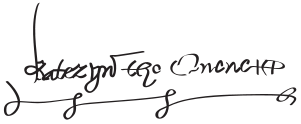
Katherine's signature as Queen Regent.

Katherine’s signature as Queen Regent. (Cotton MSS Vesp. F III fol. 16. b)

The position of power and the door to the regency council was shut in the Queen Dowager’s face and once again, Katherine was left to mourn a dead husband. Despite the outcome of the situation, a piece of history may provide proof that she was to be head of the regent council as shortly after Henry’s death, Katherine signed two documents as “Kateryn the Quene-Regent, KP.”


Sources:

  • Susan James. Catherine Parr: Henry VIII’s Last Love, The History Press, US Edition, 2009. pg 356-59.
  • Linda Porter. The Myth of “Bloody Mary”: A Biography of Queen Mary I of England, St. Martin Griffins, 2010.
  • Anna Whitelock. Mary Tudor: England’s First Queen, Bloomsbury Publishing PLC, 2009.
© 28 January 2012
Meg McGath

Family of Queen Katherine: Sir Thomas Vaux, 2nd Baron Vaux of Harrowden

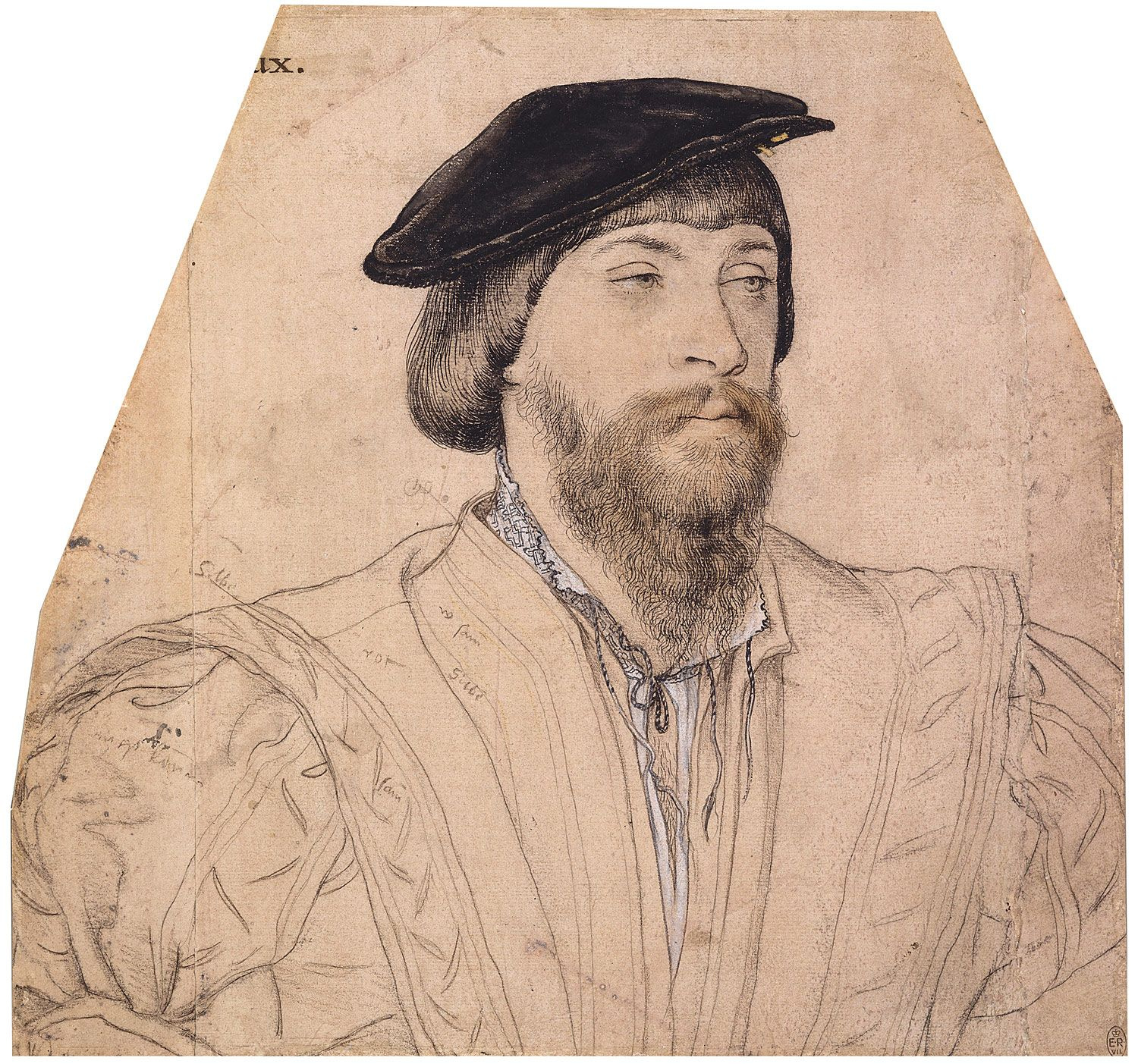
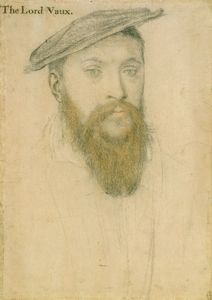
2nd Baron Vaux, sketch by Holbein.

2nd Baron Vaux, sketch by Holbein.

Sir Thomas Vaux, 2nd Baron Vaux of Harrowden K.B. (25 April 1509[1] – October 1556), an English poet, was the eldest son of Sir Nicholas Vaux, 1st Baron Vaux and his second wife, Lady Anne [Green] (born circa 1489), daughter of Sir Thomas Green, Lord of Greens Norton, and Joan Fogge [cousin to Edward IV’s consort Elizabeth], daughter of Sir John of Ashford.[2][3] Vaux was educated at Cambridge University.[4]  Vaux’s mother was the maternal aunt of queen consort Katherine Parr, while his wife, Elizabeth Cheney, was a paternal first cousin through her mother, Anne Parr.

Life

Lord Vaux by Holbein

Lord Vaux by Holbein

In 1527, Vaux accompanied Cardinal Wolsey on his embassy to France.

Vaux privately disapproved of Henry VIII’s divorce from his first queen consort, Katherine of Aragon.[5]

It is interesting to note the family circle that he was in. The Parrs and their extended family stuck by the queen and all had an opinion of Henry’s “Great Matter.” Vaux’s aunt, Lady Maud Parr, was a lady-in-waiting and good friend to Queen Katherine of Aragon. Lady Parr was given her own quarters at court to attend the queen and when she gave birth to a baby girl in 1512, it is thought that she named her after the queen who may have been her godmother. Lady Parr stayed with the queen until her household was divided; Parr died in 1531. Lord Vaux’s sister, Katherine, would marry the staunch Catholic Sir George Throckmorton; the outspoken courtier who dared to speak out against the king.

In 1531, Lord Vaux took his seat in the House of Lords. In 1532, he attended Henry VIII to Calais and Boulogne and was made Knight of the Bath at the coronation of Anne Boleyn on 1 June 1533. He was Lieutenant Governor of Jersey in 1536. Schism from Rome caused him to sell his offices; his position as Governor was sold to Sir Edward Seymour [later Lord Protector and Duke of Somerset]. He did not attend Parliament between 1534 and 1554.[5] Instead, Vaux retired to his country seat until the accession of Mary I, when he returned to London for her coronation.[5] Vaux was a friend of other court poets such as Sir Thomas Wyatt and Henry Howard, Earl of Surrey.[5]

Family and issue

Elizabeth_Cheney_Lady_Vaux

Lady Elizabeth Vaux [born Cheney] was cousin to Queen Katherine by her mother, Lady Anne [Parr].

Vaux’s father, Nicholas, had been previously married to Hon. Elizabeth FitzHugh, daughter of Henry FitzHugh, 5th Lord FitzHugh of Ravensworth Castle and Lady Alice Neville, as her second husband.[3] By Elizabeth’s first marriage to Lord William Parr, she was the mother of Anne Parr, the mother of Thomas’ wife, Elizabeth Cheney, as well as Sir Thomas Parr, father to Queen Katherine.[3]

From the marriage of Nicholas Vaux and the dowager Lady Parr, the 2nd Lord Vaux had three older paternal half-sisters; Katherine, Lady Throckmorton; Alice, Lady Sapcote; and Anne, Lady Strange.[3] After the death of Elizabeth in about 1507, the 1st Lord Vaux married secondly, in about 1508, to Anne Green, the older sister of Maud Green, Lady Parr who had married Sir Thomas Parr; thus making the 2nd Lord Vaux a first cousin to queen Katherine. At the time of the marriage, Lord Vaux was aged c.47, she was aged c.18.

Sir Thomas had been contracted to marry Elizabeth Cheney, daughter and heir of Sir Thomas Cheney of Irtlingburgh and Anne Parr (aunt to Queen Katherine), since 6 May 1511 [he was aged 2].[3] Thomas married Elizabeth between 25 April 1523 and 10 November 1523.[3] They had three children.

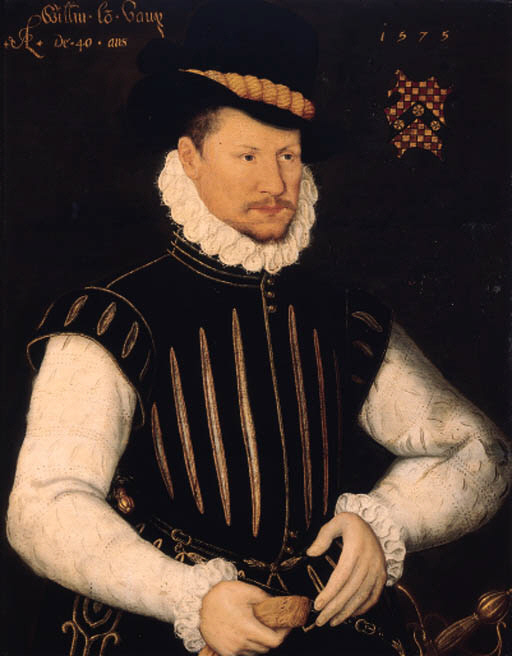
  • Hon. William Vaux, 3rd Baron Vaux of Harrowden (born 1535), married firstly before 1557 to Elizabeth Beaumont, a distant cousin, by whom he had issue. In 1563, Vaux married to his second cousin, once removed, Mary Tresham, great-granddaughter of Sir William Parr, Baron Parr of Horton (uncle to Queen Katherine Parr) and had issue.
William, Lord Vaux of Harrowden (1535-1595), oil on panel 31 x 24½in. (78.8 x 62.2cm.). Inscribed

William, Lord Vaux of Harrowden (1535-1595), oil on panel 31 x 24½in. (78.8 x 62.2cm.). Inscribed “Willm. Lo. Vaux AE. ?de 40. ?ans 1575” 1575; Circle of Cornelius Ketel

  • Hon. Nicholas Vaux
  • Hon. Anne Vaux, married Reginald Bray of Stene, nephew of Edmund Braye, 1st Baron Braye; had issue.

Thomas Vaux died in October 1556.

Descendants

Among the many descendants of Thomas, Lord Vaux and his wife Elizabeth, Lady Vaux are:

  • Lady Diana Spencer, Princess of Wales and thus HRH Prince William, Duke of Cambridge and HRH Prince Henry of Wales.
  • Sarah, Duchess of York [by both parents], who was married to Prince Andrew, Duke of York and is mother to TRH Princess Beatrice and Princess Eugenie.
  • HRH Princess Alice [Montagu-Douglas-Scott], Duchess of Gloucester, who married HRH Prince Henry, 1st Duke of Gloucester [son of King George V and Queen Mary]. They were parents to HRH Prince Richard, 2nd Duke of Gloucester (b.1944).
  • Henry George Lascelles, 6th Earl of Harewood, husband to HRH Princess Mary, Princess Royal [only daughter of King George V and Queen Mary]. They had two sons including the 7th Earl of Harewood.

Art

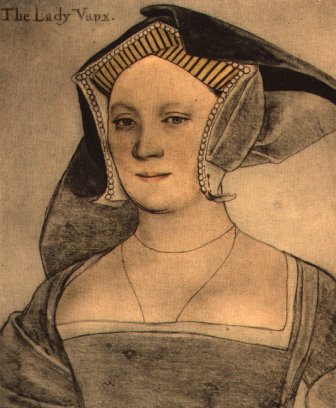
Sketches of Vaux and his wife by Holbein are at Windsor, and a finished portrait of Lady Vaux is at Hampton Court. Another hangs in Prague. More info: The OTHER Elizabeth Cheney

Elizabeth, Lady Vaux of Harrowden, wife to the 2nd Baron Vaux.

Elizabeth, Lady Vaux of Harrowden, wife to the 2nd Baron Vaux.

Elizabeth, Lady Vaux

Works

Two of his poems were included in the Songes and Sonettes of Surrey (Tottel’s Miscellany, published in 1557 (see 1557 in poetry). They are “The assault of Cupid upon the fort where the lover’s hart lay wounded, and how he was taken,” and the “Dittye … representinge the Image of Deathe,” which the grave-digger in Shakespeare’s Hamlet misquotes.[4]
Thirteen pieces in the Paradise of Dainty Devices, published in 1576 (see 1576 in poetry), are signed by him.[4] These are reprinted in Alexander Grosart’s Miscellanies of the Fuller Worthies Library (vol. iv, 1872).

Lord Vaux wrote during Queen Mary’s reign. The following lines by Vaux were first printed in The Paradise of Devices (1576).

OF A CONTENTED MIND
When all is done and said, in the end thus shall you find,
He most of all doth bathe in bliss that hath a quiet mind:
And, clear from worldly cares, to deem can be content
The sweetest time in all his life in thinking to be spent.
The body subject is to fickle Fortune’s power,
And to a million of mishaps is casual every hour:
And Death in time doth change it to a clod of clay:
Whenas the mind, which is divine, runs never to decay.
Companion none is like unto the mind alone; [or none]
For many have been harmed by speech, through thinking, few,
Fear oftentimes restraincth words, but makes not thought cease; [peace]
And he speaks best, that hath the skill when for to hold his
Our wealth leaves us at death; our kinsmen at the grave;
But virtues of the mind unto the heavens with us we have.
Wherefore, for virtue’s sake, I can bo well content,
The sweetest time of all my life to deem in thinking spent.

The introduction of a rhyme at the cesura or pause of the longer line in this measure breaks of its couplets into a four lined stanza. We have example of this by the same poet in what a MS copy describes as, “a dytte or sonet made by Lord Vaux in the time of the noble quene Marye representing the image of Death.” The first, third, and eighth stanzas of this poem, with a line from the last but one transferred to the third, were chosen by Shakespeare for the grave-digger’s song in fifth act of Hamlet; the clown giving, of course, his rudely remembered version of them [see Hamlet, act five].

So Shakespeare’s clown quoted it. This is the poem itself as written in Queen Mary’s reign by Lord Vaux:
THE IMAGE OF DEATH
I loathe that I did love,
In youth that I thought sweet,
As time requires for my behove
Methinks they are not meet.
My lusts they do me leave,
My fancies all arc fled,
And tract of time begins to weave
Grey hairs upon my head.
For Age with stealing steps
Hath clawed me with his crutch,
And lusty Life away she leaps
As there had been none such.
My Muse doth not delight
Me as she did before;
My hand and pen arc not in plight,
As they have been of yore.
For Reason me denies
This youthly idle rhyme;
And day by day to me she cries,
“Leave off these toys in time.”
The wrinkles in my brow,
The furrows in my face,
Say, limping Age will lodge him now.
Where Youth must give him place.
The harbinger of Death,
To mo I see him ride :
The cough, the cold, the gasping breath
Doth bid mo to provide.
A pickaxe and a spade,
And eke a shrouding sheet,
A house of clay for to be made
For such a guest most meet.
Methinks I hear the clerk,
That knolls the careful knell,
And bids mo leave my woeful work,
Ero Nature me compel.
My keepers knit the knot
That Youth did laugh to scorn,
Of me that clean shall be forgot,
As I had not been born.
Thus must I Youth give up,
Whose badge I long did wear;
To them I yield the wanton cup
That better may it bear.
Lo, here the bared skull,
By whose bald sign I know,
That stooping Age away shall pull
Which youthful years did sow.
For Beauty with her band
These crooked cares hath wrought,
And shipped me into the land
From whence I first was brought.
And ye that bide behind,
Have ye none other trust :
As ye of clay were cast by kind,
So shall ye waste to dust.
From: Cassell’s library of English Literature, selected, ed. and arranged by H. Morley
By Cassell, ltd.

References

  1. George Edward Cokayne. The Complete Peerage of England, Scotland, Ireland, Great Britain, and the United Kingdom, Vol. XII/2, p. 219-221.
  2. Unknown author, David Faris. Plantagenet Ancestry of 17th Century Colonists, p. 39.
  3. Douglas Richardson, Plantagenet Ancestry, pg 326, 561-562, 566.
  4. Dominic Head. The Cambridge Guide To Literature In English, Cambridge University Press, Jan 26, 2006. pg 1151.
  5. John Saward, John Morrill, Michael Tomko. Firmly I Believe and Truly: The Spiritual Tradition of Catholic England, Oxford University Press, Nov 15, 2011. pg 92.
Researched and written by Meg McGath

© 26 March 2012

Belinda Durrant Exhibit at Sudeley Castle: Where’s Mary?

Belinda Durrant has three new works on display at Sudeley Castle as part of their exhibition celebrating the quincentenary of the birth of Katherine Parr. She was gracious enough to share them with us and to even write what inspired her to make these works. 

Sudeley Exhibit by Belinda Durrant ©

“It [the exhibit] was made as a direct response to visiting the castle. I am no history scholar…just couldn’t understand why there was so little info about the poor little child at the Castle and decided I was going to find out myself….and promptly discovered that there was nothing much more to find, which just made it all worse, somehow.

Katherine Parr was the 6th wife of Henry VIII. After his death in 1547 she married Thomas Seymour and moved to his country residence, Sudeley Castle in 1548 where she gave birth to a daughter, Mary on August 30th of that year. She died from puerperal (childbed) fever just seven days later and is buried in St Mary’s Church within the castle grounds. The site of baby clothing often provokes unexplained sentimental reactions, particularly from women. Freud tells us that this is fetish. Such clothing reminds us of the child itself and is embraced as a substitute for the ‘lost’ child. Freud means ‘lost’ in terms of the fleeting period of babyhood, but in this case, Lady Mary Seymour was apparently quite literally ‘lost’.

We are told that Mary became an orphan at just a few months old when her father was executed for treason and that she was sent to live with Katherine Willoughby, the Duchess of Suffolk. I have been able to find out very little else. It seems all record of her disappears after August 29 1550, the eve of her second birthday.

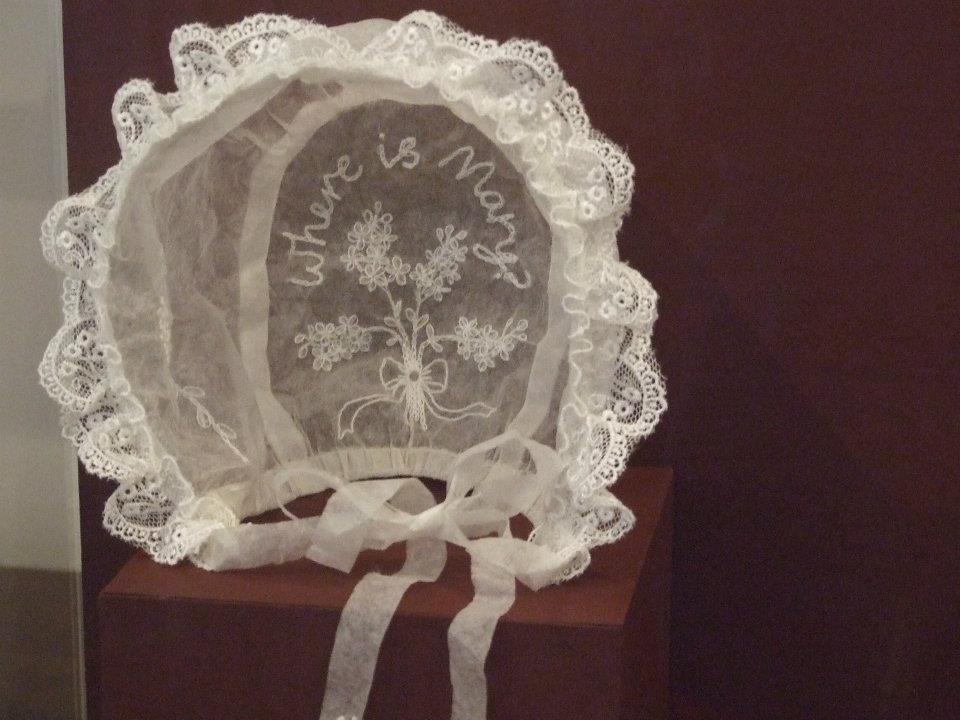
The three works I have displayed in the Castle exhibition centre, ‘Where is Mary? Bonnet, Mittens, Bib’ were made as a direct response to a visit I made to the castle in July 2011. The work is not about embroidery and stitch.

It is about the ACTS of embroidering and stitching; the almost ritualistic time, care and love which goes into the making of those very special first clothes which celebrate the arrival of a new child.

Bonnet which reads “Where is Mary” by Belinda Durrant, picture by Sudeley Castle.
 © 13 April 2012

16 February 1547: The Funeral of King Henry VIII

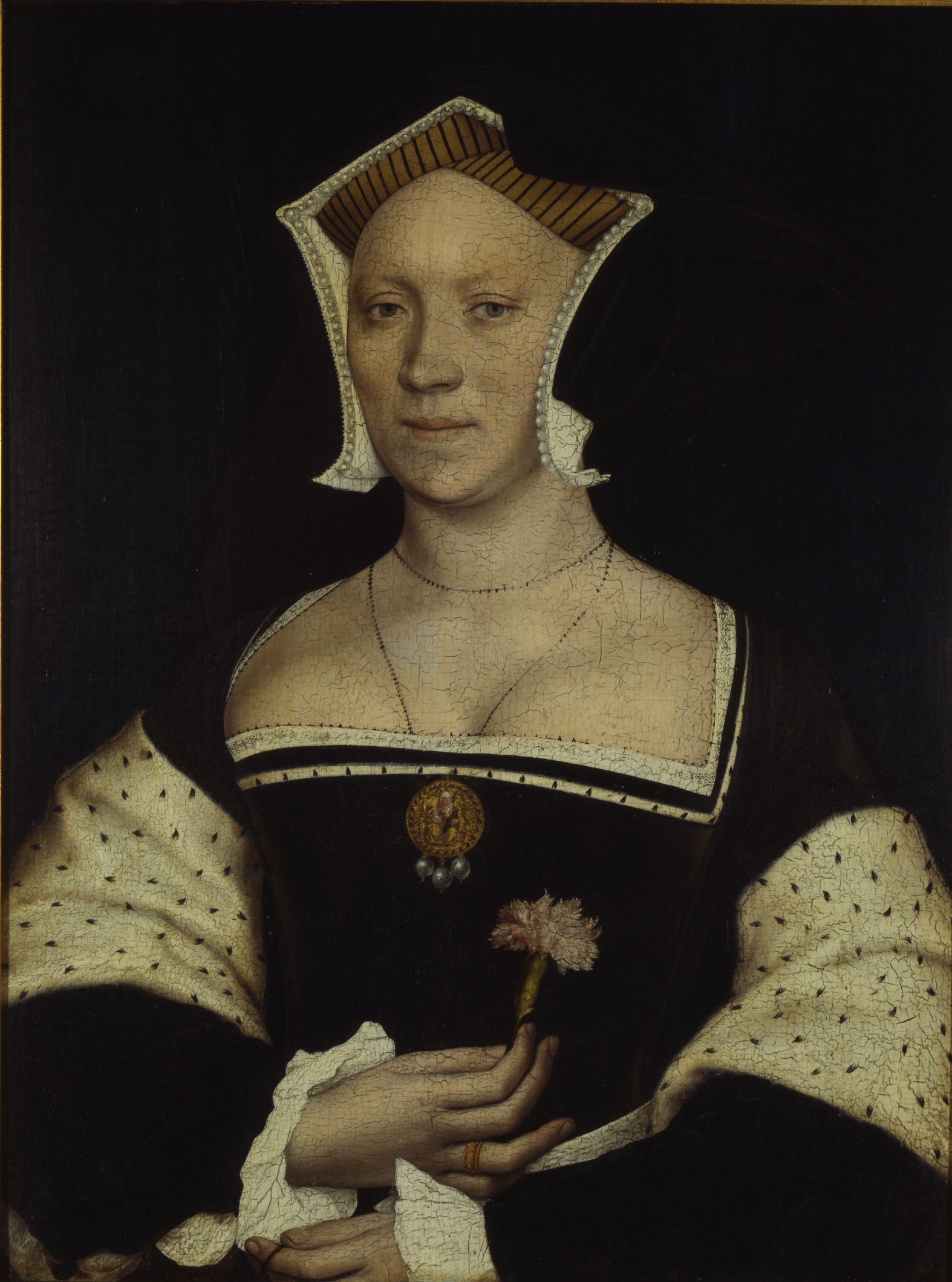
Queen Katherine Parr painted most likely as a young widow, posthumously.

After the news of King Henry’s death became public, the now Dowager Queen Katherine for the third time in her life donned widow’s weeds and mourning jewels. She wore buttons of gold enamelled black. She wore a gold ring with a death’s head. The death’s head of Christian lamentation on her finger, the queen secluded herself while she mourned and prepared for the funeral of the now dead king. Vast amounts of black cloth had been ordered for mourning clothes for the Lady Mary and Lady Elizabeth as well as the queen’s ladies and Henry’s household.
 For ten days the king’s embalmed body lay in the privy chamber in a huge chest lit by tapers. On 8 February, an official announcement was made that the King had indeed died. The bells through out the kingdom rang and prayers and Requiem masses were said for the king’s soul.

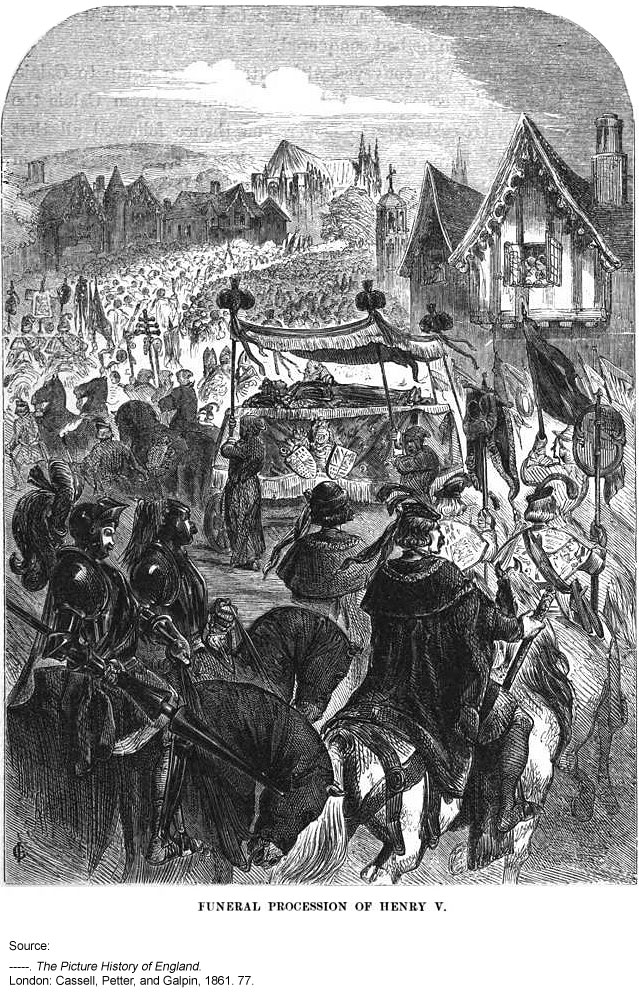
Funeral procession of Henry V; just an image to show how Henry VIII’s probably went, only grander of course!

On 14 February 1547, a great procession of 1,000 horsemen and hundreds of followers formed around a larger then life hearse made for the king. It was seven stories high, adorned with carefully crafted effigy of the monarch. The procession moved from Westminster down to Windsor stopping at night at the new “Lord Protector’s” home in Syon for the night. The road itself had to be repaved and trees had to be cut out of the way in order to bear the weight and size of the King’s hearse.
The funeral cortege arrived at Windsor in the afternoon of the 15th of February. The main Requiem and service would be held the next day.

An edited drawing of Queen Katherine.

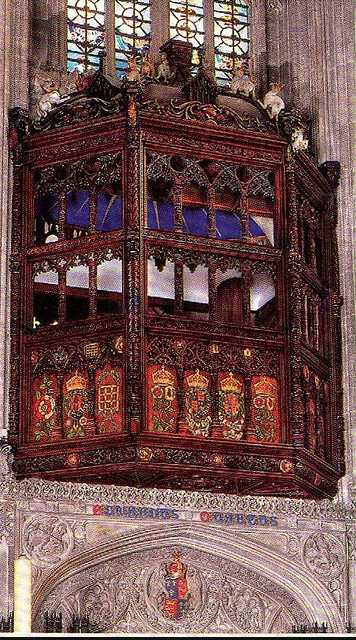
Dressed in blue velvet lined with purple with a ring of gold with a death head, the queen watched the proceedings from her private Chapel above the choir, the Queen’s Closet, in St. George’s Chapel, Windsor. It was the final act of a drama that had begun for Katherine over four years ago. Katherine watched as Henry was interred with his “most beloved” wife, the mother of the new king, Edward VI, Queen Jane Seymour. Ironically, it was Bishop Gardiner who officiated at the Requiem Mass. After all that Henry had done to break from Rome and the fact that he died holding Archbishop Cranmer’s hand; Henry wanted to have the familiar Latin Mass of the old religion to ensure the good of his soul. Katherine surely must have been upset with the situation seeing how much she disliked Gardiner and the form of ceremony. No doubt, with a disbelief of Purgatory notwithstanding, she said at least one prayer for her husband’s soul. The fact that she had been excluded from the Regency council was probably playing in her mind along with other thoughts which were not accounted for. One of them might have been towards her long lost love, Sir Thomas Seymour, who Katherine would now be free to marry.

The King left Katherine a generous lifestyle. He doted her as his “entirely beloved wife” and left her quite comfortably.

“The Queen shall have’, he commanded,  ‘3,000 in plate, jewels and stuff, beside what she shall please to take of what she has already, and further receive in money 1,000 besides the enjoyment of her jointures.’ She was always to be served and waited on as befitted a queen, with a large household (well over one hundred people) and all her dower properties which included her manors at Hanworth and Chelsea. She was still to exercise patronage, continue writing, live a life of privilege and comfort. Katherine would remain till her death the Dowager Queen of England and was the first lady of the Realm followed by Lady Mary, Lady Elizabeth, and Lady Anne of Cleves.

That this rule was followed and upheld becomes a completely different blog and issue entirely after Katherine’s marriage to Sir Thomas Seymour, younger brother of the Lord Protector and uncle to King Edward VI.

 Sources:
  1. Susan James. Catherine Parr: The Last Love of Henry VIII, History Press, Gloucestershire, 2009. pg 259-
  2. Linda Porter. Katherine, the Queen, Macmillan, US Edition, December 2010. pg 275-76.

20 July 1543: Queen Katherine to her brother, William Parr

Oatlands Palace, Surrey

From Oatland’s Palace in Surrey on 20 July 1543 to the queen’s brother, Sir William Parr.

[Addressed to] To our right dear and entirely beloved brother, the Lord Parr, Lord Warden of the Marches,

Right dear and well-beloved brother, we great you well. Letting you wit that when it hath pleased almighty God of His goodness to incline the King’s majesty in such wise towards me, as it hath pleased his highness to take me of all others, most unworthy, to his wife, which is, as of reason it ought to be, the greatest joy and comfort that could happen to me in this world:

To the intent, you being my natural brother, may rejoice with me in the goodness of God and of his majesty, as the person who by nature hath most cause of the same, I thought meet to give your this advertisement. And to require you to let me sometime hear of your health as friendly as you would have done, if God and his majesty had not called me to this honor: which, I assure you, shall be much to my comfort. Given at my lord’s manor of Oatlands, the twentieth of July, the thirty-fifth year of his majesty’s most noble reign.

Kateryn, the quene

Transcription by Janel Mueller, from her compilation of the Works and Correspondences of Katherine Parr.

Katherine Parr: Complete Works and Correspondences, editor Janel Mueller. University of Chicago, 2011. pg 46.

Katherine Parr’s Letter to Lord Seymour: February 1547

The actual letter from Katherine to Seymour as shown at Sudeley Castle, February 1547.

The actual letter from Katherine to Seymour as shown at Sudeley Castle, c. February 1547.

THE DOWAGER QUEEN TO THE LORD ADMIRAL
my lord j send yow my moost humble and harty comendations beyng desyrous to knowe how ye haue done syns j sawe yow. I pray yow be not offended with me in that j send soner to yow than I sayd I wold. for my promys was but such one ones in fourtened how be yt the tyme ys well abrevyated by what meanes I knowe not except the weakes be schorter at chelsey than in other places my lord, your brother hathe dyffered answer consernyng suche requestes as I made to hym tyll hys comyng hether wyche he sayth schalbe immediatly after the terme thys ys not hys fyrst promys I haue receyued of hys comyng and yett vnperfourmed I thynke my lady hath tawght hym that lesson for yt ys her coustome to promys many comynges to her frendes and to perfourme none I trust in greatter matters sche ys more cyrcumspect. And thus my lord I make an ende byddyng yow moost hartely farewell wyschyng yow the good I wold my self. from chelsey
[postscript] I wold not haue yow to thynke that thys myne onest God Wyll towarde yow to procede of any sodayne motyon or passyon for as truly as god ys god my mynd was fully bent the other tyme I was at lybertye to marye yow [which clearly shows she was at the time free to marry again] before any man I knewe howbeyt god withsode my wyll theryn moost vehemently for atyme and through hys grace and goodnes made that possible wyche semeth to me moost vnpossible that was made me to renownce utterly myne one wyll, and to folowe hys wyll most wyllyngly yt wer to long to wryte [all] the processe of thys mater yf I lyue I trust schall declare yt to yow my self I can [say] nothyng but as my lady of suffolke saith god ys amervelous man.
by her that ys yowrs to serue and obey duryng her lyf,
Kateryn the Quene KP
Actual letter written in the queen's hand at Sudeley Castle, c. February 1547.

by her that ys yowrs to serue and obey duryng her lyf,
Kateryn the Quene KP

*transcription from “Katherine Parr: Complete Works & Correspondences” compiled by Janel Mueller
My Lord I send you my most humble and hearty commendations, being desirous know how ye have done since I saw you. I pray you be not offended with me in that I send sooner to you than I said I would. For my promise was but such one once in a fortnight. Howbeit the time is well abbreviated: by what means I know not, except the weeks be shorter at Chelsea than in other places. My Lord your brother hath deferred answer concerning such requests as I made to him till his coming hither, which he saith shall immediately after the term. This is not his first promise I have received of his coming, and yet unperformed. I think my Lady hath taught him that lesson, for it is her custom to promise many comings to her friends, and to perform none. I trust in greater matters she is more circumspect. And thus, my Lord, I make an end, bidding you most heartily farewell, wishing you the good I would myself. From Chelsea.
[Addition to body of letter]
I would not have you to think that this mine honest goodwill towards you to proceed of any sudden motion or passion. For as truly as God is God, my mind was fully bent the other time I was at liberty to marry you before any man I knew. Howbeit, God withstood my will therein most vehemently for a time and, through His grace and goodness, made that possible which seemeth to me most unpossible–that was, made me to renounce utterly mine own will, and to follow His will most willingly. It were too long to write all the process of this matter. If I live, I shall declare it to you myself. I can say nothing but, as my Lady of Suffolk saith, “God is a marvelous man.”
By her that is yours to serve and obey during her life,
Kateryn, the quene, KP
Signature of Katherine Parr
This letter was written as Dowager Queen according to Janel Mueller’s compilation of Katherine Parr’s works. The letters started in mid-February of 1547, AFTER the death of King Henry VIII. This particular letter was written in mid-February 1547 and is featured at Sudeley Castle.A recent publication in a British newspaper put forth letters discovered between Queen Catherine and Lord Seymour. The paper was unsure as to when letters were exchanged between the two. The letters, which reveal a different side of the queen, are compiled and preserved in the 2011 compilation “Katherine Parr: Complete Works & Correspondences” by Janel Mueller. According to Mueller, the letters started mid-February, 1547, AFTER the death of King Henry. As Dowager Queen, Katherine was free to express her true feelings towards Seymour. Her feelings about herself as a woman were also revealed within her book “Lamentations of a Sinner” which was published after Henry’s death.

Source:

  • Katherine Parr (Author), Janel Mueller (Editor). Katherine Parr: Complete Works & Correspondences, University of Chicago Press, Jun 30, 2011. pg 129-31.
© Meg McGath
23 May 2012