Family of Queen Katherine: Thomas Dacre, 2nd Lord of Gilsland

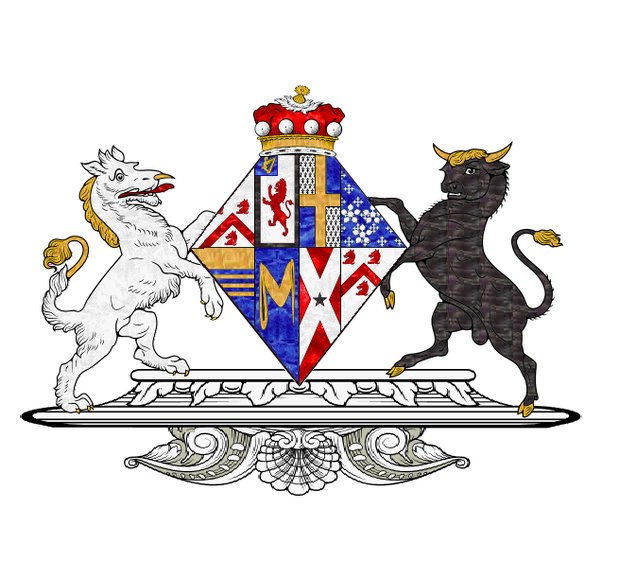
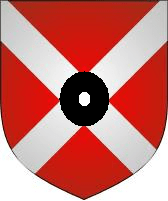
Coat of arms of the Barons of Dacre showing their heraldic charges, the Bull. European Heraldry

SIR THOMAS DACRE, 2nd Lord (Baron) Dacre of Gillesland (25 November 1467 – 24 October 1525) was the eldest son and heir of Sir Humphrey Dacre, 1st Lord Dacre and his wife, Mabel Parr (great-aunt of Queen Katherine Parr).[1]

Dacre was summoned to parliament from 17th October 1509 to 12th November 1515. This nobleman in the 9th Henry VII, served under Thomas, Earl of Surrey (later the 2nd Duke of Norfolk), at the siege of Norham Castle, and his lordship obtained great celebrity in the command of a body of horse reserve at the famous fight of Floddin in the 4th Henry VIII under the same gallant leader. He was subsequently, at different times, engaged in Scotland and he filled the important office of warden of the West Marches from the 1st year of King Henry VIII.

Naworth Castle, home to the Dacre family from 1335-1601. http://www.flickr.com/photos/23408986@N06/4260147660/lightbox/

Naworth Castle, also known as, or recorded in historical documents as “Naward”, is a castle in Cumbria (formally Westmorland), England near the town of Brampton. It is on the opposite side of the River Irthing to, and just within sight of, Lanercost Priory. It was the seat of the Barons Dacre. The castle is thought to have late 13th-century origins, in the form of a square keep and bailey. It was first mentioned in 1323, and in 1335 a licence to crenellate was granted to Ralph Dacre, 1st Baron Dacre (ca. 1290 – April 1339). Residential quarters were added in the early 16th century by Thomas, 2nd Lord Dacre. He built the whole of the south and east wings including the 100ft Great Hall, and what is now known as Lord William’s Tower. Unfortunately for the Dacre family, in 1560 the then Lord Dacre died, leaving a widow, three daughters and a young son called George. Thomas Howard, 4th Duke of Norfolk, Queen Elizabeth’s cousin, married the widowed Lady Dacre, and arranged to marry his three sons to her three daughters. Young George was killed in a fall from a vaulting horse and the vast Dacre estates which covered great tracts of the north of England- including 70,000 acres of the Barony of Gilsland, lands in Cumberland including Greystoke and Dacre, 20,000 acres around Morpeth and 30,000 acres in Yorkshire – now part of Castle Howard estate, all came under the control of the Howard family.The castle is currently occupied by Philip Howard, brother and heir presumptive of the 13th Earl of Carlisle.[2]

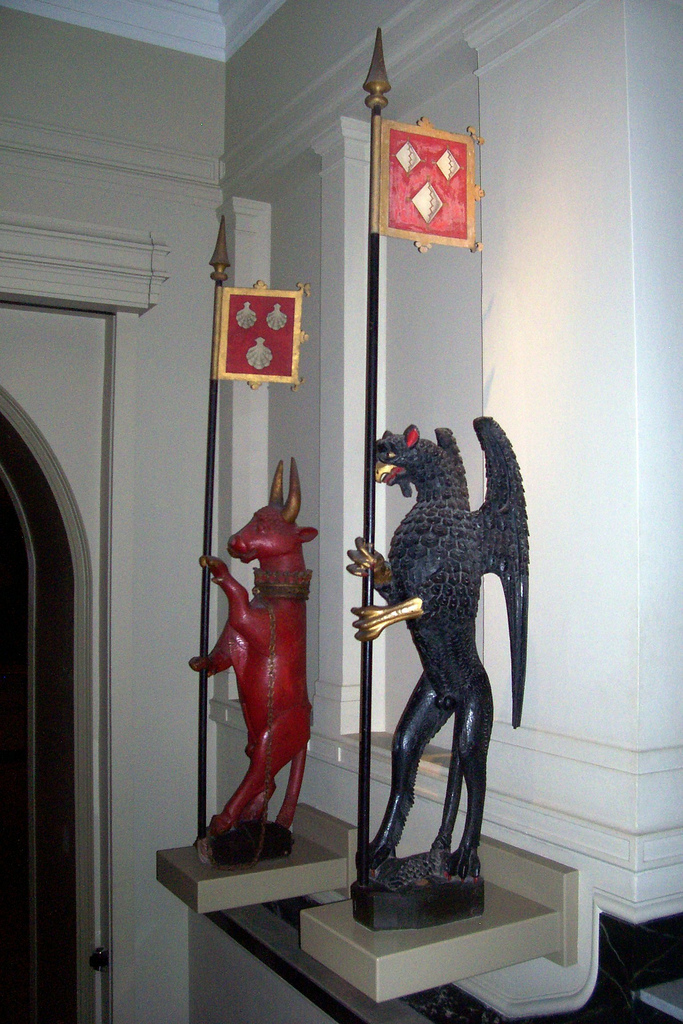
Two of the four two metre-high Dacre Heraldic Beasts (a bull and a gryphon), which used to stand in the hall of Naworth Castle in Cumbria, now the seat of the Howard family, the Earls of Carlisle, from whom they were recently purchased. They date from 1519-21. http://www.flickr.com/photos/24151047@N05/3286962813/

Marriage and issue

He married c. 1488 to Elizabeth, suo jure 6th Baroness Greystock, daughter and heiress of Sir Robert de Greystoke by Lady Elizabeth Grey, daughter of Edmund Grey, 1st Earl of Kent [descendant of Lady Elizabeth of Lancaster, daughter of John of Gaunt and Blanche of Lancaster] and Lady Katherine Percy [descendant of Edward III’s granddaughter, Lady Joan Beaufort and also his son, Lionel of Antwerp]. Elizabeth was the granddaughter and sole heiress of Ralph de Greystock, 5th Baron Greystock KG [descendant of Edward III by his granddaughter, Lady Joan Beaufort’s, first marriage to Lord Ferrers].[1]

They had eight children:

  1. William Dacre, 3rd Baron Dacre of Gilsland, who married Lady Elizabeth Talbot, 5th daughter of George Talbot, 4th Earl of Shrewsbury and Lady Anne  Hastings.[1]
  2. Hon. Mary Dacre who married Francis, 5th Earl of Shrewsbury, brother of the above Lady Elizabeth Talbot. Had issue.[1]
  3. Hon. Anne Dacre, wife of Christopher Conyers, 2nd Baron Conyers. Had issue.[1]
  4. Hon. Mabel Dacre who married Henry Scrope, 7th Baron Scrope of Bolton. Had issue which included their son, John, 8th Baron. The 7th Lord Scrope would enter into marriage negotiations with Lady Maud Parr for the hand of his eldest son and heir, Henry. If everything had gone according to plan, Katherine would have married her 2nd cousin [twice removed, closest relation out of several shared ancestors]. Luckily for Katherine the marriage was rejected as Henry died a few years later. His brother John succeeded their father in the barony.[1]
  5. Hon. Jane Dacre, wife of Lord Tailboys.[1]
  6. Hon. Philippa Dacre, most likely named after her paternal grandmother, Lady Philippa Neville.[1]
  7. Hon. Humphrey Dacre.[1]
  8. Hon. Jane Dacre, of the second name.[1]

His lordship died on 24 October 1525 due to a fall from his horse.[1] He had his wife, who had died in August of 1516, were buried in Lanercost Priory, Cumberland, England.[1] He  was succeeded by his elder son William.

References

  1. Douglas Richardson. Magna Carta Ancestry: A Study in Colonial and Medieval Families, 2nd Edition, 2011. pg 16-18.
  2. Naworth Castle History

Family of Queen Katherine Parr: Sir John Neville, 3rd Lord Latimer

Coat of Arms of the Neville Barons Latimer of Snape.

Sir John Neville, 3rd Baron Latimer of Snape Castle (17 November 1493–2 March 1543) was an English nobleman of the House of Neville. Latimer was Katherine Parr’s second husband and Latimer’s third and final wife. His family was one of the oldest and most powerful families of the North. They had a long standing tradition of military service and a reputation for seeking power at the cost of the loyalty to the crown as shown by Sir Richard Neville, 16th Earl of Warwick [Warwick, the Kingmaker], John’s 1st cousin, twice removed.[2]

Latimer’s branch of the Neville family was in line for the Earldom of Warwick; his great-grandmother, Lady Elizabeth Beauchamp was a daughter of the 13th Earl of Warwick by his first wife. The 13th Earl’s heir was his only son, Henry, by his second marriage Lady Isabel le Despenser [granddaughter of Edmund of Langley, 1st Duke of York]; he was created Duke of Warwick. Warwick married to the future “Warwick, the Kingmaker’s” sister, Lady Cecily Neville. The Duke’s only child and heir by Cecily was a daughter, Lady Anne, who became Countess in her own right. After her early death the Earldom and inheritance became an issue.[see note 1] Due to the affiliation, Lord Latimer dealt with quite a bit of sibling rivalry. Legal actions were taken by his younger brothers and Latimer, at the time of his marriage to Katherine in 1534, was having financial difficulties. He lived chiefly at Snape Castle, Yorkshire, but sometimes at Wyke in Worcestershire.

Born about 17 November 1493,[1] he was eldest son of Sir Richard Neville, 2nd Baron Latimer by Anne, daughter of Sir Humphrey Stafford. His grandfather and heir to the Barony, Sir Henry, had been involved in the War of the Roses and in 1469 was killed at the battle of Edgecote fighting for Henry VI [the last Lancastrian king]. The fortunes of this branch of Nevilles were saved by Neville’s sympathetic granduncle, Cardinal Thomas Bourchier [uncle of Neville’s paternal grandmother Joan], who procured the wardship of the 2nd Baron and preserved his inheritance.

He came to court where he was one of the gentlemen-pensioners. Neville doesn’t really enter into history until 1513 when he accompanied Henry VIII to Northern France and was knighted after the taking of Tournai. He had taken part in about 1517 in the investigation of the case of the Holy Maid of Leominster. He was knight of the shire (MP) for Yorkshire in 1529 which was a step in progress even if he owed it to his father. The representation of the county was somewhat of a family affair as his fellow knight was Sir Marmaduke Constable, whom Neville took precedence over most likely due to his noble inheritance. He was not a member of the Commons for long as his father died before the end of 1530 and he had livery of his lands and succeeded to the House of Lords as the 3rd Baron on 17 March 1531.

Tomb of Queen Katherine at Sudeley features the her family arms impaled with that of her four husbands [Latimer & Parr]. Copyright Meg McGath

Tomb of Queen Katherine at Sudeley features the her family arms impaled with that of her four husbands [Latimer & Parr]. © Meg McGath [2012]

In the summer of 1534, Latimer married the widowed Lady Borough, Katherine Parr. At age 40, Lord Latimer was twice Katherine’s age. Latimer was a 2nd cousin to Katherine’s paternal grandmother, Elizabeth [at the time of Latimer’s birth, she had become Lady Vaux after re-marrying]. The match was credited to several family members which included Katherine’s uncle, Sir William, who had taken over as a father figure when her father died in 1517. From the beginning of the marriage, Katherine tried to be a good wife. Her affection for her husband would grow deep enough to cherish a remembrance of him, his New Testament with his name inscribed inside, which she kept until her death. Katherine would also prove to be a good step-mother to her step-children; a trait which she would again show after her marriage to the King. Her “teenage” step-son, John, proved to be difficult. There is some indication that Margaret, his sister, was the couple’s favorite. Never the less, Katherine would continue a relationship with the two after her marriage to King Henry, bringing Margaret to court as her maid-in-waiting and securing a position for John’s wife, Lucy, the new Lady Latimer in her household.[10]

The Pilgrimage of Grace

Latimer was a supporter of the old religion and bitterly opposed the king’s divorce and remarriage and it’s religious ramifications. In 1536, within two weeks of the riot in Louth, a mob appeared before the Latimer’s home threatening violence if Lord Latimer did not join their cause. Katherine watched as her husband was dragged away by the rebels. As prisoner of the rebels, conflicting stories of which side Latimer was truly on began to reach Cromwell and the King in London. The rebellion in Yorkshire put him in a terrible dilemma. If he was found guilty of any kind of treason his estates would be forfeited leaving Katherine and her step-children penniless. The King himself, wrote to the Duke of Norfolk pressing him to make sure Latimer would ‘condemn that villain Aske and submit [himself] to our clemency’.[11] Latimer was more than happy to comply. Both Katherine’s brother, William Parr and uncle, William Parr, 1st Baron Parr of Horton fought with the Duke of Norfolk and the Duke of Suffolk against the rebellion. Katherine’s brother, Sir William Parr, who had been in the service of the Duke of Richmond [natural son of King Henry VIII and Elizabeth Blount], blocked the Great North Road at Stamford, with a large force of armed men, they were in the way of anyone coming up from London. The only substantial Lincolnshire landowner that the King could depend on was his friend and brother-in-law, the Duke of Suffolk.It is to most likely to Katherine’s credit that Lord Latimer survived; both her brother and uncle probably intervened at one point and saved Lord Latimer’s life.[10] Never the less, Latimer represented the insurgents at the conferences with the royal leaders in November 1536, and helped to secure amnesty.[12]
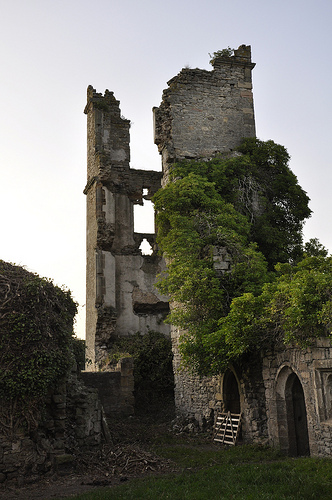
Ruins of Snape Castle.

In January 1537, Katherine and her step-children were held hostage at Snape Castle during the uprising of the North; the “Bigod Rebellion” which was lead by Sir Francis Bigod of Settrington. The rebels ransacked the house and sent word to Lord Latimer, who was returning from London, that if he did not return immediately they would kill his family. When Lord Latimer returned to the castle he somehow talked the rebels into releasing his family and leaving, but the aftermath to follow with Lord Latimer would prove to be taxing on the whole family.[10] It is probable that Katherine made sure that her husband did not join the uprising.[12]

The family would later move south after the executions of the rebels which pleased Cromwell and the King. Although now charges were found, Latimer’s reputation which reflected upon Katherine, was tarnished for the rest of his life. He spent the last seven years of his life blackmailed by Cromwell. Latimer was called away frequently to do the biding of Cromwell and the King and be present during Parliament from 1537-42. With Cromwell’s fall in 1540, the Latimer’s reclaimed some dignity and as Lord Latimer attended Parliament in 1542 he and Katherine spent time in London that winter. The atmosphere of the court was much different from the rural and parochial estates. It was at court that Katherine could find the latest trends, not only in religious matters, but in frivolous matters such as fashion and jewellery which she loved.[10]

By the winter of 1542, Lord Latimer’s health had broken down after a grueling life of what some would call ‘political madness’. Katherine spent the winter of 1542-1543 nursing her husband. John Neville, Lord Latimer, died in 1543. In Lord Latimer’s will, Katherine was named guardian of his daughter, Margaret, and was put in charge of Lord Latimer’s affairs which were to be given over to his daughter at the age of her majority. Latimer left Katherine Stowe Manor, Wyke [or Wike] Manor, and other properties. He also bequeathed money for supporting his daughter and in the case that his daughter did not marry within five years, Katherine, was to take £30 per annum out of the income to support her step-daughter. Katherine was left a rich widow faced with the possibility of having to return north after Lord Latimer’s death.[10]

Wyke Manor in Wick, Worcestershire. [Wikipedia]

Wyke Manor in Wick, Worcestershire. [Wikipedia]

He died on 2 March 1543 in London, and was buried in St. Paul’s Cathedral. In Weever’s Monuments, ed 1631, page 371, he says in speaking of old St Paul’s,

“Here in a monument broken all a pieces lieth entombed the body of John Nevill Lord Latimer whose widow Katherine Parr daughter of Sir Thomas Parre of Kendal and sister to William Lord Parre Marquesse of Northampton was the sixth and last wife to King Henry the Eight. He died in the year 1542 [incorrect date].”[9]

Family

Latimer married three times:

1. By 1520,[3] Dorothy de Vere (d. 7 February 1527), the daughter of Sir George de Vere and Margaret Stafford. Dorothy was the sister and co-heiress of John de Vere, 14th Earl of Oxford. She is buried in Wells, North Yorkshire in St. Michael’s; which is next to Snape Castle. The couple had two children:

  • John Neville, 4th Baron Latimer (1520[4]-1577), married Lady Lucy, daughter of Henry Somerset, 2nd Earl of Worcester and Anne Browne [daughter of Sir Anthony Browne and Lady Lucy, herself a daughter of John Neville, 1st Marquess of Montagu]  by whom he left four daughters and co-heiresses, of whom Dorothy married Thomas Cecil, 1st Earl of Exeter.[2] On his death, the Barony of Latimer fell into abeyance between his four daughters and co-heirs, and so remained until 1913, when Francis Burdett Thomas Coutts-Nevill was summoned to Parliament by writ, dated 11 February 1913.[5][6] Latimer was buried near Snape Castle in St. Michael’s Church, Wells, within Nevilles’ Chapel.[7]
Effigy and tomb of the 4th Lord Latimer in Nevilles' Chapel, Wells, North Yorkshire Well Village Website © Well Parish Council 2011

Effigy and tomb of the 4th Lord Latimer in Nevilles’ Chapel, Wells, North Yorkshire Well Village Website © Well Parish Council 2011

  • Hon. Margaret Neville (1525[7]-1546), was betrothed to her cousin Ralph Bigod in 1534, before the Bigod Rebellion. Ralph was the son of the rebel Sir Francis Bigod. The betrothal was broken most likely to the Rebellion. She died at age twenty-one, unwed, and d.s.p. [no children].[2]

2. On 20 June 1528, he obtained a marriage license to Elizabeth Musgrave (d. 1530), daughter of Sir Edward Musgrave of Hartley and Joan Warde, by whom he had no issue.[1][2] Elizabeth was in fact a cousin to Katherine Parr sharing Sir Thomas Tunstall and Isabel Harrington [3rd cousins, twice removed]; the 3rd Lord FitzHugh and Elizabeth Grey [4th cousins]; and both Sir Ralph Neville, 1st Earl of Westmorland and Lady Joan Beaufort — Elizabeth descended from Westmorland’s children, Sir Ralph [4th cousin, once removed] and Hon. Philippa [4th cousin], by his first wife, Lady Margaret Stafford, who married his stepmother’s (Lady Joan Beaufort) daughter, Hon. Mary Ferrers, the daughter from Lady Joan’s first marriage to of Robert, Lord Ferrers [4th cousin, once removed]. These last three connections to Westmorland, Lady Joan Beaufort, and Lady Margaret Stafford also made Elizabeth a cousin of her husband Lord Latimer.
3. In Summer 1534, Katherine, daughter of Sir Thomas Parr of Kendal and widow of Sir Edward Borough (d. circa April 1533), son of Thomas Burgh, 1st Baron Burgh.[2]

Ancestry

By his father, Latimer descended from King Edward III of England twice. Latimer’s grandparents were Sir Henry Neville, heir to the barony of Latimer and Earldom of Warwick, and the Hon. Joan Bourchier. Henry Neville was the heir and eldest son of Sir George, 1st Baron Latimer of Snape and Lady Elizabeth Beauchamp [through whom the Latimer’s claimed the Earldom of Warwick; Elizabeth was a daughter of the 13th Earl of Warwick by his first wife Hon. Elizabeth Berkeley, both descendants of Edward I]. George was a younger son of Sir Ralph Neville, 1st Earl of Westmorland and his second wife, Lady Joan Beaufort. Lady Joan was the legitimized daughter of Prince John of Gaunt, 1st Duke of Lancaster [son of Edward III and father of Henry IV of England] by his mistress, later wife, Katherine Roet.

Joan Bourchier was a granddaughter of Sir William, 1st Count of Eu and Lady Anne of Gloucester, daughter of Prince Thomas of Woodstock [youngest son of Edward III] and his wife, Lady Eleanor de Bohun [descendant of Edward I and Henry III]. This connection to the Bourchier family made Latimer a cousin of the Earls of Bath, Lords Dacre of the South, the Lady Margaret Bryan [governess of the King’s children], Lady Anne Bourchier [husband of Katherine Parr’s brother William Parr], and even the Duchess of Somerset Anne Stanhope. Perhaps the connection to the Bourchier’s, specifically Anne, wife of Sir William Parr, brought Katherine and Latimer together. Credit is usually given to Parr’s uncle also named Sir William and her cousin Bishop Cuthbert Tunstall.

Ancestry of John Neville, 3rd Lord Latimer; Queen Katherine and Latimer shared Lady Joan Beaufort and Sir Ralph, 1st Earl of Westmorland as common ancestors.

Notes

  1. The earldom passed to the 13th Earl’s male heir, Henry, from his second marriage to Lady Isabel le Despenser [a granddaughter of Edmund of Langley, 1st Duke of York]. Henry married Lady Cecily, a sister of the future Lord Warwick [Richard Neville] in 1436. At the same ceremony, Henry’s sister Lady Anne was married to Richard Neville, son of the 5th Earl of Salisbury. After the marriage, Henry was created Duke of Warwick in 1445. The couple had one child, a daughter Lady Anne, who inherited as suo jure 15th Countess of Warwick after the death of her father in 1446 [women could not inherit Dukedoms]. Lady Anne died young (d.1449). The title went to her her paternal aunt Lady Anne Beauchamp [whom she was most likely named after]. The title was passed to her husband, Richard Neville, who was also the maternal uncle of the last Countess. For the full story, see “Warwick Inheritance” on Lady Cecily’s page. The Warwick inheritance would be the subject of another feud after the death of Lord Warwick between his two daughters, Lady Isabel, Duchess of Clarence, and Lady Anne, Duchess of Gloucester and future queen of England. The title was bestowed upon Lady Isabel’s husband, George, Duke of Clarence (brother of King Edward IV and Richard III) and would go to his son, Edward, 17th Earl of Warwick, the last male Plantagenet.

References

  1. History of Parliament: a biographical dictionary of Members of the House of Commons, ed. Stephen Bindoff ‘Neville, Sir John I (1493-1543), of Snape, Yorks.,‘ 1982.
  2. Linda Porter. Katherine, the Queen. Macmillan, 2010.
  3. Cokayne, and others, The Complete Peerage, volume VII, page 483.
  4. Linda Porter. Katherine, the Queen, Macmillian, 2010. pg 65. *At the time of his father’s marriage to Katherine Parr in 1543, Neville was 14 yrs old.
  5. Charles Mosley, editor, Burke’s Peerage, Baronetage & Knightage, 107th edition, 3 volumes (Wilmington, Delaware, U.S.A.: Burke’s Peerage (Genealogical Books) Ltd, 2003), volume 1, page 1363.
  6. G.E. Cokayne; with Vicary Gibbs, H.A. Doubleday, Geoffrey H. White, Duncan Warrand and Lord Howard de Walden, editors, The Complete Peerage of England, Scotland, Ireland, Great Britain and the United Kingdom, Extant, Extinct or Dormant, new ed., 13 volumes in 14 (1910-1959; reprint in 6 volumes, Gloucester, U.K.: Alan Sutton Publishing, 2000), volume VII, page 484.
  7. History of Village of Well, North Yorkshire, St. Michael’s
  8. Linda Porter. Katherine, the Queen, MacMillian, 2010. pg 66. *At the time of her father’s marriage to Catherine Parr in 1543, Margaret was aged 9.
  9. Richard Simpson. Some Accounts of the Monuments in Hackney Church, Billing and Sons, 1881; Chapter: Lady Latimer.
  10. Susan E. James. Catherine Parr: Henry VIII’s Last Love. The History Press, 2009 US Edition. pg 61-73.
  11. Letters and Papers, Foreign & Domestic of the Reign of Henry VIII, II, no. 1174.
  12. Sir Sidney Lee. Dictionary of the National Biography, Vol XL, Smith, Elder and Co., 1894. pg 269.

Links

History of Parliament: Neville, Sir John I (1493-1543), of Snape, Yorks.

The Herbert’s: Lady Violet Herbert, Countess of Powis

Violet, Countess of Powis, by Ellis Roberts. ca,1887 ©NTPL/John Hammond/Powis Estate Trustees

Violet Ida Eveline Herbert, Countess of Powis and 16th Baroness Darcy de Knayth (1 June 1865 – 29 April 1929) was a British peeress.

Hon. Violet Lane-Fox was the youngest child of the Sackville George Lane-Fox, 12th Baron Conyers, 15th Baron Darcy de Knayth, and his wife, Mary Curteis.[1] Her sister, Hon. Marcia Lane-Fox, became the Countess of Yarborough, and her brother, Hon. Sackville Fitzroy Henry Lane-Fox, died at age 18 at Durban, South Africa, unmarried.[1] Her paternal grandparents were Sackville Walter Lane-Fox and Lady Charlotte Mary Anne Georgiana Osborne (daughter of George Osborne, 6th Duke of Leeds).[1]

Lady Powis

The Countess of Powis at the coronation of Edward VII in 1902.

On 21 August 1890, she married George Herbert (who succeeded his uncle as Earl of Powis six months later) at St George’s, Hanover Square, London, England.[1] As the wife of the 4th Earl of Powis, Violet persuaded her husband to entrust the entire management of the deteriorating gardens at Powis Castle to her in 1911. Over the next 18 years, she effectively recreated the gardens of Powis into the internationally renowned form that they have today.[2]

The Edwardian Bodley Gate at Powis Castle commissioned by Lady Violet; photo by Andrew Butler

Powis Castle Gardens by Andrew Lawson.

The Earl and Countess of Powis had three children:

  • Percy Robert Herbert, Viscount Clive (1892–1916), killed at the Somme.[3]
  • Hon. Hermione Gwladys (1900 – 1995), married Roberto Lucchesi-Palli, 11th Duke della Grazia and 13th Prince di Campofranco. They had one daughter.[3]
  • Hon. Mervyn Horatio Herbert, Viscount Clive, 17th Baron Darcy de Knayth (1904–1943), father of Davina Ingrams, 18th Baroness Darcy de Knayth.[3]

Barony of Darcy de Knayth

Violet Ida Eveline Herbert nee Lane-Fox, arms as suo jure 16th Baroness Darcy de Knayth http://www.europeanheraldry.org/house_of__darcy.html

In 1888, the countess’s father died and the Baronies of Darcy de Knayth and Conyers fell into abeyance between his two daughters. On 8 June 1892, the abeyance of the Barony of Conyers was terminated in favour of Violet’s elder sister, the Countess of Yarborough. Eleven years later, on 29 September 1903, the Barony of Fauconberg (a title which had been in abeyance since the death of the last holder, the 6th Baroness Fauconberg in 1490), was also granted to the Countess. On the same date, The House of Lords also agreed that their father had held the barony of Darcy de Knayth, which was granted to Violet in her own right.[5]

The countess died in 1929, aged 63, in a motorcar accient, and was buried in the churchyard of Christ Church, Welshpool. Her title passed to her eldest surviving son, Mervyn.

Lady Violet Ida Evelyn Lane-Fox, 16th Baroness Darcy of Nayth, Countess of Powis (1865-1929) by Mabel Emily Hankey (d.1943), National Trust Inventory Number 1180763

Ancestry

Ancestry of her father:

  • From Hon. Maud Vaux, daughter of Sir Nicholas Vaux, 1st Baron Vaux of Harrowden and his second wife, Anne Green; maternal aunt of Queen Katherine Parr and thus Lady Anne Herbert, Countess of Pembroke from which Lady Powis’s husband descended.
  • Lady Powis also descended several times from Edward III via his sons Lionel of Antwerp, 1st Duke of Clarence and John of Gaunt, 1st Duke of Lancaster.
  • She even descended from Katherine Parr’s step-son, John, 4th Lord Latimer and his wife Lady Lucy Somerset.
  • She descended from Katherine Parr’s friend and guardian of her daughter, Lady Katherine Willoughby, the Dowager Duchess of Suffolk by her second husband.
  • From her ancestor Robert Darcy, 4th Earl of Holderness she was a descendant of Princess Elizabeth Stuart, Queen of Bohemia; daughter of King James I of England and wife Anne of Denmark [and thus a descendant of Henry VII by his eldest daughter Margaret Tudor, Queen of Scots].
  • Lady Powis also descended from Lady Henrietta Churchill, 2nd Duchess of Marlborough, niece of Arabella Churchill, Royal Mistress to James II of Great Britain.

Herbert, Violet Ida Eveline, Countess of Powis (1865 – 1929) (Stamp 1) University of Toronto; British Armorial Bindings

References

  1. ^ a b College of Arms. Visitation of England and Wales, Volume 13, 1905. pg 110. Google eBook
  2. ^ “The Art Fund” is the operating name of the National Art Collections Fund, a charity registered in England and Wales (209174) and Scotland (SC038331). Violet Lane-Fox, Baroness Darcy
  3. ^ a b c Charles Mosley, editor, Burke’s Peerage, Baronetage & Knightage, 107th edition, 3 volumes (Wilmington, Delaware, U.S.A.: Burke’s Peerage (Genealogical Books) Ltd, 2003), volume 1, page 1029.
  4. ^ The National Trust. National Trust Images, LADY VIOLET IDA EVELYN LANE-FOX, 16TH BARONESS DARCY OF NAYTH, COUNTESS OF POWIS, (1865-1929)
  5. ^ Henry Robert Addison, Charles Henry Oakes, William John Lawson, Douglas Brooke Wheelton Sladen. Who’s Who,” A. & C. Black, 1907.

Links

The National Trust: Powis Castle

Family of Queen Katherine: Lady Joan, Countess of Arundel

Effigy of Lady Arundel in the FitzAlan Chapel, St. Nicholas, Arundel Castle, Sussex, England – redone by TudorQueen6.

Joan FitzAlan, Countess of Arundel (before 2 November 1424-before 9 September 1462) (born Lady Joan Neville) was the eldest daughter out of the six daughters of Sir Richard, 5th Earl of Salisbury and Lady Alice Montacute, suo jure 5th Countess of Salisbury [Countess in her own right]. Alice was the granddaughter of Lady Alice FitzAlan, Countess of Kent; daughter of Sir Richard “Copped Hat”, 10th Earl of Arundel and Lady Eleanor of Lancaster. Joan was most likely born at her mother’s principal manor in Wessex.

The Salisbury’s had ten children which included Richard Neville, 16th Earl of Warwick, known as ‘Warwick, the Kingmaker’; John, 1st Marquess of Montague; Lady Cecily, Duchess of Warwick; Lady Alice, Baroness FitzHugh; Lady Katherine, Baroness Hastings; and Lady Margaret, Countess of Oxford. Joan’s family was one of the oldest and most powerful families of the North. They had a long standing tradition of military service and a reputation for seeking power at the cost of the loyalty to the crown as was demonstrated by her brother, the Earl of Warwick.[2] Warwick was the wealthiest and most powerful English peer of his age, with political connections that went beyond the country’s borders. One of the main protagonists in the Wars of the Roses, he was instrumental in the deposition of two kings, a fact which later earned him his epithet of “Kingmaker”.

Joan and her siblings would visit their grandmother, Lady Joan Beaufort, Countess of Westmorland [daughter of Prince John of Gaunt, 1st Earl of Lancaster and Katherine Swynford], often at her manors in Middleham and Sheriff Hutton. After 1440, her father inherited the manors and Joan and her siblings began living in the manors on a more permanent basis. At and early age Joan started lessons in Latin and French with an introduction to law and mathematics. Joan would begin every day by attending mass with her family. As the tradition of most nobility of the times, the parents were absent attending to the King’s matters or personal business. They only saw each other on special occasions.

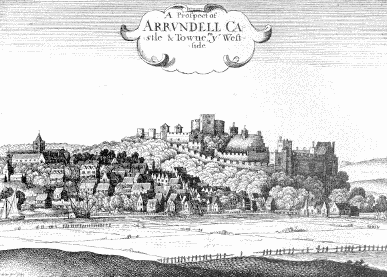
Arundel Castle and surrounding town in 1644.

Lady Joan married her 3rd cousin, William FitzAlan, 16th Earl of Arundel, sometime after 17 August 1438. After she married, Joan spent most of her adult life at Arundel Castle in Sussex where the Earls were seated. Arundel was the son of John FitzAlan, 13th Earl of Arundel and Eleanor Berkeley. His mother was a daughter of John Berkeley and Elizabeth Betteshorne, granddaughter of Thomas de Berkeley, 3rd Baron Berkeley and his second wife Catherine Clivedon. Through Arundel’s great-grandfather, the 1st Lord Arundel, came the inheritance of the Earldom of Arundel. It passed to Lord Arundel’s grandson, John [13th Earl], upon the death of his cousin, Thomas FitzAlan, the 12th Earl. Arundel was a direct descendant of King Henry II and Eleanor of Aquitaine; King Henry III and Eleanor of Provence; King Edward I and Eleanor of Castile; and others.

William fought in the Second Battle of St Albans (22 February 1461) as a supporter of the House of York. The Yorkists were commanded by his brother-in-law Richard Neville, 16th Earl of Warwick. Edward IV of England named him a Knight of the Garter in 1471, probably in honour of his support during the Wars of the Roses. He was Warden of the Cinque Ports in 1471 and from 1483 to 1488. After Joan’s death in 1462 he largely retired from public life.

They had four sons and one daughter,[3]

  1. Thomas, Lord Maltravers (23 November 1417–1487) who succeeded his father as the 17th Earl of Arundel. He was godfather to Prince Arthur of Wales, son of Henry VII and Elizabeth of York. Thomas married to Lady Mary Woodville, sister of queen consort Elizabeth Woodville [wife to Edward IV.] They had issue which included William, 18th Earl of Arundel.
  2. William FitzAlan
  3. George FitzAlan
  4. Sir John FitzAlan
  5. Lady Margaret FitzAlan

Joan, Lady Arundel died in 1462. Joan was buried with her husband in FitzAlan Chapel adjoining St. Nicholas Church, Arundel Castle. There effigy is conserved in glass after being severely damaged over the centuries. Her sisters, Cecily and Margaret, were also interred with their husbands in the Chapel. Joan is the only sister’s effigy which survived the Dissolution and the Puritans

Joan’s sister was Alice, Lady FitzHugh, great-grandmother to Queen Katherine Parr. The FitzHugh’s were related to the FitzAlan family through the 4th Lord FitzHugh’s wife, Hon. Margaret Willoughby, who was a great-granddaughter of Sir Edmund, 9th Earl of Arundel. The Neville’s were also descendants of Sir Richard, the 8th Earl who’s daughter, Eleanor, married Sir Henry Percy, 9th Baron Percy. Joan’s mother, Alice, also descended from the FitzAlan family being the granddaughter of Lady Alice FitzAlan [see intro].

This slideshow requires JavaScript.

Sources:

  1. David Baldwin. The Kingmaker’s Sisters: Six Powerful Women in The War of the Roses, Gloucestershire: The History Press, 2009.
  2. Linda Porter. Katherine the Queen; The Remarkable Life of Katherine Parr, the Last Wife of Henry VIII. Macmillan, 2010.
  3. Douglas Richardson. Magna Carta Ancestry: A Study in Colonial and Medieval Families, 2nd Edition, 2011.

Photos

Meg McGath
© 9 November 2012

5 November 1605: The Gunpowder Plot

5 NOVEMBER 1605: “Remember, remember, the 5th of November.

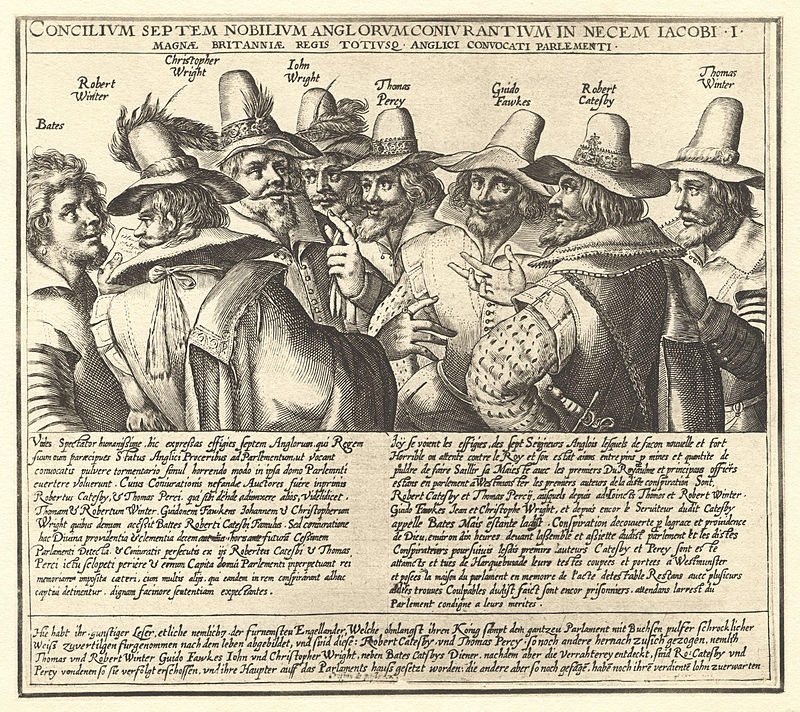
800px-The_Gunpowder_Plot_Conspirators,_1605_from_NPG

The Gunpowder Plot Conspirators, 1605, by unknown artist. (Wikipedia)

Catholic dissident Guy Fawkes and 12 co-conspirators spent months planning to blow up [assassinate] King James I of England during the opening of Parliament on November 5, 1605. But their assassination attempt was foiled the night before when Fawkes was discovered lurking in a cellar below the House of Lords next to 36 barrels of gunpowder. Londoners immediately began lighting bonfires in celebration that the plot had failed, and a few months later Parliament declared November 5 a public day of thanksgiving. Guy Fawkes Day, also known as Bonfire Night, has been around in one form or another ever since. Though originally anti-Catholic in tone, in recent times it has served mainly as an excuse to watch fireworks, make bonfires, drink mulled wine and burn Guy Fawkes effigies (along with the effigies of current politicians and celebrities). (Guy Fawkes Day: A Brief History, History.com)

The main conspirator, Sir Robert Catesby, and one of his accomplice’s Sir Francis Tresham, was/would have been a first cousin, once removed of Queen Catherine Parr being great-grandchildren of Catherine’s paternal aunt, The Hon. Katherine Vaux. Catesby and Tresham were among some of the great-grandson’s of Sir George Throckmorton who did not convert to the new religion. Tresham was also a great-grandson of Queen Catherine’s uncle Sir William Parr, 1st Baron Parr of Horton.

An indirect influence, Father John Gerard, was taken in by Catherine Parr’s cousins, the Vaux’s of Harrowden. The Vaux’s were noted recusant. Elizabeth, Lady Vaux, wife of Sir George Vaux [heir to his father’s barony, but pre-deacesed his father], was strong-willed and most of what we know of her comes from Sir Thomas Tresham, brother of her mother-in-law, and it is extremely biased, but was certainly possessed of a forceful character. Elizabeth and Tresham entered into legal wrangles over the estate, but in 1598 she was able to purchase the wardship of her son, the new Lord Vaux. Shortly after this, Elizabeth founded what was essentially a Jesuit college at Harrowden—a place to educate Catholic boys before they were old enough to be smuggled out of England to attend Douai. In 1605, Elizabeth was questioned over a letter she had written that made it seem as if she had ties to the Gunpowder Plot. Godfrey Anstruther’s Vaux of Harrowden devotes several chapters to Elizabeth’s activities in the early 1600s. She was never tried, either for treason or for harboring priests, and was eventually allowed to return to Harrowden, where the next few years were quiet.

External links:

Guy Fawkes Day: A Brief History at History.com

The Gunpowder Plot at History by BBC.com

The Gunpowder Plot Society; an unofficial page focusing on the plot, conspirators, history, etc.

Marriage Negotiations: Letter of Maud Parr to Lord Dacre

Bolton Castle, North Yorkshire.

Bolton Castle, North Yorkshire. (Image page is error, author unknown)

Between the Spring of 1523 and 1524, Maud Parr entered into marriage negotiations for her daughter Katherine. Her first choice came upon the Hon. Henry le Scrope (c.1511-25 March 1525), son and heir to Sir Henry le Scrope, 7th Baron Scrope of Bolton by his wife Mabel Dacre. Lord Scrope was family being related by various ancestors of Katherine, i.e., Henry, 4th Lord FitzHugh and Marjory Willoughby [Katherine’s great-great-grandparents]; Sir Henry Scrope, 1st Baron of Masham and Joan [Katherine’s 5x great-grandparents]; and Sir Ralph Neville, 1st Earl of Westmorland and Lady Joan Beaufort. His wife, Mabel, was a granddaughter of Katherine’s great-aunt, Mabel Parr, Lady Dacre.

The marriage was stalled for various reasons; the modest character of Katherine dowry and lineage [which was just as strong as Lord Scrope]. The failure was fortunate as Henry died in 1525, which would have left Katherine a widow shortly before she would turn thirteen.

Most honourable and my very good lord,

I heartily commend me to you. Whereas it pleased you at your last being here to take pains in the matter in consideration of marriage between the lord Scroop’s son and my daughter Katharine, for the which I heartily thank you, at which time I thought the matter in good furtherance. Howbeit, I perceive that my lord Scroop is not agreeable to that consideration. The jointure is little for 1100 marks, which I will not pass, and my said lord will not repay after marriage had; and 200 marks must needs be repaid if my daughter Katharine dies before the age of sixteen, or else I should break Master Parr’s will [meaning the will of Katherine’s late father, Sir Thomas], which I should be loth to do, and there can be no marriage until my lord’s son [lord Scroop] comes to the age of thirteen, and my daughter to the age of twelve, before which time if the marriage should take none effect, or be dissolved either by death, wardship, disagreement, or otherwise which may be before that time notwithstanding marriage solemnized, repayment must needs be had of the whole, or else I might fortune to pay my money for nothing. The conversation I had with you at Greenwich, was that I was to pay at desire 1100 marks, 100 on hand–and 100 every year, which is as much as I can spare, as you know, and for that my daughter Katharine is to have 100 marks jointure, whereof I am to have 50 marks for her finding till they live together, and then they are to have the whole 100 marks and repayment to be had if the marriage took not effect. My lord it might please you to take so much pain as to help to conclude this matter, if it will be, and if you see any defect on my part it shall be ordered as ye deem good, as knoweth Jesu, who preserve your good lordship.

Written at the Rye the 13 day of July,

Your cousin Maud Parr